

Gila was a German Krautrock band that released a 1972 BASF album and the 1973 Warner title Bury My Heart at Wounded Knee. Guitarist Conrad Veit played concurrently in Popol Vuh.
Members: Conrad “Conny” Veit (guitar, vocals), Fritz Scheyhing (Mellotron, 1969-72), Walter Wiederkehr (bass, 1969-72), Daniel Alluno (drums, percussion, 1969-72), Daniel Fichelscher (drums, bass, 1973-74), Florian Fricke (keyboards, piano, 1973-74), Sabine Merbach (vocals, 1973-74)
Inception
Gila formed in 1969 in Stuttgart as Gila Füchs, assembled by guitarist Conrad Veit with percussionist Daniel Alluno, bassist Walter Wiederkehr, and keyboardist Fritz Scheyhing.
Gila
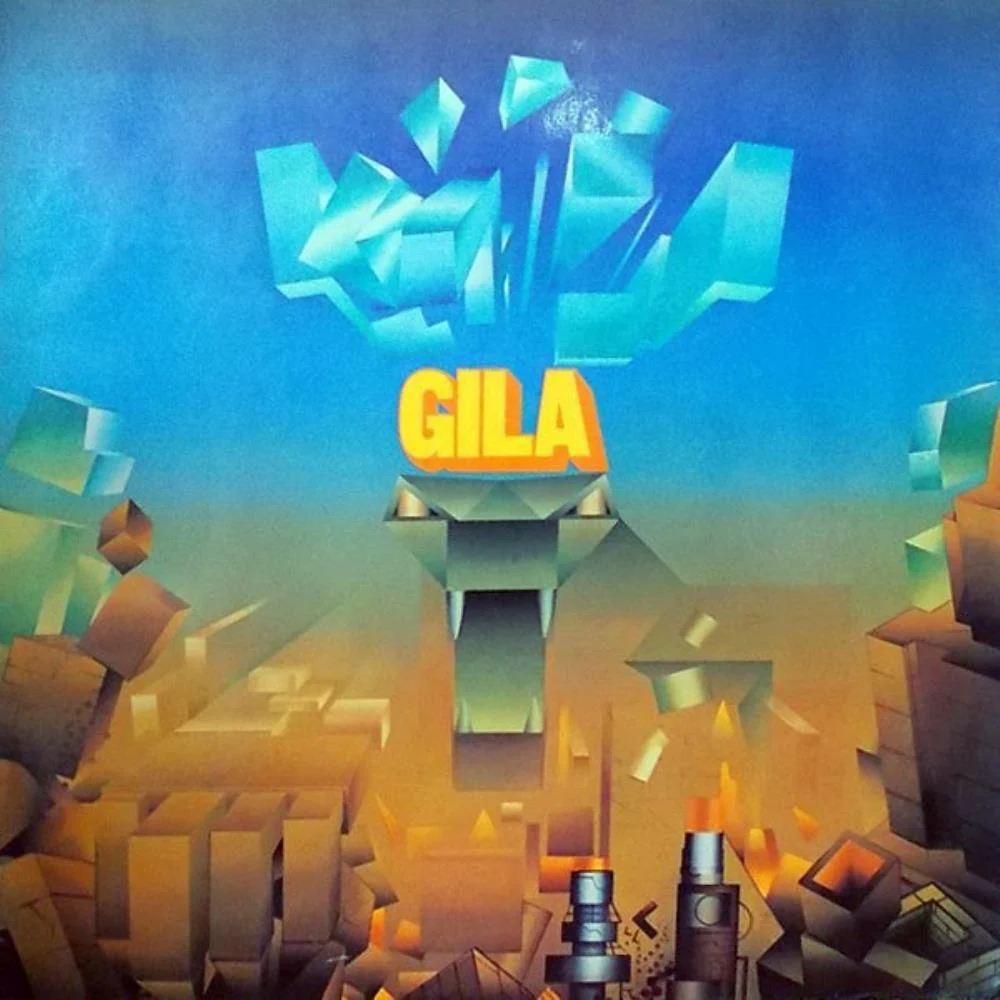 Gila released their self-titled debut album in February 1972 on BASF.
The album carries the subtitle Free Electric Sound and presents extended instrumental sections shaped by layered organ, Mellotron, and treated effects from keyboardist Fritz Scheyhing. He trades passages with guitarist Conny Veit, who moves between sustained electric lines and acoustic flourishes, often processing his parts with electronic treatments and sharing percussive space on tabla with drummer Daniel Alluno. Scheyhing adds percussive elements alongside his keyboard arsenal, while Veit handles vocals in addition to composing all six tracks.
“Aggression” leads with clipped, overdriven guitar against modal organ and phased distortion, propelled by dense drumming and submerged bass. “Kommunikation” stretches across twelve minutes of gradual metamorphosis: drifting electric piano and acoustic strums give way to warping drones, pulsed low-end repetition, and echo-processed slide guitar above shimmering Mellotron swells and spoken passages.
The second side settles into slower tension and darker tonal planes—“Kollaps” centers on sustained organ, delay trails, and a ruptured guitar line that yields to percussive rattling and faint background cries. “Kontakt” introduces acoustic motifs with subtle Eastern phrasings, layered above residual effects from its ambient lead-in. “Kollektivität” and “Individualität” operate as linked episodes, the former layering wah-toned guitar over slow-building percussion and saturated organ, while the latter strips the arrangement to tribal percussion figures and faint electronic residue.
A1. “Aggression” (4:33)
A2. “Kommunikation” (12:47)
B1. “Kollaps” (5:30)
B2. “Kontakt” (4:30)
B3. “Kollektivität” (6:40)
B4. “Individualität” (3:36)
Gila recorded the album from June 7 to June 15, 1971, at Dierks Studios in Cologne with house engineer Dieter Dierks. The band self-produced the sessions, with Veit handling executive decisions and contributing the liner notes. The mix balances live-in-studio interplay with processed textures, emphasizing dynamic range and ensemble cohesion.
In 1972, keyboardist Florian Fricke summoned Veit to Munich for the third Popul Vuh album, Hosianna Mantra, which features Conrad on electric and 12-string. Fricke returned the favor in a revised Gila lineup.
Bury My Heart at Wounded Knee
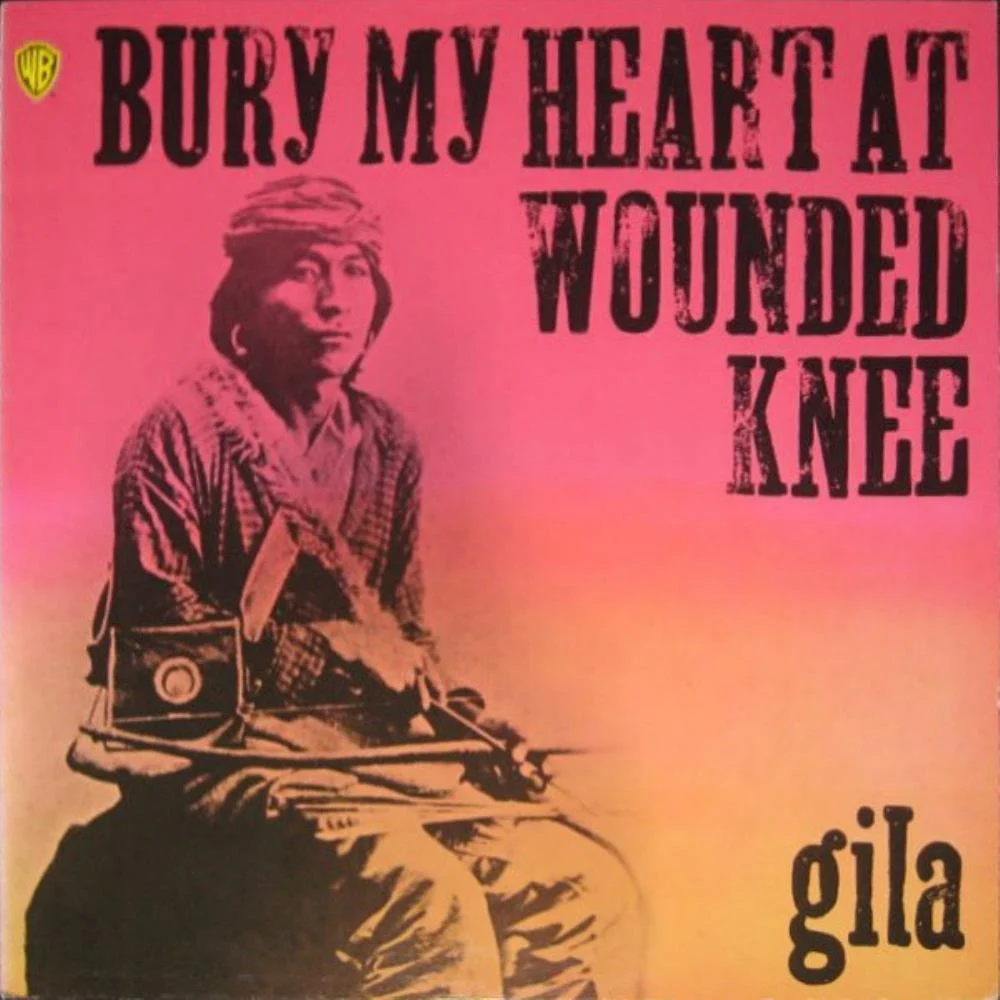 Gila released their second album, Bury My Heart at Wounded Knee, in July 1973 on Warner Bros.
The album presents an expanded instrumental palette shaped by multi-tracked guitar and electronic overlays from Conny Veit, who alternates between 12-string acoustic textures and electric leads, often layering Moog and vibraphone within the same piece. Florian Fricke adds grand piano, Mellotron, and further Moog passages, which intersect with Veit’s lines, while Daniel Fichelscher balances his dual roles on drums and bass with interwoven percussive accents and sectional transitions.
Wounded Knee traces a tonal arc from crystalline calm to ceremonial uplift. “This Morning” and “In a Sacred Manner” pair 12-string acoustic guitar with grand piano and Mellotron, as dual vocals drift between short lyrical stanzas and suspended instrumental interludes. “Sundance Chant” folds handclaps into its steady pulse, with short vocal refrains circling muted electric leads. “Young Coyote” isolates the acoustic guitar in a continuous solo figure, free of accompaniment.
Side two adopts a starker, more dynamic character. “Black Kettle’s Ballad” alternates subdued electric chords and flute lines with lyrical snapshots of aftermath and loss. “The Buffalo Are Coming” builds from sparse piano into a gradual escalation of drumming, Mellotron, and guitar layers, then folds into chanted refrains. “Little Smoke” closes the album with slow-motion piano, whispering Mellotron, and distant acoustic figures that resolve into layered percussion and final chord suspensions. Conny Veit’s parts remain central throughout, but Fricke’s piano and Fichelscher’s hybrid percussion anchor the phrasing with recurring contrasts of clarity and haze.
A1. “This Morning” (5:40)
A2. “In a Sacred Manner” (4:42)
A3. “Sundance Chant” (4:09)
A4. “Young Coyote” (3:18)
B1. “Black Kettle’s Ballad” (4:24)
B2. “Little Smoke” (5:06)
B3. “The Buffalo Are Coming” (7:20)
Sessions took place in 1973 with Veit producing the album and handling the majority of instrumental parts. Sabine Merbach appears on lead vocals for “This Morning.” Dieter Dierks handled the final mix.
The title references the 1890 massacre at Wounded Knee, where U.S. cavalry forces killed hundreds of Lakota Sioux. In 1973, members of the American Indian Movement (AIM) occupied the site in protest of broken treaties and tribal corruption, triggering a 71-day standoff with federal agents.
Discography:
- Gila (1971)
- Bury My Heart at Wounded Knee (1973)
Sources:
Artist/Album Pages:
Alan Skidmore (born April 21, 1942) is an English tenor saxophonist from London who appeared on 19...
Blues Creation was a Japanese hard-rock band that debuted with a 1969 Polydor album, followed by t...
Blue Mountain Eagle was an American psych-rock band from Los Angeles that released a 1970 self-tit...
Lou Courtney (1943–2021) was an American soul singer and songwriter who scored R&B hits with ...
Assagai was a London-based Afro-rock quintet comprised of three South African and two Ghanaian mus...
Dave Mason (May 10, 1946 – April 19, 2026) was an English singer-songwriter who emerged as the guita...
Emerson, Lake & Palmer — alternately known by the acronym ELP — were an English symphonic-rock t...
Ora was an English folk-pop band that released a self-titled album on small-press Tangerine Record...
Era di Acquario was an Italian symphonic-folk band that made two 1972 singles on RCA Italiana, fol...
Betty Wright (Dec. 21, 1953 – May 10, 2020) was an American soul singer from Miami. She cut her d...
Marvin Gaye (April 2, 1939 — April 1, 1984) was an American R&B vocalist, songwriter, and prod...
April Wine is a Canadian hard-rock band from Halifax that released twelve studio albums and three li...