

Lougarou / Garolou was a Québécois symphonic-folk band that released a 1976 self-titled album as Lougarou on London Records. After being sued by a similarly named dance troupe, the band modified the spelling to Garolou for their 1978 second London album, followed by two further titles on Kébec-Disc.
Members: Marc Lalonde (bass, guitar, vocals), Michel Lalonde (guitar, vocals), Michel Deguire (drums), Gilles Beaudoin (guitar, 1978-80), Gaston Gagnon (guitar, 1980-present), Réginald Guay (keyboards, vocals)
Background
Lougarou formed in September 1975 after Franco-Ontarian brothers Marc and Michel Lalonde turned a Prince Edward Island theatre-circuit music project into a five-piece recording group. The first lineup comprised guitarist-vocalist Michel Lalonde, bassist-vocalist Marc Lalonde, drummer Michel “Stan” Deguire, guitarist-vocalist Georges Antoniak, and keyboardist-vocalist Steven Naylor.
Michel Lalonde was born in Cornwall, Ontario, and grew up in Glen Robertson, an eastern Ontario village with a francophone community. His father sang as an amateur, read solfège, directed a choir, and introduced Lalonde to public singing through church-choir work. Marc Lalonde was Michel’s younger brother and worked with him in the Prince Edward Island theatre circle. Both brothers worked as teachers before Lougarou.
In 1974, the Lalonde brothers played music for a children’s theatre troupe and recorded demo material around a plan to recast French and French-Canadian traditional songs with electric instruments, close vocal parts, and keyboards. Deguire came from Montréal and played drums in local groups before professional sideman work with Marc Hamilton, Steve Fiset, Georges Thurston, François Guy, Priscilla, and Céline Lomez. Antoniak and Naylor entered the Prince Edward Island project before the group adopted the Lougarou name.
In September 1975, Deguire rejoined the Lalondes on Prince Edward Island. Antoniak and Naylor completed the lineup after further rehearsals. Lougarou cut a demo within weeks and moved to the Laurentides to approach the Quebec recording market. The members lived in two chalets near Lac Connelly in Saint-Hippolyte and rehearsed through the winter. Michel Lalonde found André Perry’s Le Studio in Morin-Heights through a local phone directory.
Lougarou
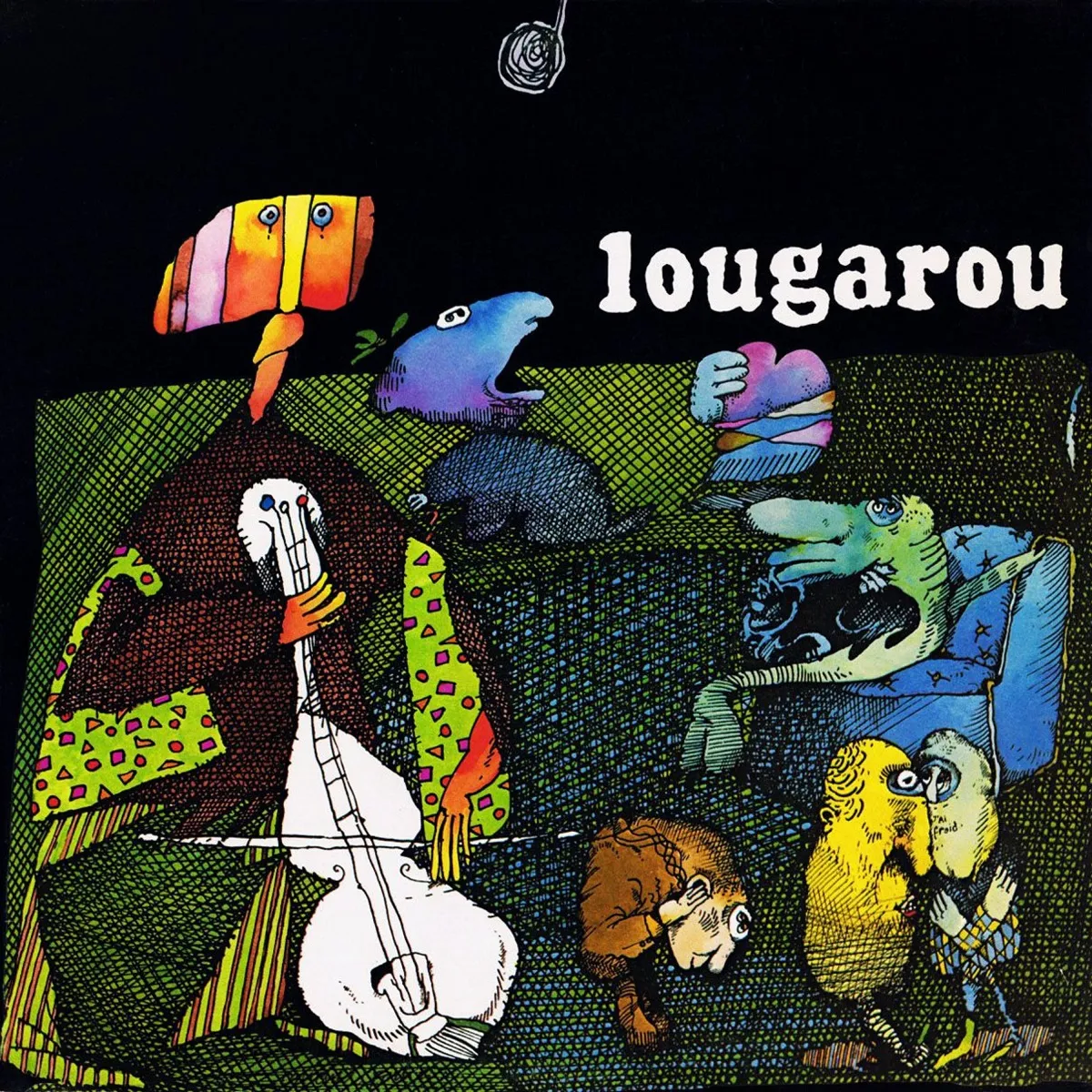 Lougarou released their self-titled debut album in 1976 on London.
The album contains eight traditional titles arranged by Lougarou and the Steven Naylor instrumental “Éclipse.” Singer/guitarist Michel Lalonde and bassist/singer Marc Lalonde share the lead-vocal front line with guitarist Georges Antoniak, keyboardist Steven Naylor, and drummer Michel Deguire. The arrangements set group voice against electric guitar, keyboards, and bass-and-drum rhythm parts; violinist Robert Lalonde appears on “La Vendée.”
“Dis-moi, Charles” strums through a plain acoustic entry. “La belle Françoise” expands into electric figures and ensemble interplay. “La partance” charges through piano-led motion and guitar replies. “La Vendée” snaps through nimble plucked figures and firm vocal answers. “Ah, toi belle hirondelle!” strides on a brisk repeated figure and taut ensemble pace. “À la claire fontaine” stretches acoustic-electric material into a dramatic arc.
A1. “Dis-moi, Charles” [Tell Me, Charles] (2:15)
A2. “La belle Françoise” [Beautiful Françoise] (5:53)
A3. “La partance” [The Departure] (5:52)
A4. “La complainte de mon frère” [My Brother’s Lament] (3:48)
B1. “La Vendée” [The Vendée] (2:51)
B2. “Ah, toi belle hirondelle!” [Ah, You Beautiful Swallow!] (4:10)
B3. “Un bon matin” [One Fine Morning] (3:23)
B4. “À la claire fontaine” [At the Clear Fountain] (7:02)
B5. “Éclipse” [Eclipse] (4:20)
Sessions occurred in spring 1976 at Le Studio in Morin Heights with producer/engineer Ed Stasium. Nick Blagona mixed the album.
Lougarou appeared in a gatefold sleeve with illustration by Michel Fortier and photography by Jacques Lafond. The front cover shows colored, cartoon-like figures around a white upright string instrument on a dark ground. The back cover uses a black-and-white winter photograph of a small wooden building.
London lifted “La Vendée” as a 1977 single (b/w “Un bon matin”), followed by “Ah, toi belle hirondelle!” (b/w “Dis-moi, Charles”). Lougarou spent four weeks on the Quebec album chart and reached No. 7.
Name Change
The Montréal chant-and-dance troupe Ensemble folklorique Loup-Garou had used its name since 1969 and challenged Lougarou over the similar band name. In 1977, the band changed its spelling to Garolou. Antoniak and Naylor left at the same point and returned to the Maritimes. Keyboardist Réginald Guay and guitarist Gilles Beaudoin joined in time for the second album
Garolou
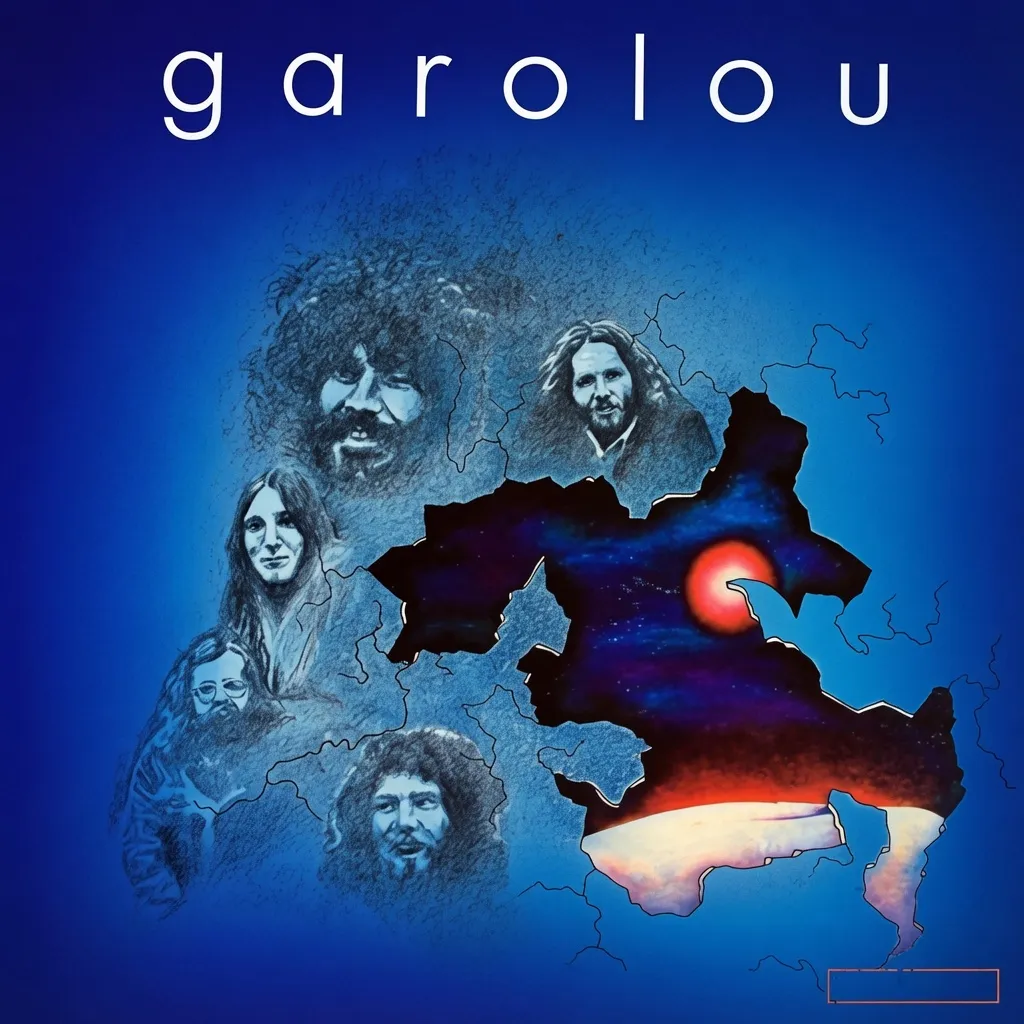 Garolou released their second eponymous album in 1978 on London.
The Lalondes and Deguire remain from the Lougarou lineup; keyboardist Réginald Guay and guitarist Gilles Beaudoin replace Naylor and Antoniak. The album retains the traditional-source format, with additional words/music and arrangements credited to Garolou. Guay uses piano/Fender Rhodes and synthesizers; Beaudoin adds mandolin and flute. Violinist Bobby Lalonde returns, and accordionist Pierre Guérin and mandolinist Bob Cussen appear in the guest credits.
“Aux Illinois” enters with a quiet electric-piano line before raucous rhythm guitars join the vocal. “La complainte du maréchal Biron” sets acoustic accompaniment against restrained string synths. “Le départ pour les États” turns on a lead break. “Je me suis habillé en plumes” shifts its middle passage to keyboards before a short guitar escape. “Alouette” snaps through a breakneck treatment. “Wing-tra-la” strips the arrangement to a cappella voices. “Germaine” rises from a merry opening into a harder middle passage, drops toward a near-stop, then closes through dramatic bursts and a repeating synth finale.
A1. “Aux Illinois” [To Illinois] (3:42)
A2. “La complainte du maréchal Biron” [The Lament of Marshal Biron] (5:24)
A3. “Le départ pour les États” [Departure for the States] (5:32)
A4. “Je me suis habillé en plumes” [I Dressed Myself in Feathers] (3:46)
A5. “Alouette” [Lark] (2:06)
B1. “Victoria” (2:55)
B2. “La retraite de Bonaparte” [The Retreat of Bonaparte] (2:44)
B3. “Wing-tra-la” (4:27)
B4. “Germaine” (10:30)
Sessions occurred in February and March 1978 at Le Studio in Morin Heights with producer/engineer Edward Stasium Jr. Sylvain Jacob assisted during recording. Stasium and Garolou mixed the album with assistants Ramona Janquitto and Jacob.
Garolou features illustration and design by Shirley Bossé with photography by Guy Schiele. The cover sets five drawn portraits beside a map-like central silhouette on a blue field.
London lifted “Victoria” as a 1978 single (b/w “Alouette”), followed by “La retraite de Bonaparte” (b/w “Je me suis habillé en plumes”). In 1979, “La complainte du maréchal Biron” appeared as a single (b/w “Aux Illinois”).
Music Canada certified Garolou gold on March 1, 1979. ADISQ awarded the album the 1979 Félix for Disque de l’année — folklore et traditionnel.
Romancero
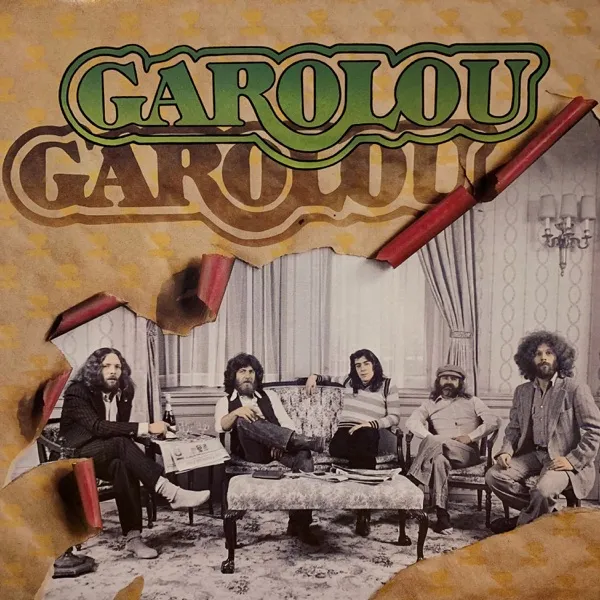 Garolou released their third album, Romancero, in 1980 on London.
Romancero returns to traditional repertoire after the lineup change that replaces Beaudoin with guitarist/singer Gaston Gagnon. Garolou arrange all ten titles, with Michel and Marc Lalonde on the lead-vocal front line. Guay and Deguire remain; violinist Bobby Lalonde and saxophonist Reynald Wiseman add the credited auxiliary parts.
“Sur le bout du pont” flickers with bright synth colors and a squared rhythm. “Nicholas” darkens an opening riff into heavier ensemble motion. “Dans Paris” glides through slick synths and a saxophone intervention. “La danse de la limonade” bounds through a live fiddle-led dance turn. “D’où reviens-tu, mon fils Jacques?” gathers from quiet passages into ensemble interplay. “Le condamné” closes with a stark firing-squad effect.
A1. “Le mariage anglais” [The English Marriage] (5:34)
A2. “Sur le bout du pont” [On the End of the Bridge] (3:30)
A3. “Damon et Henriette” (4:42)
A4. “Nicholas” (5:43)
A5. “Dr. Mason” (2:58)
B1. “Dans Paris” [In Paris] (3:55)
B2. “La danse de la limonade” [The Lemonade Dance] (2:52)
B3. “Quand j’étais garçon” [When I Was a Boy] (2:33)
B4. “D’où reviens-tu mon fils Jacques” [Where Have You Been, My Son Jacques?] (6:00)
B5. “Le condamné” [The Condemned Man] (4:13)
Garolou recorded Romancero in February and March 1980 at Studio P.S.M. in Québec with Edward Stasium Jr. and Garolou producing. Stasium engineered and mixed the album; Serge Provençal served as executive producer.
Romancero appeared in a gatefold sleeve. The front cover sets the green Garolou logo above a torn-paper reveal of the five members seated in a furnished room.
London lifted “La danse de la limonade” as a 1980 single (b/w “Dr. Mason”), which reached No. 3 on the Quebec song chart. “Dans Paris” followed as a second single (b/w “Quand j’étais garçon”).
Romancero spent 12 weeks on the Quebec album chart and reached No. 1 for three weeks. ADISQ awarded Romancero the 1980 Félix for Microsillon de l’année — folklore et traditionnel.
Centre-ville
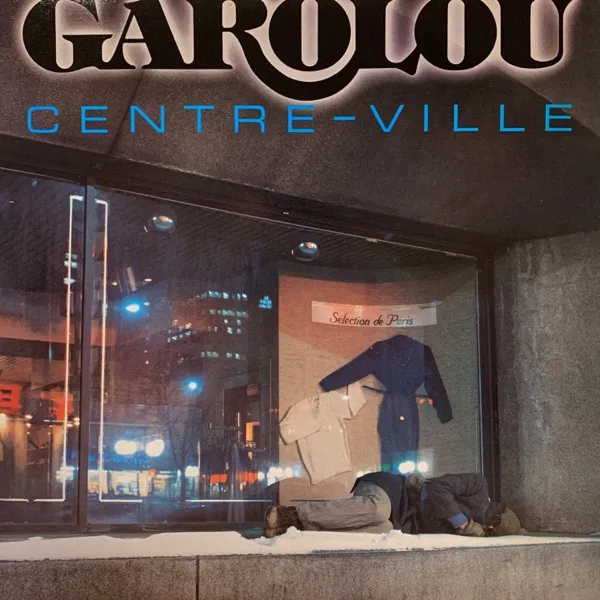 Garolou released their fourth album, Centre-ville, in 1982 on Kébec-Disc.
Centre-ville replaces the traditional-source format with nine originals by Michel H. Lalonde, Marc Lalonde, Guay, Alain Roberge, and Gaston Gingras. The lineup retains Gagnon, Guay, Deguire, and the Lalondes. Reynald Wiseman returns on saxophone, the only named auxiliary credit.
“Tu ouvres la porte” lopes through an offbeat lilt. “Je deviens fou” softens a long intro into slick ensemble sheen. “Aller-retour” slows into a rounded ballad line. “Terre” circles a repetitive closing figure with sparse instrumental space. “Je savais pas” brightens the pace. “Seul au centre-ville” closes in a soft late-night setting.
A1. “Tu ouvres la porte” [You Open the Door] (3:47) – Michel H. Lalonde
A2. “Je deviens fou” [I’m Going Mad] (5:47) – Réginald Guay
A3. “Aller-retour” [Round Trip] (4:04) – Alain Roberge, Michel H. Lalonde
A4. “Terre” [Earth] (6:26) – Alain Roberge, Michel H. Lalonde, Réginald Guay
B1. “Pleine lune” [Full Moon] (4:14) – Alain Roberge, Michel H. Lalonde, Réginald Guay
B2. “Peine perdue” [Wasted Effort] (4:22) – Gaston Gingras
B3. “Parle-moi” [Talk to Me] (4:15) – Alain Roberge, Marc Lalonde
B4. “Je savais pas” [I Didn’t Know] (4:23) – Michel H. Lalonde
B5. “Seul au centre-ville” [Alone Downtown] (5:33) – Alain Roberge, Marc Lalonde
Garolou recorded Centre-ville with Edward Stasium Jr. as producer, engineer, and mixer.
Centre-ville displays a nighttime storefront photograph. The image shows a sidewalk snowbank, a display window marked “Sélection de Paris,” and a prone figure at the base of the window.
Kébec-Disc lifted “Seul au centre-ville” as a 1982 single (b/w “Je savais pas”), followed by “Tu ouvres la porte” (b/w “Parle-moi”). ADISQ nominated Centre-ville for Microsillon de l’année — rock at the 1982 Félix awards.
Discography:
- Lougarou (1976)
- Garolou (1978)
- Romancero (1980)
- Centre-ville (1982)
Sources:
- Discogs: Lougarou
- Discogs: Garolou
- RYM: Garolou
- 45cat: Garolou
- MusicBrainz: Garolou
- ProgQuébec: Garolou
- citizenfreak: Garolou
- Official: Garolou
Artist/Album Pages:
Tatsuro Yamashita — 山下達郎 (born Feb. 4, 1953) — is a Japanese art-pop musician and songwriter who, ...
Ann Peebles is an American soul singer from St. Louis who released seven albums between 1969 and ...
Sylvester James (Sept. 6, 1947 — Dec. 16, 1988) was an American soul-funk singer from Los Angeles ...
Arti & Mestieri was an Italian jazz-rock band that released the 1974/75 albums Tilt (Immagini ...
Yan Tregger is a French composer and vocalist who released numerous library recordings on assorted...
A Raincoat was an English pop-rock band on EMI that released three singles and the 1975 album Digalo...
Haikara was a Finnish symphonic/jazz-rock band that made the 1972–74 albums Haikara and Geafar, fo...
Pierrot Lunaire was an Italian avant/symphonic-folk combo that released two albums on RCA-subsidia...
Don Mock (December 22, 1950 – April 14, 2025) was an American jazz-rock guitarist, educator, and a...
Maneige was a Québécois chamber|jazz-rock band that released the 1975 Harvest albums Maneige and ...
Lasting Weep was a Québécois chamber-rock quartet, active from 1968 to 1972 in Montreal. They reco...
Smoked Sugar was an American soul group that released a 1975 self-titled album on 20th Century Rec...