

MX-80 Sound was an American avant-rock band from Bloomington, Indiana, formed amid the first wave of Midwest proto-punk innovators (Pere Ubu, Electric Eels). After their 1976 DIY debut, they linked with Island Records for 1977’s Hard Attack, a blue-print for post-punk, No Wave, and noise-rock styles. On Ralph Records, they made the 1980/81 albums Out of the Tunnel and Crowd Control, both marked by the dissonant guitar work of singer Bruce Anderson.
Members: Bruce Anderson (guitar, vocals), Dale Sophiea (bass, vocals), Jeff Armour (drums, 1975-78), Kevin Teare (drums, 1975-76), Rich Stim (vocals, saxophone, guitar, 1976-present), Dave Mahoney (drums, 1976-2006), Mark Weinstein (drums, 1984-present), Jim Hrabetin (guitar, 1985-present)
Background
MX-80 Sound formed in 1974 in Bloomington, Indiana, when guitarist Bruce Anderson and bassist Dale Sophiea—both recent members of the Screaming Gypsy Bandits—began collaborating on material shaped by their shared interest in modern classical music and avant-rock figures like Captain Beefheart.
In 1975, they added dual drummers Jeff Armour and Kevin Teare and contributed the instrumental “Spoonfight” to Bloomington I, a local Bar-B-Q Records compilation. The following year, Chinaboise alumni Rich Stim (vocals, sax, guitar) and Dave Mahoney (drums) joined the group as Teare departed to pursue painting. With Anderson and Stim as the core writers—occasionally joined by lyricist Andrea Ross (aka Angel Corpus Christi)—MX-80 developed their set through unconventional live shows held at the Monroe County Library after being excluded from local club circuits.
Big Hits – Hard Pop From The Hoosiers (EP)
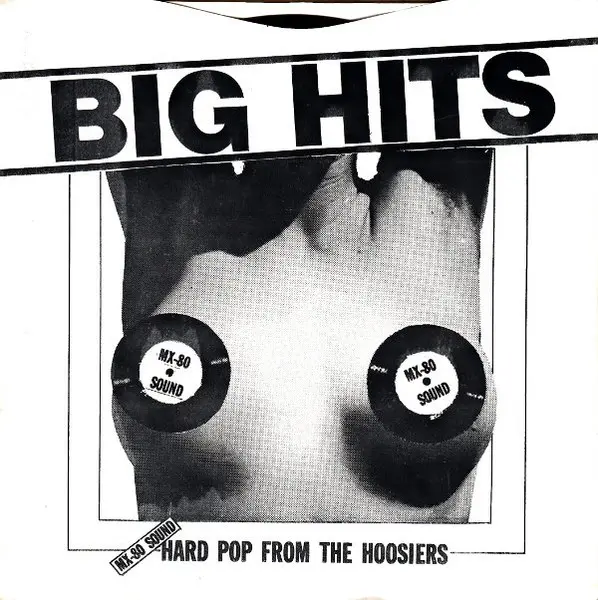 In 1976, MX-80 Sound debuted with Big Hits – Hard Pop From The Hoosiers, a seven-track EP on BRBQ Records.
Guitarist Bruce Anderson and saxophonist–vocalist Rich Stim drive the set with interlocked lines and textural diversions, trading angular phrases and compressed stabs atop fragmented vocal passages. Bassist Dale Sophiea and dual drummers Dave Mahoney and Jeff Armour underpin the material with staggered thrusts and blunt forward momentum. Anderson and Stim wrote all seven numbers.
A1. “Train to Loveland” (1:43) – Anderson, Stim
A2. “You Turn Me On” (2:09) – Anderson, Stim
A3. “S C P” (1:25) – Stim
A4. “Till Death Do Us Part” (2:05) – Anderson, Stim
B1. “Myonga Von Bontee” (2:05) – Anderson, Stim
B2. “Boy Trouble Girl Trouble” (0:59) – Anderson, Stim
B3. “Tidal Wave” (3:10) – Anderson, Stim
MX-80 recorded the EP at Gilfoy Studios in Bloomington with engineer Mark Hood under the direction of producer Mark Bingham. Issued as a limited-run 7-inch at 33⅓ RPM, the original edition came packaged inside an 8-inch, 28-page fanzine with lyrics, artwork, and interviews, housed in a stamped envelope labeled “From Blooming, Ind. Big Hits,” along with a sticker reading “MX-80 Sound Songbook & Record.” A Sounds review by Caroline Coon led Island Records to license the band’s next release.
Hard Attack
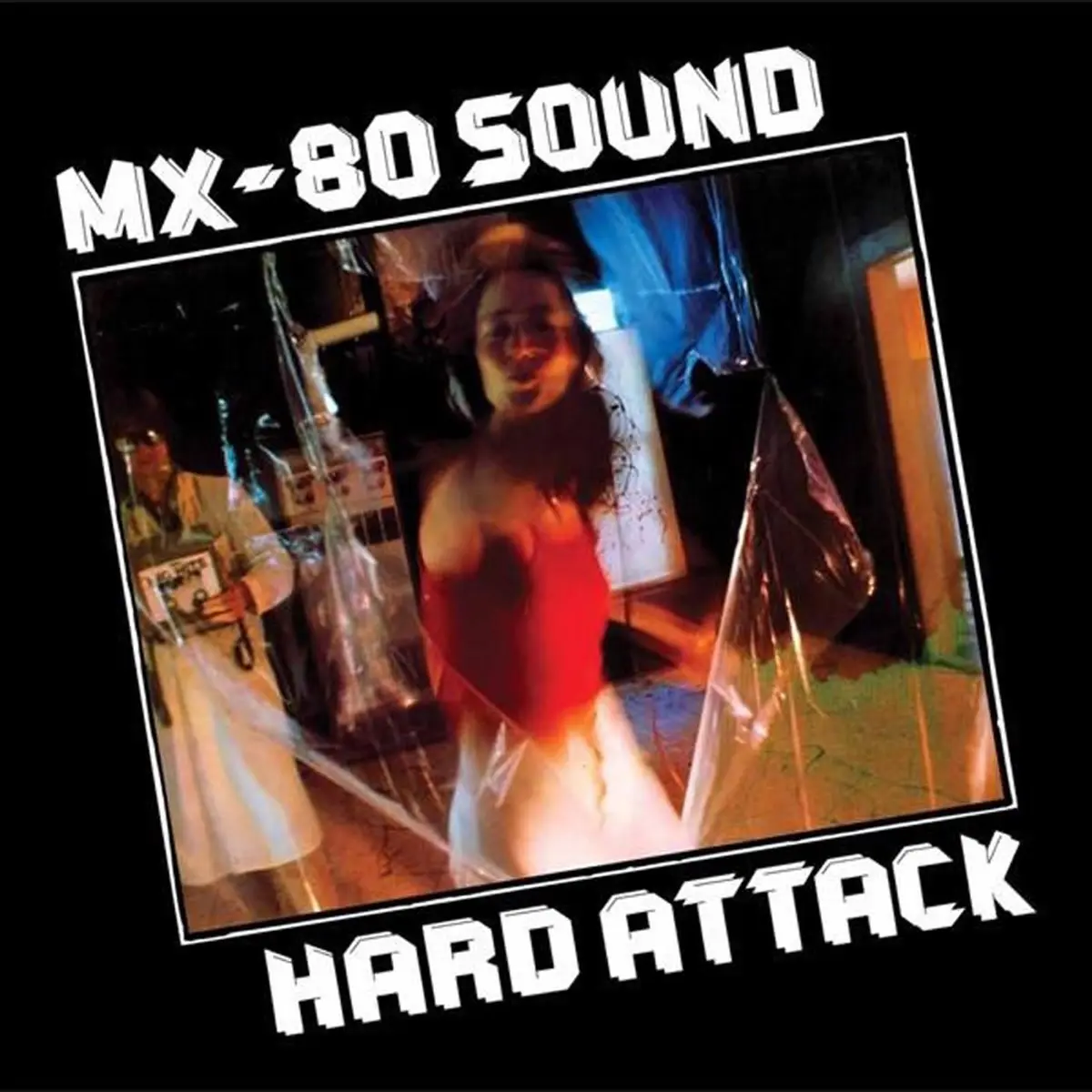 MX-80 Sound released their first album, Hard Attack, in October 1977 on Island (UK, Netherlands).
Hard Attack layers erratic tempo shifts with jagged contours and sudden tonal pivots, driven by clipped rhythms and tightened phrasing. Bruce Anderson’s guitar cuts in short, upward flurries and jagged pulses that often double back into feedback breaks or tangled repetitions, while Rich Stim alternates between stilted recitations and sharp, off-center vocal emphasis. Bassist Dale Sophiea and drummer Dave Mahoney anchor the material with staggered pulses and low-end counterpoint, reinforcing the album’s structural volatility and sharp dynamic turns. MX-80 group-wrote all twelve tracks.
“Crushed Ice” compresses rhythmic accents into short cycles that mirror the title’s fragmentary punch, broken only by its repeated vocal chant and frictional guitar recoil. “PCB’s” locks into a twitchy, stop–start pace that breaks down into spiraling interjections, undercut by fluttered sax and sharp vocal enjambment. “Civilized / Demeyes” slows the attack into longer phrasing arcs, with brief dropouts and saturated build-ups that stretch across its bifurcated form. “Summer ’77” opens as a semi-tone ballad ajar before its rapid twist into fuzz-laden fireworks. Throughout the album, dual-drummer interplay emphasizes short phrases, staggered cadences, and ricochet-like fills, while Dale Sophiea’s low-end lines shift from unison reinforcement to dislocated undercurrents, especially beneath the more abstract passages. Tension emerges from this layering of restraint and rupture, each phrase teetering at the edge of collapse before being yanked back into formation.
A1. “Man on the Move” (3:55)
A2. “Kid Stuff” (2:56)
A3. “Fascination” (1:43)
A4. “Summer ’77” (3:03)
A5. “PCB’s” (1:57)
A6. “Crushed Ice” (3:10)
B1. “Tidal Wave” (3:13)
B2. “Checkmate” (1:46)
B3. “Facts-Facts” (3:11)
B4. “You’re Not Alone” (3:39)
B5. “Civilized / Demeyes” (5:17)
B6. “Afterbirth / Aftermath” (4:27)
Mark Bingham produced the album at Gilfoy Studios in Bloomington with engineer Mark Hood. Kim Torgerson handled the sleeve photography. Island issued the album only in the UK and Netherlands. In 1995, Atavistic reissued Hard Attack on CD alongside the Big Hits EP.
Subterranean Modern
In 1978, MX-80 Sound relocated from Bloomington to San Francisco during a period of social unrest and political volatility in the city. They arrived amid the fallout from the Dan White murders and ensuing White Night riots, which later informed their track “White Night.” The group also performed at Temple Beautiful shortly after the Jonestown mass suicide, playing near a parking lot filled with cars left behind by Peoples Temple victims. Throughout their early SF tenure, they played regular sets at the Mabuhay Gardens, Deaf Club, and Savoy Tivoli, but their dense, abstract sound clashed with the prevailing punk and new-wave aesthetic. Local indifference to their performances led to the departure of drummer Jeff Armour, reducing MX-80 to a quartet. In 1979, they joined Ralph Records, the label operated by fellow avant-outliers The Residents.
 That year, Ralph issued Subterranean Modern, a split compilation featuring four experimental bands—all based in San Francisco and asked to contribute original material plus a version of Tony Bennett’s “I Left My Heart in San Francisco.” MX-80 submitted three tracks, including a satirical take on the Bennett standard, alongside two originals.
MX-80 Sound tracks on Subterranean Modern (1979):
A4. “Lady in Pain” (2:49)
A5. “I Left My Heart in San Francisco” (1:52)
A6. “Possessed” (4:54)
Subterranean Modern also featured contributions from The Residents, Tuxedomoon, and Chrome (the latter ultimately not signing to Ralph). Artist Gary Panter illustrated the cover, marking the label’s first visual collaboration outside its in-house design team, Pore-Know Graphics.
Out of the Tunnel
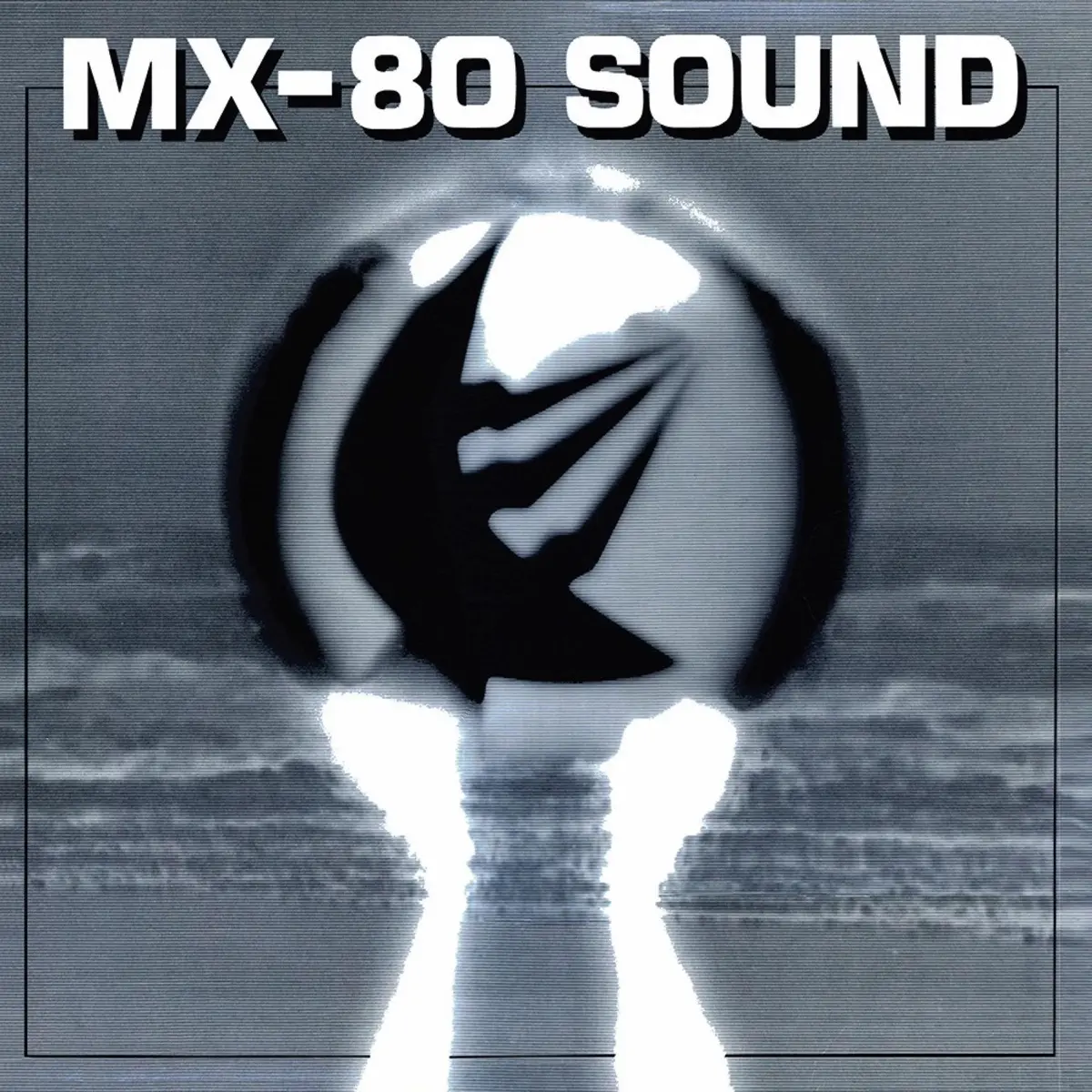 MX-80 Sound released their second album, Out of the Tunnel, in March 1980 on Ralph.
Out of the Tunnel pares down the band’s density into a more concentrated form, trading the wide sprawl of Hard Attack for precision-cut bursts, sharp shifts, and tightened interplay. Guitarist Bruce Anderson and saxophonist–guitarist Rich Stim operate in tight tandem, weaving abrupt phrase shifts and offset accents through dense arrangements with biting tonal clashes. Bassist Dale Sophiea and drummer Dave Mahoney stabilize the attack with staggered propulsion and clipped low-end momentum. Anderson, Mahoney, Sophiea, and Stim wrote all nine tracks.
“It’s Not My Fault” opens with clipped vocal phrasing and stop-start cadences that quickly collapse into a tangle of distorted guitar and staggered hits, each phrase folding in on itself before pushing outward again. “Follow That Car” sustains a wired, rising tension, coiling around Bruce Anderson’s contoured solo and a locked rhythm section that fragments and reassembles in quick succession. “Fender Bender” builds from a compressed sax motif that spirals into a blown-out central loop, reinforced by Dave Mahoney’s metallic accents and Sophiea’s short, blunt pulses; Anderson counters with scorched intervals that break from and circle back to the central line. “Someday You’ll Be King” stretches into longer, ascending patterns, with alternating peaks and dropouts that frame the guitar’s tight, searing phrasing in between barrages.
On “Frankie I’m Sorry,” the structure thins to a chant-like progression beneath Stim’s flattened vocal tone, which wavers between drained and incantatory while the instrumentation builds around him in concentric layers. Across the set, Bruce Anderson tempers the feedback swells and chaotic turns with clearly segmented motifs, while Rich Stim’s muttered delivery and abrupt sax detonations land between punctuation marks and derailments. The mix occasionally softens the attack, but the ensemble moves with deliberate, short-form thrust—each phrase clipped, angled, and timed with coiled intent.
 A1. “It’s Not My Fault” (3:27)
A2. “Follow That Car” (4:16)
A3. “Fender Bender” (4:17)
A4. “I Walk Among Them” (3:14)
A5. “Someday You’ll Be King” (3:32)
B1. “Frankie I’m Sorry” (3:22)
B2. “Gary and Priscilla” (4:34)
B3. “Man in a Box” (4:18)
B4. “Metro Teens” (5:13)
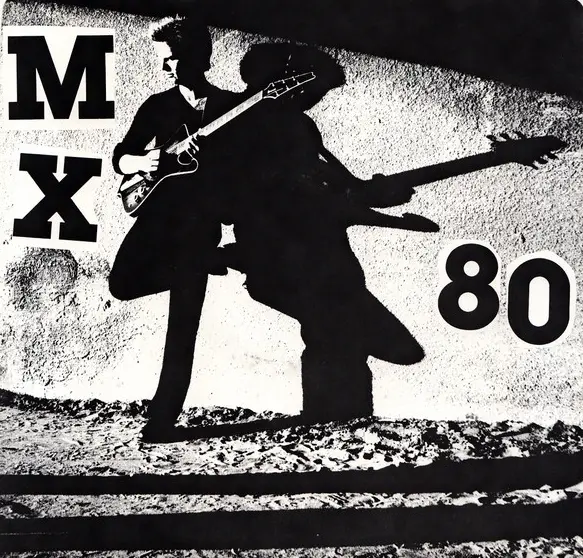
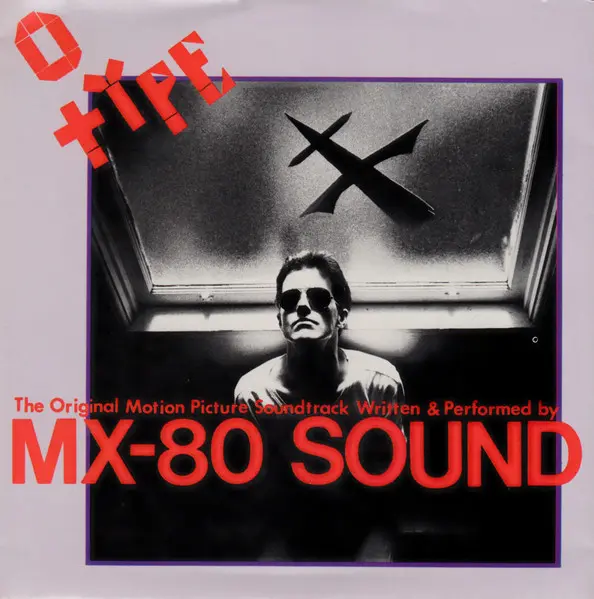
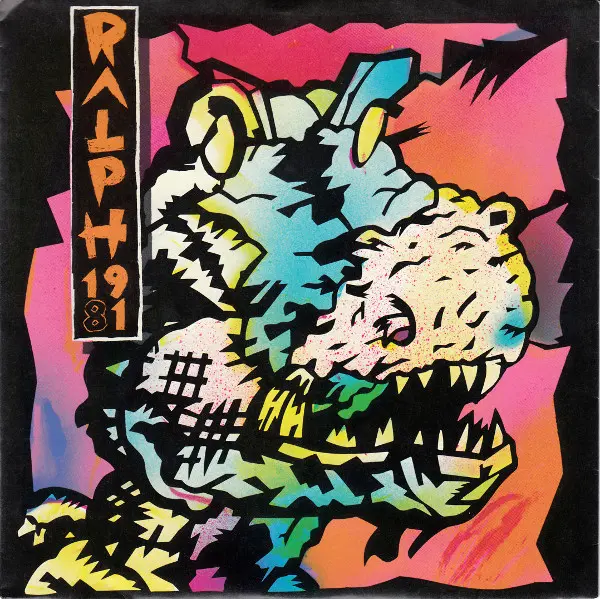 MX-80 recorded Out of the Tunnel at Mobius Music in San Francisco with producer Mark Bingham, who handled the sessions alongside engineer Oliver Dicicco. Kim Torgerson photographed the back cover at the disused Ocean Beach tunnels.
Ralph issued the LP in a die-cut sleeve and later featured “Don’t Blame It on Me” on their April 1980 Buy or Die sampler EP.
“O Type”
Crowd Control
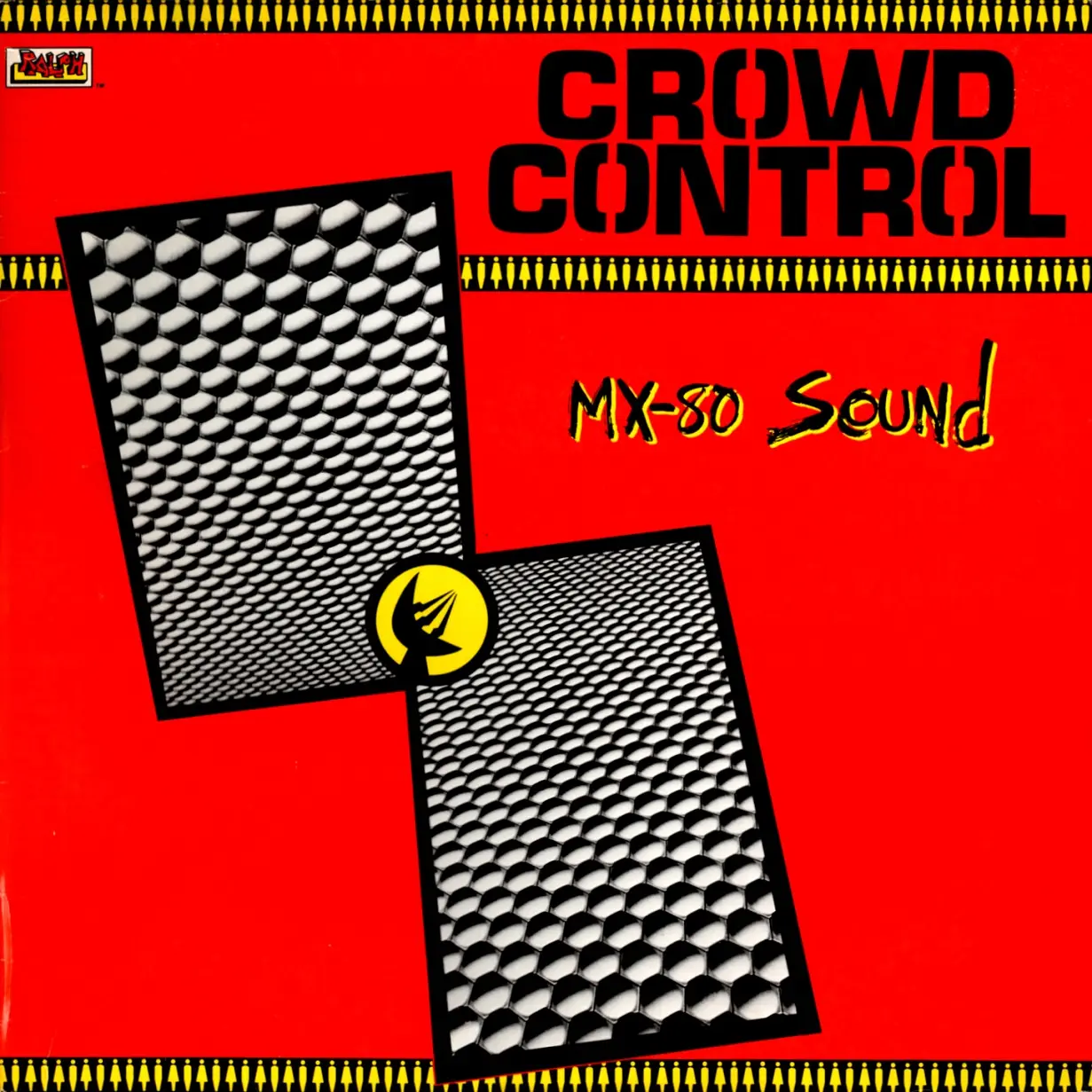 MX-80 Sound released their third album, Crowd Control, in March 1981 on Ralph.
Crowd Control tightens MX-80 Sound’s attack into briefer, more delineated forms while leaving the edges frayed and the pacing volatile. Guitarist Bruce Anderson threads sharp, compressed bursts through coiled patterns exchanged with saxophonist–rhythm guitarist Rich Stim, who interjects with deadpan phrasing and tonal counterlines. Bassist Dale Sophiea and drummer Dave Mahoney hold to a firm, forward-leaning axis that underpins the set’s abrupt structural pivots and tonal fragmentation. Anderson wrote most of the material with contributions from Stim, Angel Ross (aka Angel Corpus Christi), and Jim Hoy, with one track sourced from outside composer Bernard Herrmann.
“Face of the Earth” opens with clipped, staggered phrasing and sliding guitar figures that lurch between ascending breaks and sudden rhythmic resets. The title track cuts in at double speed—drums firing against a darting riff and sax interjections that teeter between propulsion and collapse. “Why Are We Here” unfolds in monotone over a churning low-end line, each repetition narrowing the tonal range until the guitar swerves in with chromatic pullbacks and slurred, acidic sustain. “Obsessive Devotion” builds from slow, chant-like backing and shrouded distortion, with guitar lines that shimmer in and out of pitch center before hardening into sustained feedback arcs. “More Than Good” cuts off each descending phrase with a clipped chord or bass drop, pushing into tonal ambiguity while retaining a slanted vocal cadence.
Side two edges into a hazier frame—“Night Rider” unfolds in lurching meter, with washed-out guitar textures and mumbled lines suspended over martial percussion. “Pharoah’s Sneakers” moves through start–stop jabs and swerves into irregular tempo shifts, with sharp horn breaks mimicking blown-out brass hits. “Promise of Love” closes with stretched phrases over a reduced palette of cymbal hisses, low-register pulses, and ambient guitar smears that taper into silence. Across the album, Bruce Anderson shapes contorted leads with a clipped tail or bleeding edge, while Rich Stim’s flat vocal tone alternates with pointed sax stabs. Dale Sophiea and Dave Mahoney carry the frame, switching from blunt metric drive to half-speed drag without settling into repetition. Every phrase lands with weight, but nothing rests in place for long.
A1. “Face of the Earth” (3:46) – Anderson, Stim
A2. “Crowd Control” (2:39) – Anderson
A3. “Why Are We Here” (2:55) – Anderson, Stim
A4. “Obsessive Devotion” (4:21) – Anderson, Hoy
A5. “More Than Good” (3:48) – Ross, Anderson
B1. “Night Rider” (4:25) – Anderson, Stim
B2. “City of Fools” (2:30) – Anderson, Stim
B3. “Theme from Sisters” (2:11) – Bernard Herrmann
B4. “Cover to Cover” (2:44) – Ross, Anderson
B5. “Pharoah’s Sneakers” (2:47) – Anderson
B6. “Promise of Love” (4:38) – Ross, Anderson
MX-80 recorded and mixed the album at Celebration Studios in New York City with longtime producer Mark Bingham, marking their final collaboration. Mark Hood handled engineering, with lacquer cutting by RL at Masterdisk. Kim Torgerson directed the package design and photography, including the two-color printed jacket and custom inner sleeve.
Ralph Records and the Cryptic Corporation manufactured the LP, with publishing split between Emexco Music and Pale Pachyderm Publishing, except for the Herrmann composition. “Why Are We Here” also appeared on Buy Or Die 1981, Ralph’s spring label sampler.
Discography:
- Big Hits – Hard Pop From The Hoosiers (EP, 1976)
- Hard Attack (1977)
- Out of the Tunnel (1980)
- Crowd Control (1981)
Sources:
Artist/Album Pages:
Larry Willis (Dec. 20, 1940 — Sept. 29, 2019) was an American jazz-funk pianist and composer from...
Experiments With Ice was an English coldwave band behind a 1981 self-titled album on Experimental ...
The Silesian Blues Band — commonly billed as SBB — are a Polish symphonic/space-rock band that deb...
Animal Nightlife was an English sophisti-pop band that released four singles and the 1985 Island a...
Ndikho Xaba & the Natives were an American spiritual jazz ensemble that released a 1971 album ...
Con Funk Shun was an American soul-funk band that released eleven albums between 1976 and 1986 on ...
Pollen was a Québécois symphonic-rock band that released a self-titled album in 1976 on Kébec-Disc...
Croox was a German NDW band that released the 1980–82 albums A and Geld Her!, both on Ink Records. ...
Schicke Führs Fröhling (SFF) were a German symphonic-rock band that released three albums on Brain...
Hiroki Tamaki — 玉木宏樹 (born March 13, 1943) — is a Japanese violinist, composer, and conductor from...
Young & Company were an American soul-funk band from New Jersey that released the 1980 album I...
Yonin-Bayashi (四人囃子) was a Japanese folk-psych band that made the 1973/74 Tam albums Hatachi no Ge...