

Con Funk Shun was an American soul-funk band that released eleven albums between 1976 and 1986 on Mercury.
Con Funk Shun formed in Vallejo, California, and initially recorded two albums’ worth of material in Memphis around 1973, which later appeared separately on Pickwick and 51 West. They signed with Mercury in 1976, beginning a decade-long run of eleven albums that solidified their reputation in R&B and funk.
Early releases, including Secrets (1977), Loveshine (1978), and Candy (1979), showcased tightly arranged funk rhythms, intricate horn lines, and the interplay of Michael Cooper’s tenor and Felton Pilate’s falsetto, producing R&B singles such as “Ffun” and “Chase Me.”
By the early 1980s, albums like 7 (1981) and To the Max (1982) combined up-tempo party tracks with romantic ballads, most notably “Bad Lady” and “Love’s Train,” highlighting the group’s ability to balance danceable funk with quieter, emotionally driven compositions.
From 1983 onward, Con Funk Shun experimented with electronic instrumentation and external producers. Fever (1983) produced the Top Ten single “Baby I’m Hooked (Right Into Your Love),” while Electric Lady (1985) and Burnin’ Love (1986) leaned heavily on synthesizers and contemporary production trends, including early rap influences and urbanized ballads.
Despite Felton Pilate’s departure after Electric Lady, the band maintained a consistent R&B presence through punchy up-tempo tracks and electronically driven arrangements, concluding their Mercury tenure with a blend of dance-ready singles and smooth ballads that reflected both their origins in funk and their adaptability to evolving 1980s R&B styles.
Members: Michael Cooper (guitar, keyboards, vocals), Louis McCall (drums, percussion, 1968-87), Karl Fuller (trumpet, vocals, 1971-87), Paul “Maceo” Harrell (saxophone, flute, 1971-87), Cedric Martin (bass, vocals, 1971-87), Danny “Sweet Man” Thomas (keyboards, vocals, 1971-87), Felton Pilate (vocals, guitar, keyboards, trombone, 1971-85, 1993-present), Melvin Carter (vocals, keyboards, 1985-87)
Background
Con Funk Shun began life as the Soul Project, formed in 1969 by Vallejo high school students Michael Cooper (vocals, guitar) and Louis A. McCall (drums). Over the next two years, they added bassist Cedric Martin, keyboardist Danny “Sweet Man” Thomas, trumpeter Karl Fuller, and reedist Paul “Maceo” Harrell. In late 1971, they grew to a septet with singer and multi-instrumentalist Felton Pilate. They took their name Con-Funk-Shun (later dropping the hyphens) from a title-sake song by The Nite-Liters.
In 1973, they relocated to Memphis, where they served as the live backing act for Stax recording artists The Soul Children. Signed to Crankshaft Productions by Stax co-founder Estelle Axton, Con Funk Shun entered Audio Dimensions studio with producer Ted Sturges and recorded two albums of material, later released as Organized Con Funk Shun (1978) and The Memphis Sessions (1980).
In May 1974, Con-Funk-Shun made their vinyl debut with the single “Now and Forever,” a Cooper/Pilate track backed with “Clique,” a Cooper/Harrell number. Sturges produced both sides for the Memphis indie Fretone Records.
A. “Now and Forever” (3:08)
B. “Clique” (2:55)
In October, Fretone issued their second single: “Mr. Tambourine Man,” a Byrds cover backed with “Bumpsumboody,” a group-credited original.
A. “Mr. Tambourine Man” (3:00)
B. “Bumpsumboody” (3:25)
Organized Con Funk Shun
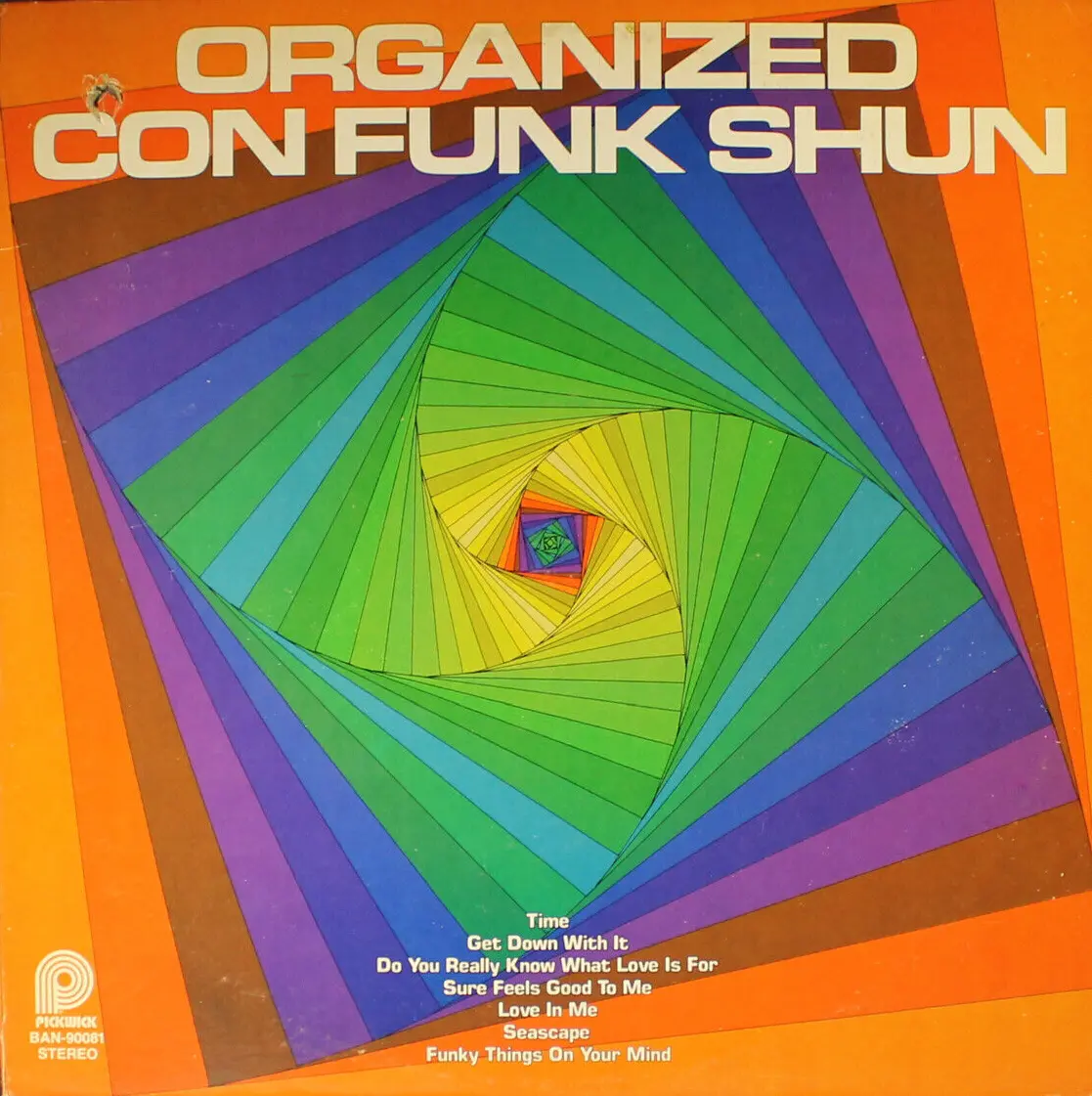 The first release of 1973 Memphis material, Organized Con Funk Shun, appeared in 1978 on Pickwick.
Organized Con Funk Shun draws from the band’s spring 1973 sessions at Audio Dimensions with producer Ted Sturges.
The seven songs divide between uptempo funk, ballads, and extended jazz-soul interplay. Michael Cooper and Felton Pilate trade leads across the set, supported by layered horns and rhythm accents. “Love in Me” pairs alto sax phrasings with guitar figures before easing into “Seascape,” a slow ballad-tempo instrumental with brass passages by Pilate, Karl Fuller, and Paul Harrell. Pilate carries “Do You Really Know What Love Is For,” a reflective ballad centered on his tenor vocal. By contrast, “Get Down With It” and “Funky Things On Your Mind” ride wiry guitar against shifting horn lines.
A1. “Time” (2:27)
A2. “Get Down With It” (5:45)
A3. “Do You Really Know What Love Is For” (3:08) — Pilate sings the ballad with measured phrasing against restrained keys and guitar.
A4. “Sure Feels Good to Me” (2:37)
B1. “Love in Me” (2:15) — Features alto sax interjections with contoured guitar figures and dual vocal blend.
B2. “Seascape” (Instrumental) (8:45) — A horn showcase built on brass voicings in a ballad tempo with jazz inflection.
B3. “Funky Things On Your Mind” (3:16)
The album features Cooper (lead guitar, vocals), Pilate (trombone, trumpet, keyboards, vocals), Thomas (piano, organ, vocals), Martin (bass, vocals), McCall (drums, percussion, vocals), Fuller (trumpet, flugelhorn, vocals), and Harrell (saxophone, flute, vocals). Sturges produced the sessions with mastering by Phil Austin at Trutone. Spyros Horemis designed the cover with graphics sourced from Dover Publications.
The Memphis Sessions
 The second release of 1973 material, The Memphis Sessions, appeared in 1980 on 51 West.
The Memphis Sessions draw deeper into Con Funk Shun’s stockpiled 1973 recordings with producer Ted Sturges at Audio Dimensions.
The album opens with the brief self-titled theme before stretching into the seven-minute “7:15 Funk (Do It for Yourself),” a sectional jam that layers ensemble interplay over a steady pulse. Felton Pilate takes lead on “Another World,” where Paul Harrell shifts between sax and flute while Michael Cooper adds clipped guitar lines. Pilate also fronts “The Way It Should Be (Felton’s Song),” a piano-led ballad with ceremonial pacing, and he trades with Cooper on their cover of Marvin Gaye’s “You Sure Love to Ball,” recast as a spacious soul-jazz vamp. The set closes with the reflective “Without Your Love” and the tight, riff-driven “Discovery.”
A1. “Con-Funk-Shun” (1:02) — A short theme piece that introduces the band’s name in song form.
A2. “7:15 Funk (Do It For Yourself)” (7:15)
A3. “Lonesome Highway” (3:23)
A4. “Another World” (4:38) — Pilate’s lead vocal framed by Harrell’s saxophone and flute exchanges with Cooper’s guitar lines.
B1. “The Way It Should Be (Felton’s Song)” (3:05) — A piano-paced wedding song with Pilate’s lyrical tenor.
B2. “You Sure Love to Ball” (4:55) — Their 1973 reading of Marvin Gaye’s ballad with Pilate’s falsetto tenor, Cooper’s guitar fills, and subtle vocal ad libs.
B3. “Without Your Love” (4:12)
B4. “Discovery” (3:37)
The lineup features Cooper (guitar, vocals), Pilate (trombone, trumpet, keyboards, vocals), Thomas (organ, vocals), Martin (bass, vocals), McCall (drums, percussion, vocals), Fuller (flugelhorn, trumpet, vocals), and Harrell (flute, saxophone, vocals). Sturges produced with co-production, mixing, and mastering by Michael Stewart. Michael Mendel designed the cover.
Con-Funk-Shun
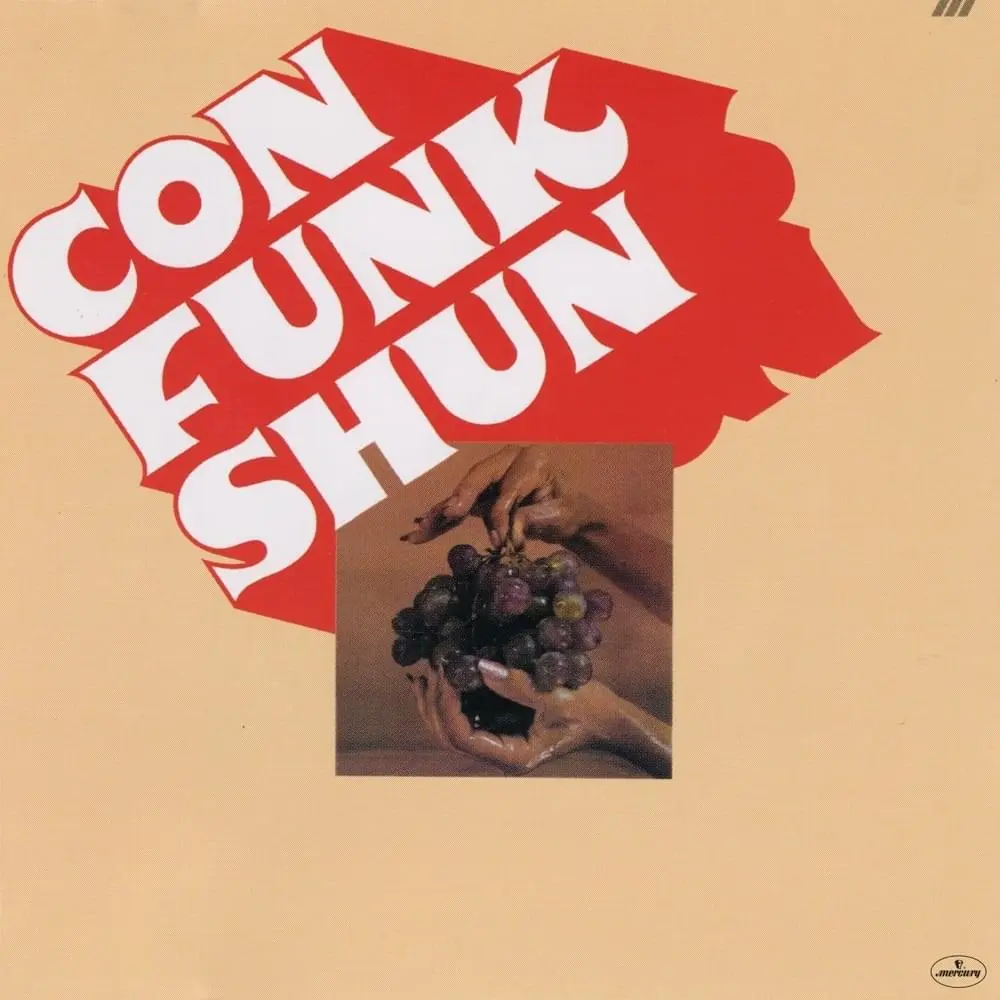 Con Funk Shun released their self-titled debut proper in 1976 on Mercury.
The set balances funk workouts, disco-driven instrumentals, and slow ballads. “Sure Feels Good to Me” stretches to six minutes with shifting rhythms and vocal interplay between Michael Cooper and Felton Pilate. “Foley Park” places the band in disco terrain with steady four-on-the-floor pace and layered instrumentation.
Pilate carries the ballads “Never Be the Same” and “Owe It to Myself,” both arranged with string sections by Marvell Thomas. “Nothing to Lose By Trying” also adds string coloration over a Gamble & Huff-styled arrangement. Karl Fuller co-wrote “Forever Just Ain’t Long Enough,” a mid-tempo number arranged with brass punctuation.
A1. “Music Is the Way” (2:37)
A2. “Tell Me That You Like It” (2:58)
A3. “Never Be the Same” (4:25) — Pilate’s lead set against strings arranged by Marvell Thomas.
A4. “Owe It to Myself” (3:37)
A5. “Foley Park” (3:55) — A disco-styled instrumental driven by steady pulse and layered rhythm parts.
B1. “Nothing to Lose By Trying” (3:41) — Adds string backing and Philadelphia-style arrangement touches.
B2. “Forever Just Ain’t Long Enough” (3:18)
B3. “Another World” (4:25)
B4. “Sure Feels Good to Me” (6:13) — Extended funk piece with alternating vocal exchanges.
The album was produced by Con Funk Shun with Ron Capone, recorded at Audio Dimensions, and mastered by Larry Nix. Linda Lou McCall handled the cover concept with photography by Frederick Toma. “Tell Me That You Like It” appeared as a single with “Another World” on the flip.
Secrets
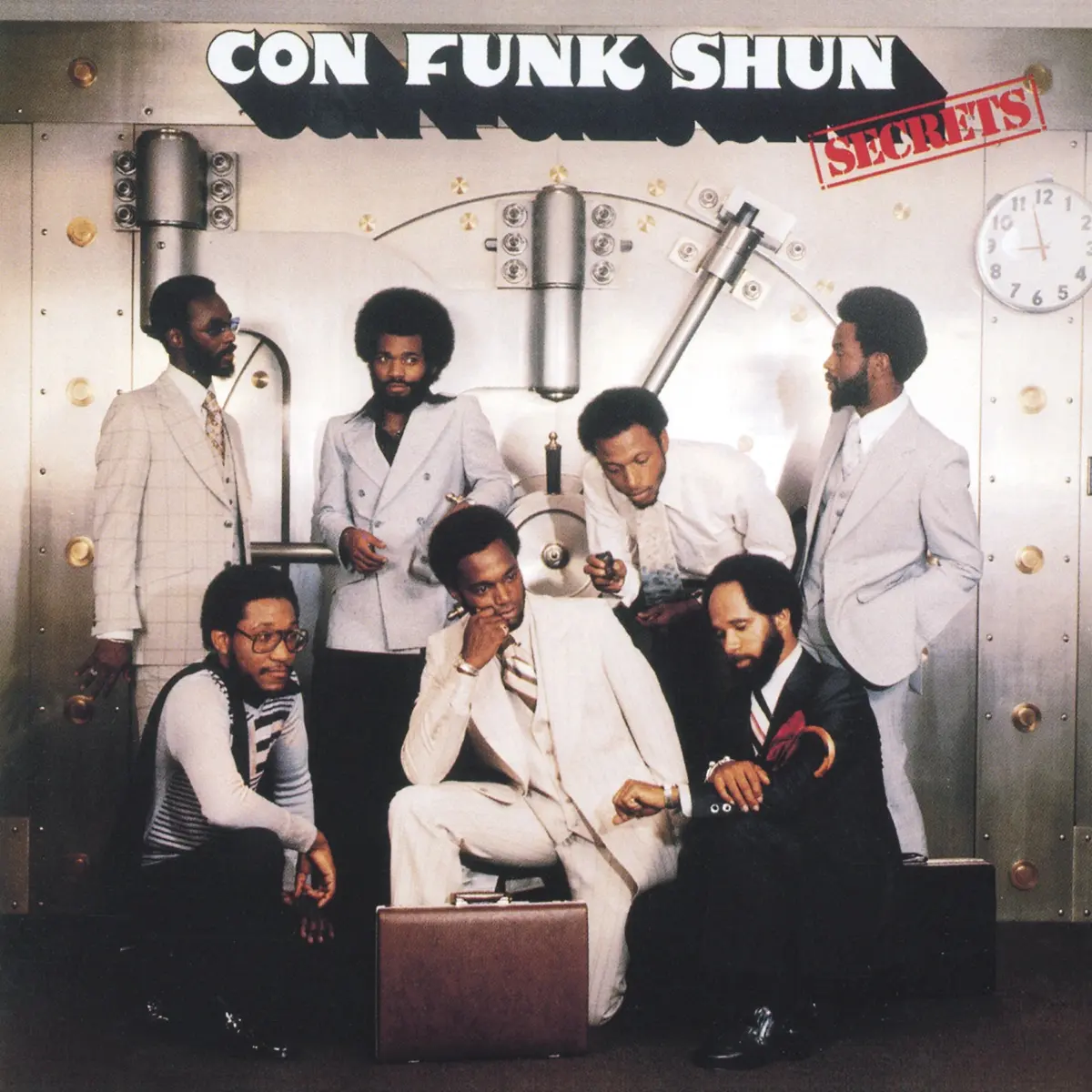 Con Funk Shun released their second proper album, Secrets, in 1977 on Mercury.
The material spans funk-driven singles, mellow ballads, and instrumental interludes. “Ffun,” written by Michael Cooper, rides with brisk pace and sharp horn accents, while “ConFunkShunizeYa” matches swinging brass with Cooper’s vocal lead. Felton Pilate fronts the ballads: “Who Has the Time” frames his tenor against string charts and social commentary, and “Tears in My Eyes” pairs his falsetto with Cooper’s voice in a sorrowful duet.
The titular “Secrets” drifts at midtempo with subdued instrumentation. Cedric Martin and Skip Scarborough penned “Indian Summer Love,” presented first as a short prelude and later as an extended instrumental that layers synthesizers and percussion. Cooper also carries “I’ll Set You Out O.K.,” shaded by Pilate’s falsetto and Paul Harrell’s saxophone runs. Pilate multi-tasks on trumpet, trombone, piano, and the ARP Solina String Ensemble.
A1. “DooWhaChaWannaDoo” (3:24)
A2. “Who Has the Time” (4:42) — Pilate leads a ballad with string backing and reflective lyric.
A3. “Indian Summer Love (Interlude)” (0:40)
A4. “Tears in My Eyes” (4:01) — Pilate and Cooper trade lines in a sorrowful duet.
A5. “Ffun” (4:08) — Brisk funk built on horn accents and Cooper’s vocal lead.
B1. “Secrets” (4:15) — Midtempo with subdued textures and flowing vocal.
B2. “ConFunkShunizeYa” (4:24) — Horn-driven funk with swinging rhythm and Cooper upfront.
B3. “I’ll Set You Out O.K.” (4:10) — Cooper’s tenor with Pilate’s falsetto, rounded by Harrell’s saxophone.
B4. “Indian Summer Love (Instrumental)” (4:52) — Synth-led instrumental with layered percussion.
The album was produced by Skip Scarborough and recorded at CBS Studios in San Francisco. David Crawford arranged strings for “Who Has the Time” and “Tears in My Eyes,” while Scarborough supplied additional keyboard and synthesizer parts. Sheila Escovedo contributed percussion. Linda Lou McCall conceived the cover design with photography by Frederick Toma.
Mercury lifted two singles: “Ffun” b/w “Indian Summer Love (Instrumental)” in October 1977 (No. 23 on the Billboard Hot 100, No. 1 R&B) and “ConFunkShunizeYa” b/w “Who Has the Time” in March 1978 (No. 31 R&B). Secrets reached No. 51 on the Billboard 200 and No. 6 on the R&B Albums chart.
Loveshine
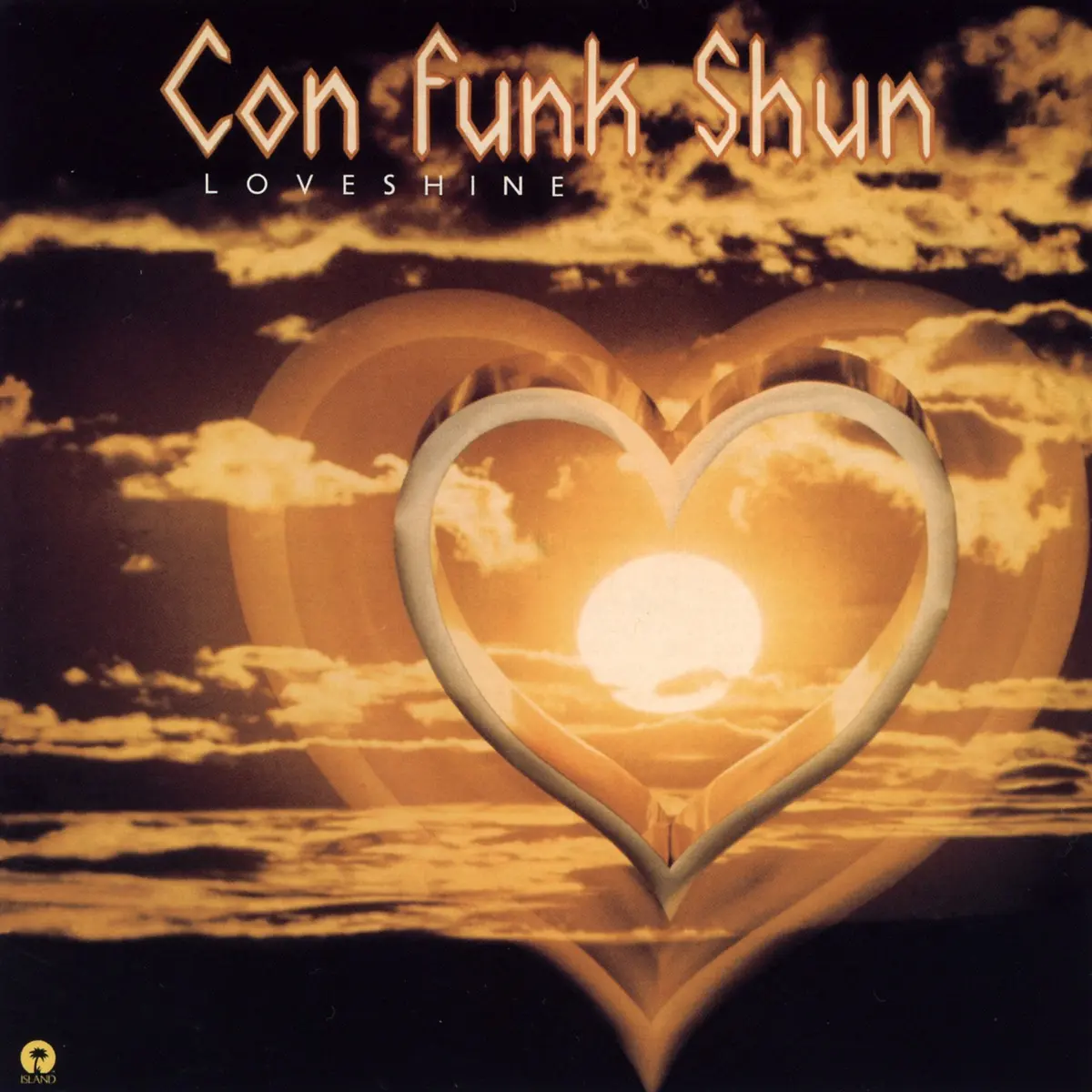 Con Funk Shun released their third album, Loveshine, in 1978 on Mercury.
The album balances brisk dance numbers and polished midtempo tracks with a set of ballads arranged around Felton Pilate’s falsetto and Michael Cooper’s tenor. “Shake and Dance With Me” rides clipped guitar and tightly stacked horns, while “So Easy” moves on a disco-paced rhythm accented with layered percussion.
“When the Feeling’s Right” extends the brassy interplay across a more elastic pace. Pilate leads “Make It Last” and the title track with elongated vocal lines over strings, while “I Think I Found the Answer” and “Can’t Go Away” scale back to slow ballad form with piano and Fender Rhodes at the center.
A1. “So Easy” (4:30) – Driven by percussion from Sheila Escovedo and horn accents, the song runs on a brisk disco pulse under Cooper’s arrangement.
A2. “Magic Woman” (4:14)
A3. “Shake and Dance With Me” (3:49) – Fast rhythm guitar and stabbing horns shape the band’s sharpest dance cut of the set.
A4. “Make It Last” (5:02)
A5. “Loveshine” (4:45)
B1. “When the Feeling’s Right” (5:35) – Brassy horn lines stretch across a looser midtempo pace.
B2. “I Think I Found the Answer” (4:30) – A ballad framed by Skip Scarborough’s Fender Rhodes with Pilate and Louis McCall sharing the arrangement.
B3. “Wanna Be There” (4:21)
B4. “Can’t Go Away” (3:57) – Slow ballad with acoustic piano accompaniment by Scarborough.
Loveshine was recorded at Pat Gleeson’s Different Fur Studios in San Francisco with Skip Scarborough producing. Don Cody engineered the sessions with assistance from Hill Swimmer and Steve Mantoani. Escovedo appears on bongos, congas, and shekere.
Mercury lifted two singles: “Shake and Dance With Me” b/w “I’ll Set You Out O.K.” in June 1978 (No. 60 on the Billboard Hot 100, No. 5 R&B) and “So Easy” b/w “Tears in My Eyes” in October. Loveshine reached No. 32 on the Billboard 200 and No. 10 on the R&B Albums chart.
Candy
 Con Funk Shun released their fourth album, Candy, on May 26, 1979, on Mercury.
The album moves between horn-driven funk workouts and polished ballads, continuing the balance of dance cuts and romantic slow numbers that defined their late-70s sound.
The band collectively produced and arranged the album. Michael Cooper handled lead and rhythm guitar and co-led vocals with Cedric Martin and Felton Pilate, who also contributed keyboards, horns, and brass arrangements. Danny Thomas played clavinet, organ, electric piano, and synthesizer, while Paul Harrell added saxophones and flute. Drummer Louis McCall incorporated both acoustic kit and Syn Drums. Sheila Escovedo played timbales on “Chase Me” and Bill Summers added congas on “Not Ready” and “Da Lady.” Skip Scarborough contributed piano on the title track and clavinet on “Main Slice.”
The funk numbers dominate the first side with “Chase Me,” “Da Lady,” and the title track built on fast, brassy riffs and clipped guitar. “Main Slice” continues the sharp, syncopated interplay with clavinet at the core. The ballads “Not Ready” and “(Let Me Put) Love On Your Mind” slow the pace with extended vocal passages over smooth instrumentation, while “Images” closes the set with a brief instrumental interlude.
A1. “Fire When Ready” (1:43)
A2. “Chase Me” (5:39) – A taut funk number driven by clipped horns, timbales, and fast rhythm guitar.
A3. “Not Ready” (5:16) – Slow ballad framed by congas and flute, with expressive dual vocals.
A4. “Da Lady” (3:51) – Midtempo funk track with rolling congas and tightly stacked horns.
B1. “Candy” (5:13) – Smooth ballad with Skip Scarborough on piano and layered trumpet lines.
B2. “(Let Me Put) Love On Your Mind” (6:08) – Romantic ballad featuring Pilate on electric guitar.
B3. “Main Slice” (4:11) – Funk cut built around Scarborough’s clavinet patterns and ensemble horn blasts.
B4. “Images” (2:40) – Instrumental with guitar figures and horn shading over a subdued pace.
Sessions occurred at The Automatt in San Francisco with Con Funk Shun producing and Skip Scarborough co-producing. Don Cody and Leslie Ann Jones engineered the sessions with remix assistance from Fred Catero. Joe Hansch mastered the album.
Mercury issued three singles: “Chase Me” b/w “I Think I Found the Answer” in April 1979 (No. 4 R&B), “(Let Me Put) Love On Your Mind” b/w “Fire When Ready” in August, and “Da Lady” b/w “Images” in November. Candy reached No. 46 on the Billboard 200 and No. 7 on the R&B Albums chart.
Spirit of Love
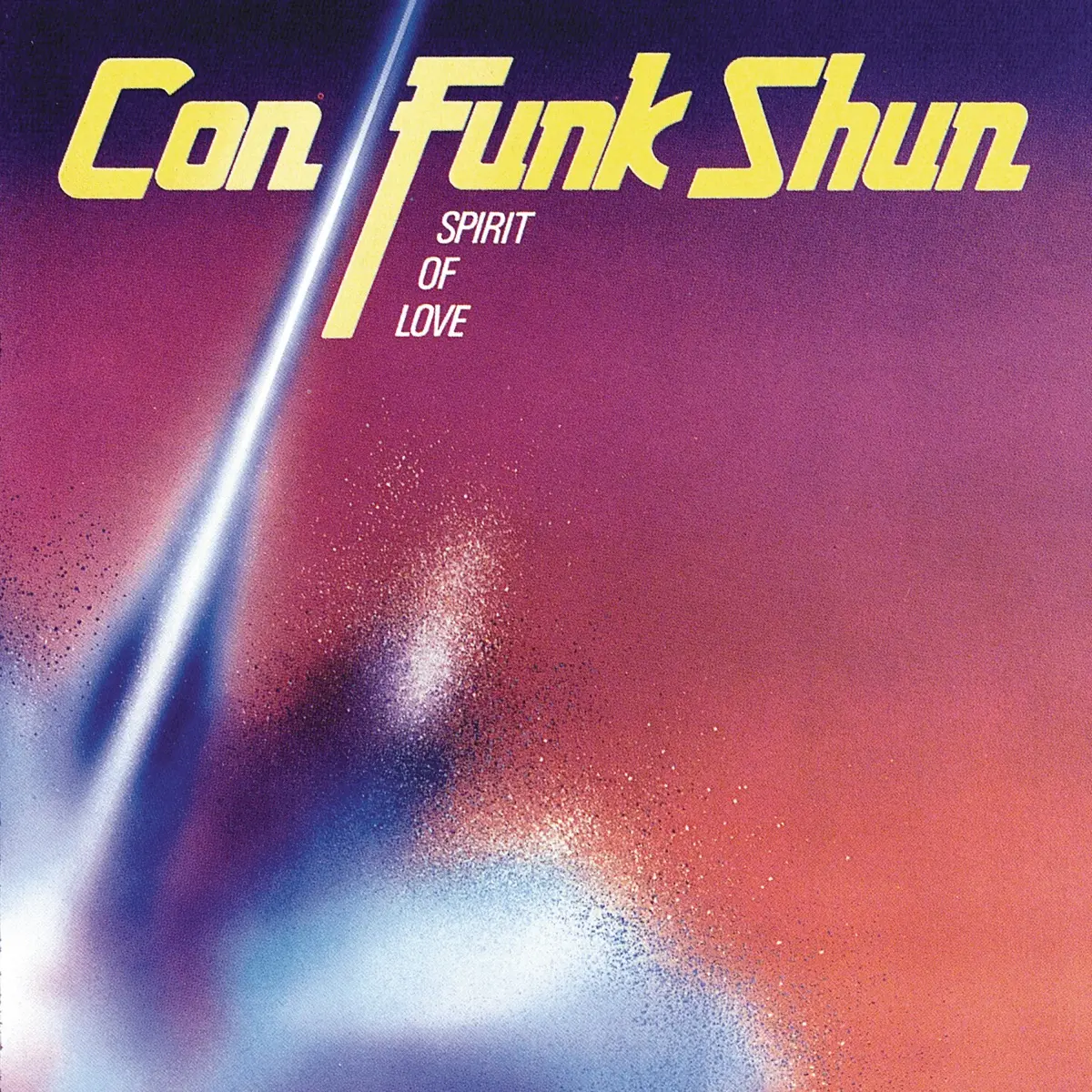 Con Funk Shun released their fifth album, Candy, in early 1980 on Mercury.
The album sustains the balance of brisk funk numbers and slower romantic ballads, enhanced with brass charts, electronic percussion, and layered vocal exchanges. Skip Scarborough again oversaw production, giving the set a polished mix of propulsive tracks and calmer, piano-led passages.
Guitarist Michael Cooper co-wrote “Got to Be Enough,” “Juicy,” and “Lovestruck 1980,” and paired with Felton Pilate on the opening track. Pilate also wrote “By Your Side” and “All Up to You” with Karl Fuller, co-wrote “Curtain Call” with Scarborough, and added brass, synthesizer, and lead vocals across the set. Cedric Martin sang lead on “Early Morning Sunshine,” written with Gordon DeWitty and drummer Louis McCall. Paul Harrell co-wrote the title track with Scarborough and supplied saxophone and flute parts. Danny Thomas co-wrote “Honey Wild” with McCall.
“Got to Be Enough” launches the album with surging horns, chanted refrains, and alternating leads between Cooper and Pilate. “Happy Face” continues the upbeat funk with rapid-fire rhythms and stacked horns. The ballads include “By Your Side,” led by Pilate’s falsetto over soft keyboards, and “Spirit of Love,” where Harrell’s flute and Scarborough’s piano frame the vocal interplay. “Curtain Call” and “All Up to You” sit mid-tempo, built on steady rhythm and brass accents. “Juicy,” “Honey Wild,” and “Lovestruck 1980” round out the set with tighter structures and varied pacing.
A1. “Got to Be Enough” (5:42) – brisk funk opener with sharp brass punches and alternating lead vocals
A2. “By Your Side” (4:06) – ballad carried by falsetto lines and electric piano textures
A3. “Curtain Call” (3:58) – mid-tempo cut with piano flourishes and layered trombones
A4. “Early Morning Sunshine” (3:08) – short ballad with gentle phrasing and subdued rhythm
A5. “Spirit of Love” (4:20) – title track led by flute and piano with interwoven vocals
B1. “Happy Face” (3:51) – uptempo funk track marked by fast horn lines and lively rhythm guitar
B2. “All Up to You” (5:31) – extended mid-tempo number with vocal trade-offs and brass shading
B3. “Juicy” (2:53) – concise funk interlude with clipped guitar patterns
B4. “Honey Wild” (4:11) – ballad accented by percussion layers and vocal harmonies
B5. “Lovestruck 1980” (3:58) – closing track with steady pace, dual vocals, and horn accents
Sessions occurred at The Automatt in San Francisco with Skip Scarborough producing for Relmarc Productions and Con Funk Shun credited in association. Leslie Ann Jones engineered the remix with assistance from Wayne Lewis, while Greg Blockman engineered the sessions. Paul Stubblebine mastered the album.
Spirit of Love features an illustrated cover by Rick Monzon with photography by Bruce Smith. Joe Kotleba designed the logo.
Mercury lifted three singles: “Got to Be Enough” b/w “Early Morning Sunshine” in February 1980 (No. 8 R&B), “By Your Side” b/w “Spirit of Love” in June (No. 27 R&B), and “Happy Face” b/w “Early Morning Sunshine” in September (No. 87 R&B). Spirit of Love reached No. 30 on the Billboard 200 and No. 7 on the R&B Albums chart.
Touch
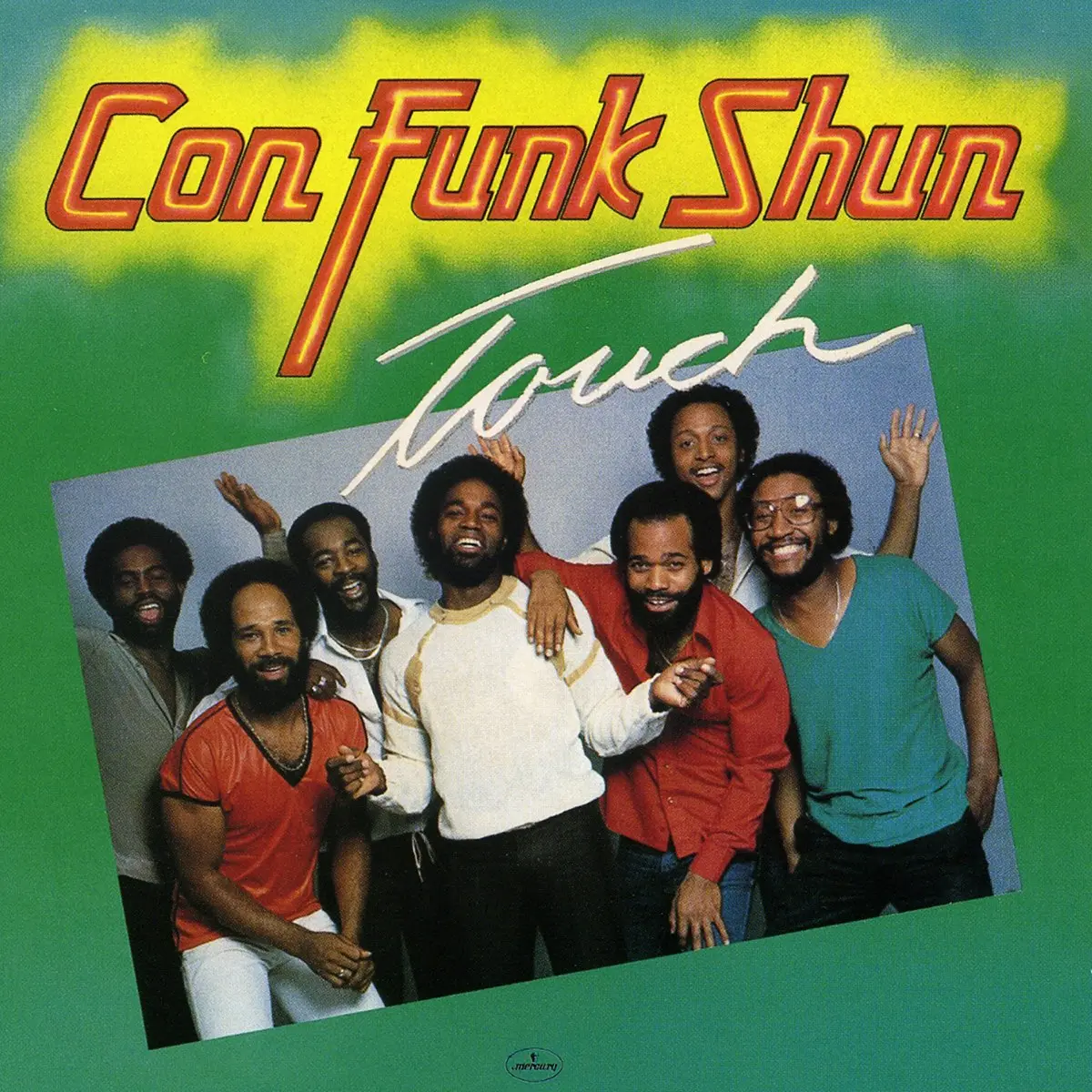 Con Funk Shun released their sixth album, Touch, in late 1980 on Mercury.
The album continues their late-70s balance of hard funk workouts and balladry, with layered horn charts, string arrangements, and vocal interplay. Recorded between San Francisco and Memphis, the record broadens their sound with guest players on percussion, horns, and bass.
Michael Cooper wrote the opening track and co-wrote “Lady’s Wild” with Felton Pilate and Garry Jackson. Pilate also wrote “Can’t Say Goodbye,” co-wrote the title track with Jackson, and paired with Karl Fuller on “Pride and Glory.” Cedric Martin penned “Give Your Love to Me.” Danny Thomas wrote “Kidnapped!” with Michael Poole. Louis and Linda Lou McCall wrote “Welcome Back to Love” with Patricia M. Allen. Pilate and Paul Harrell co-wrote “Play Widit” with another Harrell family member.
“Too Tight” sets the pace with driving bass and a horn fanfare framing the verses. “Lady’s Wild” follows with a bright rhythm and festive vocal exchanges. Ballads appear in “Give Your Love to Me,” led by Martin’s voice with instrumental breaks from Cooper on guitar and Pilate on trombone, and “Can’t Say Goodbye,” a subdued number carried by Pilate’s falsetto and Rhodes textures. “Pride and Glory” and “Welcome Back to Love” occupy mid-tempo terrain, while “Kidnapped!” injects brief intensity. The closing “Play Widit” returns to funk form with ensemble horns and sharp rhythmic accents.
A1. “Too Tight” (6:17) – uptempo funk piece with bold horn intro and insistent rhythm
A2. “Lady’s Wild” (4:53) – dance-flavored cut with festive exchanges and party-like ad libs
A3. “Give Your Love to Me” (4:58) – ballad featuring guitar and trombone solos against steady keyboard lines
A4. “Pride and Glory” (4:29) – mid-tempo piece with layered horns and ensemble vocals
B1. “Kidnapped!” (3:24) – short funk workout with taut pacing
B2. “Welcome Back to Love” (3:55) – smooth ballad marked by subdued phrasing and horn swells
B3. “Touch” (4:31) – title track with relaxed pace and brass accents
B4. “Can’t Say Goodbye” (4:19) – quiet storm ballad led by falsetto vocals and Rhodes chords
B5. “Play Widit” (4:18) – closing funk track with horn interplay and rhythmic stabs
Sessions occurred at The Automatt in San Francisco and Melody Sound Studios with Con Funk Shun self-producing. Don Cody engineered with Wayne Lewis assisting, and George Horn mastered the album. Touch features a cover photograph by Paddy Reynolds.
Mercury lifted two singles: “Too Tight” b/w “Play Widit” in November 1980 (No. 8 R&B) and “Lady’s Wild” b/w “Pride and Glory” in March 1981. Touch reached No. 51 on the Billboard 200 and No. 7 on the R&B Albums chart.
7
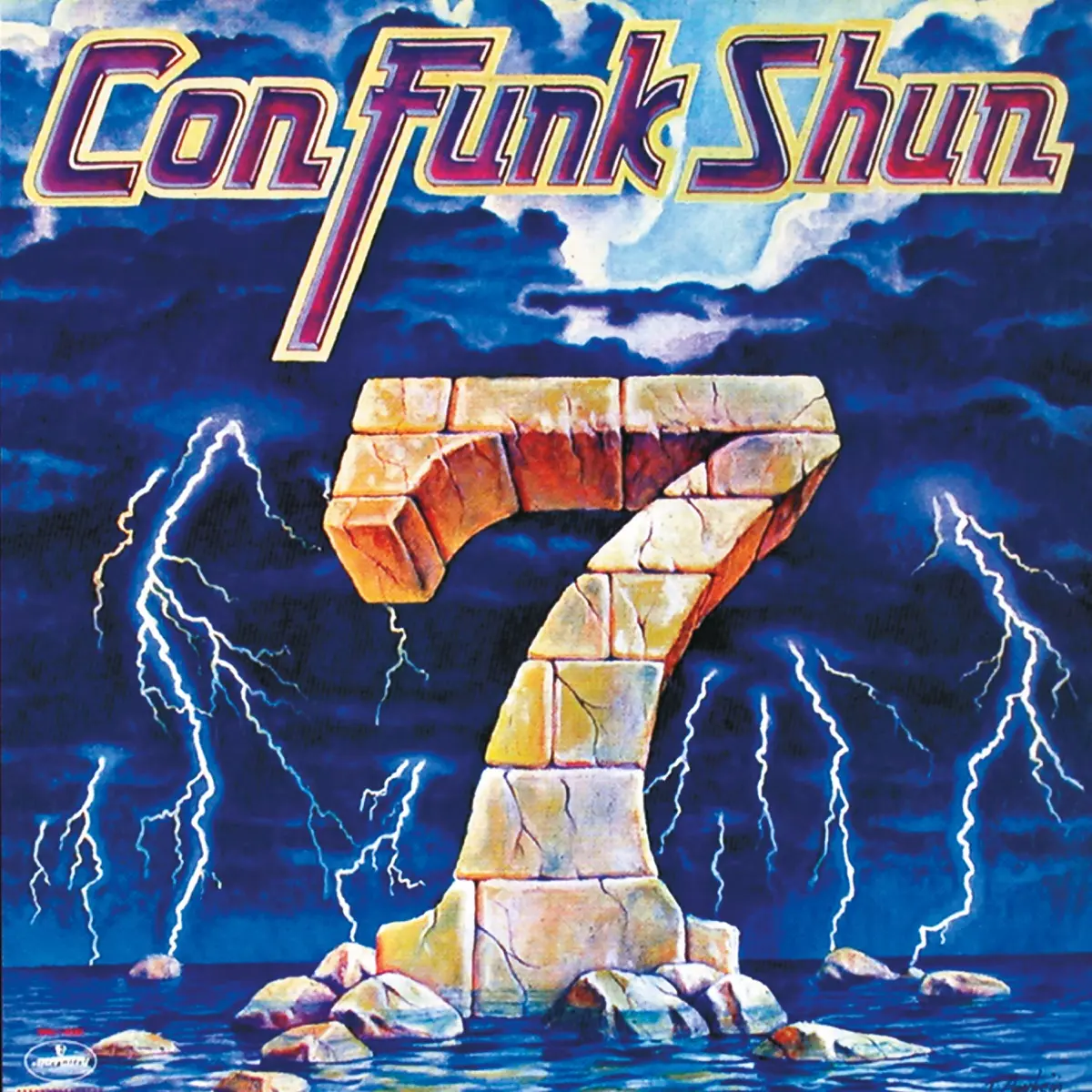 Con Funk Shun released their seventh album, 7, in 1981 on Mercury.
The album blends the group’s signature horn-driven funk with ballads and light rock textures, highlighting the interplay of Cooper’s tenor, Pilate’s falsetto, and ensemble harmonies. Recorded across three San Francisco-area studios, it marks a mature phase in the band’s output, emphasizing expressive vocals and layered instrumentation.
Felton Pilate wrote or co-wrote six tracks, often pairing with Nita Wells-Pilate, Paul Harrell, or Linda Lou McCall. Michael Cooper co-wrote three songs with Perri McKissack or Anthony Crosley and collaborated with Pilate on select tracks. Cedric Martin and Louis McCall co-wrote “California 1” with Pilate and McCall.
The opening single “Bad Lady” drives with tenored vocals and accented horns. Ballads include “Promise You Love,” which shifts from bass-driven intro to bluesy pre-verse and settles into an R&B rhythm with Cooper’s monologue ad lib, and “Straight From the Heart,” led by Pilate’s falsetto and Cooper’s tenor. Mid-tempo funk tracks “If You’re in Need of Love” and “A Song for You” maintain steady pacing, while “California 1” introduces subtle rock guitar flourishes.
A1. “Bad Lady” (4:09) – R&B-oriented funk with husky tenor and horn accents
A2. “I’ll Get You Back” (5:12) – mid-tempo number featuring falsetto and ensemble phrasing
A3. “Body Lovers” (4:40) – ballad with tender tenor lead and layered keyboards
A4. “Promise You Love” (7:34) – expansive R&B piece with bass intro, bluesy pre-verse, and monologue ad lib
B1. “If You’re in Need of Love” (6:35) – steady funk with brass punctuations
B2. “Straight From The Heart” (4:39) – falsetto-led ballad supported by expressive tenor
B3. “A Song For You” (5:00) – moderate tempo funk with vocal interplay
B4. “California 1” (4:36) – rock-tinged track with electric guitar and rhythm shifts
Sessions occurred at The Automatt and Russian Hill in San Francisco, and Harbour Sound in Sausalito, with Con Funk Shun producing and Linda Lou McCall assisting. Nancy Evans and Richard Greene engineered the recordings, with Leslie Ann Jones handling remix duties. Paul Stubblebine mastered the album.
7 features art direction by Joan Marlow with a cover concept and liner notes by Linda Lou McCall.
The album’s lead single, “Bad Lady” b/w “California 1” (Nov 1981), reached the R&B Top 20. The follow-up single “Body Lovers” b/w “Give Your Love to Me” appeared in February 1982. 7 peaked at No. 17 on the R&B Albums chart.
To the Max
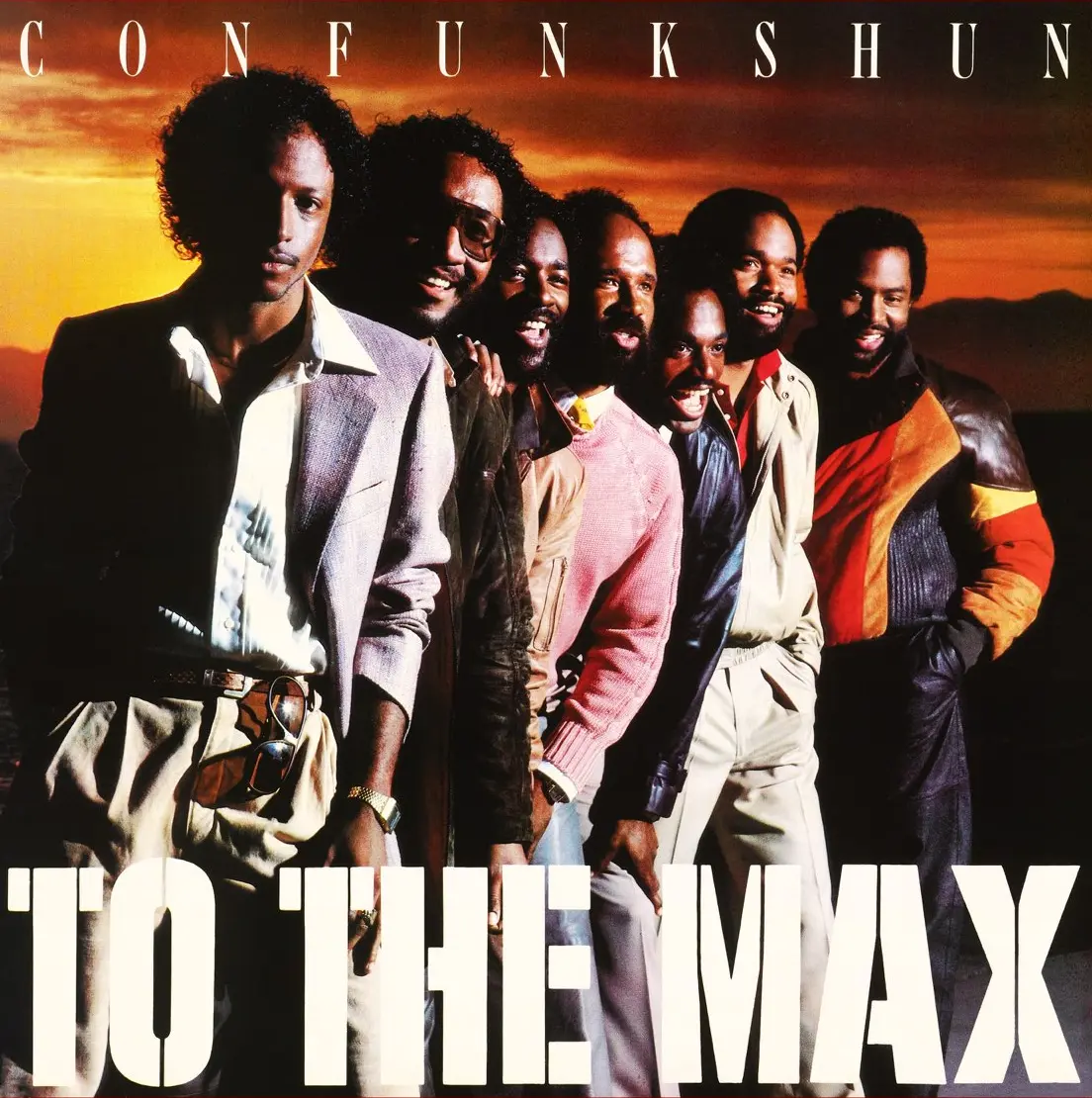 Con Funk Shun released their eighth album, To the Max, in August 1982 on Mercury.
The album continues the group’s mix of horn-driven funk, dance tracks, and ballads, emphasizing Cooper’s tenor and Pilate’s falsetto alongside layered keyboards and rhythmic guitars. It balances up-tempo party numbers with funk-infused ballads, reflecting the band’s evolving approach to R&B and quiet-storm textures.
Michael Cooper wrote or co-wrote four tracks, often paired with Felton Pilate. Pilate wrote or co-wrote five tracks, collaborating with keyboardist Gorden De Witty on select songs. Cedric Martin contributed bass and co-wrote arrangements alongside the primary songwriters.
To the Max opens with the dance-oriented single “Ms. Got-The-Body,” propelled by tight pacing and energetic vocals. Ballads like “Love’s Train” and “Everlove” emphasize romantic textures through tenor and falsetto interplay, layered piano, and guitar rhythms. Up-tempo tracks “Take It To The Max” and “T.H.E. Freak” maintain momentum with driving brass and percussion, while “You Are The One” and “Let’s Ride And Slide” add smooth, mid-tempo dynamics to the set.
A1. “Ms. Got-The-Body” (3:51) – up-tempo funk with tight rhythmic drive
A2. “Let’s Ride And Slide” (4:30) – mid-tempo, layered keyboard and guitar textures
A3. “Everlove” (4:06) – ballad with co-leads and subtle instrumental interplay
A4. “Hide And Freak” (4:23) – experimental, rhythm-focused track
A5. “You Are The One” (3:38) – smooth, quiet-storm style
B1. “Take It To The Max” (5:01) – driving funk with accentuated brass
B2. “Love’s Train” (5:12) – romantic ballad with husky tenor and rhythmic accompaniment
B3. “Ain’t Nobody Baby” (5:32) – moderate-tempo funk with ensemble vocals
B4. “T.H.E. Freak” (4:23) – playful, high-energy rhythm and horn passages
Sessions occurred at The Automatt in San Francisco and were co-produced by Con Funk Shun and Gorden De Witty on select tracks, with Greg Blockman, Ken Kessie, and Richard Greene engineering. Chris Bellman mastered the album.
Moshe Brakha provided photography for the album cover.
Singles included “Ain’t Nobody, Baby” b/w “Everlove” (Oct 1982), “Ms. Got-The-Body” b/w “Hide And Freak” (Jan 1983), and “You Are The One” b/w “Let’s Ride And Slide” (May 1983). To the Max reached No. 9 on the R&B Albums chart.
Fever
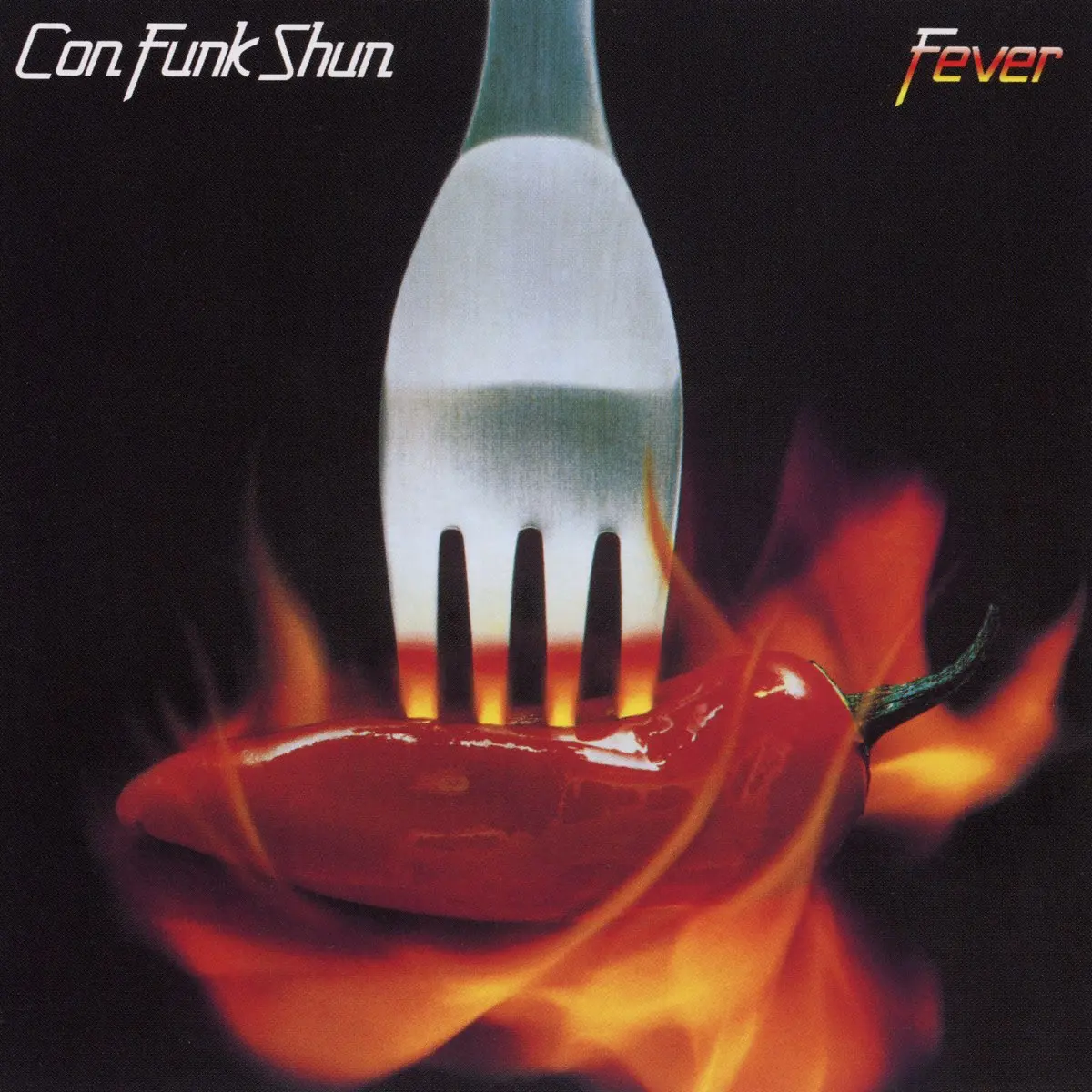 Con Funk Shun released their ninth album, Fever, in 1983 on Mercury.
The album blends the band’s signature R&B ballads with dance-oriented tracks, highlighting Pilate’s falsetto and Cooper’s tenor across layered keyboards, guitars, and percussion. Fever emphasizes smooth rhythms and romantic textures while maintaining up-tempo numbers suited for the dancefloor.
Primary songwriters Felton Pilate and Michael Cooper collaborated on several tracks, while Cedric Martin co-wrote the lead single with Van Ross Redding. Additional contributions include Pilate’s pairing with Melvin Carter and Cooper’s co-writes with G.L. Calhoun.
Fever opens with “Can You Feel The Groove Tonight,” a lively, dance-oriented track penned by Eddie Minninfield. Ballads like “Thinking About You Baby” and “Lovin’ Fever” highlight tenor and falsetto interplay over measured piano, synth, and guitar patterns. “Baby I’m Hooked (Right Into Your Love)” drove the Top Ten R&B single with emotive lead vocals by Pilate, while “Don’t Let Your Love Grow Cold” maintains rhythmic momentum with lighter, more restrained instrumentation. Up-tempo numbers like “Hard Lovin’” balance romantic themes with vigorous rhythm sections.
A1. “Can You Feel The Groove Tonight” (4:15) – lively, percussion-driven dance track
A2. “Indiscreet Sweet” (4:00) – smooth ballad with layered keyboards and guitar
A3. “Baby I’m Hooked (Right Into Your Love)” (4:15) – emotive R&B single with tenor lead
A4. “Thinking About You Baby” (4:38) – romantic, mid-tempo ballad
B1. “Don’t Let Your Love Grow Cold” (4:08) – restrained yet rhythmic R&B track
B2. “Lovin’ Fever” (4:25) – funk-tinged ballad with falsetto accents
B3. “Hard Lovin'” (5:02) – up-tempo track with driving rhythm and layered instrumentation
B4. “If I’m Your Lover” (4:14) – falsetto-led ballad with measured keyboard and guitar textures
Sessions occurred at Duplex Sound and Harbour Sound studios, with Eumir Deodato producing and Linda Lou McCall assisting. Engineers included Mallory Earl, John Clavin, and Dana Jon Chappelle. Larry Hawley provided photography for the album.
Singles included “Baby I’m Hooked (Right Into Your Love)” b/w “Thinking About You Baby” (Oct 1983), “Don’t Let Your Love Grow Cold” b/w “Lovin’ Fever” (Feb 1984), and “Hard Lovin’” b/w “Lovin’ Fever” (May 1984). Fever reached No. 12 on the R&B Albums chart, with “Baby I’m Hooked” peaking at No. 5 R&B.
Electric Lady
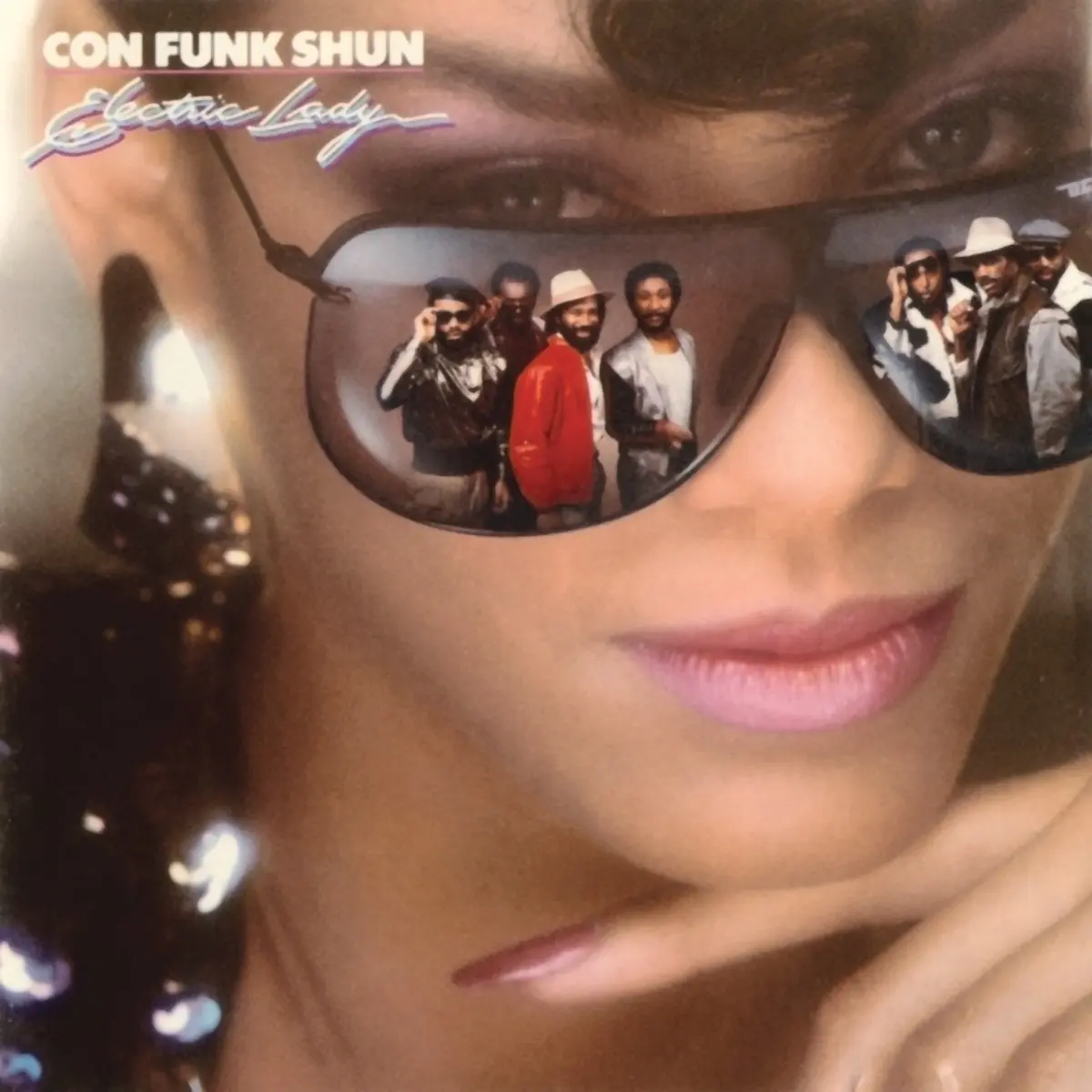 Con Funk Shun released their tenth album, Electric Lady, in 1985 on Mercury.
Electric Lady marks a stylistic shift, incorporating electronic synthesizers and outside production while retaining the group’s R&B foundation. Group members contributed minimally to songwriting, instead collaborating with producers Maurice Starr, Larry Smith, and Attala Zane Giles to craft contemporary, urban-leaning tracks.
Primary songwriters include Felton Pilate and Michael Cooper, though several tracks were written by external collaborators such as J. Baby, Larry Smith, and M. Starr. Cedric Martin co-wrote “Tell Me What You’re Gonna Do” with Smith, M. Madden, and Van Ross Redding, while Felton Pilate co-wrote “Circle of Love” with D. English.
The album opens with “Turn the Music Up,” a high-energy track produced and arranged by Jonny Baby. Singles like “Electric Lady” feature synthesized, rap-adjacent vocals led by Cooper, while “I’m Leaving Baby” delivers an urbanized ballad with layered keys and guitar. Felton Pilate fronts the electronic ballad “Tell Me What You’re Gonna Do,” and tracks such as “Pretty Lady” and “Don’t Go (I Want You Back)” offer polished, dance-ready arrangements. The album mixes electronic experimentation with mid-tempo ballads and funk-inflected numbers.
A1. “Turn The Music Up” (4:36) – up-tempo, electronic dance track
A2. “Rock It All Night” (4:17) – rhythm-driven track with layered percussion
A3. “I’m Leaving Baby” (5:40) – urbanized ballad with tenor lead and synth accents
A4. “Tell Me What You’re Gonna Do” (3:55) – electronic R&B ballad led by falsetto
B1. “Electric Lady” (3:54) – synthesized, rap-adjacent single with monotone lead
B2. “Don’t Go (I Want You Back)” (4:45) – polished, mid-tempo track
B3. “Circle Of Love” (4:11) – electronic-infused arrangement with co-lead vocals
B4. “Pretty Lady” (4:55) – dance-oriented R&B track with layered instrumentation
Sessions occurred at The Plant Studios in Sausalito, Skip Sailor Studios in Los Angeles, and Greene Street Studios in New York. Production credits include Maurice Starr, Larry Smith, and Attala Zane Giles, with Linda Lou McCall assisting. Engineers included D.J. Disco Bee, Jim Gaines, Ken Kessie, Bob Missbach, Skip Sailor, D.J. Starchild, and Wayne Lewis.
Photography was provided by Clinton Davis, Jr., and art direction was handled by Bill Levy and Murry Whiteman.
Singles included “Electric Lady” b/w “Pretty Lady” (Mar 1985, No. 4 R&B), “I’m Leaving Baby” b/w “Love’s Train” (Jul 1985, No. 12 R&B), and “Tell Me What You’re Gonna Do” (No. 47 R&B). Electric Lady reached No. 9 on the R&B Albums chart.
Burnin’ Love
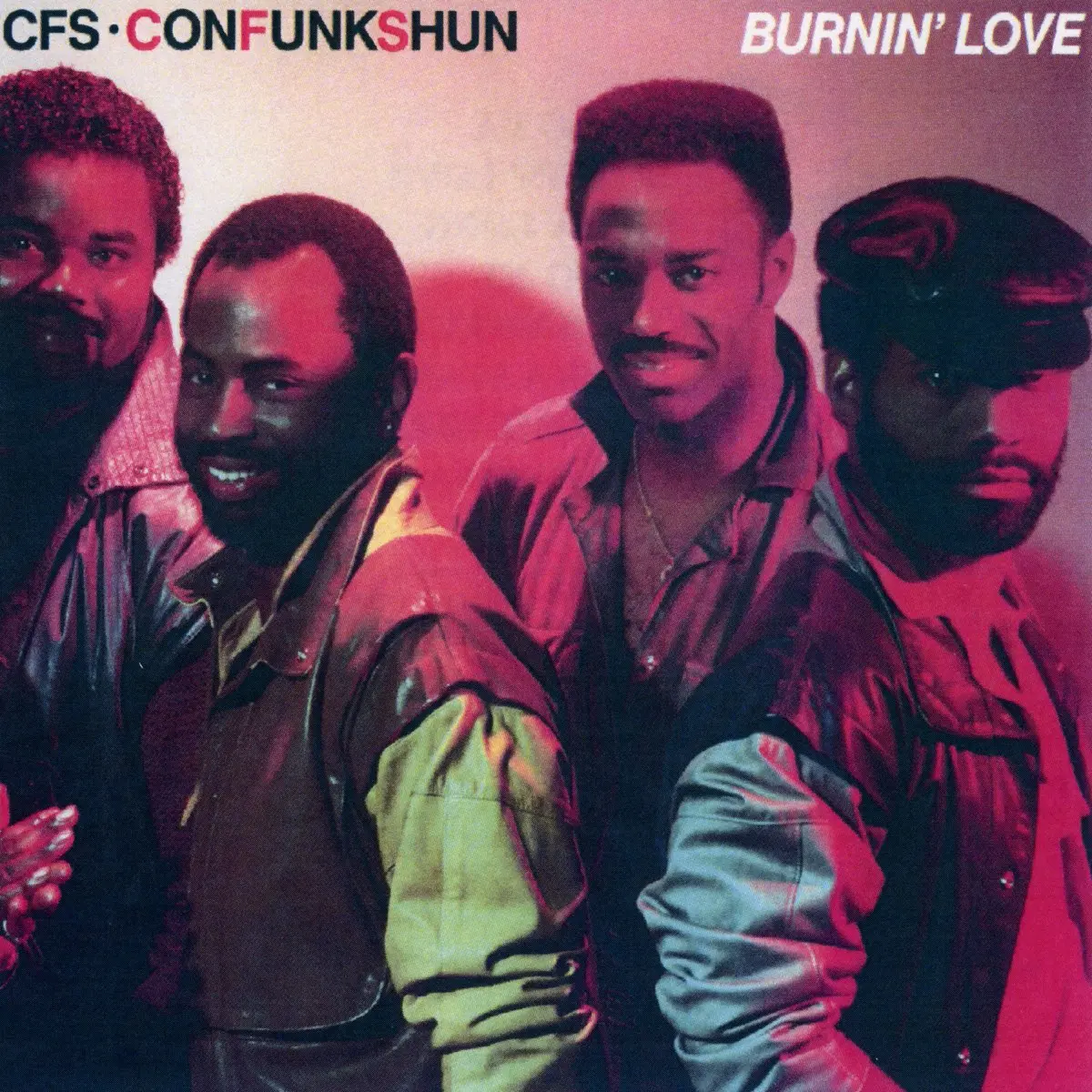 Con Funk Shun released their eleventh album, Burnin’ Love, in 1986 on Mercury.
The album embraces a fully contemporary mid-’80s R&B sound, dominated by electronic instrumentation and production. Founding member Felton Pilate had departed prior to these sessions, replaced by Melvin Carter, shifting the band’s dynamic while retaining some traditional funk elements.
Primary songwriting came from Attala Zane Giles and Billy Osborne, who wrote the majority of the tracks. Denzil Foster, Thomas McElroy, and J. King contributed “Jo Jo,” while Billy Valentine co-wrote “It’s Time Girl” and “You Make Me Wanna Love Again,” the latter in collaboration with Leon Ware.
The album balances punchy, up-tempo numbers with electronic ballads. Singles “Burnin’ Love” and “She’s a Star” are energetic, the latter adding a light rap element. “Do Ya” and “She’s Sweet” deliver sharp, rhythm-driven arrangements, while other tracks continue the electronic, synthesized palette established on Electric Lady. The record mixes contemporary production with occasional nods to the band’s funk roots.
A1. “Do Ya” (5:10) – electronic dance-oriented track with rhythmic propulsion
A2. “Burnin’ Love” (3:57) – up-tempo, punchy single with layered synths
A3. “How Long” (6:14) – mid-tempo ballad with contoured keys and bass
A4. “Jo Jo” (5:04) – polished arrangement with co-lead vocals
B1. “She’s Sweet” (4:44) – electronic-tinged track with rhythmic accents
B2. “She’s A Star” (5:00) – danceable track with light rap interlude
B3. “It’s Time Girl” (4:27) – ballad with smooth synth textures
B4. “You Make Me Wanna Love Again” (5:25) – mid-tempo ballad with layered vocals
Sessions occurred at Ameraycan, Lighthouse Recording, and The Plant, with multiple producers including Attala Zane Giles, Billy Osborne, Billy Valentine, Bryan Loren, and Leon Ware.
Art direction and design were handled by Murry Whiteman, and photography was by Clinton Davis, Jr.
Singles included “Burnin’ Love” b/w “Candy” (May 1986, No. 8 R&B) and “She’s A Star” b/w “Rock It All Night” (Sep 1986).
Discography:
- Organized Con Funk Shun (1978, recorded 1973)
- The Memphis Sessions (1980, recorded 1973)
- Con-Funk-Shun (1976)
- Secrets (1977)
- Loveshine (1978)
- Candy (1979)
- Spirit of Love (1980)
- Touch (1980)
- 7 (1981)
- To the Max (1982)
- Fever (1983)
- Electric Lady (1985)
- Burnin’ Love (1986)
Sources:
Artist/Album Pages:
New York City Band was an American soul-funk studio ensemble that released a self-titled album on ...
Sunshine People were an American soul-funk band that released a self-titled album on the tax-scam ...
Sapo was an American Latin-rock/funk band from San Francisco that released a 1974 album on Bell Re...
Dynasty was an American soul-funk band from Los Angeles that debuted with the 1979 Solar release Y...
Aretha Franklin (March 25, 1942 — August 16, 2018) was an American soul singer from Memphis. She...
The 8th Day was an American soul-funk/psych band from Detroit that scored 1971 R&B crossover h...
Crown Heights Affair was an American soul-funk band from Brooklyn that released a 1974 self-titled...
Eddie Henderson (born Oct. 26, 1940) is an American trumpeter, cornetist, and composer who emerged...
Bohannon (1942–2020) is an American percussionist, composer, and producer who started as an arrang...
Seawind was an American jazz-funk-soul septet, originally from Hawaii, that released two albums on...
Mandrill is an American soul-funk band from Brooklyn that released five albums on Polydor between ...
Legs Diamond was an American hard-rock band from San Francisco that made the 1977 Mercury albums L...