
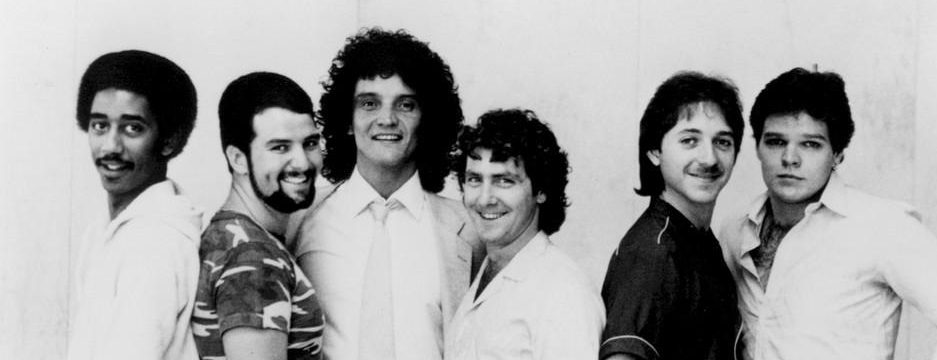
Spyro Gyra are an American jazz-funk band that released thirteen albums between 1977 and 1989 on MCA. They developed a signature sound blending tight ensemble arrangements, saxophone-led melodies, and textured mallet-synth lines.
The group released their self-titled debut in 1977, followed by Morning Dance (1979), which featured the breakout title track, and Catching the Sun (1980). Throughout the 1980s, they issued Incognito (1982), City Kids (1983), Alternating Currents (1985), Breakout (1986), Stories Without Words (1987), Rites of Summer (1988), and Point of View (1989), consistently combining rhythmic drive, horn interplay, and extended mallet and keyboard textures.
Their work highlights compositions by bandleader Jay Beckenstein, keyboardist Tom Schuman, and percussionist/mallet specialist Dave Samuels, with standout tracks including “Morning Dance,” “Cayo Hueso,” “Bob Goes to the Store,” and “Slow Burn.”
Members: Jay Beckenstein (saxophone, lyricon), Jeremy Wall (piano, keyboards, percussion, 1977-81), Jim Kurzdorfer (bass, 1977-79), Tom Walsh (drums, percussion, 1977-78), Umbopha Emile Latimer (percussion, 1978-79), Dave Samuels (vibraphone, 1978-93), Tom Schuman (piano, synthesizer, 1980-present), Gerardo Velez (percussion, 1984-88), Kim Stone (bass, 1984-87), Chet Catallo (guitar, 1984-85), Eli Konikoff (drums, 1984), Richie Morales (drums, 1985-91), Julio Fernandez (guitar, 1985-88, 1992-present), Oscar Cartaya (bass, 1988-91), Jay Azzolina (guitar, 1989-?), Marc Quinones (percussion, 1990-?), Joel Rosenblatt (drums, 1992-?), Scott Ambush (bass, 1992-?)
Background
Spyro Gyra formed in Buffalo, New York, in 1974 when saxophonist Jay Beckenstein teamed with keyboardist Jeremy Wall.
Beckenstein (born May 14, 1951) grew up in Farmingdale on Long Island, where he first practiced piano. At age seven. he received a saxophone from his parents: Lorraine (an opera singer) and Leonard, a jazz enthusiast who raised Jay on the music of Charlie Parker and Lester Young.
During Jay’s teens, the Beckenstein’s moved to Germany, where he graduated from Nurnberg American High School. In 1973, he earned a music degree from the University at Buffalo, where Dizzy Gillespie jammed one night with Jay’s college band. Meanwhile, Wall arrived from Columbia University and jammed with Jay on the Buffalo bar scene.
They rounded out the initial quintet with bassist Jim Kurzdorfer, drummer Tom Walsh, and sixteen-year-old keyboardist Tom Schuman. When a bar owner asked for their group name, Beckenstein answered “Spirogyra,” taken from an algae he’d studied in college. The owner misspelled their name “Spyro Gyra,” which became official.
Spyro Gyra
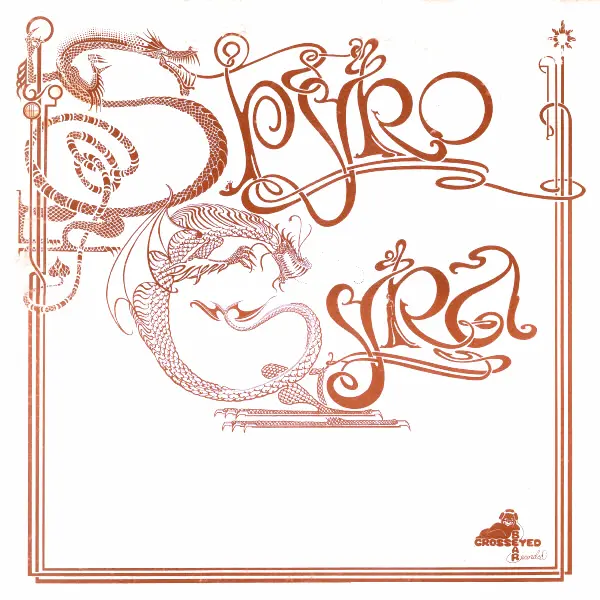 Spyro Gyra self-released their eponymous first album in 1977 on Crosseyed Bear.
The album presents tightly arranged, rhythm-forward instrumentals rooted in extended vamp patterns, contour-driven sax lines, and interlaced keyboard textures. It features their first recorded lineup with alto saxophonist Jay Beckenstein, keyboardist Jeremy Wall, bassist Jim Kurzdorfer, drummer Tom Walsh, and percussionist Umbopha Emile Latimer, supported by guest keyboardist Tom Schuman, marimbist Dave Samuels, and alternating guitarists Freddy Rapillo and Rick Strauss.
Beckenstein wrote four tracks: “Shaker Song,” “Pygmy Funk,” “Leticia,” and the two-part suite “Paula/Paw Prints.” Wall composed the remaining five.
“Shaker Song” opens the album with quick, syncopated rhythm patterns that spur sharp-turn alto phrasings. “Pygmy Funk” uses clipped horn punctuation over steady-paced bass motion. Beckenstein’s “Paula/Paw Prints” shifts from buoyant electric piano figures to a prowling, low-register close. Wall’s mallet-led “Mallet Ballet” centers on bright vibraphone interplay, while “Galadriel” closes the album at a slow, ambient pace with floating textures and refrained ensemble motion. “Leticia” runs mid-length with dense chordal layering and chromatic thematic exchanges.
A1. “Shaker Song” (4:49)
A2. “Opus D’Opus” (5:08)
A3. “Mallet Ballet” (5:11)
A4. “Pygmy Funk” (5:34)
A5. “Cascade” (3:12)
B1. “Leticia” (6:10)
B2. “Mead” (4:00)
B3. “Paula/Paw Prints” (4:01)
B4. “Galadriel” (4:55)
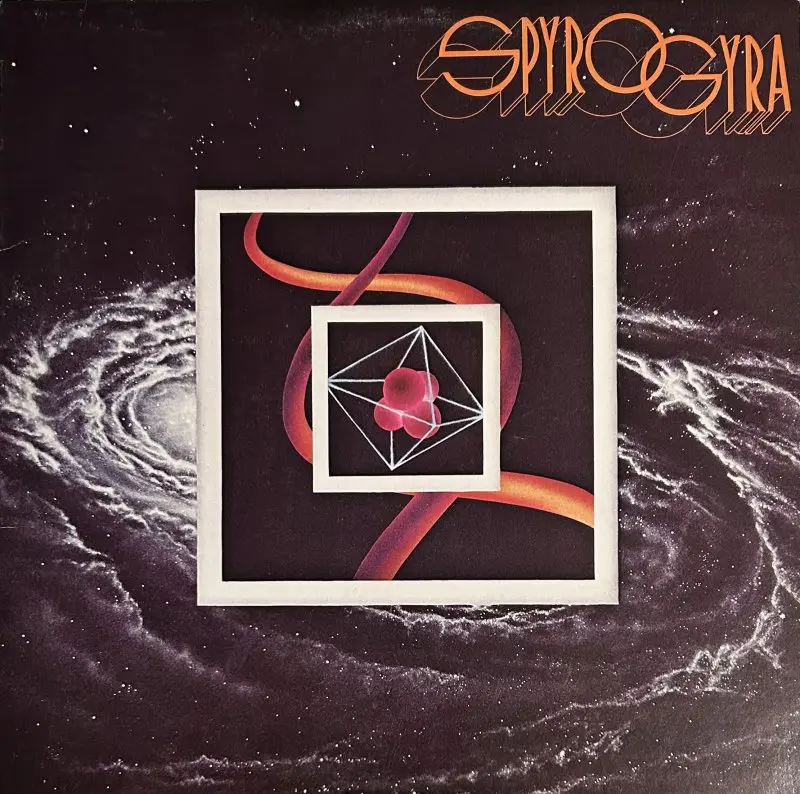 Sessions occurred in 1976 at Mark Studios in Clarence, New York, with additional recording in 1977 at Blue Rock Studio (NYC) and House of Music (West Orange, NJ), produced by Jay Beckenstein and Richard Calandra. Chuck Madden served as engineer, with Craig Bishop and Larry Swist handling the mix.
The album first appeared with a 1977 cover design by Michael Cobb. In 1978, Amherst Records re-released Spyro Gyra with different cover art by Chris Maggio. Abroad, the album appeared on Infinity (Japan, UK) and MCA (Australia, Italy).
Crosseyed Bear promoted the album with “Shaker Song,” which reached No. 16 on the Billboard Adult Contemporary chart and No. 90 on the Hot 100. Manhattan Transfer later covered “Shaker Song” with lyrics on their 1979 album Extensions.
Morning Dance
 Spyro Gyra released their second album, Morning Dance, on March 9, 1979, on MCA/Infinity.
Morning Dance presents a brighter, more polished studio sound with tightly layered percussion, steel-drum coloration, and expanded horn and keyboard textures that establish several of the band’s enduring traits. Jay Beckenstein fronts a large supporting cast that includes drummer Steve Jordan, bassist Will Lee, percussionist Rubens Bassini, marimbist Dave Samuels, trumpeter Randy Brecker, saxophonist Michael Brecker, and French horn player John Clark, alongside multiple guitarists and keyboardists.
Beckenstein wrote “Morning Dance,” “Pygmy Funk,” and “Leticia,” and shares horn arrangement duties with Jeremy Wall, who contributes five pieces and arranges the strings and horns on most tracks. Guitarist Rick Strauss composed “It Doesn’t Matter.”
The uptempo tracks divide between steel-drum-inflected themes and denser ensemble charts. The title track rides quick, buoyant percussion under a contoured alto-sax line that ascends in tandem with bright marimba figures. “Jubilee” moves at a brisk pace with festive horn bursts and sharp trumpet punctuation. “Starburst” opens with a forceful tenor-sax exclamation and shifts into a firm, forward-driving rhythm for Michael Brecker’s extended solo.
“Heliopolis” unfolds in long, cinematic arcs with layered synth pads, marimba cycles, and steady alto-sax climbs. Slower pieces include “Song for Lorraine,” centered on suspended Rhodes voicings, soft vocal pads, and a weightless soprano-sax theme, and “It Doesn’t Matter,” a relaxed vocal tune framed by bright keyboards and unobtrusive percussion. “Little Linda” flows in a gentle 3/4 meter with vibraphone coloration and softened bongos, while “End of Romanticism” closes the album with sparse 12-string figures, restrained soprano-sax phrases, and muted French horn shading.
A1. “Morning Dance” (3:58)
A2. “Jubilee” (4:31)
A3. “Rasul” (3:57)
A4. “Song for Lorraine” (3:59)
A5. “Starburst” (4:50)
B1. “Heliopolis” (5:34)
B2. “It Doesn’t Matter” (4:27)
B3. “Little Linda” (4:27)
B4. “End of Romanticism” (5:00)
Sessions occurred across 1978 at Secret Sound (New York City), PCI Studios (Rochester), Trackmaster Audio (Buffalo), and House of Music (West Orange) with production by Jay Beckenstein and Richard Calandra. Michael Barry and Jack Malken handled recording and mixing with additional engineering by Charlie Conrad, Mick Guzauski, and Lawrence Swist. Bob Ludwig mastered the album at Masterdisk (New York).
Morning Dance features artwork by Peter Corriston with illustration by Julie Heffernan.
Infinity promoted the album with “Morning Dance” (b/w “Song for Lorraine”), which reached No. 24 on the Billboard Hot 100, No. 1 on Adult Contemporary, and No. 17 in the UK.
Catching the Sun
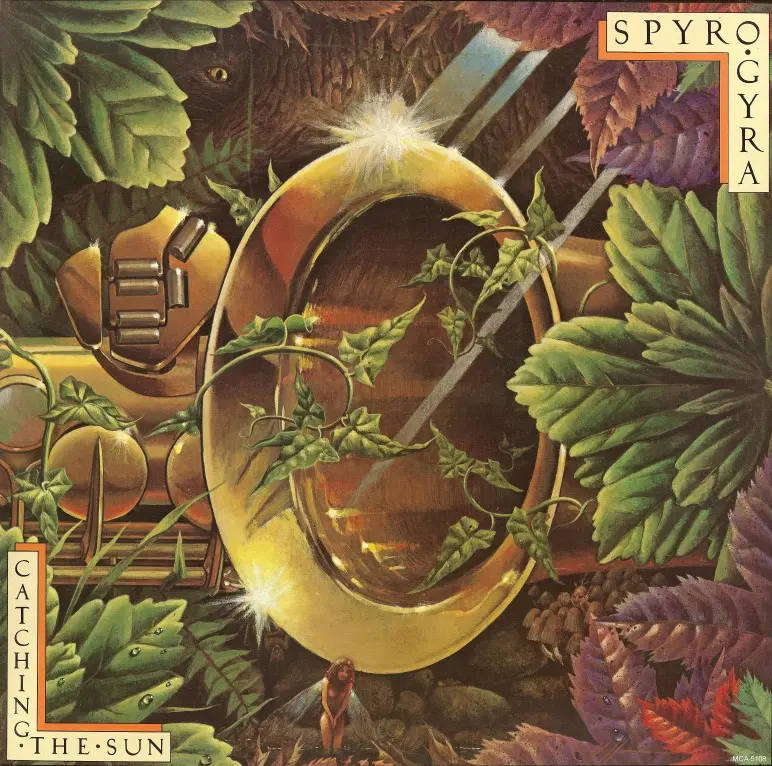 Spyro Gyra released their third album, Catching the Sun, in February 1980 on MCA.
The album presents dense, rhythm-forward arrangements with layered percussion, contour-driven sax themes, and a tightened studio polish that extends the bright, percussive direction established on Morning Dance. Beckenstein leads a large studio cast that includes drummer Eli Konikoff, percussionists Gerardo Velez and Rubens Bassini, and a rotating lineup of guitarists and keyboardists, joined by prominent session players Randy Brecker (trumpet), Barry Rogers (trombone), Hiram Bullock (guitar), and John Tropea (guitar).
Beckenstein wrote four songs. Jeremy Wall contributes “Autumn of Our Love,” “Safari,” and “Cockatoo”; Tom Schuman provides “Laser Material”; Chet Catallo contributes “Lovin’ You (for Christine)”; and Jim Kurzdorfer supplies “Philly.”
“Catching the Sun” opens with a mid-uptempo pulse that moves in an airy, undulating pattern driven by soft-steel percussion and contoured alto phrasing. “Cockatoo” turns high-intensity with sharp-tenor runs, vivid trumpet accents, and a relentless percussion bed. Wall’s “Autumn of Our Love” slows the pace with extended Rhodes voicings and soft soprano-sax lines. Schuman’s “Laser Material” pushes into a harder-edged setting with clipped synth stabs, clavinet friction, and a fervent trumpet break.
“Percolator” races through a short, tight rhythmic figure marked by fast marimba strikes and brief alto gestures. Kurzdorfer’s “Philly” shifts to an urban mood with firm horn punctuation and a pronounced trombone spotlight. Catallo’s “Lovin’ You (for Christine)” uses warm string-synth pads and a mid-tempo sway, while “Here Again” unfolds in a circular, vibraphone-marked pattern. “Safari,” the closing Wall piece, centers on layered hand percussion, steady marimba cycles, and supportive low brass.
A1. “Catching the Sun” (4:42)
A2. “Cockatoo” (4:04)
A3. “Autumn of Our Love” (5:09)
A4. “Laser Material” (4:59)
A5. “Percolator” (2:28)
B1. “Philly” (4:18)
B2. “Lovin’ You (for Christine)” (4:41)
B3. “Here Again” (4:56)
B4. “Safari” (4:52)
Sessions occurred across 1979 at Secret Sound Studios in New York City with producers Jay Beckenstein and Richard Calandra and engineers Michael Barry and Jack Malken. Bob Ludwig mastered the album at Masterdisk in New York.
Catching the Sun features artwork by Peter Corriston with illustration by David Heffernan.
MCA promoted the album with “Catching the Sun” (b/w “Percolator”), which reached No. 15 on the Billboard Adult Contemporary chart and No. 68 on the Hot 100. “Percolator” followed as a second single and reached No. 48 on Adult Contemporary.
Carnaval
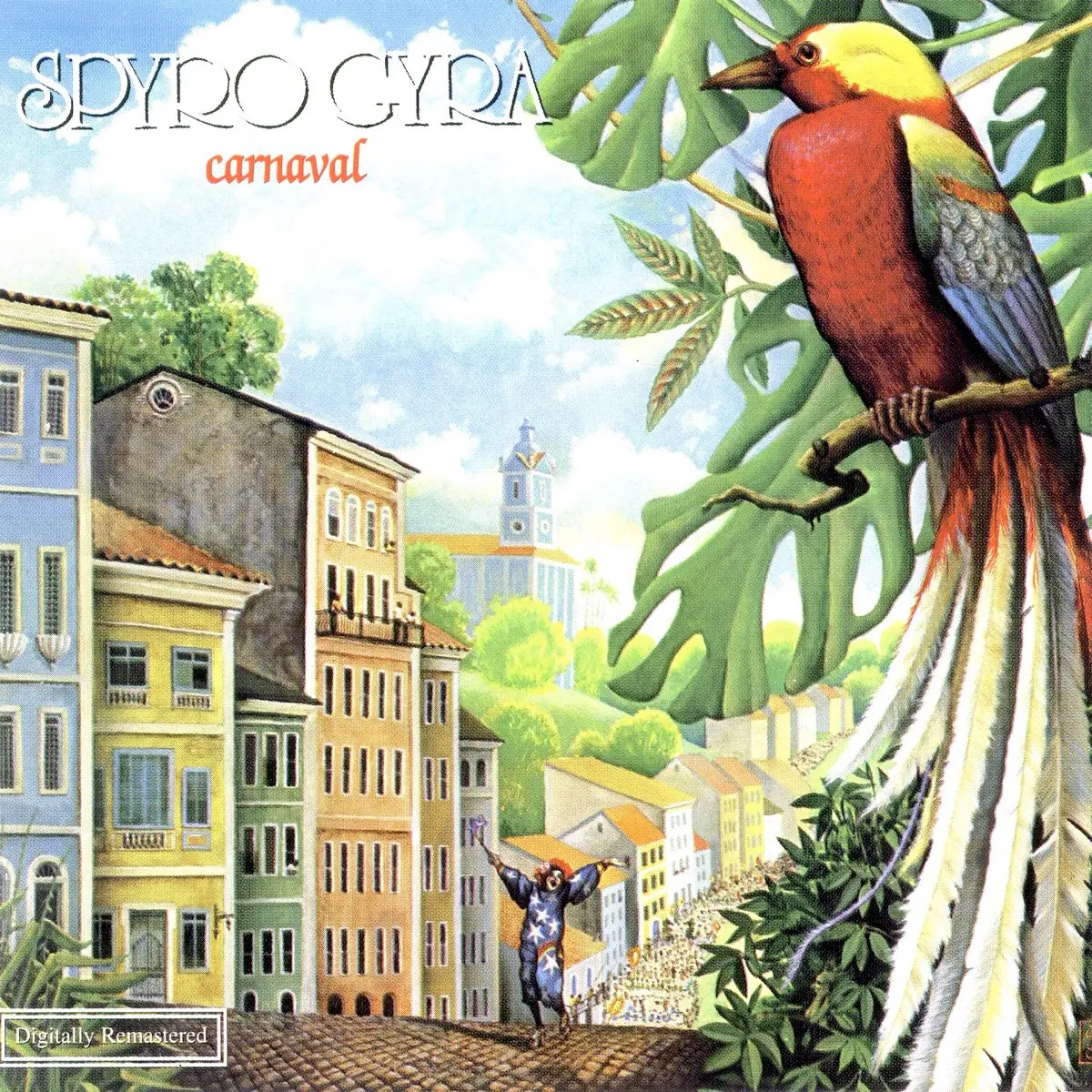 Spyro Gyra released their fourth album, Carnaval, on September 29, 1980, on MCA.
Carnaval features compact, high‑gloss arrangements built on bright horn voicings, layered percussion, and contoured sax leads set to brisk and mid‑tempo rhythmic patterns. Jay Beckenstein fronts a revolving cast of guitarists (Hiram Bullock, John Tropea, Chet Catallo), keyboardists (Tom Schuman, Jeremy Wall, Rob Mounsey), and percussionists (Gerardo Velez, Errol “Crusher” Bennett, Steve Kroon), joined by bassist Will Lee and drummers Eli Konikoff and Steve Jordan.
Beckenstein wrote “Cafe Amore,” “Bittersweet,” and “Carnaval.” Wall composed “Dizzy,” “Awakening,” and “Cashaça,” while Schuman contributed “Sweet and Savvy” and arranged “Foxtrot.” Catallo supplied “Foxtrot.”
“Cafe Amore” unfolds with smooth, legato guitar lines and soft flute figures that lift over a gently stepped rhythm. “Dizzy” drives forward with tight horn gestures, accelerated bass motion, and sharply accented percussion that creates a rotational push. “Awakening” opens in suspended tones before gathering into a gradual, thickening pulse. “Cashaça” and “Carnaval” draw on festive rhythmic patterns with lively horn breaks and rapid auxiliary percussion. “Bittersweet” turns to minor‑key sax phrasing set against warm string layers, while “Foxtrot” and “Sweet and Savvy” continue the album’s emphasis on rhythmic precision and bright ensemble contrast.
A1. “Cafe Amore” (5:02)
A2. “Dizzy” (4:40)
A3. “Awakening” (5:48)
A4. “Cashaça” (4:18)
A5. “Foxtrot” (4:40)
B1. “Sweet and Savvy” (5:12)
B2. “Bittersweet” (4:28)
B3. “Carnaval” (5:26)
Sessions occurred in 1980 at Secret Sound and Power Station in New York City with producers Jay Beckenstein and Richard Calandra and engineers Michael Barry, Neil Dorfsman, and Jack Malken.
Carnaval features cover art by David Heffernan, whos image depicts a parrot perched amid tropical foliage above a cobblestone street lined with pastel colonial-style buildings that descend toward a distant church tower, evoking a warm, festive Latin American or Caribbean setting in line with the album’s title and rhythmic themes.
MCA issued “Cafe Amore” as the album’s lead single, which reached No. 14 on the Adult Contemporary chart and No. 77 on the Hot 100.
Freetime
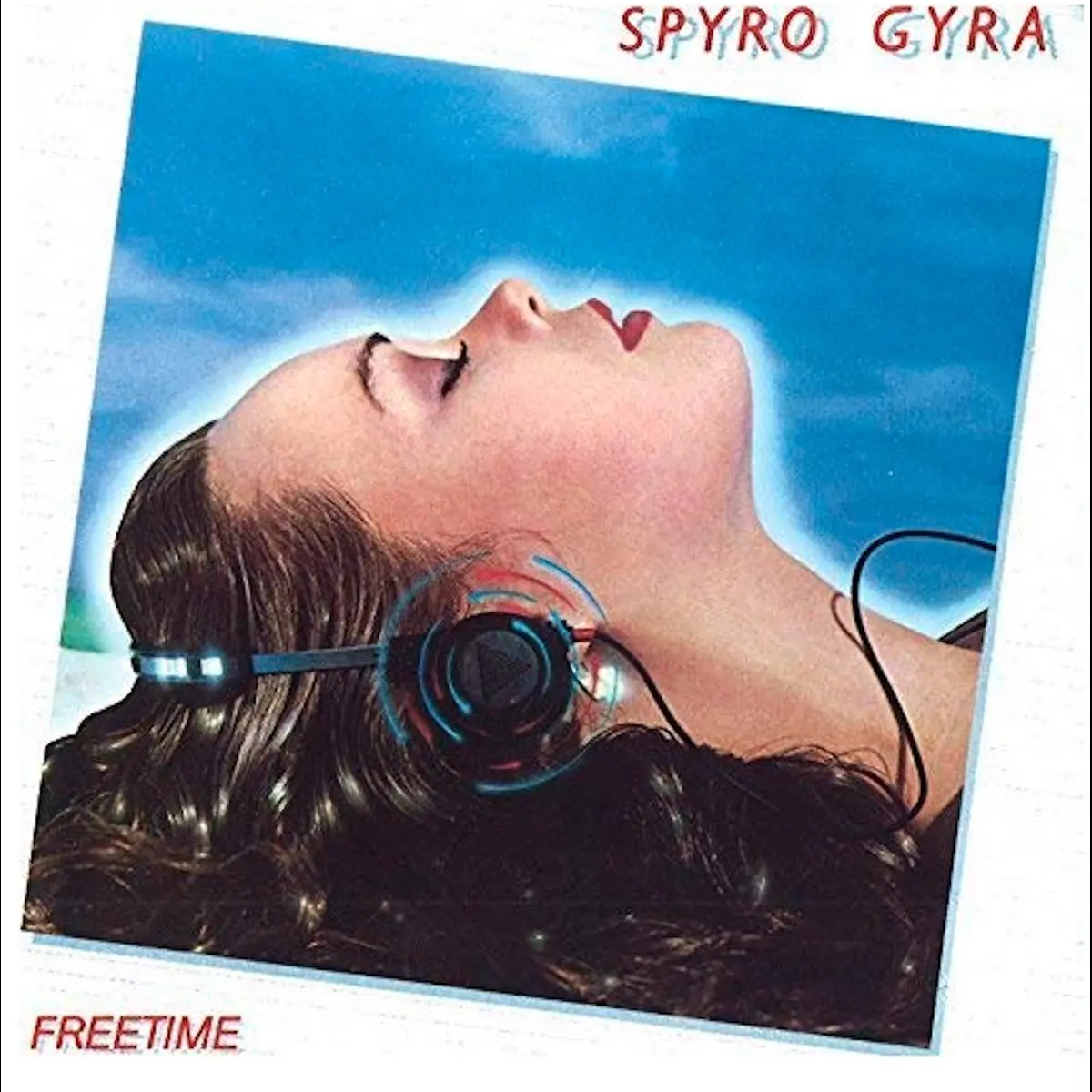 Spyro Gyra released their fifth album, Freetime, in July 1981 on MCA.
The album balances intricate rhythmic textures with extended harmonic layering, alternating between energetic ensemble passages and more contemplative, spacious settings. Jay Beckenstein leads a core group with keyboardists Tom Schuman and Jeremy Wall, guitarists John Tropea and Chet Catallo, bassist Will Lee, drummer Eli Konikoff, and percussionist Gerardo Velez.
Beckenstein wrote “Telluride” and “Amber Dream.” Wall composed “Freetime” and “Pacific Sunrise,” and co-wrote “Summer Strut” and “String Soup” with Schuman, who also arranged. Founding bassist Jim Kurzdorfer contributed “Elegy for Trane.”
Tracks divide between dynamic world-beat excursions, reflective modal pieces, and layered ballads. The title track opens with clay-flute flourishes and shifting 6/8–4/4 meters punctuated by sharp horn stabs. “Telluride” accelerates through soprano lines and precisely timed guitar jabs. “Summer Strut” features playful marimba counterlines and sprightly horn accents. “Elegy for Trane” builds on solemn alto phrasing and cello drones, while “Pacific Sunrise” spans seven minutes of impressionistic synth swells and gentle 3/4 pulses. “Amber Dream” places lyrical soprano phrasing over warm Rhodes textures, and “String Soup” ends the album with pizzicato bass figures under misty synth overlays.
A1. “Freetime” (6:03)
A2. “Telluride” (5:18)
A3. “Summer Strut” (5:07)
A4. “Elegy for Trane” (4:35)
B1. “Pacific Sunrise” (7:53)
B2. “Amber Dream” (5:07)
B3. “String Soup” (3:30)
Sessions occurred in 1981 at Secret Sound (New York City) and House of Music (West Orange, New Jersey) with producers Jay Beckenstein and Richard Calandra, and engineers Michael Barry, Steve Baldwin, and Charles Conrad.
Freetime features cover design and photo illustration by David Heffernan, whose subjects rests with headphones with her back to the sand.
Incognito
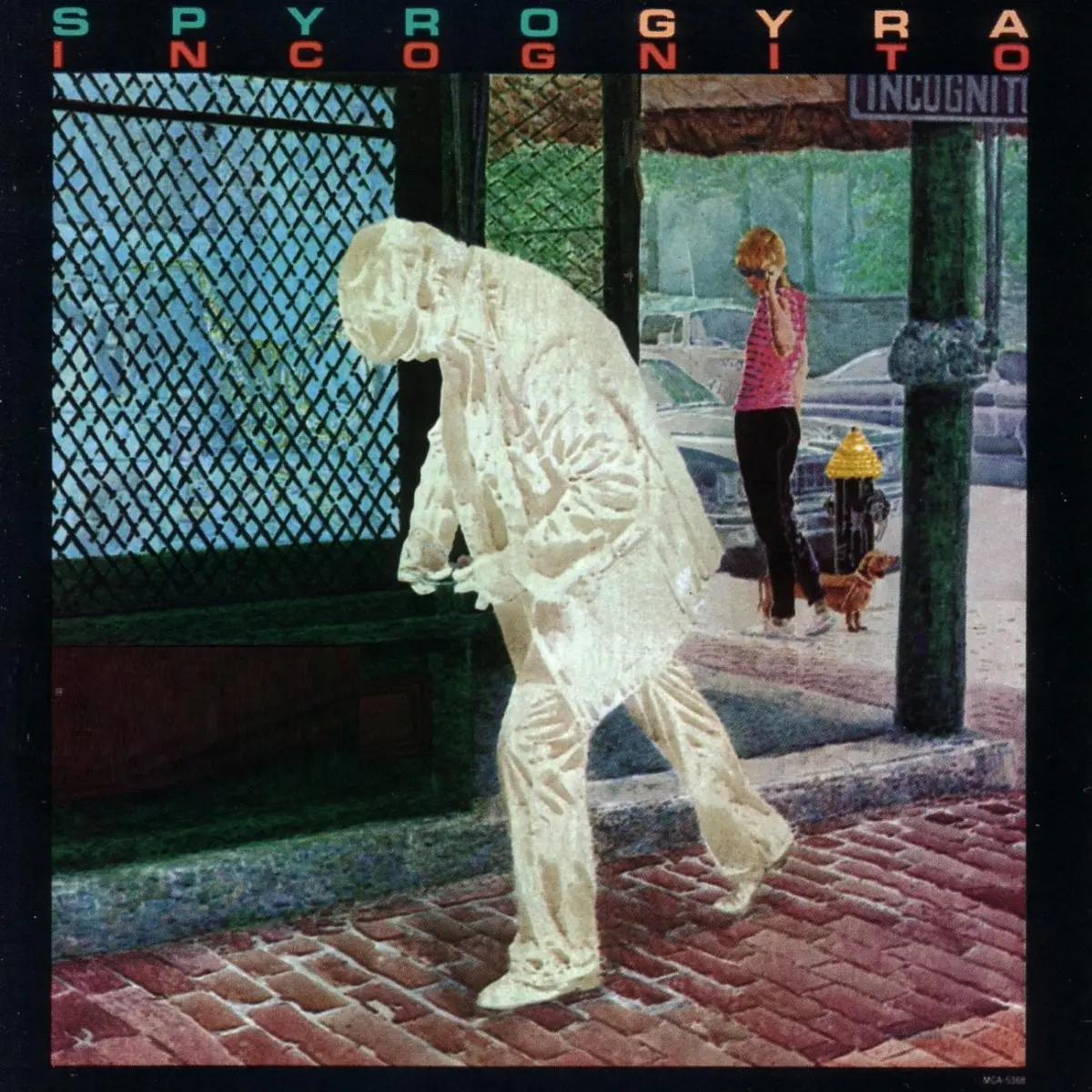 Spyro Gyra released their sixth album, Incognito, in September 1982 on MCA.
The album blends sophisticated urban textures with layered instrumentation, alternating between dynamic rhythmic workouts and ambient, modal explorations. Jay Beckenstein leads a large ensemble with Tom Schuman (Yamaha GS-1, electric and acoustic piano, synthesizers), Jeremy Wall (electric piano), guitarists Chet Catallo and John Tropea, percussionist Gerardo Velez, and mallet player Dave Samuels, joined by high-profile guests including Hiram Bullock (guitar), Marcus Miller (bass), Steve Gadd (drums), and Toots Thielemans (harmonica).
Beckenstein composed “Last Exit,” “Harbor Nights,” “Incognito,” and “Soho Mojo.” Schuman wrote “Old San Juan” and “Sueño,” and Wall contributed “Stripes” and “Oasis.” Beckenstein and Wall co-arranged the material with input from guest players on texture and detail.
“Last Exit” opens with dramatic horn swells over crisp bass interplay. “Old San Juan” incorporates salsa-rooted percussion with tumbao piano figures and whistle. “Harbor Nights” drifts on a laid-back Rhodes progression with soft conga flourishes. “Stripes” foregrounds Thielemans’ harmonica over subdued horns and mid-tempo rhythm. “Oasis” flows with Lyricon phrasing above shimmering synths and desert-like textures. The title track blends a mid-tempo pulse with vocoder overlays, while “Sueño” unfolds gently over marimba cycles and brushed percussion. “Soho Mojo” closes the set with gritty electric guitar and swaggering downtown horn lines.
A1. “Last Exit” (4:17)
A2. “Old San Juan” (6:41)
A3. “Harbor Nights” (4:22)
A4. “Stripes” (4:01)
B1. “Oasis” (5:39)
B2. “Incognito” (5:56)
B3. “Sueño” (4:05)
B4. “Soho Mojo” (3:47)
Sessions occurred in 1982 at Ocean Way Recording (Hollywood), Secret Sound (New York City), and BearTracks Studios (Suffern, New York) with producers Jay Beckenstein and Richard Calandra. Engineers included Michael Barry and assistants Steve Crimmel, Josiah Gluck, Debbie Rebhun, Nina Siff, and Larry Swist. Bob Ludwig mastered the album at Masterdisk (New York).
Incognito features a stylized cover illustration by Michael G. Cobb under the art direction of George Osaki. Cobb’s image presents a slouched frozen man beside a shuttered business on a brick sidewalk—evoking film noir aesthetics. Cobb also illustrated the band’s 1977 debut.
City Kids
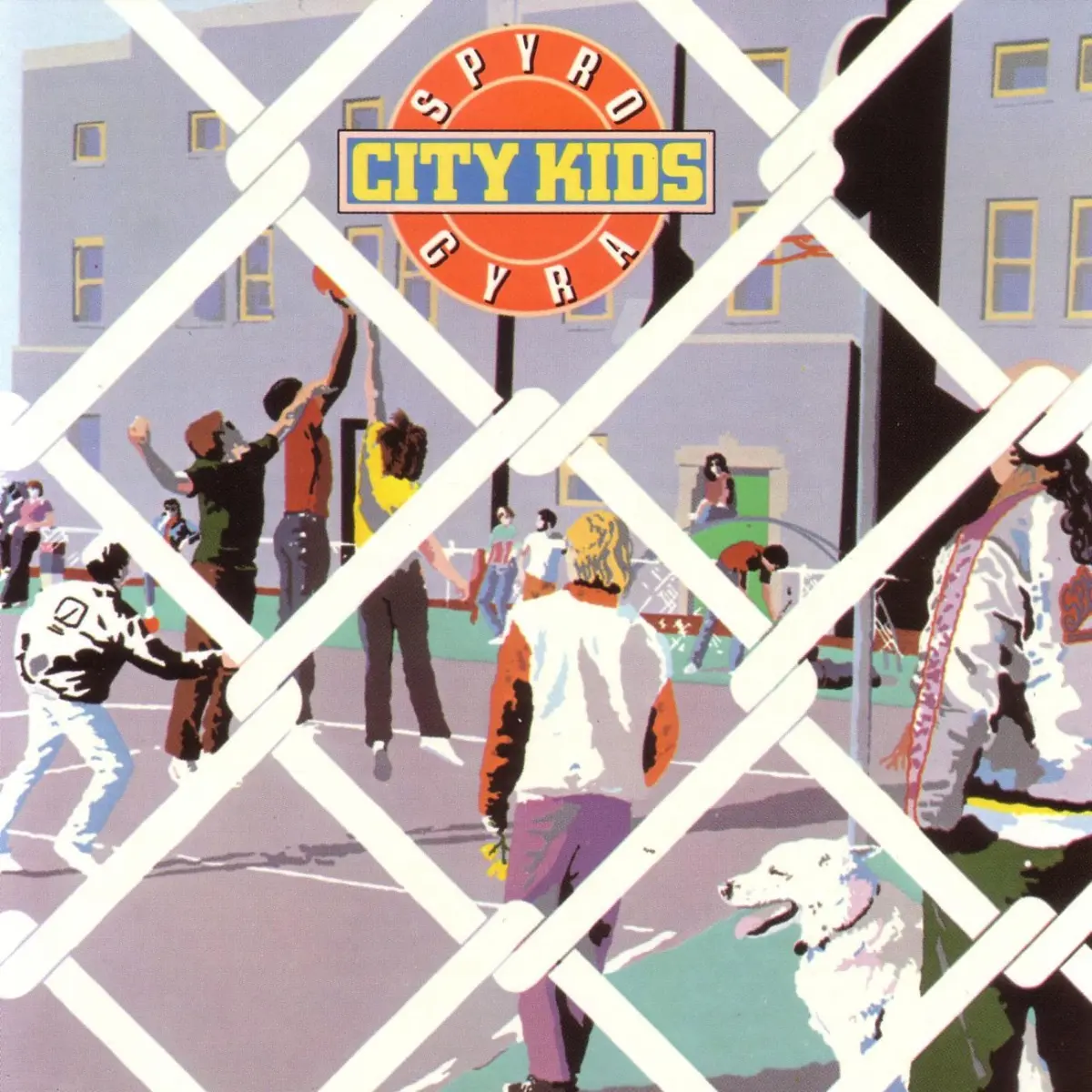 Spyro Gyra released their seventh album, City Kids, in 1983 on MCA.
The album emphasizes urban rhythmic drive and layered textures, alternating between propulsive ensemble interplay and spacious, atmospheric settings. Jay Beckenstein leads a core unit with Tom Schuman (electric and acoustic piano, synthesizers), Jeremy Wall (acoustic piano, synthesizers), Chet Catallo (guitars), Kim Stone (bass), Eli Konikoff (drums), Gerardo Velez (percussion), and Dave Samuels (vibraphone, marimba), supplemented by high-profile guests including Hiram Bullock, Marcus Miller, Steve Gadd, Will Lee, Eddie Gómez, Steve Jordan, Richard Tee, Jorge Dalto, and Rob Zantay.
Beckenstein composed “City Kids,” “Serpent in Paradise,” “A Ballad,” and “Haverstraw Road.” Schuman supplied “Nightlife” and “Silver Linings,” while Wall wrote “Islands in the Sky” and “Conversations.” Session players contributed to texture, phrasing, and dynamics across multiple tracks.
The title track opens with bright horn punches over fast, syncopated percussion. “Serpent in Paradise” contrasts Lyricon lines and sinuous bass with sudden guitar jabs. “A Ballad” slows the pace with lyrical soprano over acoustic bass and sparse electric piano. “Nightlife” adds rhythmic bounce under flickering electric keys. “Islands in the Sky” stretches into panoramic layers with shimmering synths and precise drum work. “Conversations” stages angular guitar–percussion exchanges. “Silver Linings” brings measured horn harmonies over a mid-tempo rhythm, while “Haverstraw Road” ends the set with forceful guitar-sax unisons and coordinated dynamic shifts.
A1. “City Kids” (5:11)
A2. “Serpent in Paradise” (4:45)
A3. “A Ballad” (5:42)
A4. “Nightlife” (4:32)
B1. “Islands in the Sky” (6:44)
B2. “Conversations” (5:34)
B3. “Silver Linings” (4:36)
B4. “Haverstraw Road” (5:00)
Sessions occurred in 1983 at BearTracks Studios (Suffern, New York) with producers Jay Beckenstein and Richard Calandra, assisted by Jeremy Wall and Tom Schuman. Michael Barry engineered and mixed the album with assistance from John Penzotti and Bob Troeller. Bob Ludwig mastered the audio at Masterdisk (New York).
City Kids features cover art by Michael G. Cobb with art direction by George Osaki. Cobb’s illustration shows school children on a playground basketball court, as seen from behind a fence—conveying an energized, youthful urban atmosphere that parallels the album’s title and uptempo focus.
Access All Areas (live)
 In 1984, MCA issued Access All Areas, a live double-album sourced from Spyro Gyra’s November 1983 engagement in Florida.
The album captures the band’s onstage dynamism and expanded ensemble interplay, performed by Jay Beckenstein (alto and soprano saxophones), Tom Schuman (Yamaha CP-70, GS2, Dyno Rhodes, Prophet-5, Memorymoog, Multimoog, Moog Liberation), Chet Catallo (electric and classical guitars), Kim Stone (bass, acoustic bass), Eli Konikoff (drums), Dave Samuels (vibraphone, marimba), and Gerardo Velez (congas, timbales, percussion).
The set draws from their 1979–83 studio catalog, with three tracks per side except Side B, which contains two. “Old San Juan,” “Shaker Song,” and “Serpent in Paradise” open the sequence with crowd-energizing rhythmic intensity. “Heliopolis” builds into a sprawling multi-solo epic. “Harbor Nights” and “Conversations” each highlight extended marimba and percussion interplay. “Schu’s Blues” and “Sea Biscuit” are live-only originals. “Morning Dance,” “Islands in the Sky,” and “Latin Streets” appear in expanded arrangements.
A1. “Old San Juan” (8:20) – from Incognito
A2. “Shaker Song” (7:14) – from Spyro Gyra
A3. “Serpent in Paradise” (5:56) – from City Kids
B1. “Heliopolis” (11:49) – from Morning Dance
B2. “Harbor Nights” (7:04) – from Incognito
C1. “Conversations” (8:30) – from City Kids
C2. “Schu’s Blues” (4:46) – original
C3. “Morning Dance” (5:37) – from Morning Dance
D1. “Islands in the Sky” (6:29) – from City Kids
D2. “Sea Biscuit” (6:03) – original
D3. “Latin Streets” (8:24) – original
Beckenstein and Richard Calandra produced the album with assistance from Schuman and Jeremy Wall. Michael Barry handled engineering and mixing. Remote recording was provided by Guy Charbonneau with Le Mobile, assisted by Cliff Bonnell and John Penzotti.
Access All Areas features cover illustrations by Michael G. Cobb, inside photography by Yukio Ichikawa, design by Jon Echevarrieta, and art direction by George Osaki.
Alternating Currents
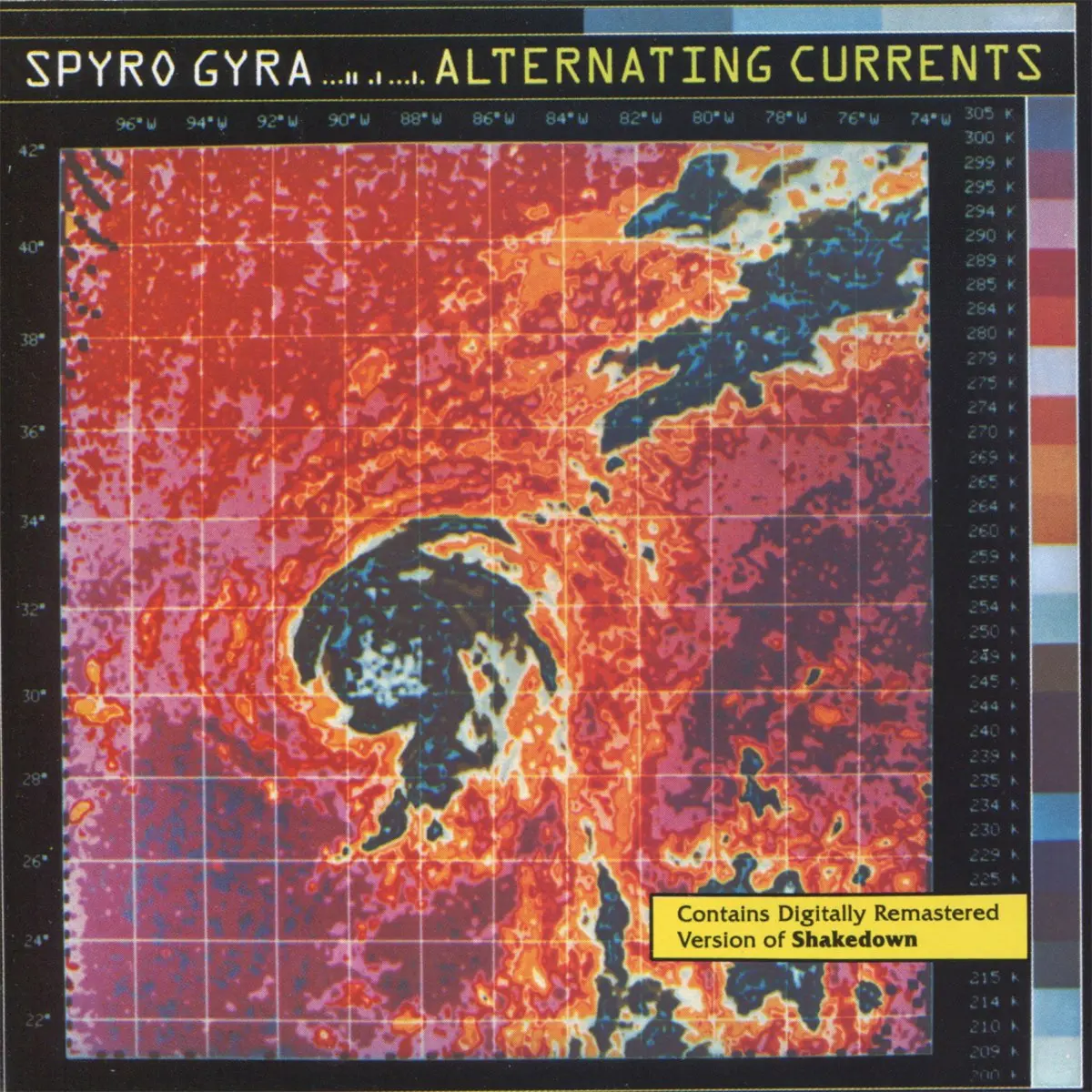 Spyro Gyra released their eighth studio album, Alternating Currents, on June 15, 1985, on MCA.
The album highlights the working lineup of Jay Beckenstein (saxophones, Lyricon), Tom Schuman (keyboards), Julio Fernández (guitars), Kim Stone (bass), Richie Morales (drums), Gerardo Velez (percussion), and Dave Samuels (marimba, vibraphone), continuing the group’s emphasis on interlocked rhythms, sharp ensemble coordination, and bright, synthesized timbres.
Beckenstein supplied most of the material, with Jeremy Wall writing “Shakedown” and “Heartbeat,” Schuman contributing “I Believe in You” and “Sunflurry,” and Samuels composing “Mardi Gras.” “Binky Dream No. 6” is a collective piece credited to Beckenstein, Fernández, Morales, Schuman, Stone, and Velez.
The album alternates between compact rhythmic surges, mid‑tempo keyboard‑driven pieces, and mallet‑centered features. “Shakedown” emphasizes horn jabs and clipped guitar over a retro pulse. “Alternating Currents” moves in electric surges shaped by synchronized ensemble lines. “Taking the Plunge (for Jennifer)” develops cascading keyboard figures above steady mid‑tempo propulsion.
“Binky Dream No. 6” twists through angular funk with bright mallet punctuation. “PG” pushes forward with tight guitar‑and‑sax unisons. “Heartbeat” uses a bass‑drum pulse to mimic its title. “Mardi Gras” showcases Samuels’ marimba in a celebratory procession, while “I Believe in You” softens into emotive sax and keyboard warmth. “Sunflurry” closes in a burst of rapid horn and keyboard exchanges.
A1. “Shakedown” (4:22)
A2. “Alternating Currents” (4:28)
A3. “Taking the Plunge (for Jennifer)” (4:48)
A4. “Binky Dream No. 6” (4:13)
A5. “PG” (4:15)
B1. “Heartbeat” (4:48)
B2. “Mardi Gras” (6:04)
B3. “I Believe in You” (5:31)
B4. “Sunflurry” (5:01)
Sessions occurred at BearTracks Studios (Suffern, NY) with producers Jay Beckenstein and Richard Calandra, assisted by Jeremy Wall. Larry Swist engineered with Rick Begin and John Penzotti assisting. Bob Ludwig mastered the album at Masterdisk (New York City).
Alternating Currents features art direction by Jeff Adamoff, design by SteeleWorks, and band photography by William Coupon. The front cover incorporates a NASA image of Hurricane Camille, whose spiral structure visually echoes the album’s emphasis on circulating rhythmic motion.
Breakout
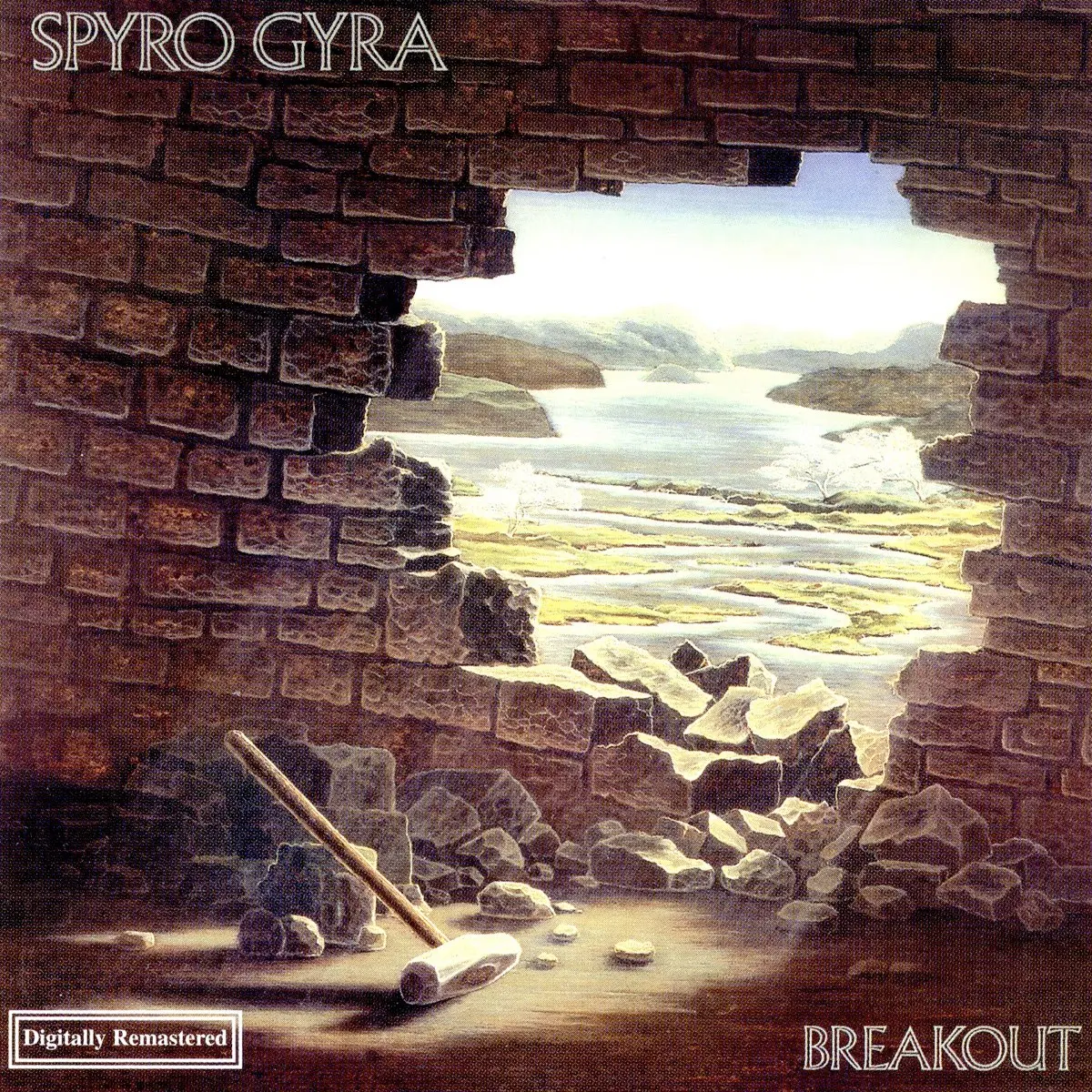 Spyro Gyra released their ninth studio album, Breakout, on June 11, 1986, on MCA.
The album features the core sextet—Jay Beckenstein (saxophones), Tom Schuman (keyboards), Julio Fernández (guitars), Kim Stone (bass), Richie Morales (drums), and Dave Samuels (KAT Polyphonic mallet synthesizer, vibraphone, marimba)—supported by percussionist Manolo Badrena and Synclavier programmer Eddie Jobson. It marks the final Spyro Gyra project co‑produced by Richard Calandra, who died later in 1986.
Beckenstein composed “Freefall,” “Doubletake,” and “Breakout.” Jeremy Wall contributed “Swept Away” and “Whirlwind,” Stone provided “Bob Goes to the Store,” Morales and Mark Gray wrote “Body Wave,” Samuels composed “Whirlwind,” and Schuman added “Guiltless.”
The album moves between rhythm‑centered workouts, mallet‑driven pieces, and bright ensemble tunes. “Bob Goes to the Store” showcases Stone’s slap‑bass performance over snappy rhythmic figures. “Freefall” descends through airy keyboard lines. “Doubletake” uses mirrored riffs and intensified rhythmic doubling. The title track breaks into explosive horn figures over fractured beats. “Body Wave” shifts in rolling, wave‑like pulses. “Whirlwind” highlights Samuels’ mallet synthesizer in spiraling patterns. “Swept Away” turns to a soft, romantic setting shaped by string‑synth pads, and “Guiltless” closes with upbeat, unburdened ensemble playing.
A1. “Bob Goes to the Store” (4:36)
A2. “Freefall” (4:52)
A3. “Doubletake” (4:05)
A4. “Breakout” (4:37)
B1. “Body Wave” (4:09)
B2. “Whirlwind” (5:37)
B3. “Swept Away” (5:43)
B4. “Guiltless” (5:10)
Sessions occurred at BearTracks Studios (Suffern, NY) with producers Jay Beckenstein and Richard Calandra, assisted by Jeremy Wall. Larry Swist engineered with Chris Bubacz assisting. Bob Ludwig mastered the audio at Masterdisk (New York).
Breakout features art direction by Jeff Adamoff, design by Spencer Drate and Judith Salavetz, and a front‑cover illustration by Larry Swist. It shows a brick wall with a hammered-out opening that leads down a valley to a lake. Duane Michals supplied the rear‑cover photography. MCA issued a music video for “Bob Goes to the Store,” partially filmed from the perspective of the roaming dog who serves as the song’s namesake.
Stories Without Words
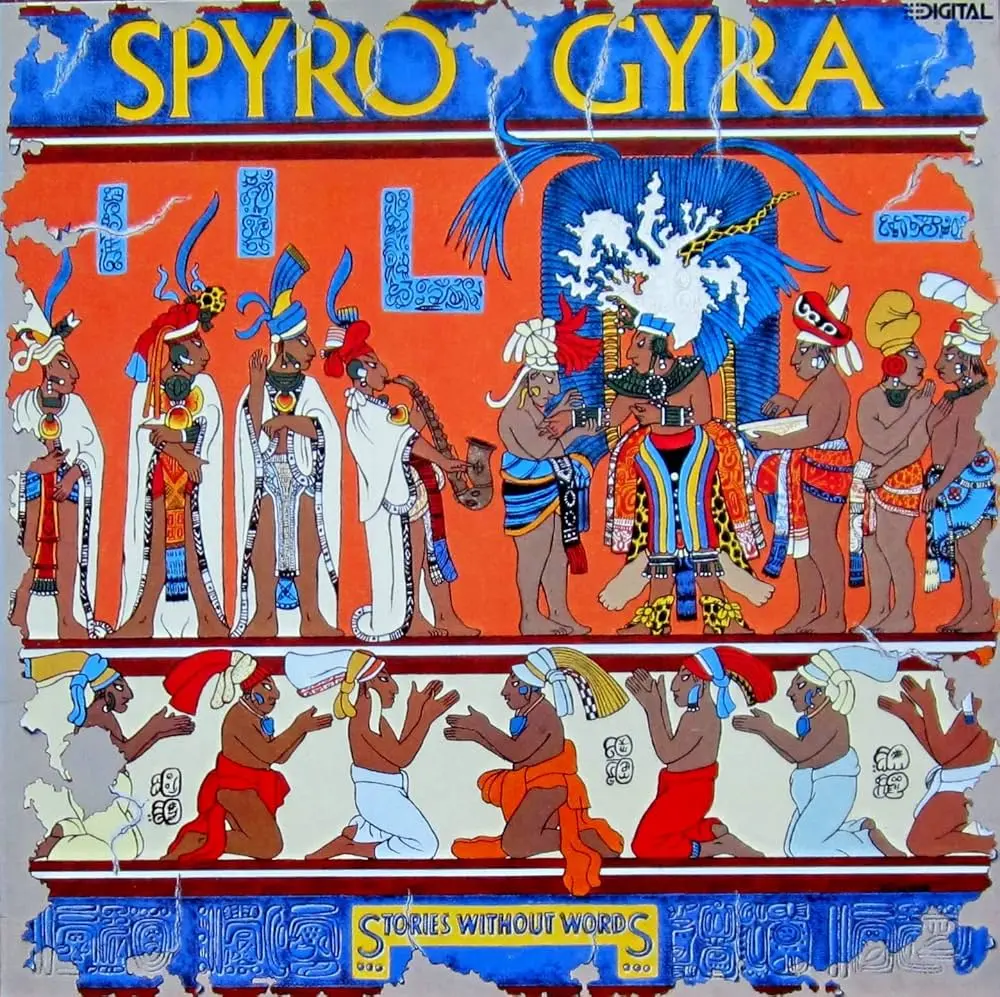 Spyro Gyra released their tenth studio album, Stories Without Words, on August 10, 1987, on MCA.
The album features Jay Beckenstein (saxophones), Tom Schuman (keyboards), Julio Fernández (guitars), Roberto Vally (bass), Richie Morales (drums), Dave Samuels (marimba, vibraphone), and percussionist Manolo Badrena, continuing the band’s emphasis on layered rhythmic motion, bright mallet coloration, and tightly coordinated ensemble phrasing.
Beckenstein wrote “Cayo Hueso” and “Early Light.” Schuman composed “Serpentine Shelly,” Fernández wrote “Del Corazon,” Badrena supplied “Nu Sungo,” Samuels contributed “Chrysalis,” and Jeremy Wall wrote “Joy Ride” and “Pyramid.”
Musically, the album moves between relaxed, percussive landscapes and focused, architecturally built ensemble pieces. “Cayo Hueso” rides a warm island pulse beneath understated alto phrasing. “Serpentine Shelly” coils through Schuman’s interlocked keyboard figures. “Del Corazon” centers on Fernández’s expressive Latin‑fusion guitar. “Early Light” shifts through crystalline guitar, light percussion, and rising sax gestures. “Nu Sungo” channels Badrena’s Afro‑Caribbean rhythmic concepts. Samuels’ “Chrysalis” evolves through shimmering mallet textures. Wall’s “Joy Ride” races through cascading keyboards, and “Pyramid” builds in geometric layers toward a tightly controlled climax.
A1. “Cayo Hueso” (5:29)
A2. “Serpentine Shelly” (4:33)
A3. “Del Corazon” (6:25)
A4. “Early Light” (4:23)
B1. “Nu Sungo” (4:10)
B2. “Chrysalis” (4:12)
B3. “Joy Ride” (4:55)
B4. “Pyramid” (6:25)
Sessions occurred at BearTracks Studios (Suffern, NY) with producers Jay Beckenstein and Jeremy Wall. Larry Swist engineered with assistance from Chris Bubacz and Doug Rose; Doug Oberkircher provided technical support. Bob Ludwig mastered the album at Masterdisk (New York).
Stories Without Words features art direction and design by Kathleen Covert, a front‑cover illustration by Ted Glazer, and back‑cover photography by Timothy White.
Rites of Summer
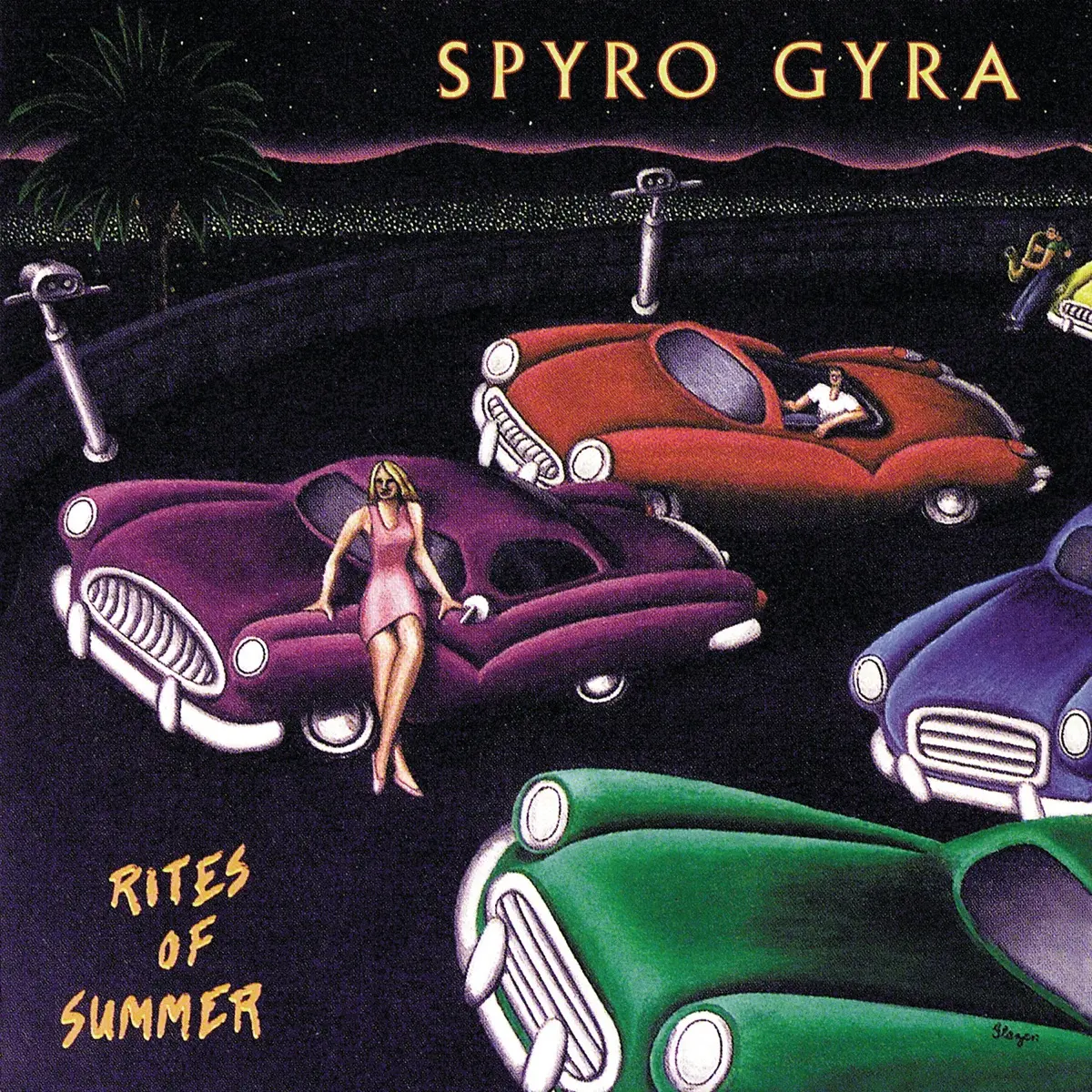 Spyro Gyra released their eleventh studio album, Rites of Summer, in June 1988 on MCA.
The lineup features Jay Beckenstein (saxophones, wind‑driven synthesizer), Tom Schuman (keyboards), Julio Fernández (guitars), Oskar Cartaya (bass), Richie Morales (drums, percussion), and Dave Samuels (vibraphone, marimba, percussion), with synthesizer programming by Steve Shapiro. The album continues their core fusion approach while expanding into ambient, textural territory.
Rites of Summer contains two tracks each by Beckenstein (“Claire’s Dream,” “Daddy’s Got a New Girl Now”), Schuman (“Innocent Soul,” “Captain Karma”), Wall (“No Man’s Land,” “Yosemite”), and one apeice by Fernández (“Shanghai Gumbo”), Samuels (“Limelight”), and Morales (“The Archer”).
Musically, the album alternates between impressionistic, atmospheric pieces and rhythmically precise ensemble writing. “Claire’s Dream” opens with modal sax–piano interplay in a hushed, dreamlike setting. “Daddy’s Got a New Girl Now” moves with brassy, tightly stepped accents. Samuels’ “Limelight” brings the vibraphone to the forefront.
Fernández’s “Shanghai Gumbo” fuses East‑West intervallic shapes with a spicy rhythmic drive. Schuman’s “Innocent Soul” forms a drifting ambient space with Satie‑like piano voicings and soft synth halos. Wall’s “No Man’s Land” and “Yosemite” both emphasize slow‑moving, open tonal fields. Morales’ “The Archer” locks into arrow‑straight rhythmic precision, and Schuman’s “Captain Karma” closes with circulating ambient layers.
A1. “Claire’s Dream” (5:39)
A2. “Daddy’s Got a New Girl Now” (4:02)
A3. “Limelight” (4:27)
A4. “Shanghai Gumbo” (4:28)
B1. “Innocent Soul” (4:52)
B2. “No Man’s Land” (5:37)
B3. “Yosemite” (5:21)
B4. “The Archer” (4:59)
B5. “Captain Karma” (5:40)
Sessions occurred at BearTracks Studios (Suffern, NY) with Jay Beckenstein producing and Jeremy Wall assisting. Larry Swist recorded and mixed with Doug Rose assisting. Bob Ludwig mastered at Masterdisk (New York, NY).
Rites of Summer features art direction by Jeff Adamoff, design by Ilene Weingard, a front‑cover illustration by Ted Glazer, and back‑cover photography by Lynn Goldsmith.
Point of View
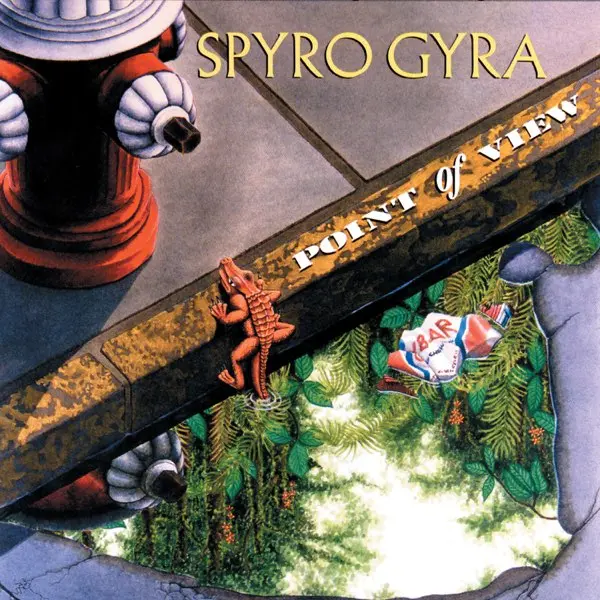 Spyro Gyra released their twelfth studio album, Point of View, in June 1989 on MCA.
The lineup features Jay Beckenstein (saxophones), Tom Schuman (keyboards), Jay Azzolina (guitars), Oskar Cartaya (bass), Richie Morales (drums), and Dave Samuels (mallet synthesizer, vibraphone, marimba), with Julio Fernández adding rhythm guitar on “Hannibal’s Boogie” and Roger Squitero on percussion for select tracks. The album continues their fusion framework while balancing structured ensemble passages with spacious, textural improvisations.
Beckenstein wrote five tracks. Dave Samuels contributed “Slow Burn” and “Riverwalk,” Jeremy Wall composed “Swamp Thing” and “Counterpoint,” Morales wrote “Carolina,” and Cartaya wrote “Gotcha.”
Musically, the set mixes simmering mallet colors, rhythmic drive, and contrapuntal exchanges. “Slow Burn” builds gradually through layered mallet‑synth lines. “Swing Street” emphasizes horn punctuations over an uptown swing pulse. “Fairweather” drifts in mellow, contoured motion. “The Unknown Soldier” introduces somber modal phrases with military‑snare underlay. “Hannibal’s Boogie” merges boogie‑woogie piano gestures with fused rhythmic hits.
“No Limits” opens mid‑tempo fusion into an airy, open space. Morales’ “Carolina” brings Southern‑inflected rhythmic motion, while Samuels’ “Riverwalk” flows on delicate mallet textures. Wall’s “Swamp Thing” creates a murky, slow‑moving texture field, and “Counterpoint” threads interlocking sax‑and‑guitar lines. Cartaya’s “Gotcha” ends the album with a bass‑driven, agile rhythmic push.
A1. “Slow Burn” (4:07)
A2. “Swing Street” (5:13)
A3. “Fairweather” (4:46)
A4. “The Unknown Soldier” (5:23)
A5. “Hannibal’s Boogie” (5:59)
B1. “No Limits” (4:41) — CD/cassette bonus
B2. “Carolina” (4:34)
B3. “Riverwalk” (4:29)
B4. “Swamp Thing” (6:26)
B5. “Counterpoint” (3:56)
B6. “Gotcha” (4:09)
Sessions occurred at BearTracks Studios (Suffern, NY) with Jay Beckenstein producing and Jeremy Wall assisting. Larry Swist recorded and mixed with additional engineering by Chris Bubacz and assistance from Doug Rose. Bob Ludwig mastered at Masterdisk (New York, NY).
Point of View features art direction by Jeff Adamoff, digital design by Stephen Walters, a front‑cover illustration by Ted Glazer, and photography by Jeff Katz.
Discography:
- Spyro Gyra (1977)
- Morning Dance (1979)
- Carnaval (1980)
- Catching the Sun (1980)
- Freetime (1981)
- Incognito (1982)
- City Kids (1983)
- Access All Areas (live, 1984)
- Alternating Currents (1985)
- Breakout (1986)
- Stories Without Words (1987)
- Rites of Summer (1988)
- Point of View (1989)
- Fast Forward (1990)
Sources:
- Discogs: Spyro Gyra
- 45worlds: Spyro Gyra
- 45cat: Spyro Gyra
- MusicBrainz: Spyro Gyra
- RYM: Spyro Gyra
- JazzMusicArchives: Spyro Gyra
Artist/Album Pages:
Horace Tapscott (April 6, 1934 — Feb. 27, 1999) was an American jazz pianist, composer, and bandle...
Lard Free was a French improve/electroacoustic band that released three albums through 1977 on Vam...
Triangulus was a Swedish symphonic jazz-rock ensemble formed by Ragnarök guitarists Peter Bryngels...
Jean-Paul Prat is a French multi-instrumentalist and composer behind the 1984 album-length Zeuhl e...
Glass Harp was an American psych-rock band that made three albums in 1971/72 on Decca. Guitarist P...
Bow Wow Wow was an English new wave band that released two proper albums and assorted singles betwee...
Bike was an American hard-rock band from Michigan that evolved from Silver Bicycle and issued one...
Pelican was an Icelandic pop/rock band behind the 1974 album Uppteknir on Á. Á. Records, followed ...
Abissi Infiniti was an Italian symphonic-rock band behind the 1981 album Tunnel on Knights Records...
Dynasty was an American soul-funk band from Los Angeles that debuted with the 1979 Solar release Y...
Lloyd Cole & The Commotions were a Scottish pop-rock band that released ten singles and the 19...
Melissa Manchester is an American singer–songwriter who released two 1973–74 albums on Bell Record...