

The Legendary Pink Dots are an English-Dutch goth-psych band that issued two cassette-albums on self-press Mirrordot in 1981, followed by three proper studio albums on In Phaze Records between 1982 and 1984. A lengthy round of albums appeared during the subsequent 10-year period on Play It Again Sam Records amid side releases on Jarmusic and other smaller labels
Members: Edward Ka-Spel (lead vocals, keyboards, synthesizer), Phil Knight [aka The Silverman] (keyboards, synthesizer), April White (keyboards, vocals, 1980-84), Roland Calloway (bass, keyboards, 1981-84), Tony Johnson (guitar, 1981-82), Patrick Q. Wright (violin, viola, mandolin, keyboards, vocals, drum programming, 1982-89, 1992), Barry Gray (guitar, drum programming, 1982-88), Sally Graves (flute, vocals, 1982-83), Keith Thompson (drums, percussion, vocals, 1982-83), Michael Marshall (guitar, 1982), Julia Niblock Waller (bass, keyboards, vocals, 1985), Graham Whitehead (piano, synthesizer, 1986-88), Niels van Hoorn (saxophone, flute, bass flute, bass clarinet, woodwinds, 1989-2009), Bob Pistoor (guitar, sitar, bass, 1989-91), Martijn de Kleer (guitar, violin, banjo, drums, bass, percussion, 1991-96, 2000-02, 2006-09), Ryan Moore (bass, drums, percussion, 1992-2001), Frank Verschuuren (engineering, 1996-2000), Erik Drost (guitar, bass, 2003-06, 2010-present)
Background
The Legendary Pink Dots formed in August 1980 when singer and songwriter Edward Ka-Spel teamed with two fellow London keyboardists, Phil Knight and April White.
In 1981, they pressed ten copies of their hand-drawn first cassette, Only Dreaming. They established Mirrordot, which pressed 120 copies of their second cassette, Kleine Krieg, comprised of seventeen tracks. Mirrordort also pressed twenty-four copies of their 1981 double-cassette, Chemical Playschool 1 & 2, which features forty-three tracks. Three 1982 cassettes (Atomic Roses, Premonition, Apparition) appeared before their debut album, which originated as a six-song cassette.
Brighter Now
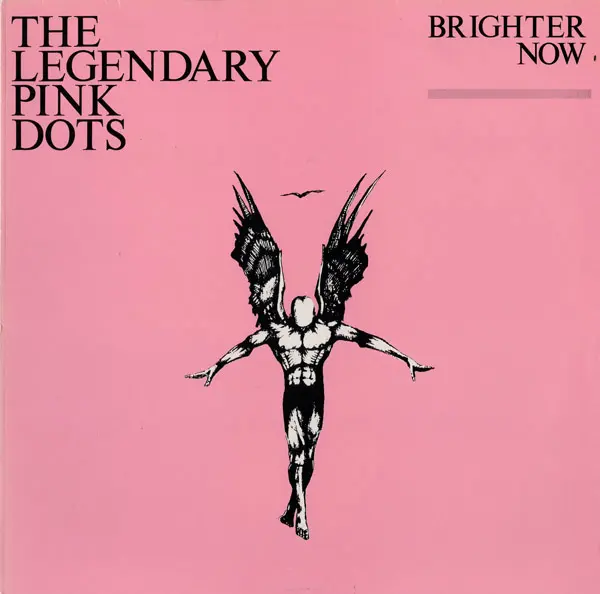 The Legendary Pink Dots released their proper debut album, Brighter Now, on December 7, 1982, on In Phaze, which pressed 1,000 copies of the nine-song LP. An earlier cassette edition appeared in a run of 300 copies.
Brighter Now runs on warm keyboards, thin drum patterns, rounded bass, and close-miked vocals. Ka-Spel sings in a plain, exposed tone while the keyboards spread the harmony from soft sustained chords to thicker atmospheric passages. The arrangements shift quickly from jaunty synth pieces to piano-led laments, longer layered tracks, and instrumental drift.
“Red Castles” opens with brisk tempo and warm keyboard backing. “Louder After 6” keeps a jaunty pace and thickens through stacked synth lines in the middle and at the close. “The Wedding” strips the music down to piano and voice. “Apocalypse Then” stretches past seven minutes and links several moods over a minimal beat and heavy bass. “Legacy” pairs acoustic guitar with bright keyboards and a softer vocal line.
“City Ghosts” starts slowly, lifts into a quicker chorus, and turns through several instrumental sections. “Hanging Gardens” slows the pulse to a near-float, with vocoder-treated voice, sustained keyboards, and a backward-running second half over steady bass. “Soma Bath” runs on a crude bass figure and sharper dissonant touches. “Premonition 4” closes as an instrumental ambient piece.
A1. “Red Castles” (3:28)
A2. “Louder After 6” (5:06)
A3. “The Wedding” (4:06)
A4. “Apocalypse Then” (7:24)
A5. “Legacy” (3:18)
B1. “City Ghosts” (5:42)
B2. “Hanging Gardens” (6:14)
B3. “Soma Bath” (3:48)
B4. “Premonition 4” (5:19)
Ka-Spel leads a seven-piece lineup with keyboardist-guitarist Michael Marshall, tape operator Phil Knight, bassist Roland Calloway, guitarist Rik Chevrolet, drummer Keith Thompson, and keyboardist April White around his vocals. In Phaze first issued the album on LP after an earlier cassette edition, and later pressings altered the cover art. The Soleilmoon reissue added new artwork and a lyric booklet.
Curse
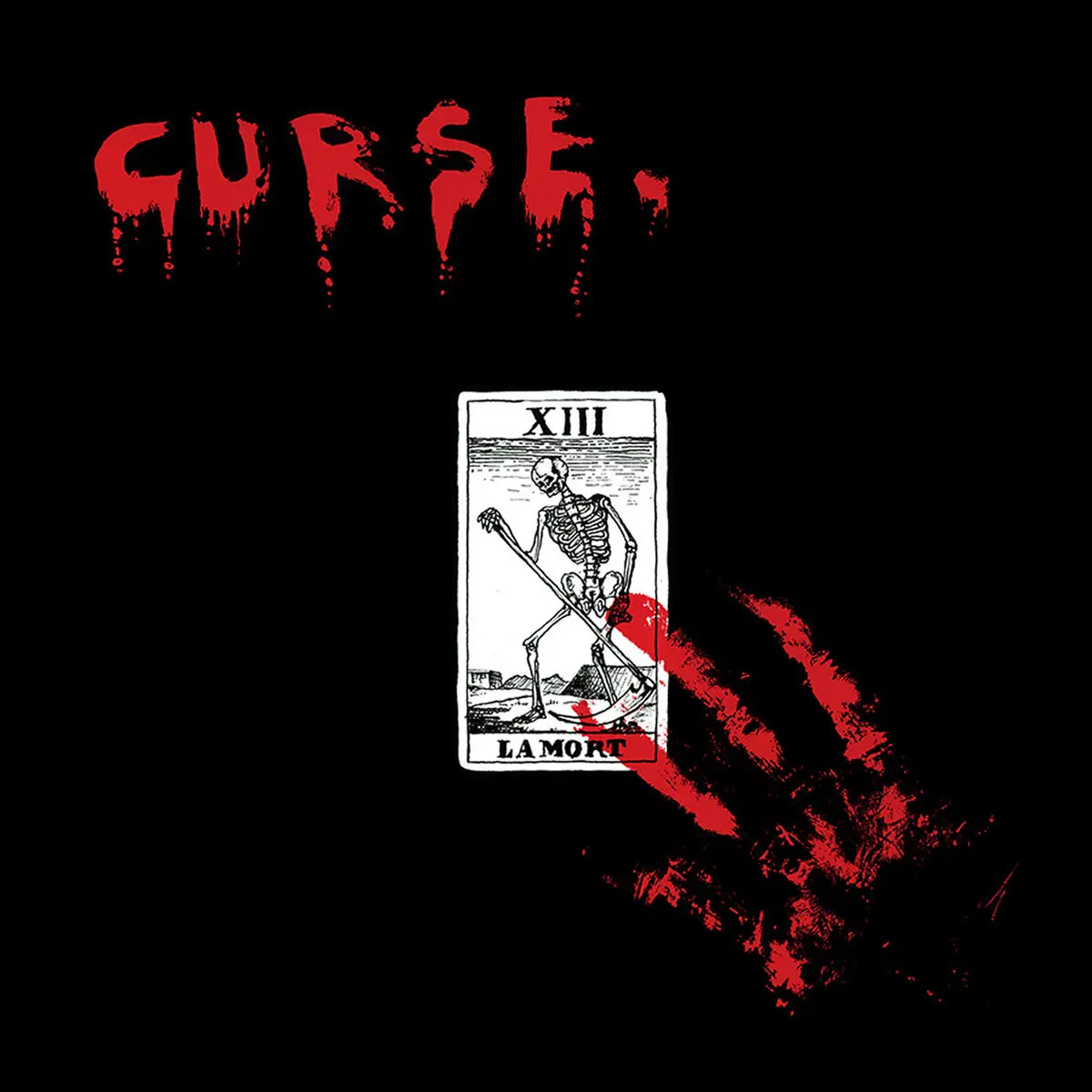 The Legendary Pink Dots released their proper formal album, Curse, on August 4, 1983, on In Phaze, which pressed 2,500 copies of the booklet-enclosed ten-song LP.
Curse pushes deeper into layered keyboards, brittle guitars, bass, percussion, and glockenspiel. The low-cost electronics stay in place, but the arrangements carry more weight and more internal detail. Ka-Spel fills the songs with sharply drawn characters and grim comic turns while the band builds a warm, uneasy surface around him.
“Love Puppets” unfolds in a melancholy haze of layered synths. “Wall Purges Night” runs on a stiffer post-punk pattern. “Lisa’s Party” sets a poisoned gathering inside a bright, childlike arrangement. “Arzhklahh Olgevezh!” uses recitation, theatrical rhythm, and backing voices. “Prüümptje Kurss” serves as a brief ambient break.
“Waving at the Aeroplanes” places a disturbing confession inside a stark setting. “Dolls’ House” runs on a clockwork pulse and leads into the slow sway of “The Palace of Love.” “Stoned Obituary” closes the album as a multi-part piece that passes through dark opening sections, drum-led passages, collage, acoustic interlude, and a stark final sing-along.
A1. “Love Puppets” (6:56)
A2. “Wall Purges Night” (4:16)
A3. “Lisa’s Party” (3:43)
A4. “Arzhklahh Olgevezh!” (6:15)
A5. “Prüümptje Kurss” (2:02)
B1. “Waving at the Aeroplanes” (3:07)
B2. “Hiding” (1:02)
B3. “Dolls’ House” (7:50)
B4. “The Palace of Love” (5:16)
B5. “Stoned Obituary” (6:31)
Ka-Spel leads a five-piece lineup with keyboardist-percussionist Phil Knight, guitarist Barry Gray, bassist Roland Calloway, and keyboardist April Iliffe around his vocals and glockenspiel. Drummer-vocalist Keith Thompson, flautist-vocalist Sally Graves, and percussionist Patrick White deepen the album’s layered texture, and engineer Pat Bermingham handled the recording. In Phaze pressed the first edition in a run of 2,500 copies. Later Big Blue and Soleilmoon editions used different artwork, and the Big Blue release added a lyric booklet.
The Tower
 The Legendary Pink Dots released their third album, The Tower, in 1984 on In Phaze.
The Tower locks into a cold, controlled pulse. Cheap drum machines, clipped keyboards, dissonant guitar, violin, and bass keep the tonal range narrow and the atmosphere sealed. Patrick Wright’s violin cuts through the electronics with sharp formal lines, while repeated march figures and short instrumental links reinforce the album’s oppressive theme.
“Black Zone” opens in tense electronic form. “Break Day” pushes Ka-Spel toward theatrical phrasing over rough guitar and cabaret-like movement. “Tower One” sets the central sequence in motion with a sinister synth pulse. “Vigil-Anti,” “A Lust for Powder,” and “Poppy Day” keep the middle stretch terse and severe, with “Poppy Day” drawing much of its force from violin-led writing. “Astrid” introduces guest vocals from Lilly AK in the album’s clearest hymn-like passage. The “Tower” pieces on side two deepen the cycle through stripped-down marches, recurring motifs, and short connective fragments.
A1. “Black Zone” (3:05)
A2. “Break Day” (3:35)
A3. “Tower One” (5:05)
A4. “Vigil-Anti” (4:24)
A5. “A Lust For Powder” (3:16)
A6. “Poppy Day” (3:56)
B1. “Tower Two” (3:57)
B2. “Astrid” (3:42)
B3. “Rope & Glory” (0:51)
B4. “Tower Three” (4:06)
B5. “Tower Four” (4:44)
B6. “Tower Five” (1:07)
Ka-Spel leads a six-piece lineup with keyboardist-percussionist Phil Knight, guitarist Barry Gray, keyboardist-vocalist April Iliffe, violinist-keyboardist Patrick Wright, and bassist Roland Calloway around his vocals, keyboards, and electronics. Guest singer Lilly AK appears on “Astrid,” Armin Bliss also appears, and engineer Pat Bermingham captured the set. In Phaze pressed the initial run of 2,500 copies. Later Terminal Kaleidoscope/PIAS and Soleilmoon editions carried different artwork.
The Lovers
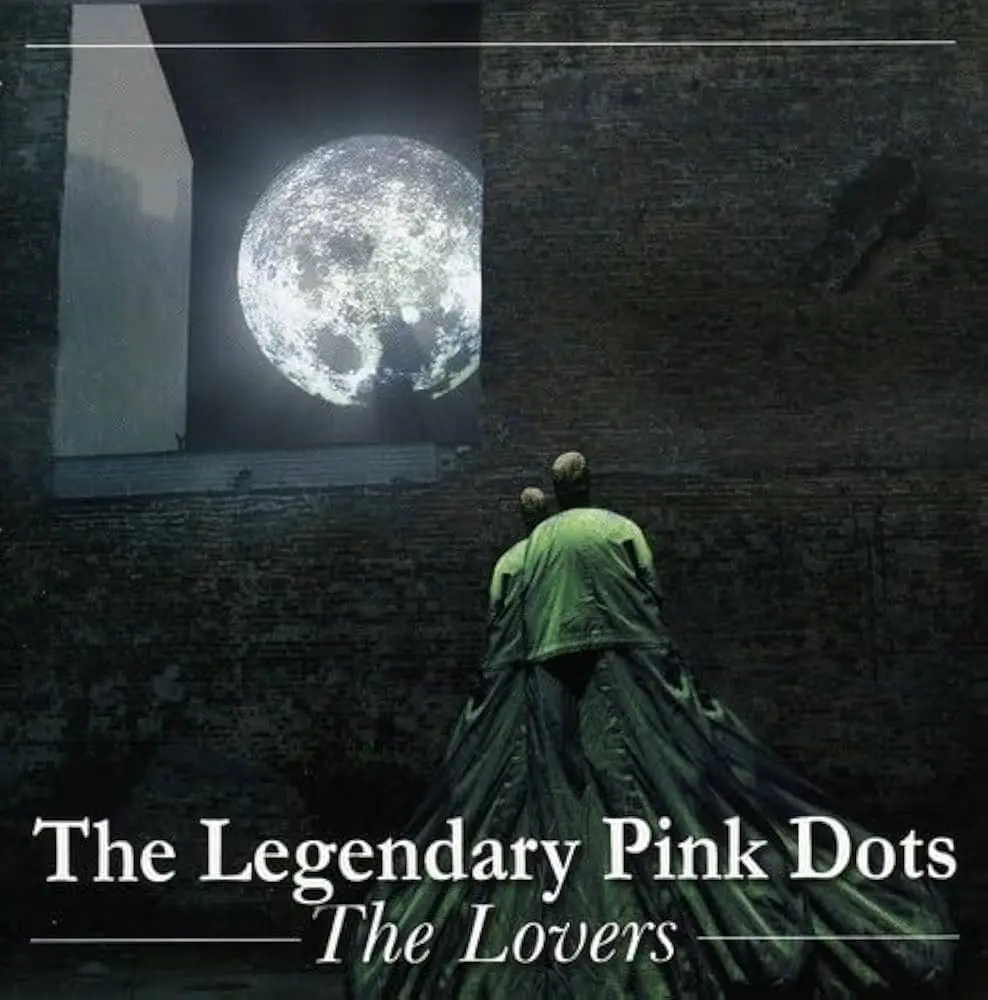 The Legendary Pink Dots released their first live album, The Lovers, in late 1984 on Ding Dong and Torso in the Netherlands.
The Lovers splits cleanly into two distinct halves. Side one drives forward with raw synth-rock force, stiff drum-box patterns, violin lines, and hard guitar, while side two turns toward piano, violin, and restrained vocal writing. Marylou Busch’s voice adds another line to the chamber-like studio material.
“MMMMMMMMMMMM…,” “The Heretic,” and “Jungle” present the band in louder form, with rigid rhythm-box patterns, raw guitar, and expanded instrumental sections. “Geisha Mermaid” already points toward the quieter side of the album, with Ka-Spel singing over a bare keyboard line. “The Lovers (Part 1)” and “The Lovers (Part 2)” form the center of the record, unfolding through piano, violin, and slow, delicate phrasing. “Flowers for the Silverman” broadens that chamber setting into one of the fullest studio pieces here. CD editions add “Curious Guy,” built from vocals, drums, and violin, and “Premonition 16,” a long experimental instrumental.
A1. “MMMMMMMMMMMM…” (5:14)
A2. “Geisha Mermaid” (3:12)
A3. “The Heretic” (3:16)
A4. “Jungle” (9:01)
B1. “The Lovers (Part 1)” (5:50)
B2. “Silverture” (1:27)
B3. “Flowers for the Silverman” (7:44)
B4. “The Lovers (Part 2)” (7:04)
CD bonus tracks:
9. “Curious Guy” (5:35)
10. “Premonition 16” (11:25)
Ka-Spel leads a six-piece lineup with keyboardist Phil Knight, guitarist Barry Gray, bassist Roland Calloway, violinist-pianist Patrick Wright, and vocalist Marylou Busch around his vocals and keyboards. Side A distills their show on September 9, 1984, at De Melkweg, Amsterdam. Side B gathers their recent set at Vara Studios, Hilversum, for VPRO Radio. Ding Dong limited the initial release to 2,000 copies, and later editions used different cover art.
Asylum
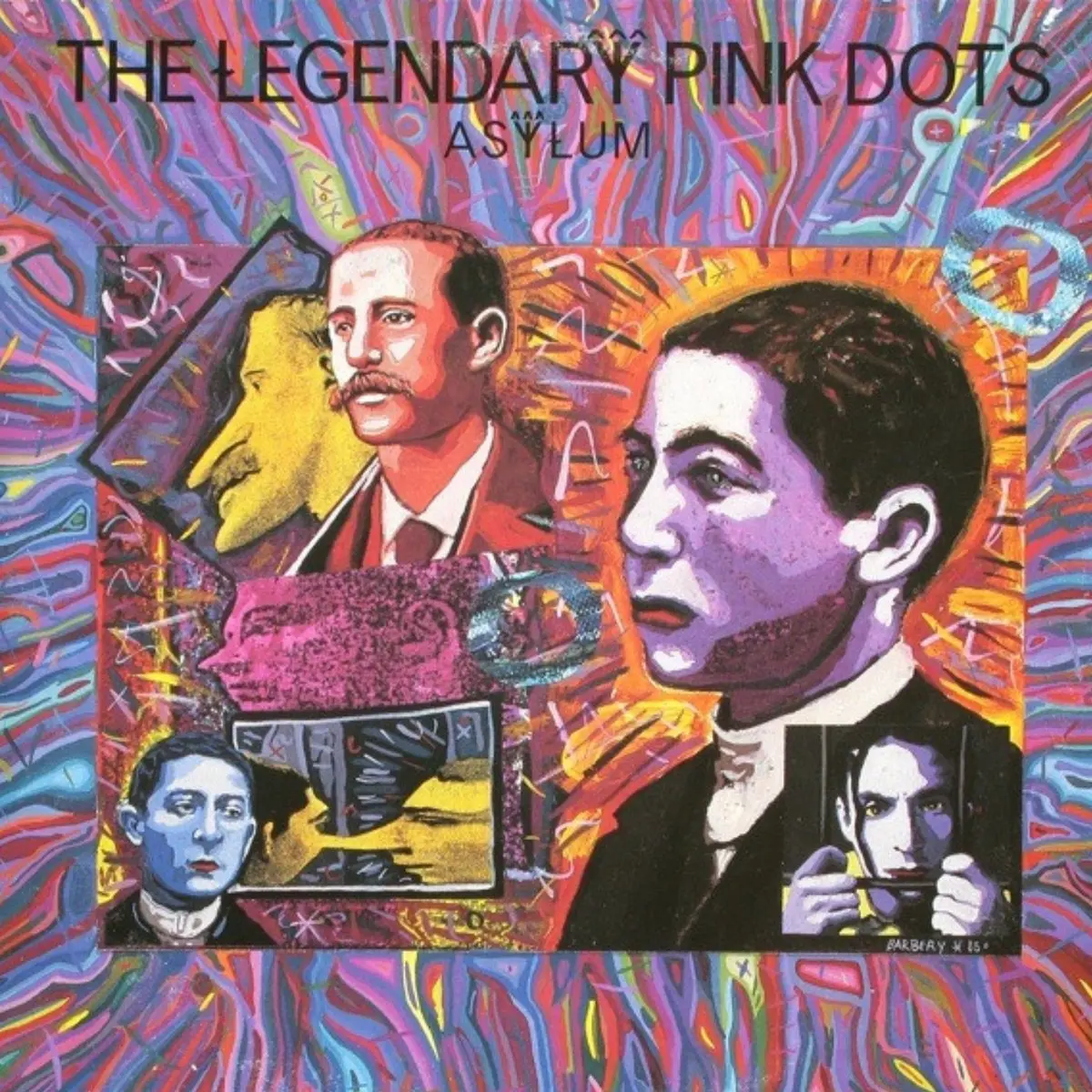 The Legendary Pink Dots released their fourth studio album, Asylum, in 1985 on Play It Again Sam.
Asylum sprawls across direct songs, chant, chamber writing, nursery-rhyme distortion, mechanical collage, and long ambient passages. Ka-Spel stays at the center of the record, and Patrick Wright’s violin cuts through the dense keyboard writing with sharp melodic lines and abrasive swells. The album keeps a constant psychological pressure even as the arrangements change shape from track to track.
“Echo Police” opens with one of the album’s clearest song structures, then widens through a galloping middle section and dramatic keyboard writing. “Gorgon Zola’s Baby” and “Fifteen Flies in the Marmalade” compress grotesque miniature scenes into short, tightly arranged pieces. “Femme Mirage” draws voice, strings, and sparse accompaniment into one of the album’s most haunted settings. “The Hill” sets disturbing subject matter against a lighter musical surface. “Prisoner” drives forward with a larger chorus and dense arrangement.
“So Gallantly Screaming” stretches past eleven minutes, moving from layered strings and drones into machinery, spoken passages, and ambient turbulence. “I Am the Way, the Truth, the Light” expands into a long sectional piece with chamber and music-hall elements. “Golden Dawn” rises through a slow narcotic pulse toward guitar and strings at the close. “The Last Straw,” “A Message From Our Sponsor,” “Go Ask Alice,” and “This Could Be the End” close the record with warped voice treatment, ambient pressure, and ceremonial motion.
A1. “Echo Police” (4:48)
A2. “Gorgon Zola’s Baby” (2:29)
A3. “Fifteen Flies In the Marmalade” (2:47)
A4. “Femme Mirage” (3:35)
B1. “The Hill” (4:22)
B2. “Demonism” (2:35)
B3. “Prisoner” (5:11)
B4. “So Gallantly Screaming” (11:13)
C1. “I Am the Way, the Truth, the Light” (8:01)
C2. “Agape” (3:49)
C3. “Golden Dawn” (5:49)
D1. “The Last Straw” (4:53)
D2. “A Message From Our Sponsor” (4:06)
D3. “Go Ask Alice” (3:25)
D4. “This Could Be the End” (8:01)
Ka-Spel leads a six-piece lineup with keyboardist Phil Knight, guitarist Barry Gray, violinist-keyboardist-vocalist Patrick Wright, bassist-keyboardist-vocalist Julia Niblock Waller, and keyboardist Graham Whitehead around his vocals and keyboards. Tape editor Steven Stapleton sharpened the album’s cut-up transitions and pressure-filled ambient passages. Asylum first appeared as a double set and later circulated on CD through Cacciocavallo/Soleilmoon and SPV.
Island of Jewels
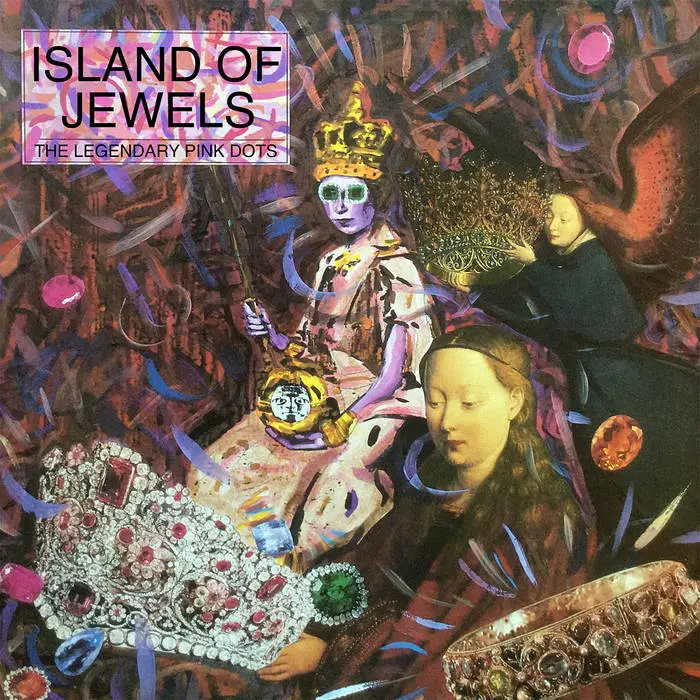 The Legendary Pink Dots released their fifth album, Island of Jewels, in 1986 on Play It Again Sam.
Island of Jewels condenses the band’s writing into shorter songs with sharper turns. Many tracks pivot midway into a fresh section or a new tonal area, and active rhythm programming keeps the music in motion. Patrick Wright’s violin stays prominent throughout, and Hanz Myre’s engineering thickens the arrangements with added depth and detail.
“Tower Six” links the album to earlier material in miniature. “The Red & the Black” starts in a clipped electronic setting, then opens into a broader second half. “The Dairy” and “Rattlesnake Arena” keep rougher textures close to the surface. “Emblem Parade” pushes the violin into a lead role. “Jewel on an Island” and “Jewel in the Crown” turn from firm verse structures toward wider atmospheric endings. “The Shock of Contact” joins rhythmic drive to one of the album’s clearest melodic designs. “Our Lady in Chambers,” “Our Lady in Kharki,” and “Our Lady in Darkness,” followed by “The Guardians of Eden,” close the album in suite-like form.
A1. “Tower Six” (2:20)
A2. “The Red & the Black” (3:35)
A3. “The Dairy” (3:42)
A4. “Emblem Parade” (3:07)
A5. “Jewel On An Island” (4:31)
A6. “Rattlesnake Arena” (3:44)
B1. “The Shock Of Contact” (5:00)
B2. “Jewel In the Crown” (4:56)
B3. “Our Lady In Chambers” (3:39)
B4. “Our Lady In Kharki” (2:19)
B5. “Our Lady In Darkness” (4:48)
B6. “The Guardians Of Eden” (1:37)
Ka-Spel leads a six-piece lineup with keyboardist-sound designer Phil Knight, guitarist Barry Gray, violinist-keyboardist-programmer Patrick Wright, keyboardist-pianist Graham Whitehead, and saxophonist-engineer Hanz Myre around his vocals and occasional electronics. The first 5,000 PIAS and Penguin LP copies appeared in gatefold sleeves with printed lyrics, and each major edition used different artwork.
Any Day Now
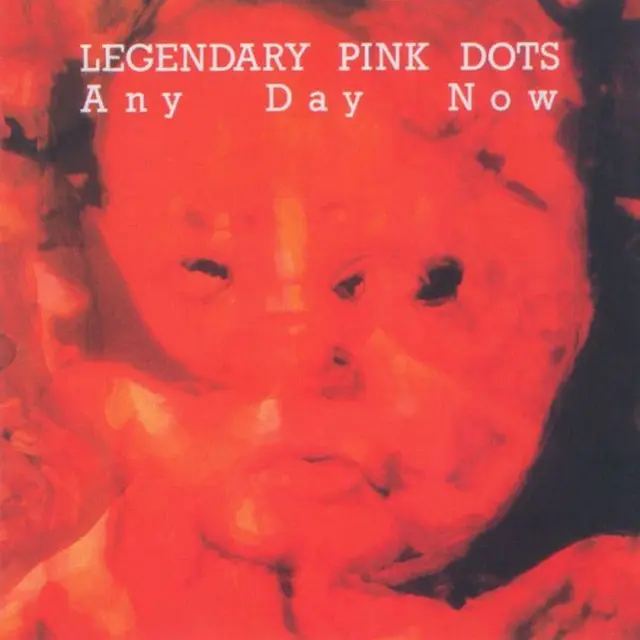 The Legendary Pink Dots released their sixth studio album, Any Day Now, in 1988 on Play It Again Sam and Wax Trax!
Any Day Now holds to a cold, nocturnal atmosphere from start to finish. Rigid drum programming, tense electronics, and sustained violin lines give the songs a tightly organized shape. Patrick Wright’s violin slices through the keyboards in long held tones and clipped figures, supplying much of the album’s tension.
“Casting the Runes” opens in dark ceremonial style, with Marylou Busch deepening the chorus. “A Strychnine Kiss,” “Laguna Beach,” and “The Gallery” keep the early stretch compact, with the last built around a repeated figure and room ambience at the close. “Neon Mariners” sets chilly keyboards and violin against a wiry bass line and rigid programmed rhythm. “True Love” drives on sequencers and urgent pulse.
“Waiting For the Cloud” runs past ten minutes while holding to formal song structure, then eases into a quieter piano-and-violin ending. “Cloud Zero” closes the LP proper in the same cold register. CD editions add “Under Glass,” “The Light In My Little Girl’s Eyes,” and “The Plasma Twins.”
A1. “Casting the Runes” (5:47)
A2. “A Strychnine Kiss” (3:19)
A3. “Laguna Beach” (2:21)
A4. “The Gallery” (3:30)
A5. “Neon Mariners” (4:46)
B1. “True Love” (3:21)
B2. “The Peculiar Fun Fair” (0:32)
B3. “Waiting For the Cloud” (10:18)
B4. “Cloud Zero” (5:48)
CD bonus tracks:
10. “Under Glass” (7:06)
11. “The Light In My Little Girl’s Eyes” (5:01)
12. “The Plasma Twins” (2:55)
Ka-Spel leads a six-piece lineup with keyboardist Phil Knight, guitarist Barry Gray, violinist Patrick Wright, keyboardist Graham Whitehead, and electronic musician Jason Salmon around his vocals. Guest vocalist Marylou Busch appears on “Casting the Runes,” drummer Tony Copier plays on “A Strychnine Kiss” and “Waiting For the Cloud,” and saxophonist-sound processor Hanz Myre adds baritone saxophone to “A Strychnine Kiss” and processing elsewhere. SPV editions used different artwork.
The Golden Age
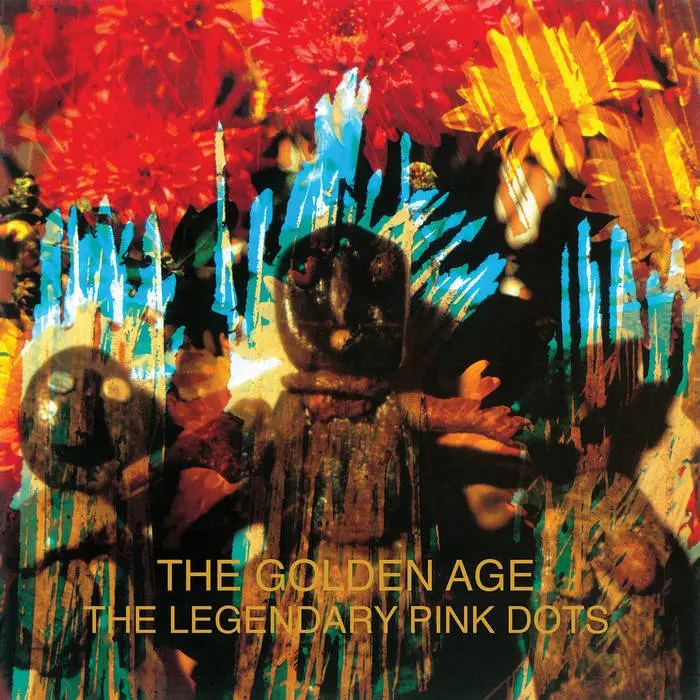 The Legendary Pink Dots released their seventh studio album, The Golden Age, in 1989 on Play It Again Sam and Wax Trax!
The Golden Age centers its writing on dark, tightly shaped songs. Waltz time, slow marches, clipped synth pulse, and Patrick Wright’s strings give the record a grave, inward pull. Ka-Spel writes at close range throughout, and the violin often carries the central line as well as much of the emotional force.
“Maniac” opens with restless motion, rabid violin figures, and hard rhythmic contrast. “The Talent Contest” narrows its focus to a single anxious scene. “The More It Changes” places bleak lyrics inside a brighter, more active arrangement. “Hotel Noir” unfolds in slow waltz time and centers on Wright’s string writing. “Stille Nacht” and “The Month After” deepen the album’s desolate mood. “Lisa’s Separation” brings the writing down to rooms, drawers, and photographs, then leads into the brief title piece. “Black Castles” closes the original LP with nursery textures, violin breaks, and a darker experimental turn. CD editions add “Blacklist,” “Methods,” and “Our Lady in Cervetori.”
A1. “Maniac” (4:07)
A2. “The Talent Contest” (4:02)
A3. “The More It Changes” (3:30)
A4. “Hotel Noir” (6:45)
A5. “Stille Nacht” (3:36)
B1. “The Month After” (4:56)
B2. “Lisa’s Separation” (5:42)
B3. “The Golden Age?” (2:00)
B4. “Black Castles” (5:24)
B5. “And Even the Vegetables Screamed” (1:35)
B6. “Regression” (1:51)
CD bonus tracks:
12. “Blacklist” (6:44)
13. “Methods” (4:13)
14. “Our Lady in Cervetori” (4:40)
Ka-Spel leads a four-piece lineup with keyboardist-sampler Phil Knight, violinist-violist-programmer Patrick Wright, and saxophonist-flautist-electronics player Hanz Myre around his vocals and keyboards. Guest guitarist Bob Pistoor appears on the album, and Hanz Myre also engineered the sessions. The bonus tracks came from the Blacklist 12″.
The Crushed Velvet Apocalypse
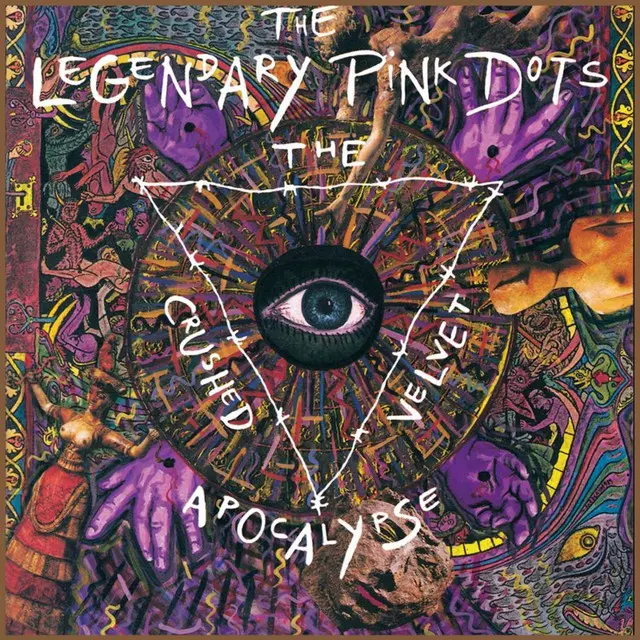 The Legendary Pink Dots released their eight studio album, The Crushed Velvet Apocalypse, in 1990 on Play It Again Sam/Wax Trax! and Caroline.
The Crushed Velvet Apocalypse broadens the band’s palette through winds, acoustic instruments, sitar, timpani, and denser electronics. The arrangements stretch outward through texture, repetition, and slow ceremonial build, while Ka-Spel’s voice remains fixed at the center. Flute, saxophone, bass clarinet, oboe, and acoustic guitar soften the edges even when the material turns sinister.
“I Love You In Your Tragic Beauty” opens in a stripped acoustic setting, then broadens through bass clarinet and flute. “Green Gang” runs sitar and tabla-like patterns into woodwinds and a low motorway-like hum. “Hellsville” pushes the album toward dirtier terrain, while “Hellowe’en” serves as a short dark interlude. “The Safe Way” holds a steady beat, adds oboe in the middle section, and breaks open into a wider close.
“Just a Lifetime” expands patiently over nearly eight minutes with drums, timpani, and increasingly impassioned vocals. “The Death of Jack the Ripper” drives one of the album’s bleakest refrains. “New Tomorrow” closes the original LP in an extended ceremonial sweep. CD editions add “Princess Coldheart,” “The Pleasure Palace,” “The Collector,” and the short coda “C.V.A.”
A1. “I Love You In Your Tragic Beauty” (4:40)
A2. “Green Gang” (7:38)
A3. “Hellsville” (5:42)
A4. “Hellowe’en” (1:17)
B1. “The Safe Way” (4:31)
B2. “Just a Lifetime” (7:40)
B3. “The Death of Jack the Ripper” (5:20)
B4. “New Tomorrow” (9:53)
CD bonus tracks:
9. “Princess Coldheart” (6:40)
10. “The Pleasure Palace” (8:10)
11. “The Collector” (5:20)
12. “C.V.A.” (1:15)
Ka-Spel leads a five-piece lineup with keyboardist-sampler-percussionist Phil Knight, guitarist-sitarist-bassist Bob Pistoor, woodwind player Niels van Hoorn, and electronics-oboe-timpani player Hanz Myre around his vocals and keyboards. Hanz Myre also engineered the album, and the expanded instrumentation gives the record its wider acoustic and wind-led texture. The title refers to the Velvet Revolution of Czechoslovakia in 1989. SPV issued a version with different artwork.
The Maria Dimension
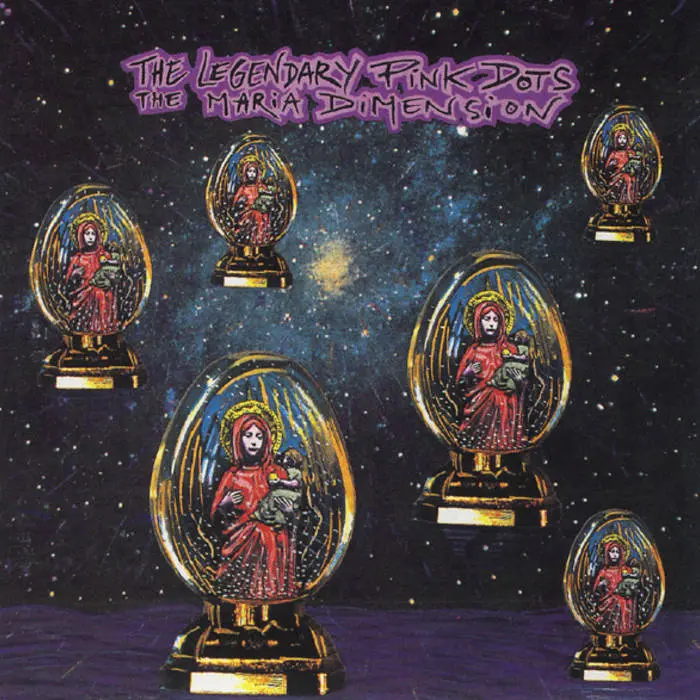 The Legendary Pink Dots released their ninth studio album, The Maria Dimension, in May 1991 on Play It Again Sam.
The Maria Dimension moves at a slower pace and sinks into deeper atmosphere. Blurred keyboards, samples, acoustic instruments, winds, percussion, and treated voices give the songs the shape of drifting processions with softened rhythmic edges. Bob Pistoor and Niels van Hoorn define much of that texture through acoustic detail, wind lines, and low-register color.
“Disturbance” opens with pulsing layers and a slow build before the vocal enters. “Pennies for Heaven” starts from intricate guitar and reserved singing, then grows heavier through drums, organ, and horns. “Third Secret” works from manipulated string-like timbres, beat, and keyboard swell, before ending in operatic vocal color. “The Grain Kings” drives forward on one of the album’s strongest rhythms, with keyboards and guitar pushing the track past eight minutes.
“The Ocean Cried ‘Blue Murder’” places piano, low wind color, electronics, and seashore effects around one of the album’s most direct songs. “Belladonna” holds back and lets synths and saxophone deepen the mood. “A Space Between” and “Evolution” extend the album’s atmospheric side, with the latter stretching into spoken passages, darker pulse, and prolonged instrumental drift. “Cheraderama,” “Lilith,” and “Fourth Secret” move through compact shadows and chant-like figures. “Expresso Noir” sets a train-like rhythm beneath the voice, “Home” opens with piano and gradually surrounds it with atmosphere, and “Crushed Velvet” closes the album in a dark spacious coda with shifting percussion and saxophone.
A1. “Disturbance” (5:24)
A2. “Pennies for Heaven” (4:18)
A3. “Third Secret” (4:27)
A4. “The Grain Kings” (8:02)
B1. “The Ocean Cried ‘Blue Murder’” (4:10)
B2. “Belladonna” (4:06)
B3. “A Space Between” (6:30)
B4. “Evolution” (8:51)
C1. “Cheraderama” (4:57)
C2. “Lilith” (4:02)
C3. “Fourth Secret” (2:58)
D1. “Expresso Noir” (3:38)
D2. “Home” (5:32)
D3. “Crushed Velvet” (6:39)
The first 3,000 European CD copies included a bonus 3″ disc, and later U.S. and Polish editions appeared with alternate artwork.
1. “I Dream of Jeannie” (3:55)
2. “Little Oyster” (3:59)
3. “She Gave Me an Apple” (3:09)
4. “Stirred But Not Shaken” (2:14)
5. “Where No Man” (6:36)
Ka-Spel leads a four-piece lineup with keyboardist-sampler Phil Knight, guitarist-sitarist Bob Pistoor, and woodwind player Niels van Hoorn around his vocals. Electronics player Hans Meyer adds devices to the sessions, and vocalist Jason Salmon appears on “Pennies for Heaven.” The album uses keyboards, electric and acoustic guitars, sitar, Hawaiian guitar, lyre, percussion, tea cups, tenor and baritone saxophone, flute, bass clarinet, glockenspiel, bass guitar, drums, and treated voices.
Discography:
- Brighter Now (1982)
- Curse (1983)
- The Tower (1984)
- The Lovers (live, 1984)
- Asylum (1985)
- Island of Jewels (1986)
- Any Day Now (1988)
- The Golden Age (1989)
- The Crushed Velvet Apocalypse (1990)
- The Maria Dimension (1991)
- Malachai: Shadow Weaver Part 2 (1992)
- Shadow Weaver (1992)
- 9 Lives to Wonder (1994)
- From Here You’ll Watch the World Go By (1995)
Sources:
Artist/Album Pages:
The Spinners were an American soul group, best known for the 1970s hits “It’s a Shame,” “I’ll Be A...
Nya Ljudbolaget was a Swedish jazz-rock/folk band behind a 1981 self-titled album on MNW. Member...
Vicious Pink was the English electro-pop duo of keyboardist Brian Moss and vocalist Josie Warden. ...
Survivor was an American hard-rock band, best known for their hit theme songs to Rocky III ("Eye o...
The Edge was an English new wave/post-punk band from London that debuted with a 1978 single on Alb...
Lion was an L.A.-based, American/English hard-rock supergroup that released the 1980 album Running...
Raw Material was an English post-psych band that released a self-titled album in 1970 on small-press...
Bachdenkel was an English post-psych band based in France. In 1970, they recorded Lemmings, which ...
The Rolling Stones are an English rock band formed in 1962 by guitarist Brian Jones with singer Mick...
Shigeru Suzuki — 鈴木茂 (born Dec. 20, 1951) — is a Japanese musician and songwriter who played with ...
Shigeharu Mukai — 向井滋春 (born Jan. 21, 1949) — is a Japanese jazz trombonist who emerged as a backi...
Samson was an English brass-psych band from Manchester that made the 1969 album Are You Samson. Paul...