

Nik Kershaw (born March 1, 1958) is an English musician, vocalist, and songwriter who rose to prominence in the mid-1980s with a run of UK chart hits and critically regarded synth-pop albums.
Kershaw released Human Racing and The Riddle on MCA in 1984, both of which went platinum in the UK and produced singles such as “Wouldn’t It Be Good,” “I Won’t Let the Sun Go Down on Me,” “The Riddle,” and “Wide Boy.”
He followed with two further albums for the label—Radio Musicola (1986) and The Works (1989)—which showcased a shift toward denser arrangements and more introspective songwriting. Before launching his solo career, Kershaw recorded the 1980 album Till I Hear from You with the jazz-funk band Fusion.
Background
He was born Nicholas David Kershaw on March 1, 1958, in Bristol and raised in Ipswich, Suffolk. His father played flute and his mother sang opera. He taught himself guitar while enrolled in secondary school. During his late teens, he worked in an unemployment office.
After playing in a series of local groups, he joined the Reg Webb Band, which released the jazz-funk album I Ain’t Signing Nothin’ on Ariola (Benelux) and Strand (Germany) in 1979. The following year, it was repackaged as Till I Hear From You on Telephone Records (UK) with the band renamed Fusion. When they split in 1982, Kershaw launched his solo career.
“I Won’t Let the Sun Go Down on Me”
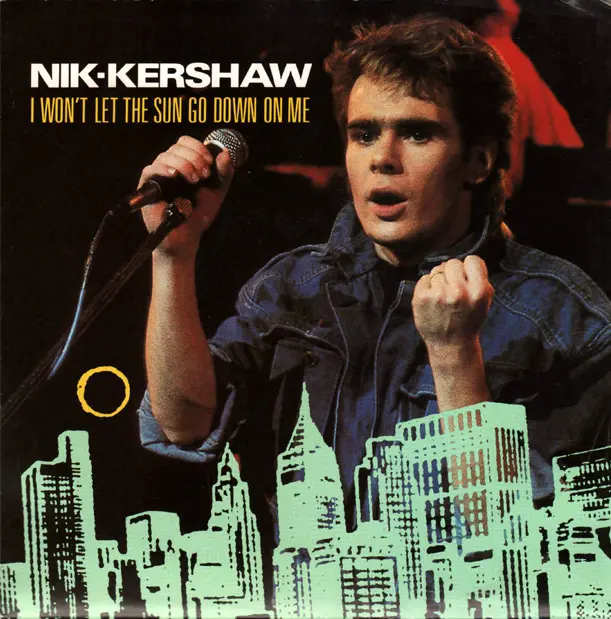 Nik Kershaw issued “I Won’t Let the Sun Go Down on Me” as his debut solo single on September 9, 1983, through MCA. Initially overlooked, the track was re-promoted in November and again re-issued on June 4, 1984, following the chart success of “Wouldn’t It Be Good.” The final push propelled it to No. 2 on the UK Singles Chart and into the Top 10 across Europe. The single is backed with the non-album B-side “Dark Glasses.”
The lyrics reflect Cold War anxiety with satirical imagery of geopolitical brinkmanship, targeting nuclear-era leadership and ideological dualities: “Old men in stripey trousers / rule the world with plastic smiles,” and “forefinger on the button, is he blue or is he red?” Kershaw, in a 1984 interview, framed it as a protest about personal accountability under political fear. Originally conceived as a folk-style protest song, it was rearranged into a synth-based anthem under producer Peter Collins, featuring a prominent Oberheim OB‑8 synthesizer line played by Paul “Wix” Wickens.
Two promotional videos exist. The 1983 version, filmed at Allington Castle, shows Kershaw accompanied by children and a minstrel with a lute. The 1984 reissue used a faux live stage video, hastily shot during touring downtime, and included symbolic imagery like a blue rabbit placed onstage by Kershaw for luck.
7″ – MCA 816
A. “I Won’t Let the Sun Go Down on Me” – 3:19
B. “Dark Glasses” – 4:15
12″ – MCAT 816
A. “I Won’t Let the Sun Go Down on Me” (Extended Dance Mix) – 6:00
B. “Dark Glasses” – 4:20
12″ – MCA NIKT 4
A. “I Won’t Let the Sun Go Down on Me” (Extended Remix) – 6:35
B. “Dark Glasses” – 4:12
The original 1983 release peaked at UK No. 47. Following the 1984 reissue, the single reached No. 2 in the UK, No. 3 in Denmark, No. 4 in Ireland, and entered the Top 10 in Belgium, the Netherlands, Switzerland, Norway, and Sweden. It reached No. 12 in West Germany and No. 17 in Australia.
“Wouldn’t It Be Good”
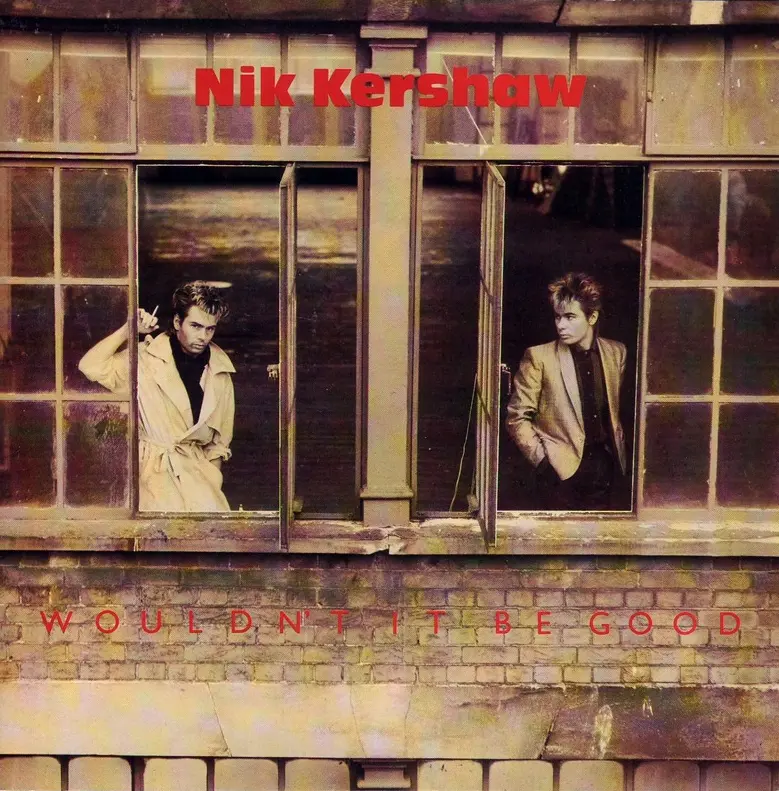 Nik Kershaw released “Wouldn’t It Be Good” as his second single on January 20, 1984, through MCA. It served as the second release from Human Racing and marked his commercial breakthrough, peaking at No. 4 in the UK and entering the Top 10 in Ireland, Australia, Canada, Switzerland, and West Germany. The B-side, “Monkey Business,” was exclusive to this single but later included on the 2012 expanded edition of the album.
Kershaw wrote the song late in the album’s development, constructing the harmony on keyboard before arranging its guitar parts as layered overdubs inspired by Queen guitarist Brian May. He recorded approximately 20 separate guitar takes to form a harmonically complex “guitar orchestra,” manually bounced on analogue tape. The main synthesizer riff was built using a PPG Wave 2.2 and Yamaha DX7. The track’s dissonant harmonic layering complicated the tuning of overdubbed bass and keyboard parts.
The lyrics address themes of envy and dissatisfaction, captured in the title’s refrain of aspirational escape. Kershaw later described it as a song about “always wanting it better than everyone else.” He performed the track at Live Aid (Wembley Stadium) in July 1985.
The music video, directed by Storm Thorgerson, depicts Kershaw as a stranded extraterrestrial who observes and briefly inhabits human experiences. It was shot over three days in mid-January 1984, using chroma key technology to render his glowing space suit. Filming locations included St. James’ Court Hotel in London and the Mullard Radio Astronomy Observatory in Cambridgeshire. The video received heavy rotation on MTV, aiding its US breakthrough (No. 46 Billboard Hot 100).
 7″ – MCA 889
A. “Wouldn’t It Be Good” – 4:35
B. “Monkey Business” – 3:28
12″ – MCA 12 889
A. “Wouldn’t It Be Good” (Special Extended Mix) – 6:50
B. “Monkey Business” – 3:28
Produced by Peter Collins. Guitars arranged and performed by Nik Kershaw. Synthesizer riff created using PPG Wave 2.2 and Yamaha DX7.
Reached No. 4 in the UK, No. 2 in Ireland and West Germany, No. 3 in Switzerland, No. 5 in Australia, No. 6 in Norway, No. 7 on Canada’s The Record, No. 9 on Canada RPM and the European Top 100, No. 12 in Austria, No. 14 in Italy and South Africa, No. 16 in New Zealand, and No. 17 in Belgium.
Human Racing
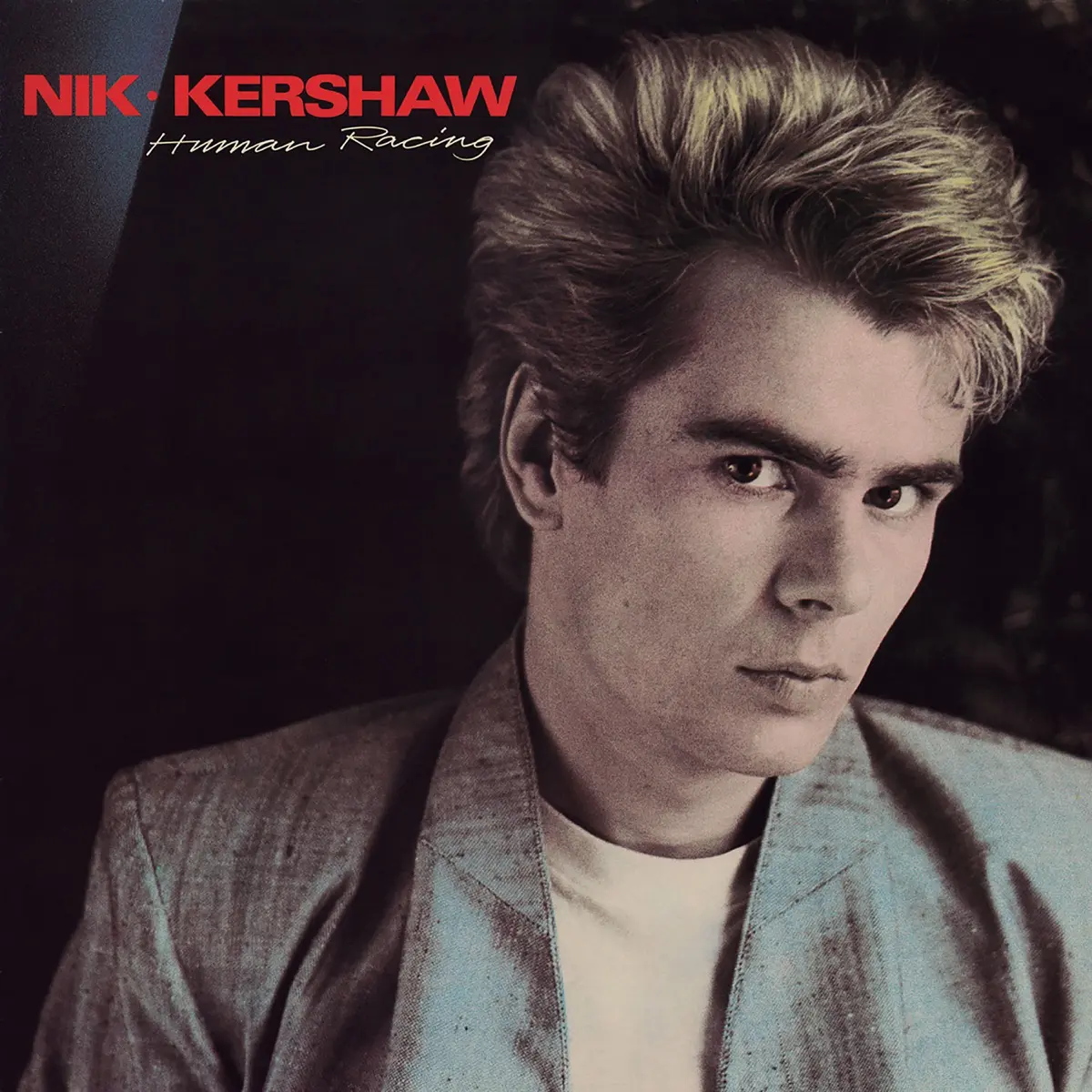 Nik Kershaw released his debut album, Human Racing, on February 27, 1984, on MCA Records.
It blends rhythmic programming, layered analog synths, and multi-tracked guitar lines, often assembled through meticulous overdubbing and tape bouncing. Several tracks, including “Drum Talk,” developed from spontaneous studio ideas, while others, like “I Won’t Let the Sun Go Down on Me,” expressed satirical commentary on political issues. Kershaw performed most guitar, bass, and keyboard parts himself, often pairing PPG Wave 2.2 and Yamaha DX7 textures with manually stacked guitar harmonies in a technique inspired by Brian May.
“Dancing Girls” opens with regimented pulses and layered synth brass, its pace sharp and persistent beneath clipped, percussive vocals. “Wouldn’t It Be Good” alternates between a climbing guitar motif and a descending verse line that resolves into a chorus reinforced by layered horns. “Bogart” shifts the mood with playful lyrics over a denser, interlocking mesh of bass and keyboard lines that move in staggered ascent. “Drum Talk” leans on programmed vocal effects, using syllabic bursts and layered rhythmic accents to simulate percussive interplay.
“Cloak and Dagger” slows the tempo with a more deliberate cadence, allowing its dual guitar lines to surface in counterpoint. “Faces” takes a darker turn with slower pacing, narrow melodic phrasing, and a flattened vocal delivery that underscores the theme of psychological loss. Kershaw closes the album with the title track, where softened synth pads and a measured pace signal an introspective landing. Across the set, he employs tonal contrast—mixing angular chorus lines with fluid bridges, and alternating synthetic precision with expressive guitar phrasing—to maintain structural interest and underscore shifts in lyrical mood without relying on abrupt stylistic detours.
A1. “Dancing Girls” (3:46) – Nik portrays a man numbed by routine and emotional fatigue who retreats into fantasy for solace. He observes, “Our hero sits with head in hands and heart upon his sleeve,” capturing the quiet despair that drives the need for imagined escape through beauty and distraction.
A2. “Wouldn’t It Be Good” (4:32) – Nik reckons life feels like a constant, exhausting struggle while others coast in comfort, breeding resentment and a desperate urge to escape his own skin. “It’s getting harder just keeping life and soul together” underlines his sense of emotional and physical depletion, where survival itself feels like an ongoing fight rather than progress.
A3. “Drum Talk” (3:10) – Nik explains that when words fail him—whether in joy, love, or pain—he expresses himself through rhythm, affirming, “I let the drums do the talking.”
A4. “Bogart” (4:38) – Nik feels overshadowed and discarded by a lover who fixates on someone else, leaving him lost in comparison and desperate for guidance. He appeals to a stoic cinematic ideal—Humphrey Bogart—for answers, confessing, “She thinks that he’s so smart / She doesn’t know that she’s breaking my heart.”
A5. “Gone to Pieces” (3:11) – Nik concludes he is emotionally and mentally exhausted, abandoning the fight and severing ties with expectations, responsibility, and even his own identity. “So tell the whole world I’m not here, I’m somewhere else and I’m not coming back” signals total withdrawal—escape not just from conflict, but from the self that kept losing.
B1. “Shame on You” (3:33) – Nik lays bare his willingness to endure anything for love, even when that devotion is met with indifference. He laments, “I would go to hell in a hat if you asked me to,” framing his self-sacrifice as both absurd and sincere—underscoring the imbalance in their connection.
B2. “Cloak and Dagger” (4:55) – Nik critiques the hidden forces that shape society, exposing the manipulation and secrecy of those in power. He asserts, “We give you bits and pieces to keep you happy and fat,” revealing how distraction and limited truths are used to pacify the public while control remains centralized.
B3. “Faces” (4:05) – Nik confronts the seductive pull of conformity and manipulation, exposing how external forces promise safety in exchange for autonomy. He recalls, “Just when you really think you’re going places, they come inside of you with their many faces,” revealing how identity is eroded by those who offer comfort at the cost of selfhood.
B4. “I Won’t Let the Sun Go Down on Me” (3:23) – Nik warns against political apathy and global self-destruction, invoking nuclear anxiety and environmental collapse as symptoms of failed leadership. He observes, “Old men in stripy trousers rule the world with plastic smiles,” exposing the hollow authority of those in charge while urging resistance before it’s too late.
B5. “Human Racing” (4:26) – Nik reflects on the futility of competition and ambition in a world driven by surface appearances and relentless pursuit. He reasons, “You never win them human races, so who’s the loser now,” exposing the illusion of progress when success is measured only by outpacing others in a cycle without end.
 Sessions took place in summer 1983 at Sarm East and Sarm West (London), Marcus Music and Cherokee Studios (Los Angeles). Peter Collins produced the album. Julian Mendelsohn handled engineering and mixing, assisted by Stuart Bruce, Keith Finney, Bob Kraushaar, Roger Howorth, and Nick Campey. “I Won’t Let the Sun Go Down on Me” and “Wouldn’t It Be Good” appeared as singles prior to the album and reissued with expanded formats following the album’s success.
Kershaw issued “Dancing Girls” as the third single on 2 April 1984. Written over a Roland TR-808 and a spontaneous Juno-6 bassline, it depicts a bored office worker longing for disruption. Its promotional video, shot in Woodberry Grove, Finchley, used satirical imagery and exaggerated characters, including a towering traffic warden, to contrast against Kershaw’s diminutive figure. The single entered the UK charts on 14 April and peaked at No. 13, remaining on the chart for nine weeks.
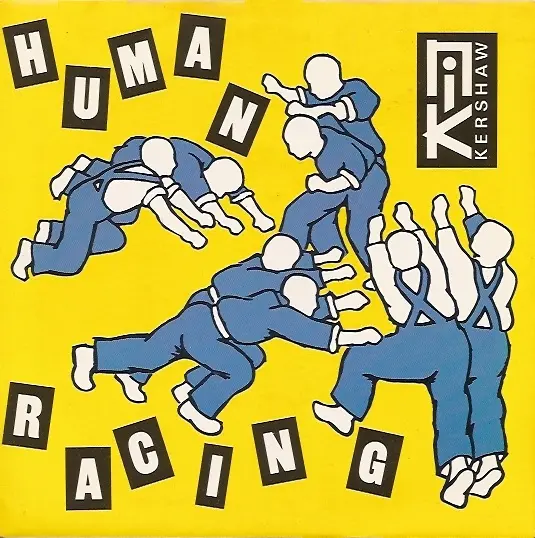 “Human Racing,” released as the fourth and final single on 3 September 1984, was a reworking of Kershaw’s 1980 song “Look Behind You” from his tenure in the band Fusion. The single appeared in multiple formats, including a gatefold double-7″ edition featuring a fold-out board game and two live recordings from the Hammersmith Odeon. It reached No. 19 on the UK Singles Chart and remained in the Top 75 for seven weeks.
Nik Kershaw plays guitar, bass, keyboards, percussion, and vocal effects. Paul “Wix” Wickens contributes Fairlight CMI and synthesizers. Charlie Morgan plays drums, with additional keyboard work by Reg Webb, Nick Glennie-Smith, and Don Snow. Paul Westwood plays bass on “I Won’t Let the Sun Go Down on Me,” and Martin Ditcham adds percussion. Jerry Hey, Gary Grant, Larry Williams, Bill Reichenbach, and Kim Hutchcroft supply the horn arrangements. Sheri Kershaw provides backing vocals on “Faces,” and Lynda Hayes voices the spoken section on “Bogart.”
Human Racing peaked at No. 5 in the UK and charted in the Top 10 in Norway, Germany, and Finland. It also reached No. 12 in Switzerland, No. 13 in the Netherlands, No. 19 in Canada, No. 32 in New Zealand, No. 35 in Australia, No. 38 in Sweden, and No. 70 on the US Billboard 200. It ranked as the 22nd best-selling album of 1984 in the UK and later earned a Platinum certification from the BPI.
The Riddle
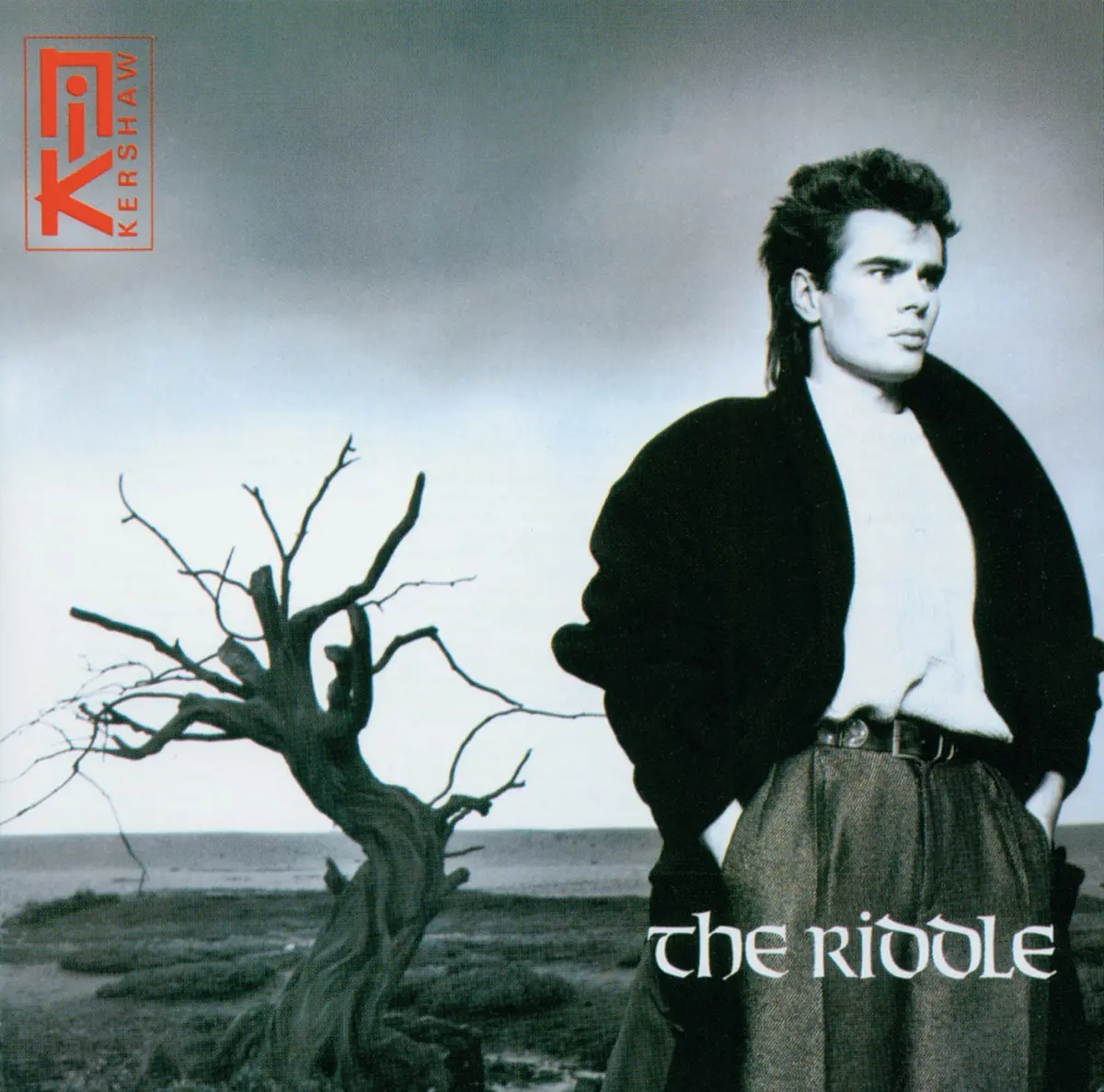 Nik Kershaw released his second album, The Riddle, on November 19 1984, on MCA, nine months after Human Racing.
The album combines Fairlight-driven synth arrangements and drum machine sequencing with layered vocals and rhythmically dense guitar parts. Kershaw wrote all ten songs and collaborated once again with producer Peter Collins and keyboardist/programmer Paul “Wix” Wickens. The sessions introduced Tim Moore and Andy Richards on keyboards and featured guest contributions from Mark King of Level 42 and percussionist Pandit Dinesh.
On The Riddle, Kershaw refines his sequencing and broadens his dynamic range, balancing intricate synth layering with sharper rhythmic contrasts. “Don Quixote” opens with taut pacing and sharp keyboard stabs beneath clipped vocal phrasing, drawing tension from staccato breaks and a gradual layering of rhythmic accents. “Wide Boy” builds around overlapping synth patterns and staggered phrasing that tightens into a dense, escalating chorus. “Easy” stretches out with a slower, rolling cadence and accentuated bass phrasing by Mark King, whose slap patterns add percussive depth against restrained keyboard overlays.
“You Might” shifts into more direct rhythmic motion, driven by a biting guitar tone and a vocal line that rides the momentum with minimal ornamentation. “City of Angels” and “Roses” veer into looser structures, with lighter textures and more air between rhythmic events. “Save the Whale” closes the album on a subdued pulse with sustained synth chords and a languid vocal that loops over a steady, hypnotic beat. Though structured around programmed elements, the album avoids rigidity through variations in tempo, phrasing, and bass articulation, each track finding its own architecture within the tight frame.
A1. “Don Quixote” (4:55) – Nik explores the blurry line between heroism and delusion, casting himself as a modern-day dreamer chasing impossible ideals. He muses, “Are we proud, are we brave, or just crazy?”—a question that captures the tension between noble intent and the absurdity of battling imaginary enemies.
A2. “Know How” (4:52) – Nik critiques authoritarian arrogance cloaked in duty, exposing how power can mask insecurity and suppress dissent. He admits, “Though I know you’re probably right, I guess it’s still not easy saying yes,” revealing a crack in the facade—a moment of self-awareness behind the rigid role.
A3. “You Might” (3:17) – Nik reflects on ambition, delusion, and the quiet sting of unmet potential, confronting the gap between fantasy and reality. He concedes, “Still a sucker for a dream,” revealing how hope persists even in the face of disillusionment and self-recognition.
A4. “Wild Horses” (3:59) – Nik contrasts two extremes—corporate excess and ascetic survival—only to reject both as false ideals, affirming a need for authenticity over illusion. He remarks, “He’s got indecision and indigestion, and he wonders where the last ten million went,” exposing the emptiness behind material success and the confusion it breeds.
A5. “Easy” (4:13) – Nik reflects on the restless cycle of modern life, where comfort masks confusion and progress feels hollow. He admits, “Wake me up, I’m fast asleep and I’ve forgotten who I am,” revealing a loss of identity beneath routine and distraction.
B1. “The Riddle” (3:52) – Nik weaves a cryptic meditation on wisdom, futility, and the passage of time, contrasting rational detachment with emotional conflict. He notes, “His mind is a beacon in the veil of the night,” portraying the old man as a symbol of quiet insight—an observer who sees clearly but refuses to engage in senseless battles.
B2. “City of Angels” (3:56) – Nik satirizes the shallow glamour and self-deception of Hollywood life, where image replaces truth and emptiness hides behind sparkle. He jabs, “Don’t mess with me ’cos I’ve a bigger hose than you,” mocking the inflated egos and status games that define the city’s illusory sense of worth.
B3. “Roses” (3:58) – Nik exposes the lies behind environmental complacency and corporate greenwashing, where destruction is repackaged as progress. He warns, “In the name of energy we give our problems to the sea, but they’ll be back for you and me,” showing how short-sighted convenience leads to long-term consequences we can’t escape.
B4. “Wide Boy” (3:28) – Nik critiques the shallow rise of fame-chasers who trade substance for flash, mocking how image can outshine talent. He scoffs, “He got no sense but he got overnight success,” highlighting how quick celebrity often rewards flash over depth, leaving nothing solid behind the swagger.
B5. “Save the Whale” (6:02) – Nik mourns humanity’s betrayal of nature’s most noble creatures, condemning our indifference to their suffering. He writes, “With every scream a piece of conscience dies,” capturing how each act of violence against the whales reflects a deeper moral collapse within us.
 Sessions took place in 1984 at Sarm East and Sarm West Studios, London. Peter Collins produced the album. Julian Mendelsohn engineered and mixed the sessions with assistance from Dave Meegan. “The Riddle” and “Wide Boy” were released in advance of the album and charted in the UK prior to the album’s long-player release.
“Wide Boy” was issued as the second single on 4 March 1985. Originally recorded during the Human Racing sessions, Kershaw reworked the track for this album and issued a remixed version for the single. The 7″ paired it with the ballad “So Quiet,” while the 12″ added a remix of “Shame on You.” The extended mix was handled by Kershaw himself in collaboration with Peter Collins. The accompanying music video was directed by Storm Thorgerson. The single reached No. 9 in the UK, No. 5 in Ireland, and No. 7 in Australia.
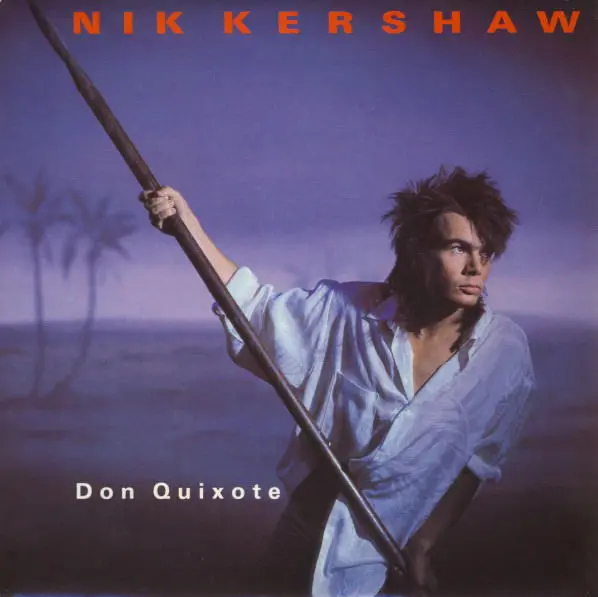 “Don Quixote” followed as the third and final single on 22 July 1985. Kershaw based the lyrics on Cervantes’ character after initially using the phrase “gorgonzola” as a placeholder. The single appeared shortly after his Live Aid performance, where “Don Quixote” featured among four songs in his set. The extended 12″ mix stretched the samba-inspired arrangement to over eight minutes. Storm Thorgerson directed the accompanying video. The single reached No. 10 in the UK and No. 9 in Ireland.
Nik Kershaw again plays guitar, bass, keyboards, and “vocal percussion.” Paul “Wix” Wickens programs the Fairlight CMI and Oberheim DMX. Keyboards are played by Tim Moore and Andy Richards, backed by drummer Charlie Morgan and bassist Dennis Smith with tablist Pandit Dinesh. Horn parts are arranged by Stuart Curtis and Dave Land. Sheri Kershaw and Don Snow contribute backing vocals. Mark King plays bass on “Easy.”
The Riddle reached No. 8 in the UK, No. 5 in Norway, No. 8 in New Zealand, No. 11 in Finland and Sweden, No. 12 in Germany, No. 13 on the European Albums Chart, and No. 21 in the Netherlands. It charted in Australia at No. 39 and was certified Platinum by the BPI. The 2013 reissue included live material and extended mixes but omitted the 12″ edit of “Wild Horses” and the single edit of “Don Quixote,” both of which Kershaw disowned or dismissed as substandard.
Radio Musicola
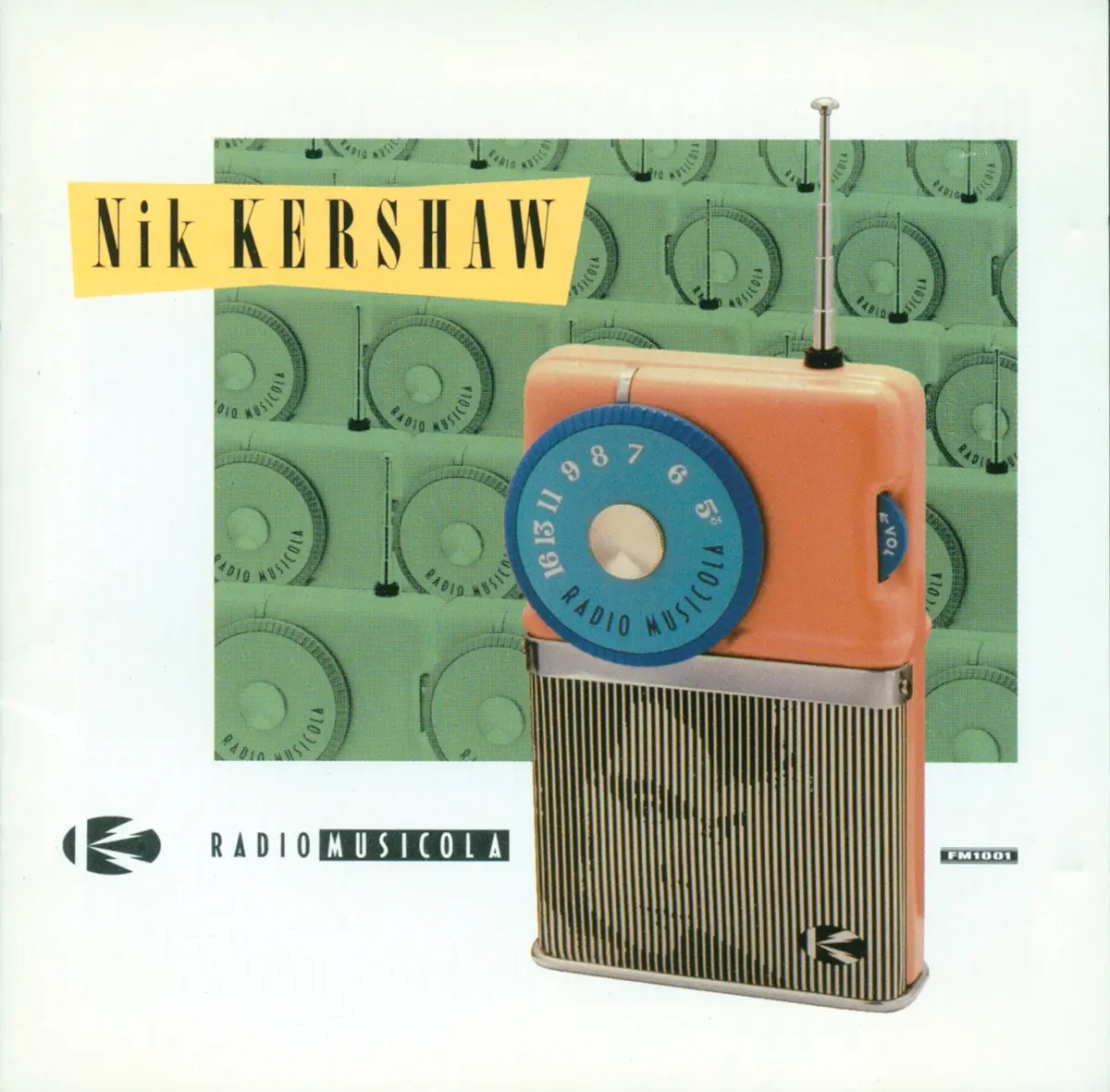 Nik Kershaw released his third album, Radio Musicola, on October 20, 1986, on MCA.
The album reflects his growing disenchantment with mass-production, tabloid intrusion, and the market demands of the record industry. Lyrically, he references media surveillance and the erosion of musical authenticity, echoed in the retro-radio imagery of the artwork and inner packaging.
Radio Musicola opens with its title track—Kershaw’s most rhythmically charged piece to date—driven by syncopated programming, rapidly layered keyboard lines, and abrupt vocal pivots that mirror the media noise it critiques. “Running Scared” builds from a steady beat into a climactic trumpet–guitar passage, where clean leads ascend in tandem before cutting sharply back to the vocal line. “Don’t Let Me Out of My Cage” hinges on a clipped rhythmic vocal delivery and segmented keyboard phrasing; its verses move with a jittery pace, though the chorus resolves with less energy.
“L.A.B.A.T.Y.D.” floats on a slower, swaying rhythm with a looser vocal line, carried by understated bass motion and light instrumental shifts. “Violet to Blue” closes the album with the most expansive arrangement—gospel-inflected call-and-response vocals stretch over sustained chord progressions and a gradually unfolding instrumental bed. The more subdued tracks like “Life Goes On” rely on open space and repeated phrasing, while “James Cagney” revisits the character-study format with bouncy pacing and dense syllabic delivery. Kershaw favors compact phrasing and rhythmic precision throughout, trading the brighter surfaces of earlier work for more breath and textural range.
A1. “Radio Musicola” (5:53) – Nik condemns the corporate takeover of music and culture, where true expression is sacrificed for market conformity. He sneers, “You gave us TV dinners, now it’s TV rock ‘n’ roll,” equating mass-produced entertainment with soulless convenience—empty, artificial, and designed to numb rather than inspire.
A2. “Nobody Knows” (4:21) – Nik observes the blurred lines between intimacy and intrusion, as private longing becomes tangled with voyeurism and secrecy. He notes, “I saw the dew upon her face—and other places too,” hinting at a moment of exposed vulnerability glimpsed through veils not meant to be lifted.
A3. “L.A.B.A.T.Y.D.” (4:14) – Nik contemplates mortality and the fleeting nature of joy, yet clings to hope for something beyond this life. He reflects, “Even when my head says this is all there is, I believe there’ll be another time,” acknowledging his doubt while asserting a quiet faith in continuity beyond death.
A4. “What the Papers Say” (3:33) – Nik satirizes media sensationalism and blind trust in authority, exposing how absurdity is often packaged as truth. He scoffs, “It said ‘we are all good and they are all bad’ / Well drive me to the clinic ’cos it’s driving me mad,” mocking the black-and-white narratives that fuel division and manipulate public perception.
A5. “Life Goes On” (5:02) – Nik mourns a lingering love that refuses to fade, haunting his senses even as life moves forward without her. He confesses, “Sometimes your face is in everything I see,” revealing how deeply her presence still permeates his world—blurring memory with reality.
B1. “Running Scared” (5:03) – Nik confronts the anxiety of living under constant threat, where fear, suspicion, and looming violence drive him to question how far is too far. He notes, “They’re watching you, watching them, watching your backs,” capturing a world of mutual distrust and surveillance that leaves no room for safety or trust.
B2. “James Cagney” (5:20) – Nik satirizes the unattainable male ideals shaped by old Hollywood, where toughness, wit, and romantic prowess define masculinity. He muses, “Where does fantasy end and reality begin?”—questioning how much of his own identity is shaped by cinematic illusions and societal expectations: “Talk tougher than James Cagney, Act smarter than Charlie Chan, Love longer than Valentino, Or you never will be a man.”
B3. “Don’t Let Me Out of My Cage” (4:34) – Nik portrays himself as barely contained volatility, aware that his aggression and desire could tip toward danger or attraction if unleashed. He warns, “It could be love or it could be war / It depends what I want to get out of my cage for,” framing self‑control as the only barrier between impulse, violence, and seduction.
B4. “Violet to Blue” (6:16) – Nik reflects on a moment of loss and emotional detachment, when a once-vivid connection faded into isolation and confusion. He asks, “What did you feel, what did you do on the day they turned violet to blue,” marking the transformation from beauty to sorrow and the silence of those who disappeared when it mattered.
[B5.] “When a Heart Beats” – 4:30 (cassette and CD only)
 Kershaw self-produced the album between 1985 and 1986 at Swanyard and Sarm West Studios in London, using a hybrid of sequencer-based arrangements and live instrumental contributions. Stuart Bruce engineered and mixed the recordings, assisted by Robin Cruikshank. Ian Cooper handled mastering. Artwork and design were directed by Richard Evans, with photography by Andrew Ellis and radio model design by Phil Warren.
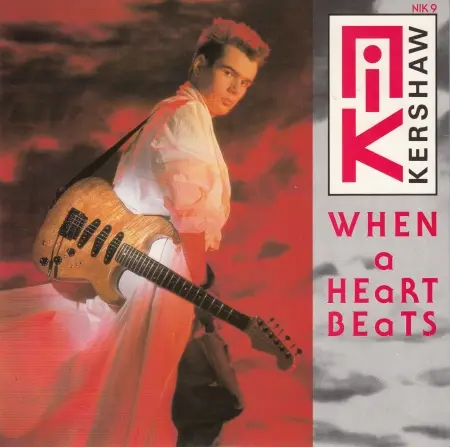
“When a Heart Beats” appeared eleven months before the album as a November 1985 standalone single and reappeared as a bonus tenth track on the cassette and CD editions.
“Nobody Knows,” released on 29 September 1986, served as the lead single from the vinyl LP. The lyrics critique celebrity voyeurism and tabloid ethics, exemplified by lines that target the public’s obsession with private lives. The single includes the exclusive B-side “One of Our Fruit Machines Is Missing,” which remained unavailable elsewhere until a 1993 compilation. The 12″ format adds a 7:29 extended version. “Nobody Knows” peaked at No. 44 in the UK, ending Kershaw’s run of consecutive Top 40 hits since his 1983 debut.
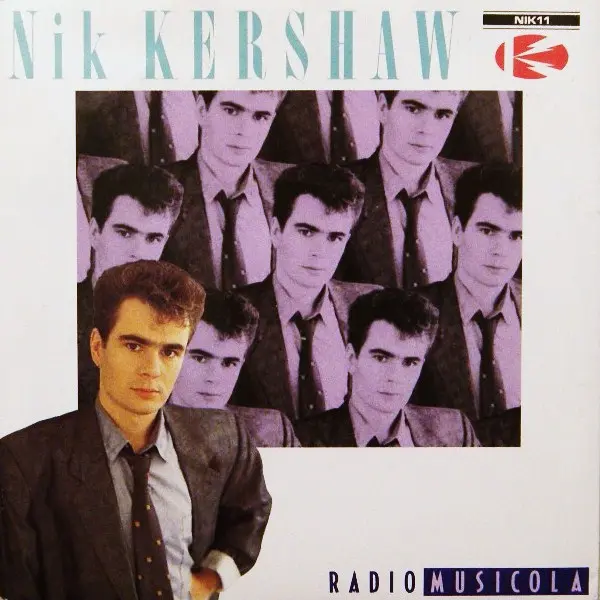 The title track “Radio Musicola” followed in November 1986 as the third single. Its lyrics underscore the album’s recurring media skepticism, and the single appeared in both 7″ and extended 12″ formats. The single mix runs 4:16, while the extended mix stretches to 7:15. It was backed with the album cut “L.A.B.A.T.Y.D.” and peaked at No. 43 in the UK.
“James Cagney” was issued in 1987 as a single in Germany only and did not chart in the UK.
Nik Kershaw handles guitar, keyboards, and computer-based programming. Andy Richards contributes keyboards, Fairlight programming, and computer sequencing, with additional keyboard input by Paul “Wix” Wickens, Tim Moore, Robin Cruikshank, and Rupert Greenall. Drums are played by Simon Phillips, Mark Brzezicki, Charlie Morgan, and Mark Price. Bass duties are shared by Steve Brzezicki, Felix Krish, Kuma Harada, and Dennis Smith. Brass parts are played by Tim Sanders (saxophones), Simon Clarke (alto sax, flute), Roddy Lorimer and Steve Sidwell (trumpet), and Peter Thoms (trombone). Gary Wallace contributes percussion. Backing vocals are provided by Iva Davies, Miriam Stockley, Stevie Lange, Sheri Kershaw, Carol Kenyon, Martin Taylor, and Gary Dyson.
Radio Musicola peaked at No. 47 on the UK Albums Chart and was certified Silver by the BPI.
The Works
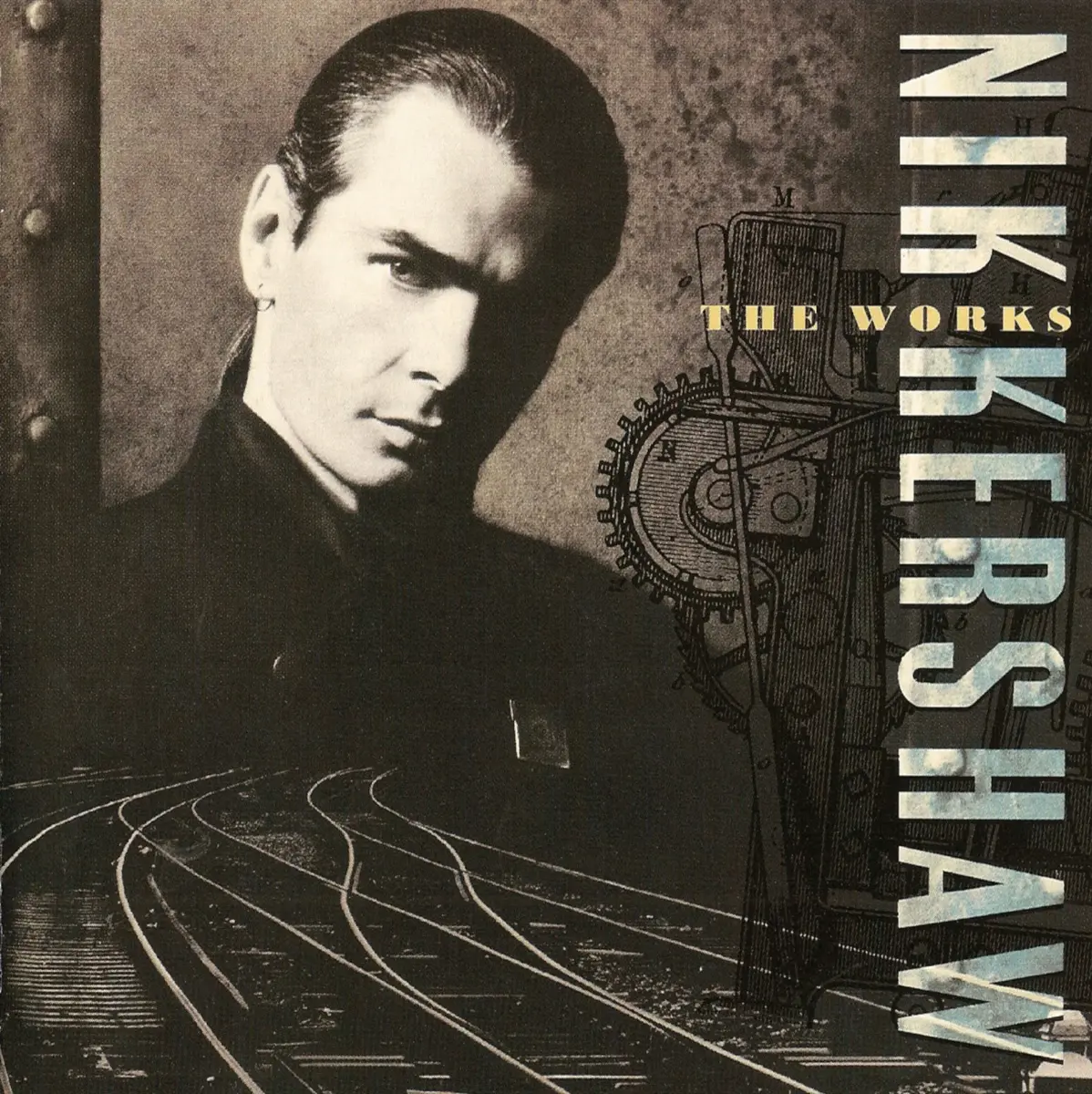 Nik Kershaw released his fourth album, The Works, on May 22, 1989, on MCA.
The Works pares back the density of Radio Musicola and returns to tighter, cleaner song forms shaped by dry production and mid-tempo pacing. “Elisabeth’s Eyes” contrasts its sobering theme with bright phrasing and clipped instrumental interplay; Kershaw keeps the motion light while navigating a stark lyrical premise. “One Step Ahead” builds around short, percussive keyboard bursts and abrupt turns in vocal phrasing, occasionally undercut by irregular interval shifts in the chorus. “Walkabout” adopts a more relaxed gait, unfolding in linear vocal lines and slowly rotating chord patterns.
“Wounded Knee” alternates between subdued verses and anthemic refrains, but its phrasing and rhythmic shape closely mirror “One World,” whose structure relies on similar call-response interplay and flat repetition. “Take My Place” features one of the album’s few expressive guitar breaks, easing out over a restrained framework of pads and sidestick rhythm. “Don’t Ask Me” and “Burning at Both Ends” introduce slight jazz voicings and accent shifts but remain locked in narrow motion. Brass players Jerry Hey and Gary Grant return for brief, staccato bursts; drummers Vinnie Colaiuta and Jeff Porcaro add minimalistic accents without opening the arrangements. The album maintains a uniform tone, with sparing dynamic contrasts and most songs resolving without sharp variation or escalation.
A1. “One Step Ahead” (3:53)
A2. “Elisabeth’s Eyes” (4:40) – Nik recounts a condemned man’s final grasp at meaning, sustained by love and advocacy even as justice fails him. He writes, “Tuesday at seven I will find my heaven,” accepting death while framing Elisabeth’s devotion as the only mercy left to him.
A3. “Take My Place” (4:04)
A4. “Wounded Knee” (3:53) – Nik recounts the legacy of colonial exploitation and betrayal, lamenting the cycle of destruction imposed on Indigenous peoples. He points out, “Now he ain’t having second thoughts—but we’ve got reservations,” using a sharp double meaning to expose the lasting consequences of stolen autonomy and forced assimilation.
A5. “Cowboys & Indians” (3:52) – Nik adopts the voice of a cynical opportunist who masks aimlessness with bravado, critiquing the glamorization of violence and conquest in modern culture. He remarks, “I am a man without a cause, but that don’t stop all the fun and games,” exposing how empty heroism persists through spectacle even when stripped of meaning.
B1. “One World” (4:39) – Kershaw, Wolf.
B2. “Don’t Ask Me” (4:02)
B3. “Burning at Both Ends” (4:05) – Nik acknowledges self‑destructive excess and denial, insisting he is “fine” even as exhaustion and consequence close in. He admits the reckoning ahead in “You’ve had your fun and now it’s time to pay,” recognizing that living at full throttle cannot last without collapse.
B4. “Lady on the Phone” (4:09) – Kershaw, Wolf.
B5. “Walkabout” (4:56)
Sessions occurred between August 1987 and October 1988 at Can-Am Recorders, Rumbo Recorders, Ground Control, and Secret Sound in California, with further work at Sarm East and West in London. Peter Wolf produced the original sessions. Nik Kershaw and Julian Mendelsohn handled all subsequent production, overdubs, and final mixes.
“One Step Ahead” appeared as the lead single on January 23, 1989. Kershaw wrote the track late in the album’s revision phase and co-produced it with Julian Mendelsohn. The single’s B-side, “When I Grow Up,” was exclusive to the release. A 12″ featured an extended “Industrial Mix,” and the CD version added two earlier hits. Kershaw promoted the song with a music video and an appearance on Dutch television. The single peaked at No. 55 in the UK and remained on the chart for two weeks, becoming his final charting entry of the 1980s.
“Elisabeth’s Eyes,” released on May 1, 1989, was inspired by the correspondence between Essex teacher Elisabeth Allan and Willie Darden, a Florida death row inmate executed in 1988. Kershaw read a press article on their relationship and wrote the song days later, intending to draw attention to capital punishment. He later stated his belief in Darden’s innocence after researching the case. The single included the non-album B-side “My Friend John,” along with extended and dub versions on the 12″. Despite a televised performance on Wogan and a video directed by Mike Ross, the single stalled at No. 105 on the UK chart.
Nik Kershaw handles guitar, keyboards, programming, and arrangements. Keyboards and synths are handled by Peter Wolf, Dave Clayton, Paul “Wix” Wickens, Tim Moore, Robin Cruikshank, and Gary Maughan. Vinnie Colaiuta and Jeff Porcaro perform drums, with additional percussion by Paulinho Da Costa. Saxophone parts are played by Dan Higgins and Larry Williams; trumpet by Gary Grant and Jerry Hey; and trombone by Charles Loper. Background vocals are provided by Ina Wolf, Maxi Anderson, Michael McDonald, Nadirah Ali, Phillip Ingram, Sheri Kershaw, Siedah Garrett, and others.
Discography:
- Human Racing (1984)
- The Riddle (1984)
- Radio Musicola (1986)
- The Works (1989)
Sources:
Artist/Album Pages:
Pat Benatar is an American rock singer from Brooklyn who released nine studio albums between 1979 ...
Julian’s Treatment was an English psychedelic musical project headed by author and keyboardist Jul...
Peter Ogi is a Hungarian-born musician and songwriter who emerged in the Paris-based new wave comb...
IQ are an English symphonic-rock band that released the 1983 album Tales From the Lush Attic on Th...
Indian Summer was an English post-psych band from the industrial Midlands that released a self-tit...
Dire Straits was an English rustic-rock band led by guitarist–singer Mark Knopfler. They released si...
Splendor was an American soul-funk band that released a 1979 self-titled album on Columbia. Memb...
The Art Objects were an English post-punk band from Bristol that released a 1980 standalone single...
The Congos were a Jamaican reggae combo behind the 1977 album Heart of the Congos on Black Art, fo...
Heat was an American soul-funk trio that released the 1980/81 MCA albums Heat and Still Waiting. ...
Sister Sledge was an American soul group from Philadelphia comprised of sisters Debbie, Kim, Joni,...
George Clinton is an American R&B-funk singer, songwriter, bandleader, and record producer. H...