

Continuum was a UK-based instrumental ensemble formed by Hungarian multi-instrumentalist Yoel Schwarcz with an assortment of English musicians. They made the 1970/71 albums Continuum and Autumn Grass on RCA Victor. Musically, they foreshadowed the chamber-folk/chamber-rock sounds that spread through France, Belgium, and Quebec in the late Seventies.
Members: Yoel Schwarcz (Spanish guitar, flute, recorder, harmonica, alto saxophone, tenor saxophone, soprano saxophone, clarinet), John Warren (Spanish guitar), Mike Hart (double bass), Dick Wildman (drums, percussion), Peter Billam (bass, electric guitar), Harvey Troupe (drums), Tim Rice (organ, piano)
Background
Continuum formed in late 1969 as the outgrowth of a transnational project led by Hungarian-born multi-instrumentalist Yoel Schwarcz, who conceived the concept while living in Holland. A trained painter with gallery exhibitions under the Continuum banner, Schwarcz brought a similar cross-disciplinary approach to music, developing early chamber-folk ideas with a Czech guitarist during a residency at an Amsterdam club in 1968.
After returning to London alone, Schwarcz partnered with English classical guitarist John Warren to formalize the group. They built the first lineup with bassist Mike Hart and drummer Dick Wildman, both aligned with Schwarcz’s vision of an acoustic ensemble rooted in classical form and folk modality. Though billed as a group, Continuum operated under Schwarcz’s creative direction, and RCA signed him directly ahead of their 1970 debut.
Continuum
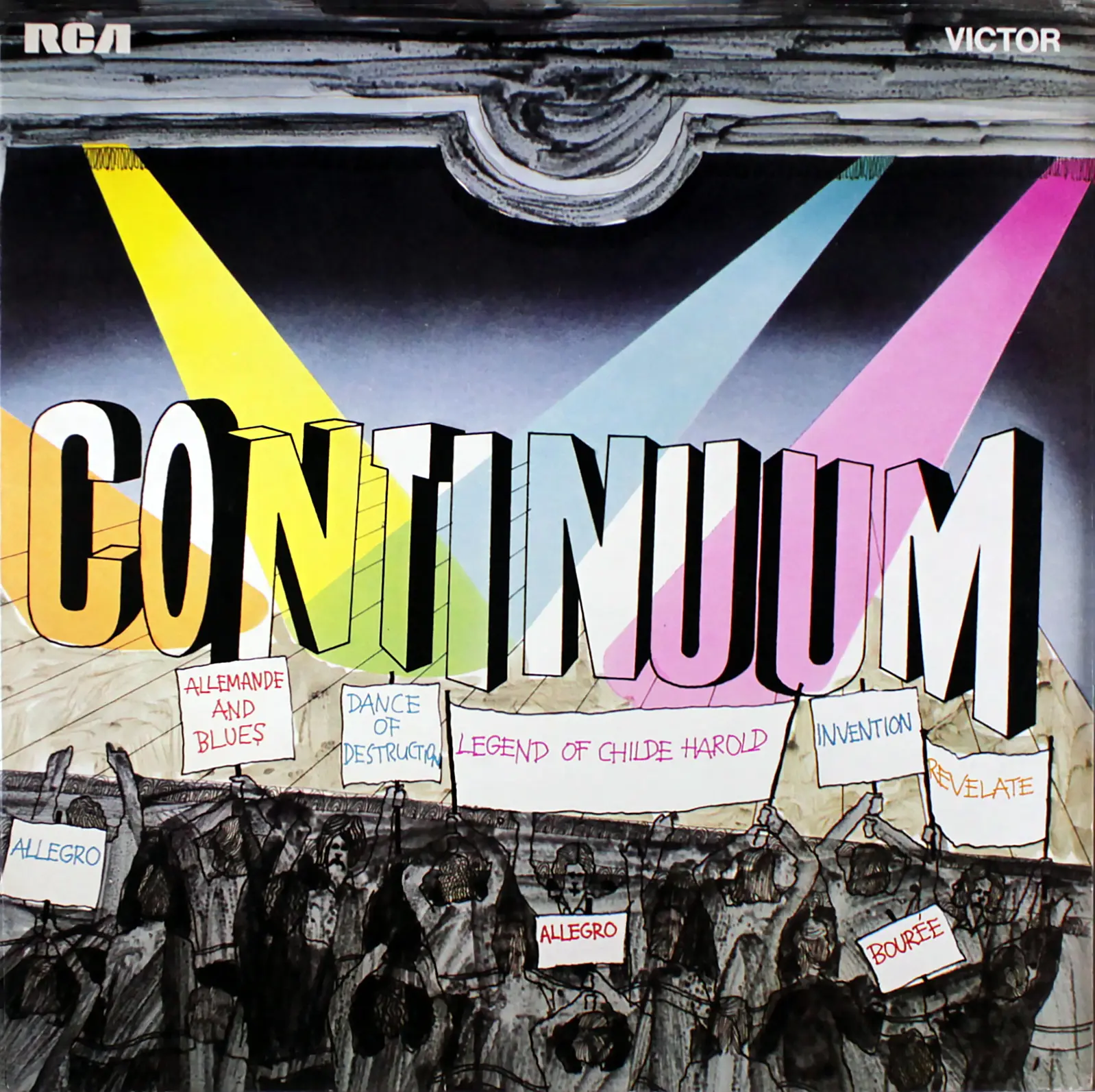 Continuum released their self-titled debut album in 1970 on RCA Victor.
The album mixes Baroque themes and original chamber-rock arrangements, merging classical structure with modal improvisation. Yoel Schwarcz weaves flute and recorder lines into contrapuntal phrases with classical guitarist John Warren, who sustains a melodic framework beneath the upper-voice variations. String arranger Richard Hartley composed the Side B suite, performed with cellist Simon Clugston, violist Paul Silverthorne, and violinists Sandy McDonald and John Prior.
Continuum divides cleanly between concise reworkings and an extended narrative form, with a steady escalation in density and abstraction across the two sides. The opening sequence favors moderate tempos and clearly stated themes, where paired classical guitars outline tight counterpoint before Schwarcz redirects the lines toward recorder, flute, or harmonica, stretching the phrases into longer arcs while the bass alternates between plucked motion and bowed sustain. “Allemande and Blues” and “Allegro” pivot mid-piece from ordered figures into looser passages, marked by sharper rhythmic emphasis and descending bass patterns that push the ensemble into firmer forward motion without dissolving the structure. “Bouree” reins the dynamic back, holding a restrained pace and emphasizing contrast between stated motifs and brief excursions.
Side two expands the scale entirely: Legend of Childe Harold unfolds in linked sections that move from slow, weighty string statements into uneven dance-like episodes, then into longer spans where meter loosens, harmony thins, and Schwarcz’s flute lines lengthen and fragment. Electronic color and sustained string textures blur the sense of pulse near the close before the ensemble regroups for a compressed, symphonic resolution, completing an arc that shifts from disciplined variation to near-formless exploration and back again.
A1. “Invention” (based on Bach’s Invention No. 13 in A Minor) (6:46)
A2. “Allemande and Blues” (based on Bach’s Lute Suite No. 1 in E Minor) (4:39)
A3. “Allegro” (based on Handel’s Harpsichord Suite No. 7 in G) (5:34)
A4. “Bourée” (based on Bach’s Second English Suite in C) (4:04)
B1. “Legend of Childe Harold” (20:01)
— a. “Revelate” (3:29)
— b. “Dance of Destruction” (4:12)
— c. “Release” (5:19)
— d. “Approach of Judgement” (2:40)
— e. “Apodosis” (4:19)
Sessions took place at Morgan Studios (tracks A1, A3, A4), Regent Sound Studios (A2), IBC Studios, and De Lane Lea Studios (B1–B6), with engineering by Mike Bobak, Tom Allom, Bryan Stott, and John Stewart. Tim Satchell produced the album for Chart Productions with final mixes by Robin Sylvester at De Lane Lea. RCA packaged the album with a John Stallerbrass design and booklet illustrations by Vicky Walwyn.
Autumn Grass
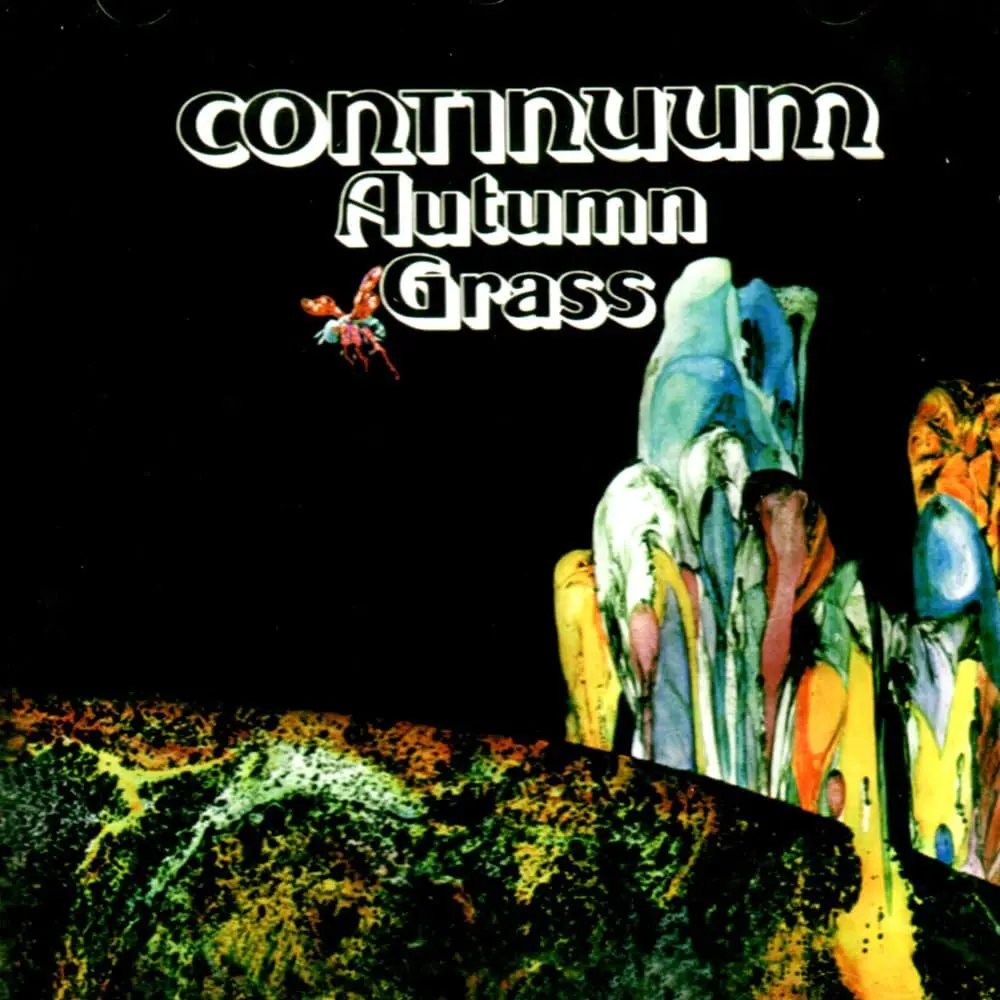 Continuum released their second album, Autumn Grass, in June 1971 on RCA Victor.
Autumn Grass marks a clear shift from Continuum’s acoustic chamber origins into amplified textures and freer improvisation. Yoel Schwarcz expands his tonal range across recorder, flute, saxophones, and harmonica, while Peter Billam alternates between electric and classical guitar beneath the organ and piano layers of Tim Rice. The trio reinterprets three source pieces spanning Renaissance, Baroque, and contemporary chamber music: “Byrd Pavan” draws from English virginalist William Byrd and Restoration-era composer Henry Purcell; “Vivaldi Synthesis Two” adapts a movement from Antonio Vivaldi’s Guitar Concerto in D Major; “Overdraft” builds on a prior group piece by Rice. Richard Hartley plays piano and Freeman synthesizer on the Vivaldi-based track.
Side two preserves the earlier lineup—Schwarcz, John Warren (guitar), Mike Hart (double bass), Dick Wildman (drums), and the Olympus Strings—on a 26-minute suite composed by Patric Standford, an English symphonist and choral writer noted for large-scale orchestral and vocal works including Christus Requiem and five symphonies.
A1. “Byrd Pavan” ( after Byrd’s Earl of Salisbury Pavan and Purcell’s Air on a Ground Bass) (9:17)
A2. “Vivaldi Synthesis Two” (Vivaldi’s Guitar Concerto in D Major, 2nd movement) (2:20)
A3. “Overdraft” (Continuum, after Rice’s Overdraft for a Group) (11:10)
B1. “Autumn Grass” (26:15)
Autumn Grass unfolds in two distinct halves, each exploring a different balance between form and freedom. Side one opens with “Byrd Pavan,” which moves from stately organ and flute lines into a layered stretch of active counterpoint, where harmonica, saxophone, and keyboard take turns threading angular figures over shifting rhythmic patterns. “Vivaldi Synthesis Two” centers on acoustic guitar suspended in soft electronic string textures, holding a steady, slow-moving pace across its brief span. “Overdraft” begins with piano and flute interplay, then shifts into the album’s most rhythm-forward passage, where electric guitar and organ alternate rapid phrasing above tight ensemble punctuation.
Side two’s title suite uses string clusters and flute motifs to build long arcs of tension and release. A solo melody midway through—carried by Schwarcz on flute—anchors a slowly accelerating section that crests into high-register improvisation before returning to the original theme. Across its full length, Autumn Grass draws contrast between sparse chamber episodes and dense, modal expansions shaped through ensemble dynamics rather than fixed form.
Continuum recorded Side A at Command Studios with Schwarcz, Billam, Rice, and drummer Harvey Troupe. Tim Satchell produced Autumn Grass for Chart Productions with engineer Barry Ainsworth and assistant soundman Ray Hendrickson.
Discography:
- Continuum (1970)
- Autumn Grass (1971)
Sources:
Artist/Album Pages:
José Mauro (José Mauro Soares da Cunha, 1948 – September 16, 2024) was a Brazilian singer-guitaris...
Data was an English synthpop trio behind the 1981–83 Illuminated albums Opera Electronica and 2-Ti...
Nasty Pop was an English pop-rock band that released a self-titled album on Island in 1975, followed...
Siloah was a German ethno-folk/psych band that self-issued a 1971 eponymous album, followed by the...
The Steve Miller Band are an American classic-rock band from San Francisco that released fourteen...
The Loading Zone was an American brass-rock-soul band that released a self-titled album in 1968 on R...
Los Shakers were an Uruguayan beat quartet, formed by brothers Hugo and Osvaldo Fattoruso amid Monte...
Fludd was a Canadian pop-rock band behind a 1971 self-titled album on Warner Bros., followed by t...
Bauhaus was an English post-punk band that sparked goth-rock with their 1979 debut single "Bela Lu...
Lagger Blues Machine were a Belgian hard-rock/jam band from Itterbeek, Vlaams-Brabant, that releas...
Nkengas were a Nigerian highlife ensemble that released two albums in 1973 on Orbitone. The band s...
Fringe Benefit was an English art-pop band that released a self-titled album on Capricorn in 1977....