
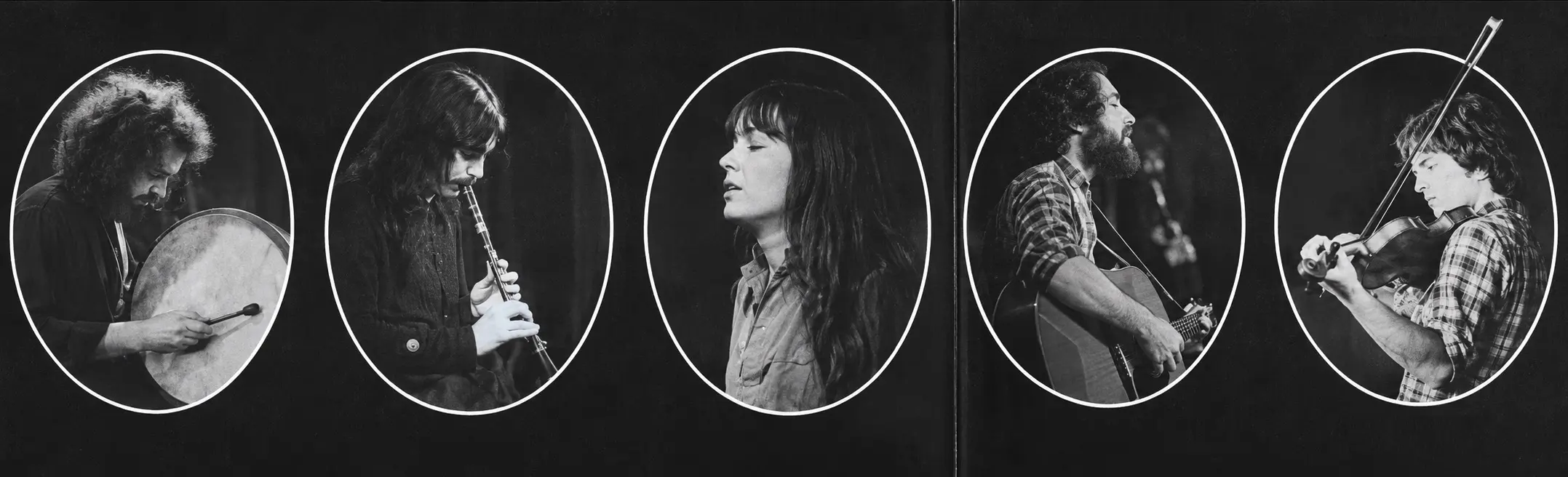
Sourdeline are a French folk ensemble behind the 1976–78 Discovale albums La Reine Blanche and . They returned in 2014 with the Reverb Worship title Sourdeline & Friends.
Members: Catherine Burban (vocals, psaltery, dulcimer, spinet), Jean-Pierre Danielsen (vocals, guitar, dulcimer, flute, crumhorn), Jean-Pierre Dalongeville (vocals, guitar, mandocello, mandolin, sitar, crumhorn, 1974-79), Jacky Izambert (percussion, tabla, vocals, 1974-76), Pascale Piat (violin, 1975-77), Alain Lousteau (vocals, bass, violin, percussion, 1977-78), Yvan Moiziard (violin, 1979-81), Jean-Michel Darremont (bass, 1979-81)
Background
Sourdeline formed in 1972 around singer Catherine Burban and singer-guitarist Jean-Pierre Danielsen. The duo appeared at Les Trois Canards, a folk club in Étampes, south of Paris. They adapted traditional French songs and medieval themes with acoustic instruments, including dulcimer, psaltery, and crumhorn. The group took its name from the sourdeline, a bellows-operated Italian bagpipe of the Renaissance and Baroque periods.
Sourdeline expanded to a quintet with percussionist Jacky Izambert, violinist Pascale Piat, and guitarist-mandocellist Jean-Pierre Dalongeville. The musicians performed at the inaugural Saint-Florent-sur-Cher folk festival in Berry, on a bill with La Bamboche, Tri Yann, and Gwendal. They linked with Nicolas Cayla, editor of the folk periodical L’Escargot Folk, who produced their 1976 Discovale debut La Reine Blanche.
Albums
(edit below)
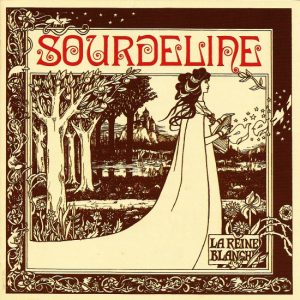 On La Reine Blanche (1976), the band mix classic and contemporary elements of French acoustic music, from the D-minor flute-laced instrumental to the G-minor vocal cut
The balance continues on
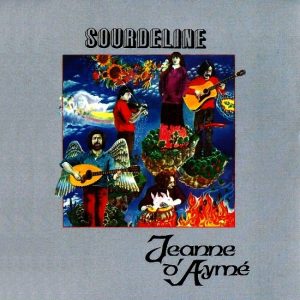
While there were no followup releases, the band continued to exist at some level. A 2014 release titled Sourdeline & Friends appeared on Reverb Worship with Burban and Danielsen in the lineup. The two ’70s titles were reissued in 2010 on the Spanish Guerssen label.
Discography:
- La Reine Blanche (1976)
References and notes
- Fnac – 2013. Reissue history identifies founders, the Étampes folk club, and early ensemble formats. (history)
- Guerssen Records – 2010. Reissue documentation places the group formation in 1972. (reissue)
- Folk Yourself – January 9, 2014. Reproduces the debut personnel credits and describes the historical instrument behind the name. (album notes)
- Valérie Rouvière – 2002. Historical study documents the Saint-Florent-sur-Cher festival and participating folk groups. (study)
- Burning Shed – 2014. Identifies Nicolas Cayla as editor of L’Escargot Folk and debut producer. (credits)
- Richard Falk – undated. Identifies the 1976 Discovale pressing, catalog WM 03, and violinist Pascale Piat. (discography)
- CNRTL – undated. Traces the instrument name to the Italian sordellina. (etymology)
Artist/Album Pages:
Al Jarreau (April 12, 1940 — Feb. 12, 2017) was an American soul and jazz singer who released elev...
Rolf Kühn (Sept. 29, 1929 – August 18, 2022) was a German clarinetist, composer, and bandleader wh...
Flibbertigibbet was a folk band formed in 1976 in South Africa. In 1978, they released the album W...
Isopoda was a Belgian symphonic-rock band behind the 1978 Twinkle album Acrostichon, followed by t...
Pantincruel was a French jazz-rock band that self-released the 1979 album J'y Retourne Immédiateme...
François Wertheimer is a French chanson-folk singer/songwriter who emerged in the pop-psych combo ...
Michel Pierre Henri Gonet is a French composer, arranger, and conductor who released numerous libr...
Noriko Miyamoto (宮本典子) is a Japanese jazz-funk vocalist who debuted in 1978 with the album Push on...
Reggie Lucas (Feb. 25, 1953 — May 19, 2018) was an American jazz-funk guitarist and producer from...
Jay Ferguson (born May 10, 1947) is an American vocalist, keyboardist, and songwriter from Burbank...
Masahiko Sato — 佐藤允彦 (born Oct. 6, 1941) — is a Japanese jazz pianist and composer with credits on...
Kashmere Stage Band (KSB) was an American funk ensemble comprised of students from Kashmere High S...