

Crane was an American hard-rock recording project built around singer and guitarist Chuck Kirkpatrick, a Criteria Studios engineer who used the Chuck Crane name for a Capitol contract. Capitol issued the 1977 advance single “Oh Dancer” and released the self-titled album Crane in January 1978 on Capitol Records.
Members: Chuck Crane (guitar, lead vocals, backing vocals, bass, keyboards), Eddie Keating (bass), Les Luhring (backing vocals), Scott Kirkpatrick (drums, backing vocals), Mike Vaughn
Background
Chuck Kirkpatrick (b. April 19, 1946; Upper Darby, Pennsylvania) played guitar from age eleven and joined Bobby Naylor & The Saints at thirteen. He subsequently worked with the Eldoradoes and the Impalas, then joined the Aerovons late in 1964 for an eight-month run. The Gas Company recruited him next for a South Florida lineup. Local-label terms forced the quintet to adopt the Proctor Amusement Company name.
Kirkpatrick’s engineering position at Criteria Recording Studios gave the group regular studio access. The musicians developed original material there and renamed the band Game. Faithful Virtue signed the group after Kirkpatrick produced demos of two Bonner-Gordon songs. Game recorded a self-titled debut at Criteria in early 1970 and completed a second album before the lineup relocated to Los Angeles. Scott Kirkpatrick left at the end of 1971, and the remaining members continued with another drummer.
Manager Steven Goldberg shifted from Game to a Kirkpatrick solo deal after a Troubadour showcase. Arista proposed a one-single agreement, which Kirkpatrick rejected in favor of an album contract. Warner Bros. considered a longer deal without reaching terms. In April 1977, Capitol talent scout Ben Edmonds helped secure a five-album agreement. Kirkpatrick began recording at Brother Studio in March and adopted the Chuck Crane name for the project.
Crane
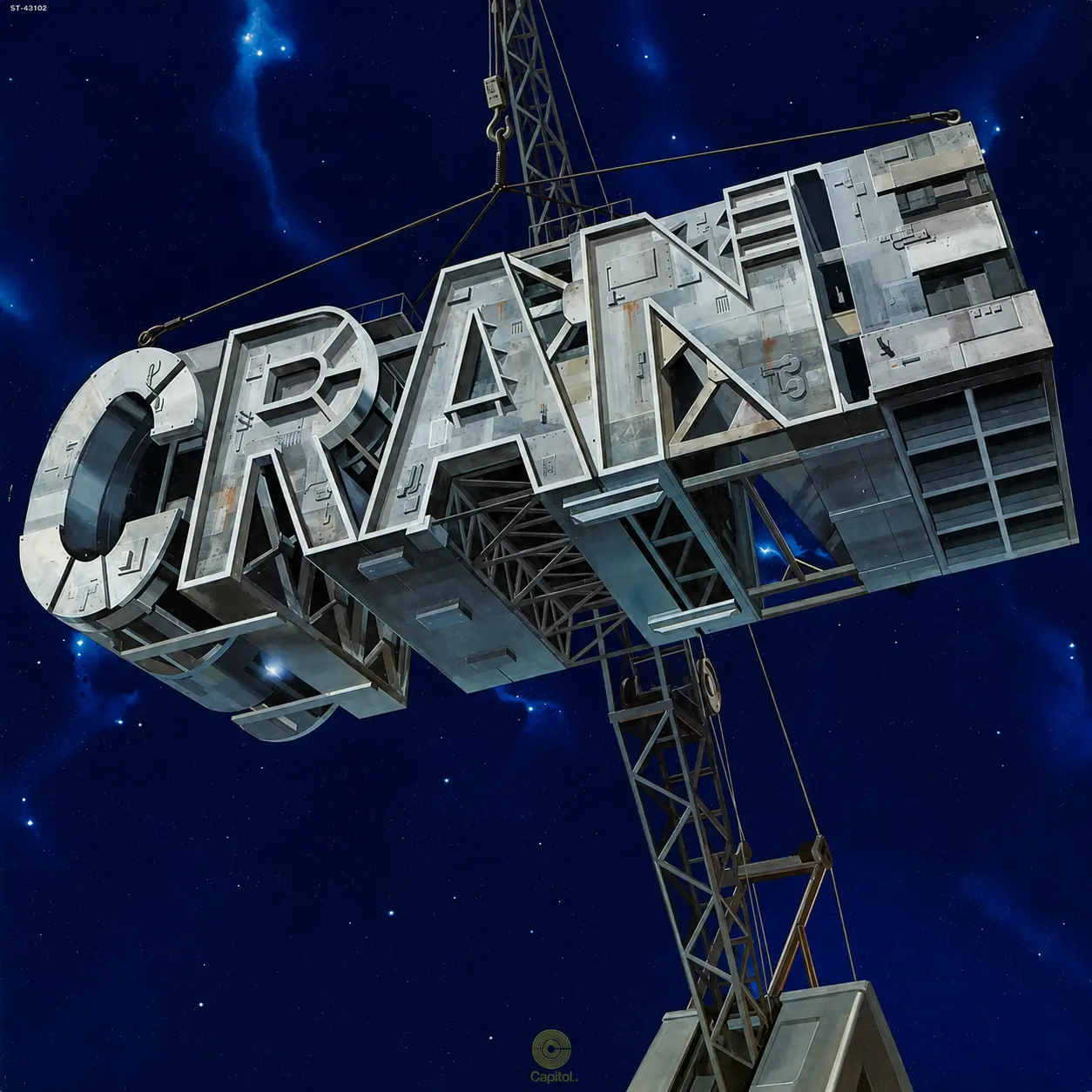 Crane released the singular album Crane in January 1978 on Capitol Records.
Kirkpatrick wrote seven songs alone and co-wrote “Over and Over” with Steven Uslan. The record also includes a version of Derek and the Dominos’ “Why Does Love Got to Be So Sad?” Kirkpatrick handled lead and backing vocals, guitars, keyboards, and part of the bass work. Former Game bassist Eddie Keating and drummer Scott Kirkpatrick returned for the sessions, while Les Luhring added backing vocals.
“Oh Dancer” barrels through fast ensemble drive beneath a firm, direct lead.
A1. “Why Does Love Got to Be So Sad?” (3:40) – Eric Clapton, Bobby Whitlock
A2. “Can’t Run Away” (6:00) – Chuck Crane
A3. “Over and Over” (5:05) – Crane, Steven Uslan
A4. “Oh Dancer” (4:00) – Crane
B1. “Now You Know Just How It Feels” (3:20) – Crane
B2. “I’m Not Gonna Wait Forever” (3:40) – Crane
B3. “Lady in Love” (3:00) – Crane
B4. “Every Day” (4:30) – Crane
B5. “Whatever Happened to That Rock and Roll” (3:02) – Crane
Recording ran for about five months from March 1977, with four songs cut at Brother Studio in Santa Monica and five at a downtown Hollywood facility. Capitol commissioned replacement mixes at the label’s in-house studios that fall. Chuck Crane produced the album with manager Steven Goldberg and Capitol talent scout Ben Edmonds.
Former Sparks guitarist and Brother Studio specialist Earle Mankey worked with Capitol recording engineer Hugh Davies and engineers James Simcik, Jay Ranellucci, and Jim Quarles. Mankey also engineered the 1977 albums The Beach Boys Love You and Pacific Ocean Blue. Davies supplied the 1964 Hollywood Bowl tape used for The Beatles’ 1977 live album The Beatles at the Hollywood Bowl.
Crane appeared in a Roy Kohara-directed sleeve designed by Ken Anderson, with cover illustration by Louis Bangham and a logo concept from Steven Uslan. No photographer received a package credit. Kohara also art-directed Steve Miller Band’s 1977 Book of Dreams, while Anderson designed the Beatles’ Love Songs that October. Their next shared Capitol credit came on Bob Seger’s 1978 album Stranger in Town.
Capitol issued “Oh Dancer” as an August 1977 single (b/w “Every Day”) on catalog 4471.
The SPRO-8818 promotional LP placed “Every Day” at A1 and used altered timings with a different sequence. Commercial copies on ST-11742 used the side order in this tracklist.
Postlude
Capitol ended the contract five months after release. Kirkpatrick later reassembled Game with Keating and Luhring before returning to Criteria as an engineer. He joined Firefall in 1983 and remained through the band’s Break of Dawn period. Kirkpatrick resumed solo releases under his birth name with the 2013 album Keep On Walking.
Discography:
- Crane (1977/78)
Sources:
Artist/Album Pages:
Jethro Tull are an English rock band that released twenty studio albums between 1968 and 1999. They ...
Bobby Womack (1944–2014) was an American soul singer/songwriter who first recorded with his four b...
Racer X was an American metal band from Los Angeles that formed in 1985 around guitarist Paul Gilb...
Dennis Wilson (Dec. 4, 1944 — Dec. 28, 1983) was an American musician from Inglewood, Calif., best...
Fungus was a Dutch folk-rock band that released four albums between 1974 and 1977 on Negram, follo...
Pavlov's Dog was an American rock band from St. Louis that released the 1975 album Pampered Menial...
Roland Kirk — aka Ronald Theodore Kirk (August 7, 1935 — December 5, 1977) — was an American multi...
Chili Charles (Oct. 9, 1946 — May 28, 2005) was a Trinidadian jazz-funk percussionist who made the...
Richard Pinhas (born May 7, 1951) is a French guitarist, keyboardist, and composer who headed the ...
Espíritu was an Argentine symphonic-rock band, active for three seperate periods between the early...
Les Variations were a French psychedelic hard-rock band of Moroccan origin. Between 1970 and 1974,...
Moto Perpétuo was a Brazilian art-rock band behind a 1974 self-titled album on Continental. Singer...