

Help was an American rustic hard-rock trio from California that released two albums in 1971 on Decca.
Members: Chet McCracken (vocals, drums, percussion), Jack Merrill (vocals, guitar), Rob Rochan (vocals, bass, percussion)
Background
Help was a rustic hard-rock trio from North California, formed in 1969 by guitarist Jack Merrill, bassist Ron “Bobby” Rochan, and drummer Chet McCracken. All three shared vocals and developed a collaborative songwriting approach rooted in tight ensemble interplay and strong harmony presence. Their blend of hard rock, late psych, and folk-tinged melodies placed them among a wave of West Coast power trios emerging in the wake of Cream and the Jimi Hendrix Experience, though Help’s sound was more melodic and compositionally layered than many of their peers.
McCracken, a former member of Skip Battin’s psych-folk outfit Evergreen Blueshoes, brought studio experience and rhythmic versatility to the band. Help quickly became a fixture in Topanga Canyon’s local scene, performing frequently at the Topanga Corral and other L.A. clubs. They signed to Decca Records through the band’s manager, Michael Gruber, who had prior connections from his time managing the Rolling Stones’ U.S. tours.
Help (first album)
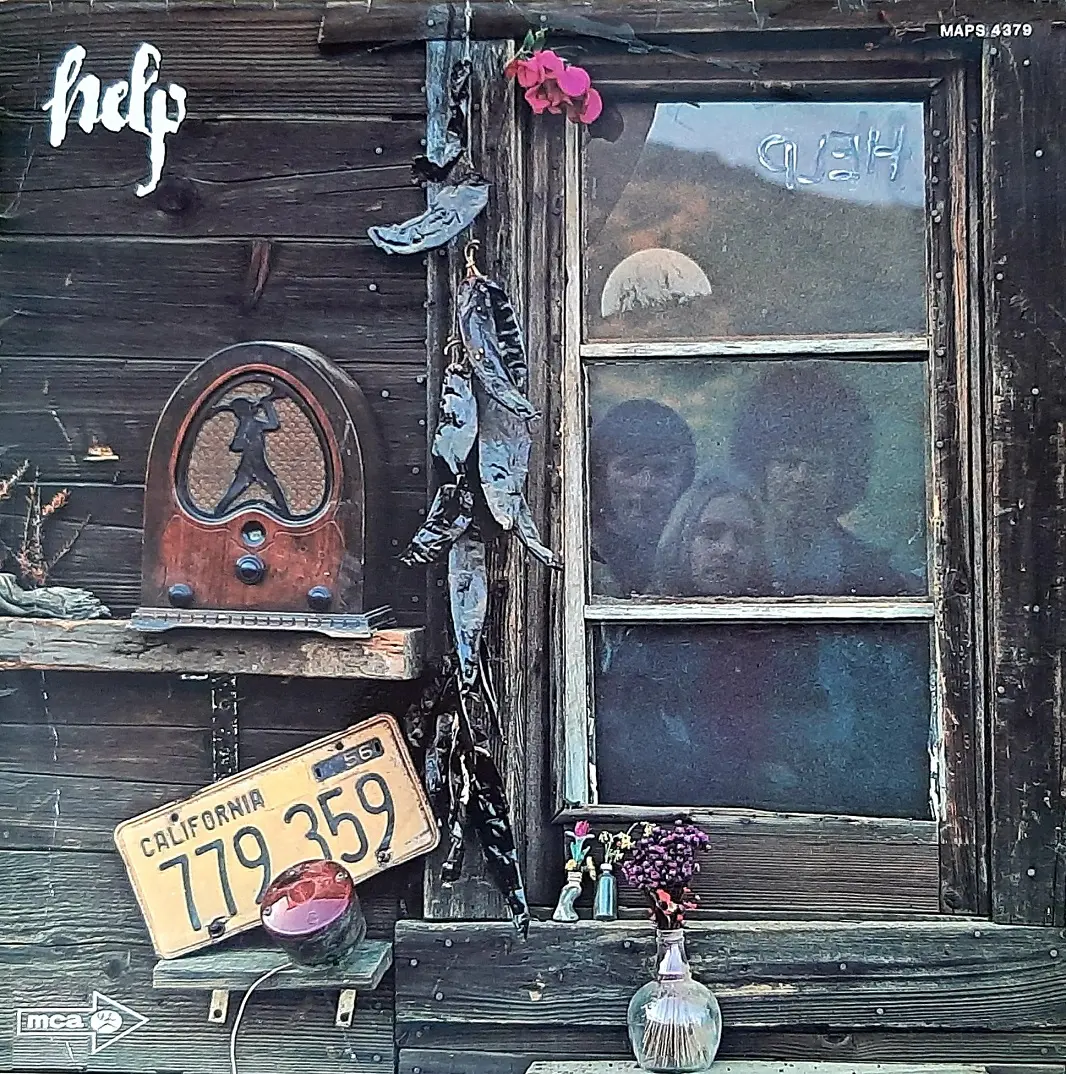 Help released their self-titled debut album in January 1971 on Decca (North America) and MCA (Germany, Japan, Oceania).
The album features nine band-written originals and a rocked-up cover of “Tennessee Waltz.” Musically, Help presents a harmony-rich blend of rustic rock, folk, and early-’70s singer-songwriter motifs. Songs veer between acoustic introspection and electrification with subtle psych flourishes and tight three-part vocals. Jack Merrill’s guitar work alternates between Allman-esque licks and wah-wah flourishes, while Bobby Rochan’s hyperactive bass adds a distinct pulse.
A1. “For Sale” (4:40) – Mid-tempo jangle-rock with harmony vocals and a gradual electric build toward a riff-driven close.
A2. “Open Up the Door” (2:50) – Breezy, upbeat tune with singalong spirit, rhythmic guitar picking, and rich vocal blend.
A3. “I Tried Too Hard” (1:43) – Short acoustic ballad with a plaintive vocal and minimal arrangement.
A4. “Easy to Be Free” (3:08) – Gentle folk-pop ballad with shifting tempos and strong harmonies.
A5. “Run Away” (7:07) – Tight, riff-based rocker with shared vocals and rhythmic variety; issued as a single.
B1. “Keep In Touch” (4:25) – Lush, progressive-leaning track with time changes and melodic bass prominence.
B2. “Take a Look at Yourself” (4:48) – Energetic groove with wah-wah soloing and rapid, nimble bass lines.
B3. “Commit Yourself” (3:00) – Jazzy guitar flourishes and fluid rhythms frame a sly lyrical hook.
B4. “Help Me, Help You, Help Me” (4:10) – Wah-driven jam with jazz-fusion hints and dynamic vocal interplay.
B5. “Tennessee Waltz” (4:02) – Hard-rock version of the Patti Page standard with brisk tempo and vocal grit.
Sessions occurred at the Sound Factory on Selma Avenue in Hollywood, where Val Christian Garay and Mark Hopkins co-produced the album for Just Us Productions. Engineering was handled by Dave “Dynamite” Hassinger. Executive production came from band manager Michael Gruber, with art direction by John C. LePrevost and cover photography by Gene Brownell.
Decca lifted “Run Away” as a single (b/w “Keep in Touch”) but otherwise gave minimal promotion.
Second Coming
Help issued their second and final album, Second Coming, on Decca and MCA in September 1971, eight months after their debut.
Compared to their rustic-psych debut, Second Coming finds Help embracing a louder, more progressive hard-rock sound influenced by the acts they shared stages with at venues like the Whisky A Go Go. While still recorded as a trio, the album thickens its sound with layered wah-wah guitar, modal bass runs, and tribal percussion. All three members share writing and vocal duties, often within the same song. The record’s structure alternates between high-energy rockers and long-form jam pieces, with tones ranging from proto-metal and boogie to extended blues-psych.
A1. “Do You Understand the Words” (3:35) – Tight, hard-rock opener with phased guitar, layered leads, and a surging rhythm section.
A2. “All Day” (3:00) – Upbeat boogie-rocker driven by fluid wah-wah riffs and heavy drumming.
A3. “Good Time Music – Hold On Child” (7:28) – Suite-like medley that shifts from vocal harmonies to a three-way solo showcase of guitar, bass, and drums.
A4. “T.C.A.” (7:10) – Multi-section jam with fuzzed-out leads, tempo shifts, and an explosive intro hailed as one of Merrill’s best.
B1. “Dear Lord” (9:55) – Slow-burning psych-blues epic with double-tracked guitars, modal bass interplay, and soaring melodic climaxes.
B2. “Oh My” (4:25) – Riff-heavy burner with a psychedelic edge and booming vocal refrains.
B3. “Power” (6:10) – Percussion-driven closer with African-style congas and communal chants in a “Power to the People” mold.
Second Coming was produced by Val Christian Garay for Just Us Productions and recorded in mid-1971, likely at the Sound Factory in Hollywood. Engineering was handled by Dave Hassinger and Rick Heenan. Executive producer Michael Gruber once again handled project oversight.
The album’s textured packaging was designed by John C. LePrevost with construction artwork by Dick Singleton and photography by Gene Brownell. Guest players on the LP include Al “Beetle” Baker and Ray Littlefield on congas (B3), Frank Sag on piano (A4), and Arnie Stonehill contributing additional vocal textures (B3).
Aftermath
Decca split the “Good Time Music – Hold On Child” medley into sides A and B of a promo songle lifted but offered Help little tour support. Consequently, Help never gained significant traction in the press or on radio. They split by late 1972 after Merrill stepped away from the group. Rochan and McCracken briefly toured with singer–songwriter Danny O’Keefe before moving on to other projects. Merrill recorded demos with Canadian singer Jim West, while McCracken later joined the Doobie Brothers and became a sought-after session drummer, studio owner, and solo artist.
Discography:
- Help (1971)
- Second Coming (1971)
Sources:
Artist/Album Pages:
Copperhead was an American psych-rock band behind a 1973 Columbia album led by Quicksilver Messen...
Orpheus was an American psychedelic rock band behind the 1968/69 MGM albums Orpheus, Ascending, a...
Apollo was a Finnish psych-rock band that released a self-titled album on Blue Master in 1970. Per...
The Advancement was an American jazz-psych band from Hollywood that released a self-titled album ...
Alco were an English folk-rock band that self-pressed the album Threads of Life in 1972 in collabo...
Roy Harper (born June 12, 1941) is an English folk-rock singer/songwriter and guitarist from Rusho...
Swegas was an English brass-rock band behind the 1971 albums Child of Light and Beyond the Ox. M...
Luv Machine was a U.K.-based hard-rock/psych band behind a 1971 Polydor album. Three members haile...
Kiki Dee is an English pop-rock singer who cut nine singles (1963–67) on Fontana, which issued her...
Jodo was an English hard-rock/blues band that released the album Guts on Decca in 1970. That same ...
The Emotions were an American soul group from Chicago, formed in 1965 and initially a singles act ...
Brave New World was a German Krautrock band behind the 1970 single "The World's Full of People" an...