

Titanic was a Norwegian hard-rock band that released four albums on CBS between 1970 and 1975, followed by two titles on Barclay and Souplet during the latter half of the decade.
The group opened on CBS with Titanic, Sea Wolf, and Eagle Rock, records that put Hammond organ, hard guitar attack, and Roy Robinson’s lead voice at the center of the band’s sound. Their best-known songs include “Searchin’,” “Macumba,” “One Night in Eagle Rock,” and the 1971 UK instrumental hit “Sultana.”
Members: Jan Løseth (guitar, vocals, 1969-75, 1977-79, 1991-present), Kenny Aas (keyboards, bass, 1969-73), Chappy [Kjell Asperud] (percussion, vocals, 1969-74, 1977-79), John Lorck (drums, 1969-74, 1977-79), Roy Robinson (vocals, 1969-75, 1977-79, 1991-present), Arica Siggs (bass, 1969-74), Tore Syvertsen (bass, 1971-78), Helge Grøslie (keyboards, 1973-74), Andrew Railston (drums, 1974-75), John Williams (guitar, vocals, bass, 1974-75), Andrew Poulton (drums, percussion, 1975), Barry Morgan (drums, 1975), Jaki Whitren (vocals, 1975)
Background
Titanic took shape in Oslo in 1969 around guitarist Janne Løseth, organist-bassist Kenny Aas, percussionist Kjell Asperud, and drummer John Lorck. Løseth entered the new band after his late-period stint in The Pussycats. Aas, Asperud, and Lorck came out of the Oslo beat circuit, with earlier ties to groups that included The Beatniks, Kenny & John, Mojo Blues, and The Hugger Muggers.
The quartet soon aimed beyond Norway and shifted into Germany. There they added English singer Roy Robinson, because the band wanted a frontman with no trace of Norwegian accent for work abroad. Robinson became the main lyricist, while Løseth supplied the central body of the music.
That lineup secured a deal with the French arm of Columbia/CBS. The contract led to the self-titled debut in 1970 and also carried the band to Cannes for a gala screening of the Woodstock film. By the time Titanic entered its first album cycle, the group had already moved from an Oslo-rooted lineup to an international unit with a British singer and a continental label connection.
Titanic
 Titanic released their self-titled debut album in 1970 on CBS.
The album runs on hard organ pressure over dense drums, while the bass locks the pulse to blunt guitar weight. “Searchin’” opens with a long chug as Kenny Aas drives organ through a hard backbeat and steady strain. “Love Is Love” hits with a sharper surge, where bass and drums push the pace beneath a thick keyboard wash. “Mary Jane” lowers the temperature with piano and romantic keyboard lines, then leaves a sad undertow beneath the vocal line.
“Cry for a Beatle” turns lighter, with a hazy rhythm and a mild jazz tint around the chorus. “Something on My Mind” starts with a doom-toned intro, then shoves the guitar farther forward without easing the organ mass. “Firewater” cuts in with brass and a brisk bop pulse before an abrupt stop. “I See No Reason” closes with a slow climb from ballad weight to a broad keyboard swell, then opens into the album’s most charged guitar solo.
Guitarist Janne Løseth cuts sharp lead lines over organist-bassist Kenny Aas, whose chords thicken the harmony and press weight into the low end. Percussionist Kjell Asperud roughens the surface, drummer John Lorck drives the backbeat, and Roy Robinson carries the songs with a raw upper-register attack. Across the record, the band favors long rhythmic passages, abrupt turns, and short bursts of orchestral color.
A1. “Searchin’” (6:59) — Løseth, Lorck, Aas
A2. “Love Is Love” (4:15) — Aas, Asperud
A3. “Mary Jane” (4:31) — Aas
A4. “Cry for a Beatle” (2:08) — Aas, Robinson
B1. “Something on My Mind” (5:46) — Løseth, Asperud, Robinson
B2. “Firewater” (2:38) — Lorck, Aas, Robinson
B3. “Schizmatic Mind” (2:51) — Løseth, Lorck, Aas, Asperud
B4. “I See No Reason” (8:15) — Aas, Robinson
Titanic recorded Titanic for CBS with William Sheller and Jean-Jacques Souplet. Sheller also arranged the string and brass parts.
The back sleeve printed short biographies of the five members. The original Dutch export pressing carried CBS catalog number S 64104.
In France, CBS issued “Searchin’” (b/w “Mary Jane”) as a promotional 7-inch in 1970.
Sea Wolf
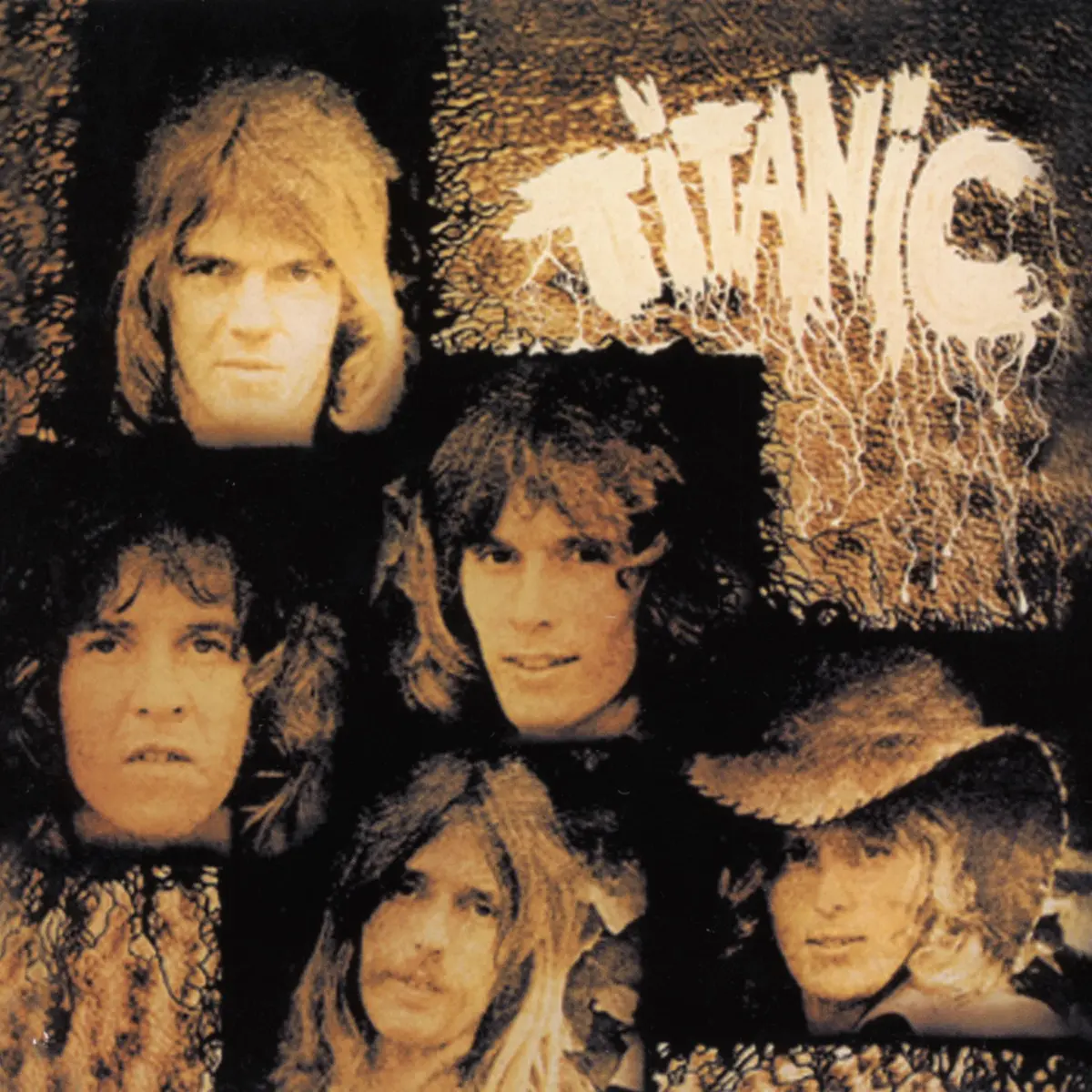 Titanic released their second album, Sea Wolf, in 1971 on CBS.
Sea Wolf opens at full strain, where the title track packs hard organ, abrupt turns, and relentless pace into a long surge with no pause for release. “Underbird” drives a quick pulse through organ bursts and hand percussion, then keeps shifting mood as Janne Loseth cuts across the rhythm with clipped lead lines. “Confusion” eases into a looser shuffle, where harmonica and Roy Robinson’s plain vocal line carry the verse toward a fuller chorus. “Sultana” locks Hammond and percussion into a warm rolling rhythm, then lets the keyboard line carry the whole piece with dense motion and steady heat.
“Hanging Over” opens with a brief piano feint, then snaps into a jolting stomp where pounding keys break the run and guitar answers with short bursts. “Covered in Dust” leans on a heavier push, while Kenny Aas threads sharper keyboard turns through the central riff and the drum-percussion team keeps firm pressure under every section. “Scarlet” lowers the lights with soft vocals, exact percussion, and spacious keyboards that hold the song in a suspended haze. “Exiled” starts with sober organ and martial drums, then widens into an emotional ballad built on a broad chorus and stately lift.
Guitarist Janne Løseth cuts wiry lead lines over Kenny Aas, whose organ chords widen the harmony and press weight under the riffs. Kjell Asperud roughens the attack with hand percussion, John Lorck drives the backbeat, and Roy Robinson carries the set with a high, sharp vocal line.
A1. “Sea Wolf” (5:55) — Løseth, Lorck, Aas, Asperud, Robinson
A2. “Underbird” (4:31) — Løseth, Aas, Robinson
A3. “Confusion” (2:59) — Aas, Robinson
A4. “Sultana” (4:14) — Titanic
B1. “Hanging Over” (3:18) — Løseth, Aas, Robinson
B2. “Covered in Dust” (3:16) — Løseth, Aas, Robinson
B3. “A Stones Throw” (3:07) — Løseth, Aas, Robinson
B4. “Scarlet” (3:59) — Aas, Robinson
B5. “Exiled” (3:52) — Aas, Robinson
Titanic recorded Sea Wolf with co-producer Jean-Jacques Souplet and engineer Roger Quested. The band also took arrangement credit.
The original LP came in a gatefold sleeve with special-effects art by M. Poitrat and photography by G. Moreau and H. Tullio. Early pressings carried a white CBS logo on the back cover.
CBS issued “Sultana” (b/w “Sing Fool Sing”) as a 7-inch in the UK on May 14, 1971. It reached No. 5 on the Official Singles Chart and remained there for 12 weeks.
Eagle Rock
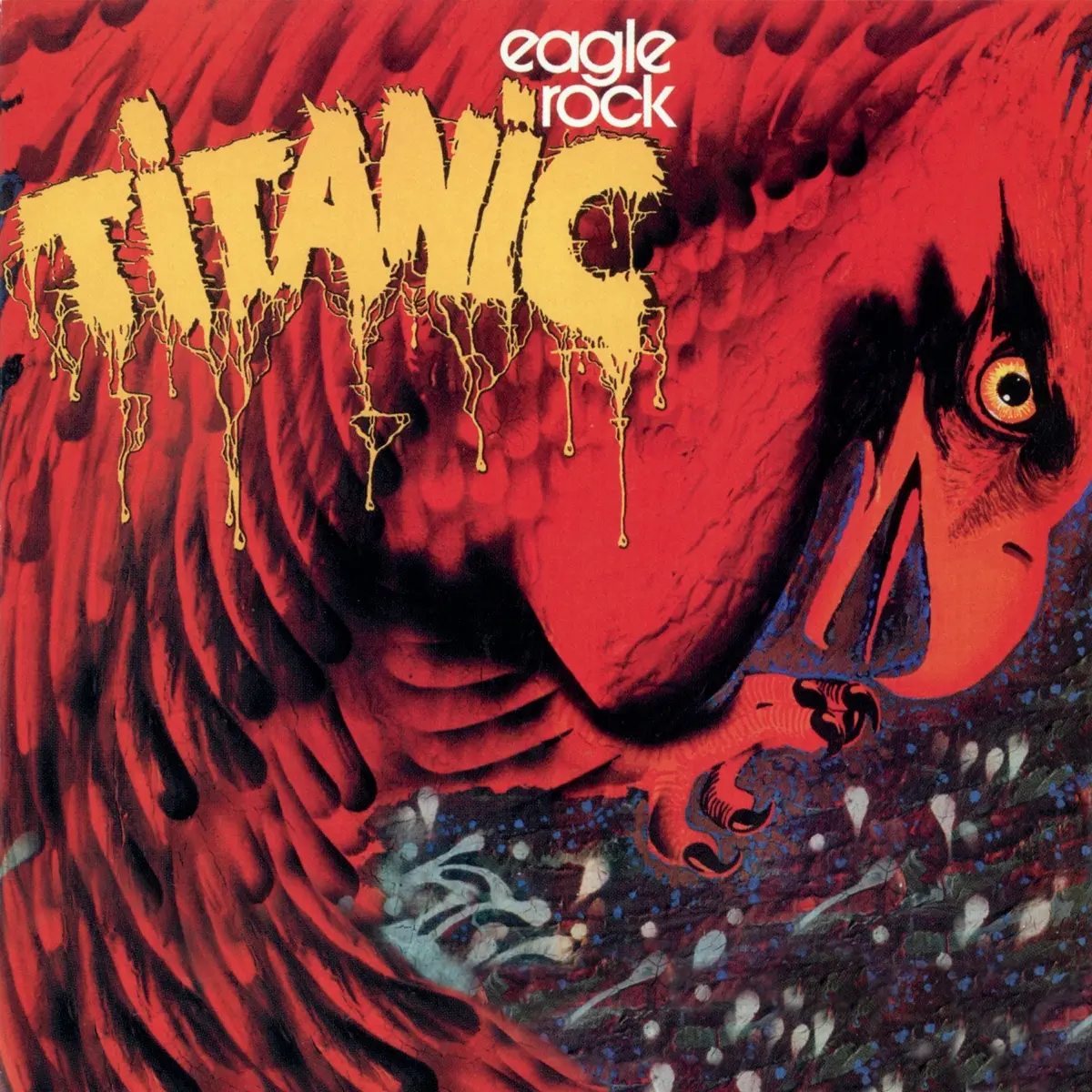 Titanic released their third album, Eagle Rock, in 1973 on CBS.
Eagle Rock opens with “One Night in Eagle Rock,” where a slow haunted intro gives way to a hard Hammond surge, descending chord figures, sharp tempo breaks, and a wild closing guitar run. “All Around You” keeps a firmer straight-line beat, with smoother organ phrases and a compact vocal line over a plain rock pulse.
“One of Your Kind” starts in a hush, then jumps into heavier attack, where Janne Loseth cuts across the organ with a bright solo before the song folds back into a softer coda. “Heia Valenga” strips the album to percussion and shouted voices for a brief ritual interlude. “Dying Sun” drives at a brisk clip through guitar arpeggios, frantic Hammond, hand percussion, and a chorus built on dramatic lift. “And It’s Music” slows the pace with piano, acoustic guitar, harmonica, and whistling, then opens short swells under Arica Siggs’ lead vocal.
“Richmond Express” returns to a harder push, with exact drumming, tight organ stabs, and abrupt sectional turns. “Maureen” starts as a tender vocal piece, then expands through keyboard layers, choral parts, and a final crescendo. “The Skeleton” closes on piano-led boogie and bass motion, with a dry jazz snap.
Janne Løseth threads long lead figures through Helge Grøslie’s keyboards, while Arica Siggs anchors the low end under John Lorck’s backbeat. Kjell Asperud adds hand percussion, and Roy Robinson cuts through the ensemble with a high vocal line. Across the record, the band favors long-form passages and compact pivots. Short ensemble breaks interrupt the longer sections.
A1. “One Night in Eagle Rock” (7:45) — Siggs, Løseth, Robinson
A2. “All Around You” (3:59) — Siggs
A3. “One of Your Kind” (5:34) — Siggs
A4. “Heia Vålerenga” (1:40) — Siggs, Grøslie, Løseth, Lorck, Asperud, Robinson
B1. “Dying Sun” (6:15) — Siggs
B2. “And It’s Music” (3:14) — Siggs
B3. “Richmond Express” (3:36) — Løseth, Robinson
B4. “Maureen” (6:12) — Siggs
B5. “The Skeleton” (2:30) — Siggs, Grøslie, Løseth, Lorck, Asperud, Robinson
Titanic recorded Eagle Rock in April 1973 at CBS Studios London with engineer Dick Palmer and assistant Steve Taylor. The band also took arrangement credit.
The original LP carried CBS catalog number 65661 and came in a gatefold sleeve on orange CBS labels.
CBS issued “Richmond Express” (b/w “Heia Valenga”) as a 7-inch in the UK on November 23, 1973. The single also appeared in France that year.
Ballad of a Rock’n Roll Loser
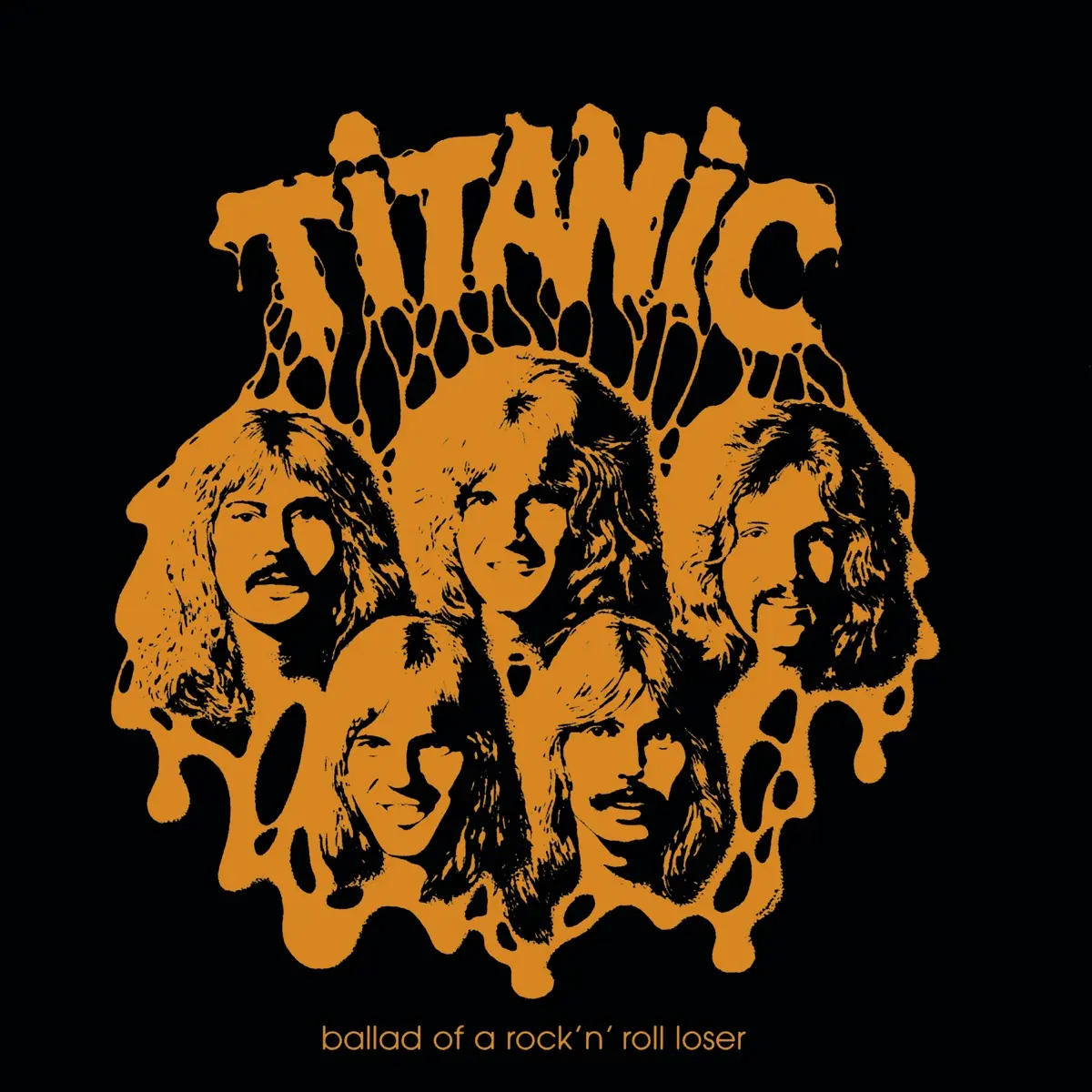 Titanic released their fourth album, Ballad of a Rock’n Roll Loser, in 1975 on CBS.
Ballad trades the old organ charge for twangy guitars, looser pacing, and a drier barroom pulse. “Riding Shotgun” opens with a plain road-song gait and a restrained arrangement built around guitar and vocal grain. “Ballad of a Rock’n Roll Loser” slows the pace to piano-led reflection and holds the center on a tender vocal line. “Ricochet” pushes a lighter dance rhythm through clipped accents and a thinner arrangement. “Following a Line” leans on drawled phrasing and a rough-edged shuffle. “Don’t Turn Around” closes with the album’s most shaped arrangement, where a soft synth layer supports the final vocal.
Janne Løseth drives the record with clipped guitar figures, slide accents, and short harmonica breaks. John Williamson anchors the low end with bass and acoustic guitar. Andrew Poulton hardens the backbeat with drums and percussion. Kjell Asperud adds hand percussion, and Roy Robinson cuts through the ensemble with a dry upper-register rasp.
A1. “Riding Shotgun On My Soul” (3:44) — Robinson, Williamson
A2. “Honky Vagrant” (3:36) — Dave Anderson
A3. “Ballad of a Rock’n Roll Loser” (3:24) — Robinson
A4. “The Crippler” (3:04) — Robinson, Williamson, Asperud
A5. “Ricochet” (4:09) — Robinson, Williamson, Poulton, Løseth, Walters, Asperud
B1. “Following a Line” (4:32) — Robinson, Williamson, Poulton
B2. “Buckshee Woman” (3:40) — Williamson, Poulton
B3. “Gambler Dealer” (3:48) — Robinson, Williamson
B4. “Only When I Fly Alone” (4:22) — Robinson
B5. “Don’t Turn Around” (5:45) — Løseth, Robinson
Track times and writing credits correspond to the original 1975 LP configuration.
Titanic recorded Ballad of a Rock’n Roll Loser at Morgan Studios in London with producer-engineer Roger Quested and assistant engineer Steve the Spaceman.
The original LP came in a gatefold sleeve and carried CBS catalog number 80786.
CBS issued “Buckshee Woman” (b/w “Honky Vagrant”) as a 7-inch in France in 1975. The single also appeared in the Netherlands that year.
Return of Drakkar
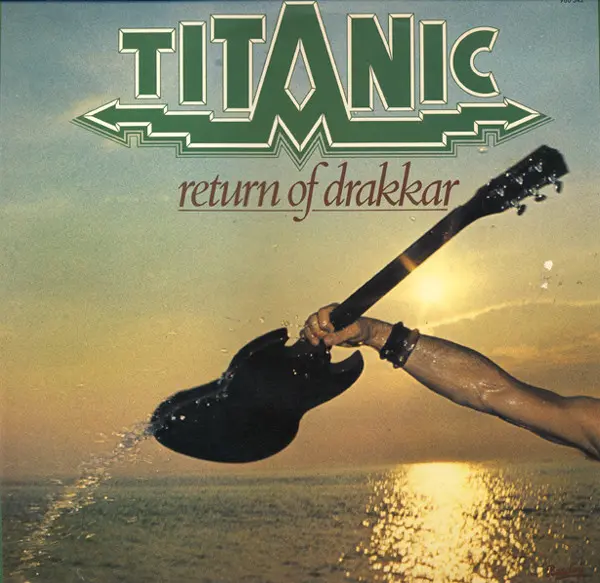 Titanic released their fifth album, Return of Drakkar, in 1977 on Barclay.
Return of Drakkar puts keyboards back in the center and rebuilds the band’s attack around organ lines, firmer rhythm, and Roy Robinson’s full-throated vocal line. “Blue Train” opens with a direct guitar drive and a steady beat. “Flashback” pushes Hammond, synthesizer, hand percussion, and lead guitar through a quick circular rhythm. “Round n’ Round” settles into an offbeat sway with a lighter vocal shape. “Sparkly Brown” trims the attack to a bright compact refrain. “Let It Ride” starts on a syncopated pulse, then hardens into a heavier guitar close.
“Jack Knife” snaps forward with frantic percussion and driving Hammond. “Mr. Hyde” leans on a rough vocal line over a blunt stomp. “Haunted House” strips the arrangement to acoustic backing and a focused vocal line. “My Gate to Hell” returns to a heavier push with Robinson pressing each line against a hard riff. “Cascade” closes with organ wash, high backing voices, and an emotional ballad arc shaped around the lead vocal.
Janne Løseth drives the album with clipped lead figures and short slide accents. Saintclair Brunet presses low-end weight under John Lorck’s backbeat, while Kjell Asperud scatters percussion across the surface. Roy Robinson cuts through the ensemble with a high, dry rasp. Short riffs, abrupt breaks, and compact acoustic passages tighten the sequence.
A1. “Blue Train” (3:48) — Robinson, Lorck
A2. “Flashback” (4:17) — Løseth, Lorck
A3. “Round ’N’ Round” (3:45) — Robinson, Chamboissier
A4. “Sparkly Brown” (4:26) — Watson, Asperud
A5. “Let It Ride” (3:21) — Robinson, Løseth
B1. “Jackknife” (3:30) — Robinson, Williamson
B2. “Mr. Hyde” (4:28) — Watson, Asperud
B3. “Haunted House” (3:44) — Watson, Saint-Clair Brunet
B4. “My Gate to Hell” (2:48) — Robinson, Løseth
B5. “Cascade” (6:11) — Robinson, Løseth
Titanic recorded Return of Drakkar at Barclay Offices in Paris with the Maison Rouge Mobile Studio and mixed the album in London.
The original French LP carried Barclay catalog number 900 542. It also included a printed insert with credits, lyrics, and a band photo.
In 1977, Barclay issued “Flashback” (b/w “Jackknife”) as a 7-inch single in France. The release carried catalog number 620354 EA and came in a picture sleeve.
Eye of a Hurricane
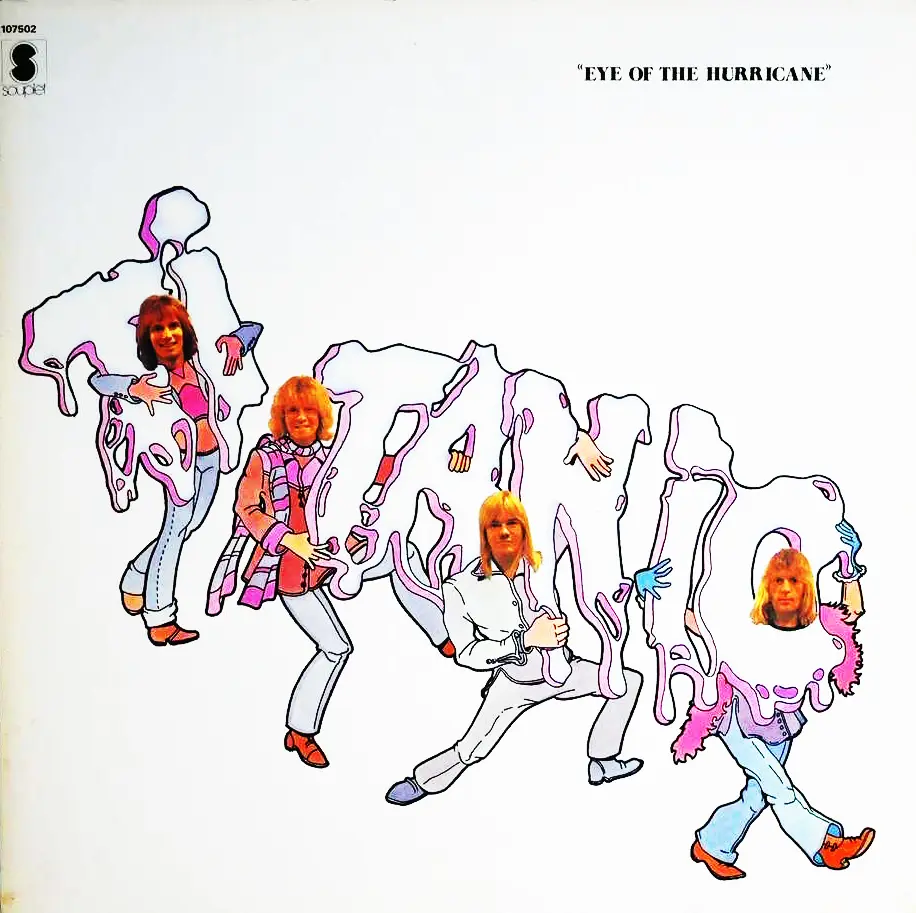 Titanic released their sixth and final album, Eye of a Hurricane, in 1979 on Ariola.
Janne Løseth cuts short lead figures through Kenny Aas, whose piano, organ, and keyboards thicken the harmony and press weight into the low end. John Lorck drives the backbeat under Roy Robinson’s vocal line. The album tightens the band’s attack into shorter songs, harder accents, and cleaner chorus turns.
A1. “East West” (5:00) — Robinson/Aas
A2. “Angel Dust” (3:25) — Robinson/Løseth
A3. “Clear as Lightning” (3:25) — Robinson/Aas
A4. “Ringing in My Ears” (3:00) — Robinson/Aas
A5. “We Got the Fire” (3:55) — Robinson/Aas
B1. “Lenny” (3:50) — Robinson/Aas
B2. “Ram Jam Band” (3:25) — Robinson/Aas
B3. “Too Late” (3:45) — Robinson/Aas
B4. “Night Bird” (3:25) — Robinson/Løseth
B5. “Love Lights Up” (3:55) — Robinson/Aas
Titanic recorded Eye of a Hurricane at Sound Recorder Studios in Los Angeles. The band arranged the album, and Mike Piccirillo handled engineering and mixing while also supplying bass on all songs.
The original LP came in a gatefold sleeve. Patrice Ordas handled the design.
In 1979, Disques Souplet issued “Love Lights Up” (b/w “East West”) as a 7-inch single in France.
Postlude
Jan Løseth joined a late-stage lineup of the French electronic band Space.
Discography:
- Titanic (1970)
- Sea Wolf (1971)
- Eagle Rock (1973)
- Ballad of a Rock’n Roll Loser (1975)
- Return of Drakkar (1977)
- Eye of the Hurricane (1979)
Sources:
Artist/Album Pages:
Ladislav Gerhardt (August 23, 1937 – August 21, 1993) was a Slovak jazz pianist, composer, and ban...
Cheryl Dilcher (1949–2005) was an American singer/songwriter who emerged with the 1970 Ampex relea...
Alain Markusfeld is a French classical/rock guitarist who released the 1970/71 Barclay folk/psych ...
Man was a Welsh jam-rock band that released twelve albums between 1969 and 1977. On Pye, they made...
Aura was an American brass-rock band from Los Angeles that released a 1971 self-titled album on Me...
Warm Dust was an English post-psych, jazz-rock band that released the 1970 double-album And It Cam...
Dark was an English hard-rock/psych band that issued the album Round the Edges on small-press Sis ...
Yosuke Yamashita — 山下洋輔 (Feb. 26, 1942) — is a Japanese pianist and bandleader who made twenty-fou...
Mainhorse was a symphonic-psych band formed in 1969 by London-based Swiss musicians. They released...
Sun Treader was an English jazz-rock trio that released the 1973 album Zin Zin on Island. Keyboard...
Sevda was a Swedish ethno-jazz/rock ensemble that released a studio album and a live set on Capric...
Hurdy Gurdy was a Danish psych-rock band that cut the 1970 Spectator single "Tick Tock Man," foll...