

Felt was an American hard-rock/psych band from Alabama that released a self-titled album in 1971.
Members: Mychael John Thomas (guitar, vocals), Mike Neel (drums), Tommy Gilstrap (bass), Stan Lee (guitar), Allan Dalrymple (keyboards)
Background
Felt formed in Arab, Alabama, in 1969 when schoolmates Myke Jackson (later known as Mychael John Thomas; guitar/vocals) and Mike Neel (drums) reunited after having previously performed together in Everyday Lyfe in high school. Seeking a full-band sound, they invited guitarist Stan Lee and bassist Tommy Gilstrap, who were quickly followed by organist Allan Dalrymple, completing a tightly knit five-piece lineup of 17-to-20-year-olds.
Drawing inspiration from a blend of blues and psychedelia, the group routinely rehearsed in Mike Neel’s father’s upholstery shop and gained local attention. A chance encounter with local TV personality Lynn McCrosky led to a Birmingham demo session, where the band laid down five tracks—including a harmonized ballad “Sweet Miss Lawrence”—to critical praise.
Their name arose organically during a late-night discussion about music’s emotional impact: someone exclaimed, “I felt that…” and the band crystallized around the name Felt.
Thanks to Myke’s uncle, who had industry connections in Nashville, the demo reached producer Bob Tubert, a country songwriter affiliated with the Nashboro family of labels.
Felt (the album)
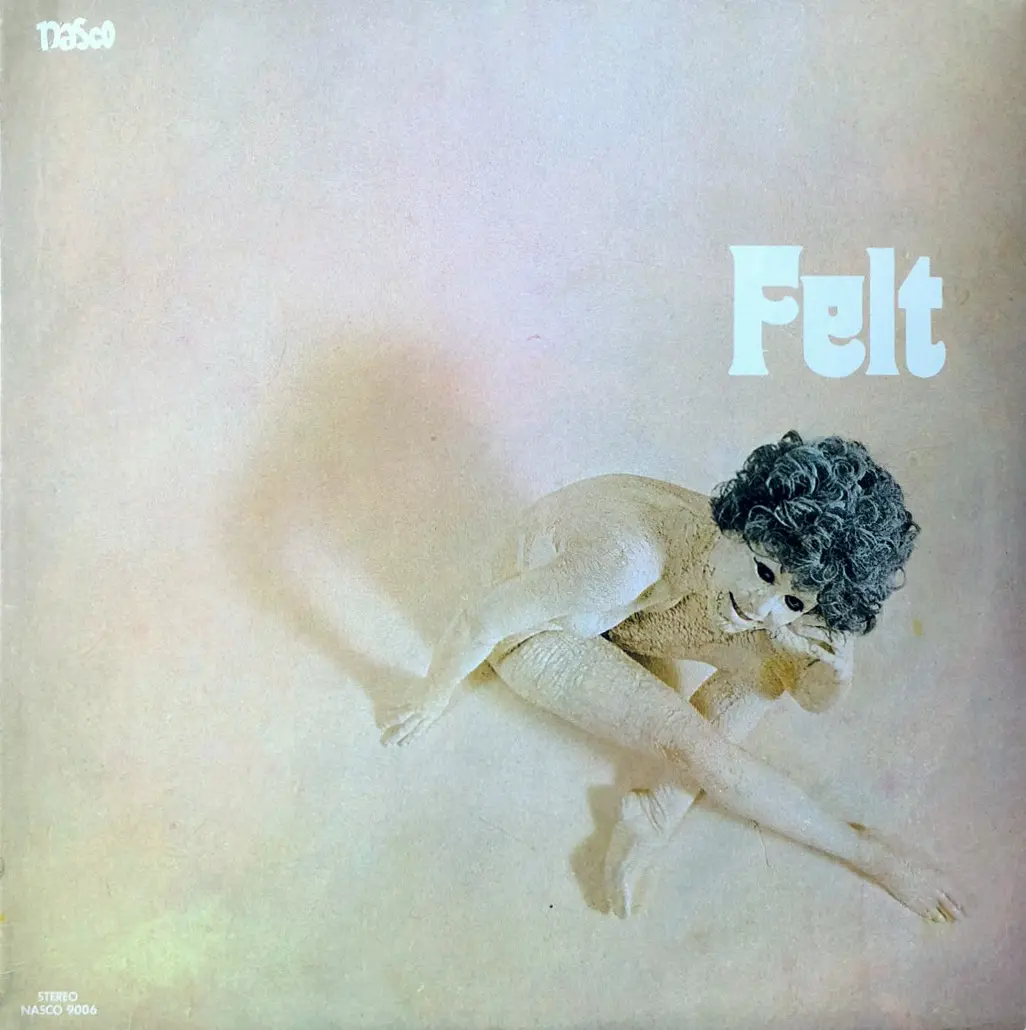 Felt released their self-titled album in March 1971 on Nasco Records, the nascent rock subsidiary of Nashboro. It contains four songs by singer Myke Jackson and two (“Now She’s Gone,” “World”) co-written with drummer Mike Neel.
Musically, Felt bridges heavy blues-rock, melodic psych, and emerging progressive stylings. “Look at the Sun” opens with a balladic intro and layered harmonies, while “Now She’s Gone” and “World” extend into moody, minor-key progressions with vocal phasing and light jazz accents.
The nine-minute centerpiece “The Change” stretches across three movements, building from plaintive vocals to fuzz-toned jams and tempo shifts, with Myke overdubbing stacked harmonies ala Yes and Spirit. “Destination” closes the album with psych-jazz turns and lyrical introspection, while “Weepin’ Mama Blues” revisits the genre’s Delta storytelling roots with a darker tonal palette.
A1. “Look At the Sun” (3:18)
A2. “Now She’s Gone” (5:29)
A3. “Weepin’ Mama Blues” (4:40)
A4. “World” (5:36)
B1. “The Change” (10:00)
B2. “Destination” (6:43)
Sessions occurred across two days in late 1970 at Woodland Sound Studios in Nashville. Bob Tubert producer the album, which Rex Collier engineered in sequence with titles by Gordon Lightfoot, Tom Rapp, and the Manhattan Transfer‘s debut, Jukin’.
Felt appeared in a single sleeve designed by Aesthetics Inc. with cover photography by Jimmy Moore. The front shows an unidentified model covered face-to-toe in white paint against a matching background. The back cover has a monochrome stock photo of a snow-ditched vehicle. The liner notes (uncredited) end with “Listen and you will have felt what Felt feels.”
Felt was the sixth LP (9006) on Nasco, which also released post-psych albums by Whalefeathers, Westfauster, and The Electric Toilet. Nasco pressed Felt in limited quantities for distribution via Nashboro Records.
Legacy
Felt gained cult status among psych and prog collectors for its raw production, emotional depth, and the ambition of its teenage creators.
The band dissolved shortly after the album’s release due to Myke Jackson’s eight-month incarceration for marijuana possession. He became a born-again Christian and recorded Alone, a 1975 CCM folk album on Yi Yi Records.
Discography:
- Felt (1971)
Sources:
Artist/Album Pages:
Triangle was a French sax-rock/psych band that debuted with a pair of singles on Odeon in 1969, fo...
Renaissance are an English rock band that released eleven studio albums between 1969 and 1983. The o...
Petr Novák (September 6, 1945 – August 19, 1997) was a Czech rock singer and songwriter who formed...
Zoldar & Clark was the mystery band attributed to a 1977 symphonic-rock album on Dellwood, whi...
Neil Young is a Canadian singer, guitarist, songwriter, and bandleader whose 1968–89 album sequence ...
Diabolus was an English jazz-rock/psych band that recorded a self-titled album in 1971, blocked dome...
Emil Viklický (born Nov. 23, 1948) is a Czech pianist, composer, and bandleader who played on the ...
Heaven & Earth were the American female folk duo of Pat Gefell and Jo D. Andrews. Their sole alb...
The Rance Allen Group was an American soul/gospel group from Monroe, Mich., led by singer, guitari...
James Williams (March 8, 1951 — July 20, 2004) was an American post-bop/jazz-funk pianist, compos...
The Red Crayola was an American psychedelic rock band from Houston that released the experimental...
3 Hür-El are a Turkish Anatolian rock trio comprised of brothers Feridun, Onur, and Haldun Hürel. Th...