

Jane Siberry is a Canadian singer, songwriter, and multi-instrumentalist who debuted with a 1981 folk-pop album on Street Records, followed by the 1984–89 art-pop titles No Borders Here, The Speckless Sky, The Walking, and Bound by the Beauty.
Background
Siberry was born Jane Stewart on October 15, 1955, and raised in Etobicoke, a former suburb of Toronto. She played piano from age four and later learned guitar by playing along to Leonard Cohen records. She adopted the Siberry surname from her maternal aunt and uncle, the family couple that embodied her ideal of perfect love.
After graduating from Richview Collegiate high school, she moved abroad for a stint at the Canadian Junior College in Lausanne, Switzerland. Back in Ontario, she enrolled as a music major at the University of Guelph. Favoring her own form of music notation over standard theory, she changed her major to microbiology and earned a BSc degree.
Meanwhile, she formed Java Jive, a coffee-house folk trio with singer Wendy Davis and bassist John Switzer. They gigged around Toronto until 1979 when Siberry chose the solo path. She retained Switzer as her musical and personal partner. Post-college, Siberry waited tables and saved money to finance her first album.
Jane Siberry
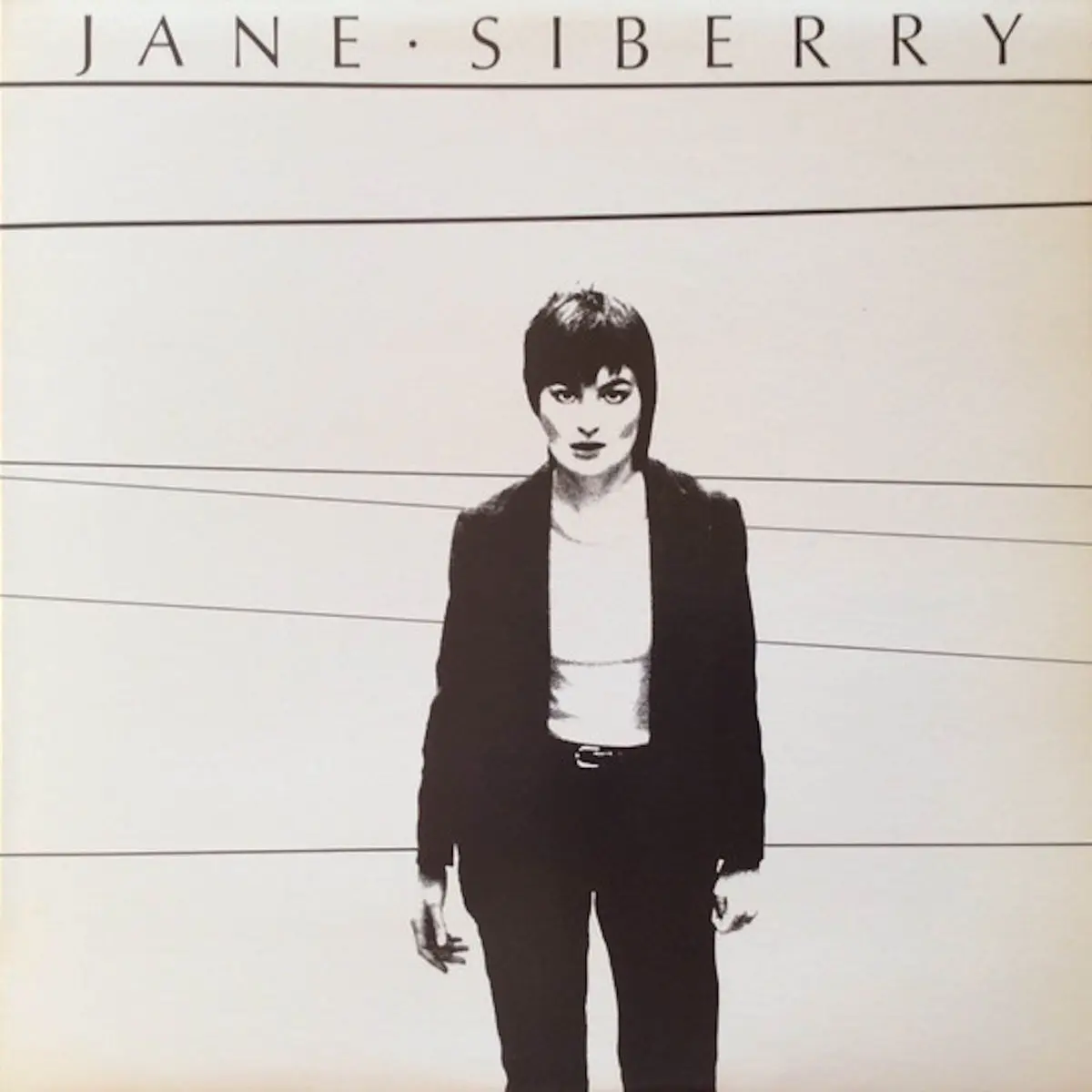 Jane Siberry released her self-titled debut album in 1981 on Street Records.
She conceived the material during 1980 and early 1981, framing the album in a sparse, folk-pop style that centers her piano, guitar, and early synthesizer textures. Jane Siberry emphasizes lyrical introspection and melodic space, shaped by a minimal, acoustic-forward aesthetic.
Synthesizer player Bruce Fowler and electric 12-string guitarist David Bradstreet interact subtly on “The Magic Beads,” which unfolds around a layered arrangement of sustained textures and melodic shifts. “Writers Are a Funny Breed” pulls back to an acoustic palette, led by Siberry’s fingerpicking and shifting vocal lines.
The closing track, “In the Blue Light,” reduces the instrumentation to just piano and voice, drawing focus to Siberry’s tone and compositional restraint. Keyboard duties alternate between Siberry and Fowler, while Bradstreet contributes guitar colorations and vocal support. Carl Keesee doubles on bass and clarinet, expanding the tonal vocabulary, and percussionist Trevor Ferrier adds congas to “The Strange Well.”
A1. “Marco Polo” (3:04)
A2. “This Girl I Know” (2:17)
A3. “The Sky Is So Blue” (4:10)
A4. “The Mystery at Ogwen’s Farm” (2:57)
A5. “The Magic Beads” (6:42)
B1. “Writers Are a Funny Breed” (5:30)
B2. “The Strange Well” (4:53)
B3. “Above the Treeline” (4:26)
B4. “In the Blue Light” (4:19)
Siberry co-produced the album with Bradstreet and Keesee at Inception Sound Studios in Toronto. Engineer Chad Irschick handled the mixdown. The album features backing vocals by Brenda Scott, Goldie Sherman, and Sarah Farquhar. Photographer John Switzer captured Siberry’s deadpan pose in back and white for the cover.
No Borders Here
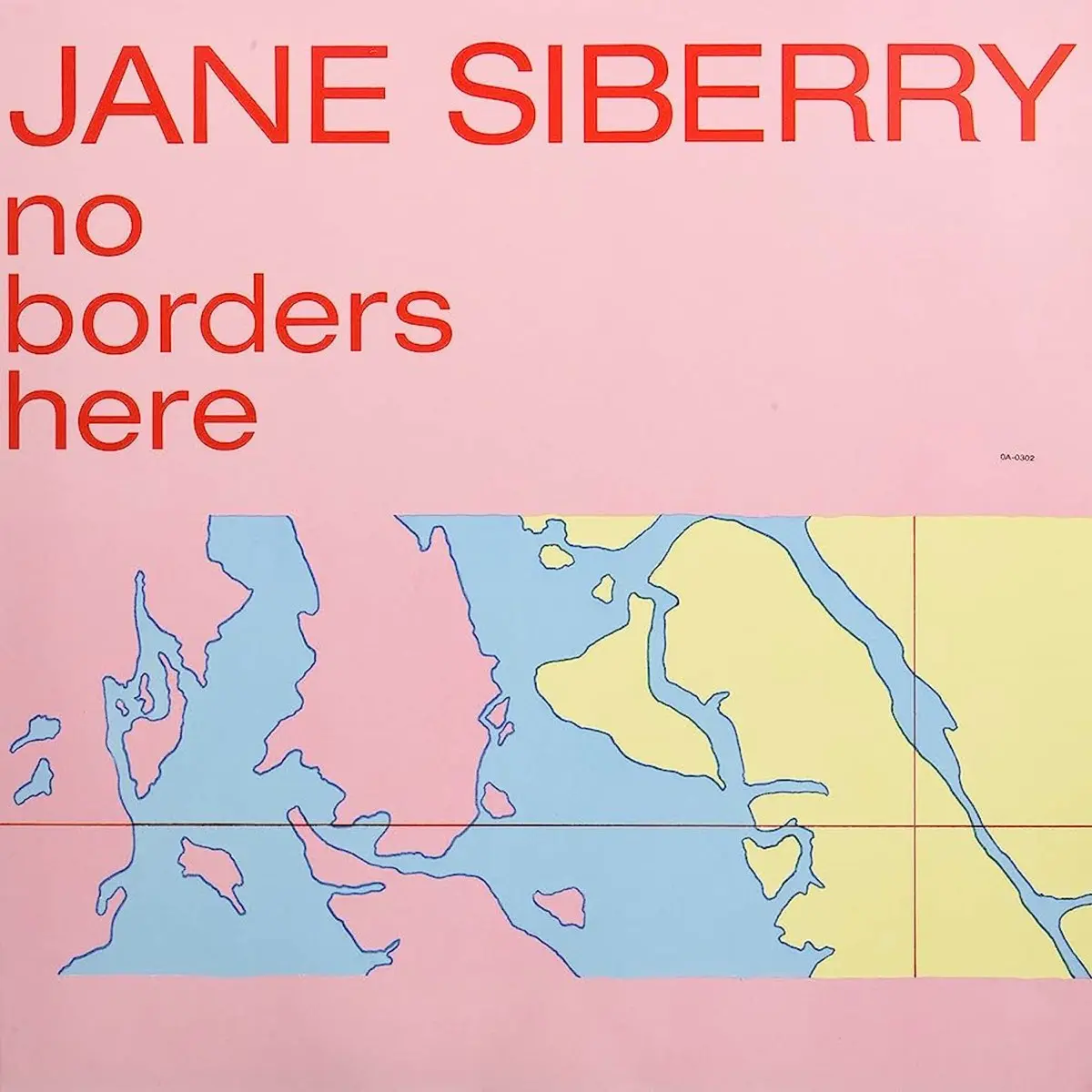 Jane Siberry released her second album, No Borders Here, on April 25, 1984, on Street Records.
The album marked her stylistic expansion into progressive and ambient pop textures, driven by keyboard layering and digital sampling. Siberry shares keyboard duties with Jon Goldsmith and Doug Wilde, while Rob Yale programs the Fairlight CMI, weaving synthetic accents and tonal shifts into the compositions.
Guitarist Ken Myhr plays a recurring melodic role opposite Siberry, blending electric phrasing with ambient coloration, particularly in the dynamic contrasts between tracks like “Dancing Class” and “Follow Me.” Myhr also adds percussion on select tracks. The title lines and harmonic shapes show greater rhythmic complexity than her debut, moving between odd meters and steady pulse forms.
On “Extra Executives,” Siberry collaborated with bassist–percussionist John Switzer on the musical structure. The album closes with “Mimi on the Beach,” which places Siberry’s imagery over a slowly unfolding arrangement shaped around ambient keys and syncopated sequences.
A1. “The Waitress” (2:25)
A2. “I Muse Aloud” (4:11)
A3. “Dancing Class” (6:41)
A4. “Extra Executives” (4:26)
A5. “You Don’t Need” (4:25)
B1. “Symmetry (The Way Things Have to Be)” (4:57)
B2. “Follow Me” (4:19)
B3. “Mimi on the Beach” (7:35)
B4. “Map of the World, Pt. 1” (3:33)
Sessions took place in the winter of 1983/84 at Inception Sound and Manta Sound in Toronto, co-produced by Siberry with Jon Goldsmith, Kerry Crawford, and John Switzer. Jeff Wolpert co-engineered the album with John Naslen.
Siberry released “Mimi on the Beach” as the album’s lone single. It became her first Canadian hit, peaking at No. 68 on RPM and gaining early video rotation on MuchMusic. The single appeared in multiple formats, including an extended 12″ version and shorter edits for Canadian and European 7″ pressings.
The Speckless Sky
 Jane Siberry released her third album, The Speckless Sky, on September 25, 1985, on Street Records.
The album deepens her use of electronic textures and compositional layering, building on the progressive and ambient elements of her prior work. She anchors the material with guitar, piano, and synth motifs, supported by Anne Bourne on secondary keyboards and Rob Yale’s Fairlight CMI sequencing.
Yale and Siberry interact sonically across multiple tracks, trading melodic motifs and accent placements, while guitarist Ken Myhr adds angular phrasing and harmonic shading on both guitar and guitar synthesizer. Siberry’s production choices allow phrases to interweave rather than dominate, with ambient passages, processional refrains, and pop-tinted refrains emerging within the same structure.
On “Map of the World (Part II),” trumpeter Sarah McElcheran enters as a tonal counterpoint, while Teddy Borowiecki contributes accordion to both “Vladimir • Vladimir” and “Map,” reinforcing Siberry’s use of theatrical instrumentation within her compositional architecture.
A1. “One More Colour” (4:38)
A2. “Seven Steps to the Wall” (5:11)
A3. “The Very Large Hat” (5:35)
A4. “Vladimir • Vladimir” (7:08)
B1. “Mein Bitte” (4:20)
B2. “The Empty City” (6:40)
B3. “Map of the World (Part II)” (5:07)
B4. “The Taxi Ride” (5:39)
Siberry co-produced the album with John Switzer at Manta Sound in Toronto, with engineer John Naslen.
The Speckless Sky became her biggest-selling album in Canada, yielding two singles: “One More Colour,” which reached No. 27 on the RPM Top Singles chart, and “Map of the World (Part II),” which peaked at No. 17 on the Adult Contemporary chart. Both singles appeared in multiple formats, with “Map” issued in both 7″ and 12″ pressings across Canada and the US. “The Empty City” appeared as a B-side on each single.
The Walking
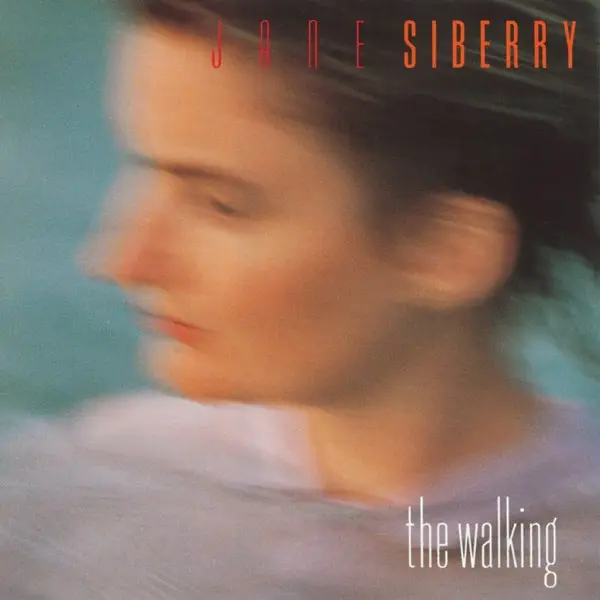 Jane Siberry released her fourth album, The Walking, on November 3, 1987, on Street Records.
She composed the album as an extended song cycle built on long-form structures, recurring images, and chamber-art textures. The arrangements layer acoustic guitar and piano with modulated synth beds and sectional phrasing, shifting tempo and tone within single tracks.
Ken Myhr trades acoustic and electric guitar passages across the suite-like movements, alternating foreground space with Siberry’s keyboards and Anne Bourne’s organ and piano voicings. Bourne and Rob Yale support Siberry’s harmonic changes with ambient textures, while trumpet player Sarah McElcheran and trombonist Steven Donald contribute to “The Lobby,” underscoring the album’s shift toward narrative orchestration.
“Ingrid and the Footman” features guitarist Wendell Ferguson and a large ensemble of backing vocalists. Her lyrics repeat natural imagery—water, trees, birds, and terrain—threaded across songs as lyrical and structural anchors.
A1. “The White Tent the Raft” (9:12)
A2. “Red High Heels” (7:19)
A3. “Goodbye” (4:17)
A4. “Ingrid and the Footman” (7:06)
B1. “Lena Is a White Table” (6:41)
B2. “The Walking (and Constantly)” (6:16)
B3. “The Lobby” (6:19)
B4. “The Bird in the Gravel” (10:34)
Sessions took place in 1987 at Manta Sound in Toronto. Siberry co-produced the album with longtime collaborator John Switzer. Al Cross handled percussion and backing vocals throughout the record, with multi-part vocal layering on “Ingrid and the Footman” contributed by Rebecca Jenkins, Gina Stepaniuk, Cherie Camp, and others. The album appeared abroad on Reprise Records.
An edited “Ingrid and the Footman” appeared on a radio-circulated single, accompanied by a music video that received a Juno Award nomination in 1989. The Walking peaked at No. 76 on the RPM Top 100 Albums chart in Canada.
Bound by the Beauty
 Jane Siberry released her fifth album, Bound by the Beauty, on September 12, 1989, on Street Records.
The album draws from folk-pop and soft art-song forms, replacing the extended suites of The Walking with concise compositions built around acoustic guitar, piano, and ensemble harmony. Siberry alternates between guitar and piano across the album, working closely with Teddy Borowiecki on piano and accordion. Guitarist Ken Myhr provides melodic counterpoint and harmonic texture, while John Switzer, who also co-produced, contributes bass and supporting vocals.
“Half Angel Half Eagle” drew attention for its lyrical juxtaposition of poetic imagery and street-level language, contrasting aerial metaphor with overheard slurs to highlight the dissonance of urban life. “Something About Trains,” included here under its alternate title, originally appeared on the soundtrack to The Top of His Head and received a Genie Award nomination. “The Valley” later gained further significance when played at the memorial for musician John Balance.
A1. “Bound by the Beauty” (4:41)
A2. “Something About Trains” (3:44)
A3. “Hockey” (3:58)
A4. “Everything Reminds Me of My Dog” (4:17)
A5. “The Valley” (6:04)
B1. “The Life Is the Red Wagon” (4:12)
B2. “Half Angel Half Eagle” (3:55)
B3. “La Jalouse” (3:59)
B4. “Miss Punta Blanca” (1:38)
B5. “Are We Dancing Now? (Map III)” (6:11)
Siberry produced the album with Switzer in 1989, accompanied by backing vocals from David Ramsden, Rebecca Jenkins, Anne Bourne, Gina Stepaniuk, and Cherie Camp on several ensemble-based tracks. Don Freed appears on “Everything Reminds Me of My Dog,” and Wendell Ferguson adds pedal steel guitar to “The Valley.”
Photographer and filmmaker Peter Mettler, who directed The Top of His Head, shot the album’s cover image. “Bound by the Beauty” received widespread radio airplay in Canada, marking Siberry’s highest rotation since “One More Colour.”
Discography:
- Jane Siberry (1981)
- No Borders Here (1984)
- The Speckless Sky (1985)
- The Walking (1987)
- Bound by the Beauty (1989)
- When I Was a Boy (1993)
Sources:
- Discogs: Jane Siberry
- 45worlds: Jane Siberry
- 45cat: Jane Siberry
- RYM: Jane Siberry
- MusicBrainz: Jane Siberry
Artist/Album Pages:
ABC are an English new wave and soul-pop band that co-headed the Second British Invasion with their ...
The Ashby-Ostermann Alliance was an American jazz-rock band from Chicago that released a 1981 self...
Leggat was a Canadian symphonic/hard-rock band that released a 1982 self-titled double-album on Ca...
Glamour was a Spanish new wave synthpop band behind the 1981–83 Polydor albums Imágenes and Guarda...
Dio was an American metal band that Ronnie James Dio formed in 1982 after his split from Black Sab...
Circus was the Swiss symphonic-rock band behind the 1976–78 Zytglogge albums Circus, Movin' On, Al...
Girlschool is an English rock band that gained prominence as part of the New Wave of British Heavy...
Logg was an American soul-funk band that released a 1981 self-titled album on Salsoul Records. M...
Dreamboy was an American soul-funk band that released a 1983 extended-play and the 1984 album Cont...
Japan was an English new wave band that released five albums between 1978 and 1981. They formed in 1...
Sister Sledge was an American soul group from Philadelphia comprised of sisters Debbie, Kim, Joni,...
Laura Branigan (July 3, 1952 — Aug. 26, 2004) was an American pop singer from Mount Kisco, N.Y. ...