

Le Roux was an American southern/hard-rock band from Lafayette, formed in 1978 as Louisiana’s LeRoux. Two albums appeared under the elongated nameplate on Capitol circa 1978/79, followed by three titles under the truncated name between 1980 and 1983.
Members: Jeff Pollard (guitar, 1978-81), Rod Roddy (piano), Tony Haselden (guitar), Leon Medica (bass), David Peters (drums), Bobby Campo (trumpet, 1978-81), Fergie Frederiksen (vocals, 1981-84), Jim Odom (guitar, 1981-84), Randy Knaps (vocals, 1985-present)
Background
Le Roux originated in Houma, Louisiana, where keyboardist Rod Roddy led the Levee Band with singer Bobby Kimball and former War Babies singer-guitarist Jeff Pollard. Kimball departed in 1974 for Los Angeles, where he cut an album with the Three Dog Night spinoff S.S. Fools joined the original Toto lineup.
Roddy and Pollard regrouped circa 1975 in Baton Rouge as the Jeff Pollard Band, which included trumpeter-flutist Bobby Campo and drummer-conguero David Peters. Bassist Leon Medica joined after the departure of an unidentified earlier player. Medica backed Louisiana blues musicians on the 1970 Excello double-album Swamp Blues, produced by Mike Vernon. He joined Potliquor for their 1973 Janus release Louisiana Rock & Roll.
Medica recruited the Jeff Pollard Band to back blues guitarist Clarence “Gatemouth” Brown. In October 1976, they accompanied Brown on a U.S. State Department tour of Africa, including engagements in Lesotho and Madagascar. The musicians also played on his 1977 Music Is Medicine album Blackjack.
Medica circulated demos of Pollard originals that reached William McEuen, manager of the Nitty Gritty Dirt Band. McEuen attended a Jeff Pollard Band concert in Colorado and arranged two Los Angeles showcases that secured a Capitol Records contract.
Pollard recruited guitarist Tony Haselden, completing a six-piece lineup with Medica, Roddy, Campo, and Peters. They adopted the name Louisiana’s LeRoux, a reference to the Cajun cooking base used in gumbo.
Louisiana’s LeRoux
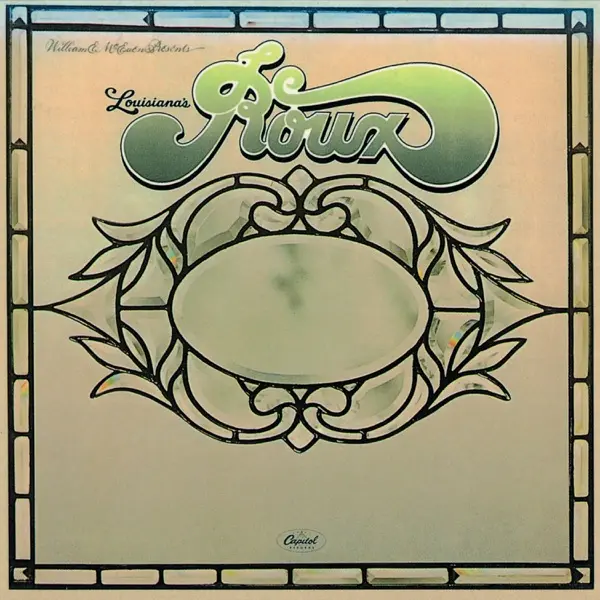 Louisiana’s LeRoux released their self-titled debut album in April 1978 on Capitol Records.
Pollard supplies eight sole compositions and shares two further songs, while Medica and Hoyt Garrick wrote “New Orleans Ladies.” Campo adds trumpet and percussion to the guitar-keyboard lineup, and all six members receive arrangement credit. The album uses original material throughout.
“Take a Ride on a Riverboat” barrels on a steady midtempo roll with close harmonies, piano fills, and a blues-tinged solo. “Love Abductor” coils around chiming guitar figures before grinding into tighter ensemble lines. “Slow Burn” drives an extended instrumental roar through open improvisation. “Snake Eyes” lopes through buoyant motion beneath darker sung lines. “Bridge of Silence” settles into restrained phrases with close ensemble harmonies. “I Can’t Do One More Two-Step” rolls with a loose shuffle.
A1. “Take a Ride on a Riverboat” (3:30) – Pollard
A2. “Love Abductor” (3:42) – Pollard, Medica
A3. “New Orleans Ladies” (3:55) – Medica, Hoyt Garrick
A4. “Crazy in Love” (2:38) – Pollard, P. Harrison
A5. “Slow Burn” (5:00) – Pollard
B1. “Snake Eyes” (4:12) – Pollard
B2. “Backslider” (3:41) – Pollard
B3. “Bridge of Silence” (4:28) – Pollard
B4. “Heavenly Days” (3:29) – Pollard
B5. “I Can’t Do One More Two-Step” (3:54) – Pollard
Sessions took place in 1978 at Studio in the Country, Bogalusa, with producer Leon Medica and engineer Warren Dewey; Brad Aaron and Bill Evans assisted. Dewey also engineered Bob Welch’s Three Hearts across the same recording cycle. Musician-designer Dean Torrence developed the sleeve with Medica. The front combines Norman Seeff’s group portrait with Bill Eastabrook’s cut-glass image, while Alice McEuen added calligraphy. Seeff also photographed Foreigner’s Double Vision and Chicago’s Hot Streets for 1978 sleeves.
Capitol issued “New Orleans Ladies” in July 1978 (b/w “Love Abductor”), and the A-side reached No. 59 on the Billboard Hot 100 chart. “Take a Ride on a Riverboat” followed in October (b/w “Backslider”) and reached No. 109 on the Bubbling Under chart. The debut peaked at No. 135 on the Billboard 200 album chart.
Keep the Fire Burnin’
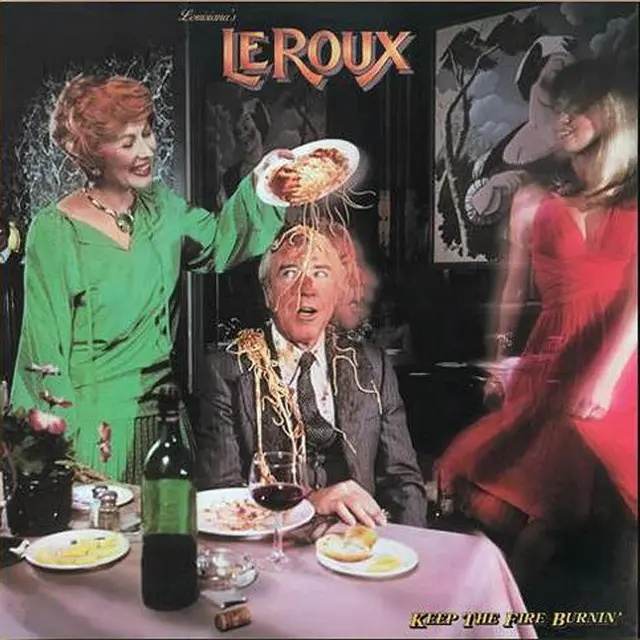 Louisiana’s LeRoux released their second album, Keep the Fire Burnin’, in June 1979 on Capitol Records.
Pollard remains principal writer, while Haselden contributes “Call Home the Heart” and “Thunder n’ Lightnin’.” The band also interprets “Fa-Fa-Fa-Fa-Fa (The Sad Song),” first recorded by Otis Redding. Saxophonist Brian Savage appears on “You Be My Vision,” and arranger Gene Page directs the strings.
“Keep the Fire Burnin’” strides through brisk offbeat accents and quick keyboard figures. “Call Home the Heart” slows into homesick lines as three-part harmonies gather around each phrase. “When I Get Home” charges through celebratory lines and rapid piano interjections. “You Be My Vision” swells through a measured arc beneath arranged strings. “Feel It” simmers around a buoyant bassline and sultry contour. “Say It (With Your Heart)” shuffles with relaxed sway.
A1. “Keep the Fire Burnin’” (3:42) – Pollard
A2. “Call Home the Heart” (3:44) – Haselden
A3. “When I Get Home” (3:14) – Pollard
A4. “You Be My Vision” (3:59) – Pollard
A5. “Fa-Fa-Fa-Fa-Fa (The Sad Song)” (3:06) – Otis Redding, Steve Cropper
B1. “Feel It” (3:41) – Roddy, Pollard
B2. “Thunder n’ Lightnin’” (4:26) – Haselden
B3. “Window Eyes” (3:38) – Pollard
B4. “Say It (With Your Heart)” (3:33) – Pollard
B5. “Back to the Levee” (4:59) – Pollard
Sessions took place in 1979 at Studio in the Country, Bogalusa, with producer Leon Medica and engineer Bill Evans. The former assistant moved to principal engineer for this album; Ronny Dobbs and David Farrell assisted. Dawn Patrol founder Jimmy Wachtel photographed and designed the cover, with Michael Curtis assisting. Wachtel also handled sleeve work for Warren Zevon’s Excitable Boy and Joe Walsh’s But Seriously, Folks… in the preceding year.
Capitol issued “Feel It” in June 1979 (b/w “Thunder n’ Lightnin’”). Keep the Fire Burnin’ reached No. 162 on the Billboard 200 album chart.
Up
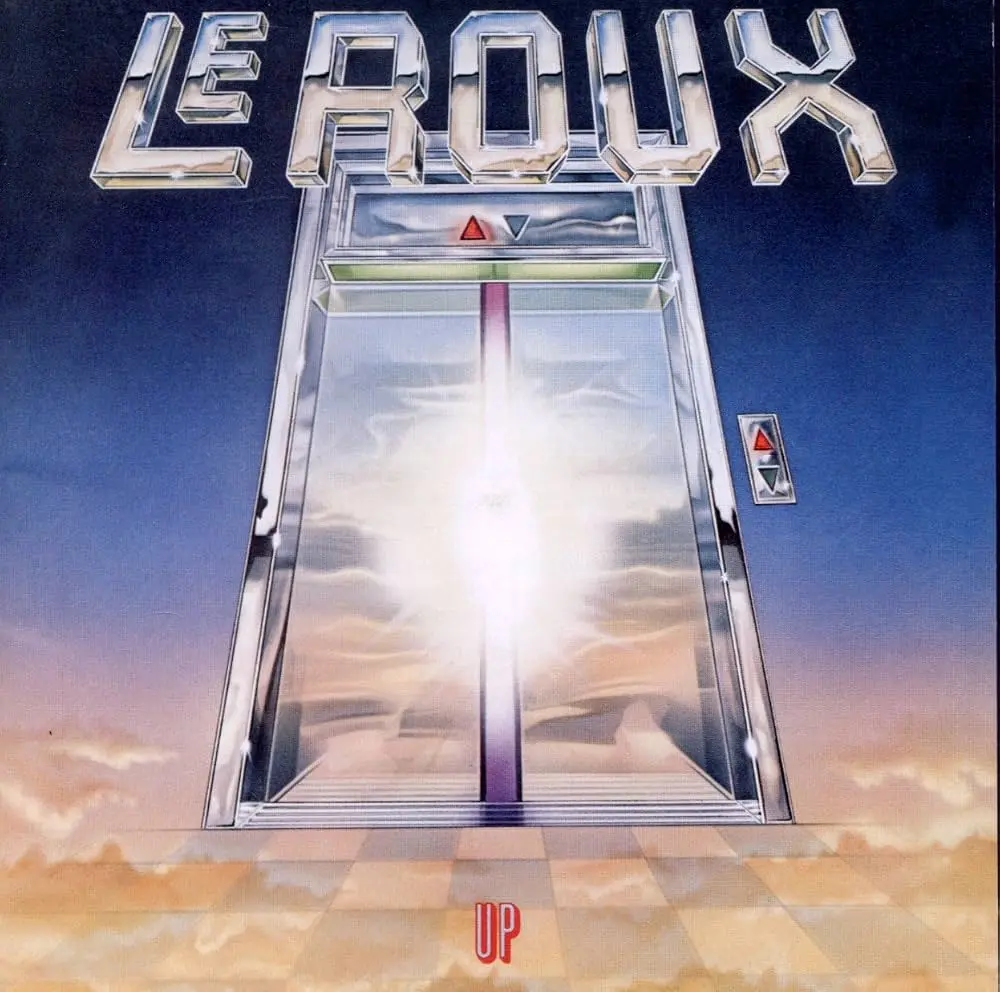 Le Roux released their third album, Up, in June 1980 on Capitol Records.
Capitol shortened the group name and brought keyboardist-producer Jai Winding into the sessions. Pollard handles most lead vocals, while Roddy takes “Get It Right the First Time” and “Mystery.” The keyboardist closes the album with “I Won’t Be Staying.” The group works without outside players, with Pollard and Roddy supplying most compositions.
“Let Me Be Your Fantasy” charges from a rough guitar entrance through a tightening passage, then settles into a firm midtempo stride. “Get It Right the First Time” coils through suspenseful lines toward a descending-scale solo. “Mystery” drives from an insistent piano figure through broad organ layers and emphatic sung phrases. “Roll Away the Stone” climbs from subdued lines into a high, soft refrain. “I Know Trouble When I See It” grinds between measured passages and harder riff cycles. “Crying Inside” snaps through intermittent chords, dissonant turns, and abrupt shifts in phrasing.
A1. “Let Me Be Your Fantasy” (3:40) – Pollard
A2. “Get It Right the First Time” (3:48) – Roddy, Haselden
A3. “Mystery” (4:08) – Roddy
A4. “Roll Away the Stone” (4:59) – Pollard
B1. “It Could Be the Fever” (3:53) – Pollard
B2. “I Know Trouble When I See It” (4:13) – Roddy, Pollard
B3. “Waiting for Your Love” (3:35) – Pollard
B4. “Crying Inside” (3:23) – Roddy, Pollard
B5. “I Won’t Be Staying” (5:13) – Roddy
Sessions took place in 1980 at Cherokee Studios and Crystal Sound in Los Angeles, with producer Jai Winding and engineer Jeremy Smith; George Tutko provided additional engineering. Winding also played keyboards on Jackson Browne’s Hold Out in the same year. Smith later engineered America’s View from the Ground for a 1982 release. Illustrator Ed Scarisbrick created the front image, which places a glass lift above a tiled approach and cloud line. Raul Vega supplied photography, while Capitol art directors Roy Kohara and Henry Marquez completed the package. Kohara also directed Bob Seger’s Against the Wind, recipient of the Grammy Award for Best Album Package.
Capitol issued “Roll Away the Stone” in July 1980 (b/w “Crying Inside”). “Let Me Be Your Fantasy” followed in September (b/w “I Know Trouble When I See It”) and reached No. 105 on the Bubbling Under chart. Up peaked at No. 145 on the Billboard 200 album chart.
Capitol ended the contract after Up. Manager Budd Carr then moved Le Roux to RCA, where Medica resumed production duties.
Last Safe Place
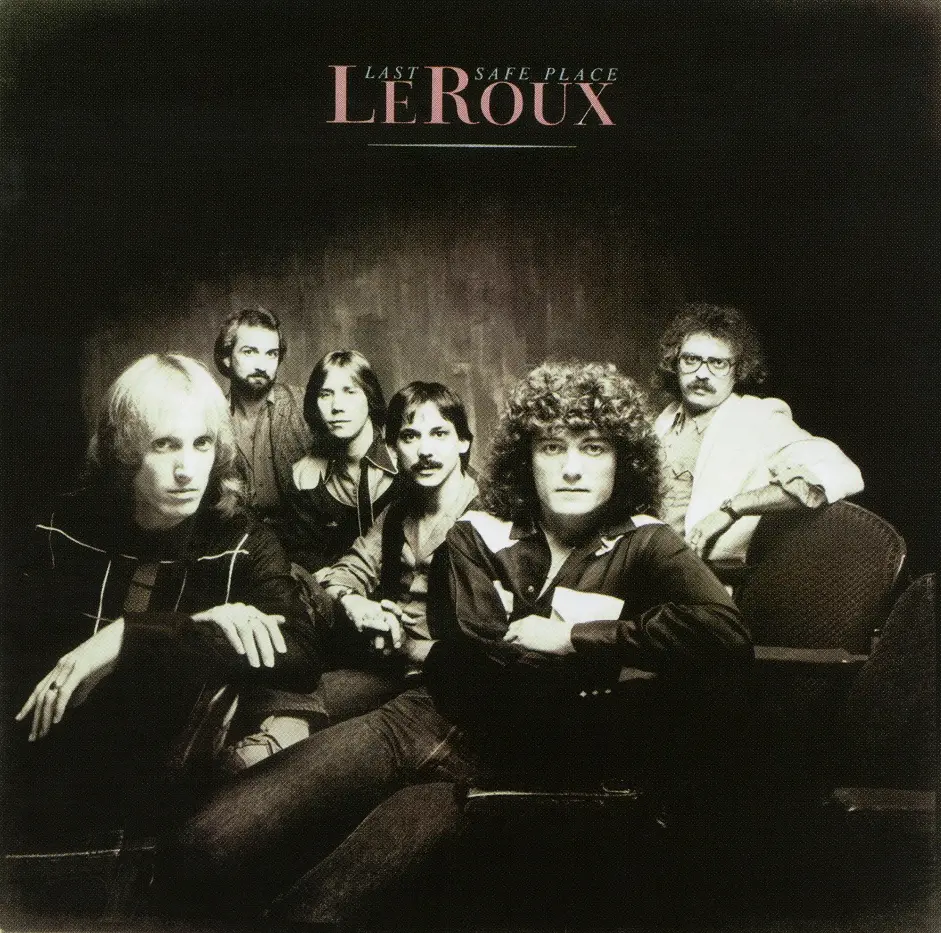 Le Roux released their fourth album, Last Safe Place, in January 1982 on RCA Records.
The RCA debut restores Medica’s production role and keeps the six-piece lineup intact. Saxophonist Lon Price appears on “Inspiration” and “Make Believe,” while Claudette Rogers adds backing vocals to “Inspiration.” The program includes “Rock ’n’ Roll Woman,” first recorded by Buffalo Springfield; the remaining songs come from group writers.
“Addicted” drives on a pulsing beat and terse riff exchanges. “It Doesn’t Matter” moves through supple syncopation and lighter chord turns before landing on a compact refrain. “Nobody Said It Was Easy” settles into a measured country-tinged ballad, with close harmony rising through an involved chorus. “Last Safe Place on Earth” pivots on darting keyboard runs, a firm backbeat and sharply divided sections. “Inspiration” softens around smooth chord movement before saxophone opens later passages.
“You Know How Those Boys Are” stomps through a tougher road-song pulse and blunt refrain. “Midnight Summer Dream” glides at an easy midtempo, using open phrasing and a broad chorus. “Rock ’N’ Roll Woman” rolls through close harmony and brighter section changes before paired guitar breaks. “Long Distance Lover” bounces through compact verses and a direct recurring refrain. “Make Believe” starts spare, swells into a broad power-ballad chorus and closes through a long final rise.
A1. “Addicted” (3:00) – Roddy
A2. “It Doesn’t Matter” (3:50) – Pollard, Roddy
A3. “Nobody Said It Was Easy (Lookin’ for the Lights)” (4:11) – Haselden
A4. “The Last Safe Place on Earth” (3:13) – Pollard
A5. “Inspiration” (4:00) – Medica, Roddy
B1. “You Know How Those Boys Are” (3:27) – Haselden
B2. “Midnight Summer Dream” (3:21) – Medica
B3. “Rock ’n’ Roll Woman” (3:26) – Stephen Stills
B4. “Long Distance Lover” (3:20) – Roddy
B5. “Make Believe” (4:50) – Roddy
Sessions took place in 1981 at Studio in the Country, Bogalusa, with producer Leon Medica and engineer Warren Dewey; David Farrell assisted. Dewey returned to the controls for the first time since the debut and mixed the album at Sunset Sound in Los Angeles. RCA art director Ron Kellum built the package around a monochrome group portrait by music photographer David Kennedy. The front shows the members seated and standing in a dark interior beneath the title. Kellum also directed Keni Burke’s You’re the Best for a 1981 RCA sleeve. Kennedy photographed Loverboy’s Get Lucky in the same year.
RCA issued “Nobody Said It Was Easy (Lookin’ for the Lights)” in February 1982 (b/w non-album “Can’t You See It in My Eyes”), and the A-side reached No. 18 on the Billboard Hot 100 chart. “The Last Safe Place on Earth” followed in May (b/w “Make Believe”) and reached No. 77 on the same chart. “Addicted” reached No. 7 on Billboard Top Tracks. Last Safe Place peaked at No. 64 on the Billboard 200 album chart.
Pollard and Campo left after Last Safe Place. Singer Fergie Frederiksen and guitarist Jim Odom joined before the next studio sessions, and both entered the songwriting pool.
So Fired Up
 Le Roux released their fifth album, So Fired Up, in February 1983 on RCA Records.
Frederiksen takes most lead vocals, while Odom sings “Carrie’s Gone” and “Look Out”; Haselden fronts three further songs, including “Let Me In” and “Line on Love.” David Pack adds backing vocals to “Turning Point” and “Carrie’s Gone.” Every song comes from group writers, with Roddy contributing to most titles.
“So Fired Up” sprints on rapid riffing and hard snare accents, with a high-register lead driving chorus. “Lifeline” opens with a circling synthesizer effect, then barrels into an urgent refrain and sustained guitar bends. “Let Me In” begins on a delicate arpeggio and mournful keyboard figure, then thickens as rhythmic motion quickens beneath rising lines. “Yours Tonight” starts with measured piano and restrained phrasing before climbing into a harder, faster refrain. “Line on Love” stretches across a slow opening, quickens at chorus and circles through sustained phrases in a drawn-out middle passage.
“Carrie’s Gone” rides a firm midtempo beat, balancing compact verses against a broad, high-register refrain. “Wait One Minute” settles into a restrained ballad, with bright notes falling across a light pulse before chorus opens. “Turning Point” bears down on a tense opening riff, slows through middle bars and regains full force. “Don’t Take It Away” breaks a softer opening with a heavy riff, then climbs through sustained high notes and a more forceful final pass. “Look Out” rattles through opening bars, pauses for a hazy suspended passage and accelerates sharply into closing section.
A1. “So Fired Up” (4:39) – Roddy, Odom, Frederiksen
A2. “Lifeline” (4:36) – Roddy, Medica, Frederiksen, Haselden
A3. “Let Me In” (4:01) – Haselden
A4. “Yours Tonight” (3:47) – Haselden, Roddy
A5. “Line on Love” (3:52) – Haselden
B1. “Carrie’s Gone” (3:40) – Frederiksen, Odom, Roddy
B2. “Wait One Minute” (4:10) – Roddy
B3. “Turning Point” (5:00) – Roddy, Haselden, Frederiksen, Odom
B4. “Don’t Take It Away” (3:35) – Roddy
B5. “Look Out” (4:19) – Odom, Frederiksen, Roddy, Haselden
Sessions took place in 1982 at Studio in the Country, Bogalusa, with producer Leon Medica and engineer Warren Dewey. The group mixed the record at Capitol Studio C in Los Angeles. Photo illustrator Paul Maxon devised the front-cover concept with model Miss Dizzy Heights, while Tom Gibson supplied the back-cover and inner-sleeve portraits. Designer Mike Doud directed the package. Doud and Gibson also contributed visual work to Supertramp’s …Famous Last Words… for a 1982 sleeve.
RCA issued “Carrie’s Gone” in February 1983 (b/w “Look Out”), and the single reached No. 81 on the Billboard Hot 100 chart.
Later Activity
The RCA contract ended, and Le Roux ceased regular activity after the album cycle. Le Roux resumed in 1985 with singer Randy Knapps and continued regional performances. The group released Ain’t Nothing but a Gris Gris in 2000 and the archival concert album Higher Up two years later. Louisiana Music Hall of Fame inducted Le Roux in 2009 as the organization’s fiftieth inductee. The seventh studio album, One of Those Days, arrived on July 24, 2020, through Gulf Coast Records.
Founding bassist-producer Leon Medica died on June 9, 2024, after a career that also encompassed session work and studio production. Guitarist Tony Haselden died on May 16, 2025, following a later career as a Nashville songwriter.
Discography:
- Louisiana’s LeRoux (1978)
- Keep the Fire Burnin’ (1979)
- Up (1980)
- Last Safe Place (1982)
- So Fired Up (1983)
Sources:
Artist/Album Pages:
Black White and Co were a French soul-funk band that released three albums on assorted labels betw...
O'Bryan is an American soul singer who scored an R&B hit with "The Gigolo" from his 1982 debut...
Tuxedomoon was an American art-rock band from San Francisco. They started as an avant-garde perfor...
Todd Rundgren (born June 22, 1948) is an American vocalist, songwriter, multi-instrumentalist, ban...
Zounds were an English anarcho-punk band whose 1979 demo cassette led to the 1980 "Can't Cheat Kar...
Forty-Seven Times Its Own Weight was an American jazz-rock band behind the 1975 album Cumulo Nimbu...
Hawkwind are an English space-rock band, originally led by guitarist Dave Brock and reedist Nik Tu...
Ph.D. was the English rock duo of singer Jim Diamond and keyboardist Tony Hymas. They made the 198...
Crosby, Stills and Nash (CSN) were an English–American folk-rock/harmony super-trio comprised of ...
Artport was an American jazz-rock band behind a 1982 self-titled album. Bassist John Purtle resurf...
Berlin Blondes were a Scottish coldwave/New Romantic band that released a self-titled album on EMI...
Love Unlimited was an American soul trio from Los Angeles comprised of two sisters, Glodean and Li...