

Ramon Morris is an American jazz-funk saxophonist who emerged in the 1970/71 lineup of Art Blakey and the Jazz Messengers. After credits with Reuben Wilson, Curtis Fuller, Shirley Scott, and Woody Shaw, Morris cut the 1973 album Sweet Sister Funk on Groove Merchant.
Background
Ramon Morris emerged from mystery origins in May 1967, when he played at Slugs’ Saloon in New York with drummer the Rashied Ali Quintet. Morris joined organist John Patton and drummer Leroy Williams in 1969 for a road trio that worked Cincinnati, Syracuse, Dayton, and Indianapolis.
On June 26, 1970, organist Reuben Wilson brought Morris to Van Gelder Studio, where he shared tenor parts with Harold Ousley on five unissued Blue Note titles. Art Blakey added Morris to the Jazz Messengers later that year alongside trumpeter Woody Shaw, pianist Albert Dailey, and bassist Mickey Bass. Morris remained in Blakey’s fluid personnel pool through 1972, including a Japanese tour in early 1971 and the sessions for Child’s Dance. Trombonist Curtis Fuller also recorded Morris at the Record Plant in July 1971 for Crankin’. Morris joined Shaw at Contemporary Records Studio in Los Angeles in September 1972 for Song of Songs.
Wilson enlisted Morris for the 1972 Groove Merchant album The Sweet Life, produced by Sonny Lester, who greenlit Ramon’s own album for the label.
Sweet Sister Funk
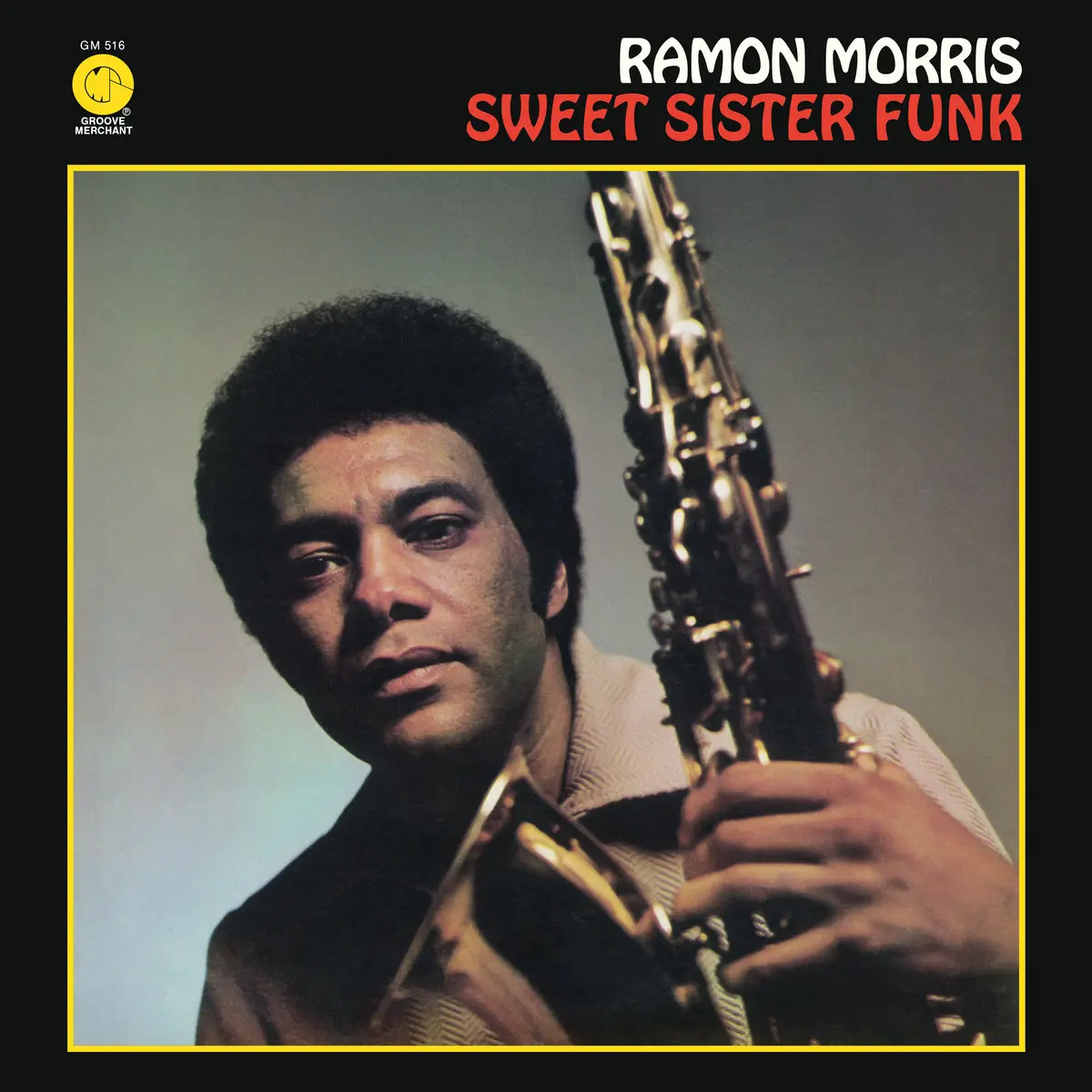 Ramon Morris released his singular album, Sweet Sister Funk, in May 1973 on Groove Merchant.
Sweet Sister Funk contains three Morris originals and pieces by bassist Mickey Bass and e-pianist Albert Dailey, both Jazz Messengers colleagues. They perform in a sextet with trumpeter Cecil Bridgewater, guitarist Lloyd Davis, drummer Mickey Roker, and conguero Tony Waters. Morris and Bridgewater share horn themes across electric, syncopated arrangements shaped by Dailey and the rhythm section.
“First Come, First Serve” centers on sax/trumpet charts at a moderate pace in a single root key. “Wijinia” alternates speedy vibrato and fluid sustain within a slow-flowing sonic seabed of bass-circulated Rhodes filigree. On the titular “Sweet Sister Funk,” the band jumps along as Morris careens with expressionist abandon.
“Sweat” walks around a dizzying array of chords that facilitate brisk Morris/Bridgewater trade-offs and breakneck arpeggiated runs from Dailey and Davis. “Don’t Ask Me” saunters from middle-C as wind-blasts scale upward and back until the mid-track takeover by Bridgewater, who coils the theme with decorative tones. “Lord Sideways” revs with flurried brass across a loose yet persistent ostinato-driven 6/4 Rhodes theme. They close with an instrumental reading of “People Make the World Go Round,” a recent hit for The Stylistics.
A1. “First Come, First Serve” (4:47) – Dailey
A2. “Wijinia” (5:30) – Morris
A3. “Sweet Sister Funk” (6:15) – Morris
B1. “Sweat” (6:23) – Bass
B2. “Don’t Ask Me” (5:18) – Morris
B3. “Lord Sideways” (6:12) – Dailey
B4. “People Make the World Go Round” (3:13) – Bell, Creed
Sessions occurred in 1973 in New York under producer Sonny Lester and engineer Malcolm Addey, the sound team on 1973 Groove Merchant albums by Larry Willis (Inner Crisis), Reuben Wilson (The Cisco Kid), and Jimmy McGriff–Groove Holmes (Giants of the Organ Come Together).
Sweet Sister Funk sports cover photography by label associate Chuck Stewart, who profiled Morris with a tenor saxophone inside a yellow rule against a black field.
P-Vine issued a 2004 CD edition of Sweet Sister Funk. Mr Bongo followed with November 2025 LP and CD editions.
Sources:
Artist/Album Pages:
The Montclairs were an American soul group from East St. Louis, Ill., that released the 1972 album...
Sweet Slag was an English jazz-rock/blues band from Luton that released the album Tracking With Cl...
The Hollies were an English pop-rock band from Manchester, formed in 1962 at the dawn of the Briti...
Color Humano was an Argentine heavy-psych trio that debuted with a 1972 album on Microfón, followe...
Dusty Springfield (April 16, 1939 – March 2, 1999) was an English singer with a career in pop that s...
Dionysos was a Québécois hard-rock/psych band that released the 1971 Jupiter album Le Grand Jeu, f...
The Royals were a Jamaican harmony-reggae group formed in 1964 by singer Roy Cousins, who led succ...
Van Dyke Parks is an American composer, arranger, and producer from Hattiesburg, Miss., who initi...
Fábio is a Paraguayan-Brazilian singer/songwriter who released several shortplayers and a self-tit...
George Freeman (April 10, 1927 — April 1, 2025) was an American jazz-funk guitarist from Chicago....
Roy Harper (born June 12, 1941) is an English folk-rock singer/songwriter and guitarist from Rusho...
Bill Watrous (June 8, 1939 — July 2, 2018) was an American jazz trombonist from Middletown, Conn. ...
original 2018 draft:
The album hears Ramon’s sandy sax tones amidst the smoky keyboards of Albert Dailey and the competitive trumpet blasts of Cecil Bridgewater. On the self-composed “Wijinia,” Morris alternates speedy vibrato with fluid sustain over a slow-flowing, bass-circulated, Rhodes-filled sonic seabed. Working the same arrangement at a slightly risen tone and tempo, “Lord Sideways” allows the headliner ample room to blow and billow amidst a loose yet persistent bass/Rhodes theme in 6/4.
Suitably-named four-stringer Mickey Bass contributes “Sweat,” where he walks around a dizzying array of chords that facilitate brisk Morris/Bridgewater trade-offs and breakneck arpeggiated runs from Dailey and guitarist Lloyd Davis. Walking basslines from middle-C allow further lungblasts on “Don’t Ask Me,” which hears Morris scaling upward and back during the first half and Bridgewater stuffing decorative notes around the theme during the second half.
Dailey’s mid-tempoed, mono-keyed “First Come, First Serve” surrenders all attention to sax/trumpet charts, while the jumpy title-track pushes Morris into borderline expressionist territory. An instrumental take on the always-invigorating Creed/Bell standard “People Make The World Go Round” fills out the set.
Though Morris never recorded a followup, select tracks from his coveted long-player are often picked by compilers in the 21st century.