

The Main Ingredient was an American soul-funk/psych group from Manhattan that first recorded as The Poets in the mid-1960s and as the The Insiders during that latter part of the decade. As the Main Ingredient, they released eleven albums between 1970 and 1981 on RCA Victor.
Members: Luther Simmons, Jr. (vocals, 1968-77, 1979-81, 1986), Tony Silvester (vocals, 1968-76, 1979-81, 1986-91), Donald McPherson (vocals, 1968-71), Cuba Gooding (vocals, 1971-77, 1979-81, 1986-91), Carl Tompkins (vocals, 1976-77)
Background
The Main Ingredient had their roots in The Poets, a soul trio formed in 1964 Harlem by singers Donald McPherson (1941–1971), Luther Simmons, Jr., and Panamanian expat Tony Silvester. In 1965, they issued “Merry Christmas Baby” (b/w “I’m Stuck On You”), produced by Leiber & Stoller and released on the songwriting duo’s Red Bird label.
The Poets became The Insiders for their second Red Bird single, “I’m Stuck On You” (b/w “Chapel Bells Are Calling”), released in 1966. The following year, they signed to RCA and issued two further Insiders singles: “If You Had a Heart” (b/w “Movin’ On”) and “I’m Better Off Without You” (b/w “I’m Just a Man”). In 1968, they made a final name-change to The Main Ingredient, taken from a Coke bottle.
Linking with producer/arranger Bert DeCoteaux (Maxine Brown, Pat Lundy, Jean Wells, Irene Reid), The Main Ingredient “debuted” in 1969 with the group-original “Brotherly Love,” backed with a cover of The Beatles‘ “Get Back.” In 1970, they scored their first R&B charter with “You’ve Been My Inspiration,” included on their debut album, L.T.D.
L.T.D.
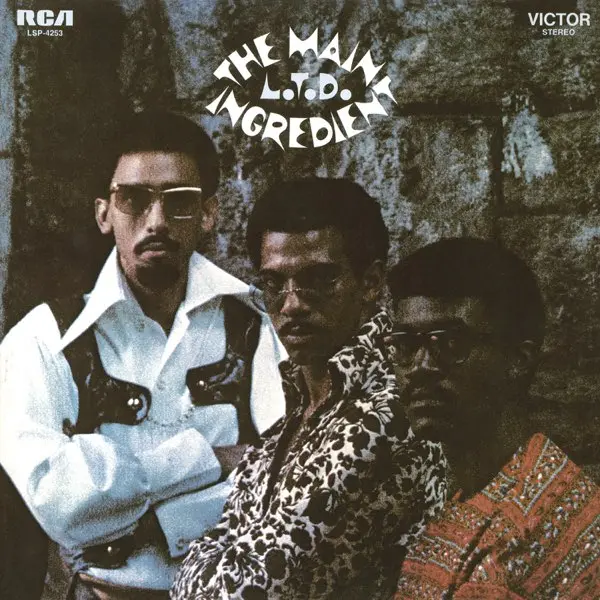 The Main Ingredient released their debut album, L.T.D., in April 1970 on RCA Victor.
The album introduced their early harmony-driven approach with compact originals shaped around interlocking tenor leads and tight unison passages. It marks the group’s first sustained collaboration with arranger Bert DeCoteaux, whose orchestral framing gives their self-written material a defined, ensemble-centered sound.
Donald McPherson, Luther Simmons, Jr., and Tony Silvester handle all vocals and jointly produce the album. DeCoteaux conducts most tracks, shaping the brass, strings, and rhythm charts; Horace Ott arranges “I Was Born to Lose.” Session players include RCA’s in-house rhythm section with alternating guitar, bass, and organ roles that keep the structures lean and forward-moving.
McPherson, Simmons, and Silvester wrote seven of the ten tracks, including both sides of their 1969 single “Brotherly Love” and “You’ve Been My Inspiration,” which became their first R&B charter. They also cover two Jimmy Webb titles and reinterpret earlier songs linked to broader pop and folk traditions.
The set moves between short, clipped patterns and slower, stepwise phrases. “Can’t Stand Your Love” drives on a steady, percussive cycle with tight vocal entries that break in staggered bursts. “You’ve Been My Inspiration” opens in a restrained ascent before the lines broaden across sustained chord pads. “Magic Shoes” uses quick exchanges and short instrumental fills that trace the rises of the main refrain. Their Webb medley shifts from halting, low-register statements into longer, arching lines as the arrangement thickens. “Brotherly Love” runs on pointed rhythmic accents, while “Una Bella Melodia Braziliania” lifts into smooth, evenly paced cadences shaped around light organ figures.
A1. “Can’t Stand Your Love” (2:39)
A2. “You’ve Been My Inspiration” (2:53)
A3. “I Was Born to Lose” (2:15)
A4. “Magic Shoes” (2:49)
A5. “By the Time I Get to Phoenix / Wichita Lineman” (4:03) — originated as 1967–68 singles by Glen Campbell, written by Jimmy Webb.
B1. “Brotherly Love” (2:53)
B2. “The Girl I Left Behind” (3:06) — traditional folk song with 19th-century variants; commonly known as “The Girl I Left Behind Me.”
B3. “Life Won’t Be the Same (Without You)” (2:24)
B4. “Una Bella Melodia Braziliania” (3:56)
B5. “Get Back” (2:54) — originated as a 1969 single by The Beatles, written by Lennon–McCartney.
Sessions occurred in late 1969 at RCA Studio C in New York City with producers Donald McPherson, Luther Simmons, Jr., and Tony Silvester. Jim Crotty and Ray Hall engineered the recordings.
L.T.D. features cover art issued through RCA’s in-house design department; surviving copies show a photo-centered layout with minimal graphic treatment.
RCA promoted the album with “You’ve Been My Inspiration,” which entered the R&B charts, followed by continued airplay of the earlier non-album single “Brotherly Love,” newly included here.
Tasteful Soul (aka Spinning Around)
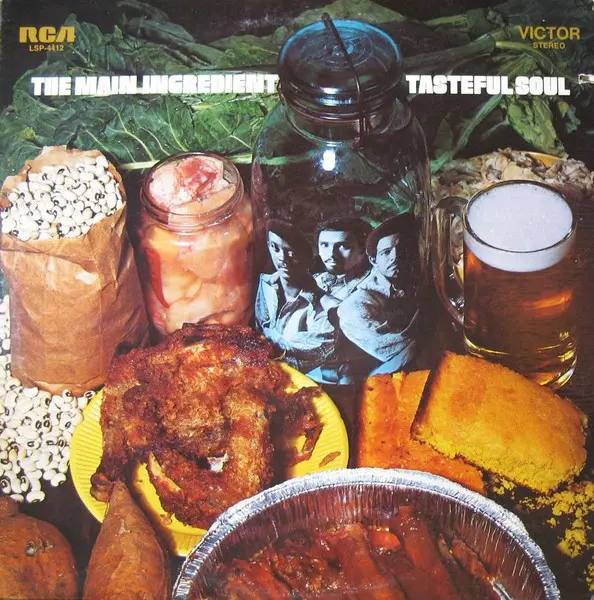 The Main Ingredient released their second album, Tasteful Soul, in November 1970 on RCA Victor, which reissued the album in April 1971 as Spinning Around.
The album builds on their debut’s close harmonies with a smoother, more orchestrated sound shaped by soft string textures and romantic pacing. It contains four covers interwoven with self-penned material and highlights their early signature song “Spinning Around,” which helped expand their audience nationwide.
Donald McPherson, Luther Simmons, Jr., and Tony Silvester share vocal and production duties. Bert DeCoteaux arranges and conducts the tracks, placing greater emphasis on violins, woodwinds, and subtle electric instrumentation. Jim Crotty and Ray Hall engineered the sessions under RCA’s in-house A&R guidance.
The trio wrote five of the ten tracks, including “I’m Better Off Without You,” “Need Her Love (Mr. Bugler),” and the soaring title track. They also revisit “Magic Shoes” from L.T.D. and contribute refined vocal arrangements to songs by Curtis Mayfield, Bread’s David Gates, and the Holland–Dozier–Holland camp via Chairmen of the Board.
The album opens with the fluid, downward melodic pull of “I’m Better Off Without You,” where soft sustained harmonies float over light electric piano chords and stepwise strings. Their version of “I’m So Proud” mirrors the Impressions’ arrangement but with slower phrasing and arched falsetto overlays. “Spinning Around (I Must Be Falling In Love)” uses suspended motion and choral layering above swirling orchestration. “Make It With You” unfolds on warm, descending cadences over vibraphone and muted guitar, while “That’s What Fate Will Do” progresses in slow bursts that emphasize harmonic tension and release. The second version of “Magic Shoes” features brighter orchestration but maintains its clipped meter and short vocal phrasing.
A1. “I’m Better Off Without You” (3:10)
A2. “Magic Shoes” (2:40)
A3. “I’m So Proud” (3:33) — originated as a 1964 single by The Impressions, written by Curtis Mayfield.
A4. “Somebody’s Been Sleeping” (2:53) — originated as a 1970 single by 100 Proof (Aged In Soul), written by General Johnson, Angelo Bond & Greg Perry.
A5. “Make It With You” (3:40) — originated as a 1970 single by Bread, written by David Gates.
B1. “Spinning Around (I Must Be Falling In Love)” (3:12)
B2. “Need Her Love (Mr. Bugler)” (3:14)
B3. “That’s What Fate Will Do” (3:30)
B4. “Look at Me” (3:03) — written by David Gates.
B5. “Searching” (3:28) — written by MacDonald & Salter.
Sessions occurred in mid-to-late 1970 at RCA Studio C in New York City with producers McPherson, Simmons, and Silvester. Jim Crotty and Ray Hall engineered the recordings. Bert DeCoteaux arranged and conducted all tracks.
Tasteful Soul was issued with a photo portrait layout and minimal framing. RCA reissued it in April 1971 under the new title Spinning Around to capitalize on the chart success of its lead single.
RCA promoted the album with “Spinning Around (I Must Be Falling In Love),” which received airplay across R&B markets. “I’m Better Off Without You,” a re-recording of an earlier single, also gained traction in the New York tri-state area.
Black Seeds
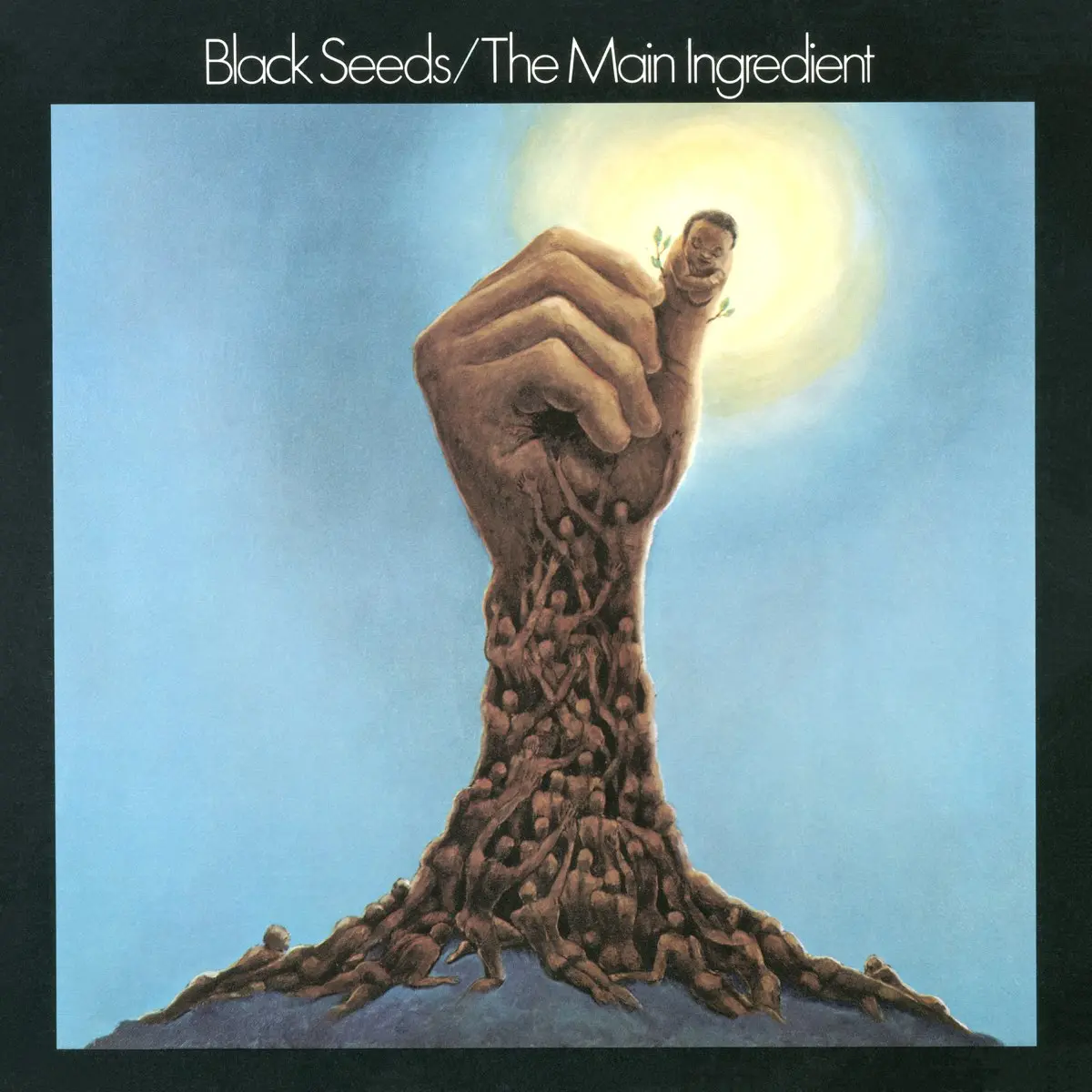 The Main Ingredient released their third album, Black Seeds, in August 1971 on RCA Victor.
The album marked the final appearance of founding lead vocalist Donald McPherson, who died of leukemia shortly before its release. The material blends social optimism and romantic introspection, bookended by calls for cultural pride and unity. RCA issued the album in tribute to McPherson, whose songwriting and vocal arrangements center the record’s tone.
McPherson, Simmons, and Silvester produced the album with arrangements by Bert DeCoteaux and engineering by Grover Helsley and Jim Crotty. The rhythm section balances understated bass with light guitar comping, subdued percussion, and string accents that frame McPherson’s leads in tight trio harmony.
McPherson composed or co-composed six of the eleven tracks, including the title anthem and closing track “Why Can’t We All Unite.” The group also collaborated with Joe Hill, who contributes three songs, and interpreted outside material by Leonard Caston Jr., William Salter, and Richard Alderson.
The set opens with “Black Seeds Keep on Growing,” built on a proud, climbing refrain and crisp vocal syncopation over marching piano chords. “Movin’ On” pivots between parallel phrases and string-led lifts. “I’ve Fallen for You” moves at mid-tempo, built around gentle turns in harmony and layered chorus swells. “Baby Don’t Change Your Mind” combines low-register unison with sudden falsetto bursts across stepwise phrasing. “Why Can’t We All Unite” closes the album with long, ascending lines that peak on held notes against orchestral underlay. “Just Say It Again” cycles through clipped cadences and light rhythmic reinforcement, while “Don’t Wonder Why” floats over suspended changes with a subdued, narrative pace.
A1. “Black Seeds Keep on Growing” (3:31)
A2. “I’m Leaving This Time” (3:16) — written by Joe Hill.
A3. “Movin’ On” (2:55)
A4. “Baby Don’t Change Your Mind” (3:23)
A5. “Another Day Has Come” (3:25)
A6. “You Ain’t Got It No Way” (3:37) — written by Joe Hill.
B1. “I’ve Fallen for You” (3:35)
B2. “Don’t Wonder Why” (4:58) — written by Leonard Caston Jr.
B3. “Just Say It Again” (3:29) — written by Joe Hill.
B4. “It’s So Sweet (Loving You)” (3:55) — written by William Salter & Richard Alderson.
B5. “Why Can’t We All Unite” (3:25)
Sessions occurred in 1971 at RCA Studio C in New York City with producers Donald McPherson, Luther Simmons, Jr., and Tony Silvester. Grover Helsley and Jim Crotty engineered the recordings. Bert DeCoteaux arranged and conducted all tracks.
Black Seeds entered the Billboard Soul Albums chart at No. 35 and peaked at No. 175 on the Pop Albums chart. RCA promoted it with the single “Black Seeds Keep on Growing,” which reached No. 15 on the Billboard R&B chart and No. 97 on the Hot 100.
Bitter Sweet
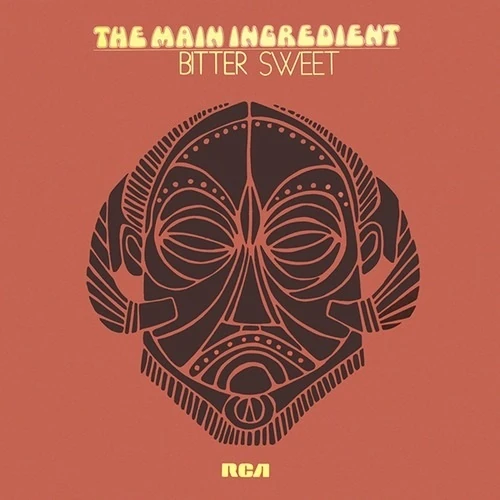 The Main Ingredient released their fourth album, Bitter Sweet, in April 1972 on RCA Victor.
The album introduced new lead vocalist Cuba Gooding, Sr., who replaced the late Donald McPherson. With Gooding’s impassioned tenor at the helm, the group leaned into more accessible pop arrangements and romantic themes, resulting in their biggest commercial breakthrough.
Tony Silvester and Luther Simmons produced the album with arrangements by Bert DeCoteaux and art direction by Acy Lehman. Gooding fronts a fuller orchestral sound with lush strings, muted brass, light woodwinds, and percussive accents shaped around contemporary soul balladry.
Bitter Sweet contains no group-penned tracks. Instead, the trio performs selections by J.R. Bailey, Rudy Clark, and Ken Williams — including “Everybody Plays the Fool,” their biggest hit — alongside works by Ed Townsend, William Salter, Ralph MacDonald, and a traditional pop standard by McHugh and Adamson.
“Everybody Plays the Fool” opens with a brief flute phrase and rides a steady mid-tempo beat with vocal callouts layered over tightly looped string stabs. “You’ve Got to Take It (If You Want It)” alternates clipped verses with accelerating choruses marked by sudden harmonic surges. “Whirl-Wind” glides in cycles of rising tension against vibrato guitar and swaying orchestral phrasing. “No Tears (In the End)” builds through rhythmic lifts and dramatic breaks as Gooding pushes the lines into upper register bursts. “Where Are You?” slows the pace to a suspended crawl with echoing vocal trails, while “Who Can I Turn To?” centers on Gooding’s crooning over a classic nightclub arrangement with string pads and brushed piano.
A1. “Traveling” (2:59) — written by Lucille Jackson.
A2. “Where Are You?” (3:15) — originated in 1937 for the film Top of the Town, written by Jimmy McHugh & Harold Adamson.
A3. “You’ve Got to Take It (If You Want It)” (3:28) — written by Ed Townsend.
A4. “Everybody Plays the Fool” (3:23) — written by Rudy Clark, J.R. Bailey & Ken Williams.
A5. “Whirl-Wind” (3:24) — written by William Salter & Ralph MacDonald.
B1. “Fly Baby Fly” (3:23) — written by Bill Robey.
B2. “I Can’t See Me Without You” (3:46) — written by Rudy Clark, J.R. Bailey & Ken Williams.
B3. “Where Do Broken Hearted Lovers Go?” (2:53) — written by Rudy Clark, J.R. Bailey & Ken Williams.
B4. “Who Can I Turn To (When Nobody Needs Me)” (4:48) — originated in 1964 as a stage number by Leslie Bricusse & Anthony Newley.
B5. “No Tears (In the End)” (3:57) — written by William Salter & Ralph MacDonald.
Sessions occurred in early 1972 at RCA Studio C in New York City with producers Tony Silvester and Luther Simmons. Buzz Willis supervised production. Bert DeCoteaux arranged and conducted all tracks. Grover Helsley and Jim Crotty engineered the sessions.
Bitter Sweet features cover photography by Nick Sangiamo and peaked at No. 10 on the Billboard Soul Albums chart and No. 79 on the Pop Albums chart.
RCA promoted the album with “Everybody Plays the Fool” (b/w “Who Can I Turn To”), which reached No. 3 on the Billboard Hot 100 and No. 2 R&B. It earned a 1973 Grammy nomination for Best R&B Song. “You’ve Got to Take It (If You Want It)” followed as the second single, reaching No. 46 Pop and No. 18 R&B.
Afrodisiac
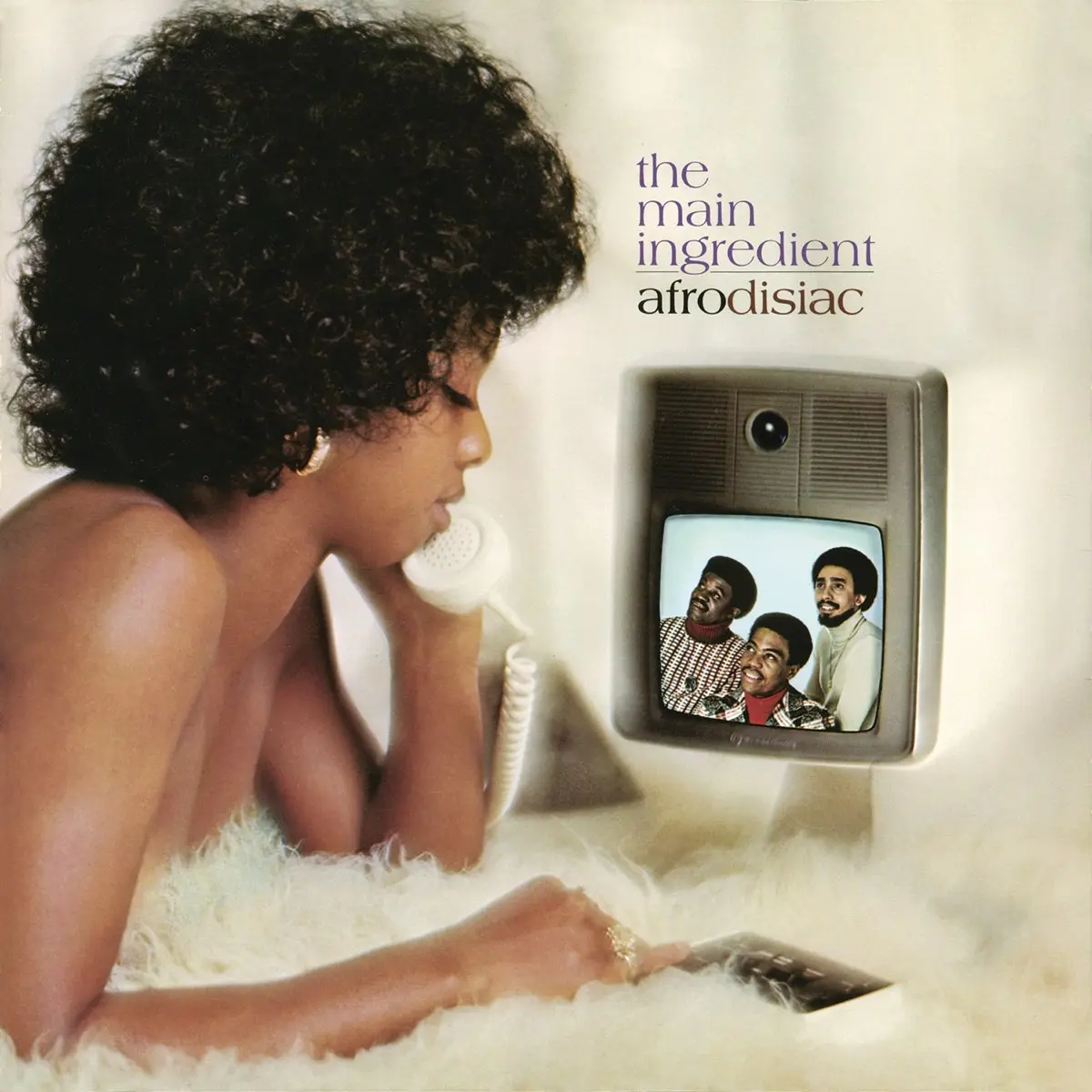 The Main Ingredient released their fifth album, Afrodisiac, in April 1973 on RCA Victor.
The album blends introspective soul with understated funk, anchored by six songs written or co-written by Stevie Wonder. With fewer upbeat tracks than prior efforts, it centers on slow-building arrangements and mature lyrical themes, signaling a stylistic shift from romantic pop toward deeper, reflective moods.
Tony Silvester, Luther Simmons, and Cuba Gooding, Sr. produced the album in-house. Bert DeCoteaux handled arrangements, pairing string and horn passages with minimal rhythm parts. Buzz Willis supervised production under RCA, and the trio recorded at Studio D in New York with expanded session backing.
Wonder wrote or co-wrote the bulk of the album, contributing five tracks including the multipart suite “Superwoman,” plus collaborations with Syreeta Wright and Yvonne Wright. They also cover the Isley Brothers’ “Work to Do” and interpret songs by J.R. Bailey, George Clinton, and others. The group themselves did not write any tracks.
“Superwoman” opens with soft piano figures and gliding falsetto over a two-part form that moves from gentle resignation to restrained tension. “Where Were You When I Needed You” rides a spacious pulse beneath bittersweet vocal phrasing. “Girl Blue” unfurls in slow, drawn-out phrases and breathy lines atop subdued harmonic turns. “Work to Do” supplies the album’s only kinetic energy with clipped stabs and staggered rhythm breaks. “Something Lovely” and “Something ’Bout Love” use brushed cymbals and layered string textures that keep the vocal leads prominent. “You Can Call Me Rover” shifts to a mid-tempo setting with stepwise turns and light rhythmic motion.
A1. “Superwoman” (3:15) — written by Stevie Wonder. Originally appeared on Music of My Mind (1972).
A2. “Where Were You When I Needed You” (4:09) — written by Stevie Wonder.
A3. “I Am Yours” (4:08) — written by Stevie Wonder & Syreeta Wright.
A4. “Work to Do” (3:18) — originated as a 1972 single by The Isley Brothers, written by Ronald Isley, O’Kelly Isley Jr. & Rudolph Isley.
A5. “Girl Blue” (4:21) — written by Stevie Wonder & Yvonne Wright.
B1. “You Can Call Me Rover” (3:26) — written by J.R. Bailey, Ken Williams & Mel Kent.
B2. “Something ’Bout Love” (4:22) — written by Stevie Wonder.
B3. “Love of My Life” (3:30) — written by George Clinton.
B4. “Something Lovely” (3:12) — written by Stevie Wonder & Syreeta Wright.
B5. “Goodbye My Love” (4:50) — written by Luther Maxwell.
Sessions occurred in early 1973 at RCA Studio D in New York City with producers Cuba Gooding, Tony Silvester, and Luther Simmons. Bert DeCoteaux arranged and conducted all tracks. Buzz Willis supervised the production; Nick Sangiamo supplied photography and Acy R. Lehman handled art direction.
Afrodisiac peaked at No. 16 on the Billboard Soul Albums chart and No. 132 on the Pop Albums chart.
RCA issued two singles: “You Can Call Me Rover” reached No. 34 R&B; “Girl Blue” peaked at No. 51.
Euphrates River
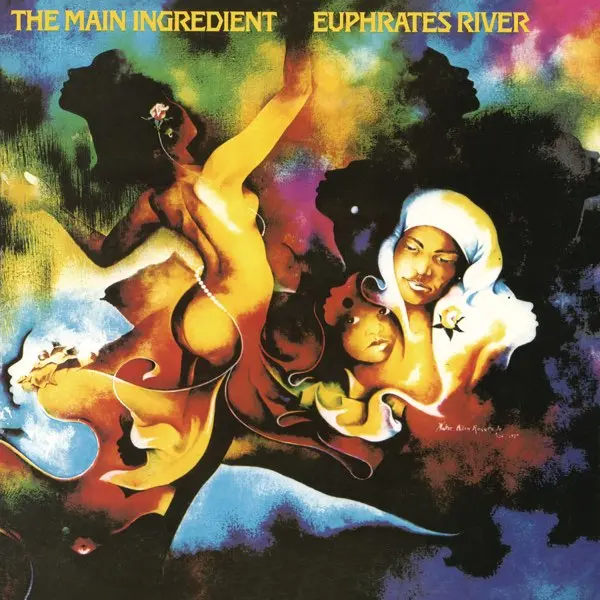 The Main Ingredient released their sixth album, Euphrates River, in May 1974 on RCA Victor.
The album tightened the group’s vocal-soul format with smoother pacing, vibrant horn arrangements, and a more groove-focused direction. Unlike the slow-burning Afrodisiac, this release favors upbeat, mid-tempo tracks with rhythmic lift and funk-adjacent energy. It also features several notable covers, including two Seals & Crofts songs, and gave the trio their second Top 10 pop hit.
Tony Silvester, Luther Simmons, and Cuba Gooding, Sr. produced the album. Bert DeCoteaux arranged and conducted the material, fusing electric piano, wah guitar, and percussion with string swells and vocal layering. RCA issued the album in both stereo and quadraphonic formats, the latter released in 1976 via CD-4 encoding.
The trio did not contribute original material, instead sourcing songs from Stevie Wonder, the Isley Brothers, Ashford & Simpson, Brian Auger, and Willie Hutch. Their breakout single, “Just Don’t Want to Be Lonely,” originally by Ronnie Dyson, became the album’s anchor and best-selling track.
The album opens with “Euphrates,” a flowing, mid-tempo number structured on a rising bassline and sweeping harmonies with fluid transitions between verse and refrain. “Happiness Is Just Around the Bend” stretches across syncopated layers with subtle disco influence and circular chord patterns. “Summer Breeze,” slower than the Seals & Crofts original, rides lush textures and a restrained pulse. “California My Way” balances funky syncopation with Gooding’s animated phrasing and a strong lead-forward mix. Their take on Stevie Wonder’s “Don’t You Worry ’bout a Thing” moves through rhythm breaks and quick vocal pivots with tightly packed crescendos. “Just Don’t Want to Be Lonely” rests on rolling phrasing and stacked harmonies, reshaped from Dyson’s 1973 version into a definitive Main Ingredient hit.
A1. “Euphrates” (4:44) — written by James Seals & Dash Crofts.
A2. “Have You Ever Tried It” (3:06) — written by Nickolas Ashford & Valerie Simpson.
A3. “Summer Breeze” (4:16) — originated as a 1972 single by Seals & Crofts, written by James Seals & Dash Crofts.
A4. “California My Way” (4:36) — written by Willie Hutch.
B1. “Happiness Is Just Around the Bend” (6:20) — written by Brian Auger.
B2. “Looks Like Rain” (3:17) — written by Alzo Fronte.
B3. “Don’t You Worry ’bout a Thing” (4:04) — originated as a 1974 single by Stevie Wonder.
B4. “Just Don’t Want to Be Lonely” (3:32) — originated as a 1973 single by Ronnie Dyson, written by Bobby Eli, John Freeman & Vinnie Barrett.
Sessions occurred in early 1974 at RCA Studios in New York City with producers Cuba Gooding, Tony Silvester, and Luther Simmons. Bert DeCoteaux handled arrangements and conducting. Art direction by Acy R. Lehman; photography by Nick Sangiamo.
Euphrates River peaked at No. 8 on the Billboard Soul Albums chart and No. 52 on the Pop Albums chart. It was later reissued in 2016 on SACD by Dutton Vocalion with both stereo and quad mixes.
RCA promoted the album with three singles: “Just Don’t Want to Be Lonely” (b/w “Goodbye My Love”) peaked at No. 10 on the Hot 100 and No. 8 R&B. “Happiness Is Just Around the Bend” followed in June and reached No. 35 Pop, No. 7 R&B. “California My Way” charted in October at No. 75 Pop and No. 48 R&B.
Rolling Down a Mountainside
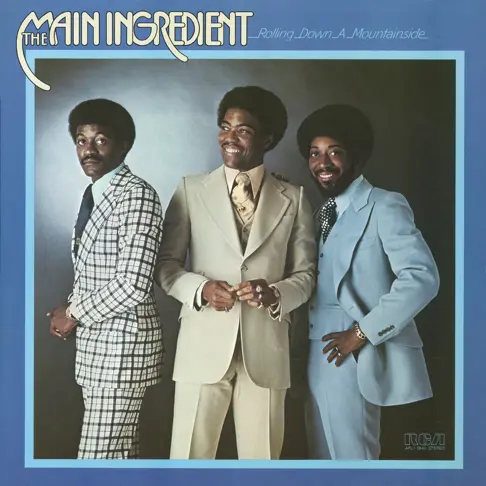 The Main Ingredient released their seventh album, Rolling Down a Mountainside, in April 1975 on RCA Victor.
The album marked a shift toward West Coast session polish, with arrangements recorded in Los Angeles and a warmer production aesthetic. The tone leans inward, centered on themes of reflection, family, and quiet resignation, supported by a mix of soft funk and ballad material. It was their first album since 1971 without a major charting single.
Cuba Gooding, Tony Silvester, and Luther Simmons produced the album with additional input from Ed Townsend on two tracks. Bert DeCoteaux and René Hall handled arrangements, which employ French horn, vibraphone, saxophone, and muted brass textures alongside Fender Rhodes, congas, and string padding. Notable contributors include pianist Joe Sample, drummer Harvey Mason, guitarist Ray Parker Jr., and bassist Wilton Felder.
The group did not contribute to the songwriting. Instead, they source material from a broad network of collaborators including Rudy Clark, J.R. Bailey, Ed Townsend, and Motown-associated writers. The sessions draw from subdued West Coast soul with tightly woven ensemble arrangements.
The title track opens with minor-key guitar voicings and low horn harmonies, building gradually into layered vocal refrains and delayed string entries. “The Good Old Days” places Gooding’s voice atop alternating verse/refrain structures with harmonic modulations and a half-tempo break near the close. “I Want to Make You Glad” stretches over nearly six minutes with slow tempo, brushed percussion, and echoing electric piano cadences. “You & Me – Me & You” lifts the pace with clipped phrasing and funk-tinged backing vocals, while “A Broken Heart Don’t Really Break” moves on close-voiced harmonies with brief instrumental interjections between lines.
A1. “Rolling Down a Mountainside” (4:35) — written by Hilliard & Leon Ware.
A2. “Of This I’m Sure” (3:35) — written by Hogan.
A3. “The Good Old Days” (3:58) — written by Perry.
A4. “I Want to Make You Glad” (5:47) — written by Richelson & Dodds.
B1. “Thanks for the Laughs” (4:00) — written by J.R. Bailey & Ken Williams.
B2. “You & Me – Me & You” (3:01) — written by Ed Townsend.
B3. “Family Man” (3:28) — written by Gottlieb.
B4. “A Broken Heart Don’t Really Break” (3:09) — written by Bailey, Williams & Rudy Clark.
B5. “That Ain’t My Style” (4:11) — written by Ed Townsend.
Sessions occurred in early 1975 at RCA’s Music Center of the World in Hollywood, California. Cuba Gooding, Tony Silvester, and Luther Simmons produced the album, with Ed Townsend contributing on B2 and B5. Bert DeCoteaux arranged “The Good Old Days”; René Hall handled all other arrangements. Mickey Crofford engineered the sessions.
Instrumentation includes Joe Sample (piano), William Upchurch (bass), Ray Parker Jr. and Melvin Ragin (guitar), Harvey Mason (drums), Charles Young (congas), Gene Este (vibraphone), and a horn section led by Ernie Fields (baritone sax), Herman Riley (tenor sax), Grover Mitchell (trombone), Sidney Muldrow (French horn), and trumpeters Robert Bryant and John Roberts.
Rolling Down a Mountainside features cover photography by Nick Sangiamo and art direction by Acy Lehman and Frank Mulvey.
Shame on the World
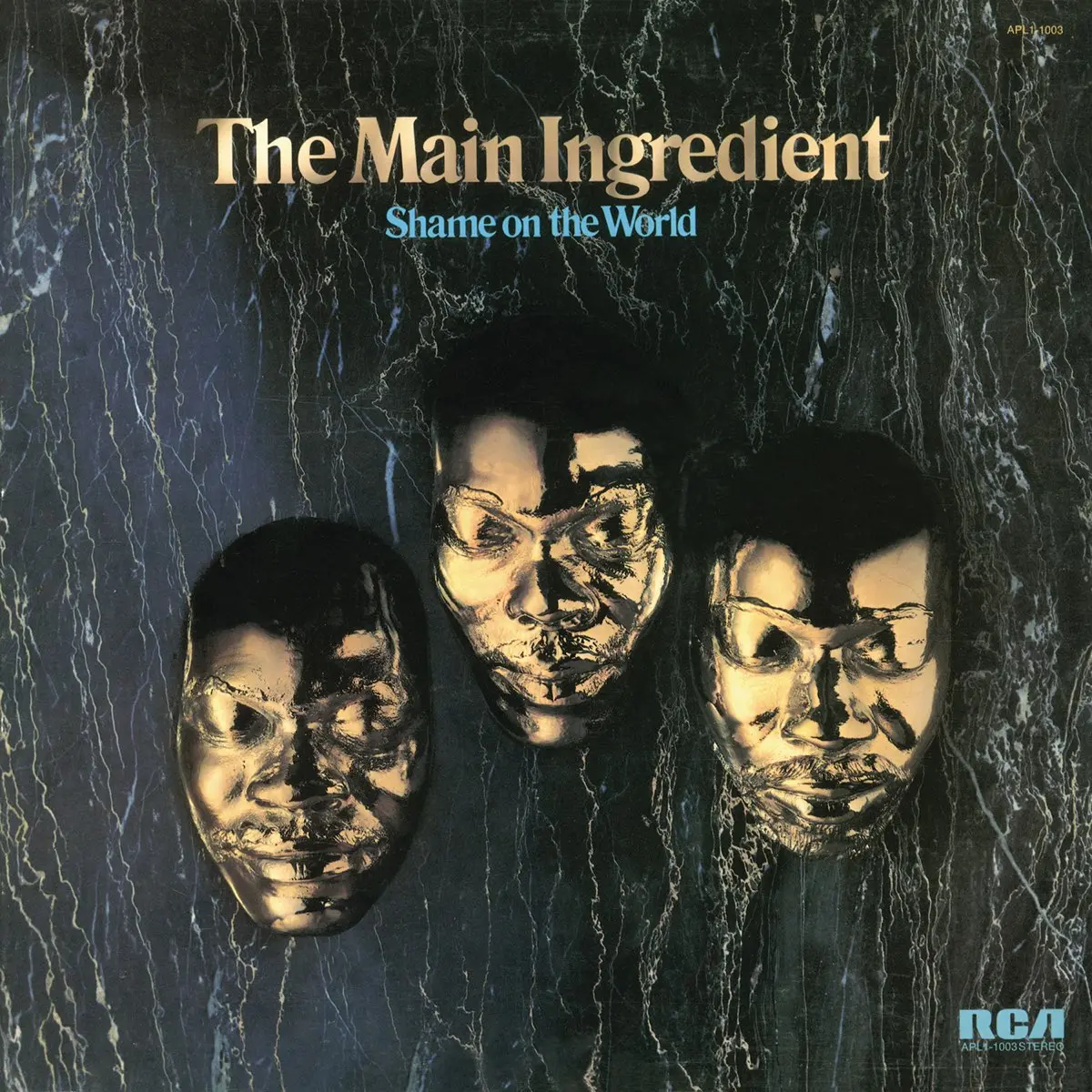 The Main Ingredient released their eighth album, Shame on the World, in November 1975 on RCA Victor.
The album marked the close of the group’s hit-making phase, as their style of soft, harmony-driven soul began to diverge from the prevailing trends in mid-’70s R&B. Rather than follow disco or funk templates, they opted for a refined, adult soul sound, rooted in subdued arrangements and lyrical introspection.
Cuba Gooding and Luther Simmons produced and arranged the album with support from René Hall. The tracks were recorded at RCA’s Hollywood facility with returning engineer Mickey Crofford and West Coast studio players under the L.T.C. Productions banner. The orchestration leans on piano, brushed drums, and string-sweetened backdrops with minimal rhythmic aggression.
The group had no songwriting involvement. Instead, they sourced material from a mix of regular collaborators and outside writers, including J.R. Bailey, Ken Williams, Rudy Clark, Lamont Dozier, and Motown-affiliated arranger Wade Marcus (as “Fuller”). Several tracks reflect an effort to present introspective or story-driven lyrical scenarios in a mature R&B context.
“Shame on the World” opens with low-register harmonies and gradual chord climbs, punctuated by light horn accents and piano rolls. “Put Your Love in My Hands” moves in tight, clipped phrases with call-and-response layering. “Let Me Prove My Love to You” alternates minor-key verses and radiant refrains with slow cadences. “Old Greyhound” rides a traveling metaphor across staggered chord changes and descending lines. “Jamaica (Let Me Go Home)” is a mid-tempo track with stepped harmonies and percussive bounce. “Lillian” slows the pace with soft piano voicings and falsetto lifts, while “If I’m Gonna Be Sad” closes the album on gentle swells and retreating instrumental passages.
A1. “Shame on the World” (4:17) — written by Lamont Dozier & Ken Williams.
A2. “Put Your Love in My Hands” (2:50) — written by Heath (with uncredited contribution by Lana Bogan).
A3. “Let Me Prove My Love to You” (3:40) — written by J.R. Bailey, Ken Williams & Rudy Clark.
A4. “Old Greyhound” (4:03) — written by Lamont Dozier & Ken Williams.
B1. “Jamaica (Let Me Go Home)” (3:11) — written by Bailey, Williams & Clark.
B2. “Over You” (4:19) — written by Fuller.
B3. “Lillian” (3:54) — written by Cherry.
B4. “If I’m Gonna Be Sad” (4:00) — written by Rudy Clark.
Sessions occurred in mid-to-late 1975 at RCA’s Music Center of the World in Hollywood, California. Cuba Gooding and Luther Simmons produced and arranged the album with assistance from René Hall. Don Holden and Mickey Crofford recorded and mixed the sessions. Acy Lehman handled art direction; Nick Aristovulos designed the cover artwork with photography by Nick Sangiamo.
Shame on the World was the group’s final album to chart during the 1970s. The title track served as their last notable hit, peaking modestly on the R&B charts.
Expansion reissued the album in 2008 on CD as part of a two-fer with I Only Have Eyes for You (1981).
Music Maximus
 The Main Ingredient released their ninth album, Music Maximus, in December 1976 on RCA Victor.
The album expanded their production scope across both coasts with sessions at Electric Lady in New York and RCA’s Hollywood facility. Music Maximus fuses soul balladry and polished pop-funk in a studio-crafted setting, utilizing orchestral backdrops and West Coast rhythm players across layered, carefully arranged material. It was their last album before a multi-year studio hiatus.
Cuba Gooding and Luther Simmons handled rhythm arrangements on most tracks with Lou Courtney, Leon Pendarvis, and Rene Hall assisting across both rhythm and orchestration. Gene Page conducted the string and horn sections, which were overdubbed at ABC Studios in Hollywood. Recording was split between Electric Lady (engineered by Ron Johnsen) and RCA’s Music Center of the World (engineered by Don Holden), under L.T.C. Productions.
The group did not write any material. Instead, they drew on songs by Leon Ware, Ray Parker Jr., Will and Richard Hutch, and songwriter James Adkins, along with multiple contributions from lyricist–vocalist Maxwell. The album’s sequencing mixes upbeat, orchestrated tracks with softer slow jams framed by rich instrumental textures.
“Prologue” sets the tone with a brief, atmospheric overture of flutes and strings. “The Laughing Song” opens with finger-snaps and syncopated horns over steady percussion and light vocal exchange. “Instant Love,” penned by Ware and Hilliard, moves in clipped, two-chord refrains with short phrasing and horn punctuations. “Car of Love” glides on Ray Parker Jr.’s signature muted rhythm guitar and staggered rhythm breaks. The B-side leans into more reflective moods, with “Comes the Night” and “Who You Really Are” unfolding slowly in cascading structures over broad harmonic fields. “Many Women in My Life” closes on a circular theme shaped by bass pull and string descent.
A1. “Prologue” (1:00) — instrumental overture.
A2. “The Laughing Song” (4:18) — written by Adkins.
A3. “I Gotta Know You” (4:31) — written by Hilton & Hammond.
A4. “Instant Love” (2:55) — written by Leon Ware & Hilliard.
A5. “Car of Love” (4:29) — written by Ray Parker Jr.
A6. “Can’t Get Ready (For Losing You)” (3:40) — written by Will Hutch & Willie Hutch.
B1. “Comes the Night” (3:54) — written by Maxwell.
B2. “Who You Really Are” (4:56) — written by Maxwell.
B3. “Half a Chance” (3:50) — written by Maxwell.
B4. “Many Women in My Life” (3:50) — written by Dodd & Vega.
Sessions occurred in 1976 at RCA’s Music Center of the World in Hollywood and Electric Lady Studios in New York City. Cuba Gooding and Luther Simmons arranged most rhythm tracks, with additional contributions by Leon Pendarvis and Lou Courtney. Gene Page arranged and conducted strings and horns (except A3 by Rene Hall), which were recorded at ABC Studios, Hollywood. Don Holden and Ron Johnsen engineered the sessions.
Music Maximus features cover photography by Ron Slenzak and art direction by Acy Lehman.
Discography:
- L.T.D. (1970)
- Tasteful Soul (1970)
- Black Seeds (1971)
- Bitter Sweet (1972)
- Afrodisiac (1973)
- Euphrates River (1974)
- Rolling Down a Mountainside (1975)
- Shame on the World (1975)
- Music Maximus (1976)
- Ready for Love (1980)
- I Only Have Eyes for You (1981)
- I Just Wanna Love You (1989)
Sources:
- Discogs: The Main Ingredient
- 45worlds: The Main Ingredient
- 45cat: The Main Ingredient
- MusicBrainz: The Main Ingredient
Artist/Album Pages:
Melissa Manchester is an American singer–songwriter who released two 1973–74 albums on Bell Record...
Esther Williams is an American soul singer who released three albums between 1976 and 1981, setti...
Sincerely P.T. was a German jazz-rock supergroup behind a 1973 self-titled album on Spiegelei/Aamo...
Captain Beefheart was the performance moniker of Don Van Vliet (Jan. 15, 1941 — Dec. 17, 2010), an...
The Moirs were an Australian vocal trio comprised of Scottish-born sisters Jean, Margot, and Lesley ...
Adrian Snell (born 1954) is an English singer/songwriter who released four albums on the Christian...
The Delfonics were an American soul group from Philadelphia, best known for the smooth-soul evergr...
Gygafo was an English symphonic-folk rock band that recorded an album in 1973 that was ultimately ...
Penetration was an English rock band that cut the 1977 Virgin single "Don't Dictate" and the 1978 ...
Peter Baumann is a German keyboardist and percussionist who served as a member of Tangerine Dream ...
Et Cetera was a Québécois symphonic art-rock band that released a self-titled album in 1976 on DIY...
Paul Davis (April 21, 1948 — April 22, 2008) was an American keyboardist, singer, and songwriter f...