

The Silesian Blues Band — commonly billed as SBB — are a Polish symphonic/space-rock band that debuted with a 1974 live album, followed by seven studio albums between 1975 and 1981, including the popular 1976/77 titles Pamięć, Ze słowem biegnę do ciebie, and Follow My Dream.
Members: Józef Skrzek (vocals, bass, keyboards, Hammond, Mini Moog, organ, Mellotron, Clavinet, harmonica), Apostolis Anthimos (guitar), Jerzy Piotrowski (drums, 1971-93, 2014-present), Sławomir Piwowar (guitar, 1979-80)
Background
Multi-instrumentalist Józef Skrzek (b. July 2, 1948; Siemianowice Śląskie) formed Silesian Blues Band in 1971 in his hometown with guitarist Apostolis Anthimos (b. September 25, 1954; Siemianowice Śląskie) and drummer Jerzy Piotrowski (b. February 9, 1950; Szopienice). Skrzek, trained in piano and organ at the State Music School in Katowice, played in the blues-psych band Breakout and later fronted his own trio on the Polish club circuit. Anthimos, a self-taught teenage prodigy of Greek descent, met Skrzek through local sessions. Piotrowski, also a Breakout alumnus, brought a background in jazz and R&B.
Silesian Blues Band made their live debut in 1971 and quickly gained a following for extended, instrumental-heavy performances that mixed electric blues, jazz improvisation, and symphonic motifs. In late 1971, the trio joined forces with veteran Polish pop singer Czesław Niemen, forming his backing unit for stage and studio work through mid-1973. As Niemen’s band, they played across Europe and recorded three albums: Strange Is This World (1972), Marionetki (1973), and Ode to Venus (1973), issued in Poland and West Germany on CBS and Electrola.
After parting with Niemen, the group renamed itself SBB — an acronym for Szukaj, Burz, Buduj (“Search, Break, Build”) — and resumed autonomous activity. In 1974, they signed with Polish state label Polskie Nagrania Muza, which released their self-titled debut, a live document from their April 18 concert in Warsaw.
SBB (live)
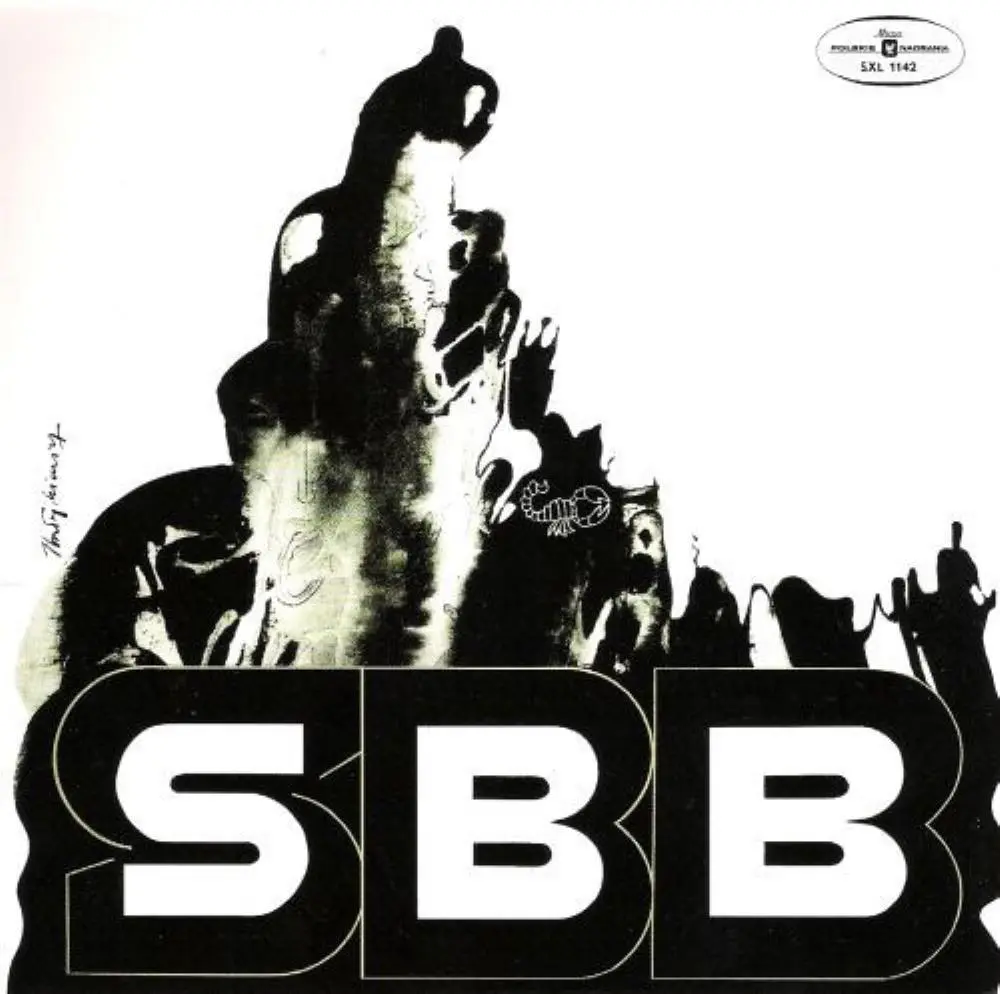 SBB released their self-titled live debut album in April 1974 on Polskie Nagrania Muza.
The album presents two side-long suites — Odlot and Wizje — recorded during sold-out concerts on April 18–19, 1974, at Warsaw’s Stodoła student club. Each suite merges piano-led vocal passages with extended instrumental sections that move between restrained themes, rapid ensemble interplay, and long-form improvisation.
The lyrical portions — “Odlecieć z wami” (“To Fly Away With You”) and “Erotyk” (“Erotic Song”) — were composed by Józef Skrzek with lyricists J. Grań and J. Matej. The instrumental sections, credited to the trio, frame Apostolis Anthimos’s high-register guitar phrasing against Jerzy Piotrowski’s active rhythmic patterns and Skrzek’s shifting keyboard layers.
Musically, the set opens with a subdued, piano-led entry before Odlot pivots into a sharp drum break and a long upward build marked by rising tempo, overdriven bass tone, and extended guitar lines that move from clipped accents into wide, sustained phrases. “Erotyk” in the Wizje suite follows a slower vocal arc before widening into passages of isolated guitar figures, loose-keyboard motifs, and an extended drum feature that escalates in density before the ensemble re-enters for a final acceleration. Additional concert material — later added to CD editions — ranges from hushed, ballad-like sections with soft piano voicing to rough-textured instrumental stretches driven by fast cymbal chatter, distorted bass, and harmonica-led blues motifs.
Side A. Odlot (19:20)
A1. “Odlot” (9:05) — SBB
A2. “Piosenka ‘Odlecieć z wami’” [“To Fly Away With You”] (10:15) — Skrzek, J. Grań
Side B. Wizje (19:00)
B1. “Wizje” (8:30) — SBB
B2. “Piosenka ‘Erotyk’” [“Erotic Song”] (10:30) — Skrzek, J. Matej
Recorded live on April 18–19, 1974, at Klub Stodoła in Warsaw and engineered by F. Babiński with recording supervision by R. Poznakowski. Cover design by Kazimierz Hałajkiewicz with photography by Chris Niedenthal, Tomasz Sikora, and Zenon Keller.
A 1997 CD edition adds four further tracks from the same concerts along with the 1974 studio recording “Toczy się koło historii.”
Nowy Horyzont
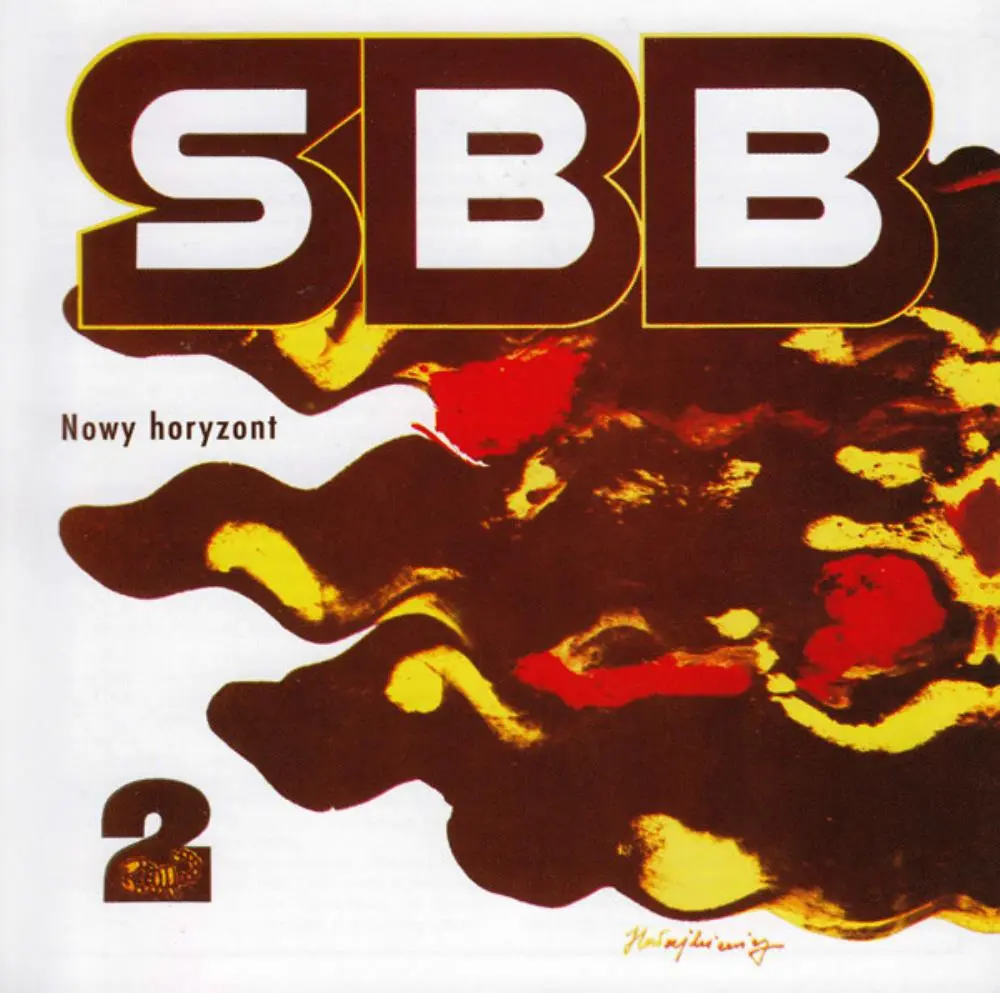 SBB released their second album, Nowy Horyzont, in May 1975 on Polskie Nagrania Muza.
The album marked SBB’s transition from longform live improvisation to composed studio material with pronounced dynamics, abstract atmospheres, and heightened thematic development. While still largely instrumental, Nowy Horyzont emphasizes structure and narrative flow across five linked pieces that combine interlocking rhythmic patterns, sustained harmonic tension, and contrasting keyboard textures.
Multi-instrumentalist Józef Skrzek composed all five tracks and performs bass, piano, Davolisint synthesizer, Hammond organ, and vocals. Guitarist Apostolis Anthimos supplies the searing lead figures and jagged riffing, while drummer Jerzy Piotrowski shifts between dense fills and restrained cadence.
The brief instrumental openers “Na Pierwszy Ogień” and “Błysk” move through squelched synths, rapid-fire drum figures, and unexpected mood drops into solo piano. The title track builds from ethereal guitar phrases into a sequence of tempo-shifting passages that culminate in fast unison bursts and flanged keyboard overlays. “Ballada o Pięciu Głodnych” breaks the flow with a whispered recitation over percussion and harmonica swells. The twenty-minute “Wolność z Nami” opens with layered piano motifs and vocalizations, eventually shifting through clusters of near-silent ambiance, fractured textures, and turbulent crescendos, culminating in a tense finale and isolated piano coda.
A1. “Na Pierwszy Ogień” [“Curtain Raiser”] (3:15)
A2. “Błysk” [“A Flash”] (2:45)
A3. “Nowy Horyzont” [“New Horizon”] (7:47)
A4. “Ballada o Pięciu Głodnych” [“Ballad of the Five Hungry Ones”] (3:55)
B. “Wolność z Nami” [“Freedom With Us”] (20:00)
Polish Radio and Polskie Nagrania recorded the album between September 1974 and January 1975 at their Warsaw studios. The in-house team at Polskie Nagrania Warszawa handled engineering and production supervision. Łódzka Drukarnia Akcydensowa printed the sleeve.
Pamięć
 SBB released their third album, Pamięć, in September 1976 on Polskie Nagrania Muza.
The album consists of three extended compositions that unfold through lyrical sections, rising instrumental arcs, and passages of ambient or textural abstraction. Jozef Skrzek plays grand piano, Fender electric piano, Hammond organ, Moog synth, and bass.
Working from Julian Matej’s Polish-language texts, Skrzek composed the music and leads the trio through a fluid set of tempo changes, overlapping keyboard layers, and tension-driven dynamics. In contrast to the rough-edged Nowy Horyzont, Pamięć adopts a more cohesive, spacious approach with clearly delineated structures and thematic depth.
“W Kołysce Dłoni Twych (Ojcu)” begins with sparse cymbals and restrained vocals before gaining momentum in an extended instrumental break led by Fender piano and organ. The piece crests with galloping drums and climactic runs before closing in subdued reflection. “Z Których Krwi Krew Moja” opens with melancholic phrases and fluctuates between lyrical passages and sharp bursts of interplay. The side-long title piece, “Pamięć w Kamień Wrasta,” builds slowly through layered keys and wordless vocalizations. At six minutes, the rhythm section enters for a steady climb that peaks in a charged middle section marked by moog accents, distorted guitar, and tremulous bass. The final movement dissolves into a low-pulse coda with minimal piano.
A1. “W Kołysce Dłoni Twych (Ojcu)” [“In the Cradle of Your Hands (To My Father)”] (9:07)
A2. “Z Których Krwi Krew Moja” [“From Whose Blood, My Blood”] (10:11)
B. “Pamięć w Kamień Wrasta” [“Memory Grows Into Stone”] (19:48)
Polskie Nagrania recorded the album in 1975 at their Warsaw studios with engineer M. Gola and recording supervisor J. Złotkowski. Kazimierz Hałajkiewicz designed the sleeve and Tomasz Sikora supplied photography. Łódzka Drukarnia Akcydensowa printed the packaging.
Ze Słowem Biegnę do Ciebie
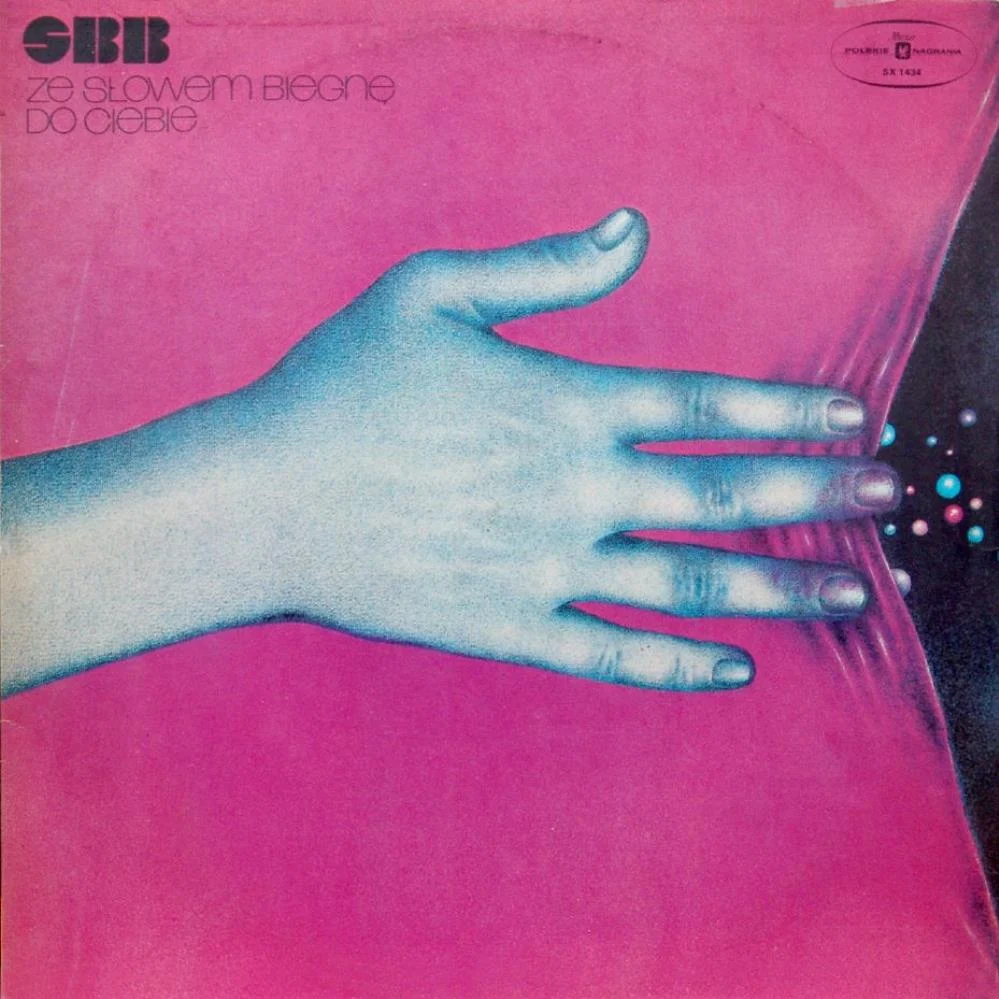 SBB released their fourth album, Ze Słowem Biegnę do Ciebie, in April 1977 on Polskie Nagrania Muza.
The album presents two long-form works originally conceived for orchestra but ultimately carried by the trio’s expanded instrumentation. Skrzek’s array of Moog, Mellotron, Clavinet, and Fender electric piano shapes broad thematic arcs, while Apostolis Anthimos and Jerzy Piotrowski sustain the long passages with controlled intensity and sharply defined rhythmic shifts.
Skrzek composed both pieces and set Matej’s Polish-language text to the title suite, guiding the trio through extended builds, suspended quiet sections, and sudden accelerations. Across both sides, the group maintains a deliberate pacing that lets ambient motifs, eruptive peaks, and intermediate transitions unfold with a sense of internal logic rather than fixed structure.
“Ze Słowem Biegnę do Ciebie” opens with irregular electronic bursts and tremulous piano figures that swell into thickened ensemble passages. A rising pulse at the three‑minute mark sets up Anthimos for long, tensile lines that ride atop Piotrowski’s tightening patterns. After a midsection drop into hushed vocals and sparse accompaniment, the piece climbs again through layers of synth, resonant bass, and rapid drum figures before dispersing into a calm ending.
“Przed Premierą” begins with scattered piano tones that gather around soft percussion before the whole band surges into a brisk, driving center. Textural stretches appear at intervals—Mellotron drones, shadowy sustain, and pockets of near-silence—before the final ascent, where Piotrowski pushes the rhythm into a forceful climax and the trio locks into a spiraling, high‑energy close.
A. “Ze Słowem Biegnę do Ciebie” [“With the Word I Run to You”] (19:20)
B. “Przed Premierą” [“Before the Premiere”] (19:40)
Sessions occurred in early 1977 at Polish Radio’s Warsaw studios with engineer M. Gola and recording supervisor J. Złotkowski.
Ze Słowem Biegnę do Ciebie features sleeve design by M. Goebel and printing by Warszawska Drukarnia Akcydensowa.
CD reissues of Ze Słowem Biegnę do Ciebie include the 29-minute bonus piece “Odejście,” a five-part suite (“Tęsknota,” “Wyzwolenie,” “Odejście,” “Rozłam,” “Pojednanie”) recorded live in the studio with minimal overdubs. The piece opens with Eastern-tinged acoustic figures and unfolds through raga-style guitar, shifting keyboard textures, improvisational interplay, and a climactic fusion segment marked by dense rhythms and melodic escalation. The extended runtime allows the trio to explore mood changes with an unforced looseness that blends spontaneous movement with underlying compositional threads.
Follow My Dream
 SBB recorded their fifth album, Follow My Dream, in November 1977 on Spiegelei.
The album presents two extended suites built on phased synthesizer layers, organ drones, staggered rhythmic turns, and brief vocal passages by Józef Skrzek. The trio shape each side with alternating surges of rapid keyboard motion, atmospheric breaks, and clipped guitar figures from Apostolis Antymos.
Skrzek wrote and arranged all eight sections and performs harmonica, organ, clavinet, string ensemble, Moog, and vocals. Antymos contributes guitar during key peaks, and Jerzy Piotrowski drives the transitions with firm meter changes and accented fills. Marek Milik supplied the text for the opening section; Paweł Brodowski wrote lyrics for three passages across both suites; Julian Matej wrote the text for “In the Cradle of Your Hands.”
Skrzek composed the full suite material. Brodowski contributed lyrics for “Going Away,” “In the Cradle of Your Hands,” and “Follow My Dream,” while Milik wrote the text for “Freedom With Us” and Matej supplied the text for “In the Cradle of Your Hands.”
“Freedom With Us” opens with sustained Hammond tones that settle into a calm, suspended pace before shifting into a darker turn near the end. “3rd Reanimation” moves into an uptempo pattern with sharp Moog bursts and energetic drum work that pushes the momentum forward. “Going Away” climbs quickly to full ensemble volume, drops into a quiet center section, and rises again through a long instrumental ascent. “Żywiec Mountain Melody” closes the side with drifting synth textures and spaced tones.
Side B begins with the atmospheric “Wake Up,” which holds in a floating register until the midpoint. “In the Cradle of Your Hands” delivers a brief vocal interlude. “Growin’” accelerates into a faster pace with assertive cymbal work and a long guitar line by Antymos. The closing segment, “Follow My Dream,” sets a steady rhythmic pattern beneath organ and voice before shifting into a denser instrumental finale.
A. “Going Away” (24:07)
— a. Freedom With Us
— b. 3rd Reanimation
— c. Going Away
— d. (Żywiec) Mountain Melody
B. “Follow My Dream” (22:05)
— a. Wake Up
— b. In the Cradle of Your Hands
— c. Growin’
— d. Follow My Dream
Sessions occurred in November 1977 at Toncooperative Hannover with engineer Leszek “Blondyn” Słanina.
Follow My Dream features gatefold cover artwork by Klaus Wiener.
1977–78 Side Projects, Singles
In 1977, SBB backed Polish jazz-pop vocalist Halina Frąckowiak on her second album, Geira, released on Polskie Nagrania Muza.
Geira features nine songs composed by Józef Skrzek with lyrics by Julian Matej. Skrzek provides keyboards and bass, joined by Apostolis Antymos on guitar and Jerzy Piotrowski on drums and percussion. The music blends psychedelic balladry with jazz-rock elements and occasional funk undercurrents, supporting Frąckowiak’s expressive vocal phrasing with atmospheric textures, moody progressions, and dynamic ensemble interplay.
Also 1977, SBB released the single “Bitwy na obrazach” b/w “Ucisk v dołku” on Supraphon in Czechoslovakia. Józef Skrzek composed both tracks, with lyrics by Julian Matej on the A-side. Both titles were unique to this release and did not appear on any studio albums.
The following year, SBB issued “I Wonder Why” b/w “Tumba” on Amiga in East Germany. Skrzek composed and arranged both sides; Paweł Brodowski supplied the English lyrics for the A-side. The single was manufactured and printed by the state-owned VEB Deutsche Schallplatten.
Later in 1978, Polish label Tonpress issued “Reko‑Reko” b/w “Serenada ‘Gia Sena’,” both composed by Skrzek and recorded at Studio Tonpress KAW. The single’s artwork was designed by A. Barecku. Neither track was featured on SBB’s contemporaneous albums.
Wołanie o Brzęk Szkła
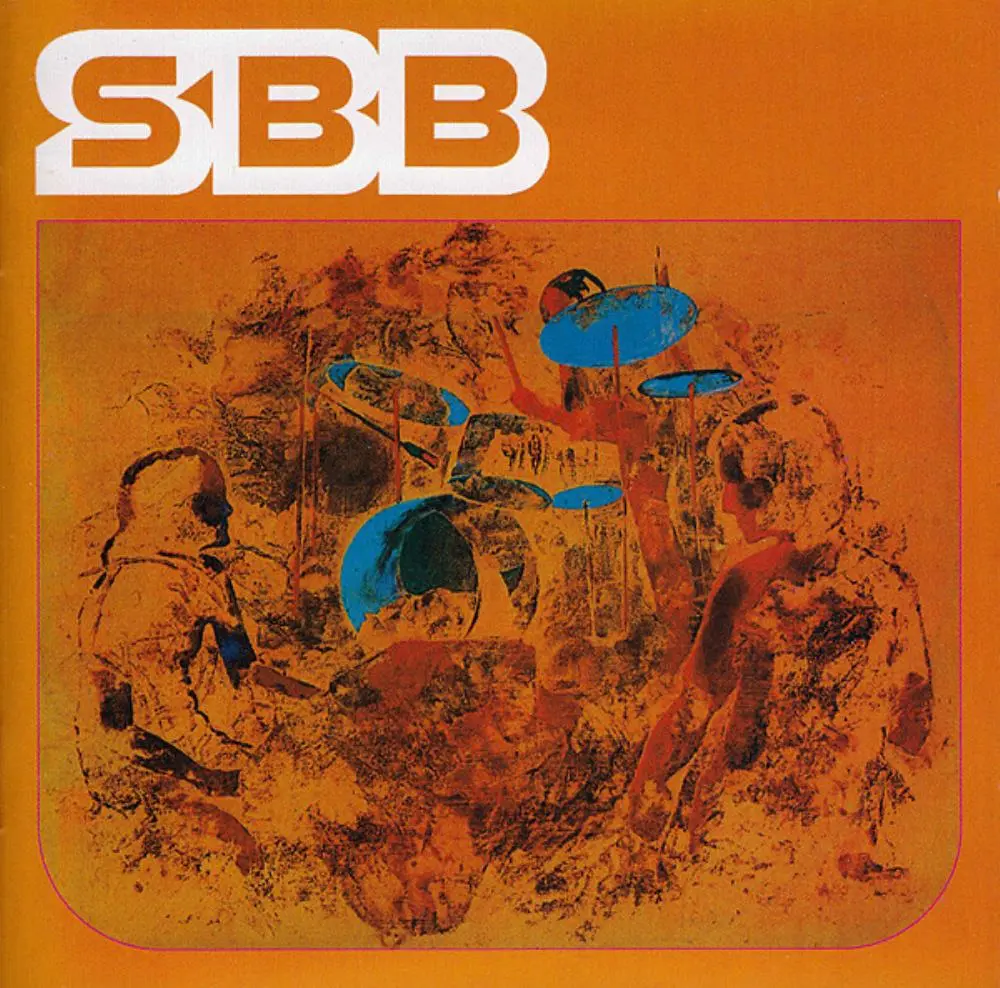 SBB released their sixth album, Wołanie o Brzęk Szkła, in April 1978 on Supraphon.
The album comprises two nineteen-minute suites built on sustained synthesizer lines, phased textures, and extended instrumental arcs. Józef Skrzek shapes the material with Moog, Concert Spectrum synthesizer, clavinet D6, electric piano, harmonica, and voice. Apostolis Antymos alternates between guitar and bouzouki, and Jerzy Piotrowski anchors the long-form movements with firm, shifting patterns and accented fills.
Skrzek composed and arranged both suites. Julian Matej supplied the lyrics.
“Wołanie o Brzęk Szkła” begins with broad atmospheric tones and cymbal detail before tightening into a stronger ensemble section around the five-minute mark. Antymos delivers an extended guitar lead, followed by a quieter middle stretch and a blues-colored harmonica passage that builds into a forceful close with pronounced drums and thicker keyboard layers. “Odejście” opens with electronic ambience and bouzouki, then moves through alternating rises and retreats: an early build with added synths, a quiet suspended section, a short vocal entry around eight minutes, and a faster sequence with clipped guitar figures and tightened cymbal work. The final minutes settle briefly before rising again into an energetic closing pattern.
A. “Wołanie o Brzęk Szkła” [Call for the Clink of Glass] (19:05)
B. “Odejście” [Departure] (19:40)
Sessions occurred from April 12–21, 1977, at Mozarteum Studio in Prague with sound engineers František Řebíček and Jiří Brabec. Jan Spálený and Květoslav Rohleder supervised the musical direction, and Hynek Žalčík oversaw artistic collaboration. Supraphon issued the LP in cooperation with Mladý Svět, with manufacturing handled by Gramofonové Závody.
Wołanie o Brzęk Szkła features a cover design by Milan Krupička, with interior artwork by Martin Wielgus and photography by Miroslav Hucek.
The 2005 CD reissue adds two bonus tracks recorded during the era: “Muzykowanie Latem” (16:50) and “Fikołek” (14:53), both replete with extended synthesizer passages, added soprano sax, and long-form sections featuring guitar solos and ensemble builds.
Welcome
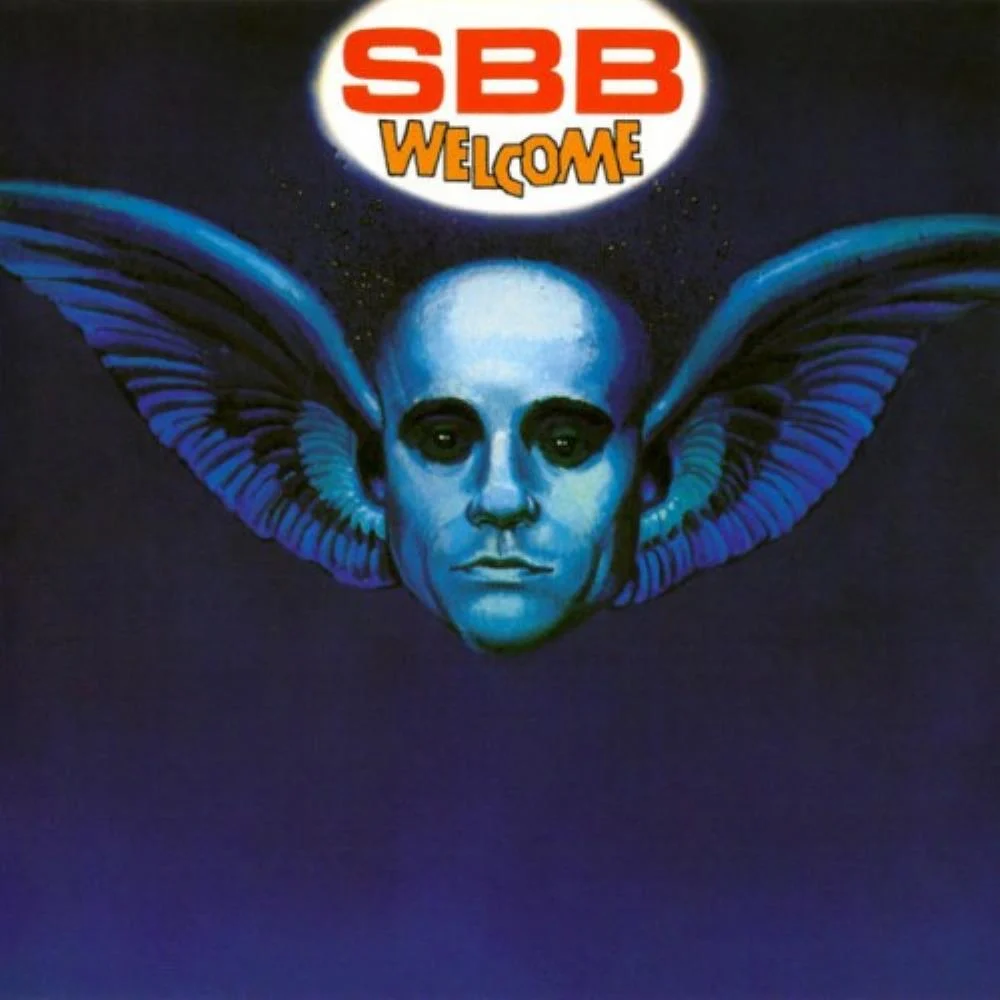 SBB released their seventh album, Welcome, in March 1979 on Wifon.
The album favors shorter, self-contained pieces with English lyrics, subdued pacing, and streamlined transitions. It continues the band’s shift toward vocal-forward arrangements with expansive keyboard layering, marking their final studio output before a two-year break.
Bassist and keyboardist Józef Skrzek composed and arranged all seven tracks. He sings and plays grand piano, Fender electric piano, clavinet D6, Mellotron, PolyMoog, MiniMoog, MicroMoog, Sonic Six Moog, Davolisint, Hammond and church organs, harmonica, timpani, marimba, and tubular bells.
The instrumental opener “Walkin’ Around the Stormy Bay” develops through fluctuating intensity, driven by alternating percussion figures and layered electronic phrasing. “Loneliness” sets a slow-paced ballad around drawn-out vocal lines and sparse harmonic shifts. “Welcome Warm Nights and Days” closes Side A with airy chorus vocals and ascending chords. “Rainbow Man” opens the second side with up-tempo syncopation and dual keyboard-guitar motion. The closing track, “Last Man at the Station,” runs through thematic variations with intermittent harmonic tension and acoustic-electric contrasts.
A1. “Walkin’ Around the Stormy Bay” (6:30)
A2. “Loneliness” (5:23) — lyrics by Paweł Brodowski
A3. “Why No Peace” (6:05) — lyrics by Paul Drasch
A4. “Welcome Warm Nights and Days” (3:07) — lyrics by Paweł Brodowski
B1. “Rainbow Man” (3:36) — lyrics by Paul Drasch
B2. “How Can I Begin” (7:06) — lyrics by Paul Drasch
B3. “Last Man at the Station” (9:37) — lyrics by Paul Drasch
Sessions occurred in late 1978 at Polskie Radio in Opole, Poland, with recording supervision by Edward Spyrka. Władysław Gawroński engineered the Polish sessions. West German producer Conny Plank and engineer Dave Hutchins mixed the album at Conny’s Studio in Wolperath. Iwona Thierry handled production management.
Welcome features cover design by Marek Komza, whose layout pairs stark typographic elements with grainy abstract forms printed by Szczecińskie Zakłady Graficzne.
Memento z banalnym tryptykiem
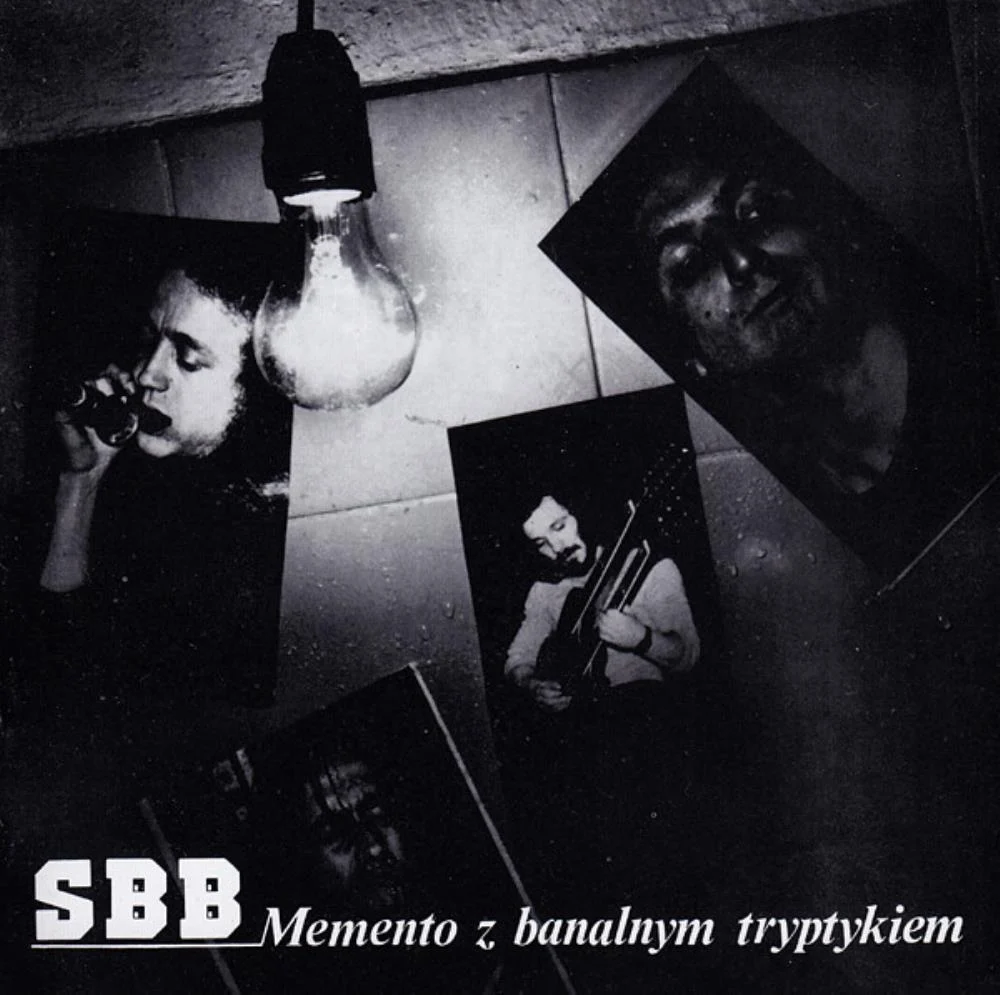 SBB released their eighth album, Memento z banalnym tryptykiem, February 1981 on Polskie Nagrania Muza.
The album blends symphonic structure, jazz-rock textures, and folk-inflected tonalities across four compositions, including a 21-minute suite on side two. It marked the final release before SBB’s 1981 breakup and remains one of the band’s most elaborately arranged and densely layered recordings.
Keyboardist and bassist Józef Skrzek composed two tracks and co-wrote one with guitarist Apostolis Antymos and drummer Jerzy Piotrowski. Skrzek sings and plays bass, keyboards (Minimoog, Micromoog, Polymoog, Sonicsix Moog, Davolisint, Concert Spectrum, Mellotron, Hammond organ, grand piano, church organ, Fender electric piano, Hohner Clavinet D6), percussion, harmonica, marimba, and Japanese banjo. Poet Julian Matej wrote the lyrics for the two Skrzek-composed tracks. Guest contributions on the title suite include harmonica by Jan Skrzek and handclaps by Alicja Piwowar and Renata Szybka.
“My Land of Dreams” opens with a symphonic prelude and accelerates into a sequence of intersecting jazz-rock passages with quick modulations between electric themes, funk riffs, phased transitions, and climactic runs for guitar and piano. “The Triangle of Joy” unfolds as a quiet instrumental with polymoog textures, fingerpicked acoustic figures, and modal soloing that shifts from classical phrasing to sustained bends. “Strategy of Pulse” centers on clavinet-driven rhythmic interplay and thick lead guitar distortion over a fusion pulse. Side two’s title suite flows through thematic expansions, harmonic diversions, acoustic and electric layering, dynamic resets, and recapitulations. The closing minutes mount with a rising guitar solo before the album ends on a brief orchestral reprise.
A1. “Moja Ziemio Wyśniona” [My Land of Dreams] (8:36) — lyrics by Julian Matej
A2. “Trójkąt Radości” [The Triangle of Joy] (7:46) — written by Sławomir Piwowar
A3. “Strategia Pulsu” [Strategy of Pulse] (3:27) — written by Apostolis Antymos and Jerzy Piotrowski
B. “Memento z banalnym tryptykiem” [Memento With a Banal Tryptych] (20:56) — lyrics by Julian Matej
Sessions occurred in 1980 at Studio Polskiego Radia in Opole with recording director Edward Spyrka and engineering by Władysław Gawroński. Renata Szybka served as assistant engineer. Skrzek handled the final mix.
Memento z banalnym tryptykiem features graphic design by M. Mroszczak and T. Sikora. The sleeve depicts a grainy, high-contrast triptych-style layout overlaid with textured typographic forms.
Discography:
- SBB (live, 1974)
- Nowy horyzont (1975)
- Pamięć (1976)
- Ze słowem biegnę do ciebie (1977)
- Follow My Dream (1977)
- “Bitwy na obrazach” / “Uścisk w dołku” (1977)
- “I Wonder Why” / “Tumba” (1978)
- “Reko-reko” / “Serenada “Gia sena” (1978)
- SBB [Wołanie o brzęk szkła] (1978)
- Welcome (1979)
- Memento z banalnym tryptykiem (1981)
Sources:
Artist/Album Pages:
Dwayne Ford is a Canadian pianist and songwriter who cut two albums with Seventies rustic-rockers ...
Mike Oldfield is an English composer, arranger, and multi-instrumentalist with a career in music dat...
Martee LeBous (born April 12, 1957) is an American singer and songwriter from New York who released...
Julie Driscoll is an English blues and jazz singer who cut two 1965 singles for Parlophone, follow...
Light Year was an American symphonic/jazz-rock band from San Francisco, active from 1974 to 1976 o...
Jah Lion — aka Jah Lloyd, born Patrick Lloyd Francis (August 29, 1947 – June 12, 1999) — was a Jam...
The Final Solution was an American soul-funk band from Chicago that recorded music for Brotherman,...
Blue Magic was an American soul group from Philadelphia that released five albums on ATCO between ...
Johnny "Guitar" Watson (Feb. 3, 1935 — May 17, 1996) was an American R&B guitarist, active as ...
Berits Halsband was a Swedish jazz-rock band behind a 1975 self-titled album on Forsaljud. Membe...
Asha Puthli is an East Indian singer who made eight albums between 1973 and 1982, scoring pop and...
Snowball was a German jazz-rock/funk band behind the 1978 Atlantic album Defroster, followed by th...