

Mi-Sex was a New Zealand new wave band that released four albums between 1979 and 1983 on CBS–Epic.
Members: Don Martin (bass), Murray Burns (keyboards), Richard Hodgkinson (drums, 1977-1981), Steve Gilpin (vocals, 1977-1984), Kevin Stanton (guitar, 1977-1986), Paul Dunningham (drums, 1981-present), Colin Bailey (guitar, 1983-present)
Background
Mi-Sex formed in 1977 in New Zealand when vocalist Steve Gilpin joined forces with keyboardist Alan Moon and bassist Don Martin, both recently of the disbanded Hamilton-based prog band Father Thyme. Gilpin, a former cabaret singer and New Faces TV talent winner, had grown restless with the lounge circuit and sought a heavier rock outlet. The trio added guitarist Kevin Stanton, recently of the rock groups Think and Brigade, and drummer Phil Smart, forming a transitional unit called Fragments of Time. After Moon’s departure, Invercargill-born keyboardist Murray Burns joined from Wellington’s Red Rose. Drummer Richard Hodgkinson replaced a brief interim by Steve Osborne and completed the lineup that transitioned to a new musical direction.
Inspired by the energy and immediacy of the UK new wave scene, they cut their hair, updated their image, and adopted the name Mi-Sex, taken from the Ultravox song “My Sex.” EMI invited them to demo at their new Lower Hutt studio, resulting in the 1978 single “Straight Laddie,” a Gilpin/Stanton number backed with “High Class Dame,” co-written with Martin. Their stage show and strategy quickly elevated them on the New Zealand circuit. By mid-1978, Mi-Sex relocated to Sydney, where their explosive live presence rapidly earned them residencies across the city and secured their place as one of the region’s fastest-rising acts.
Graffiti Crimes [aka Computer Games]
 Mi-Sex released their debut album, Graffiti Crimes, in July 1979 on CBS.
The album contains their second single “But You Don’t Care,” one of eight songs co-written by guitarist Kevin Stanton. Each side contains a group-written number (“A Loser,” “Wot Do You Want?”) and a co-write with singer Steve Gilpin (“Stills,” “21-20”).
Keyboardist Murray Burns co-wrote “But You Don’t Care” and collaborated with the pair on “Not Such a Bad Boy.” Stanton lone-wrote the epic album-closer “Inside You.” Side Two contains songs submitted by Kiwi guitarist and future member Colin Bayley (“I Wanna Be with You”) and (ex-Tamburlaine, 1860 Band) musician Rob Winch (“Camera Kazi”).
Graffiti Crimes establishes Mi-Sex as a tightly organized new wave group built around interlocking guitar and synthesizer lines, concise ensemble writing, and a balance between individual songwriting voices and collective contributions. The album reflects the band’s recent transition from the New Zealand circuit to the Australian market, aligning sharp rhythmic structures with a streamlined studio presentation developed during an intensive period of touring and rehearsal in Sydney.
A1. “Graffiti Crimes” (3:52)
A2. “Wot Do You Want?” (2:58)
A3. “But You Don’t Care” (4:06)
A4. “Not Such a Bad Boy” (2:45)
A5. “Stills” (5:56)
B1. “21-20” (3:15)
B2. “I Wanna Be with You” (2:43)
B3. “Camera Kazi” (5:28)
B4. “A Loser” (2:58)
B5. “Inside You” (3:18)
The album was recorded in April and May 1979 at Studios 301 in Sydney and produced by Peter Dawkins, with engineering by Dave Marett. CBS scheduled the release to coincide with the band’s Australian tour supporting Talking Heads, positioning the album within an aggressive live-performance cycle. The cover concept was devised by the band, with photography by Greg Penniket.
 CBS issued the first single, “But You Don’t Care,” backed with “Burning Up,” in May 1979. The single reached No. 25 on the Australian national charts and No. 33 in New Zealand following its August release.
In response to strong audience reaction during live performances, the band returned to the studio to record “Computer Games,” which CBS released as a standalone single on October 1, 1979. The track reached No. 1 in Australia and peaked at No. 5 in New Zealand, prompting CBS to add it to subsequent pressings of Graffiti Crimes.
For North American and Japanese release in 1980, the album was retitled Computer Games and re-sequenced to feature the new title track prominently.
Graffiti Crimes reached No. 6 in New Zealand and No. 16 on the Australian Kent Music Report, establishing Mi-Sex as a major regional act ahead of their second album.
Space Race
 Mi-Sex released their second album, Space Race, in May 1980 on CBS and Epic.
The album expands their keyboard-driven new wave sound with denser arrangements and tighter interplay between instrumentation.
Space Race contains six co-writes between keyboardist Murray Burns and guitarist Kevin Stanton, who lone-wrote “Living in September” and co-wrote “Slippin’ Out” with singer Steve Gilpin, who third-wheeled on “People” and “It Only Hurts When I’m Laughing.” Drummer Richard Hodgkinson was a fourth writer on the penultimate track “Burning Up.”
A1. “Space Race” (3:44)
A2. “Pages and Matches” (2:30)
A3. “Living in September” (2:41)
A4. “I Don’t Know” (2:27)
A5. “Slippin’ Out” (3:08)
A6. “It Only Hurts When I’m Laughing” (4:18)
B1. “People” (3:49)
B2. “Good Guys Always Win (Satire)” (3:17)
B3. “Ghosts” (3:42)
B4. “Burning Up” (3:35)
B5. “Ice Cold Dead” (4:16)
 Mi-Sex recorded Space Race at Studios 301 and Music Farms Studios in Sydney with producer Peter Dawkins, who had also overseen their debut. Sessions took place in early 1980 as the band toured off the success of Graffiti Crimes. The production builds on the debut’s rhythmic focus with more layered synthesizer textures and heavier emphasis on harmonic interplay between keys, guitar, and drums.
CBS issued “People” backed with “Pages and Matches” as the advance single in March 1980. “Space Race” followed in June as the second single, paired with “Living in September.” A third single, “It Only Hurts When I’m Laughing,” appeared in August with “I Don’t Know” as its b-side.
Space Race soared to No. 1 in New Zealand and No. 5 in Australia, surpassing the performance of Graffiti Crimes and cementing Mi-Sex as one of the leading acts in the Australasian new wave movement.
Shanghaied
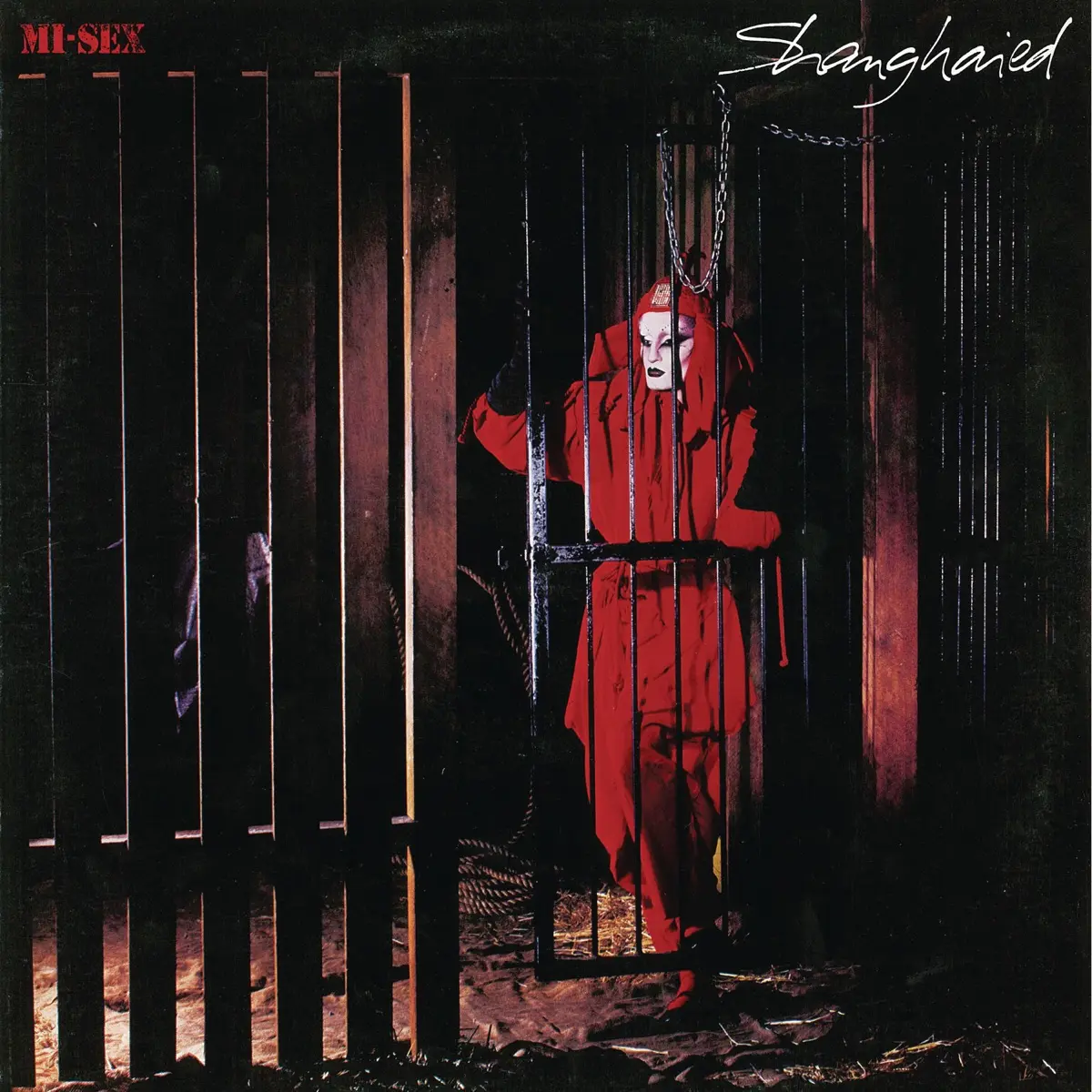 Mi-Sex released their third album, Shanghaied, in October 1981 on CBS.
The album sustains their emphasis on synthesizer-based arrangements while exploring tighter, more stylized textures across a blend of programmed rhythms and guitar-based structures.
Shanghaied contains six co-writes between guitarist Kevin Stanton and keyboardist Murray Burns, who pair on “The Jungle,” “Tears In Her Wine,” “Shanghaied!,” and “Falling In and Out,” and co-wrote “Be Quiet” with vocalist Steve Gilpin and “Water” with bassist Don Martin. Stanton lone-wrote “Mystery,” “Talking To Myself,” and “Young Maniacs.” Drummer Richard Hodgkinson contributed two songs: “Missing Person” and “Caught in the Act.”
A1. “The Jungle” (3:24)
A2. “Be Quiet” (3:38)
A3. “Mystery” (2:13)
A4. “Water” (3:21)
A5. “Talking to Myself” (3:40)
B1. “Missing Person” (2:44)
B2. “Tears in Her Wine” (3:20)
B3. “Caught in the Act” (2:47)
B4. “Shanghaied!” (3:24)
B5. “Falling In and Out” (3:20)
B6. “Young Maniacs” (3:16)
Mi-Sex recorded Shanghaied at Music Farm Studios and mixed it between EMI Studios 301 and the Power Station. The band co-produced the album with John Sayers, who worked on all tracks except the single b-sides. The sessions followed an intensive year in which the group performed hundreds of shows, balancing live commitments with studio work across multiple cities.
CBS issued “Falling In and Out” backed with “Round and Round” as the lead single. “Missing Person” followed with “Water” on the reverse, then “Shanghaied” appeared with “The Bend” as its b-side.
Where Do They Go?
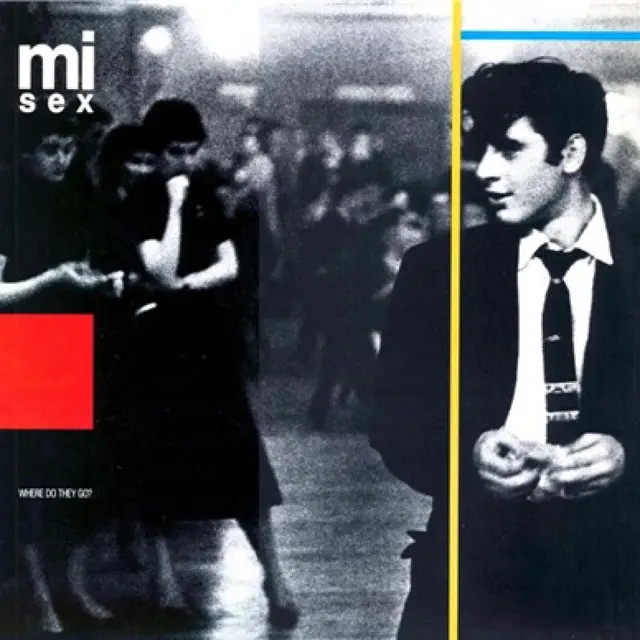 Mi-Sex released their fourth album, Where Do They Go?, in November 1983 on CBS.
The album marks a stylistic shift toward polished synth-pop with streamlined production and tighter rhythmic emphasis.
Where Do They Go? contains four co-writes between guitarist Kevin Stanton and keyboardist Murray Burns, who pair on “Only Thinking,” “Where Do They Go?,” “Castaway,” and “I Lose Control.” Stanton lone-wrote “Falling In and Out,” “Making Love on the Telephone,” “5 O’Clock (In the Morning),” and “The Stranger In You,” and co-wrote “Don’t Look Back In Anger” with guitarist Colin Bayley, who also co-authored “Only Thinking,” “Blue Day,” and “5 O’Clock.” Drummer Paul Dunningham joins Stanton and Burns on the first three tracks and receives sole credit on Side B. Gilpin appears as third writer on “Where Do They Go?” and sings lead throughout. Martin plays bass across the album.rite.
A1. “Only Thinking” (4:01)
A2. “Where Do They Go?” (4:18)
A3. “Castaway” (3:25)
A4. “Blue Day” (4:17)
A5. “I Lose Control” (4:07)
B1. “Falling In and Out” (3:19)
B2. “Making Love on the Telephone” (3:54)
B3. “5 O’Clock (In the Morning)” (3:09)
B4. “The Stranger in You” (4:14)
B5. “Don’t Look Back in Anger” (3:16)
Sessions took place at Rhinoceros Studios in Sydney and mixed at the Power Station in New York. Bob Clearmountain produced and mixed the majority of the album, with John Sayers and the band self-producing select tracks.
CBS issued “Castaway” backed with “Young Maniacs” as the lead single in 1982. “Down the Line (Making Love on the Telephone)” appeared next with “Calling” on the b-side. “Blue Day” followed in 1983 with “Lady Janice” as its reverse.
Discography:
- Graffiti Crimes [aka Computer Games] (1979)
- Space Race (1980)
- Shanghaied (1981)
- Where Do They Go? (1983)
Sources:
Artist/Album Pages:
Abedul was a Spanish symphonic-rock band behind the 1979 Columbia album Nosotros. Members: Alber...
The Method Actors were an American New Wave band from Athens, Ga., that released two albums and a...
Vainica Doble was the Spanish folk duo of singing guitarists Gloria van Aerssen (May 1, 1932 — Oct...
Gordon Lightfoot (November 17, 1938 – May 1, 2023) was a Canadian singer/songwriter, best known fo...
Hawkwind are an English space-rock band, originally led by guitarist Dave Brock and reedist Nik Tu...
Jordi Sabatés (born Oct. 23, 1948) is a Spanish jazz pianist who emerged in mid-Sixties Barcelona ...
Trisomie 21 are a French coldwave combo that released two EPs and five albums between 1983 and 198...
Camera Obscura were an English coldwave/synthpop duo from York, North Yorkshire, that was active b...
Dvouletá Fáma was a Czech avant-rock band, formed in 1981 in Prague by drummer Zdeněk Konopásek. W...
Crossfire was a Belgian hard-rock/metal band behind the 1983–86 albums See You in Hell, Second Att...
Eumir Deodato is a Brazilian pianist, composer, arranger, and producer who emerged from the Rio de...
Profil was a German jazz-rock band behind the 1982 album For You, released on Brutkasten. Member...