

The Marshall Tucker Band was an American rustic-rock band that released seven albums between 1973 and 1978 on Capricorn Records, followed by six further albums through 1983 on Warner Bros. Their gold/platinum Capricorn run produced crossover hits with “Fire on the Mountain” and “Heard It in a Love Song.”
Members: Doug Gray (vocals, tambourine), Jerry Eubanks (flute, saxophone, vocals, 1971-96), Toy Caldwell (guitar, vocals, 1971-83), George McCorkle (guitar, 1971-83), Paul Riddle (drums, 1971-83), Tommy Caldwell (bass, vocals, 1971-80), Franklin Wilkie (bass, vocals, 1980-84), Ronnie Godfrey (piano, keyboards, vocals, 1982-84), Rusty Milner (guitar, 1984-2003), Bob Wray (bass, 1984), James Stroud (drums, 1984), Kenny Mims (guitar, 1984), Bobby Ogdin (piano, keyboards, 1984-89), Stuart Swanlund (guitar, pedal steel guitar, vocals, 1985-2012), Tom Robb (bass, 1985-87), David “Ace” Allen (drums, 1985-92), Tim Lawter (bass, vocals, 1987), Don Cameron (keyboards, vocals, 1989-92)
Background
The Marshall Tucker Band formed in 1972 in Spartanburg, South Carolina, from Toy Factory, a local band that drew from The Rants and The New Generation, two high school acts. Lead guitarist–singer Toy Caldwell and rhythm guitarist–banjoist George McCorkle completed the final six-man lineup with lead singer Doug Gray, bassist–singer Tommy Caldwell, reed/keyboard player Jerry Eubanks, and drummer Paul T. Riddle.
Toy Talmadge Caldwell Jr. (b. November 13, 1947) began guitar before his teen years alongside younger brother Tommy Caldwell. He played high-school sports with Gray, Eubanks, and McCorkle. After three years of service in the Marine Corps, he returned in 1969 to Spartanburg-area music circles.
Tommy Caldwell (b. November 9, 1949) played bass in The New Generation, a Spartanburg teen band with singer Doug Gray, drummer Ross Hanna, and guitarist Randy Foster among its relevant members. Sonic issued the group’s April 1968 single “Because of Love (It’s All Over)” (b/w “That’s the Sun”), with the B-side by Caldwell and Foster.
Doug Gray (b. May 22, 1948) sang with The New Generation and moved through the same local circuit that fed Toy Factory. Gray served an Army tour duty in Vietnam, then rejoined the Caldwell band circle.
George Freeman McCorkle (b. October 11, 1946; Chester, SC) taught himself guitar on an older brother’s instrument and played Spartanburg high-school bands with the Caldwell circle. He served in the Navy from 1966 to 1968, then formed Toy Factory with Toy Caldwell. McCorkle also worked with Pax Parachute during the late-sixties Spartanburg period.
Jerry Eubanks (b. March 9, 1950) played keyboards, flute, and saxophone in the local groups that fed Toy Factory. Paul T. Riddle came from the nearby Drayton mill village and studied drums at Spartanburg High School. McCorkle recruited Riddle for the Caldwell band while the drummer was still in tenth grade.
Toy Factory opened for the Allman Brothers at a 1971 Spartanburg show and moved from the local club circuit toward the Macon network. They rehearsed in the basement of the old Gladstone Hotel on Spring Street, where the rehearsal-room key bore the name of blind piano tuner Marshall Tucker. The six-man lineup adopted the Marshall Tucker Band name from that key.
Wet Willie singer Jimmy Hall urged Toy Caldwell to book a Grant’s Lounge date in Macon, Georgia, where Buddy Thornton and Paul Hornsby recorded the band’s demo at Capricorn Sound Studios. They impressed Allman’s manager Phil Walden, who signed the Marshall Tucker Band to Capricorn Records, his newly launched Atlantic subsidiary that specialized in Southern Rock.
The Marshall Tucker Band
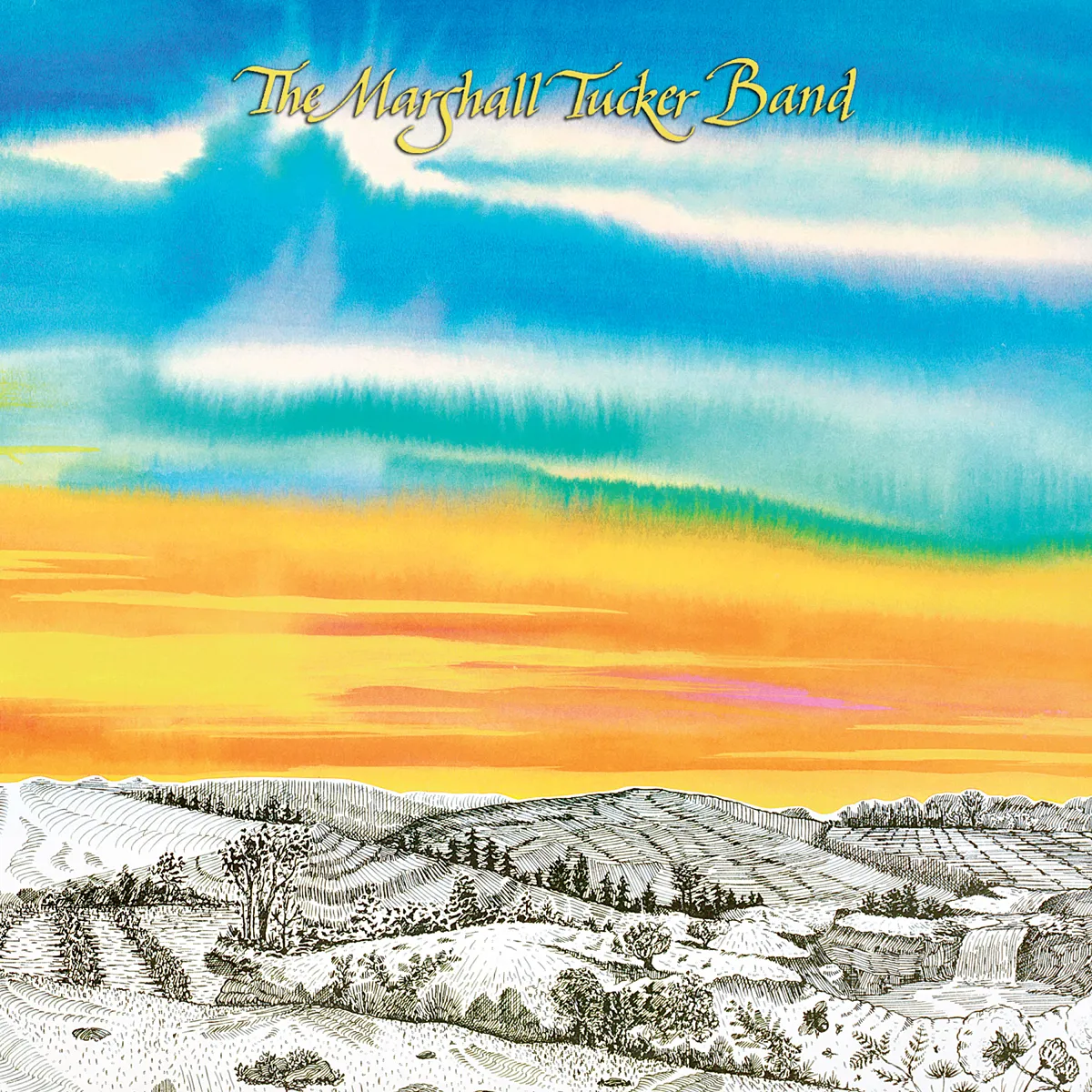 The Marshall Tucker Band released their self-titled debut album in April 1973 on Capricorn.
The album presents country-rock and blues material with flute, alto saxophone, steel guitar, and long-form guitar breaks, performed by singer Doug Gray, bassist Tommy Caldwell, drummer Paul Riddle, flutist/saxophonist Jerry Eubanks, and guitarists Toy Caldwell and George McCorkle. Toy Caldwell wrote all eight titles. Paul Hornsby adds piano, Fender Rhodes, Hammond organ, and Moog synthesizer.
Musically, Marshall Tucker Band runs through rangy road tempos, slow steel-drawn pieces, and fast-picked country turns. “Take the Highway” rolls on a road-worn tempo, with Eubanks’ flute break and Toy Caldwell’s thumb-led lead work pulling the section past compact song form. “Can’t You See” lingers on Caldwell’s rough vocal, Jaimoe’s congas, and a long solo break. “Losing You” slows through mandolin, pedal steel, and piano in the foreground.
“Hillbilly Band” high-tails through fingerpicked runs and fiddle. “See You Later, I’m Gone” saunters through steel bends and drawling harmonies. “Ramblin’” barrels through Gray’s shout, a tenor break, and fast ensemble motion. “My Jesus Told Me So” testifies through gospel-charged vocal pressure. “Ab’s Song” falls to a brief acoustic farewell.
A1. “Take the Highway” (6:10)
A2. “Can’t You See” (6:00)
A3. “Losing You” (5:02)
B1. “Hillbilly Band” (2:32)
B2. “See You Later, I’m Gone” (3:01)
B3. “Ramblin’” (5:01)
B4. “My Jesus Told Me So” (5:28)
B5. “Ab’s Song” (1:12)
The Marshall Tucker Band recorded the album in 1973 at Capricorn Studios in Macon with producer Paul Hornsby and engineers Hornsby and Buddy Thornton.
The Marshall Tucker Band appeared in a sleeve designed and illustrated by James Flournoy Holmes. C. Hearon and J. Duckworth supplied the photography through Camera House.
Capricorn lifted “Can’t You See” as a June 1973 single (b/w “See You Later, I’m Gone”), which reached No. 108 on the US singles listing. “Take the Highway” followed in October 1973 (b/w “My Jesus Told Me So”).
The Marshall Tucker Band reached No. 29 on the Billboard 200 albums chart. The RIAA certified the album gold.
A New Life
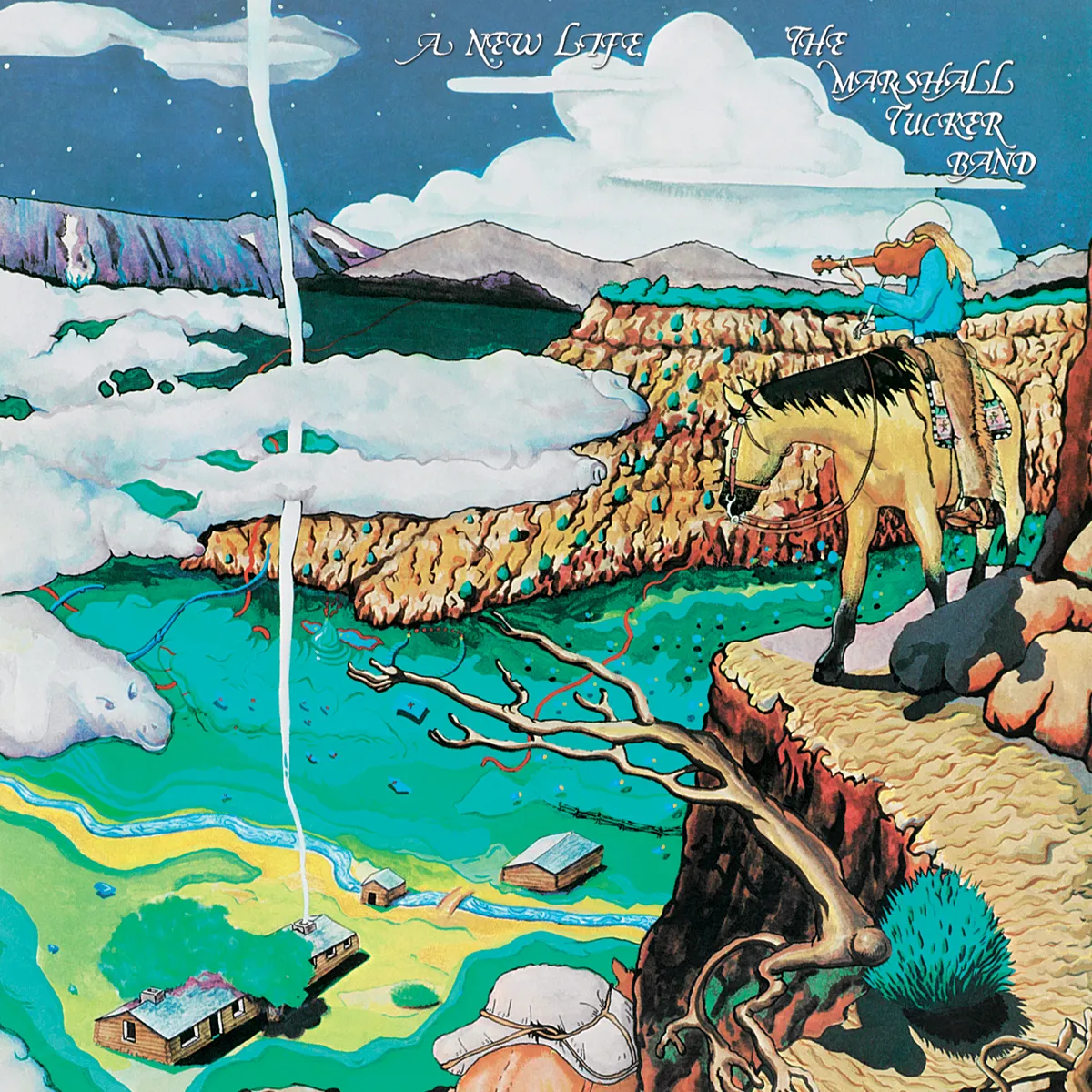 The Marshall Tucker Band released their second album, A New Life, in February 1974 on Capricorn.
A New Life contains eight Toy Caldwell titles, with longer side-one pieces and a side-two span from “Another Cruel Love” to “Fly Eagle Fly.” The album retains the original six-piece lineup and adds fiddle by Charlie Daniels, congas by Jaimoe, and a four-piece horn section.
The songs lean deeper into rural phrasing, longer midsections, and road-song motion. “A New Life” glides through easy-riding flute-and-lead patterns, with Gray’s vocal set inside an airy rural sweep. “Southern Woman” rides an organ-and-lead riff across its long form. “Blue Ridge Mountain Sky” rolls under Charlie Daniels’ fiddle, with Toy Caldwell’s vocal placed in a plainspoken road setting. “Too Stubborn” saunters through pedal-steel figures and slow barroom phrasing.
“Another Cruel Love” quickens on horns and Caldwell’s thumb-picked solo. “You Ain’t Foolin’ Me” drifts through a spacey midsection before the band returns to its extended road form. “24 Hours at a Time” high-tails behind Daniels’ fiddle in truck-stop motion. “Fly Eagle Fly” settles into a homespun closing vocal.
A1. “A New Life” (6:44)
A2. “Southern Woman” (7:55)
A3. “Blue Ridge Mountain Sky” (3:37)
A4. “Too Stubborn” (3:58)
B1. “Another Cruel Love” (3:58)
B2. “You Ain’t Foolin’ Me” (7:03)
B3. “24 Hours at a Time” (5:04)
B4. “Fly Eagle Fly” (4:25)
The Marshall Tucker Band recorded A New Life in 1973 at Capricorn Sound in Macon with producer Paul Hornsby and recording engineers Sam Whiteside and Hornsby. George Marino mastered the album.
A New Life appeared in a sleeve with art direction by Wondergraphics, David Holmes, and Jimmy Holmes.
Capricorn lifted “Another Cruel Love” as an April 1974 single (b/w “Blue Ridge Mountain Sky”).
A New Life reached No. 37 on the Billboard 200 albums chart and No. 35 on the Canadian Albums Chart. The RIAA certified the album gold.
Where We All Belong
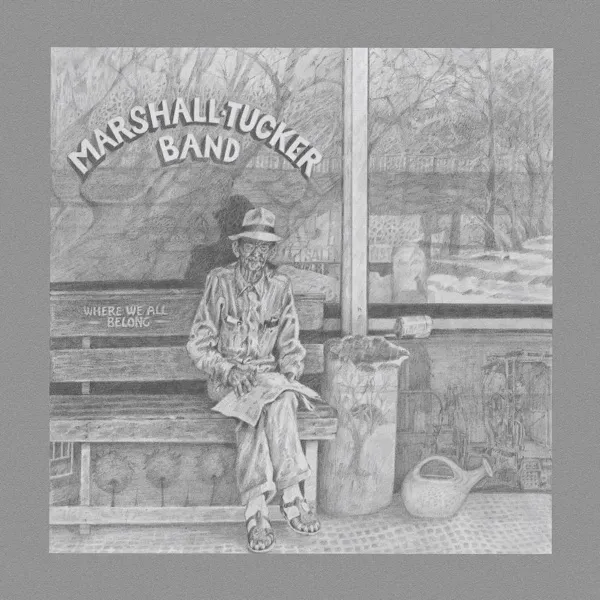 The Marshall Tucker Band released their third album, Where We All Belong, in November 1974 on Capricorn.
Where We All Belong joins a studio LP with a live LP recorded at Uihlein Hall in Milwaukee. The studio sides contain seven Toy Caldwell titles, including “Now She’s Gone,” a co-write with Tommy Caldwell; the live sides add a long “24 Hours at a Time” and a Peter Chatman blues standard. Musically, the four sides encompass acoustic swing, horn-lined uptempo work, and slow barroom pieces, then expands the live side through extended solo sections.
“This Ol’ Cowboy” rolls with acoustic ease and a lightly jazzy swing. “Low Down Ways” follows that quick-footed beat with picking in the foreground. “In My Own Way” slows by a gear and opens space for fiddle, flute, and extended solo exchanges. “How Can I Slow Down” drives through horn-punched uplift. “Where a Country Boy Belongs” lopes behind Elvin Bishop’s slide lead. “Now She’s Gone” pushes a driving road beat under rough lead turns.
“Try One More Time” settles into slow barroom blues. Live, “Ramblin’” surges through Toy Caldwell’s solo break. “24 Hours at a Time” high-tails through a long fiddle-and-lead stretch, with Gray’s road rasp cutting across the stage recording. “Everyday (I Have the Blues)” sprawls across old-time soloing. “Take the Highway” extends the debut track through driving rhythm and tightened solo turns.
A1. “This Ol’ Cowboy” (6:42)
A2. “Low Down Ways” (3:00)
A3. “In My Own Way” (7:17)
B1. “How Can I Slow Down” (3:19)
B2. “Where a Country Boy Belongs” (4:32)
B3. “Now She’s Gone” (4:20) – Toy Caldwell, Tommy Caldwell
B4. “Try One More Time” (4:46)
C1. “Ramblin’” (6:13)
C2. “24 Hours at a Time” (13:57)
D1. “Everyday (I Have the Blues)” (11:48) – Chatman
D2. “Take the Highway” (7:26)
The Marshall Tucker Band recorded the studio material at Capricorn Studios in Macon and the live material at the Performing Arts Center in Milwaukee. Paul Hornsby produced the album.
Charlie Daniels plays fiddle on “This Ol’ Cowboy” and “24 Hours at a Time.” Elvin Bishop and Johnny Vernazza add slide guitar to “Where a Country Boy Belongs.”
Capricorn lifted “This Ol’ Cowboy” as a February 1975 single (b/w “Try One More Time”), which reached No. 78 on the Billboard Hot 100 chart.
Where We All Belong reached No. 54 on the Billboard 200 albums chart and No. 91 on the Canadian Albums Chart. The RIAA certified the album gold.
Searchin’ for a Rainbow
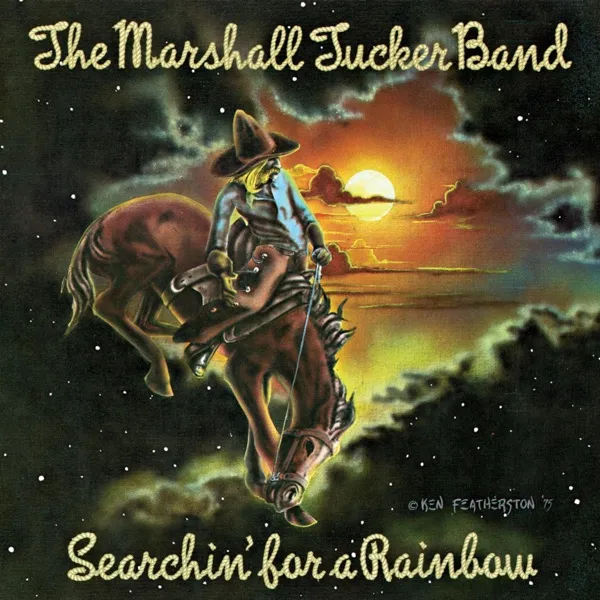 The Marshall Tucker Band released their fourth album, Searchin’ for a Rainbow, in August 1975 on Capricorn.
Searchin’ for a Rainbow contains seven studio titles and a live version of “Can’t You See” from the Milwaukee concert tape used for Where We All Belong. Toy Caldwell wrote six studio titles. George McCorkle supplied “Fire on the Mountain,” and Tommy Caldwell supplied “Keeps Me from All Wrong.”
“Fire on the Mountain” trots behind Charlie Daniels’ fiddle and Toy Caldwell’s steel, with Gray’s vocal carrying the gold-rush death story. “Searchin’ for a Rainbow” crosses Gray’s road vocal with Dickey Betts’ lead break. “Walkin’ and Talkin’” skips through western-swing turns and barroom motion. “Bob Away My Blues” bounces through honky-tonk gait and party-room ease. “Can’t You See” stretches in its Milwaukee concert take, with Caldwell’s vocal set before a longer lead break.
A1. “Fire on the Mountain” (3:57) – McCorkle
A2. “Searchin’ for a Rainbow” (3:48)
A3. “Walkin’ and Talkin’” (2:25)
A4. “Virginia” (4:54)
B1. “Bob Away My Blues” (2:42)
B2. “Keeps Me from All Wrong” (4:13) – Tommy Caldwell
B3. “Bound and Determined” (4:20)
B4. “Can’t You See” (6:25)
The Marshall Tucker Band recorded the studio material in May and June 1975 with producer Paul Hornsby. The band recorded “Can’t You See” at the Performing Arts Center in Milwaukee on July 31, 1974.
Dickey Betts plays the guitar solo on “Searchin’ for a Rainbow.” The album also features fiddle by Charlie Daniels, electric piano by Chuck Leavell, mandolin by Al McDonald, and trumpet arrangements by Leo LaBranche.
Capricorn lifted “Fire on the Mountain” as a September 1975 single (b/w “Bob Away My Blues”), which reached No. 38 on the Billboard Hot 100 and No. 81 in Canada. “Searchin’ for a Rainbow” followed in February 1976 (b/w “Walkin’ and Talkin’”) and reached No. 82 on the Billboard Hot Country Singles chart.
Searchin’ for a Rainbow reached No. 15 on the Billboard 200 albums chart and No. 21 on the Billboard Top Country Albums chart. The RIAA certified the album gold.
Long Hard Ride
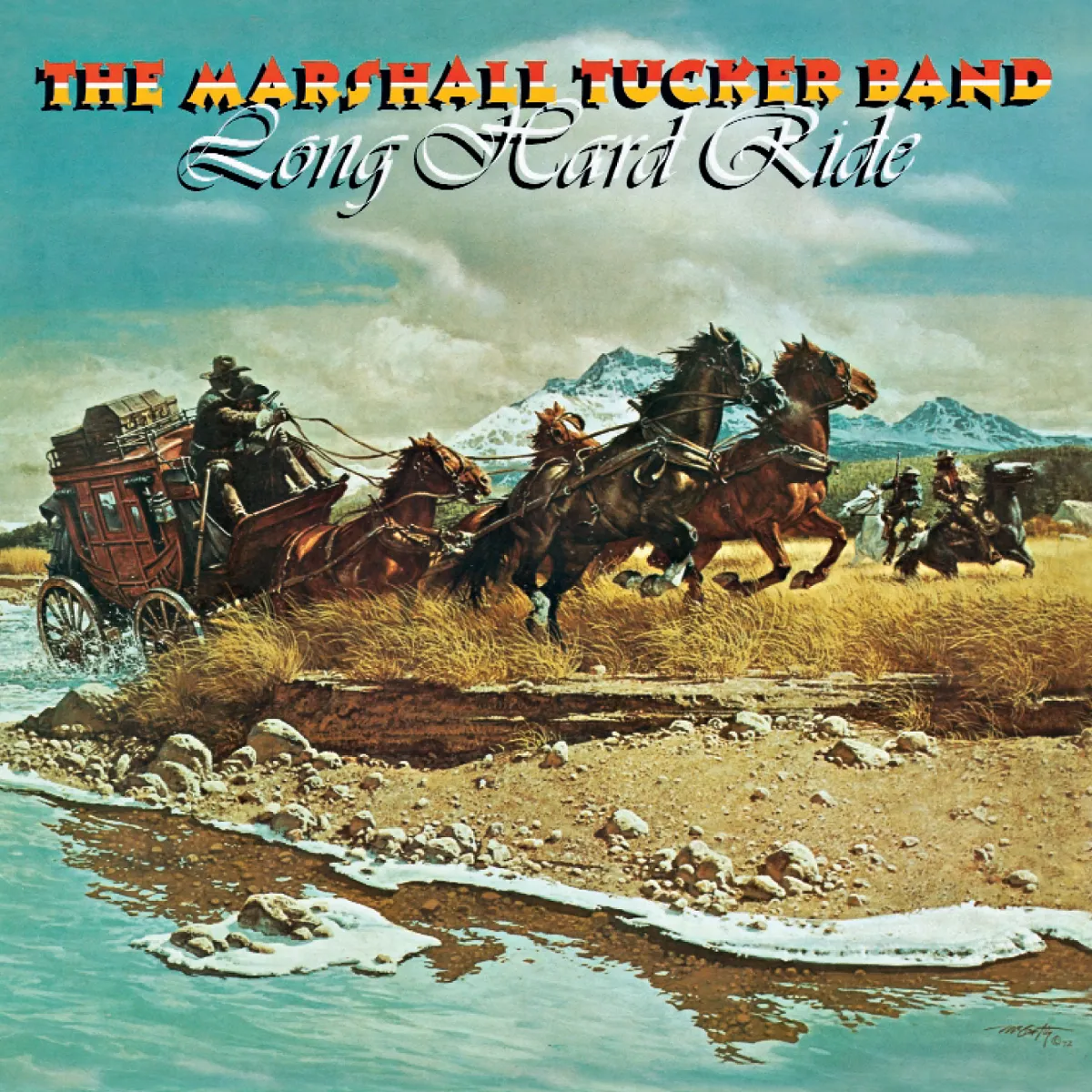 The Marshall Tucker Band released their fifth album, Long Hard Ride, in June 1976 on Capricorn.
Long Hard Ride contains five Toy Caldwell titles, one Tommy Caldwell title, one George McCorkle title, and one group co-write by Eubanks, Gray, and McCorkle. The album adds fiddle by Charlie Daniels, banjo by John McEuen, and congas by Jerome Joseph.
“Long Hard Ride” gallops as a near-instrumental showpiece, with McCorkle’s banjo and Daniels’ fiddle giving the track its old-time rush. “Property Line” moves through rapid lead work under Toy Caldwell’s vocal. “Walkin’ the Streets Alone” pushes Gray’s vocal through Eubanks’ saxophone figures and full-band breaks. “Holding On to You” softens around Eubanks’ flute part. “You Say You Love Me” charges through fast lead work and Gray’s high-vocal reach.
A1. “Long Hard Ride” (3:48)
A2. “Property Line” (2:57)
A3. “Am I the Kind of Man” (4:21)
A4. “Walkin’ the Streets Alone” (5:05)
B1. “Windy City Blues” (4:53) – Eubanks, Gray, McCorkle
B2. “Holding On to You” (3:48) – McCorkle
B3. “You Say You Love Me” (3:57)
B4. “You Don’t Live Forever” (3:55) – Tommy Caldwell
The Marshall Tucker Band recorded Long Hard Ride with producer Paul Hornsby. George Marino mastered the album.
Long Hard Ride features cover art by Frank C. McCarthy, whose painting The Last Crossing depicts riders and pack horses in a frontier crossing scene. John Kosh handled cover design and art direction.
Capricorn lifted “Long Hard Ride” as an August 1976 single (b/w “Windy City Blues”), which reached No. 63 on the Billboard Hot Country Singles chart.
Long Hard Ride reached No. 32 on the Billboard 200 albums chart, No. 21 on the Billboard Top Country Albums chart, and No. 64 on the Canadian Albums Chart. The RIAA certified the album gold.
Carolina Dreams
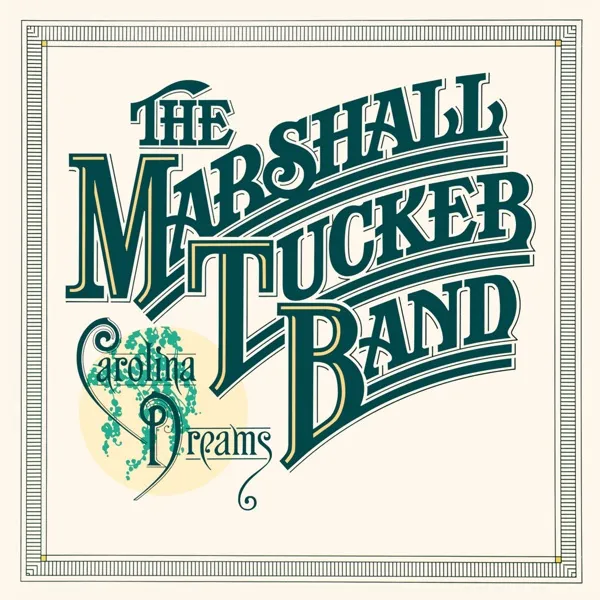 The Marshall Tucker Band released their sixth album, Carolina Dreams, in January 1977 on Capricorn.
Carolina Dreams contains four Toy Caldwell titles and three co-written titles. Charlie Daniels adds fiddle and harmony voice to “Desert Skies,” Chuck Leavell plays piano on “Life in a Song,” and Leo LaBranche arranges the horn parts on “Life in a Song” and “I Should Have Never Started Lovin’ You.”
“Fly Like an Eagle” lifts on a brisk, front-room tempo. “Heard It in a Love Song” places Gray’s pure-toned vocal over Eubanks’ flute figure and bright lead work. “I Should Have Never Started Lovin’ You” opens on horns, then stretches into Gray’s emotive lead and Caldwell’s extended guitar work. “Life in a Song” quickens around lead turns and piano support. “Desert Skies” lingers with fiddle, steel, and a horn solo in a cowboy-range setting. “Never Trust a Stranger” rolls through a steady road pattern.
A1. “Fly Like an Eagle” (3:03)
A2. “Heard It in a Love Song” (4:55)
A3. “I Should Have Never Started Lovin’ You” (7:10) – Toy Caldwell, Gray, McCorkle
A4. “Life in a Song” (3:33) – Eubanks, McCorkle
B1. “Desert Skies” (6:24)
B2. “Never Trust a Stranger” (5:28) – Tommy Caldwell
B3. “Tell It to the Devil” (6:45)
The Marshall Tucker Band recorded Carolina Dreams in 1976 at Capricorn Studios in Macon with producer Paul Hornsby and engineers Kurt Kinzel, Richard Schoff, and David Pinkston.
Carolina Dreams appeared in a sleeve with art direction by Diana Kaylan and design by John Kehe. David Alexander supplied the photography, and Bill Franks supplied the handlettering.
Capricorn lifted “Heard It in a Love Song” as a February 1977 single (b/w “Life in a Song”), which reached No. 14 on the Billboard Hot 100 and No. 5 in Canada. The single also reached No. 51 on the Billboard Hot Country Singles chart.
Carolina Dreams reached No. 23 on the Billboard 200 albums chart, No. 22 on the Billboard Top Country Albums chart, and No. 7 on the Canadian Albums Chart. The RIAA certified the album platinum.
Together Forever
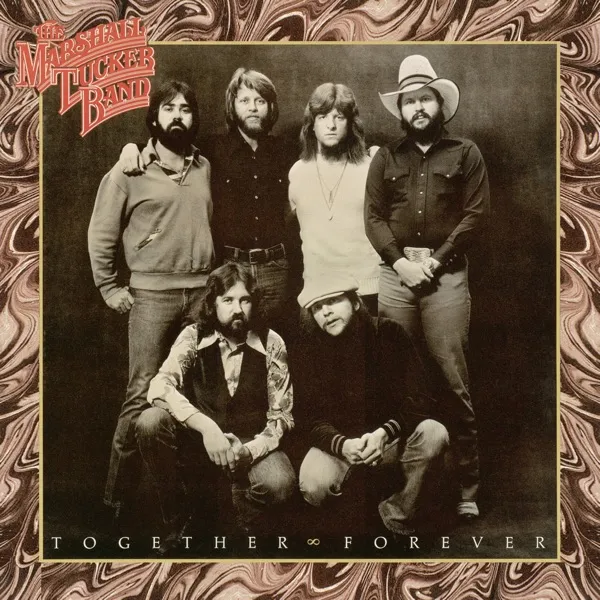 The Marshall Tucker Band released their seventh album, Together Forever, in 1978 on Capricorn.
Together Forever contains four Toy Caldwell titles and three band-member co-writes. Toy Caldwell takes lead voice on “Asking Too Much of You” and shares the lead on “Singing Rhymes.” The album marks the group’s final studio LP for Capricorn.
“I’ll Be Loving You” chugs on McCorkle’s rhythm figure, Toy Caldwell’s acoustic touches, Eubanks’ flute, Tommy Caldwell’s arpeggios, and Gray’s weathered vocal entrance. “Love Is a Mystery” settles into a midtempo vocal piece, with Eubanks’ saxophone break and Caldwell’s return lead extending the song past compact form. “Asking Too Much of You” slows around Toy Caldwell’s lead vocal.
A1. “I’ll Be Loving You” (5:31)
A2. “Love Is a Mystery” (7:11)
A3. “Singing Rhymes” (3:16)
B1. “Dream Lover” (4:38) – Eubanks, McCorkle
B2. “Everybody Needs Somebody” (4:41) – Gray, Eubanks, McCorkle
B3. “Change Is Gonna Come” (6:29) – Tommy Caldwell
B4. “Asking Too Much of You” (6:31)
The Marshall Tucker Band recorded Together Forever with producer Stewart Levine.
Capricorn lifted “Dream Lover” as a May 1978 single (b/w “Change Is Gonna Come”), which reached No. 75 on the Billboard Hot 100 and No. 80 in Canada. “I’ll Be Loving You” followed in July 1978 (b/w “Everybody Needs Somebody”).
Together Forever reached No. 22 on the Billboard 200 albums chart, No. 26 on the Billboard Top Country Albums chart, and No. 24 on the Canadian Albums Chart. The RIAA certified the album gold.
Running Like the Wind
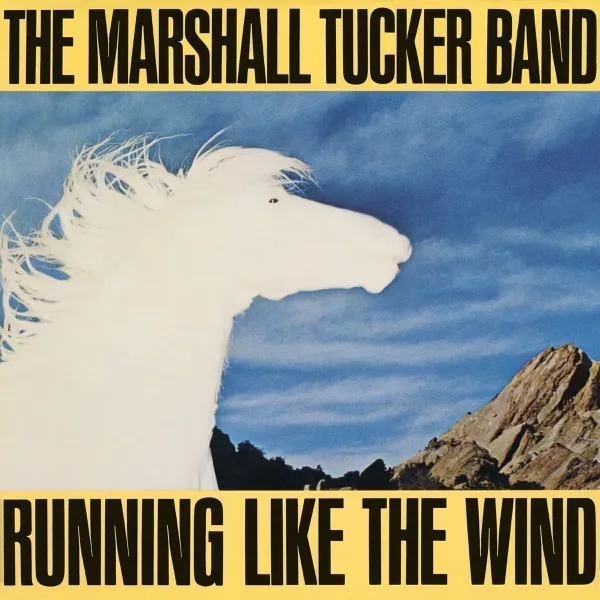 The Marshall Tucker Band released their eighth studio album, Running Like the Wind, in 1979 on Warner Bros.
Running Like the Wind places seven titles across a single LP, with Toy Caldwell titles joined by two George McCorkle pieces and one Tommy Caldwell piece. Chuck Leavell supplies keyboards, and Steve Madaio arranges a five-piece horn section.
“Running Like the Wind” stretches into a long-form road piece, with Gray’s vocal placed over the band’s polished late-period arrangement. “Last of the Singing Cowboys” leans into a cowboy theme with a jazzier slant. “Melody Ann” puts Tommy Caldwell’s sole lead vocal in a heartfelt domestic setting. “My Best Friend” crosses a plainspoken vocal with horn charts.
A1. “Running Like the Wind” (9:11)
A2. “Last of the Singing Cowboys” (4:16) – McCorkle
A3. “Answer to Love” (3:43)
A4. “Unto These Hills” (7:02)
B1. “Melody Ann” (5:27) – Tommy Caldwell
B2. “My Best Friend” (4:58) – McCorkle
B3. “Pass It On” (3:46)
The Marshall Tucker Band recorded Running Like the Wind at Bayshore Recording Studios in Coconut Grove with producer Stewart Levine and engineer David Growther. Bernie Grundman mastered the album at A&M.
Running Like the Wind appeared in a sleeve with cover and inner-spread photography by David Alexander. Steve Smith supplied the back-cover photography.
Warner Bros. lifted “Last of the Singing Cowboys” as a June 1979 single (b/w “Pass It On”), which reached No. 42 on the Billboard Hot 100 and No. 97 in Canada. “Running Like the Wind” followed in September 1979 (b/w “Answer to Love”).
Running Like the Wind reached No. 30 on the Billboard 200 albums chart and No. 99 on the Kent Music Report.
Tenth
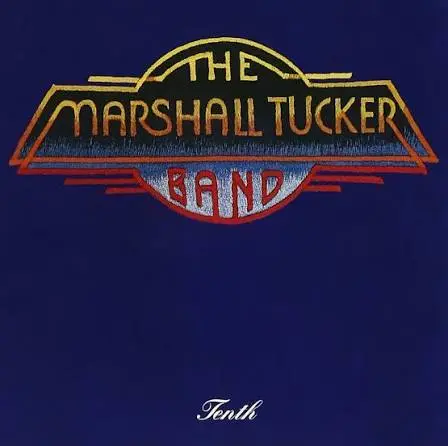 The Marshall Tucker Band released Tenth in April 1980 on Warner Bros.
Tenth contains four Toy Caldwell titles, three co-written titles, and separate pieces by Tommy Caldwell, George McCorkle, and the Eubanks–McCorkle team. The album marks Tommy Caldwell’s final studio appearance with the group.
“It Takes Time” strides through a concise opening number. “Without You” turns on Toy Caldwell’s harmonica figure. “Disillusion” adds McCorkle’s lead and Riddle’s congas to its studio-band setting. “Cattle Drive” stretches into a ranch-facing ensemble workout. “Gospel Singin’ Man” claps around McCorkle’s organ, backing-choir replies, and handclaps. “Save My Soul” places Toy Caldwell at the lead vocal. “Jimi” compresses the instrumental slot into a brief lead piece.
A1. “It Takes Time” (3:34)
A2. “Without You” (3:36) – Tommy Caldwell
A3. “See You One More Time” (3:51)
A4. “Disillusion” (3:57) – Eubanks, McCorkle
A5. “Cattle Drive” (6:19) – Toy Caldwell, Tommy Caldwell
B1. “Gospel Singin’ Man” (3:26) – McCorkle
B2. “Save My Soul” (4:36)
B3. “Sing My Blues” (3:27)
B4. “Jimi” (2:14) – Toy Caldwell, McCorkle
B5. “Foolish Dreaming” (4:52) – Gray, McCorkle
The Marshall Tucker Band recorded Tenth in 1980 at Bayshore Recording Studios in Coconut Grove with producer Stewart Levine.
Warner Bros. lifted “It Takes Time” as a March 1980 single (b/w “Jimi”), which reached No. 79 on the Billboard Hot 100 chart. “Without You” followed in May 1980 (b/w “Disillusion”).
Tenth reached No. 32 on the Billboard 200 albums chart. Between the album’s completion and release, Tommy Caldwell died on April 28, 1980, from injuries sustained at the April 22 crash of his Toyota Land Cruiser. The accident occurred less than one month after a non-performing third Caldwell brother, Tim, died at age 25 in a traffic accident.
Dedicated
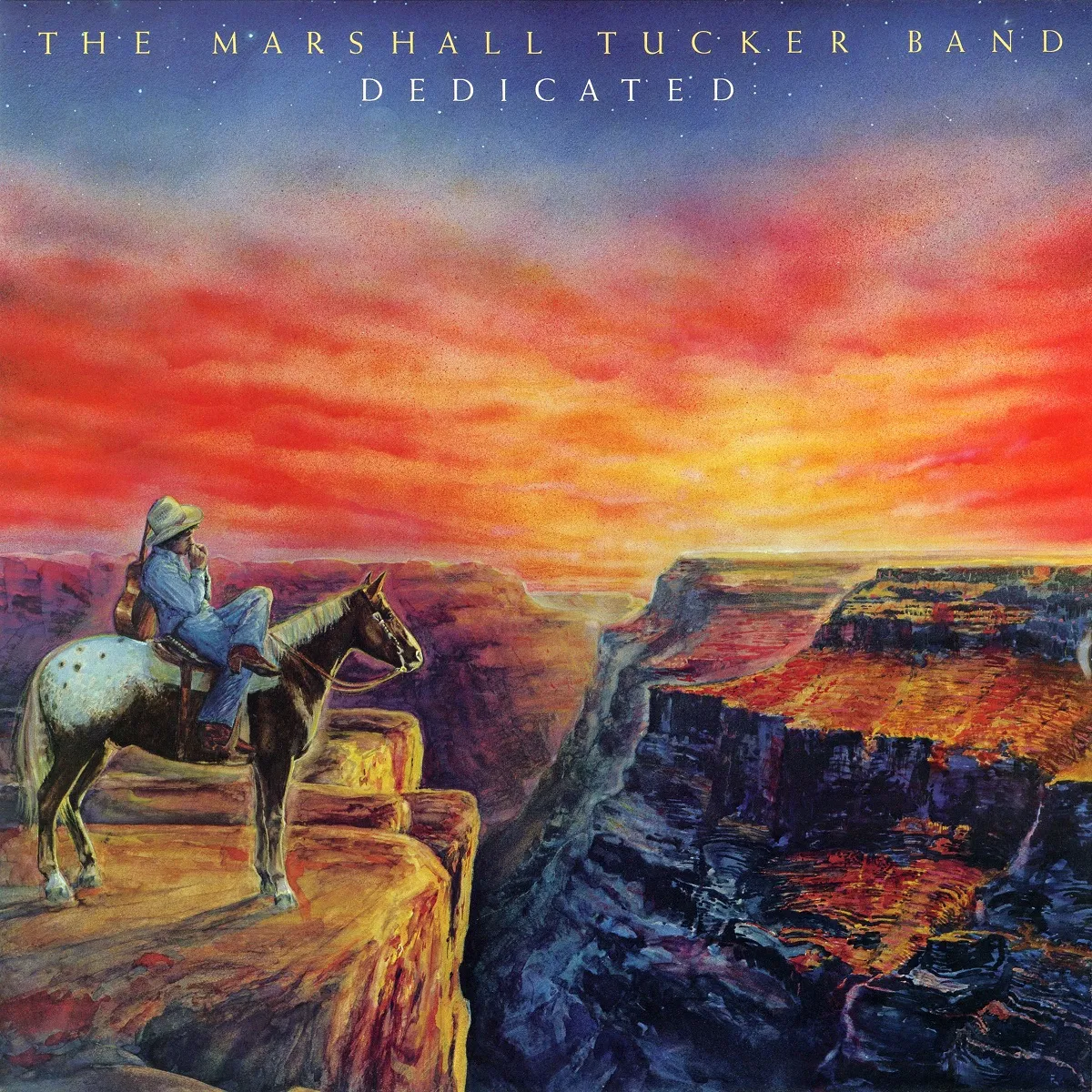 The Marshall Tucker Band released Dedicated in 1981 on Warner Bros.
Dedicated marks the first Marshall Tucker Band studio album with bassist Franklin Wilkie in the lineup. The album contains six Toy Caldwell titles, two George McCorkle titles, one Caldwell–Riddle co-write, and the Alan Tarney–Trevor Spencer song “Love Some.” Charlie Daniels adds fiddle, and Norton Buffalo adds harmonica.
“Rumors Are Raging” steadies Dedicated with Charlie Daniels’ fiddle inside the album’s polished late-period setting. “Tonight’s the Night (For Making Love)” slows the front side into a smoother vocal piece. “Love Some” follows the same restrained lane. “Ride in Peace” lowers the album to Toy Caldwell’s one-take farewell.
A1. “Rumors Are Raging” (4:10) – Toy Caldwell, Riddle
A2. “Tonight’s the Night (For Making Love)” (3:57) – McCorkle
A3. “Love Some” (2:55) – Tarney, Spencer
A4. “Silverado” (4:10) – McCorkle
A5. “Something’s Missing in My Life” (3:31)
B1. “This Time I Believe” (3:19)
B2. “Tell the Blues to Take Off the Night” (4:51)
B3. “Special Someone” (4:01)
B4. “The Time Has Come” (2:45)
B5. “Ride in Peace – Dedicated to Tim and Tommy Caldwell and to All Lost Loved Ones” (3:58)
The Marshall Tucker Band recorded Dedicated with producer Tom Dowd.
Warner Bros. lifted “This Time I Believe” as an April 1981 single (b/w “Tell the Blues to Take Off the Night”), which reached No. 106 on the US singles listing. “Love Some” followed in June 1981 (b/w “The Time Has Come”). “Silverado” also reached No. 60 on the US Rock chart.
Dedicated reached No. 53 on the Billboard 200 albums chart.
Tuckerized
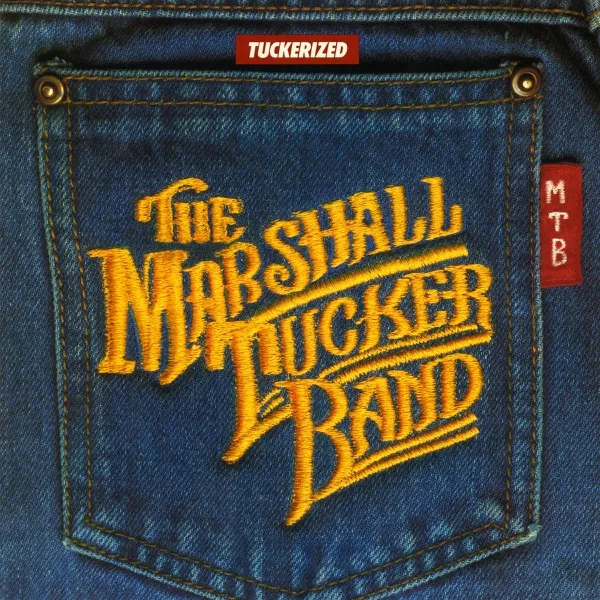 The Marshall Tucker Band released Tuckerized in 1982 on Warner Bros.
Tuckerized shifts the group toward outside song material, with band-member credits limited to “Sea-Dreams & Fairy Tales” by Toy Caldwell and “Sweet Elaine” by George McCorkle. Ronnie Godfrey adds keyboards, while Sarah Dash, Krystal Davis, and Yolanda McCullough supply backing voices.
“Mr. President” frames Randy Newman’s topical song inside the polished outside-writer setting of Tuckerized. “If You Think You’re Hurtin’ Me (Girl You’re Crazy)” carries one of the album’s firmer vocal turns. “Sweet Elaine” gives George McCorkle’s original a compact late-band placement.
A1. “Reachin’ for a Little Bit More” (3:20) – Bettis, Clark
A2. “If You Think You’re Hurtin’ Me (Girl You’re Crazy)” (4:10) – Smotherman
A3. “Even a Fool Would Let Go” (3:13) – Chater, Snow
A4. “Sea-Dreams & Fairy Tales” (3:31) – Toy Caldwell
A5. “Anyway the Wind Blows Rider” (3:59) – Bryant
B1. “Mr. President” (3:11) – Newman
B2. “Heartbroke” (3:18) – Clark
B3. “Unforgiven” (3:54) – Hardin, Lauber
B4. “Sweet Elaine” (3:11) – McCorkle
B5. “Ace High Love” (3:23) – Gaffney, Goldmark
The Marshall Tucker Band recorded Tuckerized at Creative Arts Studio in Spartanburg with producer Gary Klein. The group and Klein arranged the album.
Tuckerized appeared in a sleeve designed as a denim pocket with embroidered lettering and a red “MTB” tab.
Warner Bros. lifted “Mr. President” as a May 1982 single (b/w “Sea-Dreams & Fairy Tales”). “Reachin’ for a Little Bit More” followed in July 1982 (b/w “Sweet Elaine”).
Tuckerized reached No. 95 on the Billboard 200 albums chart.
Greetings from South Carolina
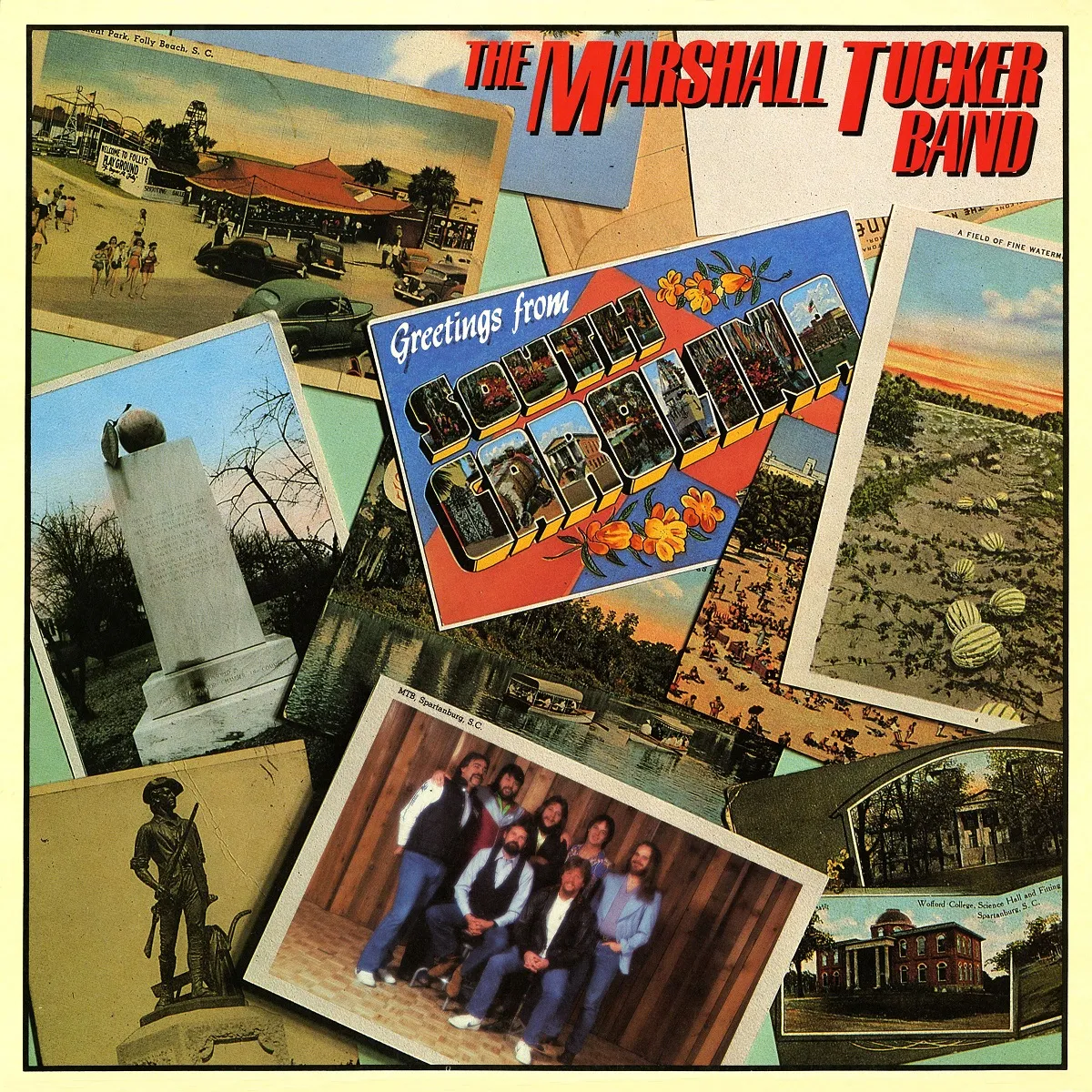 The Marshall Tucker Band released Greetings from South Carolina in 1983 on Warner Bros.
Greetings from South Carolina contains ten band-member originals. Toy Caldwell supplied three titles; Jerry Eubanks, Ronnie Godfrey, and Franklin Wilkie account for the remaining seven pieces.
“I May Be Easy But You Make It Hard” leans into the country-marked side of Greetings. “Closer to Jesus” places Franklin Wilkie’s writing inside the album’s final original-lineup setting. “Rollin’ River” settles the record into Toy Caldwell’s extended closing piece.
A1. “Carolina Sunset” (5:19) – Toy Caldwell
A2. “Good ’Ole Hurtin’ Song” (2:55) – Godfrey
A3. “If I Could Only Have My Way” (2:39) – Toy Caldwell
A4. “I May Be Easy But You Make It Hard” (2:29) – Eubanks
A5. “Closer to Jesus” (2:57) – Wilkie
A6. “Blood Red Eagle” (2:40) – Eubanks
B1. “Shot Down Where You Stand” (3:14) – Wilkie
B2. “I Feel a Drunk Comin’ On” (3:15) – Godfrey
B3. “Bags Half Packed” (3:05) – Godfrey, Wilkie
B4. “Rollin’ River” (8:24) – Toy Caldwell
The Marshall Tucker Band recorded and mixed Greetings from South Carolina at Creative Arts Studio in Spartanburg. The group produced the album with engineer Billy Sherrill and assistant engineer Randy Merryman. Masterfonics in Nashville handled the mastering.
Warner Bros. lifted “I May Be Easy But You Make It Hard” as a February 1984 single (b/w “Shot Down Where You Stand”).
Greetings from South Carolina reached No. 202 on the Billboard 200 albums chart.
Just Us
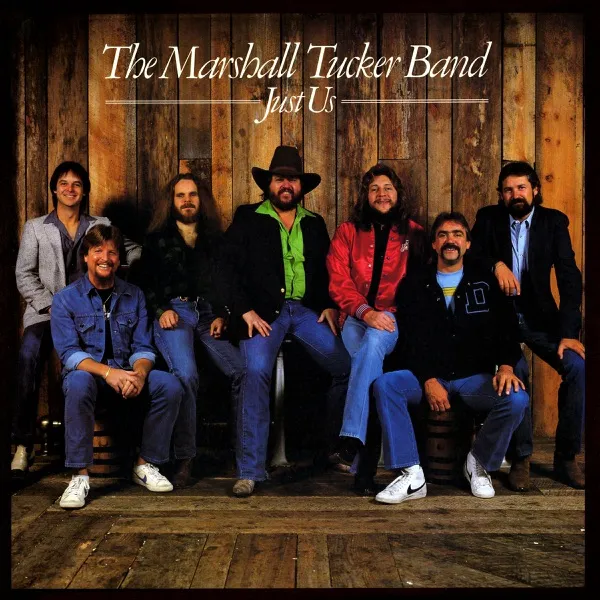 The Marshall Tucker Band released Just Us in 1983 on Warner Bros.
Just Us marks Ronnie Godfrey’s first album as a full band member. Godfrey plays pianos and adds backing voice beside the returning Wilkie lineup, with strings by the A. Strings and string arrangements by David Briggs.
“Testify” digs into the deeper blues turn on Just Us. “Wait for You” follows that lower-lit path through Ronnie Godfrey’s songbook.
A1. “8:05” (4:58) – McCorkle, Wilkie
A2. “Stay a Step Ahead” (3:32) – Toy Caldwell
A3. “Time Don’t Pass by Here” (3:37) – Godfrey
A4. “Testify” (4:26) – Toy Caldwell
B1. “Long Island Lady” (4:49) – Eubanks, Gray
B2. “A Place I’ve Never Been” (2:59) – Toy Caldwell
B3. “Wait for You” (3:40) – Godfrey, Gray
B4. “When Love Begins to Fade” (3:24) – Godfrey
B5. “Paradise” (3:56) – McCorkle, Gray
The Marshall Tucker Band recorded Just Us at Creative Arts Studio in Spartanburg. The group produced the album with engineer Billy Sherrill and assistant engineer Randy Merryman. Jim Loydd mastered the album at Masterfonics in Nashville.
Roger Bissel and Wayne Jackson add trombone and trumpet to “Long Island Lady.” Jimmy Rumey adds fiddle.
Warner Bros. lifted “A Place I’ve Never Been” as a May 1983 single (b/w “8:05”), which reached No. 62 on the Billboard Hot Country Singles chart.
Just Us reached No. 204 on the Billboard 200 albums chart.
Discography:
- The Marshall Tucker Band (1973)
- A New Life (1974)
- Where We All Belong (1974)
- Searchin’ for a Rainbow (1975)
- Long Hard Ride (1976)
- Carolina Dreams (1977)
- Together Forever (1978)
- Running Like the Wind (1979)
- Tenth (1980)
- Dedicated (1981)
- Tuckerized (1982)
- Greetings From South Carolina (1983)
- Just Us (1983)
- Still Holdin’ On (1988)
- Southern Spirit (1990)
- Still Smokin’ (1992)
Sources:
- Discogs: The Marshall Tucker Band
- RYM: The Marshall Tucker Band
- 45cat: The Marshall Tucker Band
- MusicBrainz: The Marshall Tucker Band
Artist/Album Pages:
Ray Bryant (Dec. 24, 1931 — June 2, 2011) is an American post-bop/jazz-funk pianist from Philadel...
Atmospheres was an American jazz-rock supergroup that released two albums on Capitol in 1974. Me...
The Lotus Eaters were an English sophisti-pop combo from Liverpool that released five singles and th...
The Pan Afrikan Peoples Arkestra was an American spiritual/free-jazz big band led by pianist/cond...
Enchantment was an American soul group from Detroit that released six albums between 1976 and 1983...
Gowan is a Canadian singer, songwriter, and keyboardist who debuted with a 1982 self-titled album ...
Sky was an American soul-funk band that released a 1979 self-titled album on EMI. They reunited si...
Trevor Rabin (born Jan. 13, 1954) is a South African-born/U.S.-naturalized guitarist, keyboardist,...
New York Mary was an instrumental jazz-rock trio that was active in the Northeast U.S. during the mi...
Sassafras was a Welsh hard-rock/boogie band from Caerdydd that made the 1973 Polydor album Expect...
Al Kooper (born Feb. 5, 1944) is an American musician, producer, and composer from Brooklyn who emer...
Supply Demand & Curve were an Irish progressive/jazz-rock group active in Dublin from 1970 thr...