

Dillinger — aka Lester Bullocks (born June 25, 1953) — is a Jamaican reggae artist and deejay who issued a string of singles on assorted Kingston small-press labels in 1973 and 1974, followed by the album Ready Natty Dreadie on Studio One in 1975. A pair of albums appeared on Island Records in 1976, followed by a six-album stint on Jamaica Sound between 1978 and 1981.
Background
Born Lester Bullock in Kingston in 1953, Dillinger came of age within the sound system circuit, first hanging around Dennis Alcapone’s El Paso setup before taking the mic himself on El Paso and Prince Jackie’s sets in 1971. Early performances leaned on the model of Alcapone, U-Roy, and Big Youth, and his first studio break came that year with Lee “Scratch” Perry, who rechristened him “Dillinger” after the Depression-era gangster. Perry issued his debut side, “Dub Organizer,” the first in a string of one-off releases that charted his apprenticeship as a deejay.
His earliest credited single appeared in 1971 as Young Al Capone, “Girl Called Clover” backed with “Girl Called Clover Version” on High School International. After a gap of nearly two years, he re-emerged in 1973 under several spellings of his name. That spring he cut “Donkey Bine” with John Holt’s “I’ve Been Admiring You” on the flip for Rollo, a pairing that circulated multiple times across different imprints that year. With Perry he issued “Emsome City Skank” and “Boloman Skank” on Upsetter, and an uncredited promo, “Doctor Skank” with “Version” on the reverse.
By mid-1973 Dillinger’s name began turning up on a variety of Kingston labels. He voiced “Sanatone Skank” (with Tony J. All Stars’ “Soul Revellers Rock”), “Platt Skank” (paired with Ken Boothe’s “Not for Sale”), and a High School International release of “God Is Standing By” backed with “Stick the Beef.” On Terminal he cut “Big Score” with “Rasta Fire.” As Youth Dellinger he linked with Augustus Pablo on “Down Town Rock” and Pablo’s “Havendale Rock.” Around the same time he joined Joe Gibbs, issuing “Dreadlock Rock” (with Gibbs’ “Fort Augustus Rock”). Justice League handled two more pairings: David Isaacs’ “Stranger on the Shore” backed with Dillinger’s “John Devour”, and Neville Grant’s “Sick and Tired” backed with “Wam-Pam-Pa-Do.”
Promo-only titles multiplied in 1973, including “Festival Rock” with “Cocky Bully,” a reprise of “Donkey Bine” with Holt’s cut, and Bobby Floyd’s “Sound Doctor” backed again with “Wam-Pam-Pa-Do.” On Iron Side he paired “Chuky Skank” with the Jiving Juniors’ “I’ll Be There.” Youth Dellinger’s “Down Town Rock” with Pablo resurfaced on the Lion label, while High School International carried his “Fat Beef Skank” with I-Roy’s “Tip from the Prince.” He returned to Upsetter with “Bring the Kuchy Come” backed by “Lovers Version,” and then with Chenley Duffus on “Black Girl in My Bed” coupled with Dillinger’s “Headquarters.”
The following year kept him in motion. On Rockers he recorded “Brace a Boy” with Clivey, the flip cut by Augustus Pablo. For Leo he issued “Repatriation Rock” backed with “Black Starliner,” a pairing soon reversed and re-released on Soul Beat. He returned to Rockers again with “Chuckie Boo” paired with the Heptones’ “Love Won’t Come Easy.” Rounding out 1974 was the Demon release “Pumps and Pride” backed with Randy’s All Star’s “Dub for Days.”
The real breakthrough arrived when Yabby U produced “Freshly” in 1974, his first true hit and a step beyond the trial-and-error of the earlier years. By 1975 Dillinger was voicing regularly for top Kingston producers—Augustus Pablo on “Brace a Boy” sessions, Joseph Hoo Kim with “CB 200,” Winston Holness for “Flat Foot Hustling,” and Coxsone Dodd with “Killer Man Jaro.” These singles marked the transition from scattered, small-label experiments to a sustained run that would culminate in his first albums.
Ready Natty Dreadie
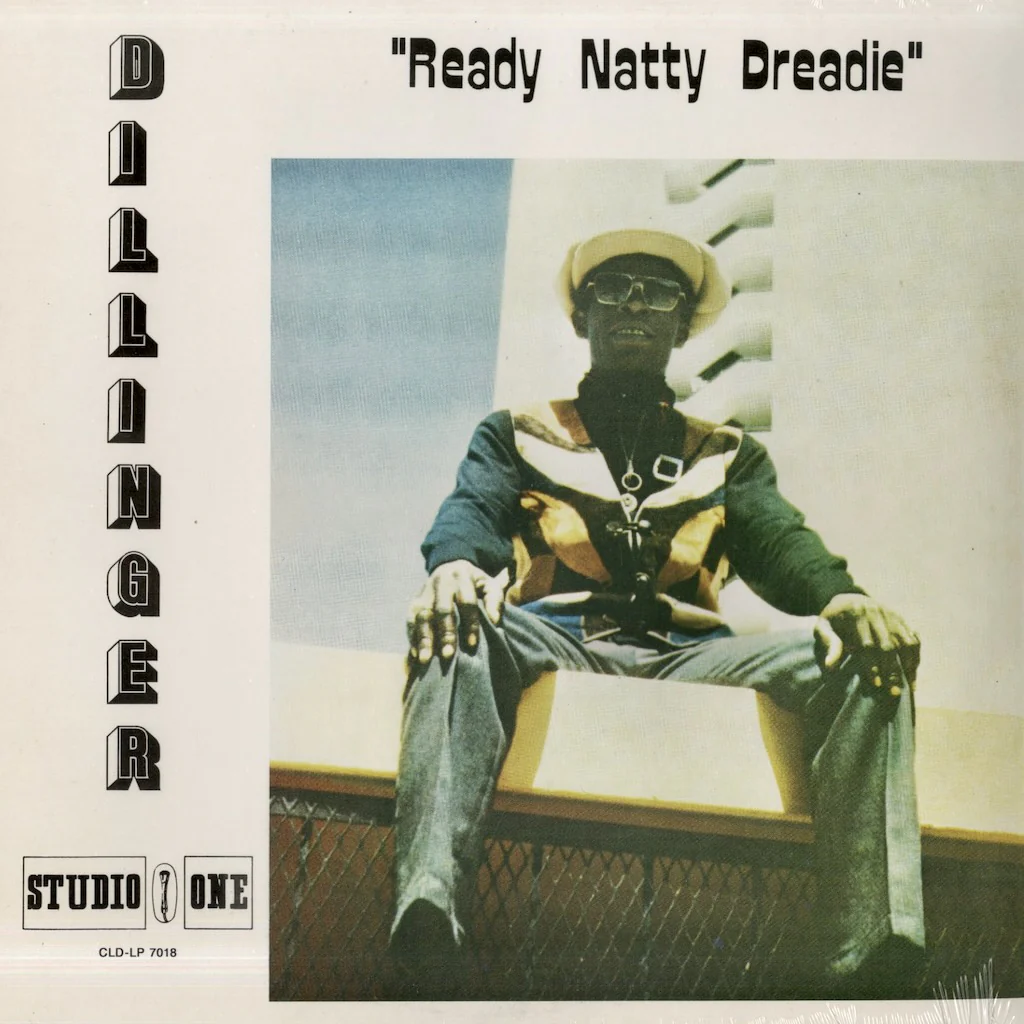 Dillinger released his debut album, Ready Natty Dreadie, in 1975 on Studio One (Jamaica). In 1978, United Artists issued the album in the US as Babylon Fever.
The record balances celebratory toasting with rough-edged Studio One riddims. Dillinger’s exuberant delivery threads through clipped guitar chords and rhythm tracks that verge into dub, creating a loose but unified atmosphere across both sides of the LP.
Most of the material stems from Dillinger himself, with Coxsone Dodd guiding the set. The lone outside contribution comes with “Killer Man Jaro’,” attributed to Clement Dodd.
The ten tracks divide between buoyant chants and harder deejay workouts. “Babylon Fever” and the title piece push forward with brash, rolling momentum, while “Dub Them Rasta” and “Natty Kung Fu” lean toward heavier riddim structures. “Fountain on the Mountain” and “Leave the Area” maintain a lighter, more loping pace. The closing “Killer Man Jaro’” strikes the fiercest tone, rounding out the set with sharp-edged declamation.
A1. “Ten To One”
A2. “Babylon Bridge”
A3. “Dub Them Rasta”
A4. “Babylon Fever”
A5. “Natty Kung Fu”
B1. “Fountain On The Mountain”
B2. “Leave The Area”
B3. “Set Jah Jah Children Free”
B4. “Jamaican Collie”
B5. “Killer Man Jaro’”
Sessions occurred at Jamaica Recording Studio in Kingston with producer Clement Dodd and engineers from the Studio One roster. The album was published through Jamrec Music and pressed by Jamaica Recording Mfg. Co. Ltd.
The back cover includes a short biography listing Dillinger’s hobbies as swimming, table tennis, and football, and citing Bob Marley among his favorite artists.
CB 200
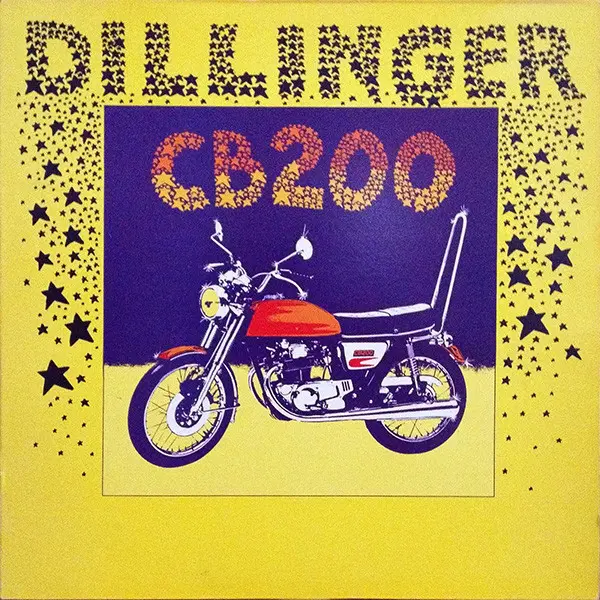 Dillinger released his second album, CB 200, in 1976 on Island Records (ILPS 9385) in the UK, Netherlands, and Germany. The album appeared in the US on Island’s Mango division.
The record captures Dillinger’s freewheeling toasting style over Revolutionaries-driven riddims tracked at Channel One. Its light, conversational atmosphere masks tightly constructed rhythms, with the set anchored by the international hit “Cokane in My Brain.”
Dillinger wrote the entire album. “Cokane in My Brain” draws on instrumentals from People’s Choice’s “Do It Any Way You Wanna” and Enoch Light’s “Hijack,” integrated into the backing track by producer Joseph “Jo Jo” Hoo Kim.
The strongest cuts split between breezy chants and heavier DJ workouts. “Cokane in My Brain” stands apart as a dub/disco hybrid with an easy lilt. “Natty Kick Like Lightning” and “The General” strike harder with terse, driving rhythms, while “Plantation Heights” and “Buckingham Palace” ease into a slower, swaying pulse. Short pieces like “Crankface” keep the flow brisk.
A1. “C.B. 200” (2:34)
A2. “No Chuck It” (2:52)
A3. “Cokane in My Brain” (2:44)
A4. “The General” (2:58)
A5. “Power Bank” (3:02)
B1. “Plantation Heights” (2:52)
B2. “Race Day” (3:35)
B3. “Natty Kick Like Lightning” (2:27)
B4. “Buckingham Palace” (4:11)
B5. “Crankface” (2:37)
Sessions occurred at Channel One Studio, 29 Maxfield Avenue in Kingston, with producer Jo Jo Hoo Kim and engineers Ernest Hoo Kim and Ossie Hibbert. The Revolutionaries provided instrumentation, including Family Man and Ranchie on bass, Benbow and Sly on drums, Ossie on keyboards, Chinna on rhythm guitar, and Bobby Ellis, Tommy McCook, and Vin Gordon on horns. Trinity supplied backing vocals.
Title graphics were credited to Alias Ripped Baggies.
The album produced several singles: “C.B. 200” (1975), “Plantation Height” (1976), “Cokane in My Brain” (1976), and “Ragnampaiza” (1977).
“Cokane in My Brain” reached No. 1 in the Netherlands, No. 2 in Belgium, and No. 35 in Germany, pushing the album to No. 7 in the Dutch charts.
Bionic Dread
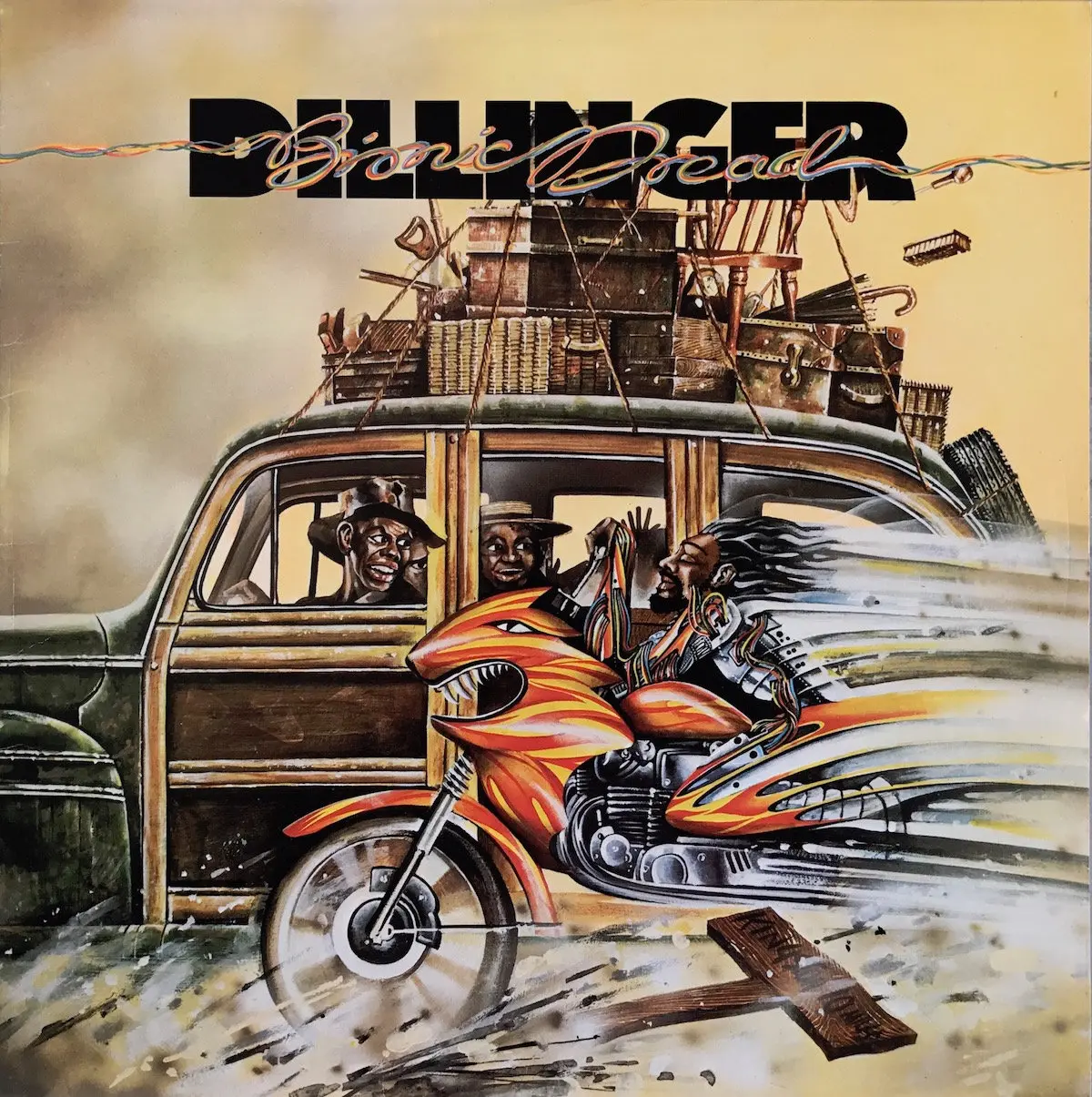 Dillinger released his third album, Bionic Dread, in 1976 on Island/Mango (ILPS 9455).
The set builds on the loose, playful style of CB 200 with a sharper focus on rhythm foundations. Its riddims carry more weight and structure, giving Dillinger’s toasts a tight frame while maintaining his relaxed, improvisatory delivery.
Dillinger wrote and performed all the material. “King of the Road” adapts Roger Miller’s country hit into a reggae context, while “Ital Fighting” rides the “Freedom Blues” riddim previously heard in tracks like “MPLA” and “Dyon Anaswa.”
The album moves between buoyant chants and heavier DJ workouts. “Natty B.Sc” became its standout piece, riding a strong rhythm with Dillinger in full command. “Ragnampiza” and “Eastman Skank” show his humor and nimble timing, while “Selassie I” and “Forward Commandments” center Rastafarian themes over lean backdrops. “Invisible Dread” keeps the pace tight with clipped phrasing and quick rhythmic turns.
A1. “Bionic Dread” (3:00)
A2. “King of the Road” (3:20)
A3. “Invisible Dread” (2:25)
A4. “Forward Commandments” (3:27)
A5. “Ragnampiza” (2:55)
B1. “Eastman Skank” (3:15)
B2. “Ital Fighting” (2:40)
B3. “Combination Two” (3:17)
B4. “Selassie I” (2:25)
B5. “Natty B.Sc” (3:25)
Sessions occurred at Channel One in Kingston with producer Jo Jo Hookim. Ernest Hookim, Barnabas, and Mac engineered the recordings. The backing players included Ranchie on bass, Sly on drums, Ansel Collins, Ossie, and Tarzan on keyboards, Duggie Bryan on guitars, with percussion by Barnabas and Sticky.
Bionic Dread features cover illustration by Tony Wright.
Dillinger verses Trinity – Clash
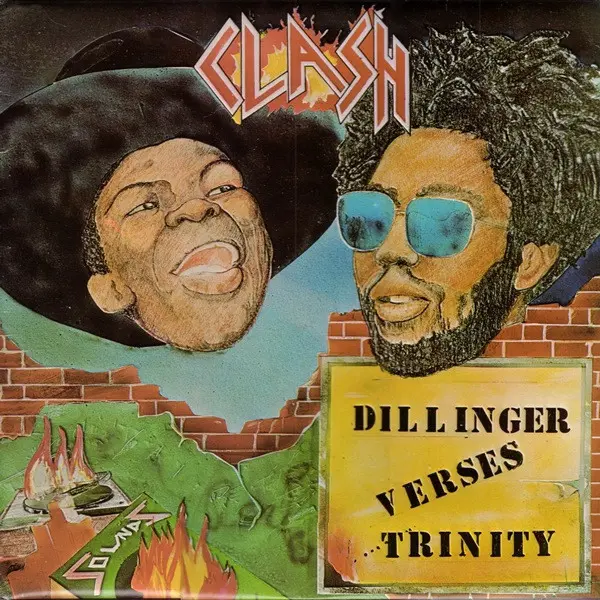 In 1977, Burning Sounds Ltd. issued Clash, a collaborative album between Dillinger and Trinity. The French Celluloid label issued this as a Dillinger title, Jamaican Dollars.
The set plays as a split showcase rather than a battle, with Dillinger and Trinity taking separate stretches and joining forces on key tracks. The sound leans on extended riddims with dubbed textures and UK studio flourishes, reflecting Clement “Clem” Bushay’s production base in London.
All titles were written by Dillinger and Trinity, except “Spike Heel Shoes” and “Jamaican Dollars,” credited to Les. Bullocks and W. Brammer.
The album’s tightest exchanges come when the two toasters overlap, most notably on “Rizla Skank,” which opens with fluid interplay. Trinity steers “Natty Dread Ah Carry the Swing” with rhythmic steadiness, while Dillinger leads “Jamaican Dollars” with more fragmented phrasing. Songs like “Cricket Lovely Cricket” and “Starsky and Hutch” push into eccentric territory, mixing topical or UK-centric references with surreal asides. Bushay’s production keeps the riddims loose, at times messy, but it gives the vocalists a broad field to move through.
A1. “Rizla Skank”
A2. “Spike Heel Shoes”
A3. “Natty Dread Ah Carry the Swing”
A4. “Natty Dread On the Ball”
A5. “Jamaican Dollars”
A6. “Shelly With the Electric Belly”
B1. “Step It Brother Clem”
B2. “Stumbling Block”
B3. “Cricket Lovely Cricket”
B4. “Natty Passing Through a Curfew”
B5. “Natty Dread Is Not the Prodigal Son”
B6. “Starsky and Hutch”
Sessions occurred at Channel One in Kingston and Chalk Farm Studios in London with producer Clem Bushay. Mixing took place at Gooseberry Sound Studios, London. The musicians included Bunny and Lloyd Parks on bass, Jah Bunny, Michael-J, and Sly on drums, Ranchie, C. Bushay, Ras-Joe, and T. Starr on guitar, Ansel Collins, Ossie, Tarzan, and Desmond on keyboards, Owen Gray and Ras Binns on piano, Rico on trombone, Tommy McCook and Hughie on saxophone, with K. Elliott and S. Binns on synthesizer.
Discography:
- Ready Natty Dreadie (1975)
- Bionic Dread (1976)
- CB 200 (1976)
- Answer My Questions (1977)
- Clash (1977 • Dillinger verses Trinity)
- Talkin’ Blues (1977)
- Top Ranking Dillinger (1977)
- Cocaine in My Brain (1978)
- Cornbread (1978)
- Funky Punk Rock to the Music (1979)
- Live at the Music Machine (1979)
- Marijuana in My Brain (1979)
- Cup of Tea (1980)
- Badder than Them (1981)
- Live at London (1981 • Dillinger / Clint Eastwood)
- Join the Queue (1982)
- Blackboard Jungle (1984)
- King Pharaoh (1984)
- Tribal War (1986)
Sources:
Artist/Album Pages:
Bob Marley (Feb. 6, 1945 — May 11, 1981) was a Jamaican vocalist, guitarist, and songwriter known ...
Jah Lion — aka Jah Lloyd, born Patrick Lloyd Francis (August 29, 1947 – June 12, 1999) — was a Jam...
Marcia Griffiths (born November 23, 1949) is a Jamaican reggae singer who scored Sixties Studio On...
Cedric Im Brooks (April 27, 1943 – May 3, 2013) was a Jamaican saxophonist, clarinetist, flutist, ...
Burning Spear — aka Winston Rodney (born March 1, 1945) — is a Jamaican dub/roots-reggae artist wh...
Dennis Brown (Feb. 1, 1957 — July 1, 1999) was a Jamaican reggae singer and songwriter who emerged...
Sugar Minott — aka Lincoln Barrington Minott (May 25, 1956 – July 10, 2010) — was a Jamaican regga...
Third World are a Jamaican roots-reggae band, established abroad with the 1976–78 Island albums Th...
Prince Douglas — aka Douglas Levy — is a Jamaican reggae sound engineer and producer who establish...
Prince Jazzbo — aka Linval Roy Carter (September 3, 1951 – September 11, 2013) — was a Jamaican re...
Junior Delahaye is a Jamaican roots-reggae artist who released the 1982 album Reggae on Wackies. ...
Steel Pulse are an English roots-reggae band from Birmingham that released the 1978–80 Island albu...