

Thelonious Monk (October 10, 1917 – February 17, 1982) was an American jazz pianist and composer known for his improvisational style. His compositions “‘Round Midnight” and “Straight, No Chaser,” became jazz standards. Monk’s musical approach was a blend of percussive attack, dissonant chords, and sudden silences. His improvisations featured flat ninths, whole tone runs, and angular melodic twists. He is the second-most recorded jazz composer after Duke Ellington.
Monk launched his recording career in 1947 on Blue Note Records. In 1952, he signed with Prestige Records and recorded multiple solo and collaborative albums, including titles with Sonny Rollins, Art Blakey, and Max Roach. He also participated in a 1954 Christmas Eve session with Miles Davis.
In 1955, Monk signed with Riverside Records. After two albums of jazz standard, he scored an artistic breakthrough with his 1957 release, Brilliant Corners. He performed multiple quartet dates with a young John Coltrane, later documented on a Riverside live LP.
Monk signed with Columbia Records for his 1963 album Monk’s Dream, a best-seller followed by Criss-Cross and Underground. Throughout this period, Monk performed with his longest-serving band, a quartet featuring tenor saxophonist Charlie Rouse.
Early Life
He was born Thelonious Sphere Monk on October 17, 1917, in Rocky Mount, North Carolina. In 1922, his family moved to the San Juan Hill neighborhood in Manhattan, New York City. At age nine, Monk switched from trumpet to piano, taking lessons from a neighbor who taught him in the stride style of pianists like Fats Waller and James P. Johnson. His mother also taught him hymns, and he accompanied her singing in church. He later studied classical piano with Simon Wolf for two years, learning the works of composers such as Bach and Mozart, but his focus on jazz ended the lessons.
Early Career and Minton’s Playhouse
At 16, Monk assembled his first band, performing at local restaurants and schools. By 17, he toured with an evangelist as a church organist before finding work as a professional jazz pianist.
In the early 1940s, he became the house pianist at Minton’s Playhouse, a Manhattan nightclub. Monk’s musical style, rooted in Harlem stride, evolved at Minton’s as he engaged in after-hours cutting contests with leading jazz soloists. His work at the club helped shape the nascent bebop movement alongside musicians like Dizzy Gillespie, Charlie Christian, and Charlie Parker.
In 1941, Jerry Newman recorded Monk’s performances at the club, and the recordings reveal a “hard-swinging” style with melodic runs in the style of Art Tatum. In 1944, Monk made his first commercial recordings with the Coleman Hawkins Quartet. Hawkins was one of the first established jazz musicians to champion Monk’s talent.
Blue Note and Prestige Records
In 1947, Monk met Lorraine Gordon and Alfred Lion, co-founder of Blue Note Records. Gordon became a fierce advocate for his genius to the jazz world, but his recordings sold poorly. Lion, however, saw sales as secondary and recorded all of Monk’s work. Monk made his first recordings as a leader for Blue Note between 1947 and 1952, showcasing his abilities as a composer.
In 1951, a New York City police incident resulted in the confiscation of Monk’s Cabaret Card, which legally prevented him from playing in venues that served alcohol. This forced him to perform in little-advertised, one-night engagements in Black-owned clubs in Brooklyn and other outer boroughs.
Despite the restrictions, Monk’s career continued to develop. He began a two-year contract with Prestige Records in 1952. Under this contract, he recorded a series of albums and collaborated with saxophonist Sonny Rollins and drummers Art Blakey and Max Roach. In 1954, he participated in a session that produced recordings for Miles Davis’s albums Bags’ Groove and Miles Davis and the Modern Jazz Giants. That same year, Monk visited Paris, where he performed and recorded a solo piano session for French radio.
Thelonious
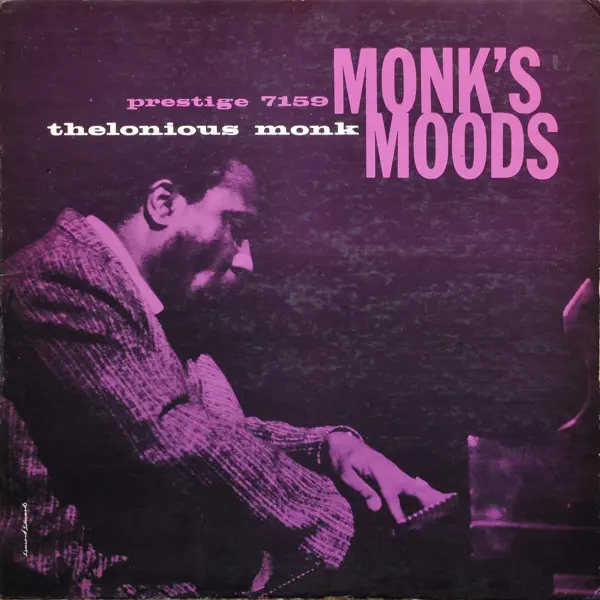 In 1953, Prestige Records issued Thelonious, the debut 10″ by the Thelonious Monk Trio. The contents of the original eight-song release (24:19 duration) reappeared with two additional tracks on the 1956 Prestige release Thelonious Monk Trio, reissued in 1959 as Monk’s Moods.
The album presents Monk in intimate settings with a rhythm section that shifts across sessions: bassist Gary Mapp anchors most tracks, Percy Heath appears on one, and drummers Art Blakey and Max Roach alternate. It captures the pianist’s early explorations of angular phrasing, dissonant chords, and sudden silences while documenting the first recorded versions of his jazz standards “Blue Monk” and “Bemsha Swing.”
Monk composed seven of the ten tracks, with covers including Gus Arnheim, Jules LeMare, and Harry Tobias (“Sweet and Lovely”); Harry Link, Holt Marvell, and Jack Strachey (“These Foolish Things”); and Julius Brammer, Irving Caesar, and Leonello Casucci (“Just a Gigolo”). “Bemsha Swing” was co-written with Denzil Best.
The material ranges from brisk, rhythmically complex originals like “Little Rootie Tootie,” “Bye-Ya,” and “Trinkle, Tinkle” to contemplative solo piano pieces such as “Reflections,” alongside renditions of standards that allow space for angular improvisation, including “Sweet and Lovely” and “These Foolish Things.” “Blue Monk” and “Bemsha Swing” display the early formulation of Monk’s signature harmonic twists and sharp rhythmic accents.
A1. “Little Rootie Tootie” (3:06) – Monk drives the piece with hammered repetitions and sudden chordal blasts, shaping the tune into a percussive statement that stretches stride into abstraction.
A2. “Sweet and Lovely” (3:33) – He recasts the standard through halting phrases and off-center harmonies, pulling the familiar contour into unexpected directions.
A3. “Bye-Ya” (2:46) – Built on Latin undercurrents, the tune pivots on sharp turns of rhythm, Monk punctuating the line with angular chords against the shaker’s steady pulse.
A4. “Monk’s Dream” (3:07) – The theme unfolds in clipped fragments, each phrase tugging against the rhythm section before settling into terse cadences.
A5. “Trinkle, Tinkle” (2:49) – Dense and fast-paced, Monk’s lines dart across the keyboard, the piano work folding in on itself with relentless intricacy.
A6. “These Foolish Things” (2:46) – Monk pares the ballad down to sparse figures and abrupt pauses, stripping sentiment into stark, deliberate gestures.
B1. “Blue Monk” (7:39) – This first recording of the blues standard extends across chorus after chorus, Monk balancing pared-down statements with subtle shifts in pacing.
B2. “Just a Gigolo” (3:00) – In solo form, Monk stretches the song with dry chordal commentary, recasting its elegance through pauses and clipped rhythms.
B3. “Bemsha Swing” (3:10) – Co-written with Denzil Best, the tune balances Caribbean inflections with Monk’s fractured phrasing, the ensemble pressing forward in steady propulsion.
B4. “Reflections” (2:48) – A quiet ballad rendered in sparse lines, Monk lingers on the theme with pointed intervals and silences that leave the edges exposed.
Sessions occurred at Prestige’s New York studio with producer Bob Weinstock. Tracks 1–4 and 5–6, 9–10 were recorded in 1952; tracks 7–8 were recorded in 1954.
Personnel includes Thelonious Monk on piano, Gary Mapp on bass (tracks 1–6, 9–10), Percy Heath on bass (track 7), Art Blakey on drums (tracks 1–4, 7), Max Roach on drums (tracks 5–6, 9–10), and Garvin Masseaux on shaker for “Bye-Ya.”
Brilliant Corners
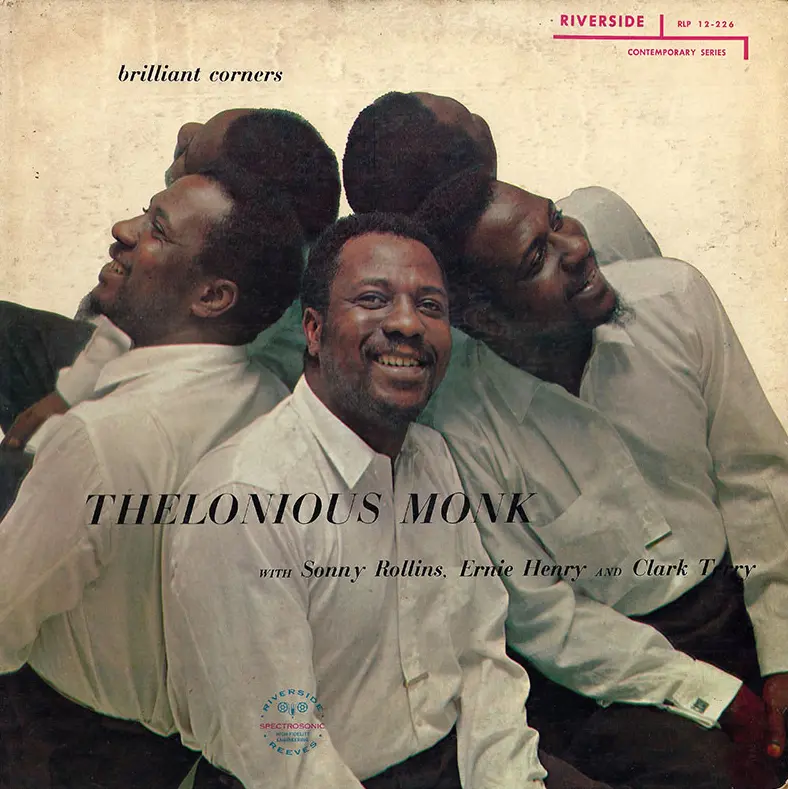 Thelonious Monk released his fourth studio album, Brilliant Corners, on April 4, 1957, on Riverside.
Brilliant Corners presents Monk’s compositions in intricate ensemble settings, featuring his angular piano lines alongside tenor saxophonist Sonny Rollins and drummer Max Roach. The sessions included multiple personnel shifts, with Ernie Henry, Oscar Pettiford, Clark Terry, and Paul Chambers appearing across tracks, and Monk playing celesta on one piece. The album showcases his early mastery of complex rhythms, unconventional forms, and harmonic daring.
Monk wrote four of the five tracks, with a cover of Harry Barris and Gordon Clifford’s “I Surrender, Dear” providing the only outside composition. “Bemsha Swing” was co-written with Denzil Best.
The opening title track “Brilliant Corners” navigates rapidly changing tempos and irregular phrase lengths, forming a ternary structure with a double-time theme. “Ba-Lue Bolivar Ba-Lues-Are” moves through laid-back, off-kilter blues forms with angular solos. Side two opens with “Pannonica,” featuring Monk on celesta, producing bell-like, harmonically idiosyncratic textures. “I Surrender, Dear” offers a stride-informed interpretation of the standard, contrasting the more adventurous originals. “Bemsha Swing” closes the album with Afro-Caribbean rhythmic accents, Max Roach on timpani, and Monk’s coloristic piano soloing.
A1. “Brilliant Corners” (7:42) – The title piece fractures traditional form with its shifting tempos and jagged accents. Monk sets the frame, then leaves Rollins and Henry to navigate a demanding structure built from sharp contrasts.
A2. “Ba-Lue Bolivar Ba-Lues-Are” (13:24) – Named after the Bolivar Hotel, the tune sprawls in a loose, blues-inflected design. Monk alternates pointed chords with sudden pauses, leaving ample space for elongated horn statements.
B1. “Pannonica” (8:50) – Dedicated to his patron, Monk shifts to celesta, creating bell-like tones against the ensemble’s subdued phrasing. The unusual timbre lends the ballad an airy resonance, stretching the harmonic language into unfamiliar terrain.
B2. “I Surrender, Dear” (5:25) – Monk turns to stride technique on this standard, compressing its romantic contour into clipped, angular lines. The solo reading lays bare his ability to remake tradition with pointed economy.
B3. “Bemsha Swing” (7:42) – Co-written with Denzil Best, the closer carries an Afro-Caribbean undercurrent, heightened by Roach’s timpani. Monk punctuates the brass and reeds with terse figures, shaping the piece through bursts of unexpected rhythm.
Sessions occurred at Riverside’s New York studio on October 9, October 15, and December 7, 1956, with Orrin Keepnews producing and Jack Higgins engineering.
Personnel includes Thelonious Monk on piano (celesta on “Pannonica”), Sonny Rollins on tenor saxophone (all but “I Surrender, Dear”), Ernie Henry on alto saxophone (tracks 1–3), Clark Terry on trumpet (track 5), Oscar Pettiford on bass (tracks 1–3), Paul Chambers on bass (track 5), and Max Roach on drums (all but “I Surrender, Dear”; timpani on track 5).
Monk’s Music
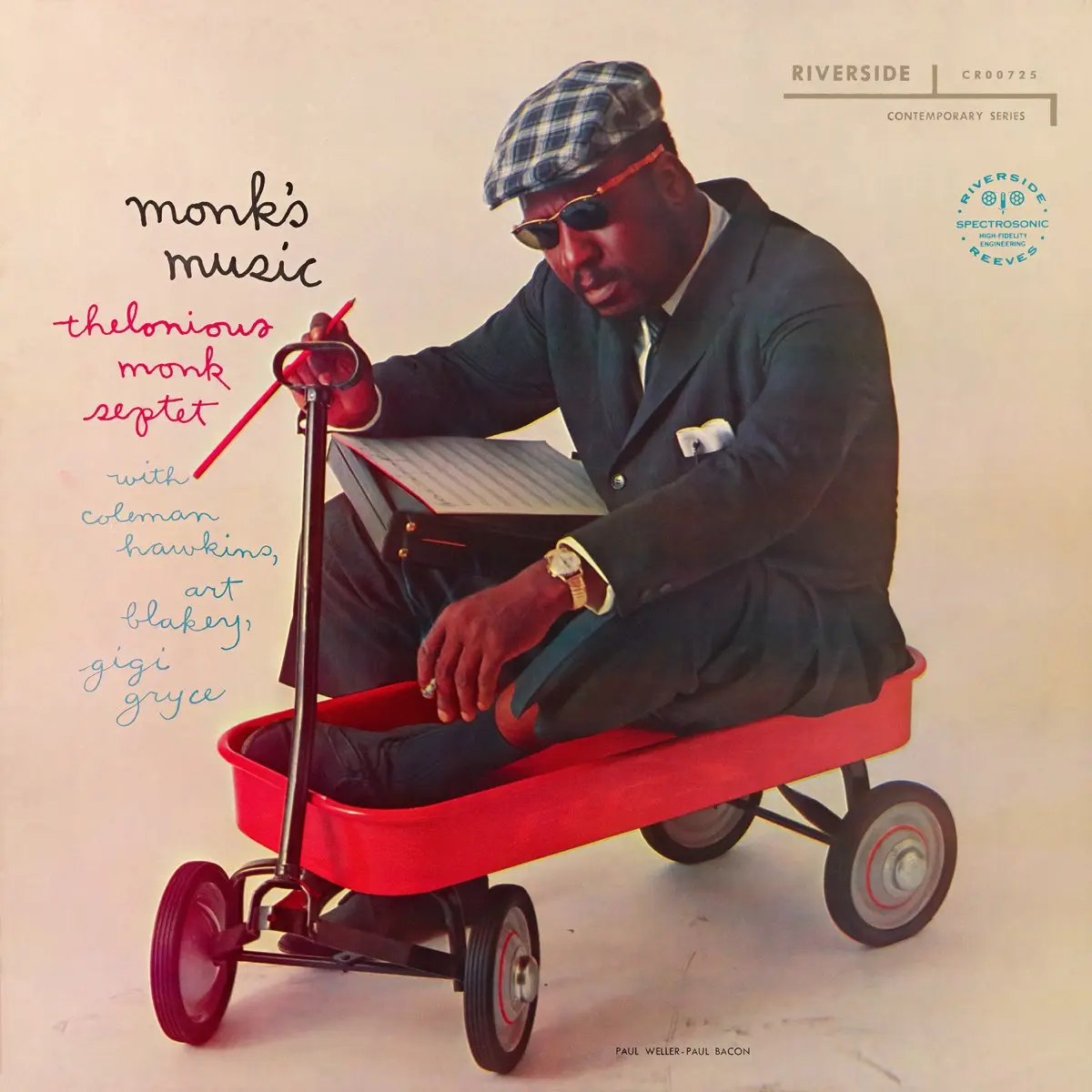 Thelonious Monk released his sixth studio album, Monk’s Music, in November 1957 on Riverside.
Monk’s Music presents Monk’s compositions in expansive ensemble arrangements, featuring a septet that includes John Coltrane and Coleman Hawkins. The sessions highlight Monk’s angular piano lines within tightly coordinated horn sections, with Art Blakey on drums and Wilbur Ware on bass. The album blends solo piano, quartet passages, and full septet interplay, emphasizing extended improvisations and complex rhythmic interactions.
Monk composed five of the six tracks, with W. H. Monk and Henry Francis Lyte credited for the hymn “Abide With Me” and Kenny Clarke co-writing “Epistrophy.”
The album opens with the horn-only reading of “Abide With Me,” followed by “Well, You Needn’t,” where Monk cues Coltrane for a tenor solo, and the full septet explores Monk’s angular themes through extended solos. “Ruby, My Dear” reduces the ensemble to a quartet for a ballad-like interpretation with carefully spaced accompaniment. “Off Minor” reworks an earlier trio piece with added brass, while “Epistrophy” stretches prior treatments into a multi-solo finale, including Coltrane, Hawkins, and Monk. The album closes with “Crepuscule With Nellie,” a slow, intricately structured piece written for Monk’s wife, featuring primarily piano with band entries toward the end.
A1. “Abide with Me” (0:54) – The horn section alone states the hymn in unison, a brief invocation that sets a solemn opening before Monk himself enters the album.
A2. “Well, You Needn’t” (11:24) – Monk launches the piece with angular piano lines before handing the theme to the septet. Solos unravel across shifting textures, Coltrane entering first at Monk’s call, with each voice stretching the structure in turn.
A3. “Ruby, My Dear” (5:26) – Hawkins leads the ballad with a full, deliberate reading of the theme, Monk shadowing with sparse chordal shapes. The pared-down quartet setting leaves space for restrained intensity.
B1. “Off Minor” (5:07) – The band presents the jagged theme in dense unison. Solos move through sharp rhythmic breaks, Blakey’s drumming pushing the ensemble’s angular phrasing forward.
B2. “Epistrophy” (10:46) – A martial introduction unfurls into expansive improvisations. Each soloist takes wide arcs around the theme before Monk closes with his own oblique statement.
B3. “Crepuscule with Nellie” (4:38) – Monk’s carefully sculpted composition unfolds in sections without improvisation, the horns adding subtle color near the close to frame the pianist’s stark design.
Sessions occurred at Reeves Sound Studio in New York City on June 25–26, 1957, with Orrin Keepnews producing and Jack Higgins engineering.
Personnel includes Thelonious Monk on piano, Ray Copeland on trumpet (tracks 1, 2, 4–6), Gigi Gryce on alto saxophone and arrangements (tracks 1, 2, 4–6), Coleman Hawkins on tenor saxophone, John Coltrane on tenor saxophone (tracks 1, 2, 4–6), Wilbur Ware on bass (tracks 2–6), and Art Blakey on drums (tracks 2–6).
Monk’s Music features a cover photo by Paul Weller with design by Paul Bacon.
Misterioso
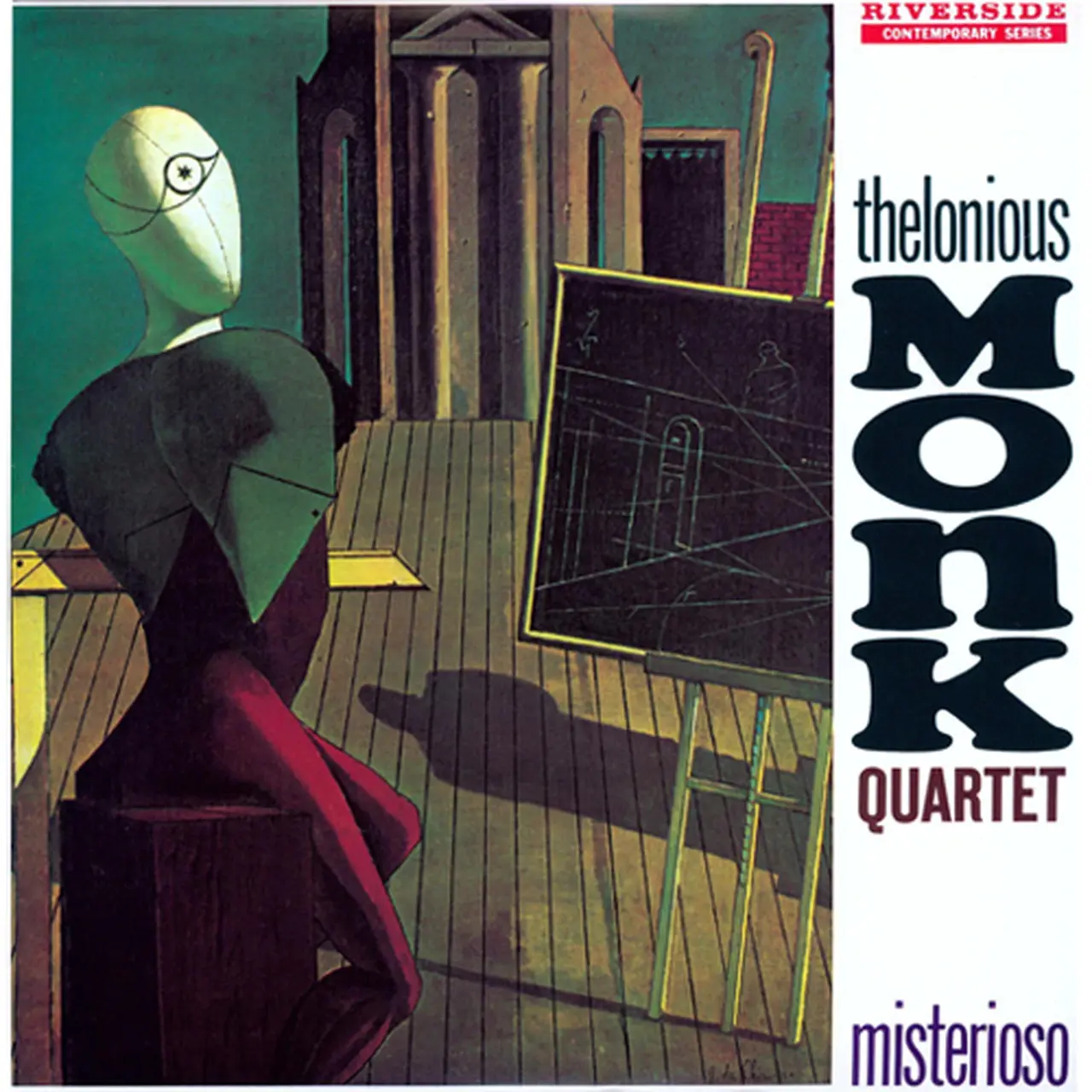 In December 1958, Thelonious Monk released Misterioso, a Riverside document of his August 7 show at the Five Spot Café in New York City.
Misterioso captures Monk’s hard bop approach in a live quartet setting with Johnny Griffin on tenor saxophone, Ahmed Abdul-Malik on bass, and Roy Haynes on drums. The performance emphasizes extended improvisation and interaction between Monk’s angular piano and Griffin’s rapid, excursive solos, with Haynes providing responsive, inventive drumming. The album marks one of the first successful live recordings of Monk’s music and highlights the quartet at the height of their cohesion.
Monk composed five of the six tracks, with Irving Caesar and Leonello Casucci credited for the standard “Just a Gigolo.”
The album opens with “Nutty,” featuring Monk’s piano themes and coordinated ensemble passages. “Blues Five Spot” honors the venue with a twelve-bar structure allowing each player to solo. “Let’s Cool One” presents reworked material from Monk’s earlier compositions. “In Walked Bud” starts with a piano intro, then Griffin delivers a vigorous, high-register solo before Monk resumes for a two-minute thematic statement. “Just a Gigolo” is performed solo, and the title track, “Misterioso,” explores superimposed major and minor sixths, blue notes, and subtle deviations from tonal centers, with Haynes providing restrained rhythmic backing to Griffin’s intense lines.
A1. “Nutty” (5:22) – Griffin darts through rapid lines, weaving in quotations as Monk and Haynes punctuate with sharp rhythmic counterpoint. The quartet’s exchanges set a brisk, unpredictable pace.
A2. “Blues Five Spot” (8:11) – Monk anchors the form with blunt chords while each player stretches across the twelve-bar frame. Griffin closes his solo with sly quotations that tilt the mood toward playfulness.
A3. “Let’s Cool One” (9:16) – The theme unfolds with Monk’s clipped phrasing, after which the band disperses into spacious solos. The rhythm section sustains a steady pulse, framing Griffin’s surging runs.
B1. “In Walked Bud” (11:20) – Monk dedicates the piece to Powell, opening with a spare introduction. Griffin follows with a torrent of ideas at the horn’s upper register, his phrases veering between brisk declarations and drawn-out cries.
B2. “Just a Gigolo” (2:07) – Monk performs the standard alone, repeating the chorus with shifting accents and pauses that reshape its familiar outline.
B3. “Misterioso” (10:52) – Built on stacked sixths, the title track moves with deliberate weight. Monk’s chordal figures ground Griffin’s expansive solo, while Haynes underlines the structure with subdued but insistent detail.
Sessions occurred live at the Five Spot Café in New York City on August 7, 1958, with Orrin Keepnews producing and Ray Fowler engineering.
Personnel includes Thelonious Monk on piano, Johnny Griffin on tenor saxophone, Ahmed Abdul-Malik on bass, and Roy Haynes on drums.
Misterioso features cover design by Paul Bacon with Giorgio de Chirico’s 1915 painting The Seer as its artwork, reflecting the album’s enigmatic and intellectual tone.
The 1989 CD reissue was digitally remastered by Joe Tarantino using 20-bit K2 Super Coding System technology, and the 2012 Original Jazz Classics Remasters edition added a bonus medley of “Bye-Ya” and “Epistrophy” with Art Blakey.
Thelonious Alone in San Francisco
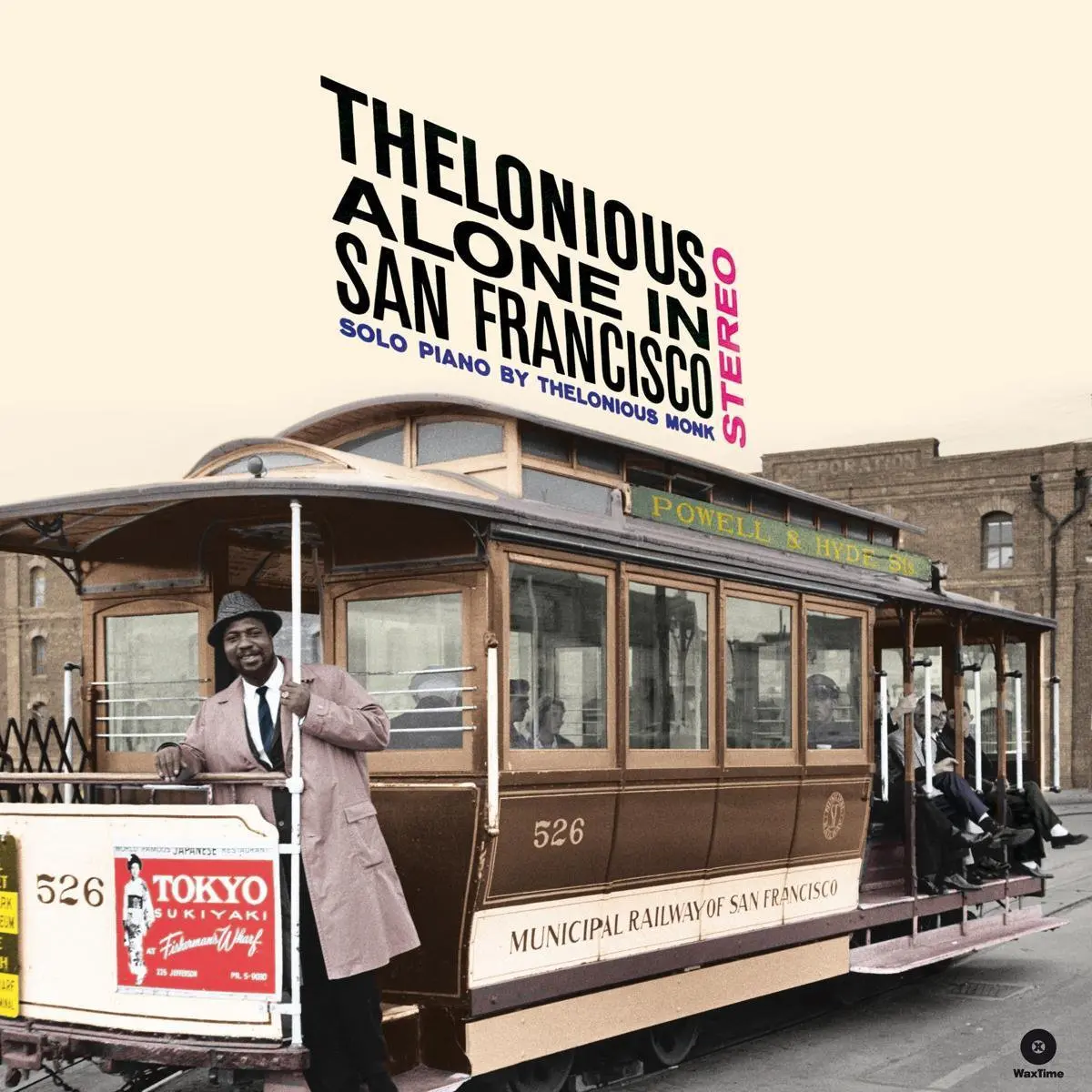 In January 1960, Riverside issued Thelonious Alone in San Francisco, a document of Monk’s October 21–22 shows at Fugazi Hall.
The album presents Monk’s piano in an unaccompanied setting, emphasizing tonal nuance, spacious phrasing, and a blend of improvisation and reworked earlier compositions. The intimate recording highlights his ability to shape each piece through shifts in pace, silences, and subtle contouring of lines.
Monk composed seven of the ten tracks, with Tom Adair and Matt Dennis credited for “Everything Happens to Me,” Ralph Rainger and Leo Robin for “You Took the Words Right Out of My Heart,” Irving Berlin for “Remember,” and Jack Meskill, Harry Richman, and Pete Wendling for “There’s Danger in Your Eyes, Cherie.”
The album opens with “Blue Monk,” a reflective reworking of Monk’s earlier blues, followed by the tender ballad “Ruby, My Dear.” Improvised blues pieces “Bluehawk” and “Round Lights” explore playful, shifting tempos. Standards such as “Everything Happens to Me” and “You Took the Words Right Out of My Heart” are rendered with spacious phrasing, letting each note resonate. “Pannonica” emphasizes lyrical, flowing lines, while “Remember” slows mid-phrase to underscore its emotional weight. The closing “Reflections” balances lyricism with angular turns, exemplifying Monk’s storytelling through solo piano.
A1. “Blue Monk” (3:44) – contemplative blues with shifting tonal emphasis
A2. “Ruby, My Dear” (3:56) – tender ballad with elongated phrasing
A3. “Round Lights” (3:34) – improvised blues with playful tempo shifts
A4. “Everything Happens to Me” (5:37) – ballad cover, paced to emphasize each line
A5. “You Took the Words Right Out of My Heart” (4:01) – expressive, measured interpretation
B1. “Bluehawk” (3:37) – improvisatory blues, playful rhythm and pacing
B2. “Pannonica” (3:51) – lyrical reworking with flowing contour
B3. “Remember” (2:41) – emotive cover, slowing mid-phrase for emphasis
B4. “There’s Danger in Your Eyes, Cherie” (4:18) – gentle, expansive ballad rendering
B5. “Reflections” (5:06) – lyrical composition with angular turns and deliberate pacing
Sessions occurred at Fugazi Hall in San Francisco, California, on October 21–22, 1959, with Orrin Keepnews producing and Reice Hamel engineering.
Thelonious Monk With John Coltrane
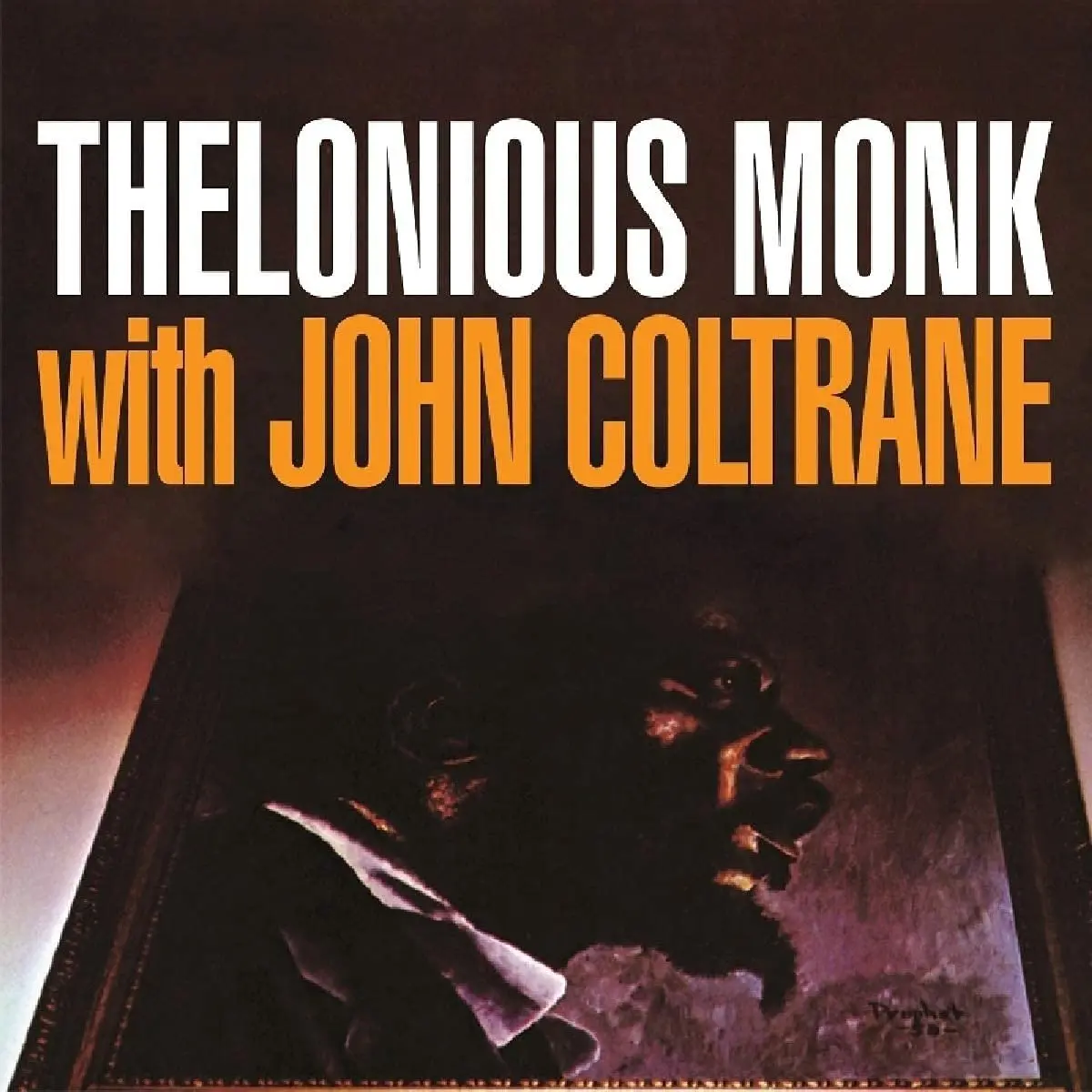 In late 1961, Jazzland issued Thelonious Monk With John Coltrane, a collection of three spring/summer 1957 sessions by the Monk Quartet with the pre-fame tenor saxophonist.
The album captures Monk’s quartet in a transitional hard bop setting, blending angular phrasing, controlled pacing, and moments of expansive improvisation. It contrasts intimate quartet tracks with larger ensemble recordings, revealing interplay between Monk’s piano and Coltrane’s emerging, expressive tenor lines.
Monk composed five of the six original LP tracks, with Kenny Clarke co-credited on “Epistrophy.” Other selections include covers of works by no outside composers on this release, aside from that collaboration credit.
Tracks like “Ruby, My Dear” present measured ballad lines, with Coltrane overlaying expressive, elongated tenor phrases. “Trinkle, Tinkle” shows him navigating complex, contoured structures in dialogue with Monk’s irregular accents. The quartet’s “Nutty” demonstrates Coltrane breaking into expansive phrasing against Monk’s structured support. Larger ensemble numbers “Off Minor” and “Epistrophy” incorporate trumpet, alto, and tenor voices, producing a dense, harmonically rich sound. The piano solo “Functional” concludes the original LP with deliberate pacing and restrained exploration, emphasizing the interplay of silence and note.
A1. “Ruby, My Dear” (6:17) – Monk’s spare harmonies frame Coltrane’s tenor, which bends the theme into long, expressive arcs, drawing contrast between piano’s clipped phrases and saxophone’s breadth.
A2. “Trinkle, Tinkle” (6:37) – The head darts in sharp angles, Monk’s jagged chords colliding with Coltrane’s rapid lines, the two pushing each other into restless invention.
A3. “Off Minor [take 4]” (5:10) – The expanded ensemble layers brass and reeds over Monk’s spiky theme, Coleman Hawkins anchoring with rounded authority against Monk’s stark interruptions.
B1. “Nutty” (6:35) – Monk’s fractured phrasing sets the stage for Coltrane to stretch the tune outward, weaving sustained momentum against the piano’s sudden stops and jolts.
B2. “Epistrophy” (3:07) – With horns stacked in clipped unison, the piece unfolds in tight rhythmic jolts, Monk punctuating the march with terse interjections.
B3. “Functional [take 1]” (9:46) – Alone at the piano, Monk extends blues form into abstraction, stacking chords, silences, and abrupt turns into a long, exploratory meditation.
CD bonus track:
7. “Monk’s Mood” (7:52) – Monk and Coltrane shape the ballad in slow contours, the piano sketching bare intervals while tenor saxophone lingers with hushed intensity.
Sessions occurred at Reeves Sound Studios in New York City: April 16, June 25–26, and July 1957, produced by Orrin Keepnews.
Personnel includes Thelonious Monk on piano, John Coltrane on tenor saxophone (tracks 1–5, 7), Ray Copeland on trumpet and Gigi Gryce on alto saxophone (tracks 3 and 5), Coleman Hawkins on tenor saxophone (tracks 3 and 5), Wilbur Ware on bass (all except track 6), Shadow Wilson on drums (tracks 1, 2, 4), and Art Blakey on drums (tracks 3 and 5).
Monk’s Dream
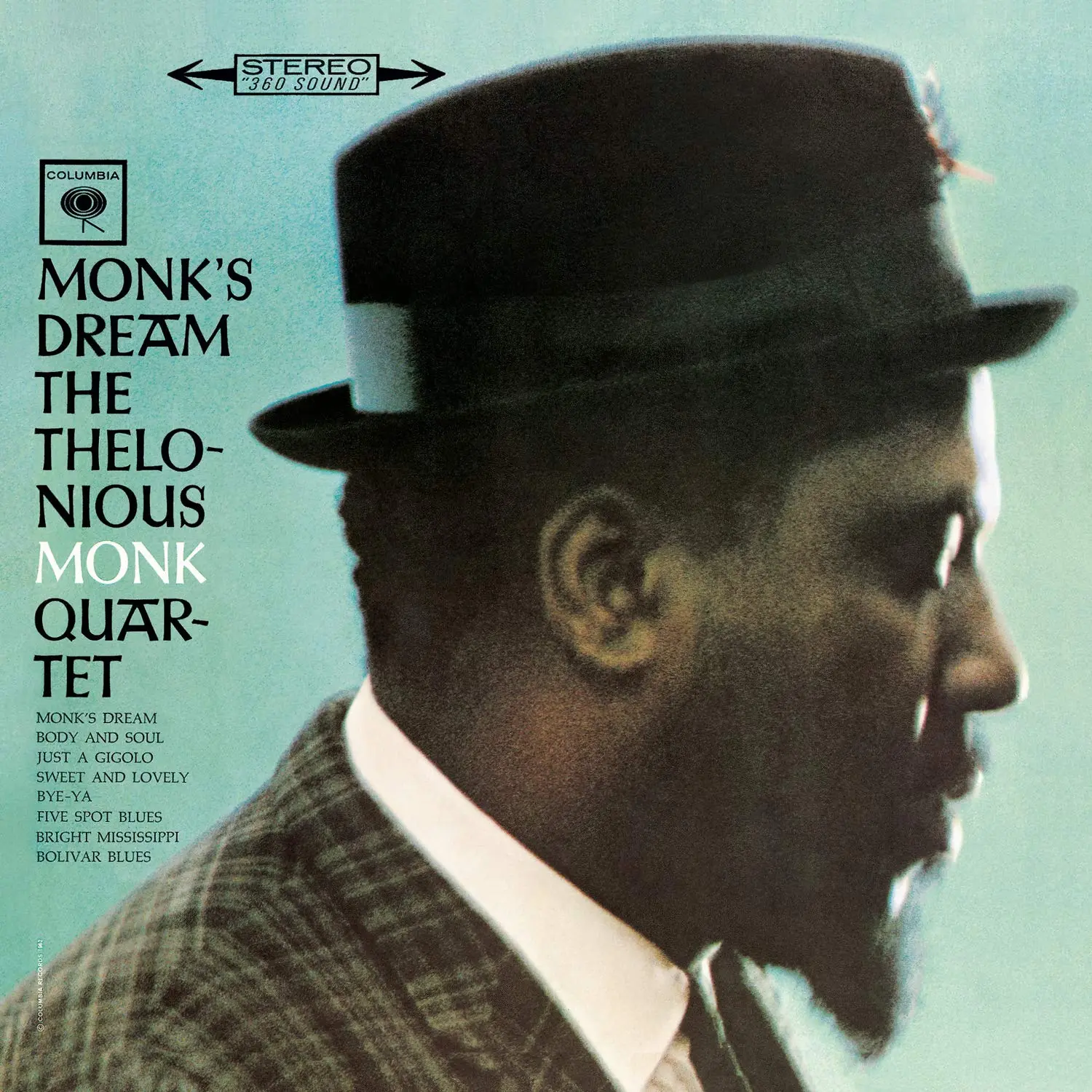 Thelonious Monk released his ninth studio album, Monk’s Dream, in January 1963 on Columbia.
Monk’s Dream presents Monk’s first Columbia sessions, featuring his renewed quartet with Charlie Rouse on tenor saxophone, John Ore on bass, and Frankie Dunlop on drums. The album blends revisited compositions with one new piece, balancing angular phrasing, controlled pacing, and structured improvisation across both standards and originals.
Monk wrote five of the eight tracks, while the remaining three are covers: Edward Heyman, Robert Sour, Frank Eyton, and Johnny Green (“Body and Soul”); Julius Brammer, Irving Caesar, and Leonello Casucci (“Just a Gigolo”); and Gus Arnheim, Harry Tobias, and Jules LeMare (“Sweet and Lovely”).
The album opens with the title track, a complex, deliberate statement of Monk’s style. “Body and Soul” develops contours through tender piano passages and interactive phrasing with Rouse. “Bright Mississippi” offers a new composition with brisk rhythmic shifts, while “Five Spot Blues” revisits a previous live recording in a tighter studio context. The remaining selections navigate revisited Monk originals and standards, featuring compact, sharply turned improvisations. Shorter tracks like “Just a Gigolo” provide concise, precise explorations, whereas pieces like “Sweet and Lovely” and “Bolivar Blues” emphasize interplay and subtle variation in tempo and rhythm.
Sessions occurred at Columbia 30th Street Studio in New York City in late October and early November 1962 with producer Teo Macero.
Personnel includes Thelonious Monk on piano, Charlie Rouse on tenor saxophone, John Ore on bass, and Frankie Dunlop on drums.
Criss-Cross
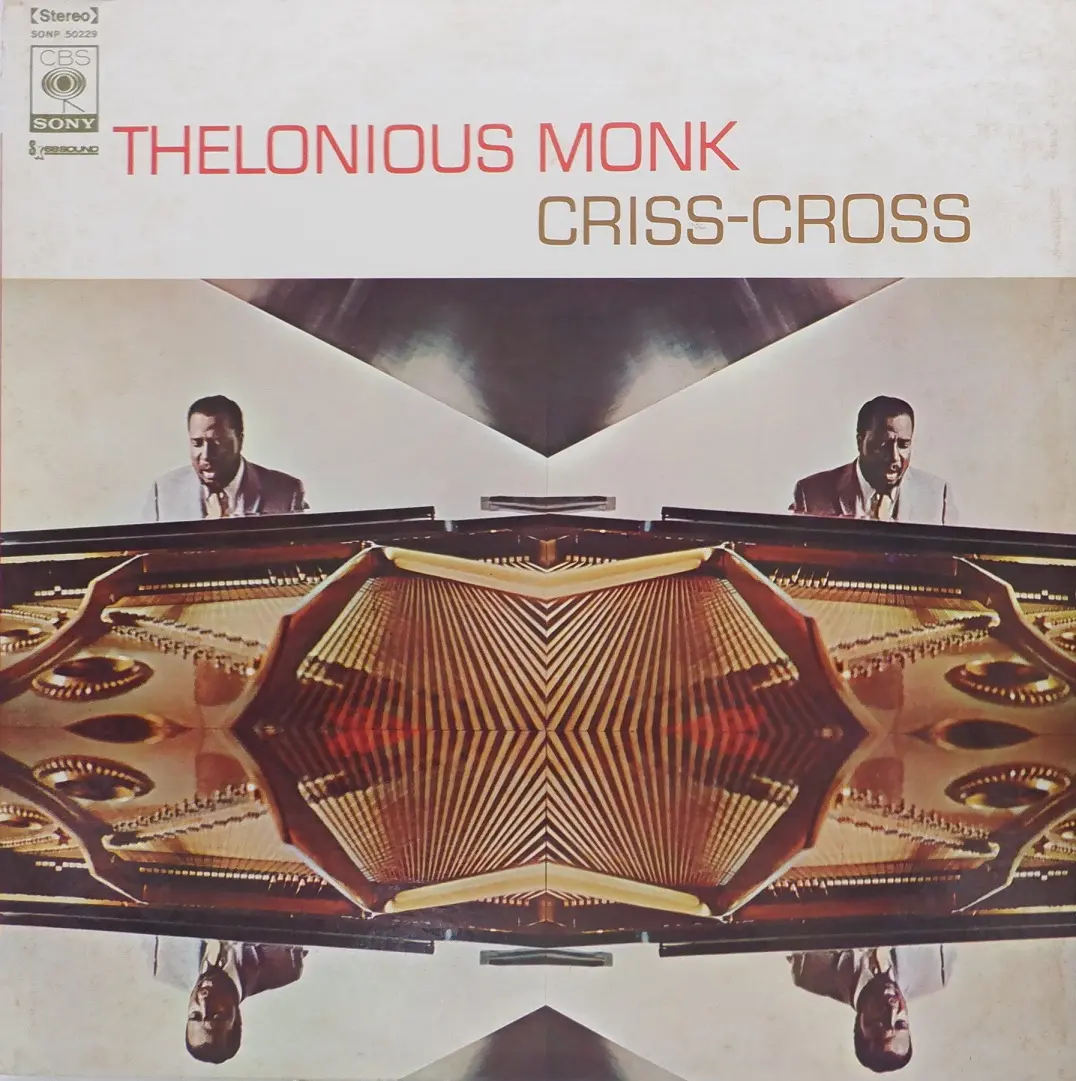 Thelonious Monk released his tenth studio album, Monk’s Dream, in August 1963 on Columbia.
Criss-Cross features Monk’s established Columbia quartet with Charlie Rouse on tenor saxophone, John Ore on bass, and Frankie Dunlop on drums. The album revisits previously recorded Monk compositions, emphasizing angular phrasing, controlled rhythmic shifts, and the cohesion of a band refined over four years.
Monk wrote five of the eight tracks, while the remaining three are covers: Vincent Youmans and Irving Caesar (“Tea for Two”); Jimmy McHugh and Dorothy Fields (“Don’t Blame Me”); and co-composed by Idrees Sulieman and Sadik Hakim (“Eronel”).
The album opens with “Hackensack,” demonstrating Monk’s precise, percussive piano approach. The title track navigates sharp turns in tempo and chord voicings. “Eronel” presents brisk bop lines, while “Think of One” and “Rhythm-A-Ning” showcase tightly coordinated ensemble phrasing. Solo piano features appear on “Don’t Blame Me” and “Crepuscule with Nellie,” contrasting the quartet’s collective interplay. Standards like “Tea for Two” receive Monk’s reinterpretation, emphasizing contouring lines over conventional delivery. The CD reissue adds “Pannonica” and alternate takes, extending the exploration of Monk’s harmonic and rhythmic vocabulary.
Sessions occurred at Columbia 30th Street Studio in New York City from November 1962 through March 1963 with producer Teo Macero.
Personnel includes Thelonious Monk on piano, Charlie Rouse on tenor saxophone, John Ore on bass, and Frankie Dunlop on drums.
Selections like “Criss Cross” and “Rhythm-A-Ning” highlight the quartet’s rhythmic precision and interaction, while solo pieces and reinterpretations of standards display Monk’s capacity to reshape familiar material into sharply contoured, rhythmically agile expressions.
Solo Monk
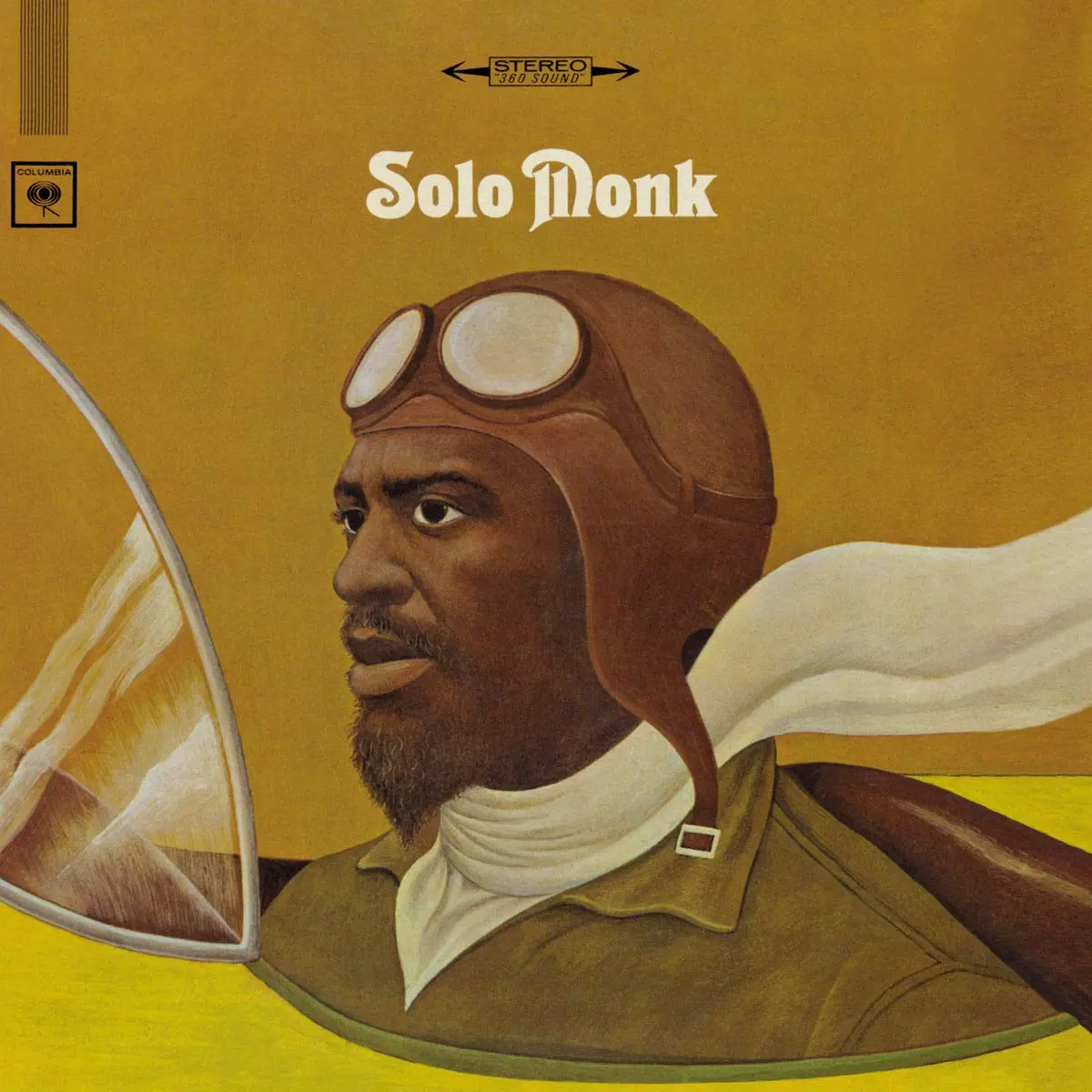 Thelonious Monk released his thirteenth studio album, Solo Monk, in June 1965 on Columbia.
Solo Monk presents Monk alone at the piano, exploring stride, ragtime-inflected passages, and angular phrasing with no accompaniment. The album highlights Monk’s improvisational agility and provides a more intimate, unadorned perspective on his compositional and rhythmic approach.
Monk wrote six of the twelve tracks, while the remaining six are covers: Harry Akst, Sam M. Lewis, and Joe Young (“Dinah”); Harry Barris and Clifford (“I Surrender, Dear”); Arthur Herzog Jr., Sam M. Lewis, and Gus Arnheim (“Sweet and Lovely”); Ray Noble (“I Hadn’t Anyone Till You”); Adair and Dennis (“Everything Happens to Me”); Johnny Mercer, Holt Marvell, and Harry Link (“These Foolish Things (Remind Me of You)”); Daugherty, Neiburg, and Reynolds (“I’m Confessin’ (That I Love You)”); Cahn, Stordahl, and Weston (“I Should Care”); and DeLange and Van Heusen (“Darn That Dream”).
The album moves between brisk, stride-based treatments of standards and Monk originals with angular turns and subtle dissonances. Solo passages like “Ask Me Now” and “Ruby, My Dear” emphasize sustained harmonic exploration, while tracks such as “Dinah” and “I’m Confessin’ (That I Love You)” recast familiar material through Monk’s contoured timing and articulation. Alternate takes on the CD edition expand these explorations, showing varied pacing and phrasing.
A1. “Dinah” (2:27) – Monk reshapes the standard with clipped stride figures, balancing jolting accents against a steady left-hand pulse.
A2. “I Surrender, Dear” (3:43) – He stretches the theme through halting pauses and unexpected turns, letting silence carry as much weight as the notes.
A3. “Sweet and Lovely” (2:58) – The familiar tune is distilled into angular lines, with Monk offsetting its contour through pointed chordal shifts.
A4. “North of the Sunset” (1:50) – A concise original, its stark intervals and abrupt cadences render it more statement than song.
A5. “Ruby, My Dear” (5:35) – Monk lingers over the ballad with measured pacing, drawing out phrases into long arcs before snapping them back with percussive jolts.
A6. “I’m Confessin’ (That I Love You)” (2:36) – The stride foundation remains intact, but Monk presses against it with sudden dissonances that tilt the sentiment off-center.
B1. “I Hadn’t Anyone Till You” (3:17) – A relaxed stride undercurrent supports Monk’s shifting emphasis on interior lines, bending the song’s flow in sharp contours.
B2. “Everything Happens to Me” (3:25) – He traces the melody with spare clarity, then fractures it with asymmetrical accents that disrupt its smooth pace.
B3. “Monk’s Point” (2:11) – The theme is pared to its essence, Monk driving it forward with terse statements and clipped momentum.
B4. “I Should Care” (1:56) – Brief and unsentimental, the piece is reduced to jagged outlines, every phrase shaped by Monk’s abrupt stops.
B5. “Ask Me Now” (4:35) – Monk treats his ballad with searching pauses and oblique reharmonizations, each line turning in sharp angles before settling.
B6. “These Foolish Things (Remind Me of You)” (3:32) – He closes with stride inflections that both honor and dismantle the tune, sustaining tension between tradition and rupture.
Sessions occurred at Columbia 30th Street Studio in New York City from October 31, 1964, through March 2, 1965, with producer Teo Macero.
Straight, No Chaser
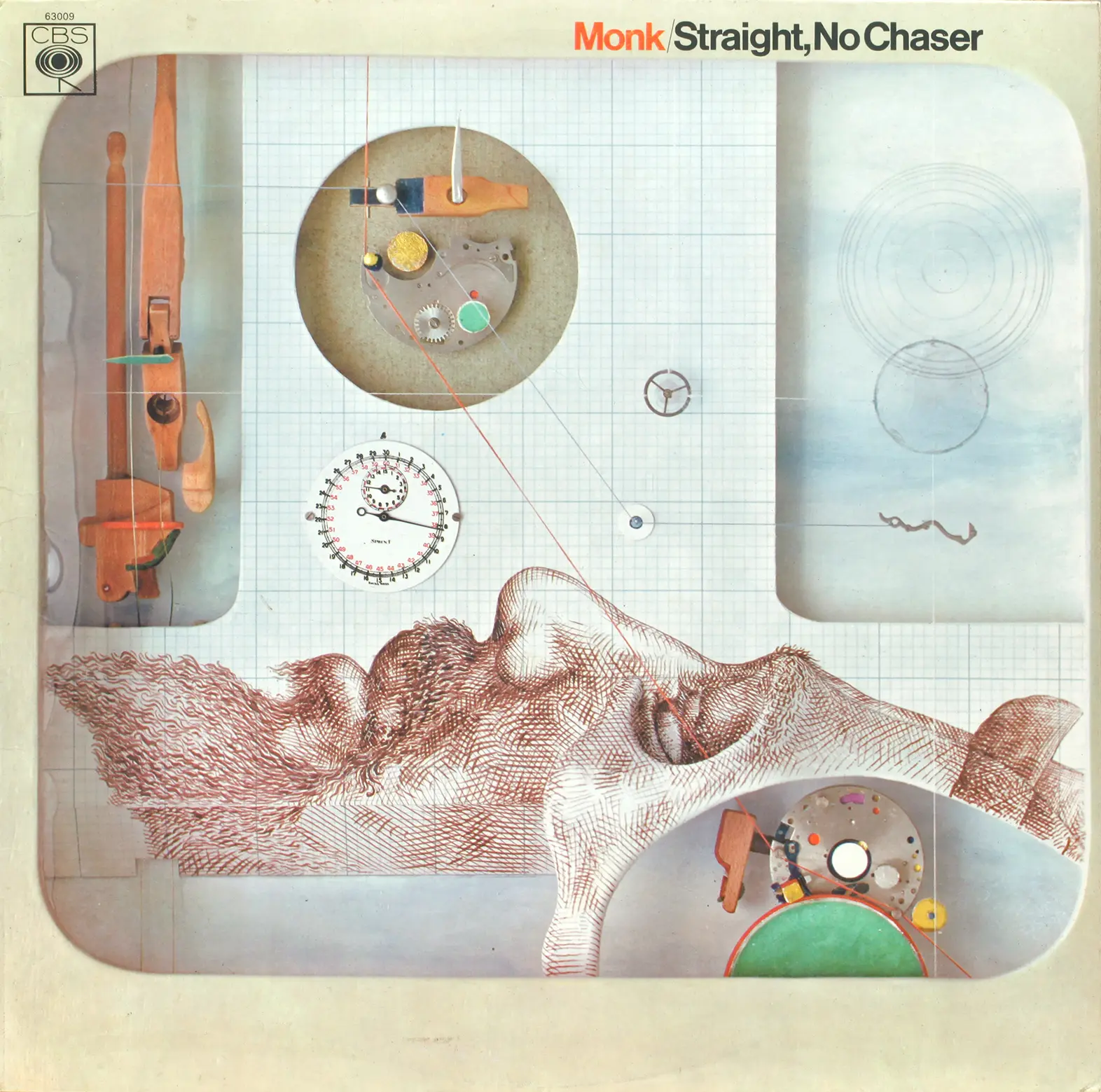 Thelonious Monk released his fourteenth studio album, Straight, No Chaser, on March 20, 1967, on Columbia.
Straight, No Chaser captures the Thelonious Monk Quartet in full command, blending Monk’s angular piano with Charlie Rouse’s tenor lines over a steady rhythm section of Larry Gales on bass and Ben Riley on drums. The album alternates between original compositions and reinterpretations of standards, highlighting rhythmic interplay and solo excursions.
Monk composed four of the original tracks. The album includes covers: Duke Ellington (“I Didn’t Know About You”); Rentarō Taki (“Japanese Folk Song / Kōjō no Tsuki”); Harold Arlen and Koehler (“Between the Devil and the Deep Blue Sea”); Phoebe Knapp (“This Is My Story, This Is My Song / Blessed Assurance”).
The album opens with driving, mid-tempo motion in “Locomotive” and continues with the title track, balancing controlled phrasing and sudden angular shifts. Ballads like “Between the Devil and the Deep Blue Sea” and “This Is My Story, This Is My Song” offer introspective solo piano moments, while “Japanese Folk Song” stretches over eleven minutes, gradually building from contemplative lines into dynamic rhythmic variation. Monk and Rouse lead melodic exploration, with Gales and Riley providing structural support that flexes to match the piano’s sharp turns.
A1. “Locomotive” (6:38) – The quartet moves with steady propulsion, Monk’s sharp chords and Rouse’s pointed lines mimicking the forward pull of a train in motion.
A2. “I Didn’t Know About You” (6:50) – Monk pares Ellington’s ballad to its essence, spacing phrases with pauses that let each contour breathe.
A3. “Straight, No Chaser” (10:31) – The blues form becomes a platform for extended dialogue, Monk punctuating the rhythm section’s steady pace with oblique runs and jagged accents.
B1. “Japanese Folk Song” (11:03) – Based on Taki’s “Kōjō no Tsuki,” the piece unfolds slowly, Monk and Rouse stretching the melody across shifting rhythmic frames.
B2. “Between the Devil and the Deep Blue Sea” (7:34) – Monk approaches the standard alone, folding stride inflections into its arc while breaking the flow with clipped interruptions.
B3. “We See” (8:48) – The theme enters in angular fragments before opening into extended exchanges, Monk shifting the pace beneath Rouse’s long-lined improvisation.
Sessions occurred in 1966–1967 at Columbia 30th Street Studio in New York City with producer Teo Macero.
Straight, No Chaser maintains momentum through extended arrangements and shifting dynamics, balancing mid-tempo originals, reworked standards, and reflective solo passages that showcase Monk’s idiosyncratic phrasing and the quartet’s tight responsiveness.
Underground
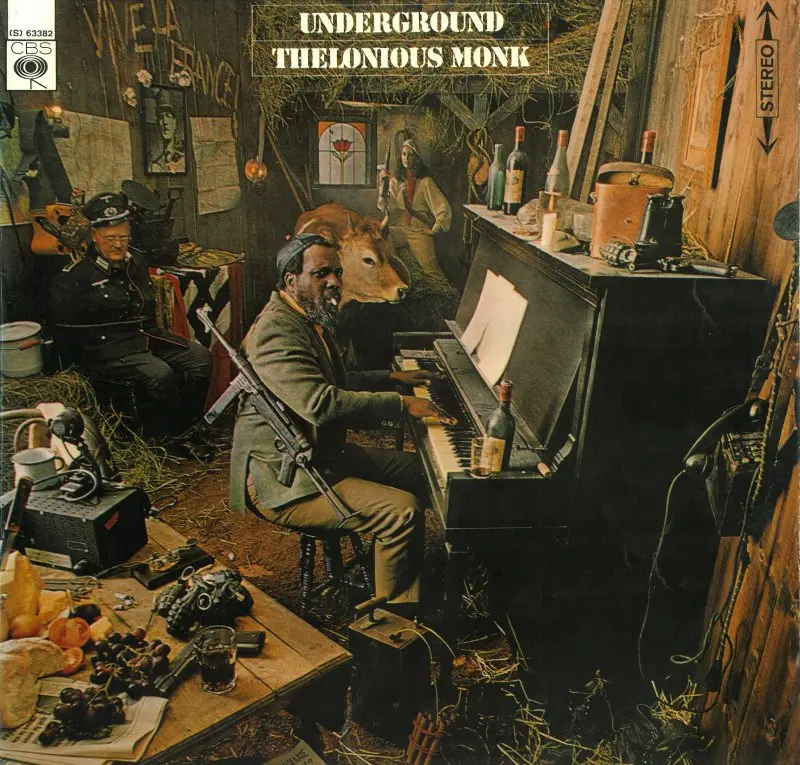 Thelonious Monk released his fifteenth studio album, Underground, on April 15, 1968, on Columbia.
Underground marks the final recording of the Thelonious Monk Quartet, featuring Monk on piano, Charlie Rouse on tenor sax, Larry Gales on bass, and Ben Riley on drums. The album blends intricate originals, playful reinterpretations, and a single vocal feature, showcasing the quartet’s cohesion and Monk’s distinctive compositional voice.
Monk composed five tracks on the album. Covers include Alan Rankin Jones (“Easy Street”) and Jon Hendricks with Monk (“In Walked Bud”).
The album opens with the self-assured, strutting “Thelonious,” immediately establishing a confident rhythmic framework. “Ugly Beauty” unfolds as a contemplative waltz with a lyrical saxophone line, while “Boo Boo’s Birthday” presents a winding, unpredictable melody framed by playful rhythmic shifts. “Raise Four” finds Monk exploring the blues with surprising detours and angular turns. Trio rendition “Easy Street” interprets Jones’s composition with Monk’s phrasing and a subtle tempo variation. “Green Chimneys” extends over nine minutes, highlighting an expressive bass solo and signature Monk thematic twists. The vocal track “In Walked Bud,” featuring Jon Hendricks, layers scatted lines over Monk’s piano and the rhythm section, creating an animated counterpoint that emphasizes rhythmic interplay and melodic contour.
A1. “Thelonious” (3:14) – The quartet revisits Monk’s signature theme, stripped to its essentials, with jagged piano voicings balanced against Rouse’s taut phrasing. The brevity sharpens the statement into something declarative and unyielding.
A2. “Ugly Beauty” (7:20) – Monk unfolds his only waltz, its contoured lines gliding between grace and dissonance. Rouse extends the atmosphere with long, arcing improvisations before the rhythm section reshapes the pulse.
A3. “Raise Four” (4:36) – A trio performance where Monk toys with blues form, layering abrupt accents over an elastic pace. His phrasing turns playful yet pointed, breaking the structure into irregular fragments.
A4. “Boo Boo’s Birthday” (5:56) – Written for Monk’s daughter, the theme twists unpredictably, demanding precision from the ensemble. Rouse traces the winding path with nimble clarity while the rhythm section steadies the shifts beneath.
B1. “Easy Street” (5:52) – In this interpretation of Alan Rankin Jones’s piece, Monk leans on stride inflections, compressing the tune into a compact dialogue between piano and rhythm. It emerges both reverent and idiosyncratic.
B2. “Green Chimneys” (9:00) – Another dedication to his daughter, the piece stretches over a long arc, Rouse and Gales trading extended statements while Monk punctuates with angular interjections. The pace holds steady, then subtly unsettles toward the close.
B3. “In Walked Bud” (4:17) – Jon Hendricks adds voice to Monk’s tribute to Bud Powell, weaving lyrics into the piece’s sharp turns. Monk underlines the vocal lines with stabbing chords and counterrhythms that reframe the familiar theme.
Sessions occurred on December 14 and 21, 1967; February 14, and December 14, 1968, at Columbia 30th Street Studio in New York City with producer Teo Macero and engineer Tim Geelan.
The cover depicts Monk as a French Resistance fighter, honoring his patron Pannonica de Koenigswarter, whose likeness also appears.
Discography:
- Thelonious (1953 • Thelonious Monk Trio)
- Thelonious Monk Quintet (1954 • Thelonious Monk Quintet)
- Thelonious Monk Quintet Blows for LP (1954 • Thelonious Monk Quintet)
- Piano Solo (1954)
- Thelonious Monk Plays (1955)
- Thelonious Monk Plays the Music of Duke Ellington (1955)
- The Unique (1956)
- Brilliant Corners (1957)
- Mulligan Meets Monk (1957 • Thelonious Monk and Gerry Mulligan)
- Thelonious Himself (1957)
- Monk’s Music (1957 • Thelonious Monk Septet)
- In Orbit (1958 • Clark Terry With Thelonious Monk)
- Art Blakey’s Jazz Messengers With Thelonious Monk (1958 • Art Blakey’s Jazz Messengers With Thelonious Monk)
- Misterioso (1958 • Thelonious Monk Quartet)
- Thelonious in Action (1958 • Thelonious Monk Quartet)
- The Thelonious Monk Orchestra at Town Hall (1959 • The Thelonious Monk Orchestra)
- 5 by Monk by 5 (1959 • Thelonious Monk Quintet)
- Thelonious Alone in San Francisco (1960)
- Thelonious Monk With John Coltrane (1961 • Thelonious Monk With John Coltrane)
- Monk’s Dream (1963 • The Thelonious Monk Quartet)
- Criss-Cross (1963)
- It’s Monk’s Time (1964)
- Monk. (1965)
- Solo Monk (1965)
- Nica’s Tempo (1966 • Thelonious Monk & Gigi Gryce)
- Straight, No Chaser (1967)
- Underground (1968)
- Monk’s Blues (1969 • Thelonious Sphere Monk)
- Something in Blue (1972)
- Thelonious Monk (1972)
- The Man I Love (1973)
- Always Know (archival, 1979)
- Blue Sphere (1979)
- ‘Round Midnight (archival, 1983)
- The Complete Riverside Recordings, Volume 2 (1986)
- The London Collection: Volume One (1988)
- Straight, No Chaser (archival, OST, 1989)
- Monkism (1998)
- The Transformer (archival, 2007)
- Les Liaisons Dangereuses 1960 (archival, 2017)
Sources:
- Discogs: Thelonious Monk
- RYM: Thelonious Monk
- JazzzMusicArchives: Thelonious Monk
- MusicBrainz: Thelonious Monk
Artist/Album Pages:
The V.S.O.P. Quintet was an American post-pop/jazz supergroup featuring the seasoned talents of k...
Charles Mingus (April 22, 1922 – January 5, 1979) was an American jazz double-bassist, composer, and...
Charles Sullivan — aka Kamau Muata Adilifu (born Nov. 8, 1944) — is an American post-bop/jazz-funk...
John Handy (born Feb. 3, 1933) is an American post-bop/jazz-funk multireedist from Dallas who est...
Roy Haynes (March 13, 1925 — November 12, 2024) was an American jazz drummer and bandleader from ...
Leroy Vinnegar (July 13, 1928 — Aug. 3, 1999) was an American post-bop/jazz standup bassist on the...
Cannonball Adderley (September 15, 1928 – August 8, 1975) was an American jazz alto saxophonist of t...
Horace Silver (September 2, 1928 — June 18, 2014) was an American jazz pianist, composer, and bandle...
Blue Mitchell (March 13, 1930 — May 21, 1979) was an American post-bop/jazz-funk trumpeter from M...
Horacee Arnold (born Sept. 25, 1937) is an American jazz-funk drummer, composer, and bandleader f...
Roland Kirk — aka Ronald Theodore Kirk (August 7, 1935 — December 5, 1977) — was an American multi...
Grant Green (June 6, 1935 — Jan. 31, 1979) was an American jazz guitarist and composer from who r...