

Zulema Cusseaux (Jan. 3, 1947 — Sept. 30, 2013), known professionally as Zulema, was an American soul singer and songwriter who started in The Lovelles, a soul trio that morphed into Faith, Hope & Charity in 1970.
After one album with FHC, she went solo with the 1972/73 Sussex Records albums Zulema and Ms. Z. She charted with “Telling the World Good-Bye” and sparked debates with the single-mother anthem “This Child of Mine.” On RCA Victor, she cut the 1975–76 albums Zulema (with her second hit “Wanna Be Where You Are”), R.S.V.P., and Suddenly There Was You. In 1978, she surfaced on London/Lejoint with Z-licious, which spawned the R&B hits “Change” and “I’m Not Dreaming.”
In 1982, Zulema resurfaced in the duo Zalmac, which cut the soul-funk album Whatcha Gonna Do on TSOB.
Background
Zulema Cusseaux was born on January 3, 1947, in Tampa, Florida, where she attended Howard W. Blake High School with friend Brenda Hilliard. They first joined local girl group The 5 Crystals, then formed soul-pop trio The Lovelles with Albert Bailey. They soon got a residency at the Pink Pussy Cat, a popular haunt in Atlanta.
The Lovelles
In 1967, The Lovelles issued two Motown influenced sides on the Brent label: the uptempo Zulema co-write “Here Come the Heartaches” (b/w the organ-driven “My Time to Cry”). Both songs display alto counterpoint between Cusseaux and Hilliard, who breaks with Bailey into non-lexical harmonies on each Zulema-led chorus. In 1969, they linked with producers Dave Crawford and Roy Lee Johnson in Muscle Shoals for one Stax-tinged ATCO single: the bluesy “I’m Comin’ Today” (b/w the ballad “Pretending Dear”), both featuring prominent sax and refined vocal arrangements.
Faith, Hope & Charity
In 1970, The Lovelles moved to New York, where they teamed with producer Van McCoy and changed their name to Faith, Hope & Charity. That year, they charted with two singles on soul-press Maxwell, written and produced by McCoy and partner Joe Cobb: the brassy “Baby Don’t Take Your Love” (b/w the emotive ballad “Make Love to Me”) and the string-heralded ballad “Let’s Try It Over” (a group original, b/w with the jubilant “So Much Love” ). All four sides appear on their self-titled debut album along with five other songs, including two further group-writes (“I’m Gonna Love You,” “That Lonely Feeling”), a Beatles cover (“Something“), and the eight-minute McCoy/Cobb uptune “The Wings of Love.”
Zulema left the group in 1971, shortly after their switch to Buddah-subsidiary Sussex, where she optioned a solo deal. Despite her absence, she’s credited with two songs (“I Was There” and “Who Made You Go”) on the 1972 Faith, Hope & Charity release Heavy Love, which also lists her on the group-written “Who Could Love You More Than I.” Singer Diane Destry took Zulema’s place in the group.
Zulema (1972)
 Zulema released her self-titled debut solo album in September 1972 on Sussex (US) and A&M (Japan, Oceania).
The album balances tender ballads with rhythmic soul, blending Zulema’s alto voice with textured backing vocals and layered percussion. Its arrangements range from restrained piano-led tracks to fuller ensemble pieces with multiple percussion and guitar lines, establishing her solo identity after Faith, Hope & Charity.
Zulema wrote seven of the ten tracks, intermixed with outside numbers by Rodgers & Hammerstein (“If I Loved You”), Paul McCartney (“Maybe I’m Amazed”), and Marvin Gaye (“If This World Were Mine”). She plays piano throughout.
A1. “I Leave It Up to You” (4:09)
A2. “This Child of Mine” (2:45)
A3. “If I Loved You” (2:43)
A4. “Maybe I’m Amazed” (2:54)
A5. “If This World Were Mine” (3:42)
B1. “Don’t Be Afraid” (2:38)
B2. “Why Do I Love You” (2:55)
B3. “American Fruit, African Roots” (5:20)
B4. “Ain’t It Sad” (2:19)
B5. “I Remember Mama” (3:16)
Bert De Coteaux produced, arranged, and conducted, coordinating a roster of session musicians including bassist Gordon Edwards, percussionist Ralph McDonald, and guitarists Cornell Dupree and John Tropea. Cissy Houston sings backing vocals along with Mickey Hunt and the Burrell sisters (Carrie and Debbie). Sessions occurred at unspecified with engineer Jay Messina.
The singles include “Telling the World Good-Bye” and “This Child of Mine,” with the latter recognized for its narrative addressing single motherhood.
Ms. Z
 Zulema released her second album, Ms. Z, in 1973 on Sussex.
The album blends soul ballads with extended rhythmic tracks, showcasing Zulema’s alto voice across piano-led arrangements and fuller ensemble sections. It balances expansive pieces with concise songs, alternating sharp turns in phrasing with sustained vocal passages.
Zulema wrote seven of the twelve tracks, including collaborations with J. Gray on “I’m Watchin’ You” and “Hold Back the Night.” Van McCoy contributed “Giving Up.” Side B includes her take on “Love Train,” a recent O’Jays hit.
A1. “Giving Up” (7:12)
A2. “I Was So Wrong” (3:22)
A3. “I Was There” (3:46)
A4. “Tree” (4:10)
B1. “You Changed On Me” (2:55)
B2. “Love Has Flown” (3:43)
B3. “Love Train” (3:11) is a 1972 chart-topper by The O’Jay’s, written by the Philadelphia International production team of Kenneth Gamble and Leon Huff.
B4. “I’m Watchin’ You” (3:48)
B5. “Hold Back the Night” (4:12)
B6. “Telling the World Good-Bye” (4:21)
Bobby Taylor produced and arranged the album with orchestration by Gene Page, who conducted the Hollywood Strings with concertmaster Jack Shulman. Musicians include bassist Leland Sklar, drummer Ed Greene, Crusaders keyboardist Joe Sample (clavinet), and guitarists Dean Parks and Robert White. Ms. Z features vocal backing by Carolyn Willis and Waters sisters Julia Tillman and Maxine Willard. Trumpeter Bobby Bryant provided horn charts along with saxophonists Ernie Watts, Jackie Kelso, and Bill Green.
Sessions occurred at Crystal Sound Recorders in Hollywood, California, with engineer Andrew Berliner.
The album features artwork directed by Carl Overr, with photography by Mike Levins and design by Dave Bhang.
Zulema also contributed “I Just Can’t Say Good-Bye” to the soundtrack of the 1974 Michael Schultz film Honeybaby, Honeybaby, which follows Laura Lewis, a young woman from Harlem nicknamed Honey Baby, who travels to Beirut after winning a game show trip. While there, she and her cousin become entangled with mercenaries seeking a secret formula unknowingly hidden in Honey Baby’s purse.
Zulema (1975)
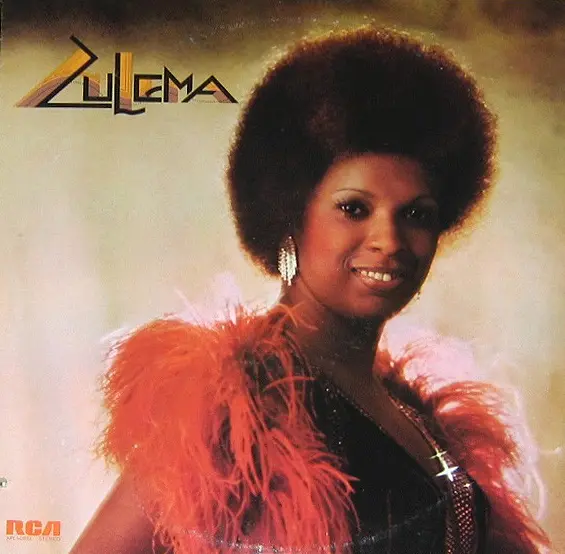 Zulema released her self-titled third album in March 1975 on RCA Victor.
The album pairs soulful ballads with rhythmically varied tracks, placing Zulema’s alto voice at the center of piano-led arrangements and ensemble sections. It alternates angular phrasing with sustained vocal passages, balancing concise songs with elongated tracks.
She wrote five songs and co-wrote “Love to Last Forever” with Joe Gray. The album also includes covers of Procol Harum (“A Whiter Shade of Pale”), Michael Jackson (“Wanna Be Where You Are”), and The Shirelles (“Will You Still Love Me Tomorrow”).
Zulema performs piano, electric piano, concert piano, vocals, backing vocals, and arranges rhythm tracks and backing vocals.
A1. “Standing in the Back Row of Your Heart” (3:44)
A2. “A Whiter Shade of Pale” (5:27) was a 1967 chart-topper by Procol Harum, written by pianist/singer Gary Brooker, organist Matthew Fisher, and lyricist Keith Reid.
A3. “Wanna Be Where You Are” (3:33) originated on Jackson’s 1972 debut solo album Got to Be There, written by Leon Ware and Arthur Ross.
A4. “People” (4:05)
B1. “Hail, Hail America” (3:53)
B2. “Love to Last Forever” (4:38)
B3. “Will You Still Love Me Tomorrow” (3:44) was a 1960 No. 1 hit for The Shirelles, written by Carole King and Gerry Goffin.
B4. “No Time Next Time” (5:21)
B5. “It’s All Right With Me” (4:35)
Bert DeCoteaux co-arranged the album’s strings and horns with Andrew Smith. Musicians include bassist Kevin Jordan, guitarist Jerome Owens, drummer Howard Wyeth, and percussionist Chuck Waldon, who all sing backing vocals.
Sessions occurred at RCA Studios C & D in New York City, with producer Beau Ray Fleming and engineer Pat Martin, assisted by Jim Crotty.
The album features art direction by Acy Lehman, photography by David Hecht, and design by Craig DeCamps.
R.S.V.P.
 Zulema released her fourth album, R.S.V.P., in October 1975 on RCA Victor.
The album merges ballads with rhythmically varied soul tracks, highlighting Zulema’s alto across piano-led arrangements and orchestrated ensemble passages. She alternates contoured phrasing with sustained vocal lines, offering a balance of tight songs and more expansive pieces.
Zulema wrote three songs and collaborated with Joe Gray on “Half of Your Heart,” “I’ve Got News For You,” and “Your Love Has Brought Me That Far.” She also covers Cold Blood (“You Had to Know”), Brenda Holloway (“Just Look What You’ve Done”), and songs submitted by Heidi Fenster (“You’re So Empty (A Strong Wind Could Blow You Away)”) and Van McCoy (“It Will Never Be the Same Again”).
A1. “What Kind of Person Are You?” (3:45)
A2. “Half of Your Heart” (4:14)
A3. “You Had to Know” (4:52) is a song by Donny Hathaway and Leroy Hutson, first recorded by Cold Blood for their 1972 third album, First Taste of Sin.
A4. “Just Look What You’ve Done” (4:04) originated as a 1967 Brenda Holloway single, written by Frank Wilson and R. Dean Taylor and covered recently by Frankie Valli.
A5. “Coins in a Bottle” (3:13)
B1. “You’re So Empty (A Strong Wind Could Blow You Away)” (4:04) is a song credited to Heidi Fenster (aka Mary Lou O’Hara), and earlier songwriter for jazz singer Teresa Brewer.
B2. “It Will Never Be the Same Again” (3:47)
B3. “Your Love Has Brought Me That Far” (4:37)
B4. “Why (Did It Have to End This Way)?” (2:40)
B5. “I’ve Got News for You” (4:00)
Zuluma’s backed by bassist Francisco Centeno, guitarists Bradley Bobo and Cornell Dupree, drummers Brian Grice and Dennis Davis, and percussionists Anderson Waldon and Napoleon Revels-Bey. Soloist Seldon Powell plays soprano saxophone on “I’ve Got News for You.” Backing vocalists include Albert Bailey, Brenda Hilliard, Carrie Burrell, Deirdre Tuck, Pat Johnson, Rennelle Stafford, and Yolanda Payne.
Carl L. Maults produced, arranged, and conducted the sessions at RCA Studios in New York with engineers Dick Baxter, Jim Crotty, and Ray Hall, assisted by Mike Moran.
The album features art direction by Acy R. Lehman, photography by David B. Hecht, and lettering design by Carl Dellacroce.
Suddenly There Was You
 Zulema released her fifth album, Suddenly There Was You, in June 1976 on RCA Victor.
The album blends soulful ballads with mid-tempo rhythmic tracks, emphasizing Zulema’s alto voice across piano-led passages and orchestrated arrangements. She alternates contoured phrasing with sustained lines amid intimate and full-bodied ensemble pieces.
Zulema composed eight tracks, including three (“Suddenly There Was You,” “I Love You Baby,” “Hungry for Your Love”) with lyrical input by Joe Gray. She co-produced the album with Leon Pendarvis, who submitted the track “A New Day Is Coming.”
A1. “All I Need Is You” (5:25)
A2. “Here’s Where Love Begins” (4:20)
A3. “Suddenly There Was You” (3:50)
A4. “I Love You Baby” (4:30)
B1. “Remember” (5:05)
B2. “A New Day Is Coming” (3:21) is a song that Cosmic Echoes pianist Leon Pendarvis co-wrote with one-time Admirals singer Billy Barnes.
B3. “Pity for the Children” (3:18)
B4. “Hungry for Your Love” (3:23)
B5. “It Takes Time” (3:40)
 Suddenly There Was You features bassist Anthony Jackson, drummer S. Jordan, conguero Errol Bennett, vibraphonist David Carey, keyboardist Steve Robbins (Fender Rhodes, harpsichord, synthesizer), and guitarists Keith Loving, Robert Quinn, and Steve Khan.
Trumpeter Jon Faddis forms the horn section with Marvin Stamm, trombonist Alan Raph, and saxophonists Andrew Gadsden, Howard Johnson, George Young, and G. Opalisky.
Sessions occurred at RCA Studios, New York, where Zulema and Pendarvis arranged and co-produced the album with Ron Moseley.
Z-licious
 Zulema released her sixth album, Z-licious, in September 1978 on Lejoint, a US subsidiary of London Records.
The album pairs soul ballads with disco-infused tracks, centering Zulema’s alto voice in piano-led arrangements and fuller ensemble passages. Songs alternate between angular phrasing and sustained lines, offering a balance of concise tracks and extended, rhythmically varied pieces.
Zulema composed the first three and last three tracks. She co-wrote “Hanging On to a Memory” with lyricist Joe Gray. Van McCoy contributed “I’m Not Dreaming,” “Praying for a Miracle,” and co-wrote “See” with Richard Harris.
Musically, the album divides between dance-oriented cuts such as “Change” and reflective ballads like “What Do I Do Now” and “I’m Not Dreaming.” Other tracks, including “Higher Plane,” “See,” and “You’ve Got Something for Me,” employ orchestrated textures and layered backing vocals, creating a rich, full-bodied sound.
A1. “Prologue” (2:30)
A2. “Higher Plane” (4:45)
A3. “Change” (4:12)
A4. “I’m Not Dreaming” (4:17)
A5. “See” (4:00)
B1. “Hanging On to a Memory” (3:55)
B2. “You’ve Got Something for Me” (4:15)
B3. “Praying for a Miracle” (4:21)
B4. “What Do I Do Now” (4:18)
B5. “Gotta Find a Way” (2:58)
B6. “Epilogue” (1:37)
Sessions occurred at Mediasound with producers Zulema Cusseaux and Van McCoy and engineer Alec Head. McCoy’s three songs feature keyboardist Leon Pendarvis and vibraphonist Mike Manieri.
The album features artwork directed by Cyd Kilbey, with logo design by Dennis Rein and photography by Kathleen King.
Singles from the album included “Change,” while the duet with Van McCoy marked a final collaborative highlight before Zulema contributed songwriting and backing vocals to Aretha Franklin’s 1979 disco album La Diva, alongside former Faith, Hope & Charity members Brenda Hilliard and Albert Bailey.
Discography:
- Zulema (1972)
- Ms. Z (1974)
- Zulema (1975)
- R.S.V.P. (1975)
- Suddenly There Was You (1976)
- Z-licious (1978)
Sources:
Artist/Album Pages:
Pacific Drift was an English art-pop/psych band from Manchester that released the album Feelin' Fr...
Lone Star was the Welsh hard-rock band behind the 1976/77 CBS/Columbia albums Lone Star and Firing...
Sandra Wright (Oct. 1, 1948 — Jan. 11, 2010) was an American soul singer from Memphis who recorde...
Sherbet was an Australian rock band from Sydney that released seven studio albums between 1972 and...
Omnibus was an American psych-rock band from New Jersey that released a 1970 self-titled album on...
IT was a Spanish/Argentine electronic/experimental duo comprised of multi-instrumentalists Eduardo...
Jet was an English glam-rock band that released a 1975 self-titled album, guided by bassist and so...
The West Coast Pop Art Experimental Band was an American psychedelic rock band from Los Angeles t...
Bob Welch (July 31, 1946 — June 7, 2012) was an American singer, guitarist, and songwriter from Lo...
Wishbone Ash are an English hard-rock/jam band from Torquay, Devon, that released eleven studio al...
Hannibal was an English blues-rock band from Birmingham that released a self-titled album on B&...
Fernand Péna et Puzzle were a French folk/psych band behind a 1977 album on the self-operated Cent...