

Van Halen is an American hard-rock band from Pasadena that formed in 1972 and built its first six-album run with singer David Lee Roth between 1978 and 1984.
The classic lineup paired guitarist Eddie Van Halen, drummer Alex Van Halen, bassist Michael Anthony, and Roth across Van Halen, Van Halen II, Women and Children First, Fair Warning, Diver Down, and 1984. Their first phase produced the FM evergreens “Runnin’ with the Devil,” “Dance the Night Away,” “Jump,” “Panama,” and “Hot for Teacher.”
After Roth left in 1985, former Montrose singer Sammy Hagar joined for 5150 and OU812, which opened the band’s second studio phase. Across the 1978–1988 span, Van Halen moved from Pasadena backyards and Los Angeles clubs to arena tours and MTV rotation.
Members: Eddie Van Halen (guitar, piano, keyboards), Alex Van Halen (drums), David Lee Roth (lead vocals, 1974-85, 2007-present), Michael Anthony (bass, 1974-2006), Sammy Hagar (lead vocals, 1985-96, 2004), Gary Cherone (lead vocals, 1996-99), Wolfgang Van Halen (bass, 2006-present)
Background
Eddie (b. January 26, 1955) and Alex Van Halen (b. May 8, 1953) arrived in Pasadena in 1962 after their family left the Netherlands. Their father Jan Van Halen worked as a professional clarinetist and saxophonist. He put both sons through early piano study before rock records pulled them toward amplified instruments. Eddie started on drums and Alex on guitar before the brothers swapped roles, a change that fixed the musical core that later carried the band.
David Lee Roth (b. October 10, 1954; Bloomington, Ind.) moved to California as a teenager, where he sang in local groups and studied music theory at Pasadena City College. He entered the brothers’ orbit when their band, Mammoth, rented his PA. Eddie sang in the pre-fame band, which evolved from a 1972 Pasadena unit called Genesis with bassist Mark Stone.
Soon after Roth’s 1974 entrance, the group relinquished the Mammoth moniker to another act and renamed themselves Van Halen, which Roth encouraged for its imposing quality (and possible Led Zeppelin-like ring). Stone cleared out for Michael Anthony (b. June 20, 1954; Chicago), the bassist–singer of Snake, a power trio from nearby Arcadia.
Van Halen built its local name at backyard parties, high-school functions, city parks, and Los Angeles clubs such as the Whisky a Go Go, Gazzarri’s, and the Starwood. A Gene Simmons-financed demo pushed the band toward a larger break, but the decisive turn came after Ted Templeman caught the group at the Starwood in February 1977 and moved Warner toward a deal. Van Halen signed with Warner that year and entered Sunset Sound in Hollywood in late August to cut their debut album.
Van Halen
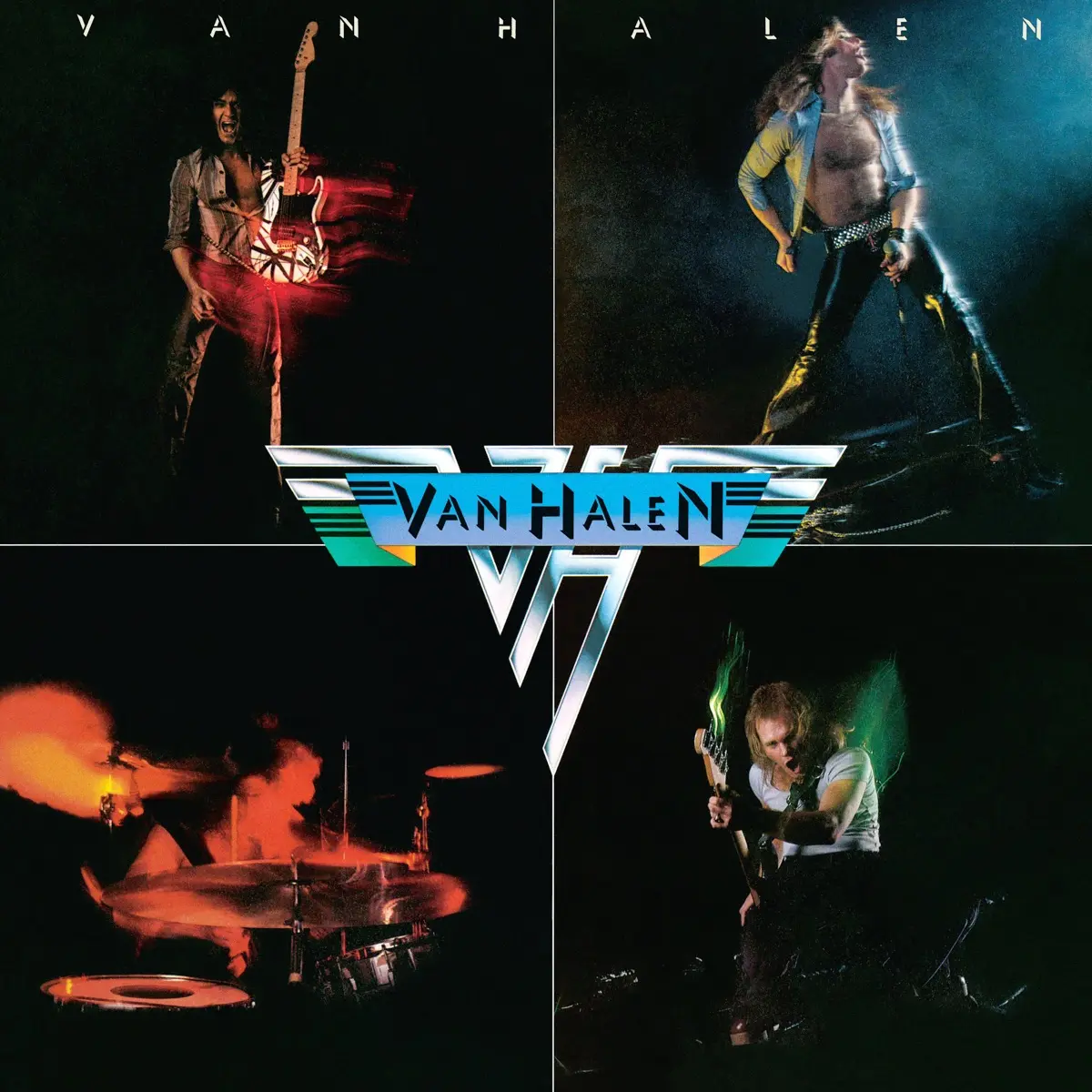 Van Halen released their self-titled debut album on February 10, 1978, on Warner Bros. It features nine group-written originals and covers of The Kinks and John Brim.
Eddie Van Halen dominates with clipped rhythm figures, dive-bomb breaks, and the short solo burst of “Eruption.” David Lee Roth commands with taunts, yelps, and spoken come-ons. Michael Anthony and Alex Van Halen hold the backbeat in a lean, fast, high-volume attack. Amid the compact setup, they engage swelled harmonies, quick stop-start turns, acoustic moments, blues detours, and sudden lead-guitar surges.
“Runnin’ with the Devil” opens the album with horn blasts and a slow stomp. “Eruption” slices across the first side as a short solo break that spills straight into “You Really Got Me.”
“Ain’t Talkin’ ’bout Love” locks onto a descending riff and a cold vocal taunt. “Jamie’s Cryin’” and “Feel Your Love Tonight” carry a brighter chorus pull. “Little Dreamer” slows into a lower strut. “Ice Cream Man” starts with Roth alone on acoustic guitar before the band snaps into electric blues motion.
A1. “Runnin’ with the Devil” (3:36)
A2. “Eruption” (1:42)
A3. “You Really Got Me” (2:38) — originated as a 1964 British Invasion hit by The Kinks, written by their frontman Ray Davies.
A4. “Ain’t Talkin’ ’bout Love” (3:50)
A5. “I’m the One” (3:47)
B1. “Jamie’s Cryin’” (3:31)
B2. “Atomic Punk” (3:02)
B3. “Feel Your Love Tonight” (3:43)
B4. “Little Dreamer” (3:23)
B5. “Ice Cream Man” (3:20) — originated as a 1953 recording by Chicago blues guitarist John Brim.
B6. “On Fire” (3:01)
Sessions spanned August 29 through October 4, 1977, at Sunset Sound Recorders in Hollywood with producer Ted Templeman, who worked in sequence on albums by Little Feat (Time Loves a Hero) and the Doobie Brothers (Livin’ on a Fault Line, Minute By Minute). Onetime Animals soundman Donn Landee co-engineered Van Halen with Logan Jervis, Peggy McCreary, and Kent Nebergall. The process moved quickly, and Roth often cut lead vocals live in an isolation booth while the band played in the room.
Elliot Gilbert photographed the sleeve at the Whisky a Go Go, and Dave Bhang handled the art direction and design. The cover catches the group in performance and shows Eddie Van Halen’s black-and-white Frankenstrat before the later red-striping revision.
In January 1978, Warner Bros. issued “You Really Got Me” as an advance single (b/w “Atomic Punk”). It reached No. 36 on the Billboard Hot 100 and gave the band its first national chart entry. The Kinks classic also inspired 1979 minimal wave versions by Silicon Teens and Dalek I.
“Runnin’ with the Devil” followed as an April single (b/w “Eruption”) that reached No. 84 on the Hot 100 and became an early signature tune. In July, Warner lifted “Jamie’s Cryin’” (b/w “I’m the One”), which didn’t chart but later gained moderate FM evergreen status. “Ain’t Talkin’ ’bout Love” followed as the fourth single in September (b/w “Feel Your Love Tonight”).
Van Halen reached No. 19 on the Billboard 200 and later earned RIAA Diamond certification. Abroad, the album peaked at No. 17 in Australia, No. 18 in Canada, and No. 22 in New Zealand.
Van Halen II
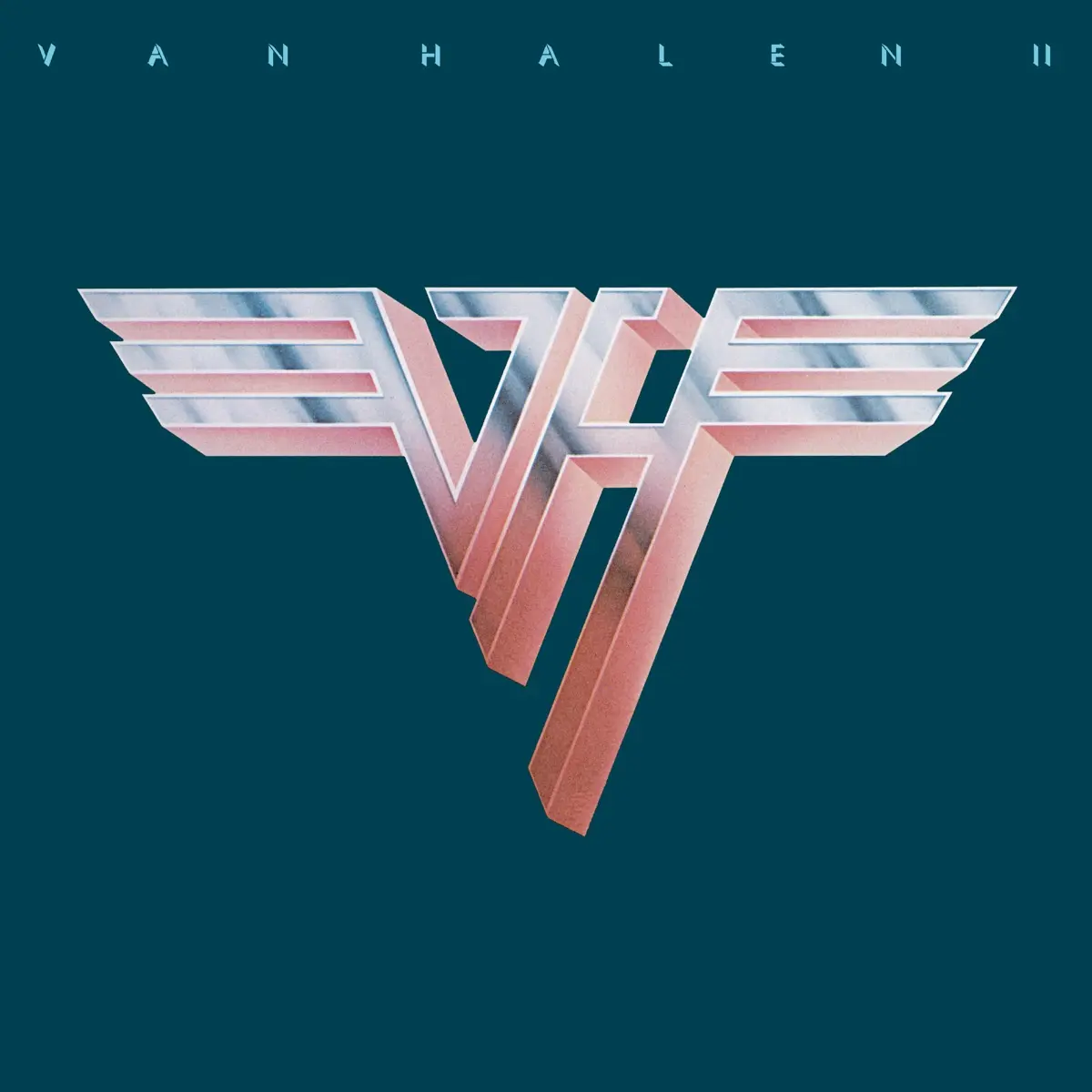 Van Halen released their numerical second album on March 23, 1979, on Warner Bros. It carries nine group-written originals and the Linda Ronstadt cover “You’re No Good.”
Eddie Van Halen reigns with palm-muted runs, tapped harmonics, acoustic breaks, and abrupt lead bursts. Roth belts with brassy, flamboyant swagger across the rolling undercurrents of Michael Anthony and Alex Van Halen. Collectively, their syntax expands with arched choruses, syncopated accents, and subtle textures.
“You’re No Good” opens with flanged bass and swelled guitar chords before the full band lands. “Dance the Night Away” propels with a bright refrain and calypso-tinged intro and middle turns. “Outta Love Again” snaps on clipped drum accents and percussive vocal phrasing. “Somebody Get Me a Doctor” stems from their early pre-record setlist.
“Spanish Fly” breaks the sequence with a short nylon-string cadenza. “Women in Love…” opens on double-tracked tapped harmonics that blur toward electric-piano texture. “Beautiful Girls” closes the album in revised form from the old demo title “Bring On the Girls.”
A1. “You’re No Good” (3:16) — written by Clint Ballard Jr.; first recorded in 1963 by Dee Dee Warwick and covered by Betty Everett, The Swinging Blue Jeans, and Linda Ronstadt, whose 1974 version reached No. 1 on the Billboard Hot 100.
A2. “Dance the Night Away” (3:06)
A3. “Somebody Get Me a Doctor” (2:52)
A4. “Bottoms Up!” (3:05)
A5. “Outta Love Again” (2:51)
B1. “Light Up the Sky” (3:13)
B2. “Spanish Fly” (1:00)
B3. “D.O.A.” (4:09)
B4. “Women in Love…” (4:08)
B5. “Beautiful Girls” (3:56)
Sessions ran December 10–16, 1978, at Sunset Sound, where Ted Templeman produced Van Halen II in sequence with titles by Nicolette Larson and ex-Doobies frontman Tom Johnston. Donn Landee co-engineered the album with Corey Bailey and Jim Fitzpatrick. .
Dave Bhang designed the cover with photography by Elliot Gilbert and Neil Zlozower. The sleeve centers the flying-V logo, while the back cover introduced Eddie’s black-and-yellow “Bumblebee” guitar, which he later said arrived in time for the photo shoot, not the tracking dates. The inner sleeve also shows Roth in a cast.
In April 1979, Warner Bros. issued “Dance the Night Away” as a single (b/w “Outta Love Again”). It reached No. 15 on the Billboard Hot 100 and gained evergreen status with its “ooh, baby, baby” chorus. “Beautiful Girls” followed in August (b/w “D.O.A.”) and peaked at No. 84 but also became an FM staple. In Japan, “Somebody Get Me a Doctor” received single release (b/w “Women in Love…”).
Van Halen II reached No. 6 on the Billboard 200 and No. 23 on the UK album chart.
Women and Children First
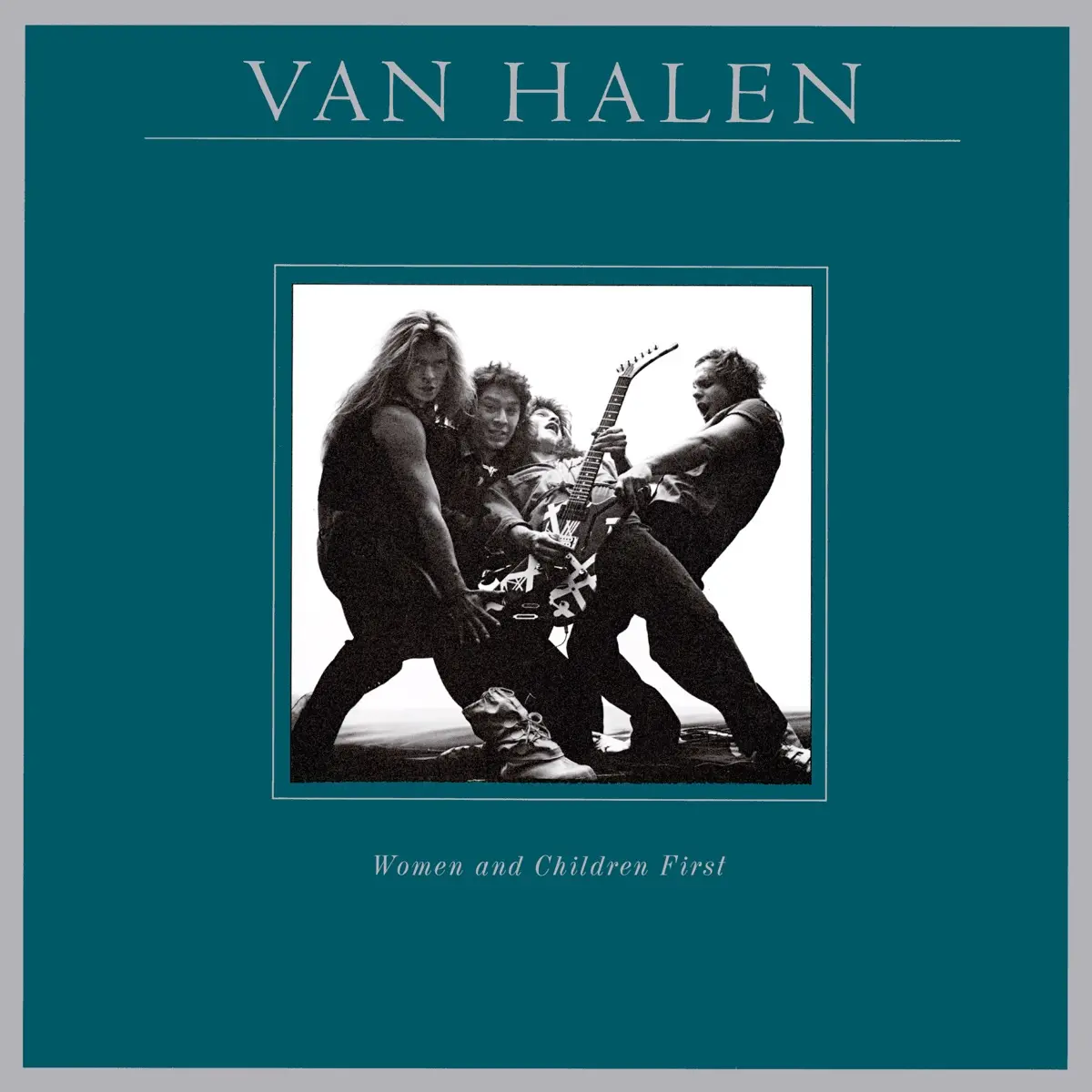 Van Halen released their third album, Women and Children First, on March 26, 1980, on Warner Bros. It was the first Van Halen album built entirely from band-written material.
Eddie bulldozes with harsher riff edges, fast rhythmic jabs, acoustic detours, and short bursts of keyboard color, while Roth strips the vocal layer down to a rougher shout and the band cuts back some of the stacked-chorus lift that shaped the first two albums. The album hits harder, leaves more open air around the rhythm section, and lets the songs turn on sharper breaks, longer tension, and a drier studio attack.
“And the Cradle Will Rock…” opens with a phase-shifted Wurlitzer run through Eddie Van Halen’s Marshall, a sound that reads like guitar until the attack settles. “Everybody Wants Some!!” stretches side one with chants, stop-start breaks, and a long spoken-vocal stretch, while “Fools” and “Romeo Delight” keep the pace hard and tight. “Take Your Whiskey Home” and “In a Simple Rhyme” both reach back to pre-fame writing stock, “Loss of Control” also came from the early stage set, and “Could This Be Magic?” drops into acoustic country-blues with Nicolette Larson on backing vocals and a live rainstorm folded into the track.
A1. “And the Cradle Will Rock…” (3:31)
A2. “Everybody Wants Some!!” (5:05)
A3. “Fools” (5:55)
A4. “Romeo Delight” (4:19)
B1. “Tora! Tora!” (0:57)
B2. “Loss of Control” (2:36)
B3. “Take Your Whiskey Home” (3:09)
B4. “Could This Be Magic?” (3:08)
B5. “In a Simple Rhyme” (4:33)
Van Halen recorded Women and Children First at Sunset Sound between December 1979 and February 1980 with producer Ted Templeman, engineer Donn Landee, and second engineer Gene Meros. Templeman and Landee spread the work across all three Sunset rooms: most tracks went down in Studio 1, many overdubs moved to Studios 2 and 3, and the mixes landed in Studio 2.
Pete Angelus developed the cover concept and served as creative consultant, Richard Seireeni handled the art direction, Norman Seeff shot the sleeve, and the original LP included a Helmut Newton poster that showed Roth chained to a fence.
In May 1980, Warner Bros. issued “And the Cradle Will Rock…” as a 7-inch (b/w “Could This Be Magic?” in the U.S. and Japan; “Everybody Wants Some!!” in the UK). It reached No. 55 on the Billboard Hot 100 and No. 81 in Canada.
Women and Children First reached No. 6 on the Billboard 200, No. 12 in Canada, No. 15 in the UK, and No. 3 in the Netherlands.
Fair Warning
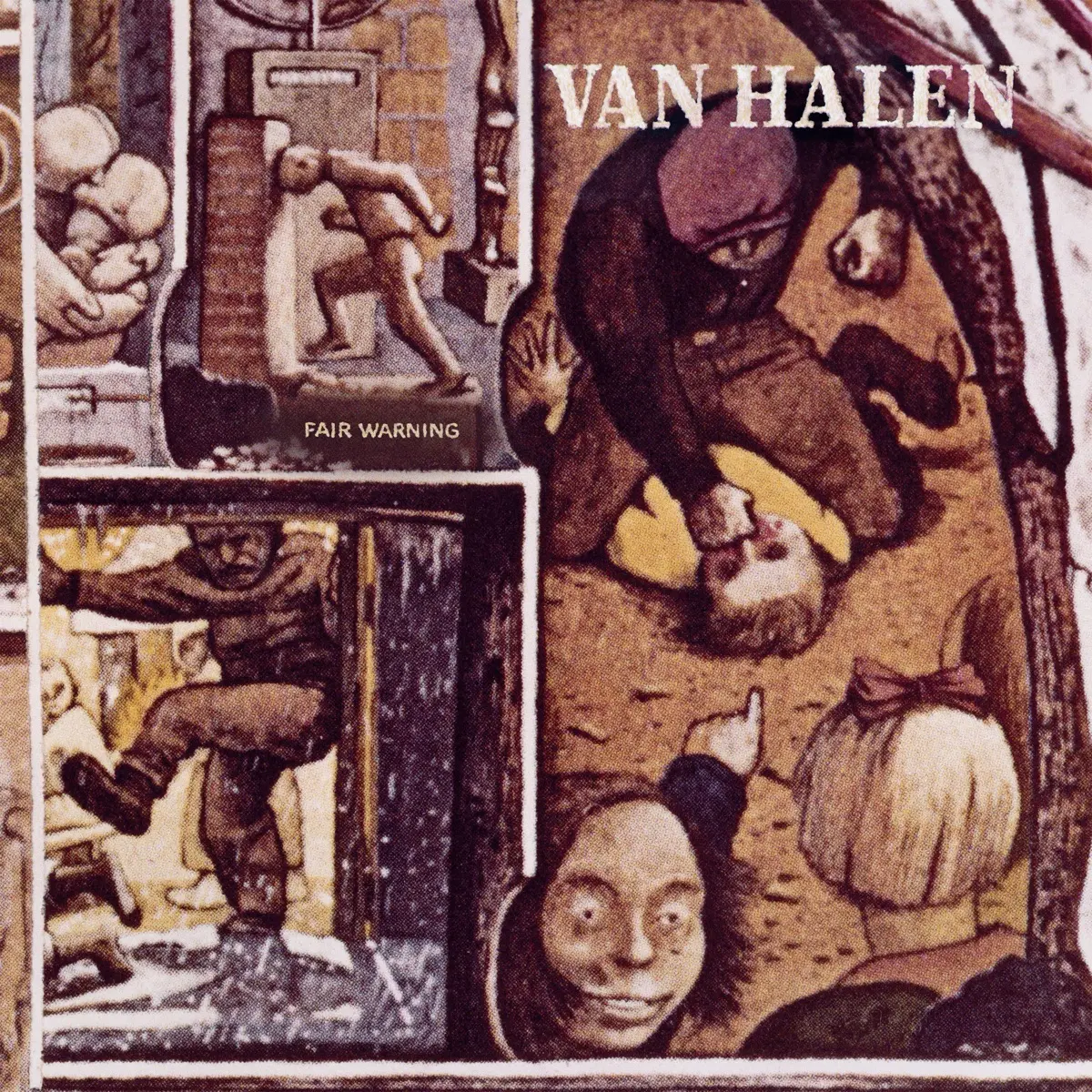 Van Halen released their fourth album, Fair Warning, on April 29, 1981, on Warner Bros.
Eddie Van Halen blazes with flanged riff attack, tighter muting, short synthesizer passages, and abrupt lead breaks, Roth cuts the vocal line into clipped taunts and asides, and Michael Anthony with Alex Van Halen keep a dry, hard backbeat under the whole set. The arrangements leave less room for chorus lift and more room for stop-start turns, brief instrumental links, and quick shifts between stomp, swing, and keyboard haze. They group-wrote all nine tracks.
“Mean Street” opens with Eddie’s tapped-harmonic intro built from the bass-slap-like technique he folded into his live solo, “Hear About It Later” began as a keyboard idea before he turned it into a guitar-based track, and “Unchained” rides a flanger-heavy riff with Ted Templeman’s spoken interjection in the break. “So This Is Love?” leans on a swing beat, “Sunday Afternoon in the Park” strips the record down to an instrumental bridge, and “One Foot Out the Door” closes the side with a synth line that gives way to a fast final burst.
A1. “Mean Street” (4:58)
A2. “Dirty Movies” (4:08)
A3. “Sinner’s Swing!” (3:09)
A4. “Hear About It Later” (4:35)
B1. “Unchained” (3:29)
B2. “Push Comes to Shove” (3:49)
B3. “So This Is Love?” (3:06)
B4. “Sunday Afternoon in the Park” (1:59)
B5. “One Foot Out the Door” (1:58)
Van Halen recorded Fair Warning at Sunset Sound in March and April 1981 with producer Ted Templeman, engineer Donn Landee, and second engineer Gene Meros.
Pete Angelus designed the sleeve, Richard Seireeni handled the art direction, and the cover reworks details from William Kurelek’s The Maze. Greg Gorman supplied the inlay photos, Neil Zlozower shot the cracked-wall insert, and Alex Van Halen had first wanted to use one panel of the painting before Angelus built the final collage.
In June 1981, Warner Bros. issued “So This Is Love?” as a US/Canadian single (b/w “Hear About It Later”). It reached No. 110 on the Billboard Hot 100 and No. 15 on the Mainstream Rock chart.
Warner lifted “Unchained” as a 7-inch in parts of Europe during July 1981, backed with “Push Comes to Shove.” Japanese copies used “So This Is Love?” on the reverse. “Mean Street” appeared as a Spanish 7-inch during 1981 with “Push Comes to Shove” on the B-side. In the Netherlands, “Hear About It Later” became a 7-inch release during 1981 backed with “Mean Street.”
Fair Warning reached No. 5 on the Billboard 200 and later earned double-platinum certification in the United States. It also reached No. 49 in the UK and went platinum in Canada.
Diver Down
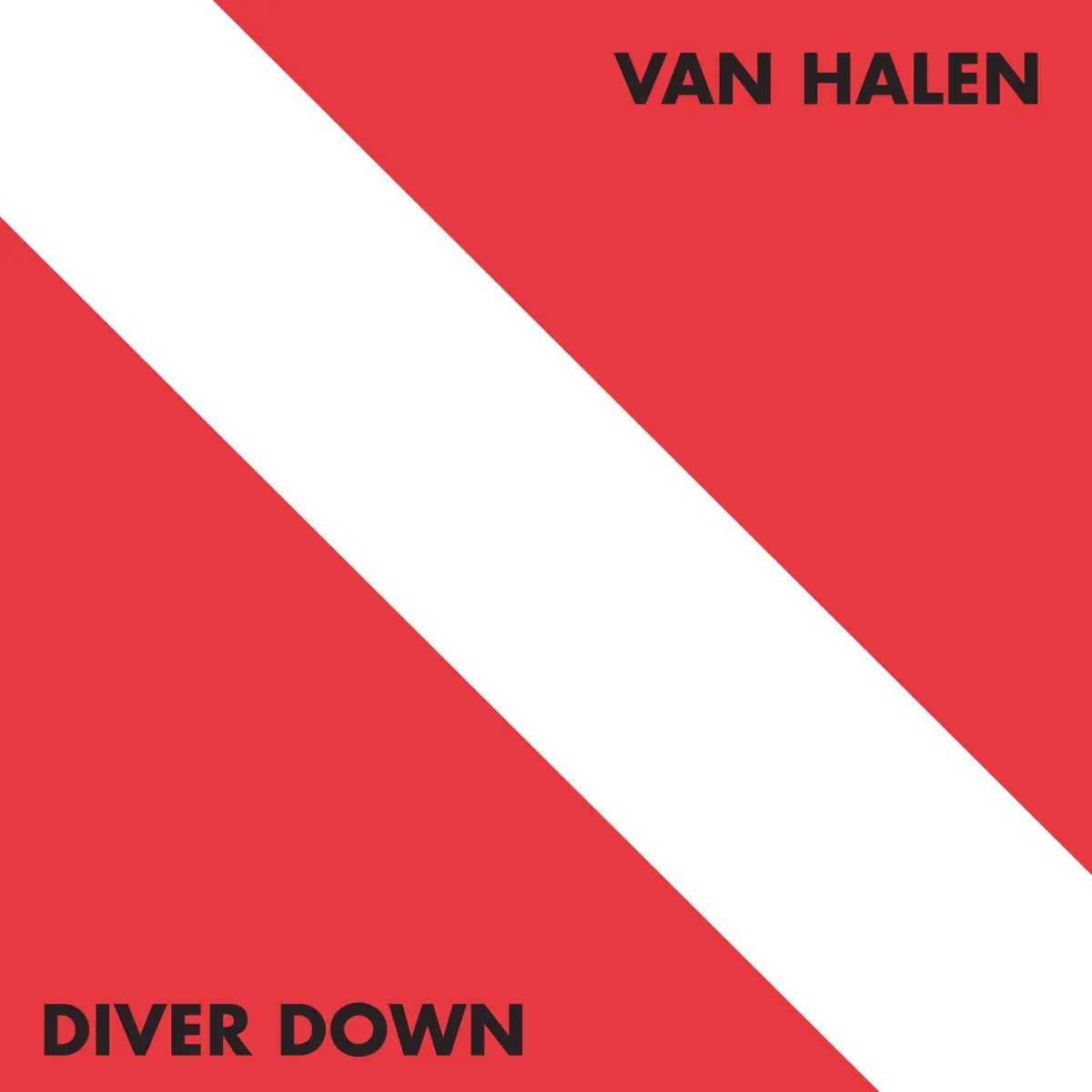 Van Halen released their fifth album, Diver Down, on April 19, 1982, on Warner Bros. It contains five covers, four group-written songs, and three short interludes.
The record deviates from prior hardness with odd bridges, acoustic turns, and abrupt stylistic pivots. Eddie Van Halen dominates with jagged riff attack, delay-toned guitar effects, brief keyboard color, and small instrumental set-pieces. Roth interjects with humor, chant, and character play. The sequence includes sharp left turns into doo-wop harmony, vaudeville swing, and flamenco-accented miniature forms.
“Where Have All the Good Times Gone!” reaches back to a Kinks song the band had already absorbed during its club years, and “Cathedral” turns delay repeats into an organ-like wash that gave the piece its title. “Secrets” slows the pulse and opens the texture around a 12-string line, while “Intruder” adds a shrieking electronic-guitar bridge written to extend the running time of the “(Oh) Pretty Woman” video.
Side two jumps again: “Dancing in the Street” snaps into a brisk pop-dance rewrite, “Little Guitars” opens with a flamenco-styled prelude before the main song lands, “Big Bad Bill (Is Sweet William Now)” pulls the band into period swing with Jan Van Halen on clarinet, and “Happy Trails” closes the album as a short a cappella tag.
A1. “Where Have All the Good Times Gone!” (3:02) — originated as a 1965 folk-rocker on The Kink Kontroversy, written by Ray Davies.
A2. “Hang ’Em High” (3:28)
A3. “Cathedral” (1:23)
A4. “Secrets” (3:28)
A5. “Intruder” (1:39)
A6. “(Oh) Pretty Woman” (2:53) — is a 1964 No. 1 by Roy Orbison, co-written by William Dees.
B1. “Dancing in the Street” (3:43) — is a 1963 Motown evergreen by Martha and the Vandellas, written by Marvin Gaye, Ivy Hunter, and William Stevenson.
B2. “Little Guitars (Intro)” (0:42)
B3. “Little Guitars” (3:47)
B4. “Big Bad Bill (Is Sweet William Now)” (2:44) — is a 1924 popular song by Margaret Young; co-written by Milton Ager and Jack Yellen; revived in 1978 by Ry Cooder and Leon Redbone.
B5. “The Full Bug” (3:18)
B6. “Happy Trails” (1:03) — is a 1952 radio theme by Roy Rogers and his wife, songwriter Dale Evans.
Van Halen recorded Diver Down at Amigo Studios in North Hollywood and Sunset Sound in Hollywood with producer Ted Templeman, engineer Donn Landee, and second engineer Ken Deane. The album came together in 12 days after the stand-alone success of “(Oh) Pretty Woman” pushed Warner Bros. to ask for another LP instead of the break the band had planned.
Pete Angelus and Richard Seireeni handled the art direction, while Richard Aaron and Neil Zlozower supplied the photography. The front sleeve uses the red diver-down flag, and the back cover shows the band onstage at the Tangerine Bowl in Orlando on October 24, 1981, at the close of its opening set for the Rolling Stones.
On January 18, 1982, “(Oh) Pretty Woman” became the lead single (b/w “Happy Trails”). It reached No. 12 on the Billboard Hot 100 and No. 1 on the Billboard Mainstream Rock chart. The accompanying clip, described by the band as its first official music video, opens with a captive figure before shifting into a rescue plot at Indian Dunes, near Valencia, involving Napoleon (Roth), Tarzan (Alex), a cowboy (Eddie), and a samurai (Anthony).
Warner Bros. lifted “Dancing in the Street” as the second single in May 1982. U.S. copies used “The Full Bug” on the reverse, while German copies used “Where Have All the Good Times Gone!” The single reached No. 38 on the Billboard Hot 100, No. 3 on Mainstream Rock, and No. 15 in Canada.
“Secrets” appeared as a third single on August 23, 1982. Dutch chart records also show a Netherlands release from the album cycle.
Diver Down reached No. 3 on the Billboard 200. It also reached No. 5 in Canada, No. 9 in France, No. 28 in the Netherlands, and later earned 4× platinum certification in the United States.
Discography:
- Van Halen (1978)
- Van Halen II (1979)
- Women and Children First (1980)
- Fair Warning (1981)
- Diver Down (1982)
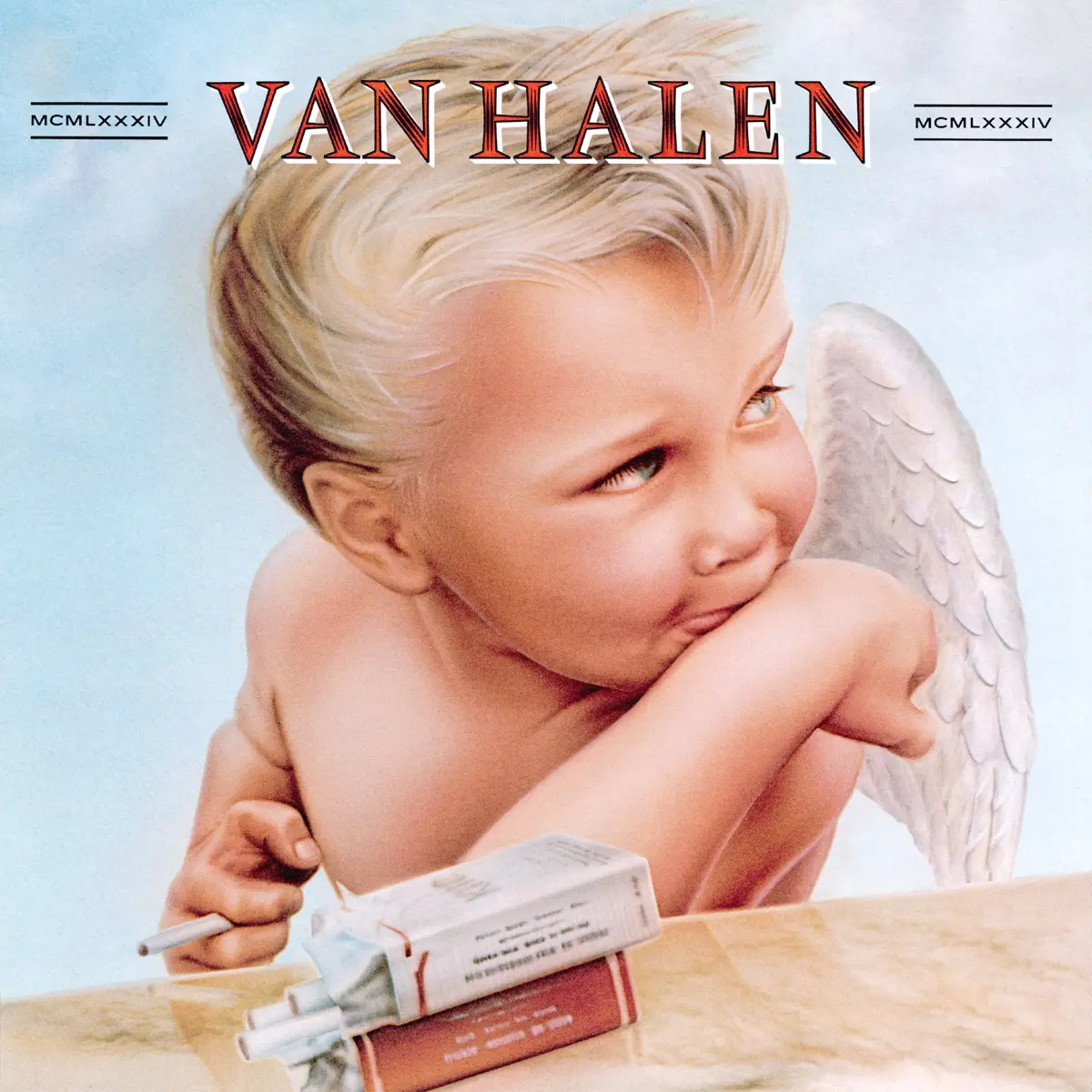
- 1984 (1984)
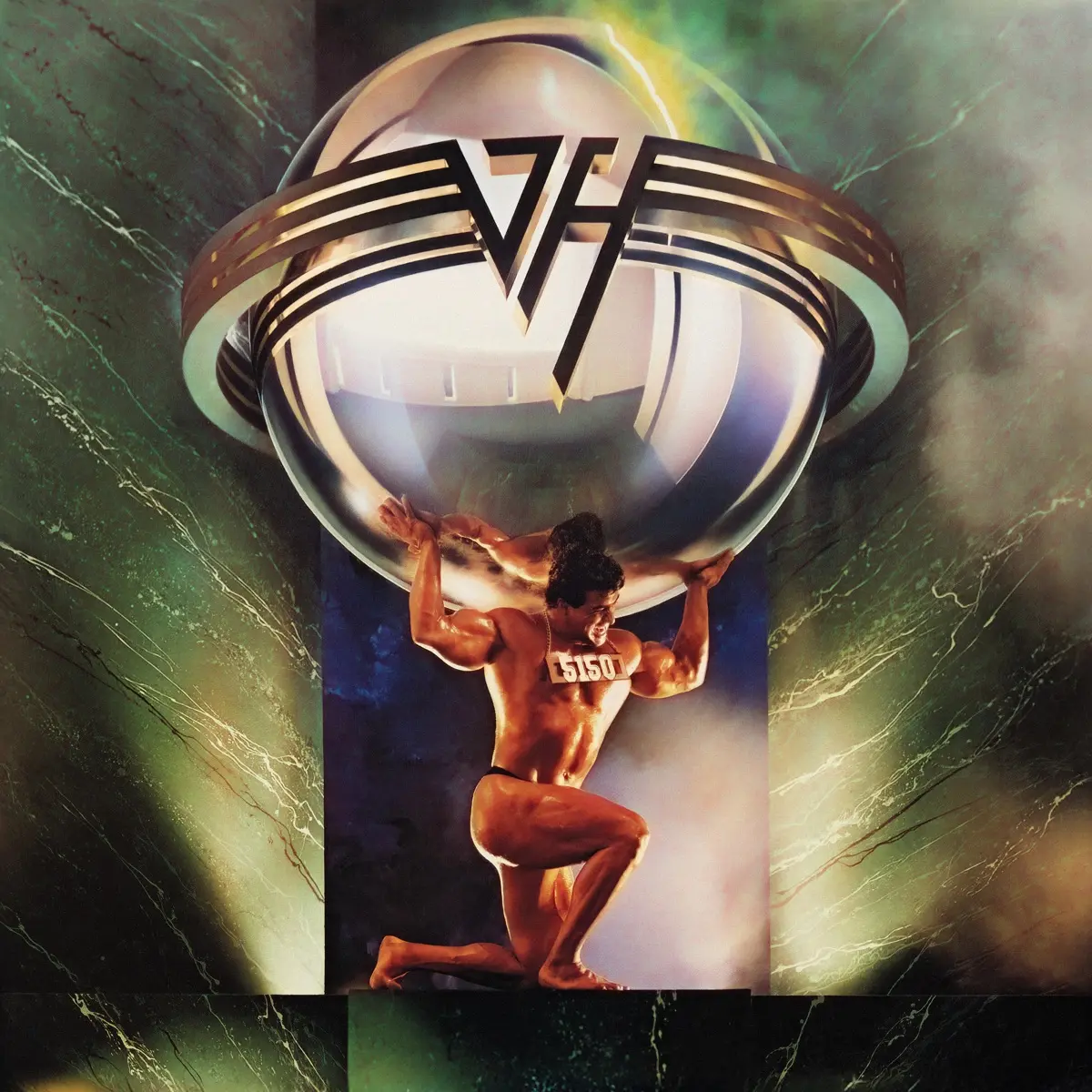
- 5150 (1986)
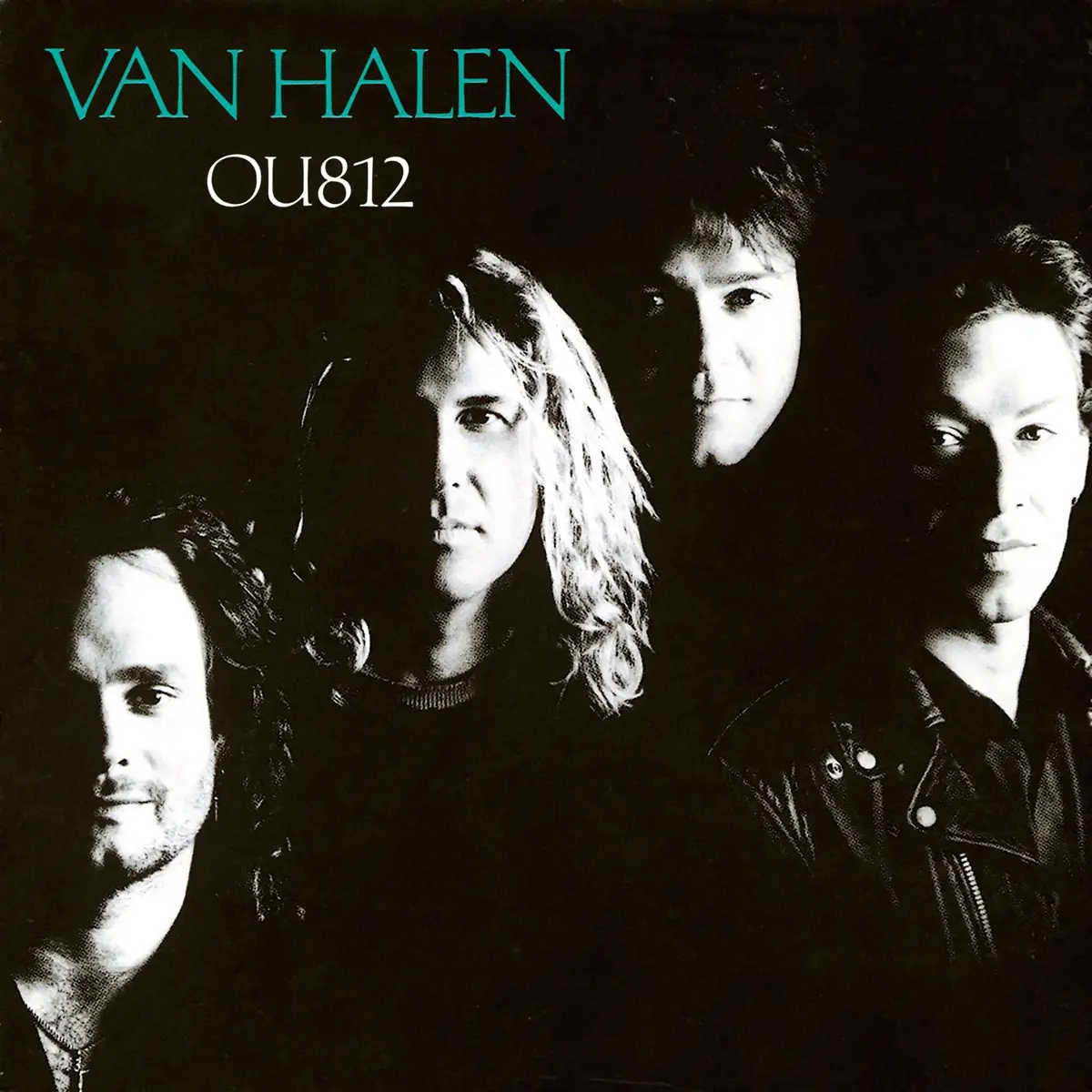
- OU812 (1988)
- For Unlawful Carnal Knowledge (1991)
- A Different Kind of Truth (2012)
Sources:
Artist/Album Pages:
Republika was a Polish post-punk/coldwave band that released two albums and three singles between ...
Alcatrazz was a multi-national metal band formed in Los Angeles by English vocalist Graham Bonnet ...
Chuck Brown & the Soul Searchers were an American soul-funk band from Washington, DC, that rel...
Espíritu was an Argentine symphonic-rock band, active for three seperate periods between the early...
Kashif Saleem (Dec. 26, 1956 — Sept. 25, 2016) was an American R&B singer, songwriter, and key...
Michael Jackson (Aug. 29, 1958 — June 25, 2009) was an American soul-pop singer and songwriter who...
Eider Stellaire was a French Zeuhl/jazz-rock band that self-released two eponymous albums between ...
Amii Stewart is an American soul singer who had a 1979 disco No. 1 with a remake of the Eddie Floy...
Alice Cooper is an American singer and performer, best known for the shock-rock antics and horror tr...
Frankie Miller is a Scottish blues-rock and blue-eyed-soul singer who released seven albums betwee...
Peter Green (Oct. 29, 1946 – July 25, 2020) was an English blues-rock guitarist from Bethnal Green...
Annette Peacock (born 1941) is an American avant-garde jazz vocalist and composer from Brooklyn w...