

The Incredible String Band was a Scottish folk-rock band from Edinburgh that released six studio albums and a live double-LP between 1966 and 1970 on Elektra, followed by five further albums between 1971 and 1974 on Island Records.
Formed in 1966 by multi-instrumentalists Robin Williamson and Mike Heron with original member Clive Palmer, The Incredible String Band pioneered a highly eclectic strain of psychedelic folk that fused Celtic, Middle Eastern, and Indian influences. Their early Elektra albums — The 5000 Spirits or the Layers of the Onion, The Hangman’s Beautiful Daughter, and Wee Tam and the Big Huge — showcased intricate acoustic instrumentation and mystical lyricism that anticipated world-folk and progressive trends.
Songs like “The Hedgehog’s Song,” “A Very Cellular Song,” and “First Girl I Loved” embodied their surreal, poetic vision. With later members Licorice McKechnie and Rose Simpson, they expanded into multi-part suites and theatrical performances, blending sitar, gimbri, and oud into Western folk frameworks. The group’s Island-era output, including Liquid Acrobat as Regards the Air and No Ruinous Feud, pursued broader arrangements with touches of rock and reggae. Renowned for their spiritual imagery, complex modal interplay, and free-form approach, they influenced subsequent acts in acid folk, progressive folk, and art-pop.
Members: Robin Williamson (guitar, violin, whistle, mandolin, gimbri, flute, oud, percussion, pan pipe, piano, shenai, [water] harp, bass, sarangi, bouzouki, suona, harpsichord, kazoo, organ, Jew’s harp, Irish harp, washboard, [Chinese] banjo, sundri, conch, cello, oboe, bass recorder, banjo, hardanger fiddle, viola, vocals, 1965-2003), Mike Heron (guitar, sitar, organ, harmonica, hammer dulcimer, harpsichord, washboard, percussion, piano, vibraphone, mandolin, bass, harmonium, flute, accordion, vocals), Clive Palmer (banjo, vocals, 1965-66, 1999-2006), Christina “Licorice” McKechnie (vocals, organ, percussion, guitar, kazoo, bass, hammer dulcimer, spoons, drums, harmonium, pipe organ, bodhrán, autoharp, 1968-72), Rose Simpson (bass, violin, percussion, tabla, vocals, 1968-71), Malcolm Le Maistre (bass, keyboards, harpsichord, percussion, kazoo, swanee whistle, mandolin, whistle, tenor recorder, bouzouki, glockenspiel, clarinet, church organ, guitar, harmonium, vocals, 1971-74), Gerard Dott (clarinet, saxophone, keyboards, vibraphone 1972-73), Stan Schnier [aka Stan Lee] (bass, 1972-74), Jack Ingram (drums, 1972-74), Graham Forbes (guitar, 1973-74), John Gilston (drums, 1974)
Background
The Incredible String Band had its roots in a musical partnership between singing acoustic musicians Robin Williamson (guitar, mandolin, fiddle) and Clive Palmer (banjo).
Williamson (b. 1943, Fairmilehead) first performed in various jazz bands on the Edinburgh club circuit. By 1961, he turned to folk music and roomed with guitarist Bert Jansch (later Pentangle). They performed as a duo in Edinburgh and London.
In 1963, Williamson befriended Palmer (b. 1943, Edmonton, North London — d. 2014), who started on the late-’50s Soho jazz scene and busked in Paris circa 1960 with folkster Wizz Jones. Williamson and Palmer played trad and bluegrass on the Edinburgh folk circuit, including the Crown Bar run by Archie Fisher.
In August 1965, they impressed American talent scout Joe Boyd, who was setting up a UK office for Elektra Records. Wanting a fuller sound, they held auditions for a third member. They hired guitarist–singer Mike Heron (b. 1942, Edinburgh), formerly of local R&B–beatsters The Saracens.
In early 1966, Palmer opened the Incredible Folk Club, an all-night haunt on Sauchiehall Street in Glasgow. As the house band, they courted interest from the folk-specialty label Transatlantic. Boyd outbid that label and signed the trio to Elektra.
The Incredible String Band
 The Incredible String Band released their self-titled debut album in September 1966 on Elektra.
The album captures the original trio of Clive Palmer, Robin Williamson, and Mike Heron performing largely self-written material, showcasing a variety of stringed and folk instruments in relatively conventional arrangements compared with the band’s later work. Palmer contributes banjo and kazoo, Williamson adds mandolin, tin whistle, fiddle/violin, and Heron provides guitar across most tracks, with each member singing their own compositions.
Mike Heron wrote seven songs, Robin Williamson five, and Clive Palmer one; the album also includes arrangements of traditional material (“Schaeffer’s Jig,” “Whistle Tune,” “Niggertown”).
The album divides into solo and ensemble performances, with solo tracks highlighting Williamson’s angular vocal phrasing and Heron’s rich guitar patterns, while the few full-trio pieces explore tightly interwoven string textures. Tracks like “October Song” demonstrate Williamson’s lyrical surrealism, and Heron’s “Empty Pocket Blues” blends reflective storytelling with subtle instrumental shifts. Traditional arrangements like “Whistle Tune” and “Schaeffer’s Jig” add concise instrumental interludes.
A1. “Maybe Someday” (2:20)
A2. “October Song” (4:09)
A3. “When the Music Starts to Play” (2:43)
A4. “Schaeffer’s Jig” (0:58) — traditional arrangement
A5. “Womankind” (3:45)
A6. “The Tree” (2:55)
A7. “Whistle Tune” (1:02) — traditional arrangement
A8. “Dandelion Blues” (3:02)
B1. “How Happy I Am” (2:20)
B2. “Empty Pocket Blues” (4:47)
B3. “Smoke Shovelling Song” (3:47)
B4. “Can’t Keep Me Here” (2:14)
B5. “Good as Gone” (3:30)
B6. “Footsteps of the Heron” (3:14)
B7. “Niggertown” (2:09) — traditional arrangement
B8. “Everything’s Fine Right Now” (2:12)
 Sessions occurred at Sound Techniques studio in Chelsea, London, with producer Joe Boyd overseeing engineering and performance.
The original UK album cover features a photograph of Palmer, Williamson, and Heron holding unusual instruments in a London music shop.
The Incredible String Band did not chart on release but reached number 34 in the UK Albums Chart in July 1968 following the later success of The Hangman’s Beautiful Daughter.
Bob Dylan praised Williamson’s “October Song” as a standout of the period. Heron later cited this debut as his favorite of the band’s releases.
The 5000 Spirits or the Layers of the Onion
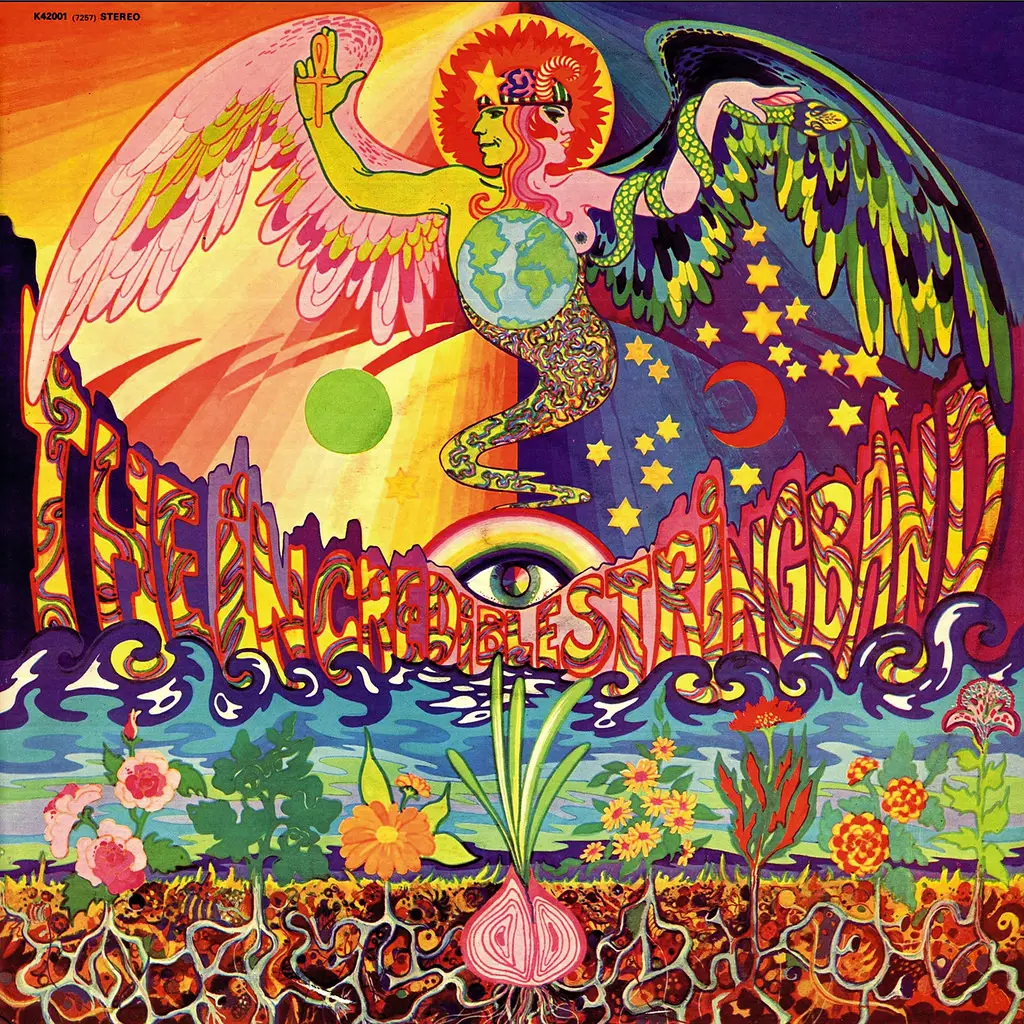 The Incredible String Band released their second album, The 5000 Spirits or the Layers of the Onion, in July 1967 on Elektra. Side One features three songs each by Mike Heron (tracks 1, 3, 5) and Robin Williamson, who wrote the odd-numbered entries on Side Two, which has three Heron numbers (8, 10, 12).
The album presents Robin Williamson and Mike Heron as a duo, expanding from conventional folk into complex psychedelic compositions enriched by British folk, North African, and Indian influences. Williamson brings oud, gimbri, mandolin, flute, and varied percussion, while Heron provides guitar, harmonica, and vocals, joined by Licorice McKechnie on vocals and percussion, Danny Thompson on double bass, John “Hoppy” Hopkins on piano, and Nazir Jairazbhoy on sitar and tanpura.
Robin Williamson wrote six songs, Mike Heron five, and the album features arrangements of traditional material alongside covers of later-interpreted works, such as Williamson’s “First Girl I Loved,” later recorded by Judy Collins and Jackson Browne.
Tracks range from ethereal, Middle Eastern-inflected pieces like “Chinese White,” with bowed gimbri weaving around acoustic guitar, to blues-tinged compositions such as “Blues for the Muse,” grounded by Thompson’s bass and Williamson’s harmonica. Psychedelic narratives and varied instrumentation characterize “The Mad Hatter’s Song” and “Gently Tender,” where flutes, sitar, hand drums, and gimbri interlock with Heron’s acoustic guitar. Shorter tracks like “My Name Is Death” juxtapose drone-based motifs with structured folk forms, while the whimsical and cosmic elements are explored in “The Hedgehog’s Song” and “Painting Box.”
A1. “Chinese White” (3:40) — features bowed gimbri and oud textures weaving with acoustic guitar, reflecting Middle Eastern influences.
A2. “No Sleep Blues” (3:53)
A3. “Painting Box” (4:04)
A4. “The Mad Hatter’s Song” (5:40) — cosmic folk-blues with complex, shifting rhythms and interlocking string patterns.
A5. “Little Cloud” (4:05)
A6. “The Eyes of Fate” (4:02)
B1. “Blues for the Muse” (2:49) — grounded by double bass and harmonica, expanding the 12-bar blues form.
B2. “The Hedgehog’s Song” (3:30) — accented by hand drums and acoustic slide guitar.
B3. “First Girl I Loved” (4:55) — later covered by Judy Collins as “First Boy I Loved” and by Jackson Browne; contemplative narrative over soft instrumentation.
B4. “You Know What You Could Be” (2:46)
B5. “My Name Is Death” (2:46) — one-chord drone opens into 18th-century folk structures.
B6. “Gently Tender” (4:49) — combines flutes, sitar, hand drums, bass, gimbri, and acoustic guitar into an anarchical, texturally dense arrangement.
B7. “Way Back in the 1960s” (3:11)
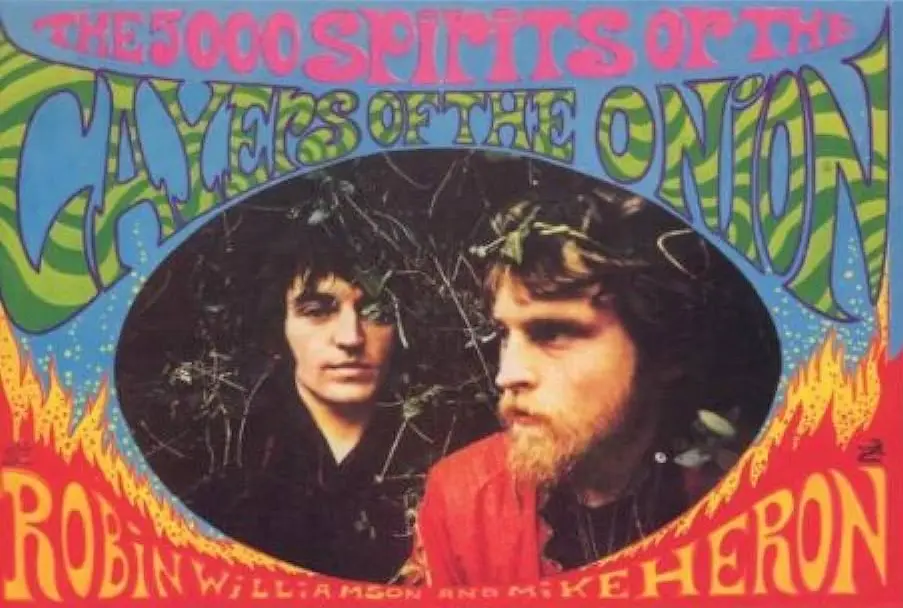 Sessions occurred at Sound Techniques studio in Chelsea, London, with Joe Boyd producing and John Wood engineering on four-track, capturing overdubs and multi-instrument arrangements.
The album cover was designed by The Fool (Simon Postuma and Marijke Koger), depicting a multi-colored hermaphrodite juxtaposing light and darkness.
Elektra promoted the album with the singles “Painting Box” and “Way Back in the 1960s” in June 1967, both issued in the UK.
The 5000 Spirits or the Layers of the Onion reached number 25 on the UK Albums Chart and number one on the UK Folk Chart. It drew admiration from Paul McCartney, who cited it as his favorite album of 1967, and influenced later covers of “First Girl I Loved” by Judy Collins and Jackson Browne.
The Hangman’s Beautiful Daughter
 The Incredible String Band released their third album, The Hangman’s Beautiful Daughter, in March 1968 on Elektra.
The album expands the duo of Robin Williamson and Mike Heron into a richly textured psychedelic folk suite, layering exotic instruments, multitracked vocals, and global influences. Williamson plays guitar, gimbri, panpipes, oud, mandolin, piano, chahanai, penny whistle, harmonica, and varied percussion, while Heron adds sitar, guitar, Hammond organ, harpsichord, and hammered dulcimer. They are joined by Licorice McKechnie on vocals and finger cymbals, Dolly Collins on flute organ and piano, and David Snell on harp, with uncredited contributions from Richard Thompson and Judy Dyble on “The Minotaur’s Song.”
Robin Williamson wrote seven songs, Mike Heron three, and the album integrates spiritual and folk traditions, including a Bahamian spiritual in Heron’s “A Very Cellular Song,” whose final section, “May the Long Time Sun Shine,” is Heron’s original composition.
Songs range from surreal parodies like “The Minotaur’s Song,” which combines call-and-response harmonies, guitar, and piano, to extended reflective suites such as “A Very Cellular Song,” where handclaps, panpipes, gimbri, and multi-part vocals circle around secular and spiritual lyrics. Tracks like “Waltz of the New Moon” and “Three Is a Green Crown” feature droning acoustic guitar, Middle Eastern vocal stylings, and sitar flourishes. The closing “Nightfall” presents a gentle lullaby framed by whole-tone vocal intervals and exotic instrumentation.
A1. “Koeeoaddi There” (4:49)
A2. “The Minotaur’s Song” (3:22) — surreal music-hall parody with call-and-response chorus, six-part harmonies, and piano-acoustic guitar interplay.
A3. “Witches Hat” (2:33)
A4. “A Very Cellular Song” (13:09) — Heron composition; merges two-chord vamp, Bahamian spiritual (“I Bid You Goodnight”), multi-part vocal rounds, and layered exotic instrumentation;
contemplative lyrics on life, love, and cellular existence.
B1. “Mercy I Cry City” (2:46)
B2. “Waltz of the New Moon” (5:10) — acoustic guitar drones, Middle Eastern and Scottish vocal elements.
B3. “The Water Song” (2:50)
B4. “Three Is a Green Crown” (7:46) — hypnotic droning with Williamson’s primitive sitar, psychedelic folk textures.
B5. “Swift As the Wind” (4:53)
B6. “Nightfall” (2:33) — lullaby with guitar, sitar, and whole-tone vocal intervals.
 Sessions occurred at Sound Techniques studio in Chelsea, London, with Joe Boyd producing and John Wood engineering on 24-track tape, capturing multitracked overdubs and complex instrumentation.
The album’s cover photo, taken on Christmas Day 1967, depicts Williamson, Heron, their girlfriends Licorice McKechnie and Rose Simpson, friends, children of Mary Stewart, and Williamson’s dog Leaf.
Elektra released the album in March 1968, preceding a solo tour for the band.
The Hangman’s Beautiful Daughter reached No. 5 on the UK Albums Chart and number 161 on the U.S. Billboard Top LPs. The album earned a Grammy nomination in the folk category, influenced Led Zeppelin’s first album according to Robert Plant, and inspired later covers, including Nigel Planer’s 1984 recording of the amoeba section from “A Very Cellular Song.”
Wee Tam & The Big Huge
 The Incredible String Band released their fourth album, Wee Tam & The Big Huge, in November 1968 on Elektra. It’s a double album (86:48) with eighteen songs: eight by Mike Heron and the rest by Robin Williamson. Record One (Wee Tam) contains three Heron numbers on Side One (“Puppies,” “Beyond the See,” “Log Cabin Home in the Sky”) and two on Side Two (“You Get Brighter,” “Air”). Record Two (The Big Huge) is all Williamson apart from “Greatest Friend,” “Cousin Caterpillar,” and “Douglas Traherne Harding.”
The double album presents a more grounded, song-oriented approach while retaining the band’s signature eclecticism. Williamson and Heron employ guitars, sitar, gimbri, violin, harpsichord, piano, Hammond organ, sarangi, kazoo, Irish harp, flute, percussion, and various reed instruments. Rose Simpson adds violin, percussion, and backing vocals, and Licorice McKechnie contributes percussion, Irish harp, and backing vocals, with the four members sharing lead and backing vocal duties.
Robin Williamson wrote fifteen tracks, while Mike Heron contributed eight, including “Puppies,” “Beyond the See,” “Log Cabin Home in the Sky,” “You Get Brighter,” and “Air.” The songs blend freeform psychedelia with more conventional folk structures, maintaining the band’s mystical and esoteric lyricism.
Record One, Wee Tam, opens with Heron’s introspective numbers layered with Eastern instruments and vocal interplay, contrasted by Williamson’s expansive compositions like “Job’s Tears” and “Ducks on a Pond.” Record Two, The Big Huge, emphasizes Williamson’s sprawling suites, interspersed with Heron tracks such as “Greatest Friend” and “Cousin Caterpillar,” which balance whimsy and contemplative textures. The album alternates between structured songs and loose, exploratory passages, incorporating drones, modal shifts, and occasional rhythmic irregularities.
A1. “Job’s Tears” (6:40)
A2. “Puppies” (5:30)
A3. “Beyond the See” (2:16)
A4. “The Yellow Snake” (2:04)
A5. “Log Cabin Home in the Sky” (4:00)
B1. “You Get Brighter” (5:44)
B2. “The Half-Remarkable Question” (5:01)
B3. “Air” (3:12)
B4. “Ducks on a Pond” (9:17)
 C1. “Maya” (9:24)
C2. “Greatest Friend” (3:30)
C3. “The Son of Noah’s Brother” (0:16)
C4. “Lordly Nightshade” (5:13)
C5. “The Mountain of God” (1:51)
D1. “Cousin Caterpillar” (5:15)
D2. “The Iron Stone” (6:33)
D3. “Douglas Traherne Harding” (6:15)
D4. “The Circle Is Unbroken” (4:47)
 Sessions occurred intermittently between April and August 1968 at Sound Techniques studio in Chelsea, London, with Joe Boyd producing and engineering handled by John Wood. The band used fewer overdubs than on previous albums, favoring live ensemble interplay.
The double LP’s UK release featured a gatefold sleeve with lyrics, poems by Williamson, and photos of the band in a garden. U.S. releases split the double album into two separate LPs, Wee Tam and The Big Huge, with individual covers of Williamson and Heron.
Wee Tam & the Big Huge marked the band’s move toward collective cohesion, fusing 1960s mysticism with British Isles folk traditions while consolidating their instrumental experimentation and esoteric songwriting into a more focused, song-oriented format.
Changing Horses
 The Incredible String Band released their fifth album, Changing Horses, in November 1969 on Elektra.
The album marks a stylistic and thematic transition for the band, expanding from acoustic psychedelic folk toward structured compositions with electric textures and a more direct lyrical approach. Robin Williamson and Mike Heron, now joined officially by Licorice McKechnie and Rose Simpson, integrate Eastern and Western instrumentation under the influence of their newly embraced Scientology beliefs. Williamson plays sarangi, flute, violin, Hammond organ, gimbri, and assorted percussion, while Heron contributes acoustic and electric guitars, sitar, vibraphone, mandolin, and piano. McKechnie adds Hammond organ, kazoo, guitar, and percussion; Simpson anchors the group on bass guitar and vocals.
Robin Williamson wrote three pieces, including the sixteen-minute “Creation,” and co-wrote “Dust Be Diamonds” with Heron, who supplied the music. Heron wrote two tracks: the fourteen-minute “White Bird” and “Sleepers, Awake!”—both marked by his expanding interest in electric instrumentation and structured form.
“White Bird” opens as an extended meditation on spiritual rebirth, developing from quiet acoustic passages into layered ensemble interplay with sitar and electric guitar. “Creation” unfolds in mantra-like sections where gimbri, violin, and hand percussion form a hypnotic framework beneath Williamson’s narrative imagery. The shorter “Big Ted” and “Mr. and Mrs.” pair rhythmic drive with eccentric humor, while “Sleepers, Awake!” conveys the group’s newfound clarity through its plainspoken tone and restrained arrangement. “Dust Be Diamonds” bridges their individual sensibilities, its shifting rhythm supporting overlapping organ and guitar figures.
A1. “Big Ted” (4:21)
A2. “White Bird” (14:46)
A3. “Dust Be Diamonds” (6:14) — features Robin Williamson’s lyrics set to Mike Heron’s music.
B1. “Sleepers, Awake!” (3:44)
B2. “Mr. and Mrs.” (4:54)
B3. “Creation” (16:04)
 Sessions occurred during the summer of 1969 at Sound Techniques studio in Chelsea, London, with producer Joe Boyd and engineer John Wood, with additional recording for “Big Ted” at Elektra Studios in New York City. Ivan Pawle (Hammond organ, piano) appeared courtesy of Dr. Strangely Strange.
The album cover, photographed by Janet Shankman, depicts the four members perched in a tree, reflecting the group’s lighter communal spirit. Inner artwork by Williamson and Heron features handwritten lyrics and symbolic drawings tied to the album’s spiritual themes.
Elektra promoted the album with the single “Big Ted” (b/w “All Writ Down”) in October 1969.
Changing Horses reached number 30 on the UK Albums Chart and number 166 on the U.S. Billboard 200. The album captures the Incredible String Band’s shift from psychedelic folk mysticism toward structured, spiritually centered songwriting that would define their next phase.
I Looked Up
 The Incredible String Band released their sixth album, I Looked Up, in April 1970 on Elektra. It features four songs in the three-to-six-minute range credited to Mike Heron and two ten-plus-minute excursions by Robin Williamson.
The album balances concise, song-based material with the group’s long-form, mystical storytelling. It contains four Mike Heron pieces in the three-to-six-minute range and two extended Robin Williamson compositions that exceed ten minutes. The sound bridges the pastoral psychedelia of Wee Tam & the Big Huge with the electric folk textures emerging in late-1960s Britain, featuring elaborate arrangements and layered acoustic instrumentation.
Robin Williamson and Mike Heron share the writing duties, with Heron penning four songs and Williamson contributing the two lengthy suites “Pictures in a Mirror” and “When You Find Out Who You Are.” The opening track, “Black Jack Davy,” reworks the Scottish traditional “Black Jack Davey,” sung by Heron in an uptempo, Appalachian-inspired setting. “The Letter” features Fairport Convention drummer Dave Mattacks, adding a folk-rock pulse that complements Heron’s spry, whimsical tone.
Heron’s “This Moment” unfolds as an introspective reflection with circular piano and organ phrases, while “Fair as You” closes the album with measured grace. Williamson’s “Pictures in a Mirror” dramatizes the tale of Lord Randall through tonal shifts and vocal distortions, merging English balladry with an eerie, theatrical sensibility. “When You Find Out Who You Are,” performed at Woodstock, extends as a meditative invocation of self-realization consistent with the group’s spiritual interests at the time.
A1. “Black Jack Davy” (3:59) — is a re-write of the traditional Anglo–Scottish border ballad “The Raggle Taggle Gypsy,” reimagined by Mike Heron in an uptempo, Appalachian-inspired arrangement.
A2. “The Letter” (3:08) — features Fairport Convention drummer Dave Mattacks on a bright, rhythmic folk-rock setting.
A3. “Pictures in a Mirror” (10:43) — adapts the “Lord Randall” story with theatrical narration and tonal shifts.
A4. “This Moment” (6:07) — lyrical reflection on time and awareness framed by piano and organ textures.
 B1. “When You Find Out Who You Are” (10:58) — extended spiritual meditation performed at the Woodstock Festival.
B2. “Fair as You” (6:27)
Sessions took place in late 1969 at Sound Techniques studio in Chelsea, London, with Joe Boyd producing and John Wood engineering. Drummer Dave Mattacks of Fairport Convention appears on “The Letter.”
I Looked Up was recorded while the group prepared their stage production U, resulting in an informal yet intricate work that reasserts their instrumental dexterity and folkloric range. The album reached number 30 on the UK Albums Chart and number 196 on the U.S. Billboard 200.
U
 The Incredible String Band released their seventh album, U, in October 1970 on Elektra.
A sprawling double set of 18 tracks spanning nearly two hours, U serves as the recorded companion to the group’s mixed-media stage production of the same name. The project united the band with the Stone Monkey dance troupe in a theatrical presentation described as a “surreal parable in song and dance,” centered on the incarnation and transcendence of the soul. Musically, U expands their psychedelic folk foundation into a far-reaching suite of raga-inspired instrumentals, folk-rock vignettes, and dramatic ritual pieces recorded in a marathon two-day session.
Mike Heron wrote eight of the album’s pieces, including both record openers (“El Wool Suite,” “Bridge Song”) and the fifteen-minute closer “Rainbow.” Robin Williamson composed the majority of the remaining material, alternating between folk ballad, spiritual invocation, and abstract narrative. Vocalist Janet Shankman contributed “Bad Sadie Lee,” while Licorice McKechnie wrote and sang “I Know You.”
Heron’s side-two sequence (“Partial Belated Overture,” “Light in Time of Darkness,” “Glad to See You,” “Walking Along With You,” “Hirem Pawnitof/Fairies’ Hornpipe,” and “Bridge Theme”) forms the album’s rhythmic centerpiece, pairing Eastern-tinged drones with rustic, dance-like phrasing. Williamson’s contributions—“The Juggler’s Song,” “Time,” “Queen of Love,” “Astral Plane Theme,” and “Puppet Song”—move between courtly folk, dreamlike allegory, and chamber-style minimalism. Shankman’s “Bad Sadie Lee” lightens the first disc with vaudevillian humor, while McKechnie’s “I Know You” lends the second disc a brief, introspective pause before Heron’s sweeping finale “Rainbow,” a near-sixteen-minute progression of pastoral motifs and devotional refrains.
A1. “El Wool Suite” (8:31)
A2. “The Juggler’s Song” (3:13)
A3. “Time” (3:58)
A4. “Bad Sadie Lee” (Janet Shankman) (3:49) — a ragtime-styled cabaret piece featuring Shankman on lead vocal.
A5. “Queen of Love” (8:37)
A6. “Partial Belated Overture” (Mike Heron) (2:56)
B1. “Light in Time of Darkness / Glad to See You” (Heron) (10:16)
B2. “Walking Along With You” (Heron) (3:59)
B3. “Hirem Pawnitof / Fairies’ Hornpipe” (Traditional, arr. Heron) (6:20)
B4. “Bridge Theme” (Heron) (2:18)
C1. “Bridge Song” (Heron) (8:49)
C2. “Astral Plane Theme” (4:52)
C3. “Invocation” (4:49)
C4. “Robot Blues” (4:09)
C5. “Puppet Song” (6:16)
C6. “Cutting the Strings” (5:10)
D1. “I Know You” (Licorice McKechnie) (3:24)
D2. “Rainbow” (Heron) (15:41)
Sessions occurred in May 1970 at Pacific High Recording Studios in San Francisco with producer Joe Boyd and engineer John Wood. The lineup featured Mike Heron (guitar, sitar, piano, organ, vocals), Robin Williamson (guitar, violin, flute, gimbri, percussion, vocals), Licorice McKechnie (vocals, drums), Rose Simpson (bass, vocals, violin), and guests Janet Shankman (vocals, harpsichord) and Tom Constanten (arrangements).
The album’s cover art by Janet Shankman depicts a multicolored “U,” with the gatefold interior showing photographs of the group and the Stone Monkey troupe performing their theatrical production.
U reached number 34 on the UK Albums Chart and number 183 on the U.S. Billboard 200.
Be Glad for the Song Has No Ending
 The Incredible String Band released their eighth album, Be Glad for the Song Has No Ending, in March 1971 on Island.
The album serves as both a transitional studio set and the soundtrack to the group’s 1970 film of the same name. It marks their first release on Island Records and the final collaboration with producer Joe Boyd. Musically, the album bridges the dreamlike acoustic psychedelia of Wee Tam and the Big Huge with the structured, ensemble-oriented sound they would pursue on Liquid Acrobat as Regards the Air. Its first side features completed songs from earlier sessions, while the second side presents an extended instrumental suite used in the film’s dramatic sequences.
Robin Williamson wrote three of the five songs on side one and co-composed the side-two suite with Mike Heron, who contributed two tracks to the first side.
Williamson’s “Come With Me” opens the album with lyrical invitation and modal instrumentation built around mandolin and violin. Heron’s “All Writ Down” follows with steady rhythm and pastoral tone, while Williamson’s “Veshengro” carries a mystical edge colored by sarangi and shawm. Heron’s “See All the People” uses organ and glockenspiel to trace scenes of human motion and awareness. Williamson closes the side with “Waiting for You,” a slow, meditative piece anchored by bass and gimbri. The second half, “The Song Has No Ending,” unfolds in nine linked instrumental passages, alternating between folk dance motifs, Indian-inspired drones, and atmospheric interludes that reflect the film’s spiritual allegory.
A1. “Come With Me” (Robin Williamson) (3:51)
A2. “All Writ Down” (Mike Heron) (4:24)
A3. “Veshengro” (Williamson) (5:03)
A4. “See All the People” (Heron) (3:38)
A5. “Waiting for You” (Williamson) (6:42)
B1. “The Song Has No Ending” (Parts 1–9) (Heron, Williamson) (26:41)
Sessions occurred between July 1968 and April 1969 at Sound Techniques studio in Chelsea, London, with Joe Boyd producing and John Wood engineering. The lineup comprised Robin Williamson (vocals, guitars, violin, mandolin, piano, bass, sarangi, bouzouki, gimbri, shawm, whistle, percussion), Mike Heron (vocals, guitars, organ, harpsichord, sitar, bass, glockenspiel, chimes), Licorice McKechnie (vocals, recorder, organ, mandolin, shaker, kazoo), and Rose Simpson (vocals, bass, recorder, tabla).
The accompanying film, released in July 1970, combined concert footage and interviews with a 20-minute fable titled The Pirate and the Crystal Ball, devised and performed by the band and friends. The music from Be Glad for the Song Has No Ending underscores both the band’s communal idealism and their shift toward a more theatrical presentation of folk mysticism.
Liquid Acrobat as Regards the Air
 The Incredible String Band released their ninth album, Liquid Acrobat as Regards the Air, in October 1971 on Island.
The album marked a major stylistic transition for the group, introducing electric instrumentation and a fuller ensemble sound that carried through their remaining years. It was their first album without bassist Rose Simpson and the first to feature Malcolm Le Maistre, whose theatrical background added stagecraft and color to the arrangements. The mix of electric and acoustic textures expands their folk base into a more elaborate, British folk-rock framework while retaining the band’s ritual and mythic character.
Robin Williamson wrote seven of the album’s twelve pieces and arranged the traditional medley “Jigs.” Mike Heron contributed four songs and co-wrote “Cosmic Boy” with Licorice McKechnie.
Williamson’s “Darling Belle” closes the album as its centerpiece—a three-part narrative told through alternating lead, response, and spoken passages that trace the life of its female subject from childhood to death. His opening “Talking of the End” establishes the album’s reflective tone with sitar and layered percussion. Heron’s “Dear Old Battlefield” and “Painted Chariot” recall the band’s earlier melodic vigor in more structured, folk-rock forms. “Cosmic Boy” blends piano and harmonium beneath McKechnie’s ethereal lead. Williamson’s “Evolution Rag” and “Adam and Eve” show his continued fascination with allegory and cyclical time, while Heron’s remake of “The Tree” reworks a song from their 1966 debut in a slower, more deliberate setting.
A1. “Talking of the End” (5:30) — Robin Williamson
A2. “Dear Old Battlefield” (3:05) — Robin Williamson
A3. “Cosmic Boy” (3:49) — Mike Heron, Licorice McKechnie
A4. “Worlds They Rise and Fall” (3:23) — Mike Heron
A5. “Evolution Rag” (4:42) — Robin Williamson
A6. “Painted Chariot” (3:42) — Mike Heron
B1. “Adam and Eve” (2:31) — Robin Williamson
B2. “Red Hair” (2:05) — Mike Heron
B3. “Here Till Here Is There” (3:04) — Robin Williamson
B4. “Tree” (2:58) — Mike Heron
B5. “Jigs: Eyes Like Leaves / Sunday Is My Wedding Day / Drops of Whiskey / Grumbling Old Men” (2:41) — traditional, arranged by Robin Williamson
B6. “Darling Belle” (10:59) — Robin Williamson
Sessions occurred in August 1971 at Sound Techniques and Island Studios in London with producer Stanley Schnier and engineer John Wood. The group comprised Robin Williamson (vocals, guitars, violin, cello, mandolin, oud, oboe, flute, banjo, percussion), Mike Heron (vocals, guitars, sitar, organ, piano, harmonium, electric piano, bass), Licorice McKechnie (vocals, organ, harmonium, recorder, percussion), and Malcolm Le Maistre (vocals, harpsichord, mandolin, bouzouki, percussion, whistles). Fairport Convention drummer Gerry Conway plays on “Dear Old Battlefield,” “Painted Chariot,” and “Adam and Eve.”
Liquid Acrobat as Regards the Air continued the band’s shift toward ensemble folk-rock while preserving their ritualistic, poetic sensibility.
Earthspan
 The Incredible String Band released their tenth album, Earthspan, in November 1972 on Island.
The album continues the group’s gradual move toward electric folk-rock, pairing acoustic textures with organ, piano, and synthesizer in arrangements that favor Western forms over the exotic tonalities of their late-1960s work. It was their second studio project with Malcolm Le Maistre and the final appearance of Licorice McKechnie, marking the end of the classic ISB era. The material alternates between wistful seafaring ballads, spiritual meditations, and narrative vignettes with less emphasis on the mystical or non-Western instrumentation that once defined their sound.
Robin Williamson wrote four songs and co-wrote one; Mike Heron composed three and co-wrote one with Licorice McKechnie. Le Maistre contributed three pieces, including the opening number. They also revisited the traditional “Black Jack David,” previously recorded on I Looked Up (1970) under its alternate title “Black Jack Davy.”
The album opens with Le Maistre’s “My Father Was a Lighthouse Keeper,” an atmospheric account of maritime solitude with layered harmonium and percussion. Heron’s “Antoine” unfolds as a lilting character sketch with shifting rhythm patterns, while Williamson’s “Restless Night” uses electric piano and blues phrasing to evoke Van Morrison’s recent introspective style. The eight-minute “Sunday Song,” co-written by McKechnie and Heron, builds from soft duet passages to rousing ensemble sections with vocal exchanges between the two writers. The revisited “Black Jack David” appears here in a brisk, hand-clapped bluegrass setting with fiddle and banjo. Williamson’s “Banks of Sweet Italy” and “Moon Hang Low” draw on European folk cadence, the former ornate and wistful, the latter tinged with early jazz phrasing. Le Maistre’s “Sailor and the Dancer” and Williamson’s closing “Seagull” both return to nautical themes, balancing reflection and romantic imagery.
A1. “My Father Was a Lighthouse Keeper” (Malcolm Le Maistre) (4:21)
A2. “Antoine” (Mike Heron) (3:53)
A3. “Restless Night” (Robin Williamson) (3:30)
A4. “Sunday Song” (Licorice McKechnie, Mike Heron) (8:28)
A5. “Black Jack David” (traditional; arranged by Robin Williamson) (2:38) — variant of the traditional Scottish ballad, earlier recorded by the group in 1970 as “Black Jack Davy”
B1. “Banks of Sweet Italy” (Robin Williamson) (3:01)
B2. “The Actor” (Malcolm Le Maistre, Robin Williamson) (3:49)
B3. “Moon Hang Low” (Williamson) (3:22)
B4. “Sailor and the Dancer” (Le Maistre) (2:34)
B5. “Seagull” (Heron) (6:02)
Sessions occurred between March and August 1972 at Sound Techniques studio in Chelsea, London, with Robin Williamson and Mike Heron producing. The group comprised Robin Williamson (vocals, guitars, violin, flute, oboe, mandolin, harmonium), Mike Heron (vocals, guitars, piano, organ, synthesizer, bass), Licorice McKechnie (vocals, organ, recorder, percussion), and Malcolm Le Maistre (vocals, mandolin, harpsichord, percussion).
Earthspan concluded the band’s collaboration with McKechnie and furthered their transition into structured, song-oriented folk-rock with reflective lyrical imagery grounded in European and maritime traditions.
No Ruinous Feud
 The Incredible String Band released their eleventh album, No Ruinous Feud, in March 1973 on Island.
The album marks a shift from the band’s trademark folk mysticism toward a lighter, rhythm-centered sound that incorporates elements of reggae, pop, and soft rock. It introduces Gerard Dott in place of Licorice McKechnie and finds Mike Heron emphasizing electric textures and contemporary arrangements over the acoustic eccentricity of earlier works.
Robin Williamson wrote five songs and arranged one traditional piece; Mike Heron composed four and produced the album with Roger Mayer. Malcolm Le Maistre contributed two originals. The band also recorded covers of Tommy McCook & The Supersonics (“Second Fiddle”) and Dolly Parton (“My Blue Tears”).
“Explorer” opens with a brisk tempo and fluid acoustic layering typical of Heron’s newer direction, while Le Maistre’s “Down Before Cathay” blends folk guitar and hand percussion under reflective vocals. Williamson’s “Saturday Maybe” explores the unease of infidelity through delicate string lines, and his “Jigs” reworks the traditional “Speed the Plow,” “Mountain Road,” and “Mason’s Apron” into a lively instrumental medley. The seafaring “Old Buccaneer” and “At the Lighthouse Dance” follow in Le Maistre’s whimsical narrative style. The group’s cover of “Second Fiddle” replaces Jamaican horns with guitar rhythm and light percussion, while Parton’s “My Blue Tears” appears as a subdued country-folk lament. Williamson’s “Circus Girl” and “Weather the Storm” return to his lyrical storytelling, and Heron’s “Turquoise Blue” closes the set with one of his more serious, contemplative pieces.
A1. “Explorer” (3:28) — Mike Heron
A2. “Down Before Cathay” (4:16) — Malcolm Le Maistre
A3. “Saturday Maybe” (2:45) — Robin Williamson
A4. “Jigs” (2:50) — traditional; arranged by Robin Williamson — medley of “Speed the Plow,” “Mountain Road,” and “Mason’s Apron”
A5. “Old Buccaneer” (3:23) — Robin Williamson
A6. “At the Lighthouse Dance” (3:30) — Malcolm Le Maistre
B1. “Second Fiddle” (2:23) — written by Duke Reid; originated as a 1968 ska single by Tommy McCook & The Supersonics
B2. “Circus Girl” (2:30) — Robin Williamson
B3. “Turquoise Blue” (3:59) — Mike Heron
B4. “My Blue Tears” (2:00) — written by Dolly Parton; first appeared on her 1971 album Coat of Many Colors
B5. “Weather the Storm” (3:02) — Robin Williamson
B6. “Little Girl” (4:21) — Mike Heron
Sessions occurred in January 1973 with production by Roger Mayer and Mike Heron. The lineup consisted of Robin Williamson (vocals, guitar, violin, flute, oboe), Mike Heron (vocals, guitar, piano, organ, bass), Malcolm Le Maistre (vocals, percussion, mandolin), and Gerard Dott (vocals, recorder, harmonium).
No Ruinous Feud captures the band’s late-period turn toward mainstream folk-pop, retaining moments of instrumental charm while incorporating reggae and contemporary rhythmic settings into their evolving sound.
Hard Rope & Silken Twine
 The Incredible String Band released their twelfth album, Hard Rope & Silken Twine, in March 1974 on Island.
The album blends folk with progressive rock elements, expanding the group’s acoustic framework with electric guitar, piano, and synthesizer textures. It serves as the group’s final studio statement, concluding a trajectory that had grown increasingly eclectic across their Island-era releases.
Mike Heron produced the album and wrote three of its six songs, including the 20-minute closer “Ithkos.” Robin Williamson contributed two, while Malcolm Le Maistre co-wrote one with pianist Mike Garson, known for his work on David Bowie’s Aladdin Sane.
Heron’s “Maker of Islands” opens with layered guitars and gentle vocal phrasing that build toward a spiritual tone. Williamson’s “Cold February” unfolds as a mournful ballad over sitar and flute lines, while Le Maistre’s “Glancing Love” takes a theatrical direction with Garson’s sharp piano accents. Williamson’s “Dreams of No Return” recalls the band’s late-’60s raga-folk style through droning strings and reflective imagery. Heron’s “Dumb Kate” provides a brief folk interlude before the side-long “Ithkos,” which traverses several movements—from Greek modes and acoustic folk to electric progressive passages with synthesizer and percussion—mirroring the band’s experimental breadth in a single piece.
A1. “Maker of Islands” (6:01)
A2. “Cold February” (5:46)
A3. “Glancing Love” (4:00) — co-written by Malcolm Le Maistre and pianist Mike Garson, noted for his work with David Bowie
A4. “Dreams of No Return” (5:20)
B1. “Dumb Kate” (3:21)
B2. “Ithkos” (19:23)
Sessions occurred in early 1974 with Mike Heron producing. The lineup comprised Mike Heron (vocals, guitars, bass, synthesizer), Robin Williamson (vocals, guitar, violin, flute, sitar), Malcolm Le Maistre (vocals, percussion), and Mike Garson (piano).
Hard Rope & Silken Twine charted at No. 208 on Billboard’s Bubbling Under the Top LPs list. The album marked the end of The Incredible String Band’s initial run, closing their career with an ambitious synthesis of folk, raga, and progressive composition.
Discography:
- The Incredible String Band (1966)
- The 5000 Spirits or the Layers of the Onion (1967)
- The Hangman’s Beautiful Daughter (1968)
- Wee Tam & The Big Huge (1968)
- Changing Horses (1969)
- I Looked Up (1970)
- U (1970)
- Be Glad for the Song Has No Ending (1971)
- Liquid Acrobat as Regards the Air (1972)
- Earthspan (1972)
- No Ruinous Feud (1973)
- Hard Rope & Silken Twine (1974)
- On Air [archival] (1991)
- The Chelsea Sessions 1967 [archival] (1997)
Sources:
- Discogs: Incredible String Band
- 45worlds: Incredible String Band
- John Peel Wiki: Incredible String Band
- RYM: Incredible String Band
Artist/Album Pages:
A Foot in Coldwater (AFIC) was a Canadian hard-rock band from Toronto that released three Daffodi...
Frantz was a French chanson-psych singer who released the 1970 album Peut-être aux yeux-silence.....
Pau Riba (Aug. 7, 1948) is a Spanish singer/songwriter who was active as a recording artist for mo...
McCoy Tyner (1938–2020) was an American jazz pianist, active for six decades. He earned his earliest...
Roy Ayers (1940–2025) was an American vibraphonist, composer, and producer who debuted with the 19...
Fields was an English organ-rock trio that released a self-titled album on CBS in 1971. They were fo...
Svenska Löd AB! was a Swedish jazz-rock band that self-released the 1971 album Hörselmat. Guitaris...
Kin Ping Meh was a German rock band that released six studio albums between 1971 and 1977, plus a ...
The Gods were an English psych-rock band that released the 1968–69 Columbia albums Genesis and To ...
The Zombies were an English art-pop/psych band that was active from 1962 to 1968. Distinguished by t...
Frijid Pink was an American hard-rock band from Detroit that released the 1970 albums Frijid Pink an...
Billy Cobham (born May 16, 1944) is a Panamanian-American jazz-rock drummer who played in the band...