

Tako was a Yugoslav symphonic/space-rock band released the 1978–80 albums Tako and U Vreći za Spavanje, both later reissued with bonus tracks and alternate cover art.
Members: Dušan Ćućuz [aka Dule] (bass, vocals), Đorđe Ilijin (keyboards, flute, harp), Sava Bojić (guitar, vocals, 1975-77), Milan Lolić [aka Mića Žorž] (drums, 1975-77), Miroslav Dukić (guitar, vocals, 1977-81), Slobodan Felekatović (drums, 1977-81)
Background
Tako (тако: the Serbo-Croatian adverb for “so,” “thus,” or “in that way”) was formed in Belgrade in 1975 by bassist Dušan Ćućuz and keyboardist/flutist Đorđe Ilijin following the breakup of Opus. Early rehearsals and demos featured guitarist Sava Bojić and drummer Milan Lolić, both replaced in 1976 by Miroslav Dukić and Slobodan Felekatović. With this stabilized lineup, Tako gained attention at the 1977 Belgrade Summer Festival and later played to 100,000 attendees as openers for Bijelo Dugme at Hajdučka česma. Their growing live reputation led to a record deal and the sessions for their self-titled debut.
Tako
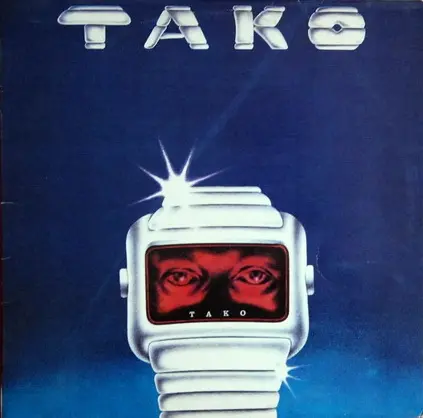 Tako released their self-titled debut album in June 1978 on ZKP RTVLJ.
The album blends space-inflected textures, angular jazz passages, and lyrical flute with shifting rhythmic intensity and dynamic electric piano work. Guitar, synth, and flute alternate lead roles across episodic structures that balance atmospheric drift with sharply defined transitions.
Guitarist/singer Miroslav Dukić composed “Utapanje Sunčeve Svetlosti u Peščanu Memoriju” while bassist/singer Dušan Ćućuz wrote the opening track. Đorđe Ilijin composed the remaining four tracks and plays keyboards, flute, and harmonica.
“Probudi se” opens with a drifting pulse and space-textured synths, gradually thickened by sustained guitar phrases that swell after each vocal line, cresting in a clipped solo that burns out just before the reprise. “Sinteza” unfolds in stages: electric piano and steady percussion open the structure, then give way to Gilmour-styled guitar phrasing before a sharp switch introduces distorted harmonica over a heavy rhythm shift. “Utapanje sunčeve svetlosti u peščanu memoriju” breaks into jagged bursts, its forward motion carried by tom-heavy drumming and alternating lead spots for guitar and synth, anchored by tight rhythmic accents and a closing vocal coda.
“Lena” contrasts piano and flute in a staggered lyrical flow, building from mid-tempo motion into interweaving solos with sharpened guitar inflections and a rounded flute return. “Minijatura” offers a brief, flute-led reverie that alternates between motion and stillness, with phrasing that leans toward chamber-folk. The 16-minute “Druga strana mene” shifts through defined sections: a heavy overture with swelling synth layers, brisk flute runs, and a rhythm section that transitions from bold to suspended; the midpoint gives way to quieter electric piano figures and ambient phrasing, later overtaken by elegiac organ, introspective flute, and clipped guitar motifs. The composition maintains tension through contrast—recurring rhythmic pivots, spatial dissolves, and melodic fragments—without collapsing into excess.
A1. “Probudi se” [Wake Up] (4:48)
A2. “Sinteza” [Synthesis] (4:55)
A3. “Utapanje sunčeve svetlosti u peščanu memoriju” [Drowning of Sunlight in Sandy Memory] (6:35)
A4. “Lena” (4:43)
B1. “Druga strana mene” [The Other Side of Me] (16:26)
B2. “Minijatura” [Miniature] (2:55)
Sessions took place at Studio M in Novi Sad with recording engineer Stevan Tibai, assisted by Ileš Ištvan. Katalin Farkaš produced the album; Ivo Umek handled editorial supervision. Lacquer cutting occurred at PGP RTB by technician ГАША.
Artwork by Jugoslav Vlahović. Inner sleeve photography by Slobodan Turić. Album pressed by TGP Helidon and printed by GIP “Beograd.”
CD reissue bonus track:
7. “Put na jug” [Journey to the South] (3:42)
U Vreći za Spavanje
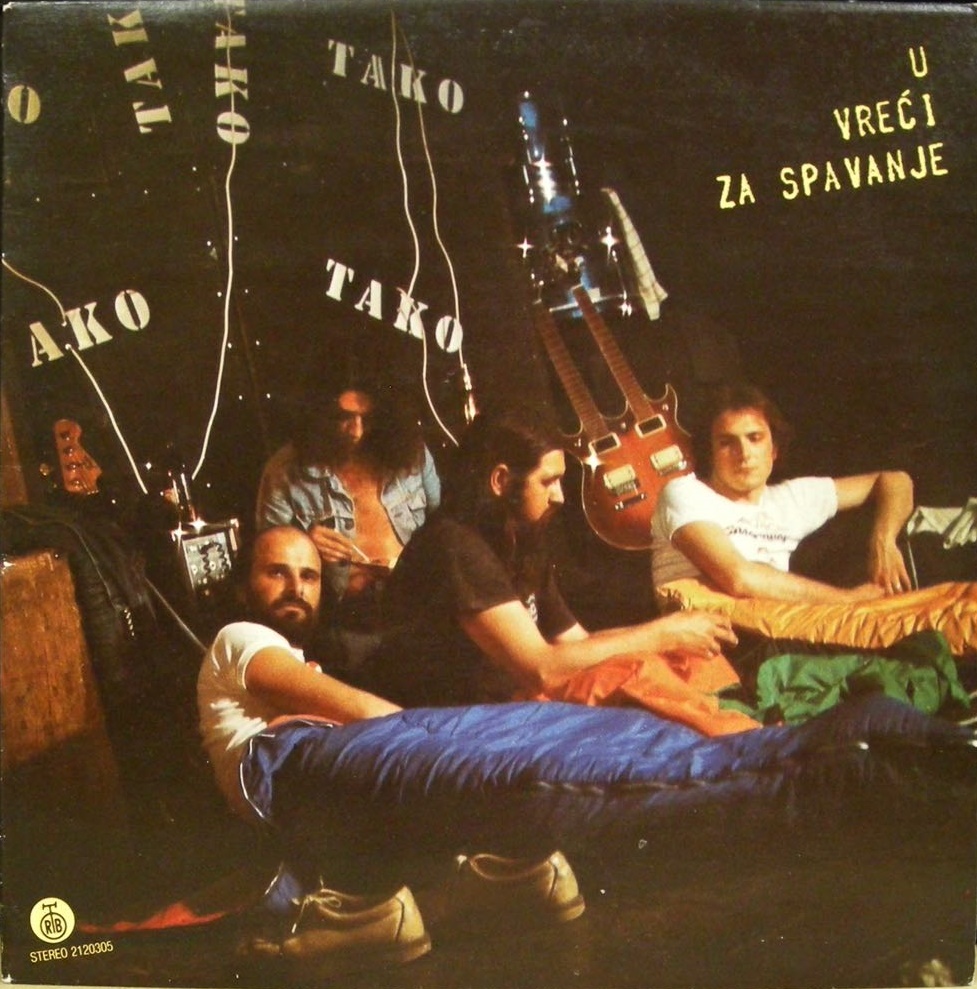 Tako released their second album, U Vreći za Spavanje, in 1980 on RTB.
Guitarist Miroslav Dukić composed “Dolina leptira” and plays electric and acoustic guitars throughout. Bassist Dušan Ćućuz wrote “Na putu ka sebi.” Slobodan Felekatović authored “Senke prošlosti” and plays drums on all tracks. Keyboardist Đorđe Ilijin composed three songs and performs on flute, Mellotron, synthesizer, electric piano, piano, harmonica, and recorder.
U vreći za spavanje unfolds as a fully instrumental set shaped by slow-blooming atmospheres and abrupt surges of intensity. The title track opens with suspended synth pads and flute, holding a restrained tempo until drums and layered keys thicken the field. “Senke prošlosti” pivots between explosive guitar–synth collisions and sudden drop‑offs, its momentum repeatedly reset by heavy bass figures and jagged keyboard intrusions. “Na putu ka sebi” launches with a direct, driving attack before dissolving into piano-led restraint, later overwhelmed by rising synth mass and returning guitar statements.
“Priče o Leni” stretches its form through alternating weight and release, moving from dense keyboard blocks into quieter piano passages, then back toward drifting space textures. “Dolina leptira” condenses the album’s language into a shorter arc, built around odd‑meter piano movement and sharp guitar accents. “Igra devojčice” closes with a gentler contour, flute and harmonica floating above recurring surges of volume, maintaining the album’s pattern of contrast between force and suspension without resolving into finality.
A1. “U vreći za spavanje” [In the Sleeping Bag] (6:00)
A2. “Senke prošlosti” [Shadows of the Past] (5:51)
A3. “Na putu ka sebi” [On the Road to Myself] (5:04)
B1. “Priče o Leni” [Stories About Lena] (9:54)
B2. “Dolina leptira” [Valley of the Butterflies] (5:27)
B3. “Igra devojčice” [Little Girl’s Game] (2:32)
Sessions took place in April 1980 at Studio Druga Maca in Belgrade. Tako self-produced the album. Stanko Terzić served as editor-in-chief with review editing by Đorđe Debač.
U vreći za spavanje features graphic design and photography by Jugoslav Vlahović. First pressing issued in 2,000 copies with blue labels marked “l – 2000.”
CD bonus tracks:
7. “Izgubljeno ništa” (3:58)
8. “Horde mira” (5:04)
Postlude
Đorđe Ilijin played on 1983/84 albums by Kozmetika and Zabranjeno Prisluškivanje!
Discography:
- Tako (1978)
- U Vreći za Spavanje (1980)
Sources:
Artist/Album Pages:
Minority Band was an American soul-funk septet from New Jersey that released the 1980 album Journe...
Marc Seberg was a French new wave/coldwave band that released five albums and accompanying singles...
Mike Mandel is an American keyboardist, composer, and arranger from Yakama, Wash. He established h...
Atlas was a Swedish symphonic-rock band behind the 1979 Bellatrix album Blå Vardag. Four-fifths of...
The Soul Searchers were an American soul-funk band from Washington, D.C., that released the 1972–7...
B.Troop was an English new wave band from Doncaster that cut two singles ("Junior," "Computer Logic...
Alpha du Centaure was a French jazz-rock band that released the album Contact on Spirales in 1979....
Takami (多加美) was a Japanese avant-folk duo that issued the 1982 cassette-only release Y. de Noir o...
Rodney Franklin (born Sept. 16, 1958) is an American jazz-funk pianist and composer from Berkeley...
Tantra was a Portuguese symphonic-rock band that made the 1977/78 Epic albums Mistérios e ...
Walter Egan (born July 12, 1948) is an American guitarist, vocalist, songwriter, and visual artist...
Gordon Giltrap (born April 6, 1948) is an English classical guitarist and composer who released tw...