

SRC was an American psychedelic rock band from Michigan. They released the 1968–70 albums SRC, Milestones, and Traveler’s Tale on Capitol, followed by two 1972 singles (one as Blue Scepter) on the Motown-subsidiary Rare Earth.
Members: Gary Quackenbush (guitar, 1968-69), Glenn Quackenbush (keyboards, vocals, 1968-70), E. G. Clawson (drums, 1968-70), Scott Richardson (vocals, 1968-70), Steve Lymann (guitar, 1968-69), Robin Dale (bass, 1968), Alan Wilmot (bass, 1969-70), Ray Goodman (guitar, 1970)
Background
SRC evolved from The Tremelos, a surf band formed in 1963 in Birmingham, Michigan, by guitarist Gary Quackenbush and drummer E. G. Clawson. In 1966, the group became The Fugitives, then The Scot Richard Case, named after vocalist Scott Richardson, a former member of The Chosen Few. Gary’s keyboardist brother, Glenn Quackenbush, completed the lineup with guitarist Steve Lymann and bassist Robin Dale.
In 1967, the Scot Richard Case released a single: “I’m So Glad,” a blues standard backed by the Richardson/Lyman original “Who Is That Girl?” Their manager, Jeep Holland, produced and arranged the single for A-Square Records, an Ann Arbor label with hometown heroes The Rationals.
A. “I’m So Glad” (2:38) originated as a 1931 Paramount a-side by Delta bluesman Skip James. Cream re-popularized the song with a cover on their 1966 debut, Fresh Cream. The Scot Richard Case version predates another high-profile cover by Deep Purple on their 1968 debut, Shades of Deep Purple.
B. “Who Is That Girl?” (2:35)
By 1968, they fired Holland and shortened their name to SRC, adopting a heavier, keyboard-driven sound shaped by Glenn Quackenbush’s classically influenced organ work. Holland fired back with the A-Square single “Get the Picture,” an unissued pre-SRC recording billed as The Old Exciting Scot Richard Case and backed with “I Need You,” a Kinks cover credited to The Early Rationals.
SRC
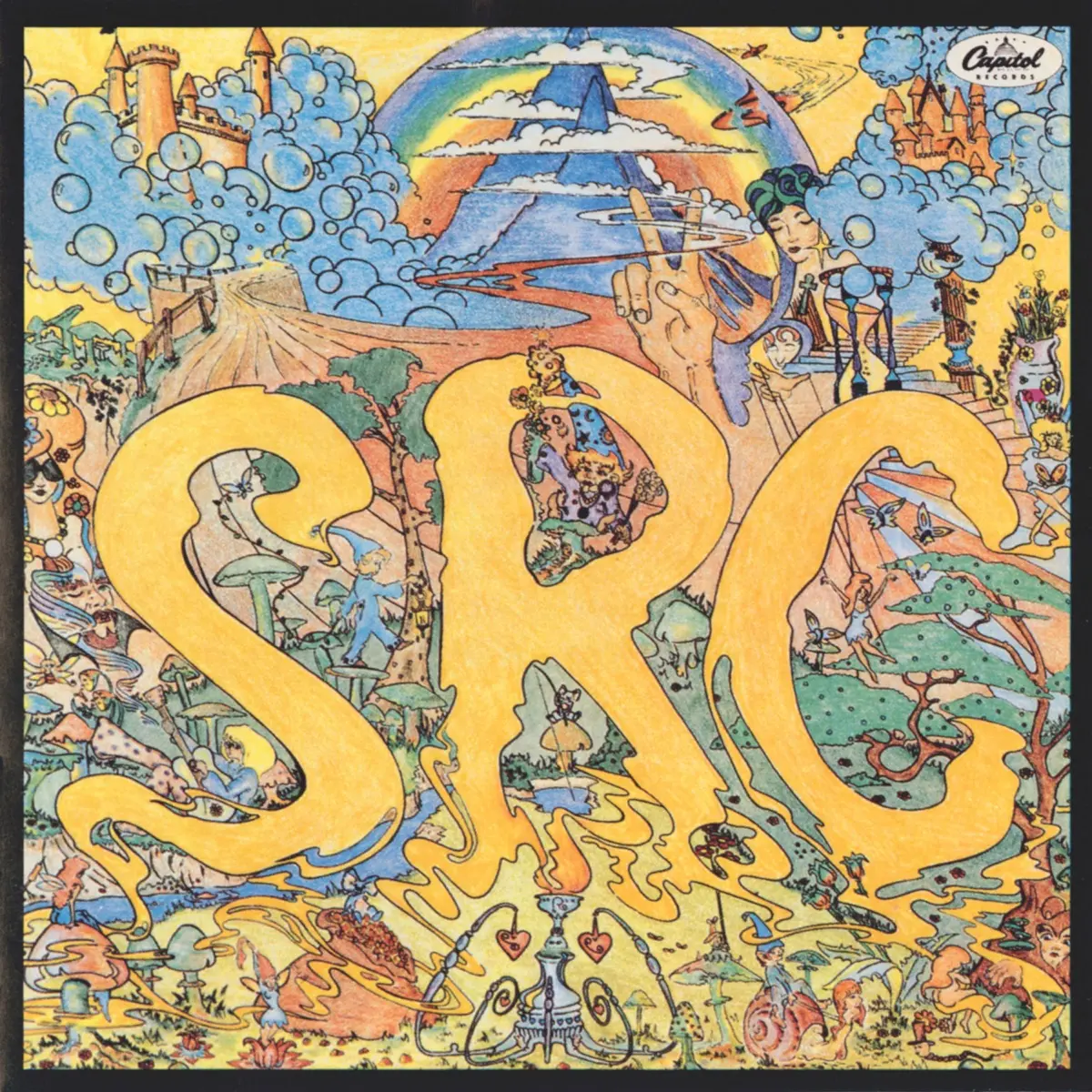 SRC released their self-titled debut album in August 1968 on Capitol.
The album features their original six-piece lineup: vocalist Scott Richardson, lead guitarist Gary Quackenbush, keyboardist Glenn Quackenbush, rhythm guitarist Steve Lymann, bassist Robin Dale, and drummer E.G. Clawson. SRC marked their full transition from garage roots to a layered, psychedelic hard-rock sound driven by swirling Hammond organ and acid guitar leads. All songs are credited to SRC as a collective unit.
The opening track, “Black Sheep,” became a local favorite in Detroit, where its biting fuzz riff and cascading organ runs earned it steady airplay. “Daystar” continues in the same heavy-psych mode with alternating vocal and instrumental passages. “Exile” and “Paragon Council” push into proto-prog territory with dynamic shifts and extended instrumental breaks. “Marionette,” a quieter, hypnotic piece built on circular guitar arpeggios, contrasts with the full-band assaults of “Onesimpletask” and “Refugeve.” The album closes on “Interval,” a mid-tempo cosmic dirge with thick organ textures and wide-panned guitar solos.
A1. “Black Sheep” (4:46)
A2. “Daystar” (4:24)
A3. “Exile” (4:20)
A4. “Marionette” (3:48)
B1. “Onesimpletask” (5:32)
B2. “Paragon Council” (4:00)
B3. “Refugeve” (3:38)
B4. “Interval” (5:07)
SRC recorded their self-titled debut between May and July 1968 at Tera Shirma Studios in Detroit. The album was produced by John Rhys and engineered by Les Chasey and Milan Bogdan. Capitol pressed the LP at their Scranton plant and issued it with a sleeve designed by Ron Ashcroft. “Black Sheep” appeared in edited form (3:49) as a November 1968 single, backed with an organ-led instrumental arrangement of Grieg’s “Morning Mood” (3:05).
SRC achieved cult status for its rich sonic interplay, notably between Glenn Quackenbush’s organ and Gary Quackenbush’s searing lead guitar. Richardson’s dramatic vocals added a theatrical edge to the band’s heady, progressive brand of Detroit psych. This would be the sole SRC album to feature bassist Robin Dale, who departed soon after its release.
Milestones
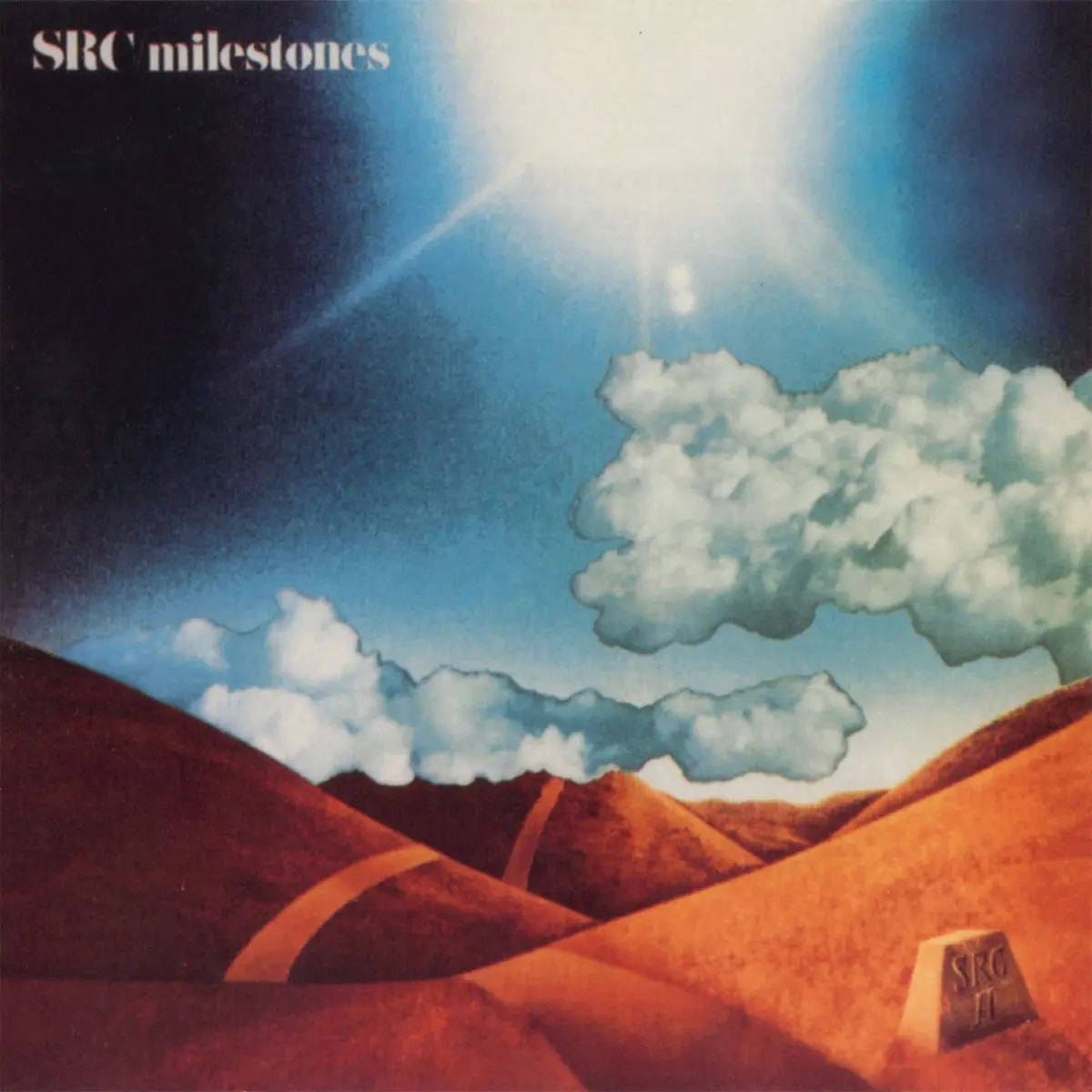 SRC released their second album, Milestones, in March 1969 on Capitol.
The band welcomed new bassist Al Wilmot. The rest of the lineup remained intact: Scott Richardson (vocals), Gary Quackenbush (lead guitar), Glenn Quackenbush (keyboards), Steve Lyman (guitar, vocals), and E.G. Clawson (drums). Co-produced by John Eddins and the band, Milestones reflects an expanded stylistic palette with elements of heavy rock and introspective balladry layered atop their original acid-rock foundation.
The album opens with the surging fuzz riff and syncopated breaks of “No Secret Destination,” followed by the gentle, bass-led “Show Me,” a commercial ballad with psychedelic touches. “Eye of the Storm” reaffirms their acid credentials with biting guitar tones and dynamic tempo shifts. The brief interlude “I Remember Your Face” segues into a six-minute instrumental medley of Grieg’s “In the Hall of the Mountain King” and Ravel’s “Bolero” (via arranger Page), which had been a staple of SRC’s live set.
Side B opens with “Checkmate,” a keyboard-led highlight with clever lyrical imagery. “Our Little Secret” and “Up All Night” revisit a melodic garage-rock sensibility, while the doo-wop infused “Turn Into Love” was curiously selected as the album’s lead single. The closing track, “The Angel Song,” blends a cinematic opening guitar figure with spoken passages and Mellotron-like textures in a nod to Moody Blues-style symphonic rock.
A1. “No Secret Destination” (4:17)
A2. “Show Me” (3:40)
A3. “Eye Of The Storm” (4:50)
A4. “I Remember Your Face” (1:40)
A5. “In the Hall of the Mountain King / Bolero” (6:07)
B1. “Checkmate” (3:42)
B2. “Our Little Secret” (2:39)
B3. “Turn Into Love” (2:59)
B4. “Up All Night” (3:04)
B5. “The Angel Song” (8:11)
All tracks credited to SRC except A5a (Grieg) and A5b (Page). The album was pressed at Capitol’s Los Angeles plant and issued with cover art by Robert Lockart, who also worked on the 1969 Gandalf LP. Photography is credited to Tom Wright.
Capitol issued “Turn Into Love” (b/w “Up All Night”) as a single in 1969 (Capitol P-2457). Milestones peaked at No. 134 on the Billboard 200. Though it didn’t repeat the local impact of their debut, the album showcases the band’s growing technical ambition and expanded range, particularly on material like “Checkmate” and “The Angel Song.” Between the album’s completion and release, Lyman left the band.
Traveler’s Tale
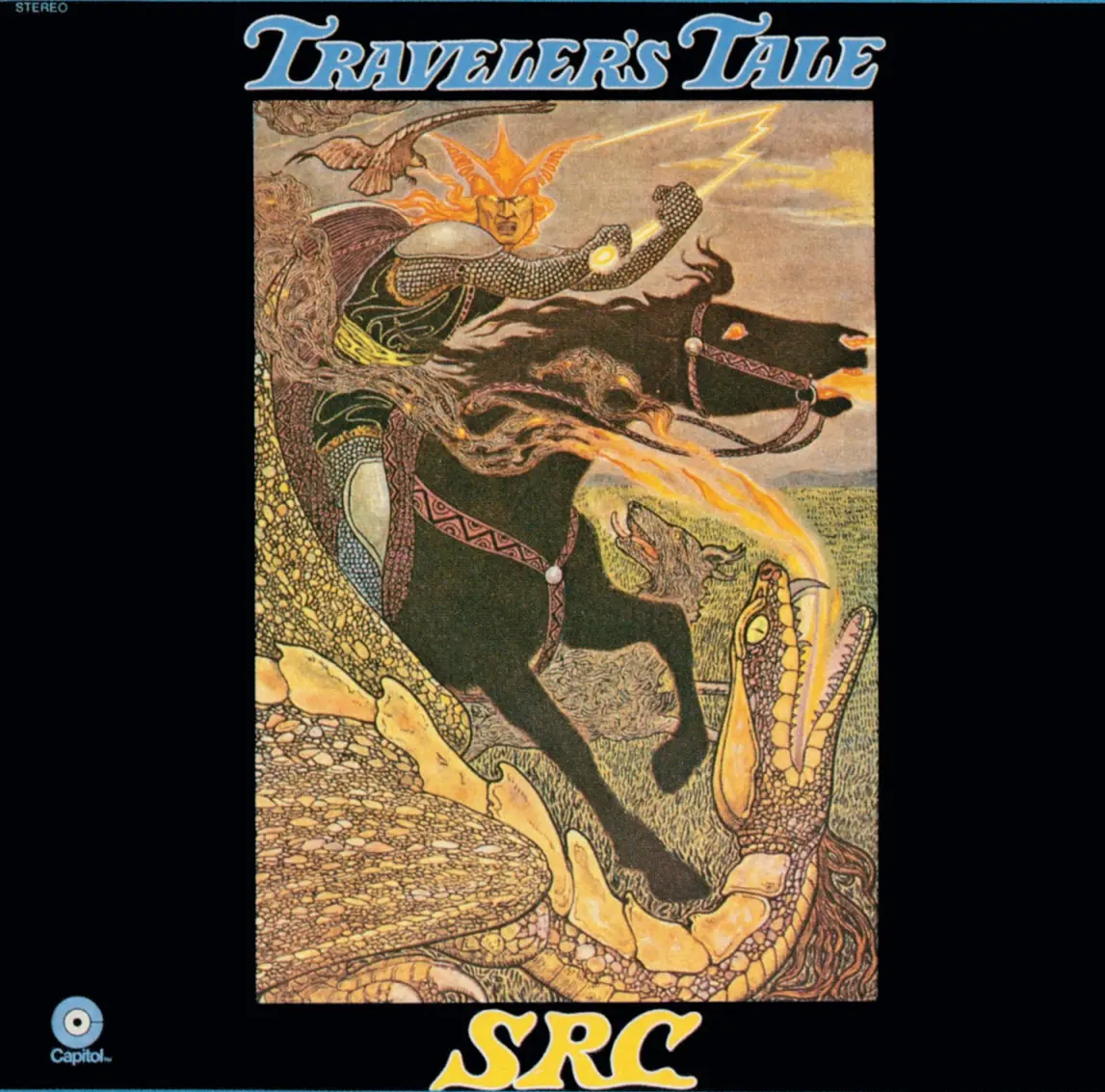 SRC released their third album, Traveler’s Tale, in February 1970 on Capitol.
The album features former Invictas guitarist Ray Goodman, who replaced both Steve Lyman and founder Gary Quackenbush, who was sidelined in a recent motorcycle accident. The remaining lineup featured vocalist Scott Richardson, keyboardist Glenn Quackenbush, bassist Al Wilmot, and drummer E.G. Clawson. Goodman co-wrote most of the album alongside the band’s three long-standing members.
Side A opens with “A New Crusader,” a seven-minute suite with ascending dynamics and layered keyboard textures. “Street Without a Name” retains the band’s melodic psych sensibility but with more refined interplay between organ and guitar. “Midnight Fever” adds bluesy flourishes, while “Never Before Now” ventures into radio-friendly pop rock.
Side B starts shakily with “By Way of You” and “Diana,” two melodic yet slight numbers. The album’s high point is the nearly wordless “Across the Land of Light,” a swirling, seven-minute instrumental that edges into full-on symphonic prog with organ crescendos and echo-laden lead guitar. The closer, “The Offering,” is a grandiose finale with dense arrangements and spiritual overtones.
A1. “A New Crusader” (7:04)
A2. “Street Without a Name” (5:12)
A3. “Midnight Fever” (4:25)
A4. “Never Before Now” (3:57)
B1. “By Way of You” (3:17)
B2. “Diana” (4:41)
B3. “Across the Land of Light” (6:55)
B4. “The Offering” (6:11)
SRC self-produced the record between October and December 1969. Capitol issued Traveler’s Tale in a gatefold sleeve with lime green “target” labels. Bob Boury arranged the orchestral parts on “Never Before Now.” The album was engineered by Clawson and Glenn Quackenbush, with final mixing by Milan Bogden.
Capitol issued one single from the sessions: “Never Before Now” backed with the non-album “My Fortune’s Coming True” (Goodman/Richardson). Despite showcasing SRC’s most progressive material, Traveler’s Tale did not chart and marked the end of their recording career.
Post-Traveler’s Tale / Lost Masters
SRC issued two non-album singles in the aftermath of Traveler’s Tale. The first, “Born to Love” backed with “Badaz Shuffle,” appeared in 1971 on the independent Big Casino label. Both sides came from a transitional lineup that included returning guitarist Gary Quackenbush and bassist Richard “Shemp” Haddad. As the band’s popularity continued to wane, they replaced Haddad with Byron Coons and renamed themselves Blue Scepter. Under this name, they released a final single: a cover of the Pretty Things’ “Out in the Night” backed with “Gypsy Eyes” on Motown’s Rare Earth imprint in 1972. When this too failed to chart, SRC disbanded.
In 1993, One Way Records issued Lost Masters, a 20-track CD of unreleased material recorded between 1970 and 1972 at Morgan Sound Theater in Ann Arbor. The first ten tracks represent the band’s scrapped fourth album. These include the soulful opener “After Your Heart”, the swirling psych-pop of “Valerie”, and the gospel-tinged “Love Is Here Now”, as well as covers of “Heatwave” and “Lovelight” (both by Holland-Dozier-Holland). Quackenbush’s guitar remains central, augmented by Glenn Quackenbush’s keys and layered vocal arrangements.
Later tracks span demos, outtakes, and standalone singles. “Out in the Night” and “Gypsy Eyes” appear in their original mono mixes. “Born to Love” and “Badaz Shuffle” also appear, alongside additional mono and lo-fi stereo recordings such as “Get the Picture” (a reissue of a pre-SRC track originally released by Jeep Holland), “Evil” (Willie Dixon), and “Ride the Wind.” Liner notes by vocalist Scott Richardson accompany the release, which also credits Terry Wachsmuth as executive producer. Glenn Quackenbush handled engineering duties with digital remixing by both Quackenbush brothers.
After the split, Scott Richardson moved to Los Angeles and transitioned into screenwriting and set design, contributing to Hearts of Fire and The Lord of the Rings trilogy. Gary Quackenbush remained musically active and founded SRC Records. The band was inducted into the Michigan Rock and Roll Legends Hall of Fame in 2010.
Discography:
- SRC (1968)
- Milestones (1969)
- Traveler’s Tale (1970)
- “Born to Love” / “The Badaz Shuffle” (1972)
- “Out in the Night” / “Gypsy Eyes” (1972 • Blue Scepter)
Sources:
Artist/Album Pages:
Michael Fennelly (born May 4, 1949) is an American singer, guitarist, and songwriter who released ...
Quatermass was an English hard-rock trio behind a 1970 self-titled album on Harvest. They were an of...
Akritas (Ακρίτας) was a Greek symphonic-rock trio that released a self-titled album on Polydor in ...
Billy Paul (Dec. 1, 1934 — April 24, 2016) was an American soul singer from Philadelphia, best kno...
Wanda Robinson is an American poet from Baltimore who released the 1971–73 jazz-poetry albums Bla...
Trifle was an English brass-rock/funk band that released a standalone single on United Artists in ...
Chilli Willi & The Red Hot Peppers were an English rustic-rock band that released the album Ki...
Mike Heron is a Scottish singer and songwriter, best known as the co-founder and mastermind of the I...
Rodolfo Alchourrón (April 25, 1934 — May 16, 1999) was an Argentinian jazz guitarist, composer, arra...
Paul McCartney (born June 18, 1942) is an English pop-rock singer, bassist, and songwriter from Li...
The Royals were a Jamaican harmony-reggae group formed in 1964 by singer Roy Cousins, who led succ...
Lynsey de Paul (June 11, 1948 — Oct. 1, 2014) was an English pop singer and songwriter who emerged...