

Snafu was an English rustic funk-rock band behind the 1973–74 WWA albums Snafu and Situation Normal, followed by the 1975 Capitol release All Funked Up.
Frontman Bobby Harrison played in the initial Procol Harum lineup that recorded their 1967 hit “A Whiter Shade of Pale.” As Snafu folded, he went solo with Funkist. Other players in Snafu’s ranks included Brian Chatton (Jackson Heights, Boys Don’t Cry), Tim Hinkley (Jody Grind, Vinegar Joe), Colin Gibson (Mark-Almond, The Movies), Peter Solley (Paladin, Fox), Terry Popple (Tramline, McPhee), and Micky Moody (Tramline, Juicy Lucy).
Members: Bobby Harrison (vocals, percussion), Micky Moody (guitar, 1973-76), Colin Gibson (bass), Pete Solley (keyboards, 1973-75), Terry Popple (drums), Brian Chatton (keyboards, 1975-76), Tim Hinkley (piano, organ), Mel Collins (saxophone), Clem Clempson (guitar, 1976)
Background
Snafu formed in London in 1973 around Bobby Harrison and Micky Moody after the two musicians had begun material for Harrison’s solo album Funkist.
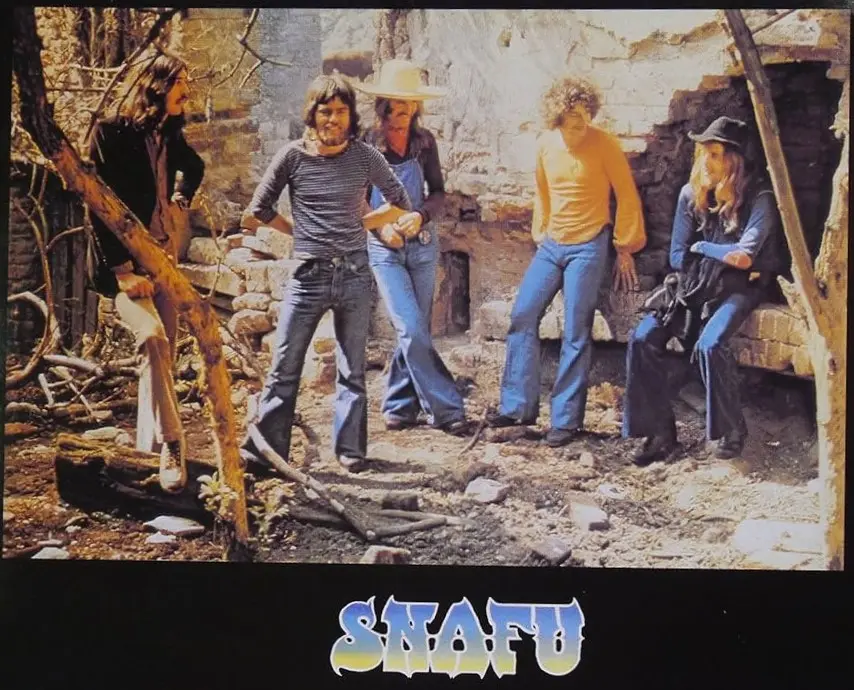 Harrison came out of Freedom, the Procol Harum offshoot that released five albums through 1972, including the 1968 soundtrack Nerosubianco. Moody recorded two 1968–69 albums with Island Records blues-rockers Tramline, then joined Juicy Lucy for their 1970–72 output. He also worked in 1969 with Lucas and the Mike Cotton Sound, a veteran soul-rock ensemble that morphed into Satisfaction.
Bassist Colin Gibson originated in Newcastle legends Skip Bifferty and did 1970–72 stints with Ginger Baker’s Air Force and Mark-Almond. Popple played beside Moody in Tramline and then had a one-album stint in Australian rockers McPhee.
Solley passed through Chris Farlowe’s Thunderbirds, the Crazy World of Arthur Brown, and Terry Reid’s touring band before co-founding Paladin, a two-album act with future Player bassist Pete Beckett. Gibson supplied the Snafu name from the military acronym behind “Situation Normal: All Fucked Up.”
WWA, the agency and label linked with Black Sabbath manager Patrick Meehan, took the band into its roster. The first album sessions followed at The Manor Studio in Oxfordshire.
Snafu
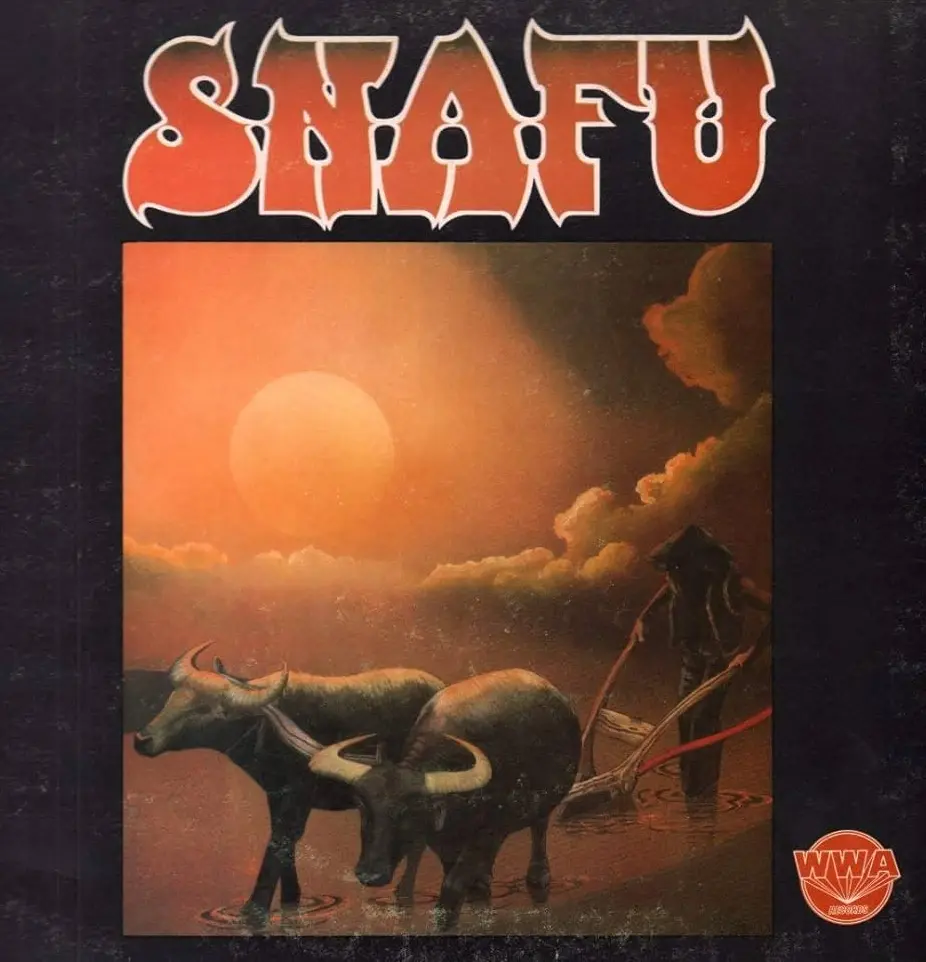 Snafu released their self-titled debut album in 1973 on WWA.
The album places Harrison and Moody originals beside a Joe Simon cover and one Solley composition. The five-piece lineup uses Solley’s keyboards and fiddle as the main arrangement variable, with mandolin and backing voices widening the country-soul sections. “Long Gone” establishes the Harrison–Moody writing link that later reappears on Funkist.
“Long Gone” simmers from slow-burning swagger into a mid-paced boogie tread. “Said He the Judge” eases in, quickens through slide and wah-wah turns, then settles back for the return of the sung line. “Monday Morning” shuffles through fiddle and mandolin figures with a country-fair bounce. “Drowning in the Sea of Love” lifts the Gamble–Huff song with female replies and a brighter uptempo tread.
“Country Nest” slouches through keyboard runs, rural sound effects, and a slower comic lyric. “Funky Friend” struts through fiddle-led hoedown motion at a quicker pace. “Goodbye USA” simmers on brooding mid-tempo funk with pedal-steel shading and synthesizer detail. “That’s the Song” romps through choir-backed responses, a solo break, and a false ending before the final swell.
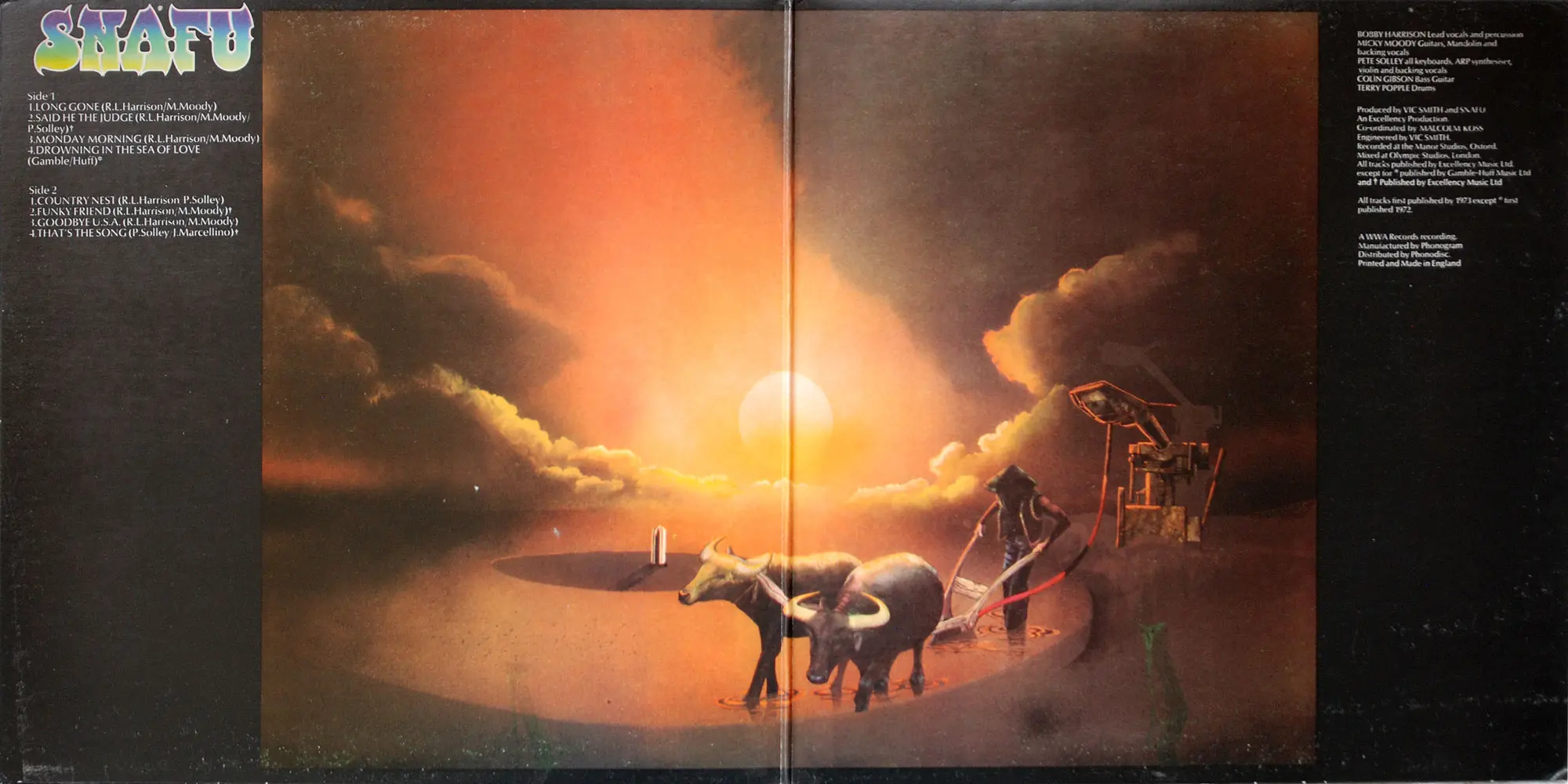 A1. “Long Gone” (5:15) – Harrison, Moody
A2. “Said He the Judge” (4:31) – Harrison, Moody, Solley
A3. “Monday Morning” (3:15) – Harrison, Moody
A4. “Drowning in the Sea of Love” (5:48) – Gamble, Huff
B1. “Country Nest” (5:19) – Harrison, Solley
B2. “Funky Friend” (4:05) – Harrison, Moody
B3. “Goodbye USA” (4:22) – Harrison, Moody
B4. “That’s the Song” (6:01) – Solley
Snafu recorded the album at The Manor Studio, Oxfordshire, with producer–engineer Vic Smith and coordinator Malcolm Koss. Smith later worked under the Vic Coppersmith-Heaven credit on albums by The Jam and The Vapors.
The album sports a logo designed by Roger Dean, the noted fantasy illustrator for Yes, Budgie, Osibisa, Uriah Heep, and (most recently) Greenslade.
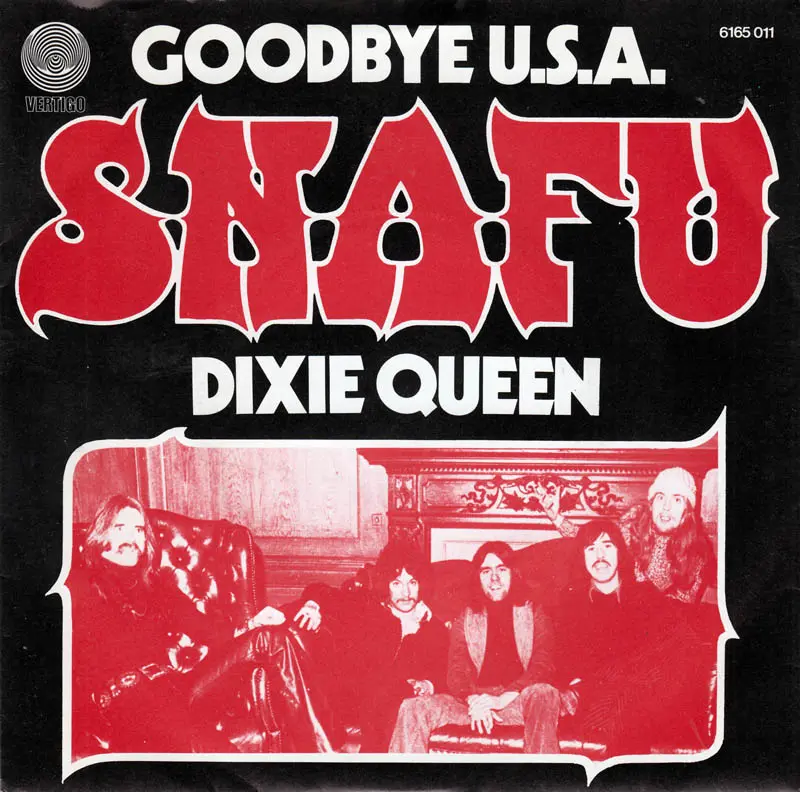 Capitol issued “Drowning in the Sea of Love” as a 1973 US promotional single in mono and stereo.
In the UK and Italy, WWA placed “Monday Morning” on the b-side of “Dixie Queen,” a non-album track became the b-side of “Goodbye U.S.A.” on Dutch Vertigo.
Angel Air paired Snafu and Situation Normal on a 1998 CD with “Dixie Queen” and “Sad Sunday” as bonus tracks.
Situation Normal
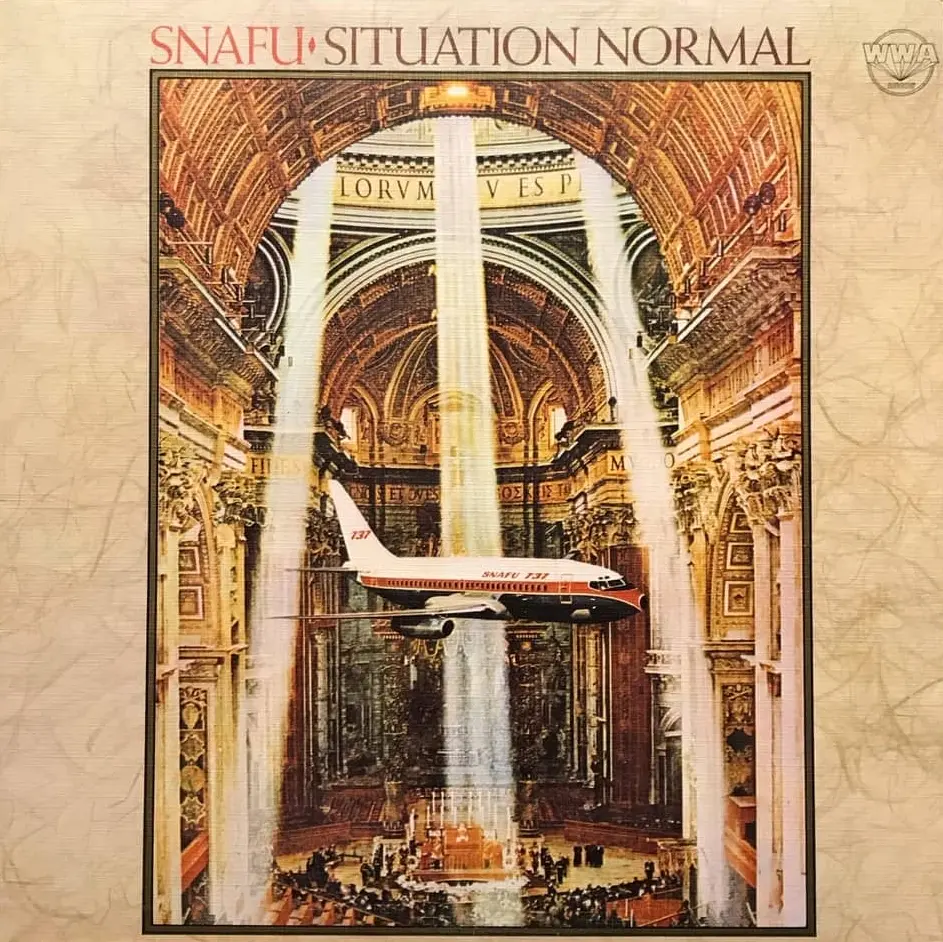 Snafu released their second album, Situation Normal, on October 11, 1974 on WWA.
The album credits all songs to Harrison, Moody, and Solley. Solley’s fiddle and keyboards occupy more of the arrangement space, while the closing track adds a horn section with saxophonists Mel Collins, Steve Gregory, and Bud Beadle. The title abbreviates the phrase behind the group name and fixes the album around the band’s own material.
“No More” lopes through a soft opening rhythm, then turns to slide breaks, harmonies, wah-wah keys, and bell-like accents. “No Bitter Taste” saunters through pedal-steel shading and slide touches before the group answer lifts the song. “Brown Eyed Beauty & The Blue Assed Fly” romps through fiddle-jig motion with washboard, spoons, and coconuts. “Lock and Key” swaggers through a slide-led boogie line and close harmonies.
“Big Dog Lusty” rumbles through honky-tonk piano, harmonica, and saloon-sprung theatrics. “Playboy Blues” coils through jangly jazz inflections and extended solo passages. “Jessie Lee” relaxes into a smoother song form with warm harmonies. “Ragtime Roll” shuffles through brass-led ragtime motion.
 A1. “No More” (6:16)
A2. “No Bitter Taste” (3:21)
A3. “Brown Eyed Beauty and the Blue Assed Fly” (3:23)
A4. “Lock and Key” (2:48)
A5. “Big Dog Lusty” (3:40)
B1. “Playboy Blues” (8:15)
B2. “Jessie Lee” (4:35)
B3. “Ragtime Roll” (5:05)
Snafu cut the basic backing tracks at Advision Studios, London, then finished vocals, overdubs, and mixes at Air London. Steve Rowland produced the album. Martin Rushent engineered the Advision tracks, Bill Price handled overdubs, and Ashley Howe handled the final Air work. Rowland had produced the Pretty Things, the Herd, Rodriguez, and Babe Ruth before the Snafu sessions.
Situation Normal appeared in a sleeve with photography by Martin Dean and artwork by Gregory Hodal. Angel Air paired the album with Snafu on a 1998 CD.
Between albums, Solley cleared for keyboardist Brian Chatton, fresh off a three-album stint with Jackson Heights, whose 1972/73 Vertigo titles Ragamuffins Fool and Bump ‘n’ Grind mixed barroom/saloon styles with music hall. Chatton had Sixties-era stints in beatsters The Warriors and psychsters Flaming Youth, the respective starting vehicles of Jon Anderson and Phil Collins.
All Funked Up
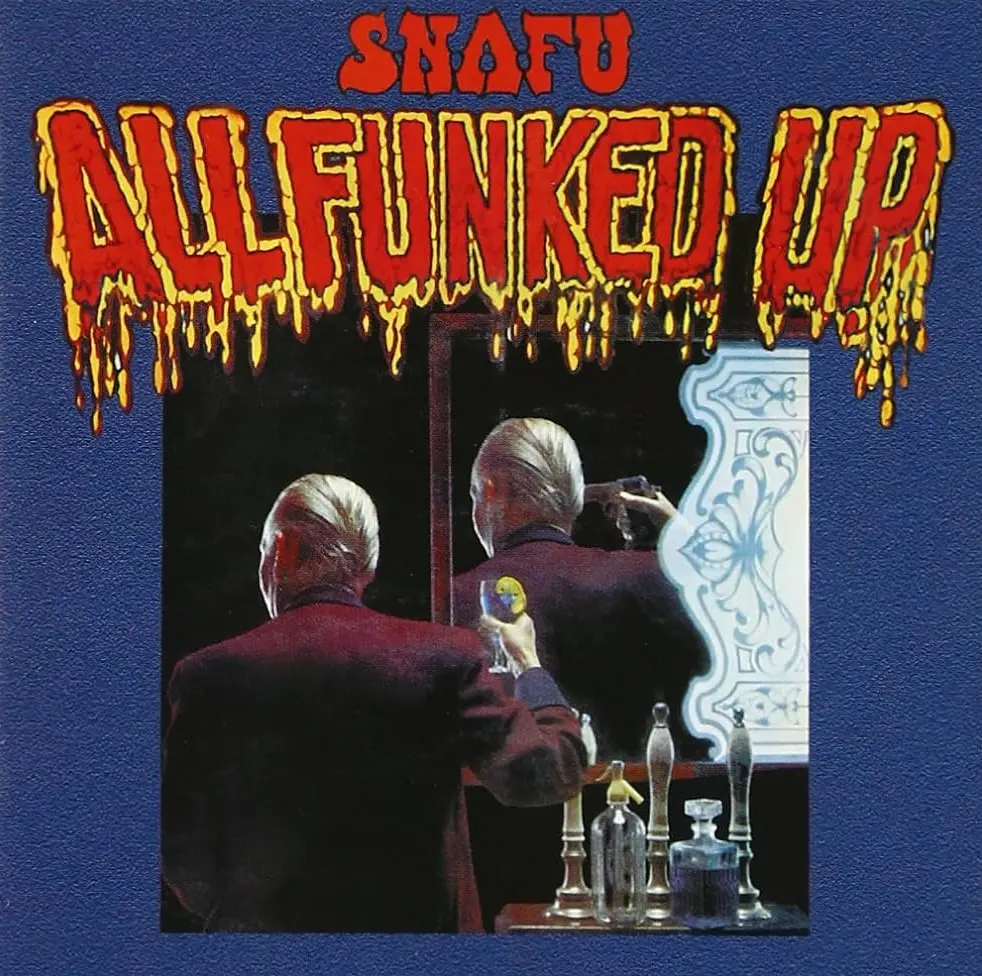 Snafu released their third album, All Funked Up, in 1975 on Capitol.
The album adds pianist–organist Tim Hinkley, saxophonist Mel Collins, and backing singers Liza Strike and Viola Wills. The program increases outside material with songs associated with Gregg Allman, Otis Redding, Brenda Holloway, and Stevie Wonder, while Chatton contributes “Turn Around” and co-writes “Dancing Feet.”
“Don’t Keep Me Wonderin’” works the Allman song through a looser roots-blues turn. “Lock and Key” returns in a swampier remake with reverb around the slide figure. “Hard to Handle” tightens the Otis Redding song into a road-worn band treatment. “Every Little Bit Hurts” slows around keys, brass, and female backing singers. “Keep on Running” leans on wah-wah and pedal-treated figures. “Bar Room Tan” flickers with slide reverb and harmonica.
A1. “Don’t Keep Me Wondering” (5:23) – Allman
A2. “Bloodhound” (5:27) – Harrison, Moody
A3. “Lock and Key” (3:00) – Harrison, Moody, Solley
A4. “Hard to Handle” (3:24) – Isbell, Jones, Redding
A5. “Every Little Bit Hurts” (4:43) – Cobb
B1. “Turn Around” (4:28) – Chatton
B2. “Deep Water” (5:29) – Harrison, Moody
B3. “Keep on Running” (3:27) – Wonder
B4. “Barroom Tan” (3:50) – Harrison, Moody
B5. “Dancing Feet” (5:50) – Chatton, Harrison
Snafu recorded All Funked Up in summer 1975 at The Manor Studio, Oxfordshire, with producer–engineer Bob Potter. The band shared the production credit. Potter mixed the album at Island Studios, London. All Funked Up appeared in a sleeve with concept by Ian Vincentini and front photography by Philip Pace.
Capitol lifted “Lock And Key” as an October 17, 1975 UK single (b/w “Bar Room Tan”). “Are You Sure” followed on February 27, 1976 as a non-album single (b/w “Bloodhound”).
Angel Air reissued All Funked Up on CD in 1999 and 2000. A later Singsong digital edition added “Are You Sure” as a bonus track.
Bobby Harrison – Funkist
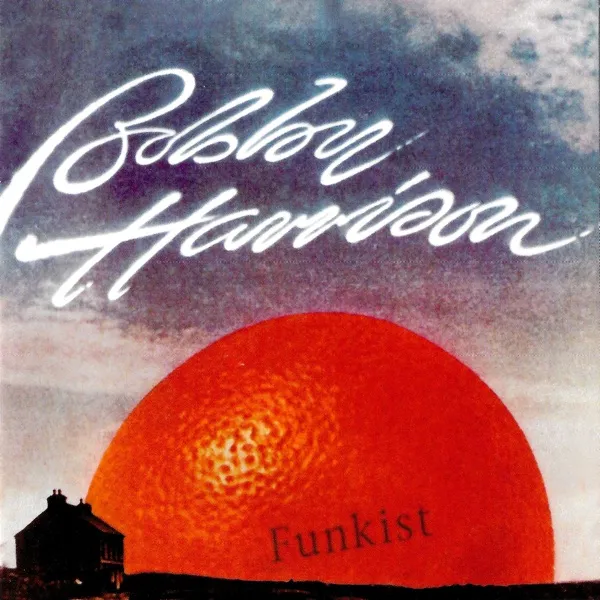 Bobby Harrison released his debut solo album, Funkist, in 1975 on Capitol.
Harrison recorded much of the album with Moody before Snafu’s formation. Sessionists include keyboardist Matthew Fisher, keyboardist Bob Sargeant, and Sabbath guitarist Tony Iommi along with three bassists (Herbie Flowers, Chris Stewart, Walt Monaghan) and drummers (Ian Paice, Clem Cattini, Henry McCullough). Moody’s Juicy Lucy colleague Ray Owen sings backing vocals.
“Cleopatra Jones” struts on a pumped line and blues-roughened singing. “Whiskey Head” swaggers through a bumped boogie beat under Harrison’s grainy phrasing. “Thinkin’ Bout You” saunters through slide-guitar replies. “King Of The Night” stretches around a slow hypnotic riff and turns through a midway interlude. “Long Gone,” a Snafu number, settles into laid-back road-song drift with Harrison’s singing high in the mix.
A1. “Cleopatra Jones” (3:38) – Simon
A2. “Whiskey Head” (4:32) – Harrison, Monaghan
A3. “Thinkin’ ’Bout You” (2:37) – Harrison, Monaghan
A4. “King of the Night” (7:10) – Harrison, Sargeant
B1. “Little Linda Lovejoy” (4:22) – Harrison, Sargeant
B2. “Spotlight” (3:05) – Goffin, Goldberg
B3. “Long Gone” (5:01) – Harrison, Moody
B4. “Looking for a Friend” (4:22) – Harrison, Sargeant
Iommi plays guitar on “King of the Night.” Fisher plays keyboards on “Long Gone,” where Moody plays guitar and Stewart plays bass. Paice, Cattini, and McCullough appear in the drum credits, while Flowers and Monaghan add bass elsewhere in the album cast.
Angel Air reissued Funkist on CD in 2000.
Postlude
Snafu’s January 23, 1976 performance at Trent Polytechnic in Nottingham later appeared as Live Nottingham 1976, with “Don’t Keep Me Wondering,” “Long Gone,” “Big Legged Woman,” “Every Little Bit Hurts,” “Unsettled Dust,” and “Highway.”
Moody left after the 1976 tour and cut the 1977 album Young & Moody with Status Quo fifth-wheel Bob Young. He then joined Deep Purple singer David Coverdale for the 1977–78 solo albums White Snake and Northwinds, then entered the first Whitesnake lineup for a six-album run through their 1984 release Slide It In.
Harrison attempted a Snafu reboot with Clem Clempson, the former Colosseum and Humble Pie guitarist, but the lineup ended without a fourth studio album.
Gibson played on 1975/76 solo albums by Yes members Steve Howe and Alan White. In 1979, he joined The Movies and played on their final two albums.
Solley joined Procol Harum for the 1977 album Something Magic and later produced records by The Romantics, Ted Nugent, Peter Frampton, Motörhead, and Wreckless Eric.
Chatton later surfaced in Boys Don’t Cry, whose 1985 single “I Wanna Be a Cowboy” reached No. 12 on the US Billboard Hot 100 and No. 4 in Australia in 1986.
Harrison moved to Iceland and recorded the 1987 solo album Solid Silver with Mezzoforte; the title track became a local Top 20 hit.
Discography:
- Snafu (1973)
- Situation Normal (1974)
- All Funked Up (1975)
Sources:
Artist/Album Pages:
Fanny Adams was a hard-rock/blues band comprised of Australian musicians based in London, England. ...
Culture Club are an English new wave and soul-pop band whose first two albums, Kissing to Be Clever ...
Charge were an English space-rock trio from Botley, Hampshire, that released a self-titled album i...
Alpha Centauri was a symphonic|hard-rock band from Colorado that existed for twelve years (1971–83...
Rezonansa was a Yugoslav folk/pop band from Sarajevo, Bosnia-Herzegovina, that issued five albums ...
Andy Fairweather Low (born Aug. 2, 1946) is a Welsh vocalist, guitarist, and songwriter who first ...
Pilot was an American soul-rock band that released a self-titled album in 1971 on RCA Victor. Mem...
Laza i Ipe was a Yugoslav symphonic/electronic duo comprised of keyboardist/composer Laza Ristovsk...
Melba Moore (born Oct. 29, 1945) is an American R&B singer and actress who got her start in show...
Hot Chocolate was an English soul-funk band from London that scored twelve UK Top 10 singles, incl...
Bodkin was a Scottish hard-rock/psych band that released a 1972 self-titled album on small-press W...
Buffalo was an Australian hard-rock band from Sydney that released five albums between 1972 and 19...