

Shotgun was an American soul-funk band from Detroit that released three albums on ABC Records between 1977 and 1979, followed by three further titles on MCA and Montage during the early 1980s. Its members hailed from the seminal Stax ensemble 24-Carat Black.
Members: Ernest Latimore (vocals, guitar), Billy Talbert (vocals, guitar, keyboards), Larry Austin (bass), Tyrone Steels (drums, vocals), Leslie Carter (percussion), Richard Sebastian (trumpet), Greg Ingram (saxophone)
Background
Shotgun had its roots in 24-Carat Black, a Cincinnati soul-funk ensemble that recorded the 1973 concept album Ghetto: Misfortune’s Wealth in Memphis with Stax producer Dale Warren. After the project ended, six of its members — guitarist/keyboardist William Talbert, drummer Tyrone Steels, guitarist/singer Ernest Lattimore, bassist Larry Austin, saxophonist Gregory Ingram, and trumpeter William Gentry — settled in Detroit, where they formed Shotgun and landed a deal with ABC Records.
Shotgun
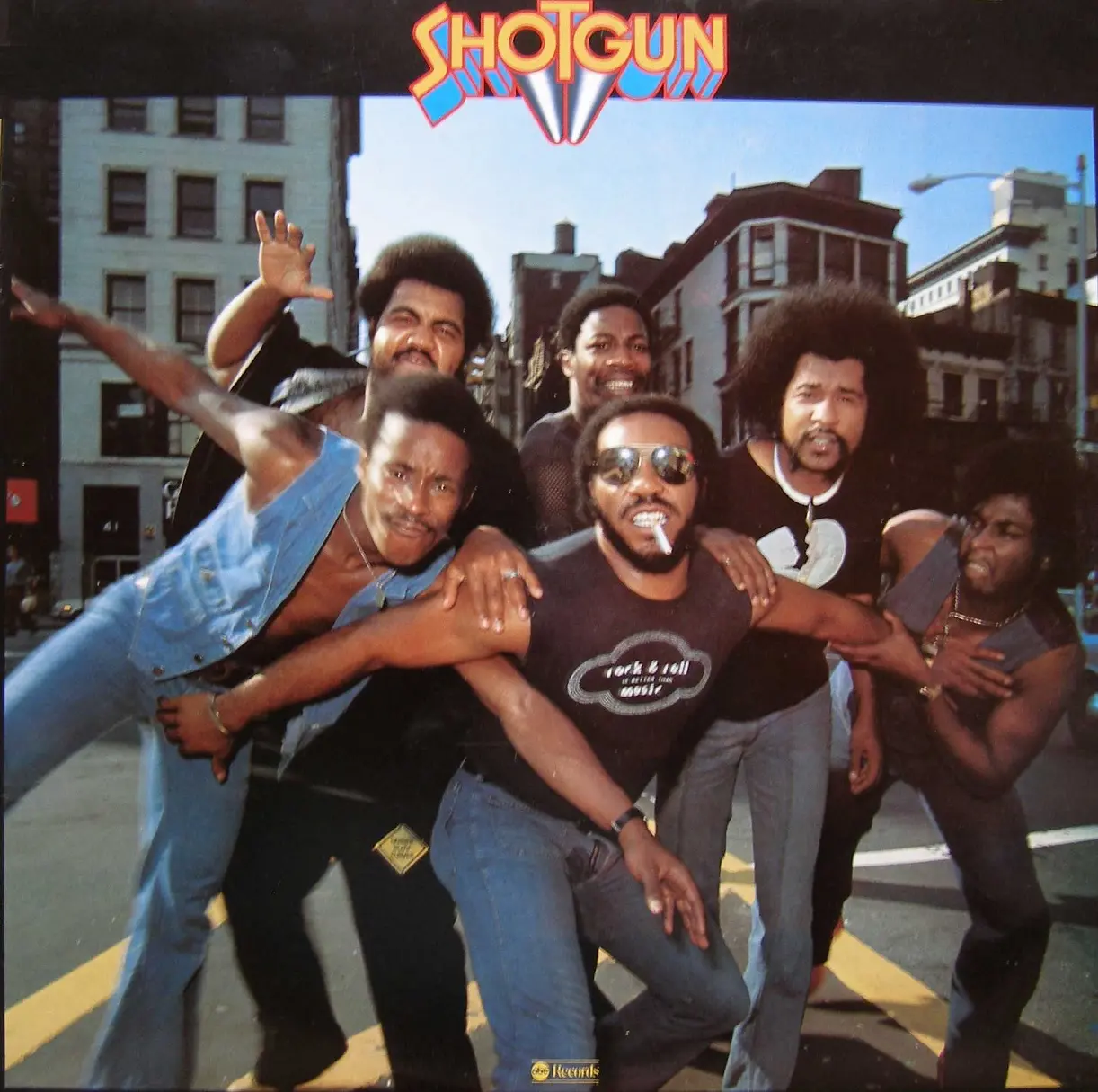 Shotgun released their self-titled debut album in April 1977 on ABC.
The record combines brass-driven funk with occasional rock-tinged textures, highlighting the ensemble’s six-member lineup that emerged from the remnants of 24-Carat Black. Tracks alternate between energetic horn charts and rhythmically taut guitar passages, giving the band a distinctive Detroit soul-funk feel.
Guitarist/keyboardist Billy Talbert co-wrote the majority of the songs with contributions from saxophonist Greg Ingram, bassist Larry Austin, drummer Tyrone Steels, trumpeter William Gentry, and guitarist/vocalist Ernest Lattimore. They co-wrote “Trouble Shooter,” “Good Thing,” and “Shady Lady” with outsider R. Resch. Side A includes “Concrete Jungle,” a Bob Marley cover.
The album opens with high-energy funkers “Shotgun” and “Mutha Funk,” anchored by driving brass and tightly spaced rhythms. “Good Thing” and “Get Down With The Get Down” offer more measured, pace-focused arrangements, while “Dynamite (The Bomb)” injects rock-inflected guitar lines. “Concrete Jungle” introduces reggae-flavored phrasing, and the singles “Hot Line” and “Mutha Funk” emphasize propulsive drums and accentuated horn stabs.
Side A: Friday Night
A1. “Shotgun” (3:11)
A2. “Trouble Shooter” (3:43)
A3. “Good Thing” (3:52)
A4. “Concrete Jungle” (3:28)
A5. “Get Down With the Get Down” (3:25)
Side B: Saturday Night
B1. “Mutha Funk” (4:56)
B2. “Shady Lady” (4:27)
B3. “Hot Line” (4:47)
B4. “Dynamite (The Bomb)” (3:18)
Sessions occurred at ABC Records’ studios with producers Al Nalli and Steve Klein.
“Hot Line” accompanied the album as a single (b/w “Shotgun”) and reached No. 87 on the Billboard R&B chart, followed in August by “Mutha Funk” (b/w “Shady Lady”), which peaked at No. 67.
Good, Bad & Funky
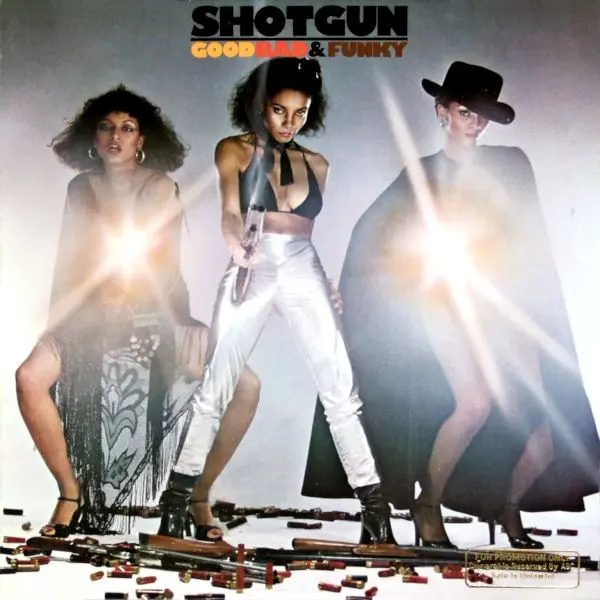 Shotgun released their second album, Good, Bad & Funky, in May 1978 on ABC.
The record expands the ensemble’s six-member lineup to seven, integrating horn-driven funk with string arrangements and occasional smooth Northern soul textures. The band balances uptempo, rhythmically assertive tracks with more measured, contoured numbers, highlighting their Detroit funk-soul roots.
Guitarist/keyboardist Billy Talbert co-wrote the majority of the songs with contributions from saxophonist Greg Ingram, bassist Larry Austin, drummer Tyrone Steels, trumpeter William Gentry, and guitarist/vocalist Ernest Lattimore. Outside co-writers include A. Casey and R. Bralver on select tracks.
Tracks like the title song and “Fire It Up” emphasize tight, punchy rhythms and horn accents, while “I’m All Strung Out,” “Love Attack,” and “Danger of the Stranger” incorporate string arrangements that contour the vocal lines. “I Wish I Could See You Again” slows the pace with a smooth, Northern soul ballad feel, and the brief “Space-N” provides a sharp, rhythmic interlude.
A1. “Good, Bad and Funky” (4:41)
A2. “Love Attack” (4:17)
A3. “Danger of the Stranger” (5:12)
A4. “I Wish I Could See You Again” (4:26)
B1. “I’m All Strung Out” (4:21)
B2. “Sister Love” (4:23)
B3. “Fire It Up” (4:03)
B4. “Space-N” (1:27)
B5. “All Spaced Out (All Funked Up)” (5:13)
Sessions occurred at Silvery Moon Studios in Los Angeles, California, from November 1977 through January 1978, with producers David Chackler, Shotgun, and Stuart Alan Love, and engineer Rick Bralver assisted by Rick Wilson.
The album cover features three women in campy disco attire flashing light wands.
“Good, Bad And Funky” accompanied the album as a single (b/w “Fire It Up”), followed in August by “Love Attack” (b/w “Danger of the Stranger”), and in December by “I Wish I Could See You Again” (b/w “Sister Love”).
Shotgun III
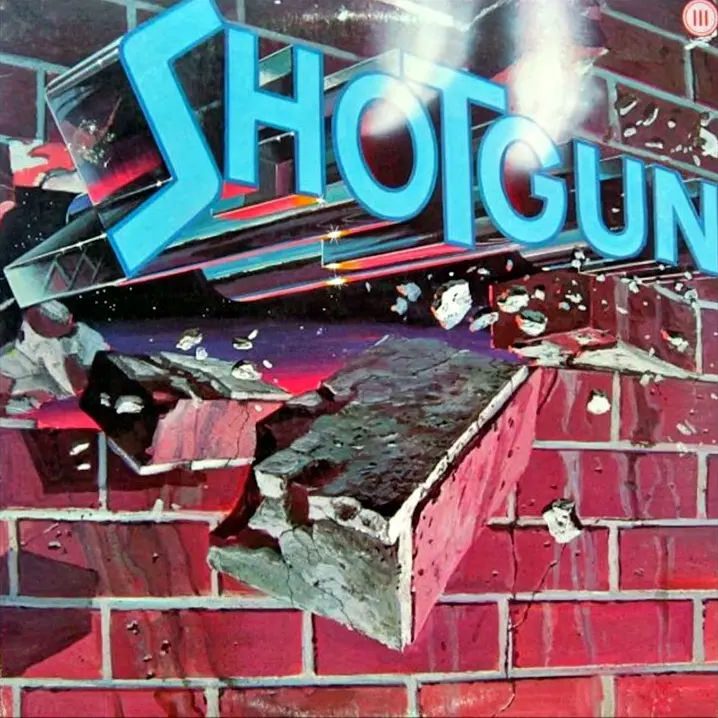 Shotgun released their numerical third album in February 1979 on ABC.
The album continues the band’s Detroit funk approach, blending horn-driven arrangements, electric keyboards, and layered percussion. It features the same six-member lineup that handled most of the writing and instrumentation while incorporating guest musicians and outside production.
Primary songwriting comes from all six members, with guitarist/keyboardist William Talbert contributing to each track. The album includes one outside contributor on strings arrangements, and “Special Lady” features partial co-writing by Talbert, Lattimore, and Ingram.
The record alternates between hard funk numbers and smoother ballads. “Skate,” “Midnight Breakdown,” and “Big Legs” drive with brisk rhythms, accented by punchy horn lines and syncopated percussion. “Special Lady” provides a slower, Northern soul-inflected counterpoint, while “Stone Women” blends extended funk patterns with layered instrumentation.
A1. “Skate” (5:10)
A2. “Don’t You Wanna Make Love ?” (5:53)
A3. “Midnight Breakdown” (5:54)
B1. “Burnin’ Passion” (6:03)
B2. “Special Lady” (4:30)
B3. “Big Legs” (4:44)
B4. “Stone Women” (4:55)
Sessions occurred at Kendun Recorders, Burbank, California, with producers David Chackler, Shotgun, and Stuart Alan Love, engineers Kevin Beamish and Rick Bralver, and mastering by Bob Carbone.
III features artwork by Gary Meyer with art direction and design concept from Stuart Kusher and photography by Richard Arrindel.
“Don’t You Wanna Make Love?” accompanied the album as a single (b/w “Stone Woman”), followed in July by “Midnight Breakdown” (b/w “Big Legs”).
Shotgun IV
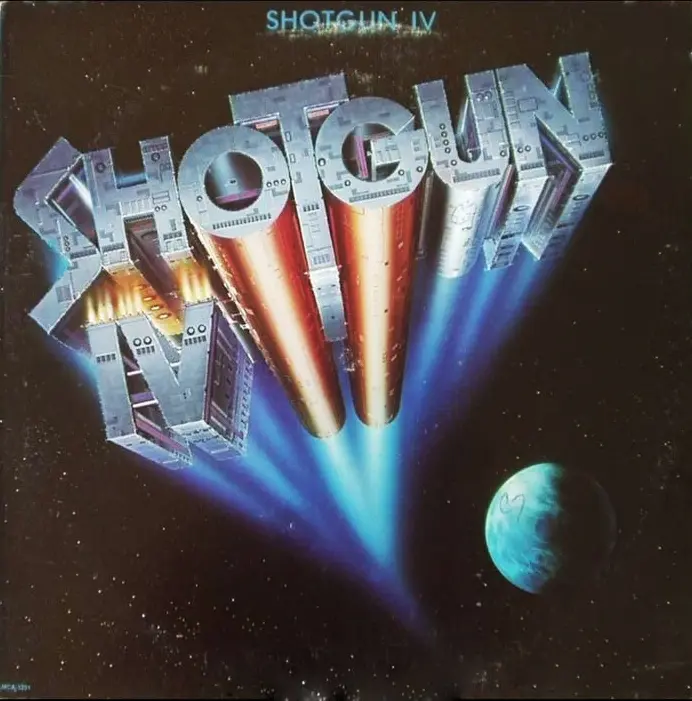 Shotgun released their numerical fourth album in April 1980 on MCA.
The album marked personnel changes: trumpeter William Gentry and drummer Robert Resch departed, replaced by trumpeter/trombonist Rickey Sebastian, who also contributed lead and backing vocals. The core six members remained active in writing and arrangements.
Primary songwriting credits go to Ernest Lattimore, Greg Ingram, Larry Austin, Tyrone Steels, and William Talbert, with Talbert also handling keyboards and lead arrangements. Several tracks include outside contributions: “I Want You” and “Go Head” feature additional musician Tom Scott, and “Standing in Need of Love” involves string arrangement by Clare Fisher. “You Deserve the Best” is solely written by Talbert, while “Come On and Dance” credits Ingram, Larry Carter, Sebastian, and R. Moore.
The album mixes hard funk with smoother Northern soul-inflected numbers. “Come On and Dance,” “I Want You,” and “Go Head” drive with brisk rhythms and horn accents. “Standing in Need of Love” provides the album’s signature ballad, contrasting the otherwise rhythmically active tracks.
A1. “Come On With It” (5:24)
A2. “I Want You” (4:54)
A3. “You Deserve the Best” (4:05)
A4. “Go Head” (5:04)
B1. “Come On And Dance” (3:52)
B2. “Standing In Need of Love” (5:03)
B3. “You Just Wanna Dance” (4:57)
B4. “Happy Feelin'” (5:25)
Sessions occurred at Kendun Recorders with producers Shotgun and William Talbert and engineer Baker Bigsby, assisted by Ralph Osborn, Terry More, and Tony Casella.
IV features cover art by Shusei Nagaoka and art direction by George Osaki, depicting a logo-integrated spaceship motif.
“Go Head” accompanied the album as a single (b/w “Special Lady”), followed in July by “You Deserve The Best” (b/w “Standing In Need of Love”).
Kingdom Come
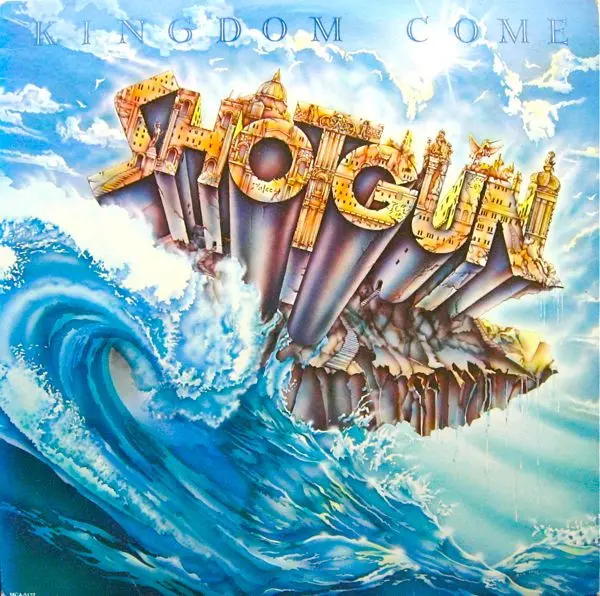 Shotgun released their fifth album, Kingdom Come, in September 1980 on MCA.
The album retains the core lineup from IV and maintains the balance of hard funk and smoother, soulful numbers that marked their previous work.
Primary songwriting credits go to Tyrone Steels and William Talbert, with contributions from Ernest Lattimore, Greg Ingram, Larry Austin, and Rickey Sebastian on select tracks. Sebastian wrote “Bad Babe,” Lattimore co-wrote “In & Out of Love” and “Party Right Here” with Talbert and the other members, and Austin co-wrote “Falling In Love” with Talbert.
The album alternates hard funk tracks with romantic and upbeat numbers. “Bad Babe” and “Wanna Have A Good Time” drive with brisk rhythms and horn accents, while “Introduce Me” and “Falling In Love” slow the pace with smooth, contoured lines. “You’re My Woman” provides a short, tender moment amid the rhythmically active tracks.
A1. “Inspiration” (3:55)
A2. “In & Out of Love” (5:03)
A3. “Bad Babe” (3:35)
A4. “Party Right Here” (4:05)
B1. “The Sky Is the Limit” (3:53)
B2. “Introduce Me” (3:21)
B3. “Falling In Love” (3:20)
B4. “You’re My Woman” (2:08)
B5. “I Believe In You” (2:53)
B6. “Wanna Have a Good Time” (3:38)
Sessions occurred at Solid Sound, Inc., Ann Arbor, Michigan, with producers Shotgun and William Talbert, recording engineers Rob Martens and Willard Spencer, and mixing by Baker Bigsby and Terry Moore.
Kingdom Come features illustration by Ron Kriss and art direction by Kathe Schreyer.
“Bad Babe” became the album’s sole single (b/w “Come On And Dance”).
Ladies Choice
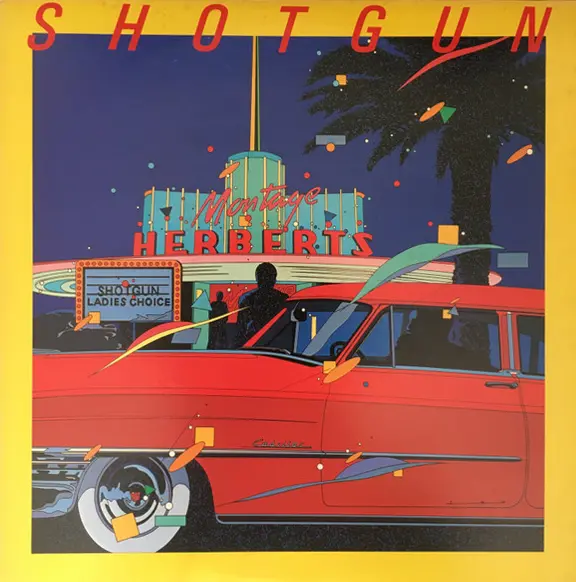 Shotgun released their numerical sixth album, Ladies Choice, in 1982 on Montage.
Greg Ingram and Tyrone Steels co-wrote “Let Me Be Myself” and group-wrote other tracks with Larry Austin, Rick Sabastian, Ray A. Moore, and Ernest Lattimore. Side A includes the Delegation cover “Stand Up Reach for the Sky.”
The album alternates energetic funk pieces with vocal-led compositions. Tracks like “Shake & Pop,” “Keep It In Motion,” and “The Party’s Right” emphasize rhythmic drive and layered instrumentation. “Ladies Choice,” “Let Me Be Myself,” and “Girl, You Are My Everything” slow the pace with contoured, smooth lines, giving the album varied textural contrast.
A1. “The Party’s Right” (4:14)
A2. “Ladies Choice” (3:40)
A3. “Stand Up Reach for the Sky” (4:27)
A4. “Keep It In Motion” (4:30)
B1. “Shake & Pop” (4:19)
B2. “Let Me Be Myself” (4:50)
B3. “Caught Up in a Crossfire” (4:39)
B4. “Girl, You Are My Everything” (5:01)
Sessions occurred at Solid Sound, Ann Arbor, Michigan, with producers Stuart Alan Love and William Talbert, engineering by Rob Martens and Will Spencer, and mixing by Barney Perkins.
The U.S. cover depicts a backside shot of a woman in white lingerie; the Japanese edition features a colorful neo-50s illustration of a red Cadillac in front of a theater named Montage Herberts, with artwork by Roland Young.
“Ladies Choice” appeared as a single (b/w “Caught Up in a Crossfire”) in March 1982, followed by “Shake & Pop” (b/w “Stand Up Reach for the Sky”) in August.
Discography:
- Shotgun (1977)
- Good, Bad & Funky (1978)
- Shotgun III (1979)
- Shotgun IV (1980)
- Kingdom Come (1980)
- Ladies Choice (1982)
Sources:
Artist/Album Pages:
October was an American symphonic-rock band that released a 1979 self-titled album on local indie ...
The Hastings Street Jazz Experience was an American post-bop ensemble from Detroit that recorded t...
RAMP was an American soul-funk band from Cincinnati that released the album Come Into Knowledge on...
Alice Coltrane (Aug. 27, 1937 — Jan. 12, 2007) was an American spiritual-jazz pianist, organist, a...
George-Edwards was an American art-pop duo from Detroit that self-pressed the 1977 album 38:38 an...
Afrique was a studio-funk band assembled in Los Angeles by mostly American musicians for the 1973...
Seven Seas were an American jazz-funk ensemble that released one album, The Miami Sound, in 1976 o...
707 was an American melodic/hard-rock band that released three albums on the PolyGram subsidiaries...
The Politicians were an American soul-funk/psych band from Detroit that released a self-titled alb...
MFSB — an acronym for Mother Father Sister Brother — was an American jazz-funk big band that serve...
Wood Brass & Steel were an American soul-funk band behind a 1976 self-titled album on Turbo Re...
Jade was an American soul-funk band from Virginia that released the album In Pursuit on Pesante Re...