

Sade are an English jazz–pop–soul band fronted by namesake Nigerian–British singer Sade Adu. They achieved fame with their 1983–85 singles “Your Love Is King,” “Hang On to Your Love,” “Smooth Operator,” and “Sweetest Taboo.” Their first two albums, Diamond Life and Promise, each topped global charts and sold ten million copies. After their 1988 release Stronger Than Pride, they resumed at lengthy intervals with Love Deluxe (1992), Lovers Rock (2000), and Soldier of Love (2010), all to renewed fanfare.
Members: Sade Adu (vocals), Stuart Matthewman (guitars, saxophone), Andrew Hale (keyboards), Paul S. Denman (bass)
Background
Sade was born Helen Folasade Adu on January 16, 1959, in Ibadan, Oyo State, Nigeria; the second child of Adebisi Adu (a Nigerian lecturer) and Anne Hayes (English nurse). Adebisi met Anne in London, where they married in 1955 and moved to his native land.
In Nigeria, locals referred to young Helen by her middle name, Folasade (Nigerian for “crowned by wealth”). Her parents shortened her name to Sade. After their 1963 separation, Anne moved Sade and her elder brother, Banjie, to Coldchester, Essex, to live with their grandparents. At eighteen, Sade moved to London and enrolled in the fashion design program at Saint Martin’s School of Art.
Upon completion of the three-year fashion program, Sade landed work as a model. She moonlighted as a backup vocalist for Pride, an unsigned Latin jazz-pop ensemble formed in 1979 (as Ariva). Pride featured guitarist Ray St. John and two London transplants from Kingston upon Hull: guitarist–saxophonist Stuart Matthewman and bassist Paul Denman. Matthewman played beforehand in The Odds, a mod-ska band that released four 1979–81 indie singles.
Sade and Matthewman formed a songwriting partnership and performed as a duo on select Pride dates, including a December 12, 1982, show at London’s famed Ronnie Scotts Jazz Club. She also collaborated with St. John on one song, “Smooth Operator,” which caught the attention of A&R reps. (St. John later formed Halo James, which scored a 1990 UK hit with “Could Have Told You So”).
In early 1983, Sade and Matthewman broke from Pride and formed a quintet with Denman, keyboardist Andrew Hale, and drummer Paul Cook (not the onetime Sex Pistols drummer). Sade’s early shows drew round-the-block queues. On May 12, they made their US live debut at New York’s Danceteria nightclub. That autumn, Sade Adu signed with Epic Records, which signed her band-mates in early 1984 after the completion of their debut album.
Diamond Life
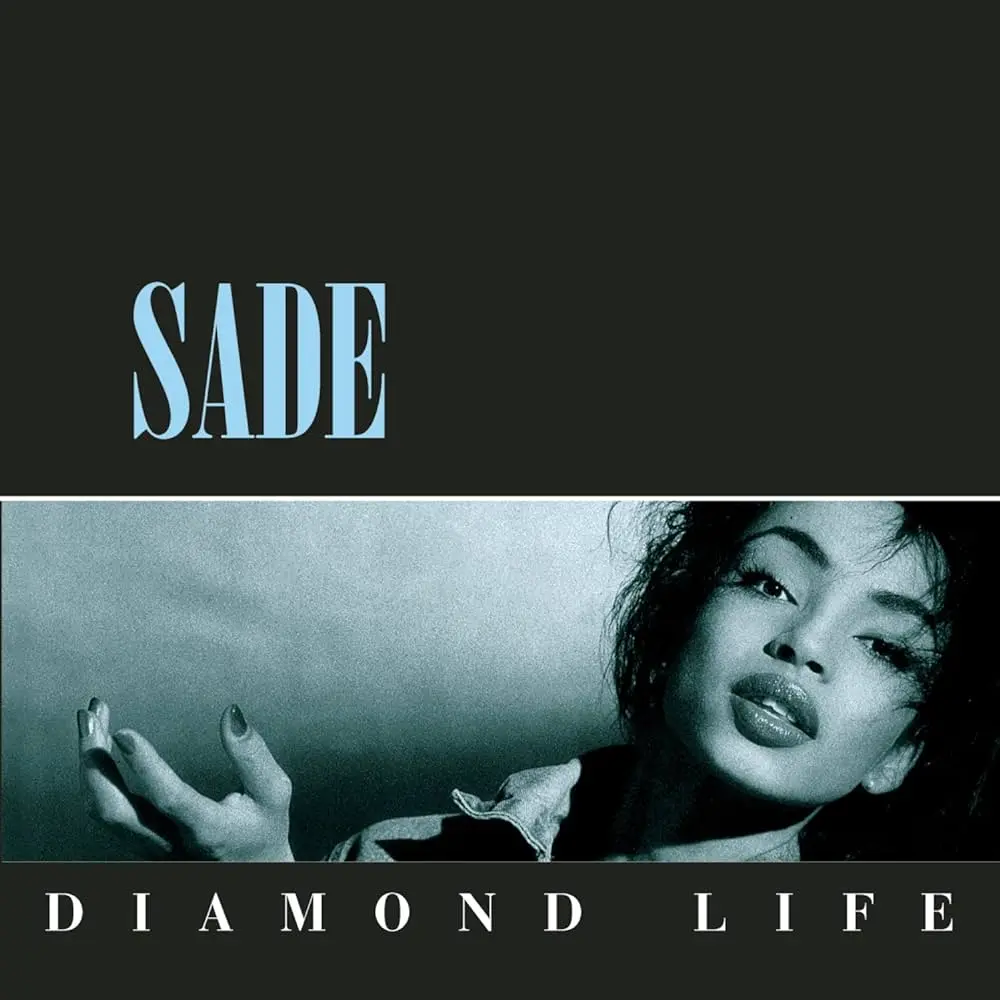 Sade released their debut album, Diamond Life, on July 16, 1984, on Epic. It features six songs co-written by Sade Adu and guitarist–saxophonist Stuart Matthewman, including “Frankie’s First Affair” and the singles “Your Love Is King,” “Hang On to Your Love,” and “When Am I Going to Make a Living.”
Side Two contains the group-written “Cherry Pie” and the Timmy Thomas cover “Why Can’t We Live Together.” Side One opens with the band’s signature song, “Smooth Operator,” co-written by Adu and her onetime Pride colleague Ray St. John. Cassette editions include a 150-second “Smooth Operator” postlude titled “Snake Bite.”
1. “Smooth Operator” (4:58)
2. “Your Love Is King” (3:41)
3. “Hang On to Your Love” (5:55)
4. “Frankie’s First Affair” (4:39)
5. “When Am I Going to Make a Living” (3:27)
6. “Cherry Pie” (6:20)
7. “Sally” (5:23)
8. “I Will Be Your Friend” (4:45)
9. “Why Can’t We Live Together” (5:28)
Sessions occurred in October–November 1983 in Northwest London at Power Plant Studios, a year-old Willesden facility whose initial users included Thin Lizzy, Amercan new wavers the Comateens, and multiple UK sophisti-pop contemporaries (Everything But the Girl, Pale Fountains, Weekend).
Sade recorded Diamond Life with Robin Millar, a soundman on Pete Sinfield‘s 1973 release Still and recent singles by The Bluebells and Working Week. Microdisney soundman Ben Rogan (a future songwriter for Etienne Daho) engineered Diamond Life in sequence with Human’s Lib, the debut by Howard Jones. The pair were assisted by Power Plant staffer Mike Pela, a mid-Seventies ELO, Renaissance, and Roy Wood engineer who worked concurrently for JoBoxers.
The credits present Sade as a quartet of Adu, Matthewman, keyboardist Andrew Hale, and bassist Paul S. Denman. Drummer Paul Cooke appears as one of five additional players along with Paz drummer Dave Early and serial percussionist Martin Ditcham, a pre-record Henry Cow temp with recent credits behind Eye to Eye, Marc Almond, Nik Kershaw, and The Rolling Stones. Diamond Life features two trumpeters: Culture Club auxiliary Terry Bailey and Stuart’s brother, Gordon Matthewman (later known as DJ Edge).
Initial European Diamond Life copies appeared in a gatefold sleeve designed by Graham Smith, a documenter of London’s recent New Romantic scene with concurrent visual credits for Blue Rondo a la Turk and Spandau Ballet. The black/teal cover shows Adu enframed in a head-tilted pose, photographed by one Chris Roberts, who captured each member with a vintage monochrome profile shot, as displayed on the inner-gates.
“Your Love Is King”
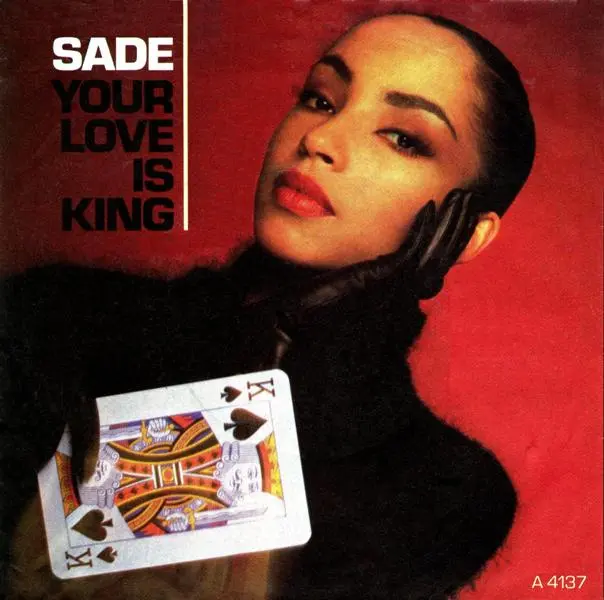 “Your Love Is King” first appeared in late February as an advance single, backed with “Love Affair with Life,” an exclusive Adu lone-write.
B. “Love Affair with Life” (4:35)
Epic also issued “Your Love Is King” as an extended UK/Dutch 12″ (3:58) backed with the full “Smooth Operator / Snake Bite” medley (7:28) and a live version of Adu’s “Love Affair with Life.”
The video spotlights Adu and Matthewman in a makeshift jazz club with an illustrated backdrop under variable lighted hues (orange, purple, blue, yellow). Adu makes deadpan (vaguely suggestive) glances at the viewer, inter-cut with lone tarot games that emphasize the king of spades (as referenced on the sleeve).
Sade mimed “Your Love Is King” amid florescent bars and flashing neon for the March 8 broadcast of the BBC music program Top of the Pops, which also featured in-studio numbers by Bananarama (“Robert De Niro’s Waiting”), Howard Jones (“Hide and Seek”), and Nena (“99 Luftballons”). They made a repeat performance amid dry ice and pink-teal geometric fixtures for the 3/22 broadcast, which also featured Depeche Mode (“People Are People”) and UB40 (“Cherry Oh Baby”).
“Your Love Is King” reached No. 6 on the UK Singles Chart and No. 7 in Ireland. Abroad, the 1984 release reached No. 2 in New Zealand and No. 5 in Italy.
Diamond Life reached No. 2 on the UK Albums Chart. On the Continent, the album reached No. 1 in Austria, France, West Germany, Switzerland, and the Netherlands. The album also topped the New Zealand chart and peaked at No. 2 in Italy and No. 3 in Finland.
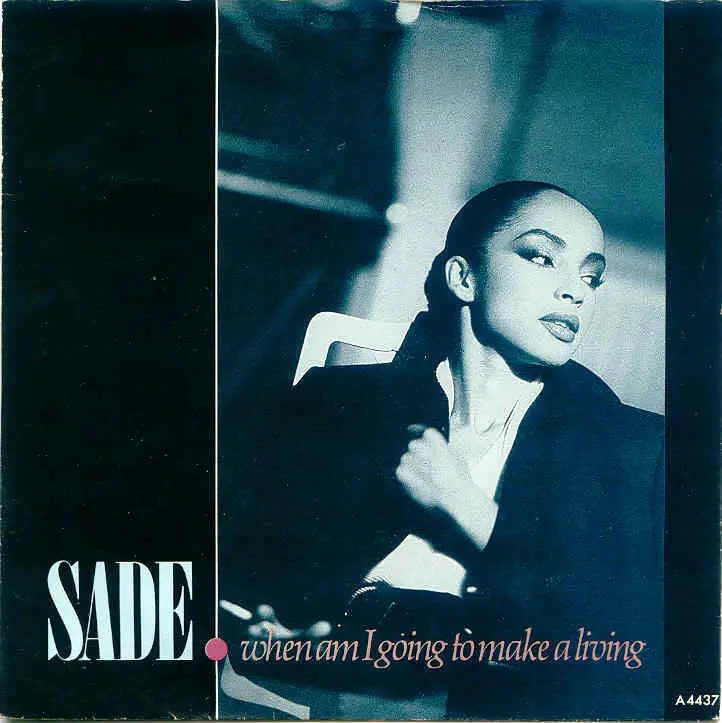 In late May, Epic lifted “When Am I Going to Make a Living” as the album’s second single, backed with “Should I Love You,” an Adu/Matthewman exclusive.
B. “Should I Love You” (3:50)
Adu dons hoop earrings and a gray trench coat in the video, where she walks London amid daytime commuters and taxi’s to a nearby diner, where she sits with her bandmates and shares flashbacks to their first encounters, including the time she first spotted Stuart in the window of a saxophone shop.
“When Am I Going to Make a Living” reached No. 12 in the Netherlands, where Sade mimed the song on a deep white stage under lavender spheres for the Dutch music program TopPop.
“Smooth Operator”
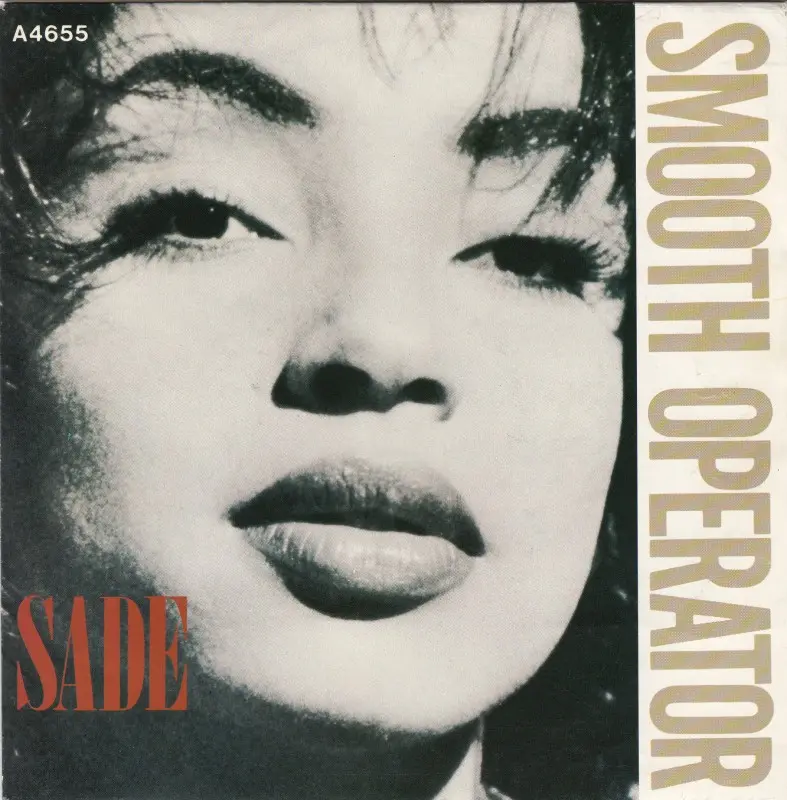 On September 15, Sade released “Smooth Operator” as their third UK single. The b-side, “Spirit,” is a Pride-era number group-credited with St. John. The single also appeared on 12″ with a second exclusive, “Red Eye,” a Matthewman/Hale number.
A2. “Red Eye” (3:18)
B. “Pride” (5:28)
The “Smooth Operator” video takes place in a night club, where Sade perform on a red-back stage as couples slowdance under mirror balls. Adu espies the subject: an Armani-suited man (actor Michael Feast) who cuts shady business deals in the dining area while the band plays. Mid-song, Adu reviews clandestine footage of the man engaged in underhanded business and illicit trysts with another woman. As the song climaxes, Adu breaks tears as the man blows her a kiss with a smug glance and makes off with the hostess (Max Headroom actress Amanda Pays, the other woman). In an alternate ending, Adu stays behind post-set to spy on the pair from behind an amplifier.
“Smooth Operator” was directed by Julien Temple, the Sex Pistols docu-filmaker behind classic clips for Judas Priest, The Kinks, Depeche Mode, Stray Cats, and Culture Club.
Sade mimed “Smooth Operator” amid slanted bar fixtures under pink/teal strobe lights for the September 27 broadcast of TotP, which twice aired the song amid early autumn hits by Alison Moyet (“All Cried Out”), Animal Nightlife (“Mr. Solitaire”), Big Country (“East of Eden”), Kim Wilde (“The Second Time”), Paul Young (“I’m Gonna Tear Your Playhouse Down”), Style Council (“Shout to the Top”), and Wham! (“Freedom”). In Sade’s segment, Matthewman and Denman wear baggy Forties suits while Adu dons a dip-double-breasted leather bolero jacket with wide velvet lapels.
“Smooth Operator” peaked at No. 19 in the UK and No. 17 in Ireland. Abroad, the song reached No. 6 in South Africa, No. 9 in France, and reached the Top 15 in Austria, West Germany, the Netherlands, and Switzerland. In Spain, performed “Smooth Operator” for the RTVE network. For this appearance, Adu sported bangs under a head-wrap with gloves and a red trench coat.
“Hang On to Your Love”
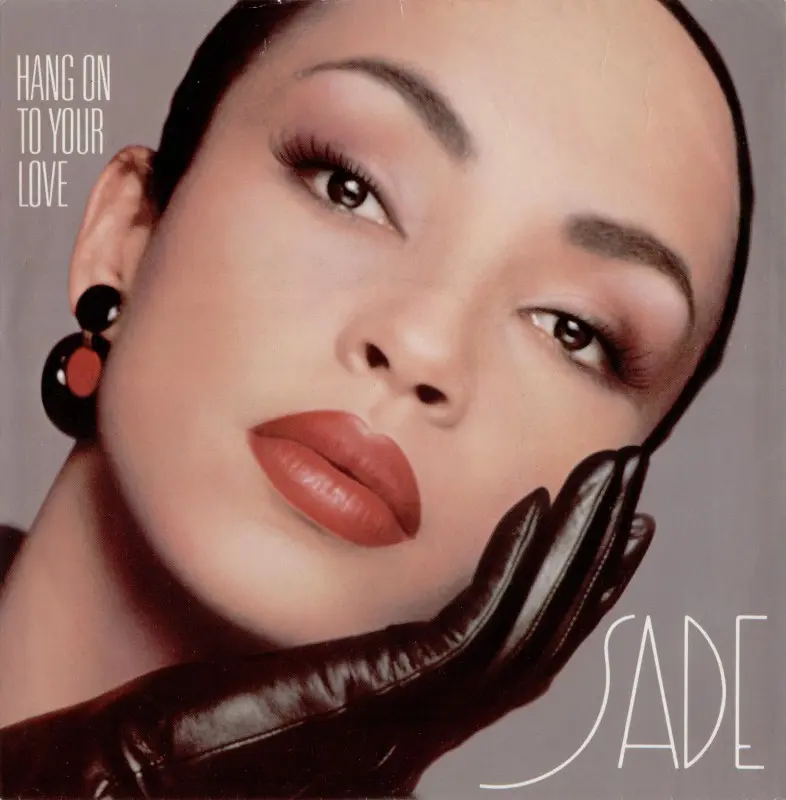 On December 8, 1984, Epic’s sister label, Portrait Records, issued “Hang On to Your Love” as the debut Sade single in North America (b/w “Cherry Pie”).
In the song’s video, Sade perform on painted cardboard instruments inside a red-lighted neo-Fifties casino, where a portly indebted gambler (actor Alex Norton) frets over losses with visions of his estranged ballet-dancing paramour. After another losing bet, he flees through a blue tunnel with collectors on his trail. The video ends on a coin-toss cliffhanger. Adu dons an all-black ensemble reminiscent of Jo Stockton (Audrey Hepburn’s Funny Face character) while her bandmates sport matching gray suits.
Sade filmed “Hang On to Your Love” with Brian Ward, who also directed mid-Eighties videos for Alphaville (“Forever Young”), The Stranglers (“Skin Deep”), and AC/DC (“Sink the Pink”).
“Hang On to Your Love” reached No. 5 on the US Billboard Dance chart and No. 14 on the R&B chart (No. 12, Cashbox). The single also went Top 20 in the Netherlands and New Zealand.
In February 1985, Portrait issued “Smooth Operator” as the second North American Sade single (b/w “Spirit”). The song reached No. 5 in Canada and resonated with radio programmers in the US, where “Smooth Operator” reached No. 5 on the Billboard Hot 100 and Hot R&B chart and No. 1 on the Adult Contemporary chart.
Sade’s stateside breakthrough coincided with the Portrait release of Diamond Life, which reached No. 5 on the US Top Jazz Albums chart and the Billboard 200. In Canada, the album peaked at No. 7.
In July 1985, “Your Love Is King” became their third North American single and reached No. 8 on the Billboard Adult Contemporary Chart (fifteen months after its peak as the highest-charting UK Sade single).
On Saturday, July 13, 1985, Sade played Live Aid, an all-star charitable concert event organized by Boomtown Rats frontman Bob Geldof for Ethiopian famine relief. The 70-act event aired to a global audience of 1.9 billion from the stages of Wembley Stadium, London, and JFK Stadium, Philadelphia. Sade took the Wembley stage at 14:53 British time and performed two Diamond Life numbers (“Your Love Is King,” “Why Can’t We Live Together?”) and one song from their upcoming second album (“Is It a Crime?”).
Promise
 Sade released their second album, Promise, on November 4, 1985, on Epic.
Promise contains five co-compositions by the main team of Sade Adu and guitarist/saxophonist Stuart Matthewman, including “War of the Hearts,” “Jezebel,” “Fear,” and “Tar Baby.”
Keyboardist Andrew Hale collaborated with the pair on “Is It a Crime?” while Adu worked with auxiliary percussionist Martin Ditcham on “The Sweetest Taboo,” the album’s global hit. Bassist Paul Denman contributed to the group-written “Mr. Wrong” and the closing Hale composition “Maureen.”
Promise utilizes Ditcham and returning auxiliaries Dave Early (drums) and Terry Bailey (trumpet), plus three first-time guests: trombonist Pete Beachill, Spanish classical guitarist Carlos Bonell (“Fear”), and former Gonzalez vocalist Jake Jacas, who sings backup on “Maureen” and the Adu/Matthewman third single “Never as Good as the First Time.”
The album appeared simultaneously on the new compact disc format with two additional songs: the Adu/Matthewman “You’re Not the Man” and the Hale instrumental “Punch Drunk.”
1. “Is It a Crime?” (6:20)
2. “The Sweetest Taboo” (4:37)
3. “War of the Hearts” (6:47)
4. “You’re Not the Man” (5:10)
5. “Jezebel” (5:29)
6. “Mr Wrong” (2:51)
7. “Punch Drunk” (5:25)
8. “Never as Good as the First Time” (5:00)
9. “Fear” (4:09)
10. “Tar Baby” (3:58)
11. “Maureen” (4:20)
Sessions spanned February through August 1985 at London’s Power Plant Studio with the Diamond Life sound team: producer Robin Millar, assistant Ben Rogan, and engineer Mike Pela. Millar produced Promise in sequence with 1985 titles by Big Sound Authority, EBTG, Fine Young Cannibals, The Kane Gang, Working Week, and the second Pale Fountains album, …From Across the Kitchen Table. Additional work took place at Studio Miraval in the Correns commune of Provence, France.
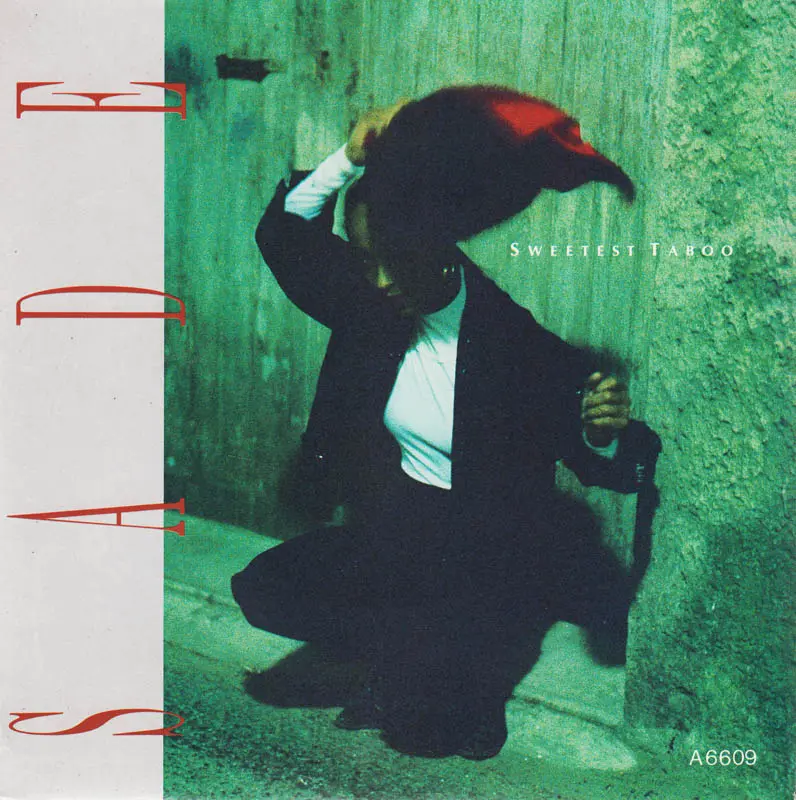 “Fear” and “Tar Baby” feature string arrangements by Nick Ingman, a veteran British conductor and library musician for KPM, De Wolfe, and Bruton Music.
Graham Smith designed the cover, which shows the singer’s zoomed, darkened profile. European LP copies appeared in a gatefold with white lyrical inner-gates graced with monochrome profile pics of each member in chic mid-century sophisti-pop attire (fedoras, suspenders, pleated slacks). The photographer, Toshi Yajima, earned contemporary visual credits on mid-Eighties sleeves for Aztec Camera, The Smiths, Virna Lindt, and Yukihiro Takahashi.
“The Sweetest Taboo” preceded the album as an October 1985 single, backed with the CD-only “You’re Not a Man.”
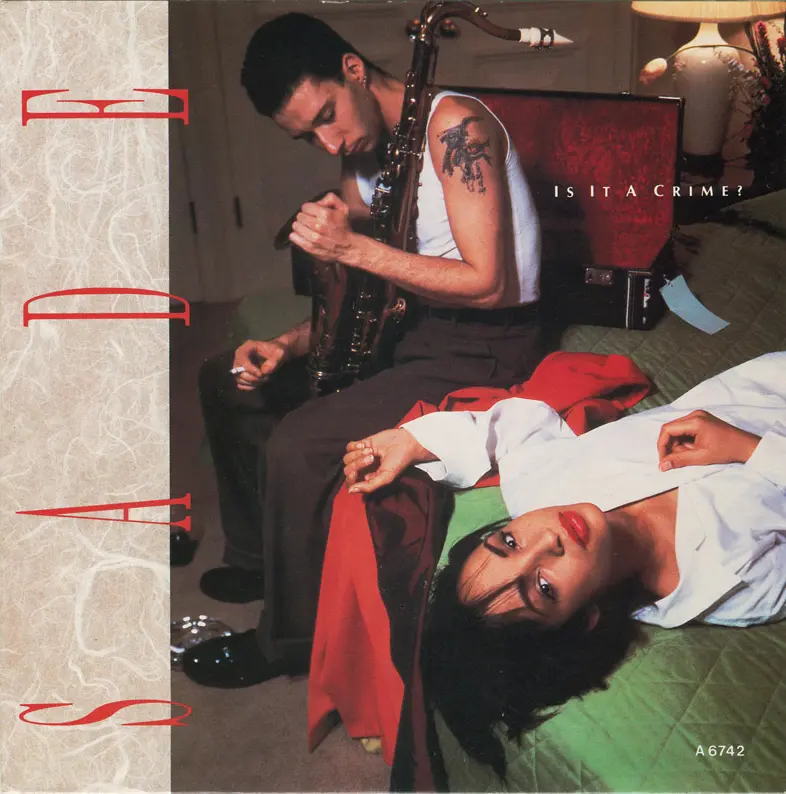 In the video, Sade perform inside a chateau foyer on a rainy day while Adu looks out the window and reflects on good times with a former lover, a desert outdoorsman.
“The Sweetest Taboo” reached No. 1 on the US and Canadian Adult Contemporary charts and No. 5 on the Billboard Hot 100 (No. 3 R&B). Elsewhere, the song reached No. 2 in Argentina, No. 9 in Finland, and charted within the Top 12 in Belgium, Ireland, Italy, and New Zealand.
In January 1986, “Is It a Crime?” became the second single, backed with the CD-only “Punch Drunk.” In the Brian Ward-directed video (a sequel to “The Sweetest Taboo”), Sade perform in a Manhattan penthouse while the subject (her ex) crosses town by taxi in an unsettled state. Adu recalls their rough times. In flashbacks scenes, she wears an off-shoulder dress with long wavy hair.
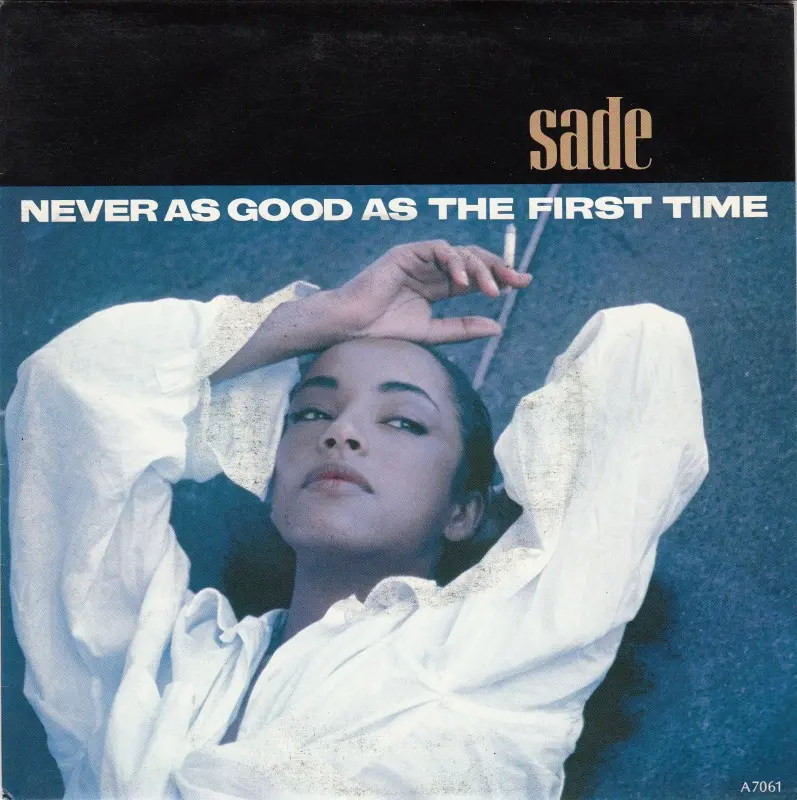 In March 1986, “Never as Good as the First Time” became the third and final Promise single, backed with “Keep Hanging On,” an exclusive number that Adu and Matthewman co-wrote with Hale and onetime Noir guitarist Gordon Hunte.
B. “Keep Hanging On” (2:59)
Promise reached No. 1 on the UK Albums Chart and the US Billboard 200. Across Europe, the album reached No. 1 in Finland, Italy, Switzerland, and No 2 in Germany. Promise also went Top 5 in Canada, France (both No. 3) and Sweden (No. 4) and peaked at No. 6 in Austria and Norway. In the Global South, Promise reached No. 2 in Argentina, No. 3 in New Zealand, and No. 9 in Australia.
In the US, Promise achieved quadruple-Platinum status with sales in excess of four million units. As of 2011, the album amassed global sales of 9.3 million.
Stronger Than Pride
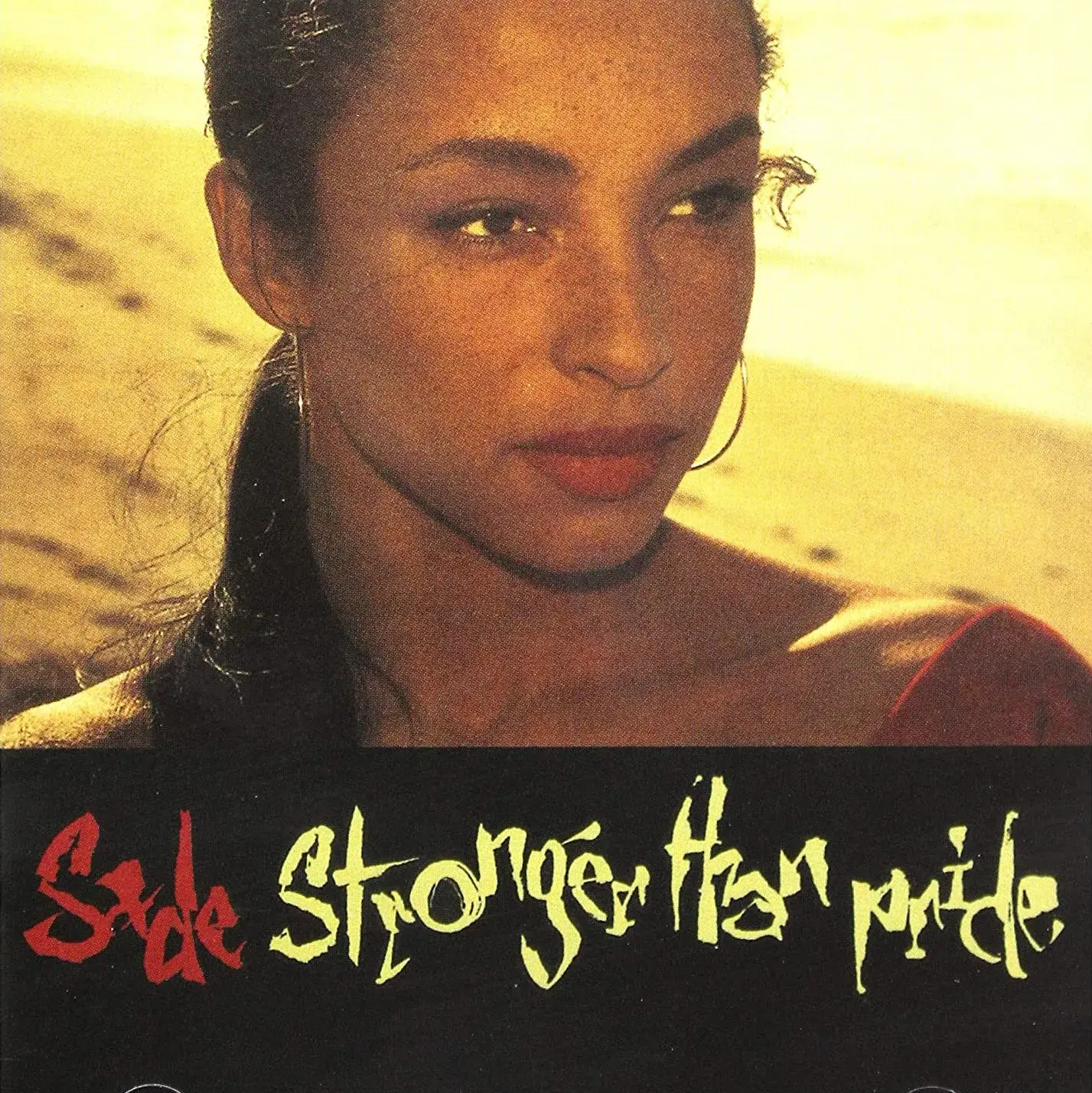 Sade released their third album, Stronger Than Pride, on July 16, 1988, on Epic.
Discography:
- Diamond Life (1984)
- Promise (1985)
- Stronger Than Pride (1988)
- Love Deluxe (1992)
- Lovers Rock (2000)
- Soldier of Love (2010)
Sources:
Artist/Album Pages:
Pink Turns Blue was a German goth-rock band that released two albums on Fun Factory! during the la...
Gordon Lightfoot (November 17, 1938 – May 1, 2023) was a Canadian singer/songwriter, best known fo...
Leggat was a Canadian symphonic/hard-rock band that released a 1982 self-titled double-album on Ca...
Locomotive was an English brass-rock/psych band that was active with multiple lineups between 1966 a...
Jun Fukamachi — 深町純 (May 21, 1946 — Nov. 22, 2010) — was a Japanese jazz keyboardist. He moved int...
Bizarre Ko.Ko.Ko was an Austrian synthesizer duo behind the 1984 album 00 Time on self-press Synop...
Casiopea are a Japanese jazz-funk band that averaged two albums per year between 1979 and 1987 on ...
Vinegar Joe was an English soul-rock band that released three albums on Island Records: Vinegar Jo...
Accolade was an English folk-rock band that released a self-titled album on Columbia in 1970, foll...
Rahmann was a French Zeuhl band that released a self-titled album in 1980 on Ramsès. Members: Ma...
Flairck was a Dutch chamber-folk/classical ensemble from that released six Polydor albums between ...
The Soul Searchers were an American soul-funk band from Washington, D.C., that released the 1972–7...