

Roy Wood is an English singer, songwriter, multi-instrumentalist, and bandleader from Birmingham who emerged as the musical mastermind of ’60s pop-psych band The Move, which evolved into Electric Light Orchestra (ELO) during the early 1970s. After recording one album with ELO, he left the project to form Wizzard. Starting with the 1973 release Boulders, he issued sporadic solo material.
Wood, the Move’s chief writer, sang lead on half their songs, despite the initial presence of designated vocalist Carl Wayne. Initially a guitarist, Wood expanded to keyboards on the band’s second album Shazam in 1970. By the time of their third album Lookin On, he played woodwinds and stringed instruments. The latter album marked the arrival of fellow songwriter and multi-instrumentalist Jeff Lynne, whose talents prompted Wood to share creative power on the 1971 album Message From the Country. That same year, they premiered their classical-rock fusion concept Electric Light Orchestra with the album No Answer.
Soon after that release, Wood left ELO in Lynne’s hands and formed the harder-rocking, retro-tinged Wizzard. They recorded three albums and ten singles over a four-year period, starting with the 1973 release Wizzard’s Brew. Concurrently, he debuted as a solo artist with the album Boulders on Harvest. He continued his dual-activity with two 1975 albums: Wizzard’s Introducing Eddie and the Falcons and the solo release Mustard.
In 1976, Wizzard recorded a brassier album that remained unreleased for many years but anticipated the sound of Wood’s followup act the Wizzo Band on the 1977 Warner album Super Active Wizzo. That same year, he produced the album Annie in Wonderland for Renaissance vocalist Annie Haslam, his girlfriend at the time. After the release of his 1979 album On the Road Again, he rolled back his activities, producing only one album during the following decade.
Early Career
Roy Wood was born on November 8, 1946, in Kitts Green, a suburb of Birmingham. In the early 1960s, he played in The Falcons, a Midlands rock ‘n’ roll band. In 1963, he joined Gerry Levene and the Avengers. He briefly attended the Moseley College of Art, the alma mater of pop artist Peter Phillips, singer–keyboardist Christine McVie (Chicken Shack, Fleetwood Mac), and (years later) UB40 frontman Ali Campbell. Moseley expelled Wood in 1964.
Wood scored his first recorded gig in Mike Sheridan & the Nightriders, a popular Brumbeat act with guitarist Dave Pritchard, drummer Roger Spencer, and bassist Greg Masters. Wood composed their 1965 b-side “Make Them Understand,” issued as Mike Sheridan’s Lot.
Months later, Wood jumped ship to rival Brumbeat stalwarts Carl Wayne & the Vikings, which featured drummer Bev Bevan and bassist–singer Chris “Ace” Kefford. In December 1965, they hired guitarist–singer Trevor Burton and became The Move. (In Wood’s absence, Sheridan quit The Nightriders, which released two singles with new recruit Jeff Lynne, then morphed into The Idle Race.)
The Move
The Move scored hits with the 1966–68 singles “Night of Fear,” “I Can Hear the Grass Grow,” “Flowers in the Rain” (b/w “(Here We Go Round) the Lemon Tree”), and “Fire Brigade” (b/w “Walk Upon the Water”) — all in advance of their debut album Move. By 1968, they were one of the UK’s biggest acts, scoring further hits with “Curly,” “Blackberry Way,” and “Wild Tiger Woman.” Wood wrote the bulk of their material, including all the hits.
By 1969, Wood amassed an assortment of odd instruments (cello, steel guitar, mandolin, cittern, bouzouki, double bass, saxophones, brass, bassoon) that he collected with Move royalties. As The Move dealt with lineup changes and artistic conflicts, Wood practiced these instruments and wrote material outside the band’s range. Little by little, he recorded these pieces during off-time from the group.
In February 1970, the Move released Shazam, comprised of longer, heavier, more theatrical numbers and forays into folk and classical music. The stylistic change prompted Wayne’s exit. Wood asked Lynne, a longtime mate and musical kin, to join the Move. Meanwhile, Wood envisioned a new musical concept: a rock band with chamber strings dubbed Electric Light Orchestra. Lynne joined the Move on the condition that they transition to the ELO concept.
The Move’s intended final album, the late 1970 release Looking On, showed a newfound emphasis on eclectic instrumentation (oboe, sitar, banjo, slide guitar, cello). Wood learned and played the assorted sundries as sessions progressed.
In mid-1971, the lineup of Wood, Lynne, and Bevan commenced work on the first Electric Light Orchestra album. To fund the project, they recorded one further Move album, Message from the Country, and continued charting with the 1971/72 singles “Tonight,” “Chinatown,” and “California Man.”
Electric Light Orchestra
The Electric Light Orchestra released their self-titled debut album in December 1971. It contains four Wood numbers, including “Look at Me Now” (an “Eleonore Rigby”-style number), “First Movement (Jumping Biz)” (a “Classical Gas” pastiche), and “The Battle of Marston Moor (July 2nd 1644)” (a booming, crashing, avant-garde chamber epic).
ELO’s sound was initially hard to replicate live. Amid conflicts with their manager and discontent with their first tour, Wood left the project during sessions for their second album, ELO 2. Lynne assumed leadership of ELO, which grew to a septet and released the finished album in 1973. Wood’s bass and cello work on the tracks “In Old England Town (Boogie No. 2)” and “From the Sun to the World (Boogie No. 1)” are his final contributions to ELO.
Wizzard
When Wood fled the ELO 2 sessions, he walked up-street to another studio and bumped into bassist Rick Price, Kefford’s replacement in the Move for the 1969/70 period. They formed Wizzard with reedists Mike Burney and Nick Pentelow and two Mongrel percussionists: Keith Smart (ex-Lemon Tree) and Charlie Grima (once of The Ghost).
Boulders
 Roy Wood released his debut solo album, Boulders, in June 1973 on Harvest. It features nine self-performed originals recorded between 1969 and 1971. Wood plays an assortment of string and wind instruments that he collected with his earnings from the Move’s success. He also painted the unfinished self-portrait on the cover.
Wood plays each basic rock instrument on Boulders (guitar, bass, drums, piano, harmonica) and performs all the multi-tracked vocal harmonies. From his collection of odd instruments, he plays mandolin, cittern (a Renaissance stringed instrument), bouzouki (a Greek mandolin), banjo, cello, double bass, brass, saxophones, bassoon, and recorders.
Musically, Boulders encompasses folk, pop, bluegrass, and retro rock with chamber and baroque flourishes. The 7:29 rock medley that closes the album is a sequence of late-fifties and early sixties pastiches.
A1. “Songs of Praise” (4:40) is a jolly strum-along (in D) with a gospelly chorus. Wood recorded his backing harmonies at half-speed to achieve the child-like voices. He first submitted this song to the British–Australian MOR folk-pop group the New Seekers, whose version appears on their 1971 album We’d Like to Teach the World to Sing (UK version). The track vaguely recalls the Move’s “Omnibus.”
A2. “Wake Up” (3:20) is a plucked bouzouki ditty with a singalong vocal melody, countered by flute and a bowed string break. A splashing sound provides the rhythmic component. It ends with backward vocals and simulated duck sounds.
A3. “Rock Down Low” (3:24) is a gruff neo-fifties rocker with with crunchy saxophone, honky-tonk piano (mixed low), and a cello break. Standard 12-bar progression in B♭.
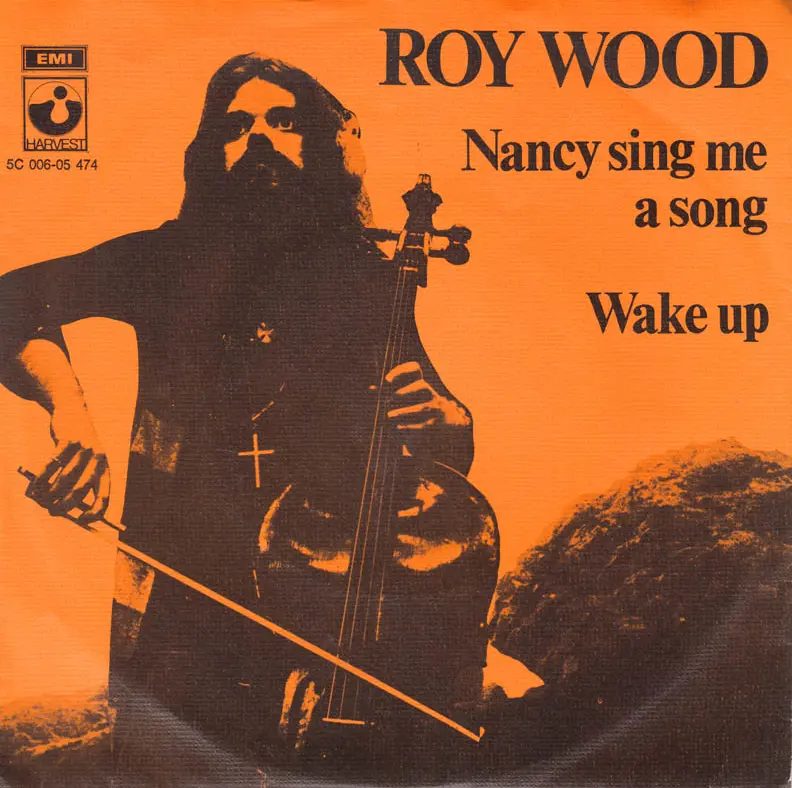 A4. “Nancy Sing Me a Song” (3:27) is a folksy tune with plucked, angular chord changes and an arching vocal melody. Chorus line: “Nancy, Nancy, sing me a song… something to make my hair grow long.”
A5. “Dear Elaine” (4:07) has a chamber-folk arrangement with mandolin, cello, and vocals, all multi-tracked to fullness. A capella middle.
B1. “All the Way Over the Hill” (4:49) is an electric harmonized singalong with an ascending–descending progression rooted in C; marked with fretless bass, tambourine, and fifties doo-wop vocals; interjected with a finger-picking, sitar-laden break. It ends with “Irish Loafer (and His Hen),” a Celtic shuffle with striking double-tracked cello.
B2. “Miss Clarke and the Computer” (4:19) is a finger-picking mandolin folk lullaby with glockenspiel and disguised vocals (Wood assuming the voice of a children’s television character, ala Sesame Street). Brief jazzy break with walking contrabass. It’s sung from the point of view of a failing robot calling out to its owner.
B3. “When Gran’ma Plays the Banjo” (3:13) is a knee-slapping bluegrass ditty about an old grannie who impresses hillbillies with her banjo playing. She gradually speeds up to much applause from the townsfolk.
B4. Rock Medley (7:31) “Rockin’ Shoes” is acoustic rockabilly with brush drums, twangy leads, and Presley-esque vocals. It breaks into “She’s Too Good for Me,” a strummed, uptempo harmony pop number reminiscent of the Everly Brothers. It blends into “Locomotive,” a rockier number with thick sax and caterwauled vocals — a musical cross between Little Richard and present-day glam, similar to the Move’s recent “California Man.”
Wood collected second-hand instruments since age 17, most of which he’d never played. As he tested out these instruments, new melodies sprung that didn’t fit within the Move’s musical framework. During 1969, as the Move coped with setbacks — the loss of Trevor Burton; a cancelled US tour; a change of bassists; a stifling tour of the UK cabaret circuit; the alienation of singer Carl Wayne — Wood recorded his new ideas at Phonogram and Abbey Road Studios, London. The recordings took place between the Move’s 1969 single “Curly” and the sessions for their 1971 album Message from the Country.
The Phonogram recordings were engineered by Roger Wake, a soundman on 1969–71 albums by Ambrose Slade, Cochise, Czar (self-titled), Gracious (Gracious!), Harsh Reality, Kaleidoscope, Linda Hoyle (Pieces of Me), Nucleus (We’ll Talk About It Later), and the Move’s Looking On.
The Abbey Road tracks were recorded with three engineers: John Kurlander (Badfinger, Wallace Collection), Nick Webb (Masters Apprentices, Mighty Baby, Pretty Things, Roy Harper), and Alan Parsons, a late-period Beatles tape op (Sgt. Pepper’s Lonely Hearts Club Band, Abbey Road) who also engineered Wizzard’s Brew and 1973 albums by Kayak (See See the Sun), Wings, and Pink Floyd (The Dark Side of the Moon). Parsons instructed Wood to wear rain gear for the splashing sounds on “Wake Up.” Kurlander plays the harmonium on “Song of Praise,” the only part on Boulders not played by Wood himself.
Boulders is housed in a gatefold sleeve with a monochrome shot of Wood playing cello (back) and sepia studio pics (inner-gates). Wood left the cover painting unfinished at EMI’s suggestion. In its promotions, EMI emphasized that Boulders is a solo effort in the true sense because Wood handled the writing, arrangements, instrumentation, vocals (including multi-tracked harmonies), and production. (Todd Rundgren did the same on most of his albums from 1972-onward, starting with Something / Anything?).
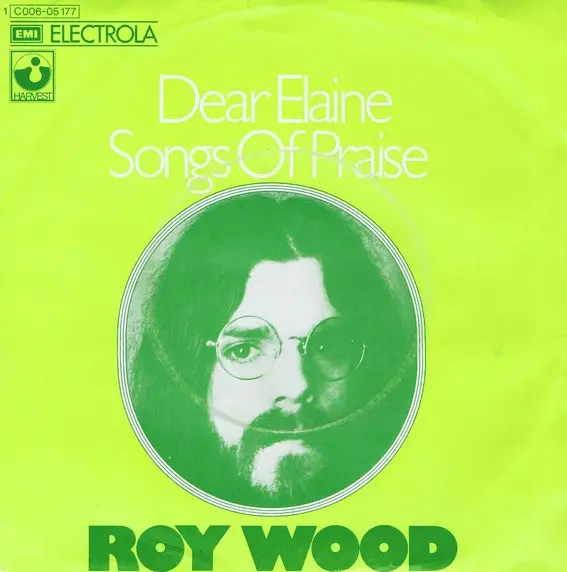 Boulders was preceded by the single “When Gran’Ma Plays the Banjo” (b/w “Wake Up”), released sixteen months earlier in February 1972 when Wood was still part of ELO. The album — long delayed by Wood’s management to avoid conflicts with Move or ELO releases — appeared three months after Wizzard’s Brew (released in March 1973).
Boulders reached No. 15 on the UK Albums Chart. Harvest lifted “Dear Elaine” (b/w “Songs of Praise”), which reached No. 18 on the UK Singles Chart. United Artists issued the album in North America, where Boulders reached the US Billboard 200. In 1977, Harvest (UK) and Sonopresse (France) reissued Boulders with a saturated xerox of a cello-playing Wood against a stark black background.
1973–75 Non-album Singles
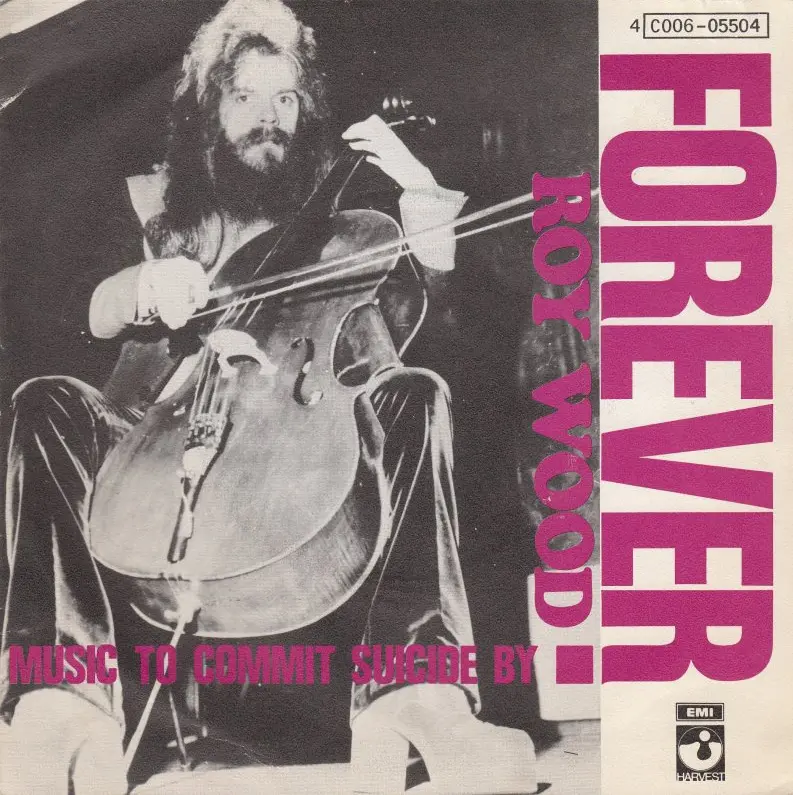 Between Boulders and Mustard, Roy Wood released three solo singles on Harvest and Jet, each pairing a self-performed A-side with an instrumental B-side. All six tracks are non-album recordings, later compiled on reissues and anthologies.
On November 16, 1973, Harvest issued “Forever” (HAR 5078), Wood’s third solo single backed with “Music to Commit Suicide By,” one of multiple songs to make light of the grim topic.
A. “Forever” (4:23)
B. “Music to Commit Suicide By” (2:47)
Wood plays all instruments and vocals on both tracks, with Rick Price credited for telephone effects on the B-side. “Forever” reached No. 8 on the UK Singles Chart and remained in the Top 50 for thirteen weeks, outlasting Wizzard’s concurrent “I Wish It Could Be Christmas Everyday.” Wood promoted the single with three Top of the Pops appearances between December 1973 and January 1974.
The A-side label includes a printed dedication to Brian Wilson and Neil Sedaka, whose influence shaped the track’s harmony structure and Brill-style melodic construction. “Music to Commit Suicide By” appeared one year after “I Think I’m Going to Kill Myself,” a music hall ode to the sentiment sung by a jolly Elton John (an actual survivor). Later upbeat vignettes on the topic include songs by Deaf School (“What a Way to End It All”) and Department S (“Suicide”).
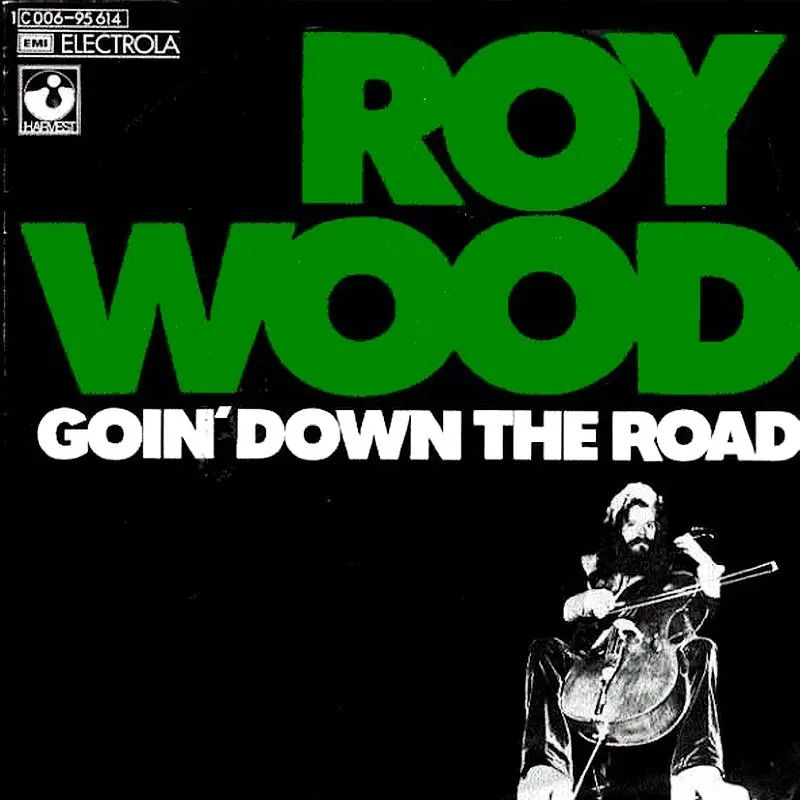 On June 7, 1974, Harvest issued “Goin’ Down the Road (A Scottish Reggae Song)” (HAR 5083), Wood’s fourth solo and ninth overall single (counting Wizzard releases) in a two-year period.
A. “Goin’ Down the Road (A Scottish Reggae Song)” (3:02)
B. “The Premium Bond Theme” (4:25)
Wood combines Highland bagpipes with a faux-reggae rhythm, playing all instruments and layering his own vocals. The single peaked at No. 13 in the UK and also charted in Ireland, Sweden, and Switzerland. The B-side extends his instrumental absurdism with a brass-driven pastiche styled like a vintage cinema theme. Both tracks reflect Wood’s penchant for surreal genre clashes performed entirely solo.
On May 23, 1975, Jet released “Oh What a Shame” (JET 754), Wood’s fifth solo and twelfth overall single since leaving the Move/ELO infrastructure.
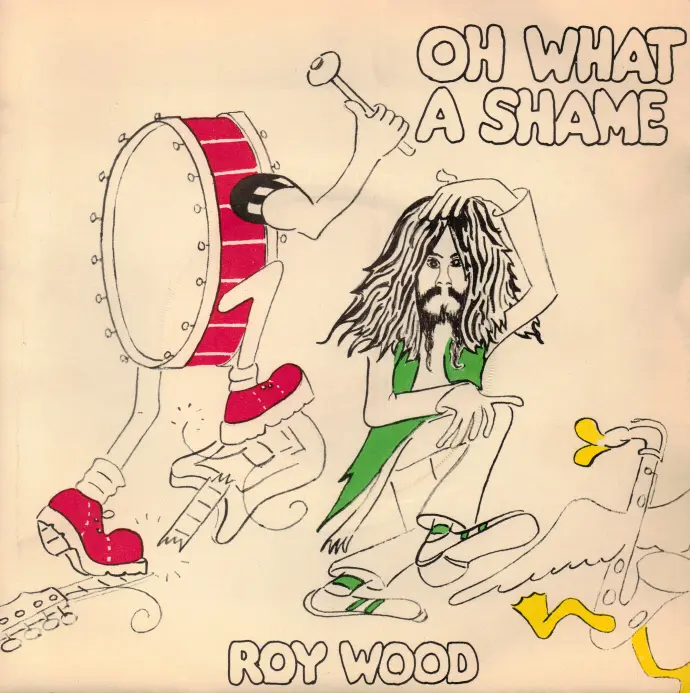 A. “Oh What a Shame” (3:49)
B. “Bengal Jig” (2:13)
This was Wood’s final solo UK chart entry, peaking at No. 13 and spending seven weeks in the Top 40. “Oh What a Shame” presents a stripped-down vocal lament with minimal arrangement, while “Bengal Jig” continues his series of bagpipe hybrids, this time incorporating mock-Indian motifs. As with the prior singles, Wood wrote, produced, and performed both sides alone.
The release arrived several months ahead of Mustard and anticipates the album’s fascination with stylistic mashups and thematic eccentricity.
Mustard
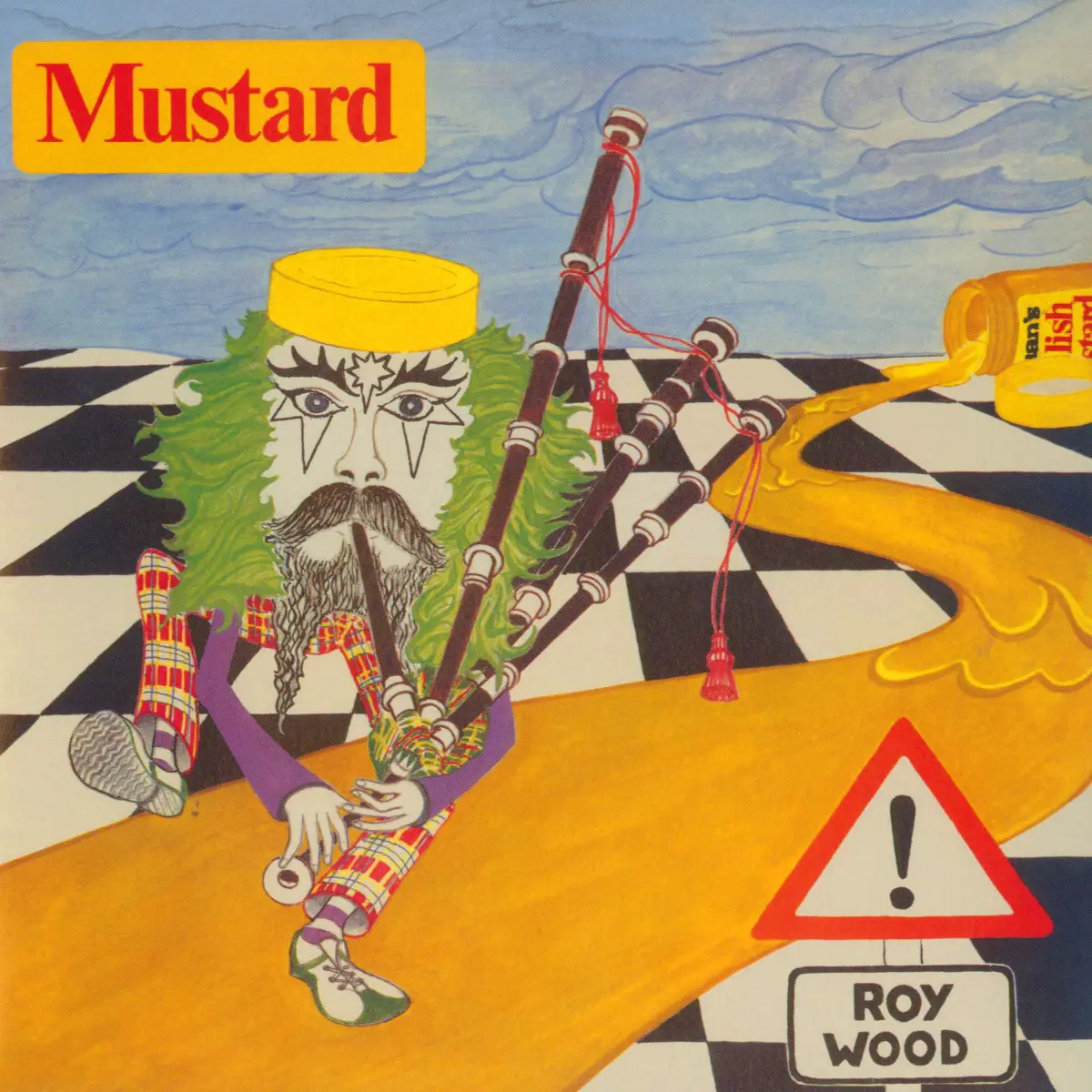 Roy Wood released his second solo album, Mustard, in December 1975 on Jet.
Mustard extends his self-contained studio approach with denser, more elaborate production built around layered vocals, stacked instrumentation, and rapid stylistic shifts. He handled all instruments (acoustic guitars, bass, drums, keyboards, strings) and multi-tracked harmonies. His material fuses orchestral flourishes with novelty structures, reflecting a deliberate move away from the looser, homemade character of Boulders toward a more maximal, constructed sound.
The album features select vocal backing by Phil Everly (“Get On Down Home”) and Wood’s then-girlfriend, Renaissance frontwoman Annie Haslam (“The Rain Came Down on Everything”).
A1. “Mustard” (1:28)
A2. “Any Old Time Will Do” (4:13)
A3. “The Rain Came Down on Everything” (6:35)
A4. “You Sure Got It Now” (5:11)
B1. “Why Does Such a Pretty Girl Sing Those Sad Songs” (4:34)
B2. “The Song” (6:35)
B3. “Look Thru the Eyes of a Fool” (2:55)
B4. “Interlude” (1:23)
B5. “Get On Down Home” (7:32)
Wood produced the album across eighteen months. His dispute with De Lane Lea staff halted access to certain tracks and delayed completion, forcing a mid-project studio change to Phonogram. He also painted the sleeve artwork and provided the cartoon centerfold.
“Look Thru the Eyes of a Fool” preceded Mustard as a November 1975 single, backed with the non-album “Strider.” After the spring 1976 release of “Indiana Rainbow” from Wizzard’s otherwise vaulted Main Street album, Jet lifted “Any Old Time Will Do” (b/w “The Rain Came Down on Everything”).
Wizzo Band – Super Active Wizzo
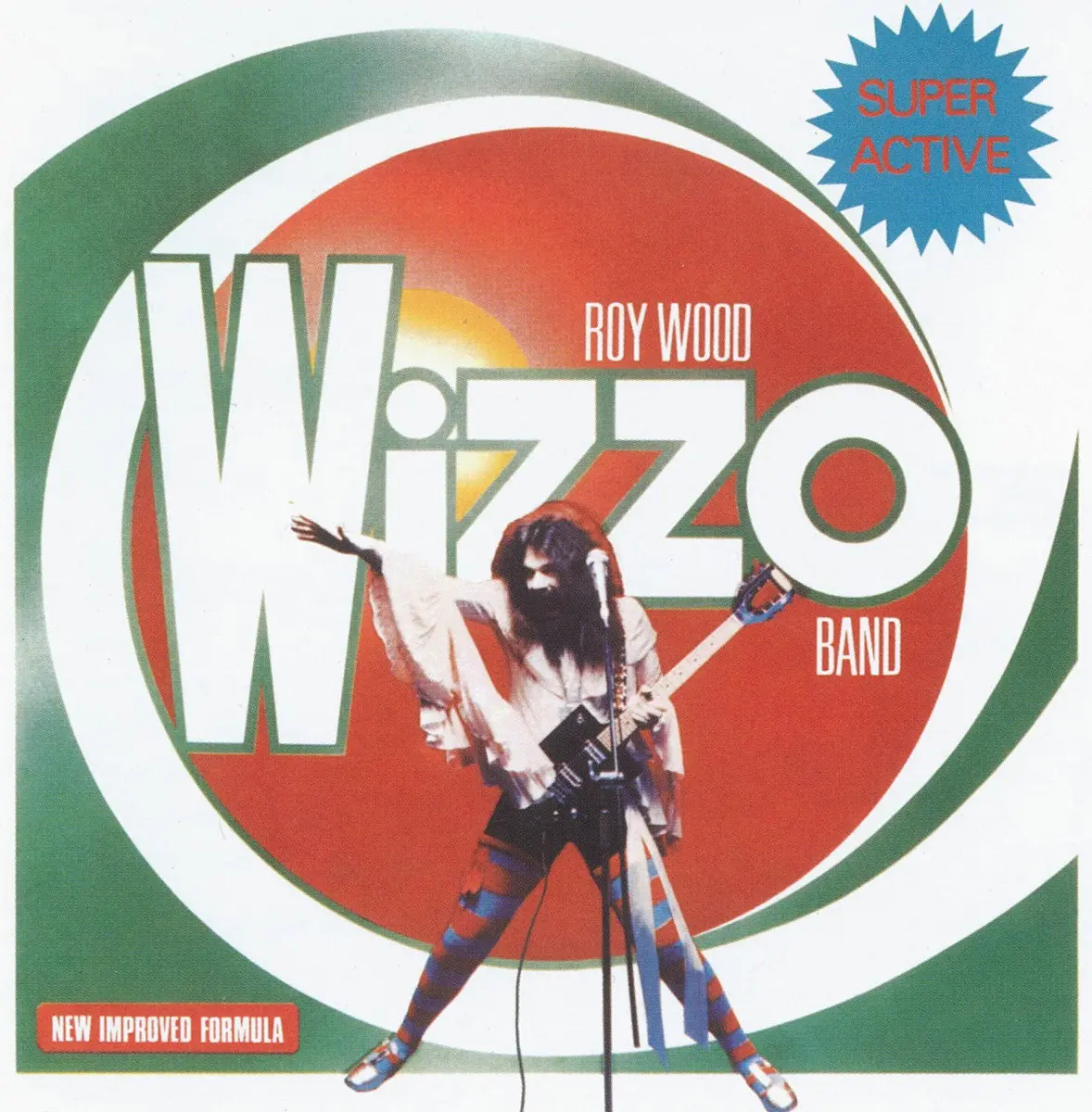 Roy Wood’s Wizzo Band released their singular album, Super Active Wizzo, in September 1977 on Warner Bros.
The album pursues a hybrid of heavy rhythm section dynamics and jazz-informed horn arrangements with longform instrumental passages and ensemble interplay. Roy Wood leads on guitar, vocals, and multiple overdubbed instruments, including electric sitar, Moog synthesizer, clavinet, upright and electric bass, and four saxophone types ranging from sopranino to baritone.
Former Move/Wizzard bandmate Rick Price plays pedal steel and electric guitar, anchored by bassist Graham Gallery and drummer Dave Donovan. Super Active Wizzo also features keyboardist Paul Robbins, trombonist Bob Wilson, and saxophonist Billy Paul (alto, baritone).
A1. “Life Is Wonderful” (8:37)
A2. “Waitin’ at This Door” (5:48)
A3. “Another Wrong Night” (11:15)
B1. “Sneakin’” (6:25)
B2. “Giant Footsteps [Jubilee]” (5:59)
B3. “Earthrise” (11:22)
Sessions took place at De Lane Lea Studios. Wood produced the album and wrote all tracks, co-authoring “Giant Footsteps” with Annie Haslam and drummer Dave Donovan, and “Earthrise” with lyricist Dick Plant.
The album was preceded by the single “The Stroll” and followed by “Dancin’ at the Rainbow’s End,” both issued by Warner Bros. Plans for a 1978 tour collpased as the band dissolved shortly after the album’s release.
On the Road Again
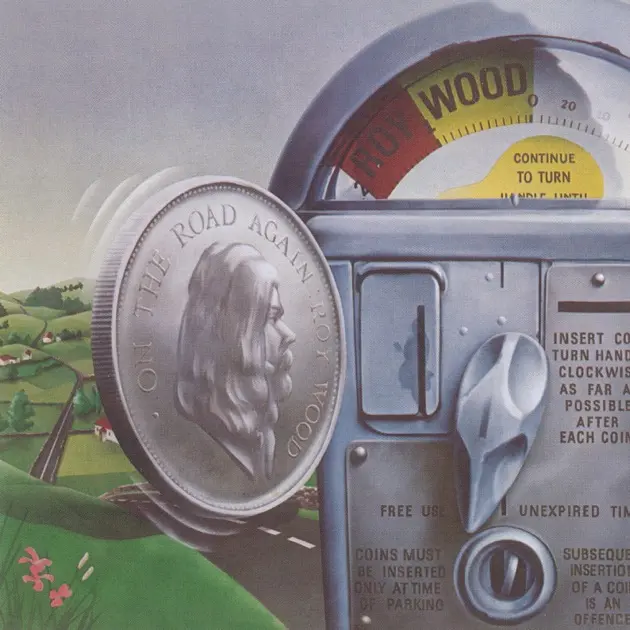 Roy Wood released his third solo album, On the Road Again, in August 1979 on Warner Bros.
The album spans layered pop-rock arrangements with varied instrumentation and key guest appearances. Wood performs lead vocals and handles the bulk of instrumentation, including guitars, bass, drums, keyboards, brass, and woodwinds.
His onetime Move bandmate, Carl Wayne, sings co-lead vocals on “Keep Your Hands on the Wheel,” which also features Led Zeppelin drummer John Bonham in one of his final appearances. Andy Fairweather Low plays additional guitar.
A1. “(We’re) On the Road Again” (4:22)
A2. “Wings Over the Sea” (3:11)
A3. “Keep Your Hands on the Wheel (Said Marie to the Driver)” (4:16)
A4. “Colourful Lady” (5:06)
A5. “Road Rocket” (3:27)
B1. “Backtown Sinner” (4:12)
B2. “Jimmy Lad” (4:28)
B3. “Dancin’ at the Rainbow’s End” (3:35)
B4. “Another Night” (3:23)
B5. “Way Beyond the Rain” (5:33)
Recording took place across several locations, including Rockfield Studios, AIR Studios, DJM, Utopia, The Music Centre in Wembley, and Lea Sound in Pelsall. Wood produced the sessions and played most instruments himself, continuing his hands-on studio approach established on Boulders and Mustard.
Warner lifted “(We’re) On the Road Again” (b/w “Saxmaniacs”) and “Keep Your Hands on the Wheel” (b/w “Giant Footsteps”). “Dancin’ at the Rainbow’s End” also appeared as a standalone single under the Wizzo Band name.
Discography:
- Boulders (1973)
- Mustard (1975)
- Super Active Wizzo (1977 • Roy Wood’s Wizzo Band)
- On the Road Again (1979)
- Starting Up (1986)
Sources:
Artist/Album Pages:
Om were a Swiss avant-jazz quartet from Luzern that debuted with a half-live/half-studio album on ...
Stanley Clarke is an American jazz-funk bassist who gained prominence in the supergroup Return to ...
Move is the debut album by Brummie pop-rock/psych band The Move, released in 1968 on Regal Zonophone...
Justin Hayward (born Oct. 14, 1946) is an English vocalist, guitarist, and songwriter from Swindon...
Clark-Hutchinson was an English jam-rock duo comprised of keyboardist Andy Clark and guitarist Mick ...
Dalek I was an English electro/art-pop combo from Liverpool that released two albums and a clutch of...
Sharks were an English hard-rock band that released the 1973–74 Island albums First Water and Jab ...
Maxine Nightingale is an English soul-pop singer who released three albums between 1976 and 1978 o...
The Abyssinians are a Jamaican roots-reggae act that released the 1976 album Satta Masa Gana, foll...
The Vapors were an English rock band that released the 1980–81 albums New Clear Days and Magnets o...
Leb i Sol was a Yugoslav jazz-rock/pop band that landed two tracks on Boom '77 and made their firs...
Toyah Willcox (born May 18, 1958) is an English New Wave vocalist, actress, and television persona...