

Pulsar was a French space-rock band that released the albums Pollen (1975) and The Strands of the Future (1976) on Kingdom Records, followed by the 1977 CBS release Halloween. Adopting a minimal-wave sound, they issued the 1981 album Bienvenue au conseil d’administration! on self-press Compagnie du Théâtre de la Satire.
Members: Jacques Roman (keyboards, Hammond organ, Moog, Mellotron, bass), Gilbert Gandil (guitar, vocals), Victor Bosch (drums, percussion, vibraphone), Philippe Roman (bass, vocals, 1971-76), Roland Richard (flute, clarinet, piano, ARP Solina string ensemble, 1974-present), Michel Masson (bass, 1977-82)
Background
Pulsar formed in 1971 as a quartet comprised of organist Jacques Roman, guitarist Gilbert Gandil, bassist Philippe Roman, and drummer Victor Bosch. They made their vinyl debut with the organ-psych rocker “Pulsar,” recorded live at the Golf Drouot nightclub in Paris and released on Groovy Pop Session, a 1972 compilation of new French acts (Ange, Tac Poum Systeme) released on Philips.
In 1974, pianist and reedist Roland Richard joined Pulsar, which recorded its debut album at Diagram Studio, Saint-Etienne.
Pollen
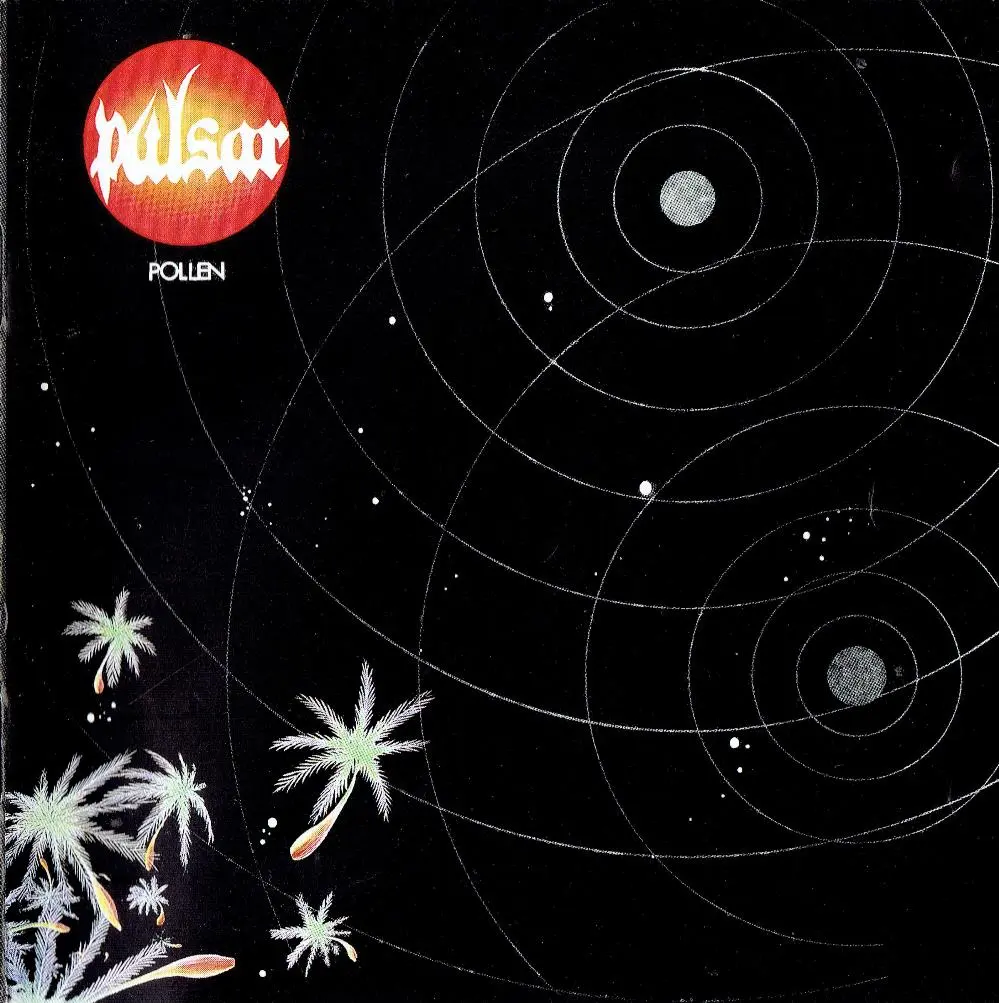 Pulsar released their debut album, Pollen, in January 1975 on Kingdom Records.
The album presents a slow-moving, atmospheric synthesis of space rock and symphonic progressive elements, performed with French lyrics and long instrumental passages. Recorded by the Lyon-based quintet after years of performing Pink Floyd covers, Pollen established Pulsar as one of France’s first internationally distributed progressive acts.
Pollen features singer–guitarist Gilbert Gandil, keyboardist Jacques Roman, flutist–string synthesist Roland Richard, bassist–vocalist Philippe Roman, and drummer–percussionist Victor Bosch, with guest vocals by Carmel Williams. Roman wrote most lyrics apart from “Omen,” which François Artaud contributed. Pulsar collectively composed and arranged the music.
The five tracks alternate between airy, meditative pieces and darker, more dynamic movements. “Pulsar” opens with electronic textures and sparse drumming that build into an astral overture. “Apaisement” follows with floating vocal and flute lines over slow organ swells. “Puzzle / Omen” shifts from an active rhythmic section to a calm recitation by Williams, framed by piano and synthesizer. “Le Cheval de Syllogie” blends ominous organ drones and fuzz guitar with processed vocals, while the 13-minute title piece closes the album with a gradual ascent from acoustic stillness to full-band grandeur.
A1. “Pulsar” (3:00) – Composed by Philippe Roman, Jacques Roman, Gilbert Gandil, Rolland Richard, Victor Bosch. Opens with celestial, spacey textures that orbit gradually before bolting drums arrive at one minute. Guitar streaks with sharp, astral lines while bass and synths provide gliding counterpoint. Explosions of cosmic sound and atmospheric breaths punctuate the track, producing sudden, interstellar surges.
A2. “Apaisement” (7:30) – Composed by Philippe Roman, Jacques Roman, Gandil, Richard, Bosch. Opens with icy, astral sounds as guitar, cymbals, and bass join in slow motion. Vocals enter intermittently, giving a frozen, contemplative texture before flute replaces the voice around 5:30, creating a crystalline overlay atop velvety synth and piano textures. The ensemble drifts through subtle shifts with gliding passages punctuated by sudden, meteoric accents.
A3. “Puzzle / Omen” (8:00) – Composed by François Artaud (lyrics), music by Philippe Roman, Jacques Roman, Gandil, Richard, Bosch. Begins with frigid, wind-like synth and spacey flute, building to a full ensemble with dashing, stormy percussion and sharp, angular guitar motifs. Around 1:30, the track settles into gliding flute and synthesized textures with punctuated, cosmic rhythms. Spoken words by Carmel Williams enter at 3:30, floating atop icy piano and glacial vocal lines. Spacey synths dominate after six minutes, culminating in a stellar, bolting finale with punctuated guitar and astral textures.
B1. “Le Cheval de Syllogie” (7:00) – Composed by Philippe Roman, Jacques Roman, Gandil, Richard, Bosch. Opens with organ and drifting synth textures before drums and bass enter with sharp, punctuated thrusts. Guitar cuts through with angular lines while violin weaves above the ensemble. Around 3:30, the track softens, allowing vocals to emerge over sparse textures before drums and guitar reintroduce a driving intensity toward the conclusion.
B2. “Pollen” (13:05) – Composed by Philippe Roman, Jacques Roman, Gandil, Richard, Bosch. Begins with strummed guitar that quickly gives way to the full ensemble, supported by precise drums and bass. Flute enters around 2:00, tracing icy, gliding lines over piano and organ textures. Vocals return near 3:00, interlacing with the instrumental layers. Between 7:00 and 9:30, the flute dominates while guitar and percussion punctuate the rising energy. The finale blends synths and ensemble textures into a soaring, expansive conclusion.
Sessions occurred in October 1974 at Diagram Studio in Saint-Étienne with producers Pulsar and Xavier Dubuc and engineers Denis Brazier and Victor Bosch. Jacques Roman engineered additional keyboard parts. The cover design, credited to Logo, depicts astral emissions.
Soon after the album’s release, bassist Philippe Roman left the band due to illness and was replaced by Michel Masson.
The Strands of the Future
 Pulsar released their second album, The Strands of the Future, in September 1976 on Kingdom Records.
The album expands the space-symphonic approach of Pollen with fuller keyboard arrangements and extended instrumental passages centered on Mellotron and Moog synthesizer textures. Recorded as a quartet after bassist Philippe Roman’s departure, the record marked Pulsar’s transition to a denser, more immersive sound that aligned them with Europe’s leading symphonic acts of the mid-1970s.
The Strands of the Future features guitarist–vocalist Gilbert Gandil, keyboardist–bassist Jacques Roman, flutist–string synthesist Roland Richard, and drummer–percussionist Victor Bosch. François Artaud supplied lyrics for the title suite. The group collectively composed, arranged, and produced the material.
The 22-minute title piece occupies Side One and unfolds as a multipart suite that moves between ambient sections and dynamic ensemble interplay. Mellotron and flute define the album’s tone across “Flight,” “Windows,” and “Fool’s Failure,” each exploring contrasts between pastoral calm and cosmic intensity. “Flight” provides a concise instrumental interlude with vocalized wordless themes, while “Windows” adopts a slower, reflective pace with soft vocals and flute phrasing. “Fool’s Failure” concludes the album with shifting instrumental climates, alternating between dark Mellotron washes, spoken narration, and bright concluding motifs.
A. “The Strands of the Future” (22:08) – Mellotron and synths unfold like glacial mist, punctuated by Bosch’s precise percussion and Gandil’s angular guitar lines. Acoustic textures and fleeting voice drift through harmonic webs, giving way to flute and layered keys. The middle section cycles intensity with spiraling Moog lines and tidal Mellotron choirs. Guitar tones disperse amid lush backgrounds as the piece closes with a solitary Mellotron tone fading into cosmic stillness. Lyrics by François Artaud.
B1. “Flight” (2:37) – Drums guide shimmering Mellotron and Solina chords while synths arc narrowly around the rhythm. Gandil’s guitar provides brief contours, and Richard’s flute traces a concise, airborne phrase before fading into sustained harmonic haze.
B2. “Windows” (8:47) – Acoustic guitar and organ establish slow, deliberate textures. Flute and synthesizer trace curving arcs, orbiting a tonal center amid steady percussion and swelling Mellotron. Guitar reappears with rounded phrasing, and the track closes with a final rising flute line that evaporates into silence.
B3. “Fool’s Failure” (10:17) – Dense Mellotron choral swells frame calm, distant vocals. Drums anchor descending harmonic figures while organ and synth interlock. Midway, fragmented drones, spoken lines, and drifting flute weave through the mix. Gandil’s guitar reenters with deliberate phrasing, and the final minutes expand into overlapping Mellotron and Moog waves before an abrupt fade into cosmic void.
Sessions occurred in January and February 1976 at Aquarius Studios in Geneva, Switzerland, with Pulsar producing and Chris Pennycate engineering.
The Strands of the Future features gatefold artwork by Alain Golay and Victor Bosch, depicting an eerie surreal landscape that complements the album’s dystopian tone.
Halloween
 Pulsar released their third album, Halloween, in December 1977 on CBS.
The album presents a continuous conceptual suite in two parts that fuse symphonic, electronic, and acoustic elements into an extended narrative form. Recorded at Aquarius Studios in Geneva, Halloween marked Pulsar’s artistic peak, expanding their space-symphonic framework with chamber instruments, layered Mellotron, and atmospheric textures.
The album features guitarist–vocalist Gilbert Gandil, keyboardist Jacques Roman, flutist–clarinetist–pianist Roland Richard, bassist Michel Masson, and drummer–percussionist Victor Bosch, joined by cellist Jean Ristori and singers Sylvia Ekström and Jean-Louis Rebut. The group wrote and arranged the music collectively, with English lyrics by Armand Fines.
A continuous composition divided into “Halloween Part I” and “Halloween Part II,” the work unfolds as an impressionistic narrative about a child’s journey through a surreal, dreamlike realm. The opening segment introduces the theme with Ekström’s childlike voice and piano, setting the tone for the extended “Tired Answers,” where Mellotron, flute, and acoustic guitar alternate between pastoral and cosmic motifs. Later movements, “Colours of Childhood” and “Sorrow in My Dreams,” move toward introspective calm. The second side mirrors this structure with “Lone Fantasy,” “Dawn Over Darkness,” “Misty Garden of Passion,” and “Fear of Frost,” culminating in the serene finale “Time.” Throughout, Pulsar integrates romantic chamber gestures and electronic ambience in a manner reminiscent of Genesis’ Trespass and Tangerine Dream’s mid-1970s soundscapes.
Halloween Part I (20:30)
A1. “Halloween Song” (1:20) – Opens with a high-pitched child’s voice over delicate piano and sustained keyboard textures, introducing spectral, crystalline motifs that drift into early acoustic guitar and flute passages.
A2. “Tired Answers” (9:30) – Slowly builds with low-register keyboards and sustained Mellotron layers; percussion enters with crisp precision, while guitar and flute traverse angular lines through shifting rhythmic landscapes.
A3. “Colours of Childhood” (6:00) – Male vocals overlay acoustic guitar and piano, interspersed with spatial synth textures; electric guitar weaves bright, contoured lines over dynamic drumming and percussive accents.
A4. “Sorrow In My Dreams” (3:40) – Piano, Mellotron, and guitar provide a desolate, icy underpinning to vocal passages; percussion punctuates the melancholy arc, concluding the epic with subtle, rime-like textures.
Halloween Part II (18:40)
B1. “Lone Fantasy” (4:50) – Cello introduces a spectral narrative supported by acoustic guitar and keyboards; flute and synth trace interstellar arcs above Bosch’s precise drumming.
B2. “Dawn Over Darkness” (6:10) – Expansive keyboards and drums establish firmament-like textures; electric guitar and flute interweave angular motifs with narrative vocal lines, moving from calm to tense passages.
B3. “Misty Garden of Passion” (2:15) – Keyboard and cello create ethereal, frozen soundscapes; subtle percussion and guitar punctuate the spatial progression.
B4. “Fear of Frost” (3:35) – Percussion drives jagged, icy rhythms as synth, guitar, and bass intersect in stark, frigid patterns; cello and keyboard add haunting, crystalline layers.
B5. “Time” (1:50) – Mellow, dark textures of sustained keyboards and acoustic guitar form a solemn cadence; high-pitched vocals and flute lines hover above, producing a frozen, desolate atmosphere.
Sessions occurred during September and October 1977 at Aquarius Studios in Geneva with Pulsar producing and (Professor) Jean Ristori engineering, assisted by Gérard Trouve. Xavier Dubuc played congas, and Eroll Maibach provided technical support.
Halloween features cover art by Victor Bosch, depicting an ethereal, surreal landscape that mirrors the album’s dreamlike concept.
Pulsar supported Halloween with a European tour that included two sold-out nights in Cascais, Portugal, before audiences of 15,000. The album is widely regarded as the band’s defining work, combining orchestral refinement with space-rock atmospherics in one of French progressive rock’s most ambitious studio productions.
Bienvenue au conseil d’administration!
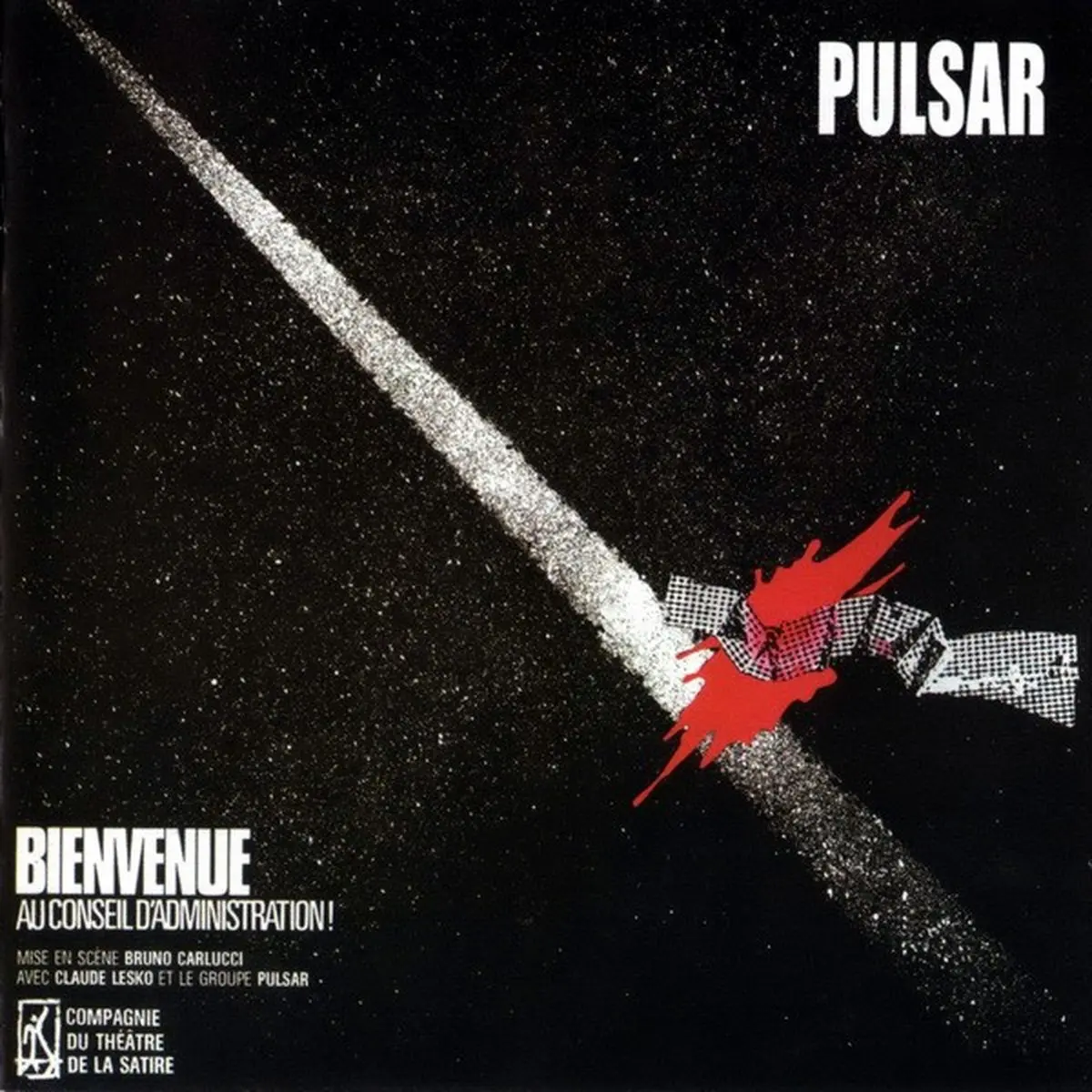 Pulsar released their fourth album, Bienvenue au conseil d’administration!, in 1981 on Compagnie du Théâtre de la Satire.
The album serves as an avant-garde theatrical collaboration between Pulsar and the Théâtre de la Satire troupe. Conceived as a soundtrack to the stage production premiered on December 9, 1980, at Théâtre de l’Est Lyonnais in Vénissieux, it marks Pulsar’s shift from symphonic progressive forms toward a textural, narrative-driven fusion of electronic, acoustic, and dramatic elements. Spoken passages, ambient interludes, and cyclical motifs replace the extended melodic suites of Halloween, resulting in a soundscape that blends experimental rock, contemporary classical, and radio-play techniques.
The album features guitarist–bassist–vocalist Gilbert Gandil, keyboardist–synthesist Jacques Roman, flutist–saxophonist–pianist Roland Richard, and drummer–percussionist Victor Bosch. The group composed the music collectively to text by Austrian playwright Peter Handke. Narrations were performed by members of the Théâtre de la Satire company, including Claude Lesko.
Roman, Gandil, and Richard share compositional duties across the album’s two sides, which unfold as a series of short tableaux linked by recurring instrumental colors and spoken sequences. “Il Fait Froid, Ici…” introduces the set with sustained flute and synthesizer tones under sparse wordless vocals. The four-part suite “La Femme au Bout du Couloir / La Tempête, Encore / Accident-Vision / Cri” alternates narration and instrumental bursts, progressing from subdued saxophone motifs to angular rhythmic sections. “Épreuve No. 2” and “Mirage de Neige” combine percussive bass figures with reflective piano phrases, while Side Two’s “Sous le Ciel Où Courait la Tempête” and “Précautions Oratoires” develop hypnotic electronic loops under dramatic speech. The closing triptych — “Énergie-Saga,” “Chanson Populaire de la Neige,” and “Dernier Avertissement” — fuses mechanical synth patterns and lyrical flute passages, ending on the spacious “Futurs Intérieurs,” a slow crescendo of keyboards and ambient voices.
A1. “Il Fait Froid, Ici …” [It’s Cold Here …] (4:13) – Opens with converging bass, keyboard, and flute textures with sparse, ethereal vocalizations. Gently, Gandil’s guitar enters, threading angular riffs over Bosch’s precise percussion, establishing a hypnotic, icy atmosphere.
A2a. “La Femme au Bout du Couloir” [The Woman at the End of the Hallway] (2:08) – Introduces saxophone lines with narrative voice layered atop drifting keyboard textures. Gandil’s guitar traces flowing lines while synth and piano outline a calm, interstellar soundscape.
A2b. “La Tempête, Encore” [The Storm, Again] (2:20) – Opens with restless synth patterns and punctuated drums, creating a stormy, kinetic energy. Guitar and bass respond with angular motifs that intersect with shifting rhythms.
A2c. “Accident-Vision” [Accident-Vision] (2:05) – Presents abrupt, heavy guitar and bass figures alongside sparse keyboard punctuations. Moments of suspension give the piece a tense, cosmic resonance before an enigmatic close.
A2d. “Cri” [Cry] (3:10) – Bass and percussion establish a grounded thrust as guitar and synth escalate in urgency. Layers of vocal textures punctuate the narrative, giving an astral, vivid quality to the climactic sections.
A3. “Épreuve No. 2” [Trial No. 2] (2:00) – Percussive guitar patterns intertwine with rhythmic bass and drums, creating a tight, pulsating structure. Saxophone lines float above, providing contrast with flowing harmonic beds from keyboards.
A4. “Mirage De Neige” [Snow Mirage] (1:30) – Piano and synth echo in crystalline motifs, while narrative voices drift over the textures. Flute emerges briefly, giving a delicate, icy coloration.
B1. “Sous le Ciel Où Courait la Tempête” [Under the Sky Where the Storm Ran] (3:19) – Opens with repeating synth loops over pulsating bass and precise drumming. Guitar interjects with angular riffs while narrative voices add intermittent, vivid commentary.
B2. “Précautions Oratoires” [Oratorical Precautions] (2:30) – Begins with restrained synth textures before percussion and bass assert angular, rhythmic patterns. Voices punctuate the instrumental layers, creating a tense, interstellar atmosphere.
B3. “La Luge et la Limousine” [The Sled and the Limousine] (2:20) – Narration introduces the piece before floating synths and piano create spacious textures. Guitar lines dart above the ensemble, interacting with Bosch’s crisp drumming.
B4a. “Énergie-Saga” [Energy Saga] (1:35) – Rhythmic patterns are precise and machine-like, punctuated by sudden stops and narrative interjections. Keyboard motifs and bass lines interlock tightly with percussion.
B4b. “Chanson Populaire de la Neige” [Popular Song of the Snow] (2:30) – Opens with gentle, flowing guitar and piano textures. Narrative voice and flute provide crystalline, almost pastoral layers over subtle synth accompaniment.
B4c. “Dernier Avertissement” [Final Warning] (0:30) – A short, sharp articulation of percussion and synth punctuates the narrative, serving as a concise, vivid conclusion to the suite.
B5. “Futurs Intérieurs” [Inner Futures] (6:15) – Piano and synth introduce a slow, floating motif that gradually expands with bass, drums, and gliding guitar. Flute enters mid-piece with interstellar precision while narrative voices punctuate the evolving textures. The finale integrates multiple layers of keys, guitar, and percussion, creating a luminous, cosmic resonance.
Sessions occurred between April and May 1981 with recording and mixing by Jean-Luc Simon and Michel Stievenart. The project was produced jointly by Pulsar and the Théâtre de la Satire.
The album’s gatefold artwork, designed to resemble a corporate dossier, reinforces the satirical premise implied by the title (“Welcome to the Board of Directors!”).
In 2001, Musea reissued Bienvenue au conseil d’administration! with four additional compositions from the stage production — “Silence d’une Petite Fille,” “Croisière,” “Perte de Vue,” and the sixteen-minute “Mélodie Boréale” — expanding the piece into a continuous, immersive soundwork that bridged Pulsar’s symphonic past with their later ambient and multimedia collaborations.
Görlitz
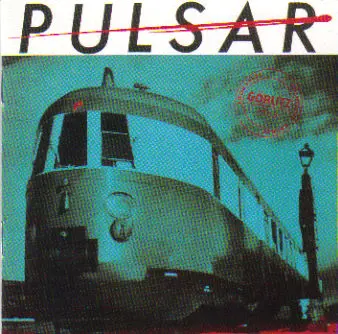 Pulsar released their fifth album, Görlitz, in 1989 on Musea.
The album blends late-1980s progressive rock with atmospheric textures, layered keyboards, and intricate guitar work. Gilbert Gandil leads on guitar and vocals, Victor Bosch holds the drum and percussion foundation, Louis Paralis anchors the bass lines, Roland Richard contributes saxophone and keyboards, and Jacques Roman handles synthesizer and piano.
Gandil composed all tracks. Roland Richard provides saxophone and keyboard contributions on “Naufrage,” adding melodic counterpoint to the ensemble’s sound.
The album opens with the nineteen-minute title track, “Görlitz,” evoking the collapse of East Germany with layered atmospherics: train sounds, children playing, and shifting dynamics between keyboards, bass, drums, and Gandil’s guitar. Vocals appear intermittently, punctuating powerful instrumental passages. “Fin de Voyage” merges drums, atmosphere, and vocals over grinding guitar lines. “Naufrage” begins with rain and atmospheric keys before guitar enters alongside voices. “Pour Un Autre Départ” offers a brief, mellow keyboard-driven interlude with fragile vocals. “Autour de Toi” combines rhythmic drive with saxophone lines and expressive guitar solos. The album closes with “Tara,” a keyboard-led soundscape joined by saxophone, sustaining a purely instrumental atmosphere.
A1. “Görlitz” (19:25)
B1. “Fin de Voyage” (4:00)
B2. “Naufrage” (4:58)
B3. “Pour Un Autre Départ” (2:46)
B4. “Autour De Toi” (5:40)
B5. “Tara” (3:00)
Sessions occurred at Studio Lazer in Lyon, with mixing at Studio Gam in Belgium. J. P. Jussey and Pulsar co-produced, while Silvio Soave and Serge Devesvre engineered the recordings.
Görlitz features atmospheric and historically themed artwork corresponding to the title track’s train motif and Eastern Bloc imagery.
Discography:
- Pollen (1975)
- The Strands of the Future (1976)
- Halloween (1977)
- Bienvenue au conseil d’administration! (1981)
- Görlitz (1989)
- Memory Ashes (2007)
Sources:
Artist/Album Pages:
Eric Clapton (born March 30, 1945) is an English guitarist, singer, and songwriter who emerged as ...
Osamu Shoji — 東海林修 (Sept. 6, 1932 — April 30, 2018) — was a Japanese composer and electronic music...
The Bruce Clarke Quintet was an Australian jazz-rock band that released the 1974 album Stratusphun...
Rose was a Canadian rock band from Barrie, Ont., that released the folk-pop/harmony album Hooked ...
Tempest was an English hard-rock supergroup on Bronze that released a self-titled album in 1973 wi...
Bill Withers (1938–2020) was an American soul singer/songwriter, best known for the 1971/72 AM eve...
Bandit was an English hard-rock/funk band that released a self-titled album in 1976 on Arista, fol...
Crack the Sky was an American rock quintet that released the 1975–76 albums Crack the Sky and Anim...
Satin Whale was a German symphonic-rock band that debuted with the album Desert Places on Brain/Me...
Spanky Wilson (b. circa 1947) is an American soul singer from Philadelphia who released four albu...
Pop Workshop was a multi-national jazz-rock supergroup based in Sweden. On Grammofonverket, they m...
Face Dancer was an American hard-rock band behind the 1979/80 Capitol albums This World and About ...