

Pataphonie was a French experimental/improve band that released an eponymous album on Pôle in 1975, followed by the Zeuhl-influenced Le Matin Blanc on self-press FeeriMusic in 1979.
Members: André Viaud (guitars), Gilles Rousseau (drums, percussion), Pierre Demouron (bass, double bass), Bernard Audureau (piano), Alain Seve (saxophone)
Background
Pataphonie coalesced unofficially in 1973 in France as an experimental fusion trio, blending rock covers with jazz improvisations inspired by Bartók, Satie, and Ravel; the name fused “pata” from pataphysique (unclassifiable) and “phonie” (sound) after random dictionary picks like “mussel” and “Patagonie” appealed phonetically.
Guitarist André Viaud developed his angular style through self-directed rock practice in early 1970s French garages. He met drummer Gilles Rousseau through mutual groups. Bassist Pierre Demouron linked with Rousseau during pub jams. They played Beatles and Cream standards but soon pivoted to free-form structures inspired by Weather Report and Henry Cow.
Pianist Bernard Audureau and saxophonist Alain Seve augmented the core for a 1974 multimedia project. The quintet gigged in Parisian underground venues, drawing 1975 press buzz as “Europe’s great discovery.” Pôle Records scouted them via festival tapes, securing a deal for live cuts spanning 1972–1975, which the band edited into side-long collages at Studio Tapioca.
Pataphonie (1975)
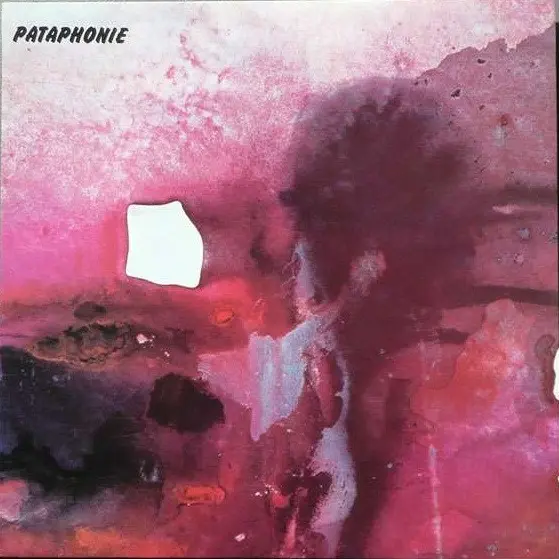 In 1975, Pôle Records issued Pataphonie, comprised of two free-form demos by the group.
Pataphonie appeared in 1975 on Pôle Records, presenting two sidelong free-form demos that capture the group’s early experimental approach. The album foregrounds chaotic improvisation, blending sparse piano, organ, and percussion with occasional bursts from bass and guitar, producing a raw, unpredictable sonic landscape.
Pierre Demouron on bass, André Viaud on guitar, Gilles Rousseau on percussion, and Bernard Audureau on piano and organ comprise the performing ensemble. Jean-Pierre Audureau handled the engineering.
Primary composition credits are shared among the band, with each track emerging from collective improvisation rather than structured songwriting. Track two introduces electric piano-led passages and distorted guitar and organ interplay reminiscent of Sun Ra and Sonny Sharrock, occasionally approaching the discordant textures of electric-era Miles Davis.
A1. “Pataphonie” (side A) — opens with disparate noises, including raspberries, string slides, and abrupt percussive interruptions, gradually escalating toward chaotic ensemble improvisation.
B1. “Structure Poubelle” [Trash Structure] (side B) — begins with industrial-strength guitar textures, moves through electric piano motifs, and evolves into layered, discordant improvisation featuring wah-wah guitar and organ confrontations.
Sessions occurred at Mardi 9 juillet 1975 [Tuesday, July 9, 1975], with Jérome Calipe recording.
The album presents a raw document of free jazz experimentation, emphasizing abrupt transitions, dissonant textures, and collective improvisation, offering little conventional structure or recurring motifs.
Le Matin Blanc
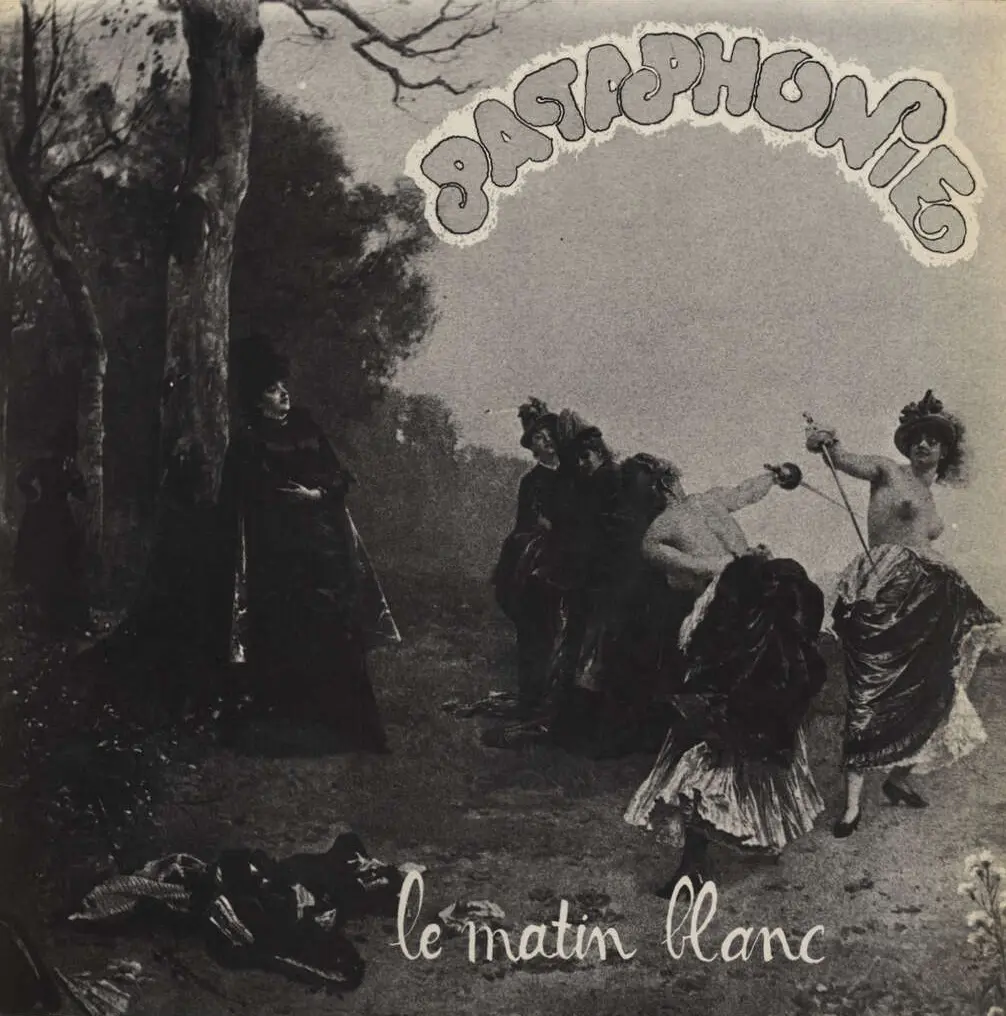 Pataphonie released their second album, Le Matin Blanc, in 1979 on FeeriMusic.
Le Matin Blanc presents Pataphonie’s most abstract and uncompromising work, recorded live-in-studio by the core trio of guitarist André Viaud, bassist Pierre Demouron, and drummer Gilles Rousseau. Moving away from the improvisational chamber-jazz atmosphere of their 1975 debut, the album delves into darker and more angular territory, merging free improvisation with the dissonant austerity of Rock in Opposition. Its structures rely on timbral contrast and space—string harmonics against scraped percussion, bowed bass textures against fractured guitar tones—conjuring a mood alternately cerebral and nightmarish.
Viaud wrote two pieces, Demouron two, and Rousseau one, with collective arrangement credit to Pataphonie. The music is entirely instrumental and unfolds in long, developing movements, occasionally suggesting the spectral tension of Univers Zero or the abstract interplay of Henry Cow.
A1. “Chanterelle” (3:25) — opens with brief operatic vocalizations over shifting guitar tones before giving way to restless ensemble interplay and high-register bass patterns.
A2. “Valse Noble” [Noble Waltz] (5:34) — a slow, ominous waltz led by bowed contrabass and reverberant guitar figures that evoke chamber strings.
A3. “Kerouac” (7:54) — unfolds as a sprawling, atonal dialogue between percussive bursts and droning strings, its structure resembling free-form improvisation more than written composition.
B1. “Rue Alice” [Alice Street] (14:29) — the centerpiece of the album, an extended sequence of rhythmic disintegration and feedback-laden motifs that culminate in spectral guitar slides and fragmented percussion.
B2. “Le Matin Blanc” [The White Morning] (2:09) — brief, atmospheric interlude with minimal bass resonance and brushed cymbals.
B3. “Pamela Story” (0:19) — short coda of manipulated guitar harmonics and percussive accents.
Sessions occurred July 17–19, 1978, at Prunay-le-Temple with Philippe Mauduit producing and Vincent Chambraud handling recording and mixing.
The cover art, paired with a foldout poster in some editions, reflects the album’s stark, introspective tone through minimalist black-and-white imagery.
Issued privately on FeeriMusic, Le Matin Blanc marked Pataphonie’s final studio work before their disbandment. Its emphasis on texture and tension over rhythm or melody positioned the group alongside France’s most uncompromising experimental ensembles of the late 1970s.
FeeriMusic’s only other release was the 1980 album Souvenirs du Futur by electronic musician Luc Marianni.
Discography:
- Pataphonie (1975)
- Le Matin Blanc (1979)
Sources:
Artist/Album Pages:
Datura was a French symphonic-rock band that self-released the 1982 album Mr Untel. Members: Did...
Philippe Besombes (born Jan. 21, 1946) is a French keyboardist and composer who, in 1975, released...
Terpandre was a French symphonic-rock band that recorded an album in 1978 that was ultimately rele...
The Alain Eckert Quartet was a French jazz-rock/Zeuhl combo that released a 1981 self-titled album o...
Besombes-Rizet were a French electronic/experimental duo that released the 1975 double-album Pôle ...
Pierre Moerlen's Gong was a French jazz-rock band that functioned as a continuation of Gong follow...
Wurtemberg were a French classical/folk ensemble that released the album Rock Fantasia Opus 9 on S...
Ada le Fol is a French symphonic-folk musician who released the album Les Années D'Errance on Disq...
Michel Zacha is a French chanson-folk singer/songwriter who released three albums and assorted sin...
Black White and Co were a French soul-funk band that released three albums on assorted labels betw...
Bernard Szajner is a French electronic musician who first recorded under the moniker Zed, issuing ...
Bedjabetch was a French jazz-rock band that released the album Subrepticement on self-press A.W.A....