

Os Mutantes are a Brazilian samba-psych band that released five albums between 1968 and 1972 on Polydor. Singer Rita Lee and bassist/keyboardist Arnaldo Baptista married and launched solo careers.
In 1974, a revised Mutantes surfaced on Som Livre with the symphonic-oriented Tudo Foi Feito Pelo Sol. Sessions held the prior year produced the similarly-styled O “A” e o “Z”, which ultimately appeared in 1992 on Philips. They reunited in 2006.
Members: Sérgio Dias (guitar, vocals, organ, cello, percussion, oud, harmonica), Arnaldo Baptista (bass, keyboards, vocals, 1966-73, 2006-07), Rita Lee (vocals, 1966-72), Liminha (bass, guitar, vocals, 1969-74), Dinho Leme (drums, tabla, percussion, 1969-73, 2006-present), Túlio Mourão (keyboards, 1974-76), Antônio Pedro (bass, 1974-76), Rui Motta (drums, 1974-78), Luciano Alves (keyboards, 1976-78), Paulo de Castro (bass, 1976-78)
Background
Os Mutantes formed in 1966 as the Six Sided Rockers in São Paulo, Brazil, by singing brothers Arnaldo Baptista and Sérgio Dias, both formerly of the The Wooden Faces. Arnaldo played keyboards and bass; Sérgio played a gold guitar (Guitarra de Ouro) made for him by Arnaldo and their brother Cláudio César Dias Baptista, an instrument builder. Singer Rita Lee came from The Teenage Singers.
Their first single, “Suicida” (b/w “Apocalipse”), appeared in 1966 on Continental under the name O’Seis. Just prior to their debut on Brazilian television, they chose the name Os Mutantes (The Mutants). They befriended rising star Gilberto Gil, an icon of Tropicália, a socially charged fusion of bossa nova and psychedelia. Os Mutantes rose in the scene and signed with Polydor.
Os Mutantes
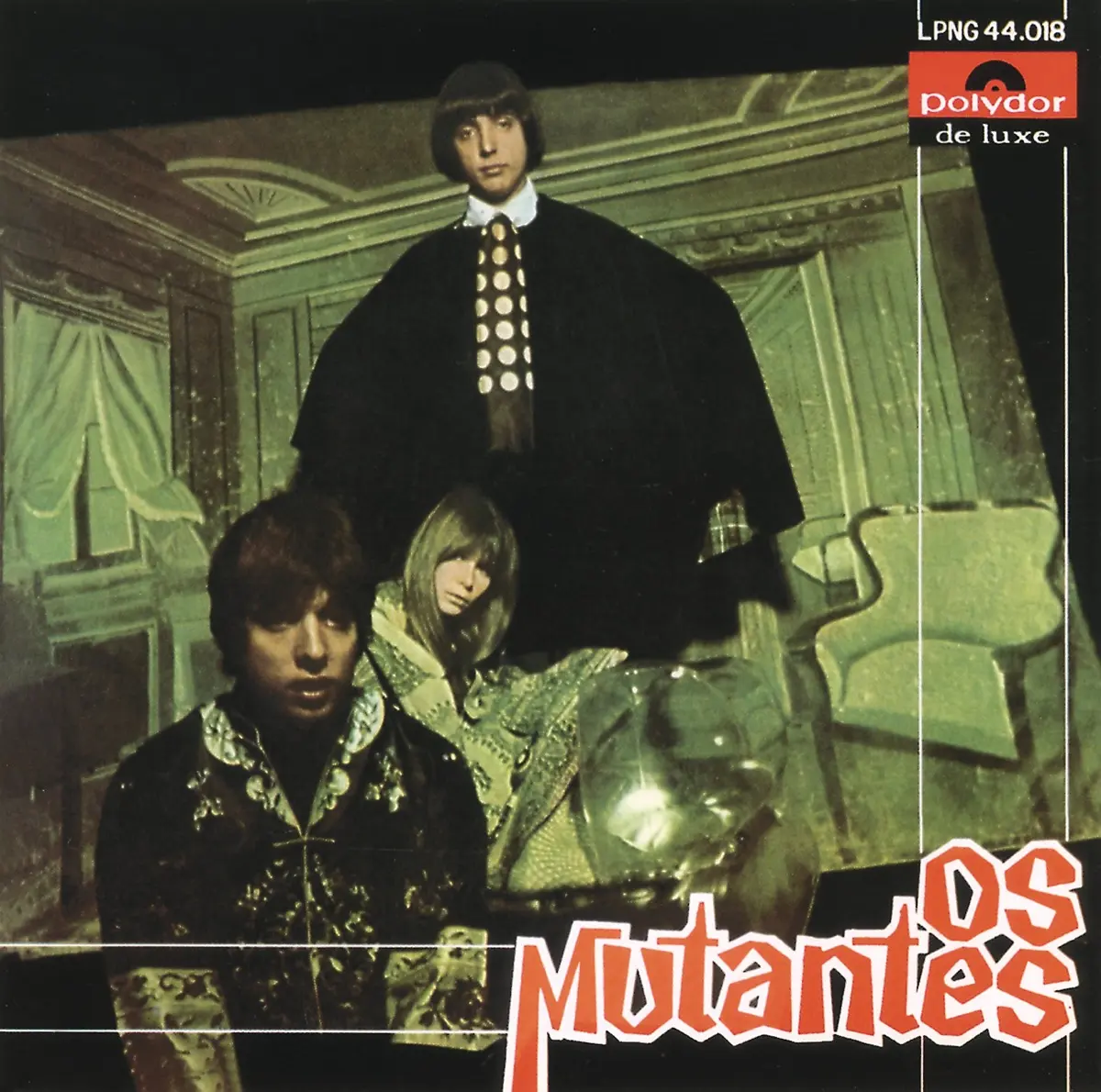 Os Mutantes released their self-titled debut album in June 1968 on Polydor.
The trio — singer Rita Lee, guitarist Sérgio Dias Baptista, and keyboardist/bassist Arnaldo Dias Baptista — worked with arranger Rogério Duprat, whose orchestrations gave the group’s hybrid of tropicália and psychedelic pop a surreal, kaleidoscopic edge. The album juxtaposes whimsical Brazilian folk themes with electric fuzz tones, musique concrète elements, tape effects, and sudden stylistic detours reminiscent of Sgt. Pepper’s Lonely Hearts Club Band.
Arnaldo wrote most of the material with Rita and Sérgio. The album also includes covers of songs by Jorge Ben (“A Minha Menina”), Françoise Hardy (“Le Premier Bonheur du Jour”), and The Mamas & The Papas (“Once Was a Time I Thought,” rendered as “Tempo No Tempo”), as well as two compositions by Caetano Veloso and Gilberto Gil (“Panis et Circenses” and “Bat Macumba”).
“Panis et Circenses” opens with fanfare and orchestral color before giving way to chant vocals and fuzz guitar; its title references the Roman phrase “bread and circuses,” a metaphor for mass complacency. “A Minha Menina” blends jangling guitars and a stomping beat with Jorge Ben’s samba-based rhythm. “O Relógio” begins with Rita’s airy vocal over sparse organ before veering into an anarchic instrumental burst and back again. “Adeus Maria Fulô,” drawn from Sivuca and Humberto Teixeira’s baião standard, pairs cuíca percussion with off-kilter group chanting. “Baby,” another Veloso piece, alternates ghostly organ textures with fuzz interjections. “Senhor F” injects humor with carnival brass and tape edits.
“Bat Macumba” reinterprets Afro-Brazilian ritual rhythms through distorted guitars and primitive synths. “Le Premier Bonheur du Jour” keeps its French lyrics but adds tambourine and tempo shifts. “Trem Fantasma” layers spectral reverb and sudden stops, while “Tempo No Tempo” compresses Mamas & Papas’ pop into a minute of quick vocal interplay and church bells. The closer, “Ave Gengis Khan,” returns to rhythmic vamping, backwards voices, and piano-driven chaos.
A1. “Panis et Circenses” [Bread and Circuses] (3:40) — written by Caetano Veloso and Gilberto Gil; a sardonic depiction of bourgeois complacency under Brazil’s military regime
A2. “A Minha Menina” [My Girl] (4:45) — written by Jorge Ben; originated as his 1967 Philips single
A3. “O Relógio” [The Clock] (3:31)
A4. “Adeus Maria Fulô” [Goodbye Maria Fulô] (3:06) — originated as a 1964 recording by Sivuca and Miriam Makeba; written by Sivuca and Humberto Teixeira
A5. “Baby” (3:01) — written by Caetano Veloso; also recorded that year by Gal Costa
A6. “Senhor F” [Mister F] (2:35)
B1. “Bat Macumba” (3:10) — written by Caetano Veloso and Gilberto Gil; draws on Afro-Brazilian chant rhythms
B2. “Le Premier Bonheur du Jour” [The First Happiness of the Day] (3:40) — written by Franck Gérald and Jean Renard; first recorded by Françoise Hardy in 1963
B3. “Trem Fantasma” [Ghost Train] (3:18)
B4. “Tempo No Tempo” [Time in Time] (1:47) — Portuguese adaptation of the 1966 Mamas & The Papas song “Once Was a Time I Thought,” written by John Phillips
B5. “Ave Gengis Khan” [Hail Genghis Khan] (3:48)
Sessions took place between December 1967 and January 1968 at Philips Studios in São Paulo with producer Manoel Barenbein and arranger Rogério Duprat.
Rita Lee handled vocals, autoharp, and recorder; Sérgio Dias played guitars and shared vocals; and Arnaldo Baptista performed keyboards and bass. Dirceu played drums, Clarisse Leite added piano on “Senhor F,” and Gilberto Gil contributed percussion on “Bat Macumba.” Jorge Ben sang and played acoustic guitar on “A Minha Menina,” and Cláudio Baptista supplied electronics.
Polydor issued “Panis et Circenses” as the lead single, backed with “A Minha Menina.” The album became a landmark of the tropicália movement and remains one of Brazil’s most celebrated psychedelic works.
Mutantes
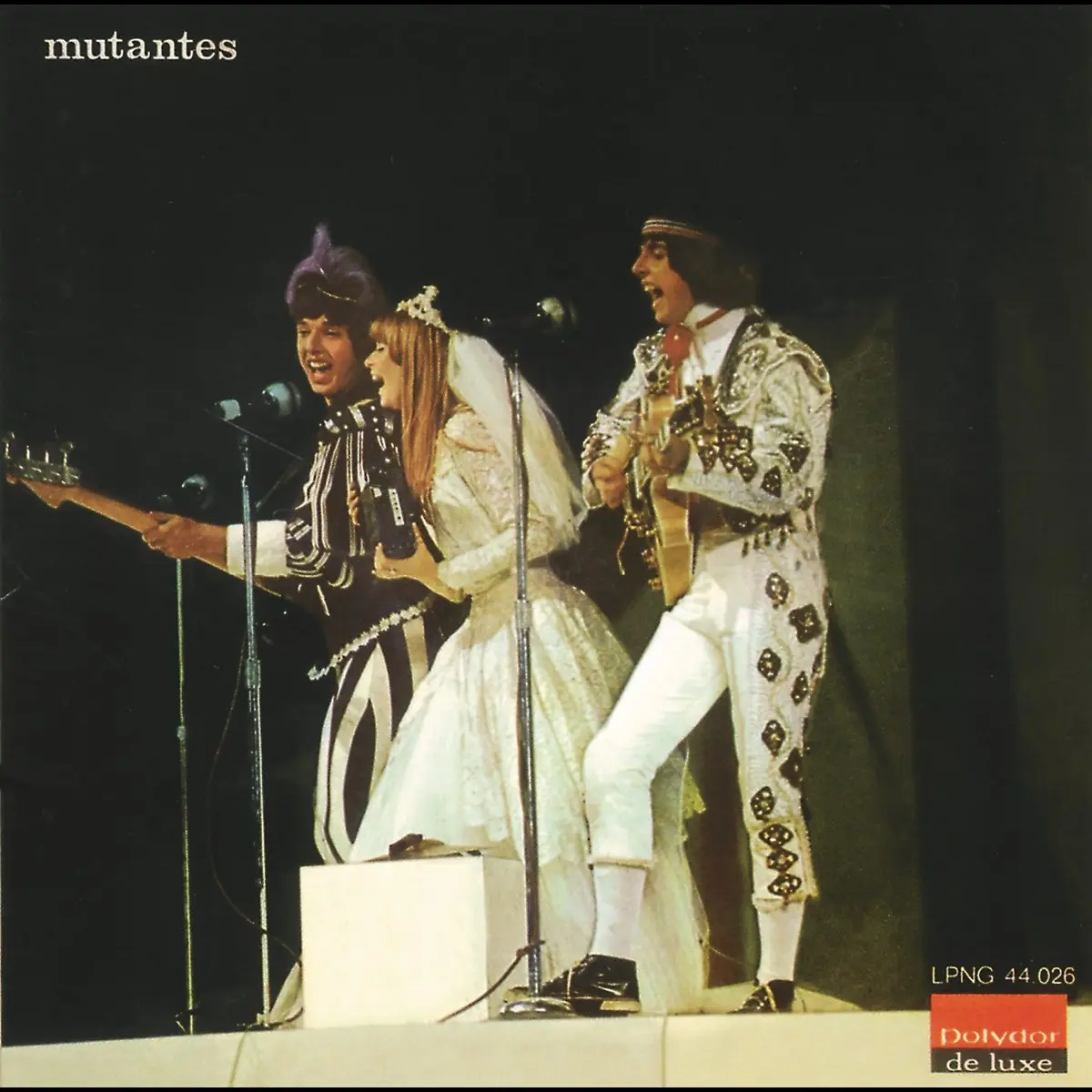 Os Mutantes released their second album, Mutantes, in February 1969 on Polydor.
The trio expanded the psychedelic and avant-pop experimentation of their debut with greater studio sophistication and stylistic range, blending baroque pop, modal Brazilian rhythms, musique concrète effects, and electric dissonance. Their use of collage-like transitions and orchestral punctuation by arranger Rogério Duprat links the album to the British psychedelic tradition of Sgt. Pepper’s Lonely Hearts Club Band and Odessey and Oracle, yet with humor and regional invention unique to São Paulo’s late-’60s tropicalismo scene.
Rita Lee, Arnaldo Baptista, and Sérgio Dias co-wrote most of the songs, with additional contributions from Tom Zé (“2001,” “Qualquer Bobagem”), Raphael Vilardi and Roberto Loyola (“Não Vá Se Perder por Aí”), and Italian songwriters Bruno De Filippi and Franco Migliacci (“Banho de Lua,” a cover of Celly Campello’s 1960 hit “Tintarella di Luna”).
The album balances surreal whimsy and compositional daring. “Dom Quixote” opens with mock-operatic harmonies and sudden shifts between fanfare and fuzz. “Dia 36” changes pace mid-song with abrupt metric turns and carnival-like key shifts. “2001” merges country viola and accordion motifs with a driving electric rhythm. “Fuga Nº II dos Mutantes” alternates pastoral interludes and sudden bursts of distortion.
“Banho de Lua” revisits Italian pop through absurd tempo changes and tone-bending effects. “Mágica” echoes Sgt. Pepper-era theatrics with orchestral layering. The closing “Caminhante Noturno” stretches over five minutes, weaving tension and noise to a climax underscored by crowd recordings mocking the band — a reaction to their experimentalism during Brazil’s late-’60s festivals.
A1. “Dom Quixote” (3:55)
A2. “Não Vá Se Perder por Aí” [Don’t Go Getting Lost Out There] (3:16) — originated as a 1966 side by Raphael Vilardi and Roberto Loyola
A3. “Dia 36” [Day 36] (4:02)
A4. “2001” (3:58) — co-written with Tom Zé; fuses moda de viola folk rhythms with electric psychedelia
A5. “Algo Mais” [Something More] (2:39)
A6. “Fuga Nº II dos Mutantes” [Mutantes’ Fugue No. II] (3:43)
B1. “Banho de Lua (Tintarella di Luna)” [Moon Bath] (3:41) — written by Bruno De Filippi and Franco Migliacci; popularized in Brazil by Celly Campello’s 1960 version
B2. “Ritta Lee” (3:10)
B3. “Mágica” [Magic] (4:38) — performed at the 1968 TV Excelsior music festival
B4. “Qualquer Bobagem” [Any Nonsense] (4:37) — co-written with Tom Zé; features vocal phrasing modeled after Roger Daltrey’s stammering in “My Generation”
B5. “Caminhante Noturno” [Nightwalker] (5:10)
Sessions occurred in December 1968 at Estúdio Scatena in São Paulo with producer Manoel Barenbein and orchestrations by Rogério Duprat. Rita Lee handled vocals, percussion, theremin, autoharp, and recorder; Arnaldo Baptista played bass and keyboards; and Sérgio Dias played guitar, bass, and occasional drums. Dinho Leme (credited as “Sir Ronaldo I Du Rancharia”) played drums, Zé do Rancho and Mariazinha performed viola caipira and accordion on “2001,” and Cláudio César Dias Baptista contributed electronic instruments and custom Regulus guitar construction.
The cover features a photograph of the band’s first live appearance at the 1968 International Song Festival performing “Caminhante Noturno,” depicting Arnaldo as a jester, Sérgio as a matador, and Rita in a dress modeled after Leila Diniz’s stage attire. The back cover shows the trio as alien figures with makeshift prosthetics inspired by The Invaders TV series.
Polydor issued “2001” as the lead single, backed with “A Minha Menina” from their debut. The album later gained cult recognition for its fusion of psychedelia and Brazilian folk idioms, and its songs “Qualquer Bobagem” and “2001” were revived by later artists, including Pato Fu.
A Divina Comédia ou Ando Meio Desligado
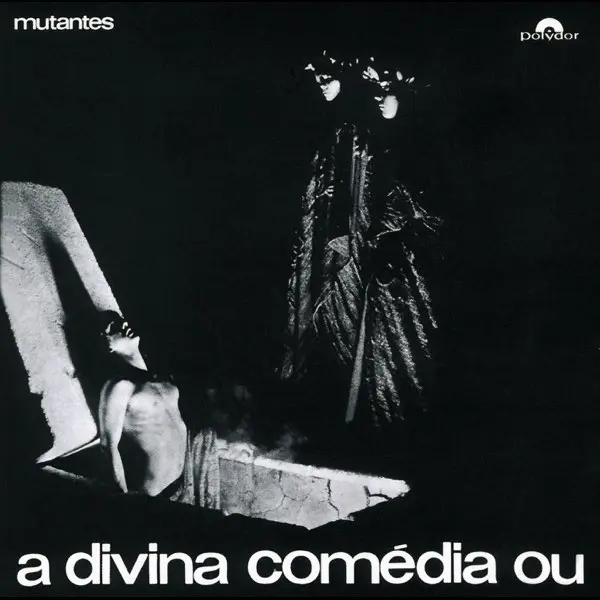 Os Mutantes released their third album, A Divina Comédia ou Ando Meio Desligado, in March 1970 on Polydor. The title is Portuguese for The Divine Comedy or I Have Been a Little Off.
The trio expanded their psychedelic palette into a denser, guitar-heavy sound, departing from Tropicália toward a more self-contained strain of rock experimentation. Recorded during the exile of Caetano Veloso and Gilberto Gil, the album merges surrealist humor and spiritual allegory with sharper rhythm patterns and less overt Brazilian styling.
Arnaldo Baptista wrote or co-wrote nine of the eleven songs with Rita Lee and Sérgio Dias. They also recorded a song by Roberto Carlos and Erasmo Carlos (“Preciso Urgentemente Encontrar um Amigo”) and a cover of Sílvio Caldas’ prewar ballad “Chão de Estrelas.”
“Ando Meio Desligado” opens with a slow, organ-led ascent before dissolving into lysergic rhythm and alternating lead vocals by Lee and Dias. “Quem Tem Medo de Brincar de Amor” follows with overdubbed harmonies and a parodic California accent. “Ave, Lúcifer” blends reversed tape effects with orchestral flourishes by Rogério Duprat. “Desculpe, Babe” pairs Sérgio’s resigned vocal with abrupt tempo breaks. “Meu Refrigerador Não Funciona” satirizes U.S. acid rock with mock-horror organ and exaggerated vocal phrasing.
Side two opens with the doo-wop sendup “Hey Boy,” followed by the Carlos-penned “Preciso Urgentemente Encontrar um Amigo.” “Chão de Estrelas” turns a 1930s torch song into musique concrète. “Jogo de Calçada” layers counter-riffs and syncopated percussion, leading to the closing pair — “Haleluia,” a quasi-religious chant with organ crescendos, and “Oh! Mulher Infiel,” a percussive instrumental jam.
A1. “Ando Meio Desligado” [I Have Been a Little Off] (4:47)
A2. “Quem Tem Medo de Brincar de Amor” [Who’s Afraid of Playing With Love] (3:40)
A3. “Ave, Lúcifer” [Hail Lucifer] (2:22)
A4. “Desculpe, Babe” [Excuse Me, Baby] (2:53)
A5. “Meu Refrigerador Não Funciona” [My Refrigerator Doesn’t Work] (6:34)
B1. “Hey Boy” (2:50)
B2. “Preciso Urgentemente Encontrar um Amigo” [I Urgently Need to Find a Friend] (3:50) — written by Roberto Carlos and Erasmo Carlos, who recorded their own version in 1972
B3. “Chão de Estrelas” [Ground of Stars] (3:16) — written by Orestes Barbosa and Sílvio Caldas; originally a 1937 samba-canção standard popularized by Caldas
B4. “Jogo de Calçada” [Sidewalk Game] (3:35)
B5. “Haleluia” [Hallelujah] (3:49)
B6. “Oh! Mulher Infiel” [Oh! Unfaithful Woman] (4:31)
Sessions took place in October 1969 at Estúdio Scatena in São Paulo with producer Arnaldo Saccomani and orchestral arranger Rogério Duprat. Baptista handled keyboards and bass; Lee contributed vocals, percussion, theremin, autoharp, and recorder; and Dias played guitars. Supporting players included bassist Liminha, drummer Dinho Leme, percussionist Naná Vasconcelos, and guitarist Raphael Villardi.
The cover adapts Gustave Doré’s Inferno engraving from Dante’s Divine Comedy and depicts the band posed amid flames and angels. The back cover — conceived by Lee — shows the trio nude in a staged boudoir scene under observation by a uniformed onlooker.
Polydor promoted the album with “Ando Meio Desligado” (b/w “Quem Tem Medo de Brincar de Amor”), which became their best-known single. The song was later covered by Pato Fu in 2001.
Jardim Elétrico
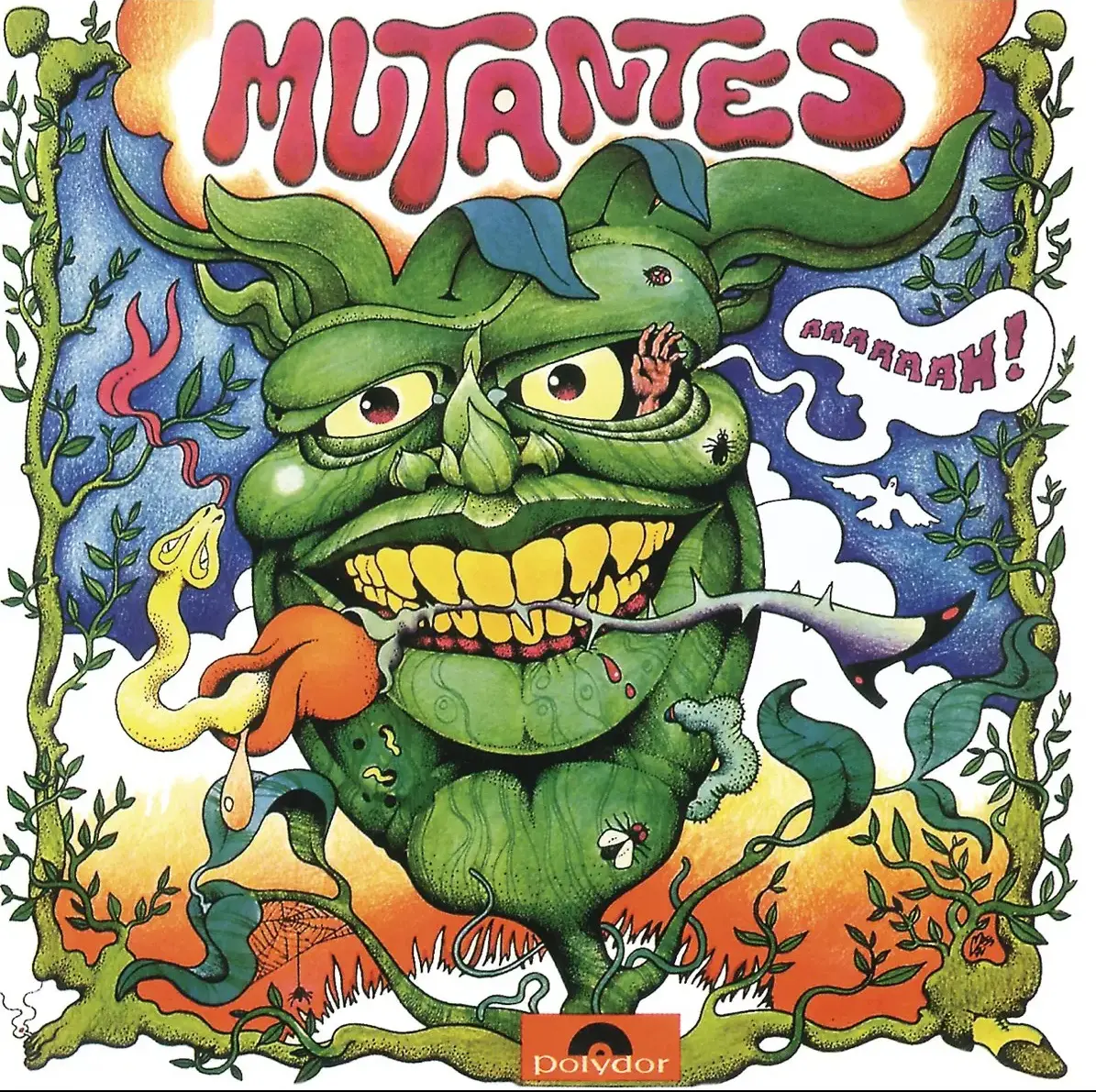 Os Mutantes released their fourth album, Jardim Elétrico, in March 1971 on Polydor.
It marks the first Os Mutantes album produced by Arnaldo Baptista, who assumed full creative direction as the trio’s sound evolved from their 1960s tropicalia base into a heavier, electric-oriented format with humor and theatrical elements intact.
The trio of Baptista (vocals, keyboards), Rita Lee (vocals, percussion), and Sérgio Dias (vocals, guitars) were joined by bassist Liminha and drummer Dinho Leme, with orchestral arrangements by Rogério Duprat.
Baptista, Lee, and Dias wrote the bulk of the material, apart from one song by Caetano Veloso. Five tracks were originally intended for their unreleased Tecnicolor project.
Jardim Elétrico opens with “Top Top,” which drives forward with brisk tempo, playful hand-claps, sharp synth bass, and chanky guitar punctuations beneath Rita Lee’s mischievous vocals. “Benvinda” shifts between languid verses and mid-tempo passages, layering horns, keyboard strings, and harmony vocals over subtle tempo variations. “Tecnicolor” builds gradually, smoothing into English vocals with fluid, contoured phrasing and restrained instrumental swells. “El Justiciero” combines Spanish and Portuguese vocal lines over mariachi-style guitar and rhythmic accentuation, while “It’s Very Nice Pra Xuxu” emphasizes exaggerated vocal delivery and staggered harmonic shifts. “Portugal de Navio” threads ragtime rhythms with concise arrangement transitions.
Mid-album tracks like “Virgínia” balance melodic leads against more intricate harmonic textures, and the title track, “Jardim Elétrico,” layers abrasive guitar stabs, percussive interjections, and insistent rhythmic propulsion. “Lady, Lady” leans on flute and guitar interplay with measured intensity, “Saravá” expands the tempo with dense guitar lines and dynamic shifts, and the closing “Baby” features Rita Lee’s smooth, jazzy phrasing over gently rising backing instrumentation, culminating in a restrained, layered finale.
A1. “Top Top” [Top Top] (2:29) — opens with jagged rhythm, distorted keys, and mocking childlike vocals
A2. “Benvinda” [Welcome] (2:48)
A3. “Tecnicolor” [Technicolor] (3:46)
A4. “El Justiciero” [The Avenger] (3:52) — parodies Latin folk melodrama with mariachi brass and Spanish–Portuguese interplay
A5. “It’s Very Nice pra Xuxu” [It’s Very Nice as Hell] (4:49) — the title plays on Brazilian slang pra chuchu, meaning “a lot”
A6. “Portugal de Navio” [Portugal by Ship] (2:44)
B1. “Virgínia” [Virginia] (3:27)
B2. “Jardim Elétrico” [Electric Garden] (3:14) — pulses with distorted riffing and organ bursts
B3. “Lady, Lady” (3:33)
B4. “Saravá” [Bless You] (4:25)
B5. “Baby” [Baby] (3:38) — originally written and recorded by Caetano Veloso
Sessions took place in 1970–71 under the direction of producer Arnaldo Baptista with orchestral contributions from arranger Rogério Duprat.
Jardim Elétrico features cover art that reflects the band’s vivid conceptual imagery of the early 1970s electric era.
Mutantes e Seus Cometas no País do Baurets
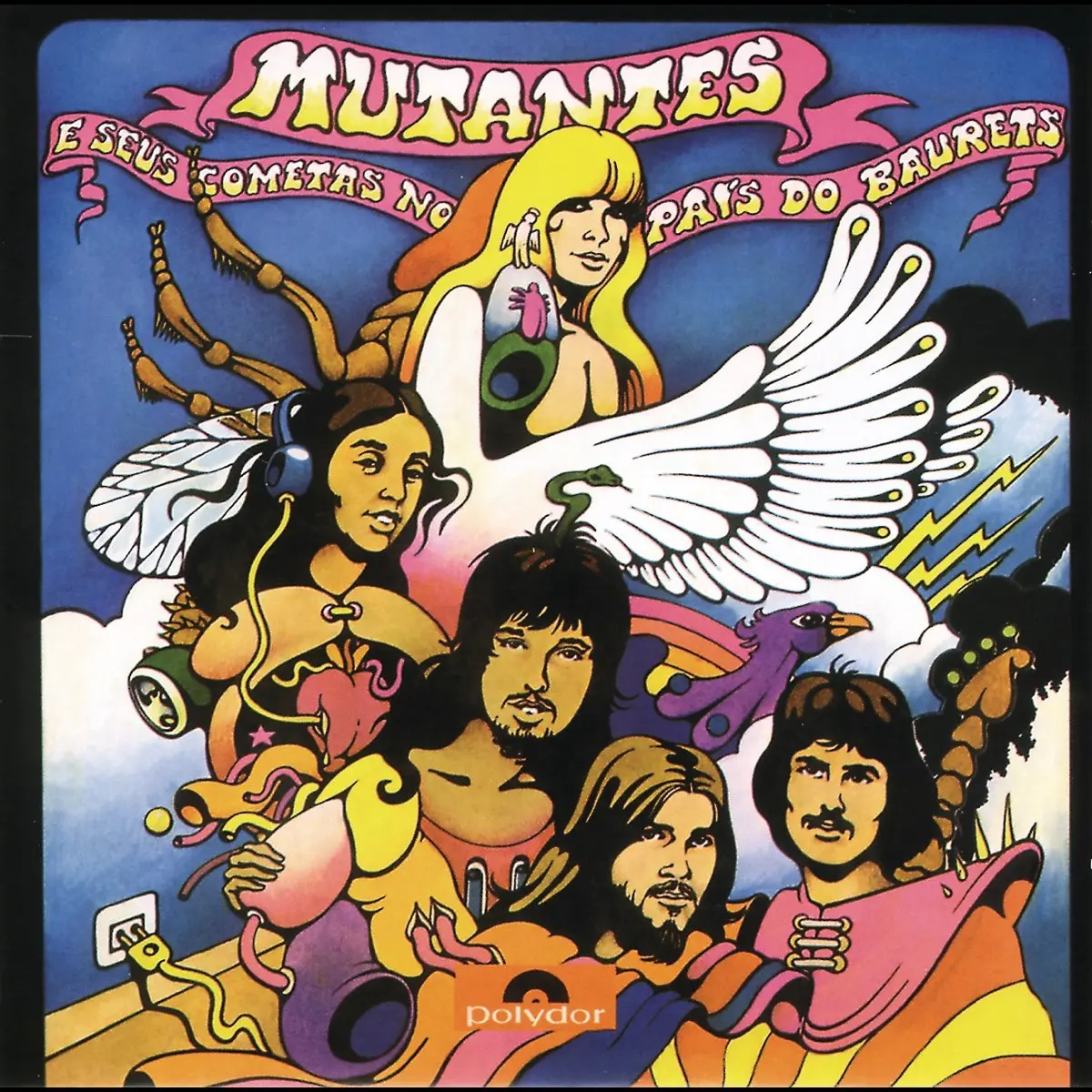 Os Mutantes released their fifth album, Mutantes e Seus Cometas no País do Baurets, in May 1972 on Polydor. The title is Portuguese for Mutants and Their Comets in the Country of Weed.
The album marks their final project with Rita Lee, who soon retained the group for her second solo release Hoje É o Primeiro Dia do Resto da Sua Vida. It shows Os Mutantes in full electric form, fusing humor, hard rock, and progressive passages within an increasingly sophisticated studio setting.
Arnaldo Baptista produced the sessions and co-wrote most of the material with Lee, Sérgio Dias, Liminha, and Dinho Leme. The group also recorded a cover of Hervé Cordovil’s 1960s youth anthem “Rua Augusta.”
The material balances parody, satire, and virtuosity. “Posso Perder Minha Mulher, Minha Mãe, Desde que Eu Tenha o Rock and Roll” opens with Jerry Lee Lewis-style piano and celebratory call-and-response. “Vida de Cachorro” frames Lee’s acoustic vocal within barking effects. “Dune Buggy” stretches into jazz-funk syncopation and layered vocal harmonies. “Cantor de Mambo” fuses Latin percussion and wah-wah guitar in a send-up of Santana’s rhythmic style. “Balada do Louco” stands apart as a solemn piano ballad with organ interjections and Moog embellishment. The ten-minute title suite closes the album with shifting tempos, instrumental breaks, and scatted jazz phrasing over extended electric passages.
A1. “Posso Perder Minha Mulher, Minha Mãe, Desde que Eu Tenha o Rock and Roll” [I Can Lose My Wife, My Mother, As Long as I Have Rock and Roll] (3:43)
A2. “Vida de Cachorro” [Dog’s Life] (3:15)
A3. “Dune Buggy” (5:23)
A4. “Cantor de Mambo” [Mambo Singer] (4:37)
A5. “Beijo Exagerado” / “Todo Mundo Pastou” [Exaggerated Kiss / Everybody Grazed] (4:49) — “Todo Mundo Pastou” written by Ismar S. Andrade (“Bororó”)
B1. “Balada do Louco” [Ballad of the Madman] (4:01)
B2. “A Hora e a Vez do Cabelo Nascer” [The Hour and the Turn for the Hair to Grow] (3:30)
B3. “Rua Augusta” [Augusta Street] (4:05) — written by Hervé Cordovil; originated as a 1963 hit for São Paulo rocker Ronnie Cord
B4. “Mutantes e Seus Cometas no País do Baurets” [Mutants and Their Comets in the Country of Weed] (9:49)
B5. “Todo Mundo Pastou II” [Everybody Grazed II] (2:25) — written by Ismar S. Andrade (“Bororó”)
Sessions occurred between October and November 1971 with producer Arnaldo Baptista at Estúdio Eldorado in São Paulo. Baptista played keyboards and piano, Lee contributed vocals and synthesizer, Sérgio Dias handled guitar and sitar, Liminha played bass, and Dinho Leme supplied drums.
The cover features artwork by French-Brazilian illustrator Alain Voss, depicting a comic-style space tableau with exaggerated humanoid figures, reflecting the album’s blend of satire and cosmic imagery.
Polydor promoted the album with “Balada do Louco” (b/w “Vida de Cachorro”), which became a regional hit and later a signature number in Lee’s live sets. The album’s mix of humor, satire, and expanded arrangements pointed toward the more progressive direction of their 1974 follow-up Tudo Foi Feito Pelo Sol.
O “A” e o “Z”
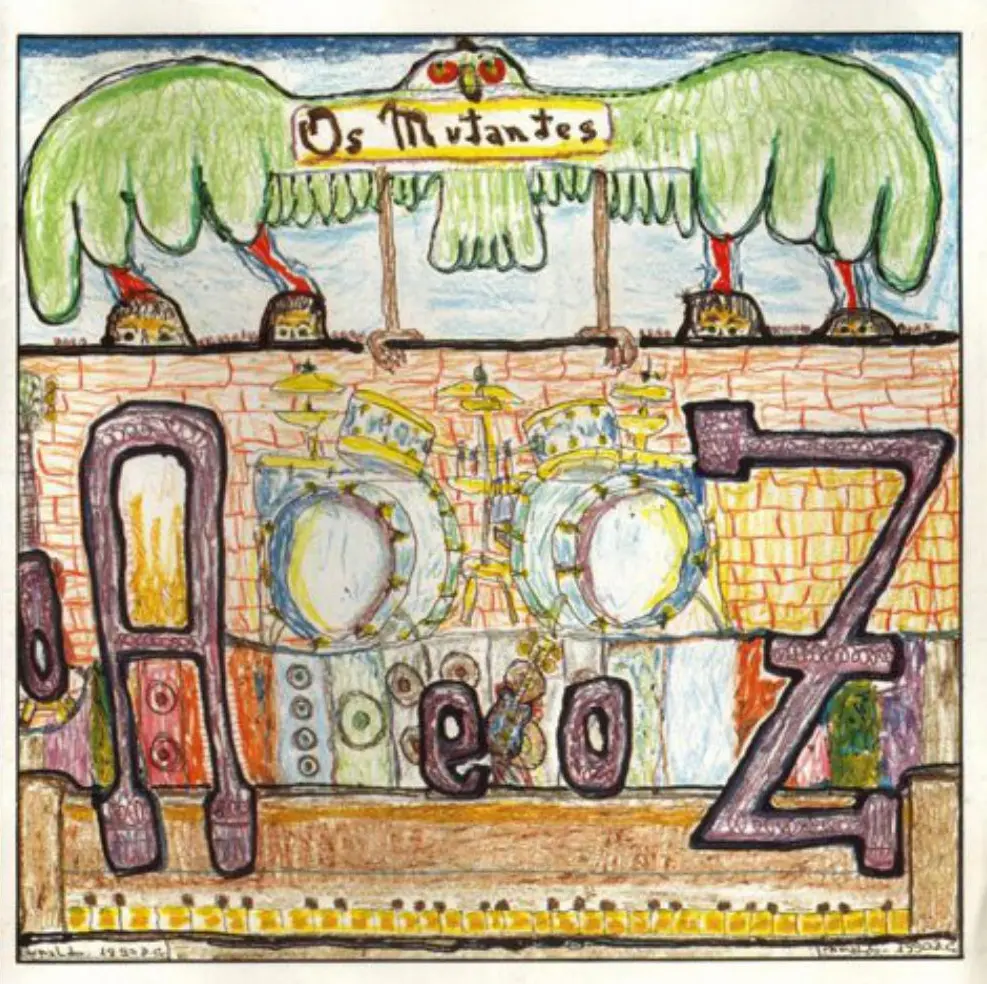 Os Mutantes recorded their sixth album in 1973 for Polydor, which shelved the contents until 1992 when it finally appeared as O “A” e o “Z”.
It was their first project without Rita Lee and the last to feature founding member Arnaldo Baptista.
The album marks the group’s full immersion into progressive rock, blending jazz fusion and symphonic elements with extended structures and instrumental interplay. Baptista handled multiple keyboards (Hammond organ L100, Mellotron M400, Clavinet C), while Sérgio Dias contributed electric, acoustic, and sitar guitar parts. They were joined by bassist Liminha and drummer Dinho Leme, who supplied additional vocals and percussion.
Baptista, Dias, Liminha, and Leme co-wrote all six pieces, which unfold in long, multi-part forms closer to Genesis and early Yes than to their 1960s tropicalismo style.
The material divides between symphonic passages and pastoral movements. “A e o Z” opens with swelling Hammond and Mellotron layers before shifting into organ solos and forceful electric guitar exchanges. “Rolling Stone” follows with hard-rock drive and deep bass lines that yield to an instrumental second half dominated by organ improvisation. “Você Sabe” contrasts those heavier numbers with acoustic guitar textures, vocal harmonies, and soft percussive accompaniment.
The twelve-minute “Hey Joe” (unrelated to the American standard) moves through changing meters, alternating calm, keyboard-centered sections and expansive instrumental peaks. “Uma Pessoa Só” develops around piano and organ crescendos, pairing romantic vocals with rising ensemble interplay. “Ainda Vou Transar com Você” closes with storm effects that frame an upbeat sequence of organ, drums, and guitar, ending the album in celebratory fashion.
A1. “A e o Z” [The A and the Z] (8:39)
A2. “Rolling Stone” (6:14)
A3. “Você Sabe” [You Know] (6:27)
B1. “Hey Joe” (12:20)
B2. “Uma Pessoa Só” [A Single Person] (7:31)
B3. “Ainda Vou Transar com Você” [I’ll Still Make Love to You] (7:14)
Sessions occurred at Estúdio Eldorado in São Paulo with production by Peninha Schmidt, Allan Watts, and Os Mutantes. Baptista’s keyboard work anchors the album, with Sérgio’s layered guitar and Liminha’s active bass reinforcing the shift from psychedelic songcraft to progressive form.
Though unreleased at the time, O “A” e o “Z” later gained recognition for its intricate arrangements and musicianship, representing the final statement of the classic Mutantes lineup before Baptista’s departure and the streamlined continuation under Sérgio Dias.
Tudo foi Feito pelo Sol
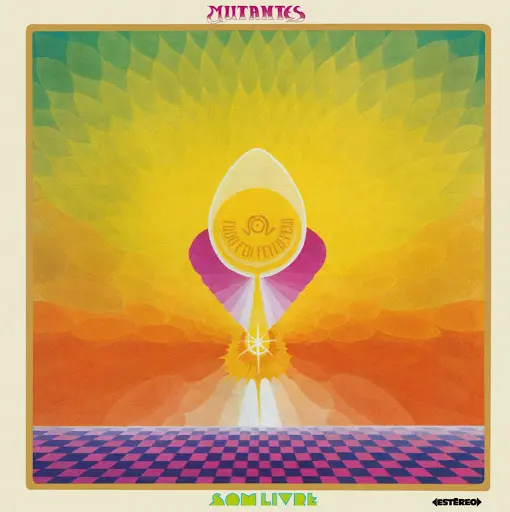 Mutantes released their seventh album, Tudo foi Feito pelo Sol, in 1974 on Som Livre. The title is Portuguese for Everything Was Made By the Sun.
The album marked their first without Arnaldo Baptista and Rita Lee, leaving guitarist Sérgio Dias as the sole original member.
The new lineup—Dias (vocals, guitars, sitar), Túlio Mourão (Hammond organ, piano, Minimoog), Antônio Pedro (bass, vocals), and Rui Motta (drums, percussion)—shifted the group toward an overtly progressive style rooted in symphonic structure and rhythmic precision, combining British influences (Yes, Flash, Gentle Giant) with Brazilian rhythmic inflections and atmospheric synth passages.
Dias wrote or co-wrote all seven songs, collaborating with Mourão, Pedro, and Motta in various combinations. Mourão contributed the instrumental “Pitágoras,” while Dias composed the title track alone.
The album moves between long instrumental flights and spacious, vocal-centered sections. “Deixe Entrar um Pouco d’Água no Quintal” opens with a brisk drum entrance and call-and-response vocal sequence anchored by organ and piano counterpoint. “Pitágoras” unfolds as a shifting instrumental built on dueling guitar and synthesizer exchanges with a closing piano reprise. “Desanuviar” drifts through slow, reflective verses and ambient Moog layers, dissolving into sitar textures and radio sermon fragments midway through.
“Eu Só Penso em Te Ajudar” emphasizes piano-driven momentum and vocal intensity, while “Cidadão da Terra” alternates Hammond-driven passages and lyrical refrains about universal identity. “O Contrário de Nada é Nada” stands as the shortest and most direct piece, a compact rocker with existential imagery. The eight-minute title track closes the album in expansive symphonic form, its organ and vocal themes rising through tempo changes to a sustained, blues-inflected finale.
A1. “Deixe Entrar um Pouco d’Água no Quintal” [Let a Little Water into the Yard] (5:03)
A2. “Pitágoras” [Pythagoras] (6:56)
A3. “Desanuviar” [To Clear Up] (8:13)
B1. “Eu Só Penso em Te Ajudar” [I Only Think of Helping You] (4:58)
B2. “Cidadão da Terra” [Citizen of the Earth] (5:35)
B3. “O Contrário de Nada é Nada” [The Opposite of Nothing Is Nothing] (2:58)
B4. “Tudo Foi Feito pelo Sol” [Everything Was Made by the Sun] (8:46)
Sessions occurred at Estúdio Eldorado in São Paulo with Os Mutantes producing and engineering their own material.
The original gatefold sleeve displays solar imagery consistent with the album’s title and lyrical themes of renewal and cosmic unity.
The album’s sophisticated arrangements and technical precision redefined Os Mutantes as a fully progressive act, standing apart from their earlier psychedelic and satirical period.
Cavaleiros Negros (EP)
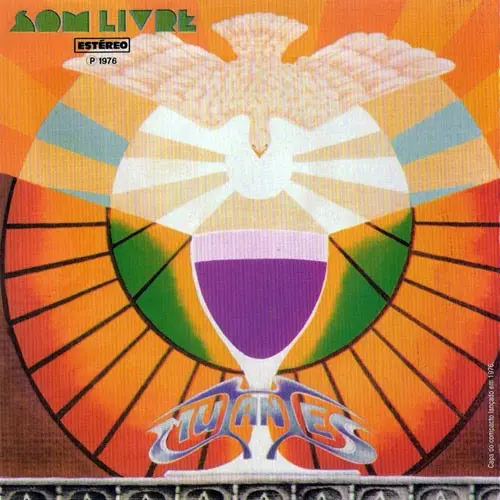 In 1976, Mutantes released a three-song EP on Som Livre, marking the band’s final studio recording before their 1978 breakup.
The EP continues the sonic exploration of Tudo Foi Feito Pelo Sol, blending progressive rock textures with virtuosic keyboard and guitar interplay. Sergio Dias drives the compositions with intricate guitar lines, Túlio Mourão supplies layered organ and synthesizer passages, and the rhythm section anchors the songs with steady, propulsive intensity.
Sergio Dias wrote the majority of the material, collaborating with A. Pedro de Medeiros and Ruy Motta on the title track. Covers do not appear, and all compositions are original.
Musically, the EP opens with “Cavaleiros Negros,” a symphonic epic that alternates between expansive organ-and-guitar harmonies and punctual climactic passages; its lyrics evoke a fantastical, Tolkien-inspired narrative. “Tudo Bem” delivers straightforward hard rock with driving drums, sharp keyboard fills, and a duel between guitar and organ. The EP closes with “Balada do Amigo,” a contemplative ballad featuring tender piano and guitar lines, though vocals falter at times, creating a fragile, human texture.
A1. “Cavaleiros Negros” [Black Knights] (8:30) — lyrics by A. Pedro de Medeiros, Ruy Motta, Sergio Dias; music by Sergio Dias
A2. “Tudo Bem” [All Right] (4:15) — lyrics and music by A. Pedro de Medeiros, Sergio Dias
B1. “Balada do Amigo” [Ballad of the Friend] (3:26) — written by Túlio Mourão
Sessions occurred at Som Livre studios in Rio de Janeiro with production handled internally by the band and engineering by the studio staff.
The three songs were later included as bonus tracks on the 2006 digipack reissue of Tudo Foi Feito Pelo Sol, preserving them for wider distribution beyond the rare original 7″ vinyl.
Discography:
- Os Mutantes (1968)
- Mutantes (1969)
- A Divina Comédia ou Ando Meio Desligado (1970)
- Jardim Elétrico (1971)
- Mutantes e Seus Cometas no País do Baurets (1972)
- Tudo foi Feito Pelo Sol (1974)
- O “A” e o “Z” (1992, released 1973)
Sources:
- Discogs: Os Mutantes
- 45worlds: Os Mutantes
- 45cat: Os Mutantes
- RYM: Os Mutantes
- MusicBrainz: Os Mutantes
- ProgArchives: Os Mutantes
Artist/Album Pages:
Mike Heron is a Scottish singer and songwriter, best known as the co-founder and mastermind of the I...
Scott Walker (Jan. 9, 1943 – March 22, 2019) was an American singer who achieved UK pop fame during ...
Edwards Hand were an English chamber-pop/folk duo from London that released a self-titled album o...
Cherry People were an American pop-psych/bubblegum band that released a self-titled album on Heritag...
Love Live Life + One were a Japanese hard-rock/psych band that released the 1971 album Love Will M...
Tony Williams (1945–1997) was an American jazz drummer who emerged in the second Miles Davis Quint...
Audience was an English folk-psych band that debuted with the 1969 album Audience on Polydor. Betwee...
The New York Dolls were an American hard-rock/glam band that released a self-titled album (produced ...
Sleepy Hollow was an American art-pop trio from Philadelphia that released a self-titled album in 19...
Ben Sidran (born August 14, 1943) is an American singer, pianist, keyboard player, songwriter, pro...
The Undisputed Truth was an American soul-psych group from Detroit, best known for their 1971 R&am...
Black Merda was an American soul-funk/psych band from Detroit that released a self-titled album on...