

Música Urbana was a Spanish jazz-rock band that released the 1976–78 albums Música Urbana and Iberia.
Members: Joan Albert Amargós (keyboards, winds), Salvador Font (drums), Carles Benavent (bass), Lluís Cabanach (guitar, 1976-78), Enric Herrera (keyboards, 1976), Emili Baleriola (guitar, 1976), Lucky Guri (keyboards, 1976-78), Jordi Bonell (guitar, 1978-79), Matthew Simon (trumpet, flugelhorn, 1978-79), Jaume Cortadellas (flute, 1978-79)
Background
Música Urbana formed in 1976 in Barcelona, emerging from the city’s fertile Catalan progressive scene. Composer and multi-instrumentalist Joan Albert Amargós spearheaded the project, recruiting bassist Carles Benavent, formerly of Maquina! and later a key collaborator with Paco De Lucia and Chick Corea. Guitarist Lluis “Luigi” Cabanach and drummer Salvador Font joined, completing the core lineup after keyboardist Enric Herrera and guitarist Emili Baleriola departed following early rehearsals.
Música Urbana
 Música Urbana released their self-titled debut album in 1976 on Zeleste.
The album blends acoustic and electric textures with layered keyboards, wind instruments, and percussive accents. Guitarist Lluis Cabanach leads on electric and Spanish guitars, accompanied by multi-instrumentalist Joan Albert Amargós,who plays multiple keyboards (Steinway grand piano, Fender e-piano, Hohner clavinet, Moog & Logan String synths) and horns (soprano sax, clarinet, flute, trombone).
Amargós composed five tracks; Benavent submitted “Font.” Bassist Carles Benavent and percussionist Salvador Font (drums, marimba, gong) round out the band. Percussionist Aurora Amargós and keyboardist Lucky Guri contribute additional textures.
Música Urbana alternates between energetic, multi-layered electric textures and softer, classically tinged interludes. “Agost” opens with piano and bass motifs before the guitar cuts in, unfolding through rapid tempo shifts and intricate fills. “Violeta” begins gently, then spins through angular, whimsical motifs, with flutes and vocalizations adding playful color. “Vacas, Toros y Toreros” continues the quirkiness with Latinized rhythms and abrupt stylistic turns, while Benavent’s “Font” layers samples, electric piano, and bass in unpredictable interplay. “Caramels de Mel” blends edgy pseudo-smooth jazz with delicate, interweaving passages, and “El Vesubio Azul” closes with expansive, fusion-driven development where improvisatory flourishes and chamber-inspired textures converge.
A1. “Agost” [August] (6:54)
A2. “Violeta” [Violet] (8:20)
A3. “Vacas, Toros y Toreros” [Cows, Bulls, and Bullfighters] (4:41)
B1. “Font” [Fountain] (4:47)
B2. “Caramels de Mel” [Honey Caramels] (5:24)
B3. “El Vesubio Azul” [The Blue Vesuvius] (8:24)
Throughout, the band alternates between tightly structured arrangements and sudden, humorous detours, keeping the music lively, unpredictable, and texturally rich.
Sessions occurred in 1976 at Estudis Gema 2 with producer Rafael Moll and engineer Joan Sirvent.
Tatuaje (OST)
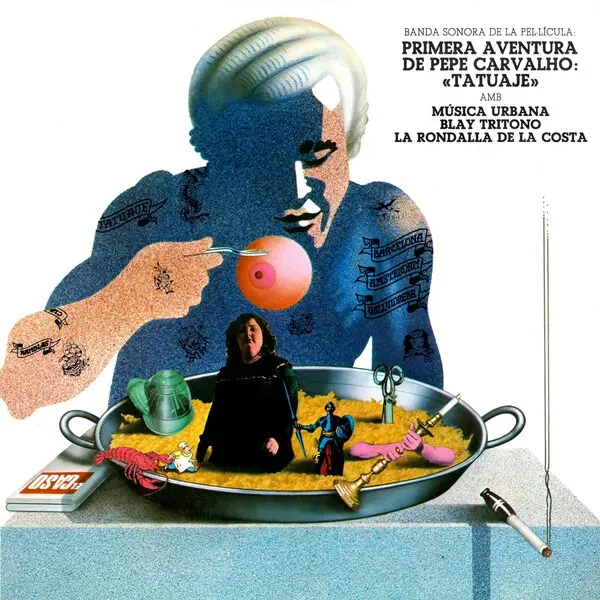 In June 1977, Zeleste released Tatuaje, the soundtrack to a Spanish thriller film with music by Música Urbana, Blay Tritono, and La Rondalla de la Costa.
Música Urbana, Blay Tritono, and La Rondalla de la Costa released Tatuaje in June 1977 as the soundtrack to the Spanish thriller Primera Aventura de Pepe Carvalho, directed by J. J. Bigas Luna with a screenplay by Manolo Vázquez Montalbán.
The album mixes short atmospheric cues with fuller instrumental passages, balancing jazz-informed keyboard textures, layered guitar lines, and wind instruments against percussive accents. Multi-instrumentalist Joan Albert Amargós oversaw arrangements and direction, while composer Toni Miró contributed the core musical material. Producer Rafael Moll and recording engineer Jordi Vidal captured the sessions with clarity, highlighting the interplay of piano, guitar, and woodwinds.
Amargós composed or arranged the majority of tracks, shaping brief transitional pieces like “Barcelona” and “Peluquería Queta (2.a versió)” alongside more extended compositions such as “Vallvidriera” and “Hotel Las Palmas.” Music alternates between rapid, angular passages and measured, contemplative sections, with percussion and bass providing rhythmic propulsion.
A1. “He Nacido Para Revolucionar El Infierno” [I Was Born to Revolutionize Hell] (4:38)
A2. “Barcelona” (0:58)
A3. “Vallvidriera” (5:00)
A4. “Camina Gorda” [Walk Fat] (4:14)
A5. “Peluquería Queta (1.a versió)” [Queta Hair Salon, Version 1] (1:22)
B1. “Peluquería Queta (2.a versió)” (0:22)
B2. “Hotel Las Palmas” (5:09)
B3. “Amsterdam-Barcelona” (2:40)
B4. “Teresa Marsé” (4:13)
B5. “Charo” (3:32)
Sessions occurred at Estudios Gema under producer Rafael Moll with engineer Jordi Vidal. Artwork features an illustration by Enric Satue, while photography credits go to Ole Armengol.
Iberia
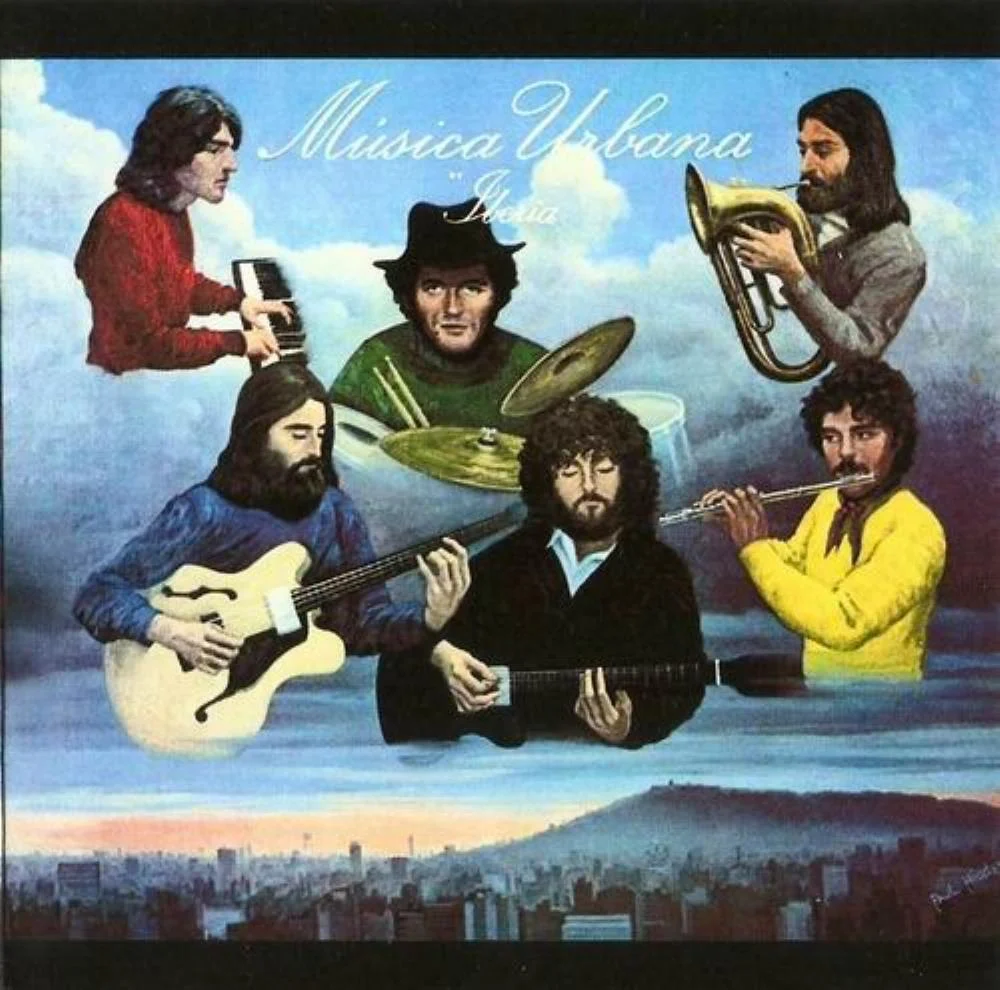 Música Urbana released their second album, Iberia, in May 1978 on RCA Victor.
The album extends their fusion of electric jazz-rock, classical, and Spanish traditional music into a more classically oriented framework, emphasizing orchestral textures over rock dynamics. Guitarist Jordi Amargós composed four tracks and co-wrote “En Buenas Manos” with bassist/mandolinist Carles Benavent.
Bonell alternates between electric and Spanish guitars, while multi-instrumentalist Joan Albert Amargós anchors keyboards, saxophones, and clarinets. Drummer Salvador Font rounds out the lineup, augmented by flutist Jaume Cortadellas, trumpeter Matthew Simon, and castanets player Aurora Amargós on castanets.
“En Buenas Manos” opens with Benavent’s fretless bass anchoring complex brass motifs, weaving through angular, Spanish-inflected rhythms before piano and guitar punctuate the layered arrangement. “Invitation au Xiulet” shifts from warm jazz phrasing to cinematic, multi-layered passages with theatrical twists, blending winds, brass, and subtle percussion in sudden turns of intensity.
“Pasacalle de Nit” condenses traditional Spanish forms into a tightly wrought, mandolin- and flute-led texture, while “Pasodoble Balear” combines precise piano maneuvers, lush brass, and sporadic flamenco flurries in a restless, ever-shifting rhythmic framework. The closing “Vacances Perdudes” spans twelve minutes, alternating between reflective, ethereal interludes and energetic bursts of ensemble interplay, balancing intricate motifs and dynamic contrasts throughout. The album foregrounds virtuosity and compositional sophistication, with each piece exploring complex interactions between electric, acoustic, and orchestral elements.
A1. “En Buenas Manos” [In Good Hands] (4:51)
A2. “Invitación au Xiulet” [Invitation to the Whistle] (7:53)
A3. “Pasacalle de Noche” [Nighttime Street Parade] (3:05)
B1. “Pasodoble Balearic” (8:06)
B2. “Vacaciones Perdidas” [Lost Vacations] (12:06)
Sessions occurred at Estudios RCA in Madrid with producer Rafael Moll and engineer Carlos Martos, assisted by Luis Delgado. Artwork credits go to Paul Hindemith (illustration) and photography to Carme Escayola, Jaume Cortadellas, and Matthew L. Simon.
Discography:
- Música Urbana (1976)
- Iberia (1978)
- Tatuaje (OST, 1978 • Música Urbana, Blay Tritono & La Rondalla de la Costa)
Sources:
Artist/Album Pages:
Casino was an English pre-wave cabaret glam band that released a 1976 self-titled album on State R...
Progres 2 are a Czech progressive rock band, formed in 1968 in Brno as the Progress Organization u...
Neuronium are a Spanish electronic combo from Barcelona, formed in 1976 by keyboardist Michel Huyg...
Edwin Starr (Jan. 21, 1942 — April 2, 2003) was an American soul singer from Nashville who released ...
Yes are an English rock band that released twenty-one studio albums between 1969 and 2014. Formed in...
Nya Ljudbolaget was a Swedish jazz-rock/folk band behind a 1981 self-titled album on MNW. Member...
Eberhard Weber is a German double-bassist and composer with more than 300 backing credits since th...
Sam Sanders (Nov. 19, 1937 — Oct. 18, 2000) was an American jazz-funk saxophonist who recorded th...
The Outsiders were an English punk-rock band from London that made the 1977/78 albums Calling On Y...
Saga are a Canadian rock band from Oakville, Ontario, formed in 1977. They achieved cult status wi...
Washington Jamb Band was an American soul-funk band that issued two 1976 singles and the 1977 albu...
Steve Marcus (September 18, 1939 — September 25, 2005) was an American tenor saxophonist from New Yo...