

Morse Code was a Québécois symphonic/art-rock band that released two albums as Morse Code Transmission on RCA Victor circa 1971/72 before shortening the nameplate for a three-album run on Capitol between 1975 and 1977. A fourth album appeared on Aquarius in 1983.
Members: Christian Simard (keyboards, vocals), Jocelyn Julien (guitar), Daniel Lemay (guitars, flute), Raymond Roy (drums), Michel Vallée (bass, vocals)
Background
Morse Code evolved from psych-rockers Les Maitres, formed in 1968 by keyboardist Christian Simard and drummer Raymond Roy. In 1970, they added bassist Michel Vallée and issued three singles on RCA: “Un Grand Amour” (b/w “Jolie Suzanne”), “Le Soleil D’Ete (Show Me Your Hand)” (b/w “Une Nuit Avec Toi”), and “Pour L’Amour” (b/w “Tu le Sauras Demain”), the last two sides written by Simard with arrangements by Yves Vincent, know for his productions of female chanson-pop acts (Karo, Chantal Pary, Les Miladys, Robin).
In 1971, guitarist Jocelyn Julien joined the band, now renamed Morse Code Transmission. That August, they released their self-titled debut album on RCA. It was produced by Bill Misener, who oversaw 1970/71 recordings by Tranquillity Base, Rhonda Silver, Marshmallow Soup Group, The French Revolution, and It’s All Meat.
Morse Code Transmission
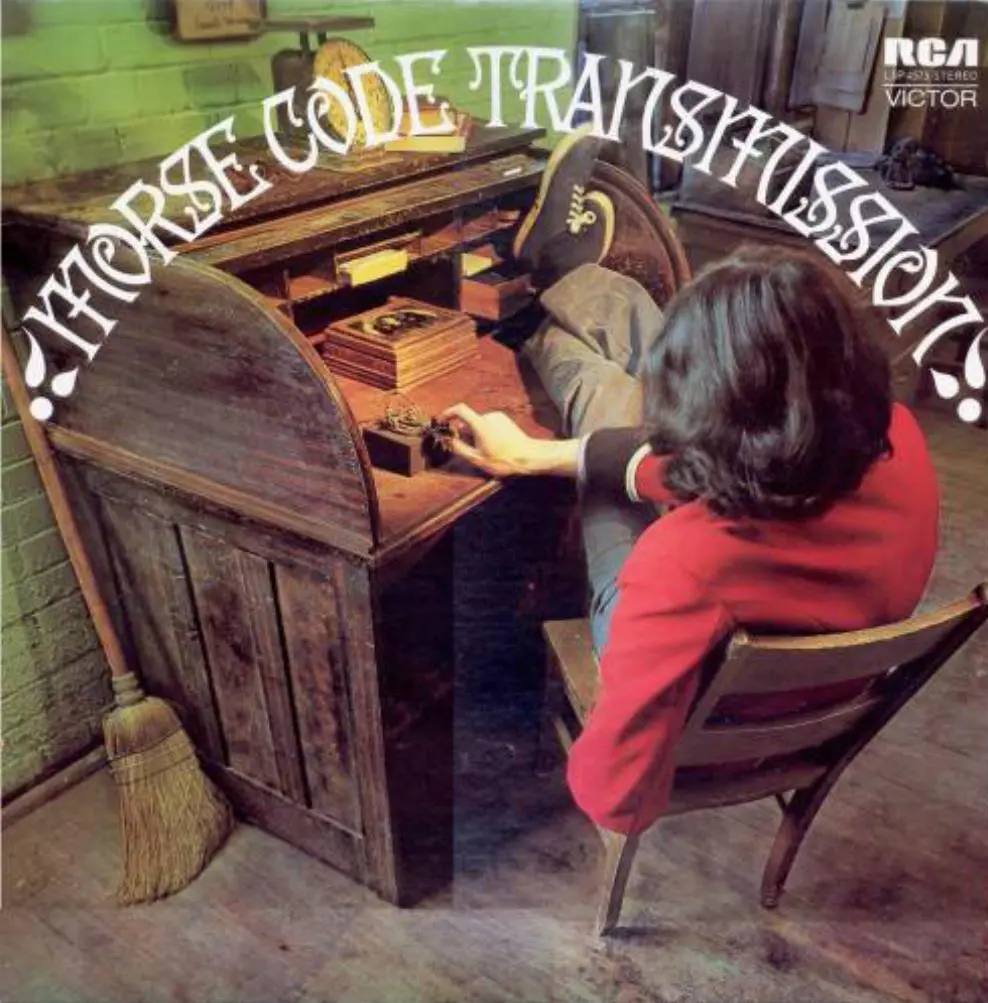 Morse Code Transmission released their self-titled debut album in August 1971 on RCA Victor.
The album presents the Montreal quartet’s early English-language period, balancing psych-inflected rock, orchestrated pop, and folk elements. Led by singer–keyboardist Christian Simard with guitarist Jocelyn Julien, bassist Michel Vallée, and drummer Raymond Roy, the band alternates between concise rock numbers and brief lyrical interludes augmented by string and fiddle accompaniments.
Simard and producer Bill Misener handled the bulk of the writing, contributing to eight of the twelve tracks. Vallée co-wrote two pieces with guitarist Rogers, while Simard collaborated with Box and De Nottbeck on “Oh Lord.” The album contains no outside covers.
“Souvenirs of Our Days” opens the set with a mid-tempo psych arrangement that introduces the group’s blend of vocal harmonies and tight rhythm work. “It’s Never Easy to Do,” co-written by Vallée, extends the mood with longer instrumental interplay and expressive vocal phrasing. “Time” and “The Friend” are short, piano-based pieces that bookend the first side’s introspective passages. “Oh Lord” combines gospel-tinged vocals and percussion accents, while “Hunting & Laughing” contrasts rustic fiddle textures with brisk rhythm.
“Story-Book Life” uses orchestral strings under vocal harmonies reminiscent of The Moody Blues. “Fire Sign” and “Freedom Train” show the band’s sharper edge, the latter driven by bass and Hammond organ in classic psych-rock form. “Today I’m Alive” and “One to One” return to melodic pop territory, and “Two Friends” closes the album as a reflective reprise to “The Friend,” expanded with cello.
A1. “Souvenirs of Our Days” (2:24)
A2. “It’s Never Easy to Do” (3:50)
A3. “Time” (1:31)
A4. “Oh Lord” (2:55)
A5. “Hunting & Laughing” (2:03)
A6. “The Friend” (1:07)
B1. “Story-Book Life” (2:58)
B2. “Fire Sign” (2:03)
B3. “Freedom Train” (3:34)
B4. “Today I’m Alive” (2:23)
B5. “One to One” (2:50)
B6. “Two Friends” (1:45)
Sessions occurred at RCA Victor Studios in Montreal and RCA Studios in Toronto with Bill Misener producing and Mark Smith and George Semkiw engineering. Cub Richardson and Hayward Parrott served as technicians.
The album features guest appearances by cellist Peter Schenkman and fiddler Al Cherney. Misener and Smith arranged the material, with Simard providing keyboard and vocal direction.
The cover design by Borg Associates features a sepia-toned Western motif, photographed by Gil Brousseau, with layout and back-cover imagery coordinated by the same studio.
RCA issued “It’s Never Easy to Do” as a single (b/w “Souvenirs of Our Days”) for Canadian radio promotion.
Morse Code Transmission introduced the group’s formative sound, laying groundwork for their subsequent move toward French-language symphonic rock on La Marche des Hommes and Procréation.
II
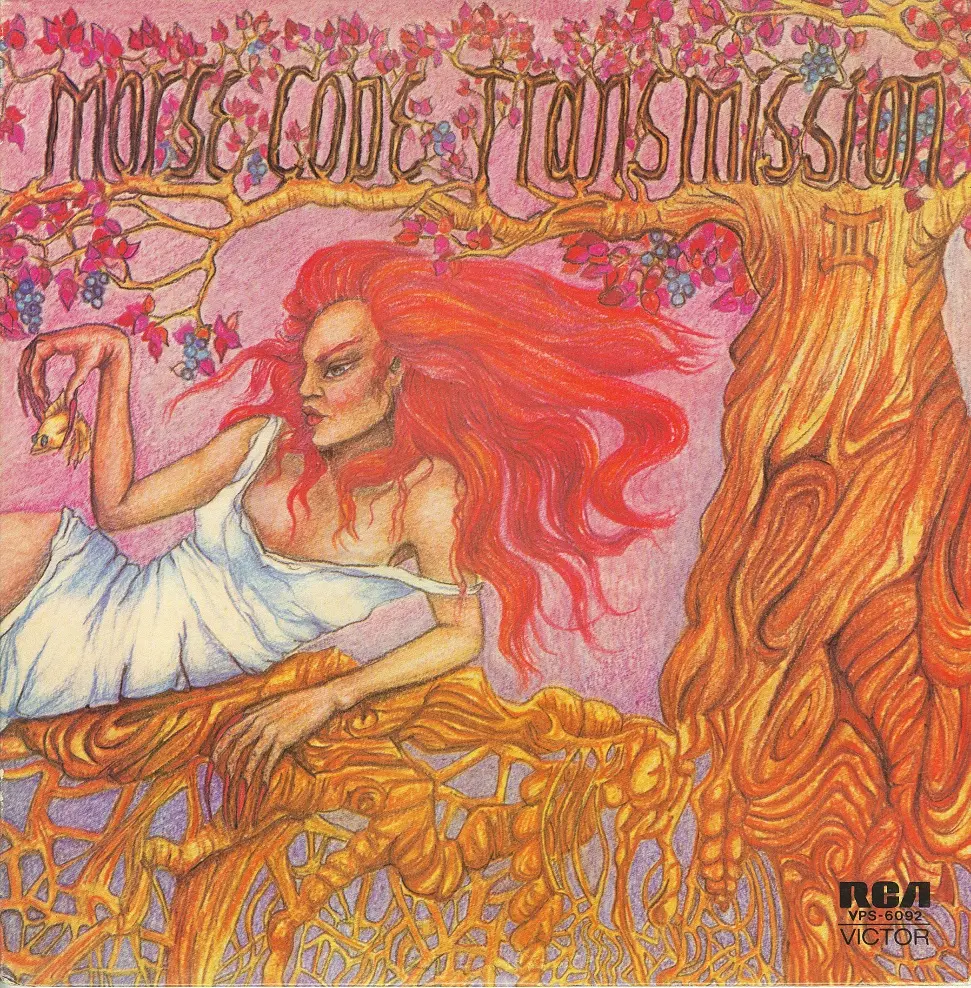 Morse Code Transmission released their second album, II, in February 1973 on RCA Victor.
The album is a double LP that expands the band’s English-language psych-prog palette with organ-driven hard rock, occasional acoustic textures, and extended compositions. The core quartet—Christian Simard on organ, piano, congas, and lead vocals, Michel Vallée on bass and vocals, Raymond Roy on drums and percussion, and Bernie Tapin on lead and acoustic guitar—explores both complex time signatures and concise psych-pop passages.
Simard wrote the majority of the tracks, contributing vocals and keyboard arrangements throughout. Tapin provided lead guitar compositions, and Myer Randolph supplied lyrics for several numbers. The album contains no outside covers.
The first disc opens with “Funky Alley,” an 8-minute organ-dominated suite with dynamic tempo shifts, extended solos, and interspersed cosmic effects. “Soul Odyssey” contrasts with a brisk, upbeat structure featuring a pronounced midsection. “Graveyard of Man” delivers shifting meters and bass accents, while “Stick the Fork In” continues the hard psych approach with extended instrumental interplay.
The second disc begins with “Liberty, Freedom, Man,” a near-10-minute track with a layered middle section, followed by “Cold Society,” which reflects a lighter, 1960s pop influence. “New Woman Kind” and “Sky Ride” continue with art-rock inflections, and “Satan’s Song” concludes the set with a concise single-oriented composition.
A1. “Funky Alley” (8:14)
A2. “Soul Odyssey” (3:34)
B1. “Graveyard of Man” (4:54)
B2. “Stick the Fork In” (8:39)
C1. “Liberty, Freedom, Man” (9:29)
C2. “Cold Society” (4:40)
D1. “New Woman Kind” (4:33)
D2. “Sky Ride” (4:31)
D3. “Satan’s Song” (3:24)
Sessions occurred at RCA Victor Studios in Montreal with Gaetan Desbiens producing and engineering.
The album was pressed by RCA Records in Smiths Falls, Ontario, featuring a gatefold cover and an orange Dynaflex label. Executive production was handled by Yvan Deschênes.
RCA promoted II with the single “Satan’s Song,” extracted from the album.
II highlights Morse Code Transmission’s move toward extended organ-driven progressive rock while retaining brief psych-pop interludes, bridging their early English-language work and the French-language symphonic rock of their mid-1970s output.
La Marche des Hommes
 Morse Code released their third album, La Marche des Hommes, in October 1975 on Capitol.
The album marks the group’s transition from early psych-rock into full-scale symphonic progressive rock with French-language lyrics and intricate, keyboard-driven arrangements. The quartet of singer–keyboardist Christian Simard, guitarist–flutist Daniel Lemay, bassist Michel Vallée, and drummer–percussionist Raymond Roy blend organ, Mellotron, and synthesizer layers with dynamic rhythmic passages and vocal harmonies comparable to contemporaneous works by Genesis and Ange.
Simard wrote four of the album’s seven songs and co-composed the remaining three with Lemay, Vallée, and Roy. Lyricist Chantal Dussault supplied words for six of the seven titles, giving the concept a socio-philosophical focus on human progress and collective struggle.
The eleven-minute title suite, “La Marche des Hommes,” opens the album with alternating heavy and symphonic sections. Electric guitar and Hammond organ introduce the theme before a shift into layered Mellotron and ensemble interplay. “Le Pays d’Or” contrasts with a subdued piano and Mellotron arrangement under reflective vocals. “La Cérémonie de Minuit” develops from acoustic and organ motifs into an extended midsection where Lemay’s guitar takes lead.
Side B begins with “Cocktail,” an instrumental centered on flute and clavinet interplay, notable for its rhythmic pulse and Mellotron layers. “Une Goutte de Pluie” follows with light organ textures, subdued piano, and soft vocals. “Qu’est-ce que T’as Compris ?” resumes the uptempo mode with alternating organ bursts and guitar lines, while “Problème” closes the album on a slower, Mellotron-rich coda.
A1. “La Marche des Hommes” [The March of Men] (11:14) — multi-movement title suite with alternating hard-rock and symphonic sections, featuring organ-led builds and Mellotron climaxes.
A2. “Le Pays d’Or” [The Land of Gold] (3:16) — piano and Mellotron ballad reflecting on idealized refuge and moral decay.
A3. “La Cérémonie de Minuit” [The Midnight Ceremony] (5:00) — combines acoustic guitar and Hammond phrasing with ensemble crescendos and lyrical imagery of ritual and renewal.
B1. “Cocktail” (3:25) — instrumental built on flute and clavinet exchanges with fluid rhythmic motion; remixed for Quebec radio and television use.
B2. “Une Goutte de Pluie” [A Drop of Rain] (3:23) — slow piano-led ballad underscored by organ and light percussion.
B3. “Qu’est-ce que T’as Compris ?” [What Did You Understand?] (5:29) — brisk ensemble number alternating between rhythmic verses and keyboard breaks.
B4. “Problème” (2:05) — brief Mellotron-centered finale with lyrical reflection on emotional restraint and disillusionment.
Sessions occurred in May and June 1975 at Son Québec studio in Montréal with Pete Tessier producing and engineering, assisted by artistic director Pierre Dubord. Sabin Brunet cut the lacquers at Disques SNB Ltée.
The album cover features sunrise graphics and photography by Jacques Bourassa, with additional band photos by Michel Verrault.
Capitol issued “Cocktail” as the lead single, which gained regional airplay and served as theme music for a Quebec television program.
La Marche des Hommes established Morse Code among Quebec’s leading symphonic-rock acts of the mid-1970s, combining classical keyboard structure with lyrical themes of humanity and progress.
Procréation
 Morse Code released their fourth album, Procréation, in September 1976 on Capitol.
The album continues the group’s evolution into fully realized symphonic progressive rock, combining classically influenced organ, Mellotron, and synthesizer arrangements with intricate ensemble passages. Singer–keyboardist Christian Simard leads guitarist–flutist Daniel Lemay, bassist Michel Vallée, and drummer Raymond Roy through tightly structured sections that balance theatrical vocals with instrumental development.
Simard composed most of the music, co-writing several pieces with Lemay, Vallée, and Roy. Lyricist Jean Robitaille supplied words for five of the album’s eight vocal numbers, joined by Donald Lautrec on one piece.
The record opens with the instrumental “Précréation,” which builds through alternating organ and flute motifs before resolving in a full ensemble climax. “Qu’est-ce T’es V’nu Faire Ici” contrasts spacey openings and sharp rhythmic turns with melodic vocals and extended keyboard passages. “Nuage” is the second instrumental, centered on organ and bass interplay. “L’Eau Tonne” develops as a slower, reflective vocal piece driven by keyboards and rhythmic pulse. “Des Hauts et des Ha!…” alternates dramatic organ bursts with theatrical vocal lines and synthesizer accents. “De Tous les Pays du Monde” closes the first side with a gradual build from subdued organ and voice to full Mellotron expansion.
Side B is occupied by the three-part suite “Procréation,” a 26-minute composition that passes through multiple movements of contrasting tone and structure. The first section opens on guitar and organ themes that evolve into a surging rhythmic sequence; Part II introduces layered Mellotron and dynamic bass against shifting time changes; Part III moves between pastoral passages and choral crescendos before returning to a grand, wordless finale.
A1. “Précréation” (Instrumental) (5:07)
A2. “Qu’est-ce T’es V’nu Faire Ici” [What Did You Come Here For] (4:40)
A3. “Nuage” [Cloud] (Instrumental) (4:40)
A4. “L’Eau Tonne” [Water Thunders] (3:59)
A5. “Des Hauts et des Ha!…” [Of Highs and Ha’s!] (4:27)
A6. “De Tous les Pays du Monde” [From All the Countries of the World] (3:49)
B1. “Procréation” (25:58)
B1.1 “Procréation I” (6:41)
B1.2 “Procréation II” (8:49)
B1.3 “Procréation III” (10:28)
Sessions occurred in June and July 1976 at Studio Son Québec in Montréal with Pete Tessier producing, engineering, and mixing. Pierre Dubord served as artistic director, with Sabin Brunet cutting the lacquers at Disques SNB Ltée.
The gatefold package features photography by Michel Verrault and R. Rompré Inc., with graphics by R. Rompré Inc.
Procréation solidified Morse Code’s standing in Quebec’s progressive scene, pairing complex symphonic structures with French-language poetics. Its 26-minute title suite remains one of the most ambitious large-scale compositions in Canadian rock of the 1970s.
Je Suis le Temps
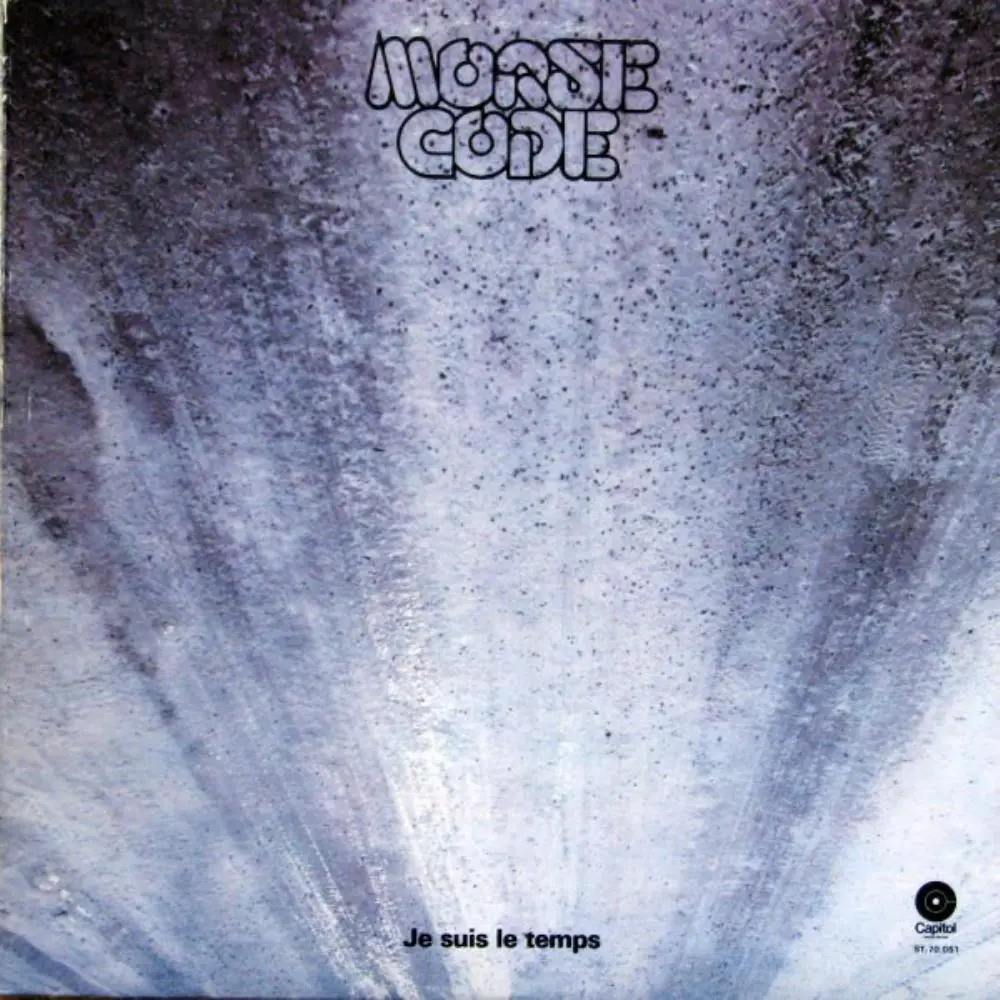 Morse Code released their fifth album, Je Suis le Temps, in November 1977 on Capitol.
The album finds the Montreal quartet refining their symphonic approach toward a tighter, song-based format recorded at Rockfield Studios in Wales. Retaining their signature French-language vocals and keyboard-dominated arrangements, the band shifts from long-form conceptual suites to more compact structures that merge progressive textures with contemporary rock production.
Singer–keyboardist Christian Simard wrote six of the album’s eight songs and co-wrote two with guitarist Daniel Lemay. Lyricists Jean Robitaille and Pierre Laberge contributed to one piece each.
The album opens with “C’est Déjà du Passé,” where alternating major-minor chord patterns and layered keyboards frame reflective lyrics about time and change. “La Réalité” extends the theme with contoured rhythms and synth phrasing under declarative vocals. “Berceuses,” co-written by Robitaille, alternates quiet verses with a drawn-out instrumental section driven by Lemay’s lead guitar. “Chevaliers d’un Règne,” with lyrics by Laberge, employs a steady rhythm under choral vocals and layered organ lines.
Side B opens with “Picadilly Circus,” an instrumental inspired by the London locale, built on shifting tempos and Mellotron accents. “Sommeil” follows with slow, ethereal keyboards and introspective lyrics that evoke dreams and distance. The seven-minute title track, “Je Suis le Temps,” unfolds in three parts, moving between slow organ themes and dynamic ensemble passages. The closing piece, “Magie de Musique,” reasserts Simard’s melodic sensibility with a succinct coda that links lyrical reflection and harmonic resolution.
A1. “C’est Déjà du Passé” [It’s Already the Past] (4:37)
A2. “La Réalité” [Reality] (4:05)
A3. “Berceuses” [Lullabies] (5:13)
A4. “Chevaliers d’un Règne” [Knights of a Reign] (4:36)
B1. “Picadilly Circus” (4:10) — instrumental named after the London square, composed during the band’s stay in Britain.
B2. “Sommeil” [Sleep] (4:24)
B3. “Je Suis le Temps” [I Am Time] (7:04)
B4. “Magie de Musique” [Magic of Music] (3:04)
Sessions occurred in July 1977 at Rockfield Studios in Monmouth, Wales, with Ted E. Sharp engineering and co-mixing alongside Simard. Pierre Dubord served as artistic director, and Otto Grimms provided technical assistance. Mastering took place at Abbey Road Studios in London by Chris Blair.
The sleeve design was handled by Guy Hubert of Groupe Graphitti, with cover photography by François Dumouchel and back photo by Philippe Espantoso. The imagery of a rain-streaked windshield and ruins reflects the album’s contemplative tone.
Capitol promoted Je Suis le Temps with the instrumental “Picadilly Circus,” which gained regional airplay in Quebec.
Je Suis le Temps concluded Morse Code’s classic 1970s run, balancing symphonic instrumentation and progressive arrangements within a more concise studio framework shaped by their time in Britain.
Discography:
- Morse Code Transmission (1971)
- II (1972)
- La Marche des Hommes (1975)
- Procréation (1976)
- Je suis le temps (1977)
- Code Breaker (1983)
Sources:
Artist/Album Pages:
Brandywine Bridge was an English folk band that released the 1977/78 albums The Grey Lady and An E...
Psycho — alternately spelled Psyhho — was an Estonian space-rock jam band, active in the mid-1970s...
Henry Franklin (born Oct. 1, 1940) is an American jazz double-bassist from Los Angeles who led the...
Ambergris was an American brass-rock/soul band formed by ex-Blood, Sweat & Tears multi-instru...
Lamb was an American soul-rock trio that released the 1970 album A Sign of Change on Fillmore Record...
The Pink Fairies were an English psychedelic hard-rock band from London that released three albums...
Bloodstone was an American soul-psych group from Kansas City that released eight albums on Decca/L...
Lucio Dalla (March 4, 1943 — March 1, 2012) was an Italian singer/songwriter with a career that sp...
Tin House was an American hard-rock powertrio that released a 1971 self-titled album on Epic. Mem...
Michel Moulinié is a French multi-instrumentalist and composer who released the 1978 Crypto album ...
Datura was a French symphonic-rock band that self-released the 1982 album Mr Untel. Members: Did...
Alain Markusfeld is a French classical/rock guitarist who released the 1970/71 Barclay folk/psych ...