

Melba Moore (born Oct. 29, 1945) is an American R&B singer and actress who got her start in showbiz as part of the off-Broadway cast in the musical Hair in 1967. She released two albums and a live disc on Mercury between 1970 and 1972, followed by four albums on Buddah and three on Epic between 1975 and 1980. She continued the pace during the subsequent decade on Capitol while acting in stage productions and film/TV roles.
Early Life
Moore was born Beatrice Melba Hill in New York City on October 29, 1945, the daughter of R&B singer Gertrude Melba Smith (aka Bonnie Davis, 1920–1976) and big band leader Teddy Hill (1909–1978). Her parents separated soon after she was born. She grew up in Harlem until age nine, when her mom married jazz pianist Clem Moorman and moved the family to Newark, New Jersey.
Theater
Moore made her recording debut in 1967 with the track “Magic Touch,” which went unreleased until 1986. That same year, she made her theatrical debut as Dionne in Hair alongside fellow soul singer Ronnie Dyson. In 1970, she won a Tony Award for Best Performance by a Featured Actress in a Musical her portrayal of Lutiebelle in Purlie. Meanwhile, she signed with Mercury and recorded her first album.
I Got Love
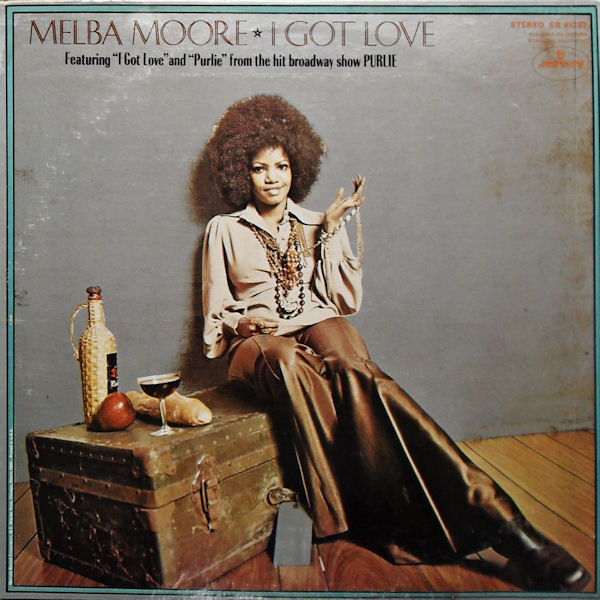 Melba Moore released her debut album, I Got Love, on June 9, 1970, on Mercury (SR-61287), which also pressed the album as Living to Give (SR 61255) with an altered tracklist.
The album blends Moore’s Broadway background with contemporary soul, balancing show tunes from Purlie, Hair, and Raisin in the Sun with recent pop material by Laura Nyro, Bobby Hebb, and Clint Ballard Jr. It also features originals from Jim Fragale and Andy Badale, giving the program a mix of theatrical and chart-bound sources.
Fragale produced the album and supplied material with Badale, Lou Stallman, and Ballard Jr. Broadway composers Gary Geld and Peter Udell contributed “I Got Love” and “Purlie,” while Nyro penned “Time and Love” and “Captain St. Lucifer.” Additional outside material includes Hebb’s “Sunny,” the Hair songs by Galt MacDermot with Gerome Ragni and James Rado, and Judd Woldin and Robert Brittan’s “He Comes Down This Morning.”
A1. “I Got Love” (2:58)
A2. “Time and Love” (3:10)
A3. “I Messed Up on a Good Thing” (2:39)
A4. “Purlie” (2:38)
A5. “Captain St. Lucifer” (3:21)
A6. “I Love Making Love to You” (2:53)
B1. “We’re Living to Give (To Give to Each Other)” (3:05)
B2. “Sunny” (4:12)
B3. “The Flesh Failures (Let the Sunshine In)” (3:18)
B4. “Easy to Be Hard” (3:38)
B5. “He Comes Down This Morning” (3:14)
B6. “The Facade” (3:26)
Sessions took place with producer Fragale and engineer Neal Ceppos. Arranger and conductor Charlie Calello handled the orchestral settings.
I Got Love features artwork by Richard Germinaro.
Look What You’re Doing to the Man
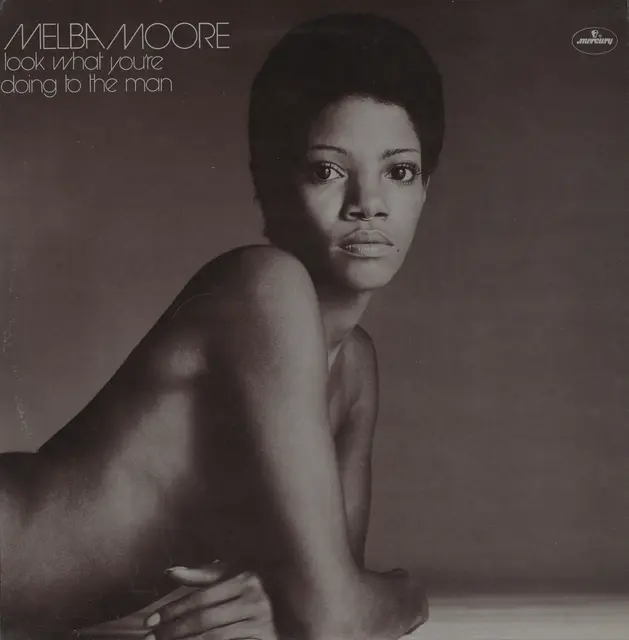 Melba Moore released her second album, Look What You’re Doing to the Man, on January 29, 1971, on Mercury.
The album expands her mix of Broadway fare and pop-soul material with contributions from Andy Badale, Jim Fragale, Clifton Davis, and Ron Miller, alongside covers of Joe South, Edwin Starr, Bobby Scott, and Rick Darnell. Arrangers Jim Wisner, Charles Coleman, Charles Calello, Bert DeCoteaux, Bernie Hoffer, and Thom Bell shaped the orchestral settings across the program.
Fragale produced the album and co-wrote four tracks with Badale, including the title song, “You Got the Power (To Make Me Happy),” and “Loving You Comes So Easy,” with Frank Stanton credited on the opener. Clifton Davis provided “Searchin’ for a Dream” and “Patience Is Rewarded.” Broadway writers Will Holt and Gary William Friedman supplied “If I Had a Million” from The Me Nobody Knows. Moore also interpreted Miller’s “Heaven Help Us All,” Scott and Bob Russell’s “He Ain’t Heavy He’s My Brother,” and Hawkins and Darnell’s “The Thrill Is Gone,” here miscredited to Arthur Benson and Dale Petite. Side one includes a medley of South’s “Walk a Mile in My Shoes” and “Twenty-Five Miles” by Starr with Harvey Fuqua and Johnny Bristol.
A1. “Look What You’re Doing to the Man” (2:45)
A2. “Searchin’ for a Dream” (3:00)
A3. “Walk a Mile in My Shoes” / “Twenty-Five Miles” (4:05)
A4. “Patience Is Rewarded” (3:50)
A5. “You Got the Power (To Make Me Happy)” (2:46)
B1. “If I Had a Million” (3:16)
B2. “He Ain’t Heavy He’s My Brother” (4:08)
B3. “Heaven Help Us All” (3:15)
B4. “The Thrill Is Gone” (3:22)
B5. “Loving You Comes So Easy” (4:05)
Sessions occurred at Philips Recording Company with producer Fragale and engineer Bob Fava.
Look What You’re Doing to the Man features photography by Richard Avedon with art direction by Desmond Strobel.
Melba Moore Live!
In July 1972, Mercury issued Melba Moore Live!, a document of her November 7, 1971, showcase at Philharmonic Hall in New York City.
The set presents Moore in a theatrical concert format, mixing Broadway numbers and American standards with contemporary pop-soul material. Along with works by Barry Mann and Cynthia Weil, Irving Berlin, and Van McCoy, she revisits “Purlie” from her stage triumph and draws again on Hair. The program also includes extended medleys that move between The Beatles, Gershwin, and jazz sources.
Clifton Davis contributed “Never Can Say Goodbye.” Clay McMurray and James Dean provided “Then We Can Try Again,” while Joe Cobb and Van McCoy supplied “Lean on Me.” Moore also interpreted material by Paul McCartney (“Lady Madonna”), George Gershwin and DuBose Heyward (“Summertime”), Bobby Timmons and Oscar Brown Jr. (“Dat Dere”), Arthur Herzog Jr. with Billie Holiday (“God Bless the Child”), Walter Marks (“Is It True Blondes Have More Fun”), Gary Geld with Peter Udell (“Purlie”), and Galt MacDermot with Gerome Ragni and James Rado (“Theme from Hair”).
A1. “New World Coming” (3:13)
A2. “Blue Skies” (2:30)
A3. “Lady Madonna” / “Summertime” / “Dat Dere” / “God Bless the Child” (10:28)
B1. “Never Can Say Goodbye” (3:20)
B2. “Theme from Hair” / “Is It True Blondes Have More Fun” / “Purlie” (6:14)
B3. “Then We Can Try Again” (2:55)
B4. “Lean on Me” (5:06)
Sessions occurred live at Philharmonic Hall and were mastered at Customatrix. Producer Jay Leer coordinated the release with engineer Elvin Campbell. Bernard Hoffer arranged the majority of the program.
Melba Moore Live! features photography by Stan Malinowski with art direction by Des Strobel.
Peach Melba
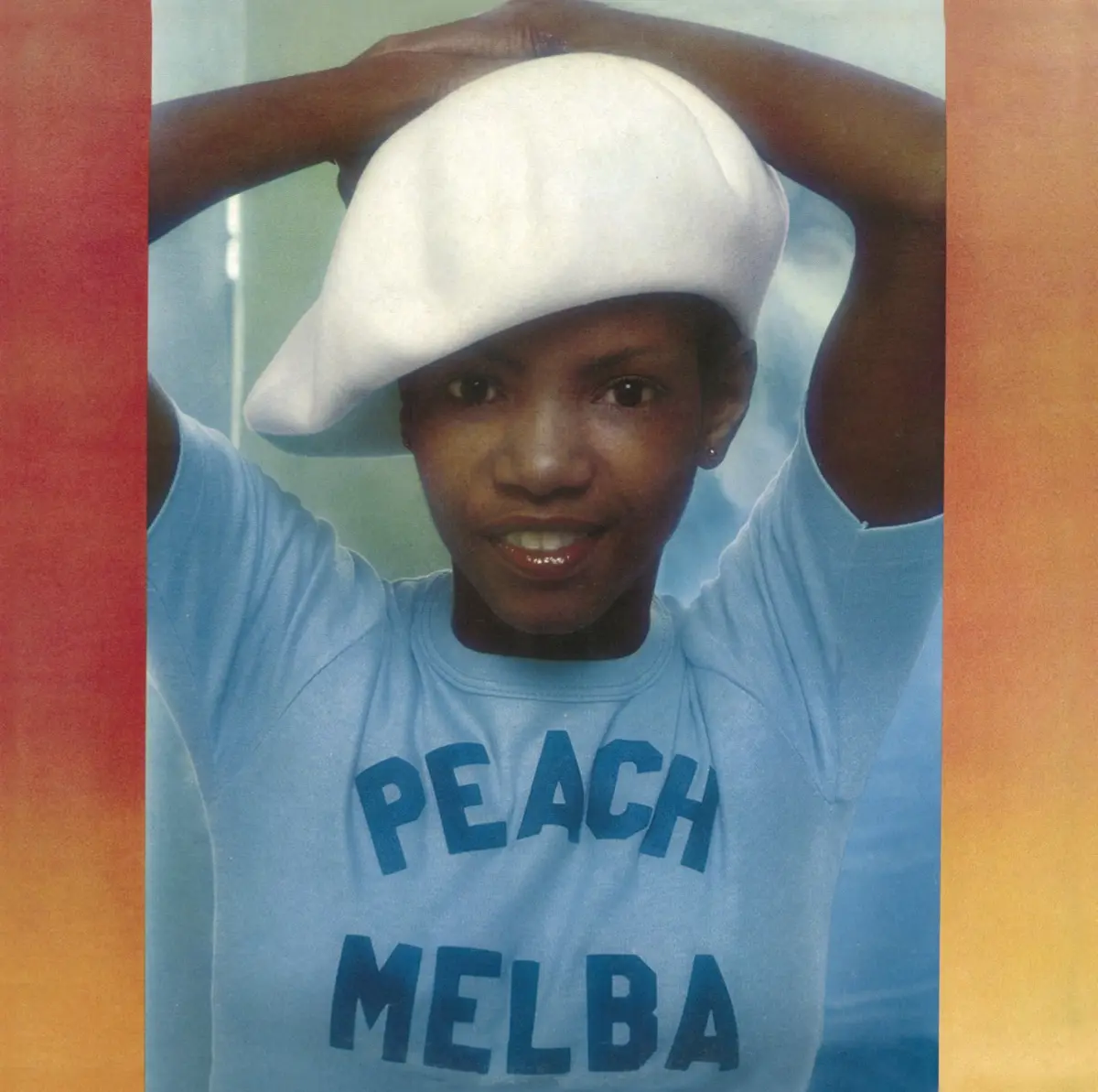 Melba Moore released her fourth album, Peach Melba, on June 10, 1975, on Buddah.
The album pairs orchestrated soul with pop crossover material, mixing Eugene McDaniels’ originals with songs by Ralph MacDonald, Mary McCreary, and Donovan. Moore’s take on “Sunshine Superman” features early vocals by Wendy and Susannah Melvoin, years before their work with Prince.
McDaniels wrote “A Million Years Before This Time” and “If I Lose” and co-wrote “Must Be Dues,” “Natural Part of Everything,” and “Get Into My Mind,” the latter with bassist Gary King, engineer Hank Cicalo, and singer Morgan Ames. Ames also wrote “I Am His Lady.” Ralph MacDonald and William Salter supplied “If You Can Believe.” Mary McCreary contributed “My Soul Is Satisfied.” Donovan’s “Sunshine Superman” joins two further outside numbers: “Green Birds Fly” (Peter Yarrow, Philip Namanworth) and “Love Can Be Good to You” (Rachel Perry).
A1. “Must Be Dues” (4:24)
A2. “Get Into My Mind” (3:56)
A3. “If You Can Believe” (3:26)
A4. “Sunshine Superman” (4:35)
A5. “My Soul Is Satisfied” (4:22)
B1. “I Am His Lady” (3:15)
B2. “Green Birds Fly” (3:31)
B3. “Natural Part of Everything” (4:15)
B4. “Love Can Be Good to You” (2:56)
B5. “A Million Years Before This Time” (4:10)
B6. “If I Lose” (3:25)
Sessions took place in Los Angeles with producer Eugene McDaniels. The lineup features Steve Gadd (drums), Hugh McCracken (guitar), Gary King (bass), and keyboardists Bob James, Dave Grusin, Paul Griffin, and Richard Tee, with percussion by Ralph MacDonald, Victor Feldman, and Crusher. The horn section includes Al Aarons, Ernie Watts, George Bohanon, Pete Christlieb, and Bill Green. Bill Nuttycomb served as concertmaster. Background vocals include Morgan Ames, Kathy Collier, Jackie Ward, Carmen Bryant, Gary King, Eugene McDaniels, Kneddy Gloud, and the Melvoin twins.
Peach Melba sports a cover image by photographer Mario Casilli.
This Is It
 Melba Moore released her fifth album, This Is It, on April 13, 1976, on Buddah.
The album marked her first project with producer Van McCoy, who steered the sessions toward orchestrated disco alongside ballads and uptempo soul. It includes her signature title track and a version of Curtis Mayfield’s “Make Me Believe in You.”
McCoy wrote the title track and co-wrote “Lean on Me” and “Stay Awhile” with Joe Cobb. Charles Kipps Jr. contributed “Free” and “One Less Morning.” Mayfield supplied “Make Me Believe in You.” Additional numbers came from Nino Ferrer (“Play Boy Scout”), John Lewin and Michael Valenti (“Blood Red Roses”), and E. Robinson (“Brand New”).
The set divides between disco-driven arrangements (“This Is It,” “Stay Awhile”) and widescreen ballads (“Free,” “One Less Morning,” “Lean on Me”). “Play Boy Scout” carries a playful uptempo rhythm, while “Blood Red Roses” strikes a sharper tone. “Brand New,” arranged by Benny Diggs with the New York Community Choir, closes the album with layered voices and percussive accents.
A1. “This Is It” (3:07)
A2. “Free” (4:27)
A3. “One Less Morning” (4:34)
A4. “Make Me Believe in You” (7:03)
B1. “Lean on Me” (4:49)
B2. “Stay Awhile” (3:51)
B3. “Play Boy Scout” (4:08)
B4. “Blood Red Roses” (3:14)
B5. “Brand New” (4:46)
Sessions occurred at Mediasound in New York with producer, arranger, and conductor Van McCoy and engineer Alan Varner. The lineup features Steve Gadd, Herbie Lovelle, and Jim Young (drums), Gordon Edwards (bass), Eric Gale and John Tropea (guitar), Richard Tee (keyboards), Leon Pendarvis (Rhodes, clavinet), George Devens (vibraphone, percussion), and Crusher Bennett (congas, tambourine, triangle, cabasa, wood block). Tom Moulton mixed the disco tracks.
This Is It features cover photography by Joel Brodsky, with costume design by Giorgio Sant’Angelo and makeup by Joey Mills.
Buddah lifted “This Is It” backed with “Stay Awhile” (US R&B No. 18, UK No. 9). “Lean on Me” appeared as a second single backed with “One Less Morning” (US R&B No. 17).
Melba (1976)
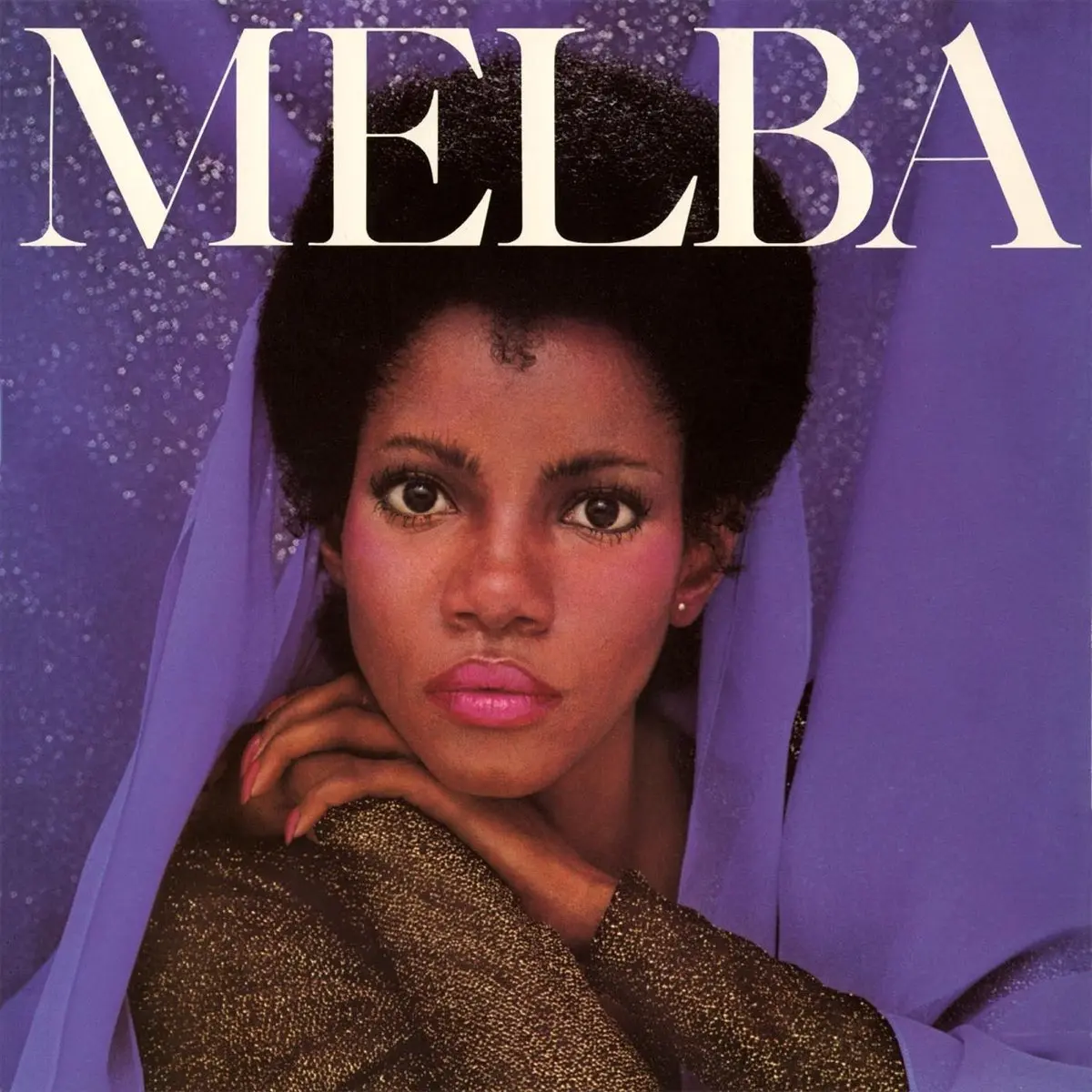 Melba Moore released her sixth album, Melba, on December 2, 1976, on Buddah.
The album continued her work with Van McCoy and Charles Kipps Jr., balancing disco arrangements, ballads, and gospel-inflected material. It produced the charting opener “The Way You Make Me Feel.”
Kipps wrote “The Way You Make Me Feel” and “(I Need) Someone.” McCoy co-wrote “Good Love Makes Everything Alright” and “The Greatest Feeling” with Richard Harris, and “So Many Mountains” with Joe Cobb. Curtis Mayfield provided “Ain’t No Love Lost.” The Beatles’ “The Long and Winding Road” joins covers of “Mighty Clouds of Joy” (Buddy Buie, Robert Nix) and Mayfield’s earlier ballad.
The record opens with the exuberant “The Way You Make Me Feel,” then shifts into the extended mid-tempo pulse of “Good Love Makes Everything Alright.” “(I Need) Someone” unfolds as a refined ballad, while “Mighty Clouds of Joy” places Moore in a gospel-soul setting. “Ain’t No Love Lost” retains Mayfield’s signature rhythmic turns, and “So Many Mountains” offers a compact summation on the second side. Her version of “The Long and Winding Road” maintains flow within the set’s orchestral arc.
A1. “The Way You Make Me Feel” (3:34)
A2. “Good Love Makes Everything Alright” (7:32)
A3. “The Long and Winding Road” (3:59)
A4. “Ain’t No Love Lost” (2:49)
B1. “The Greatest Feeling” (3:11)
B2. “Mighty Clouds of Joy” (4:05)
B3. “(I Need) Someone” (4:35)
B4. “So Many Mountains” (3:33)
Sessions occurred at Mediasound in New York with producers Van McCoy and Charles Kipps Jr. and engineer Alan Varner. The studio jazz-funk group Stuff backs Moore, featuring Steve Gadd and Christopher Parker (drums), Gordon Edwards (bass), Eric Gale and Hugh McCracken (guitar), Richard Tee (keyboards), and Leon Pendarvis (Rhodes, clavinet). Percussionists include Crusher Bennett and George Devens. Phil Bodner handled reeds with brass by Bernie Glow, Mel Davis, Victor Paz, Wayne Andre, Mickey Gravine, Bob Alexander, and Marvin Gold. Strings included Gene Orloff, Harry Lookofsky, Jesse Levy, and Kermit Moore. Backing vocals came from Faith, Hope & Charity, Jocelyn Shaw, Lorraine Moore, and Penny Blassingame, along with the New York Community Choir on “Mighty Clouds of Joy.”
Melba features front cover photography by Joel Brodsky with styling by Giorgio Sant’Angelo. Patrick Demarchelier supplied the back cover photo.
Buddah lifted “The Way You Make Me Feel” as a single, which reached the R&B chart.
A Portrait of Melba
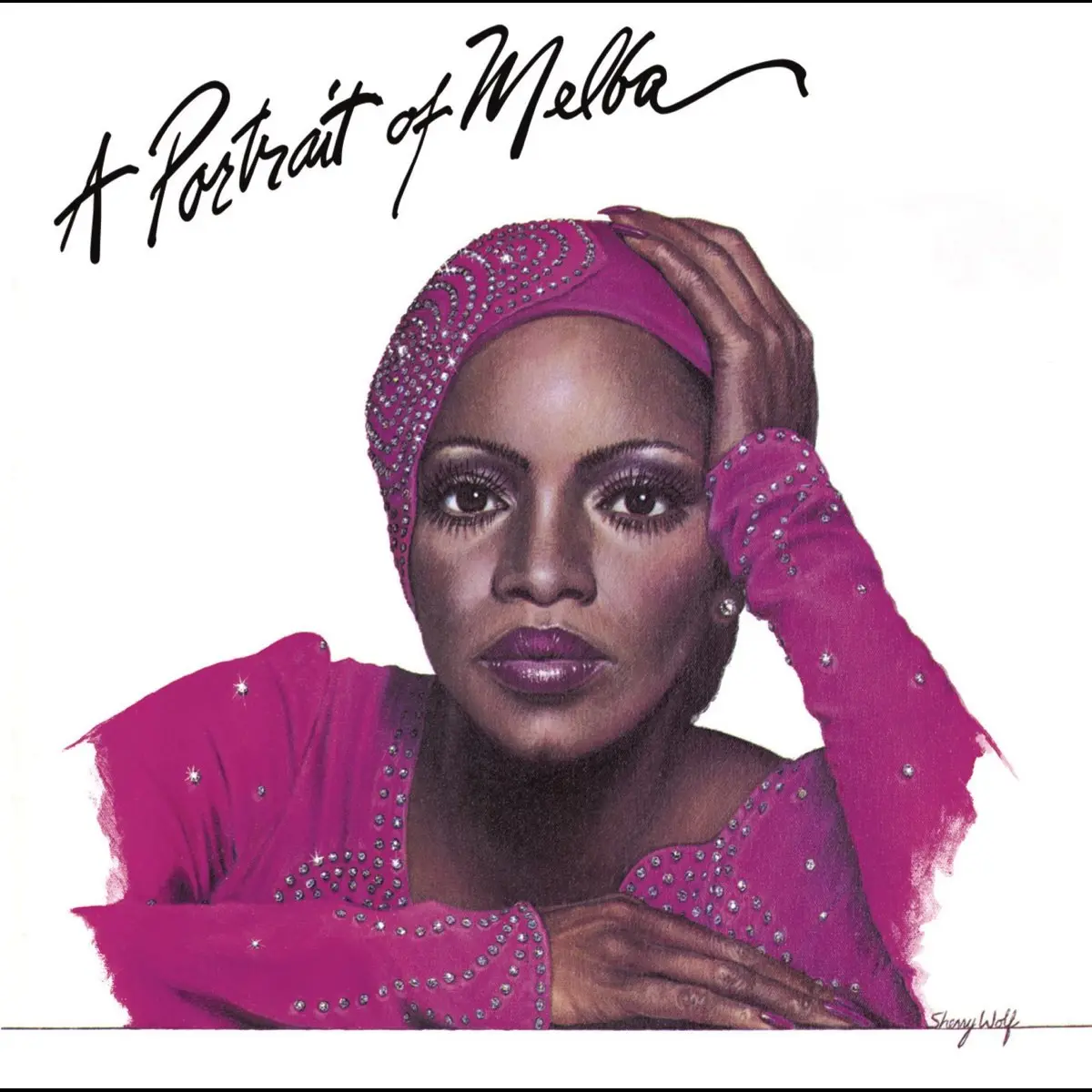 Melba Moore released her seventh album, A Portrait of Melba, on November 6, 1977, on Buddah.
The album presents Moore in a sophisticated Philadelphia International setting, combining orchestral ballads with tightly arranged mid-tempo numbers and full-band rhythm workouts.
Keyboardist Victor Carstarphen, guitarist Roland Chambers, drummer Keith Benson, bassist James Weaks, and the MFSB orchestra back Moore throughout. Carstarphen co-wrote six numbers with Gene McFadden and John Whitehead, who also co-produced. Leon Huff co-wrote “Promised Land” with the trio, while Carlos Santana and Leon Patillo supplied “You Are My River.” Douglas Brown, Tom Wallington, and Bill Bloom co-wrote “Is This the End.” Background vocals include Barbara Ingram, Carla Benson, Yvette Benton, McFadden, Whitehead, and the Futures.
“You Are My River” opens the set with layered harmonies and rising horn lines. “Promised Land” and “Living Free” place Moore in the midst of vigorous rhythm sections. “I Don’t Know No One Else to Turn To” and “Love and I Aren’t Strangers Anymore” close each side with slow builds framed by sweeping strings. “Standing Right Here” and “Just Another Link” sustain brisker tempos, while “Is This the End” takes a reflective stance.
A1. “You Are My River” (4:49)
A2. “Promised Land” (4:32)
A3. “I Don’t Know No One Else to Turn To” (5:36)
A4. “Standing Right Here” (3:53)
B1. “Just Another Link” (3:26)
B2. “Living Free” (4:59)
B3. “Is This the End” (4:04)
B4. “Love and I Aren’t Strangers Anymore” (5:04)
Sessions occurred in Philadelphia with producers McFadden, Whitehead, and Carstarphen.
Portrait features cover art by Sherry Wolf, who painted Moore’s likeness, with photography by Joel Brodsky.
“You Are My River” appeared as the album’s lead single.
Melba (1978)
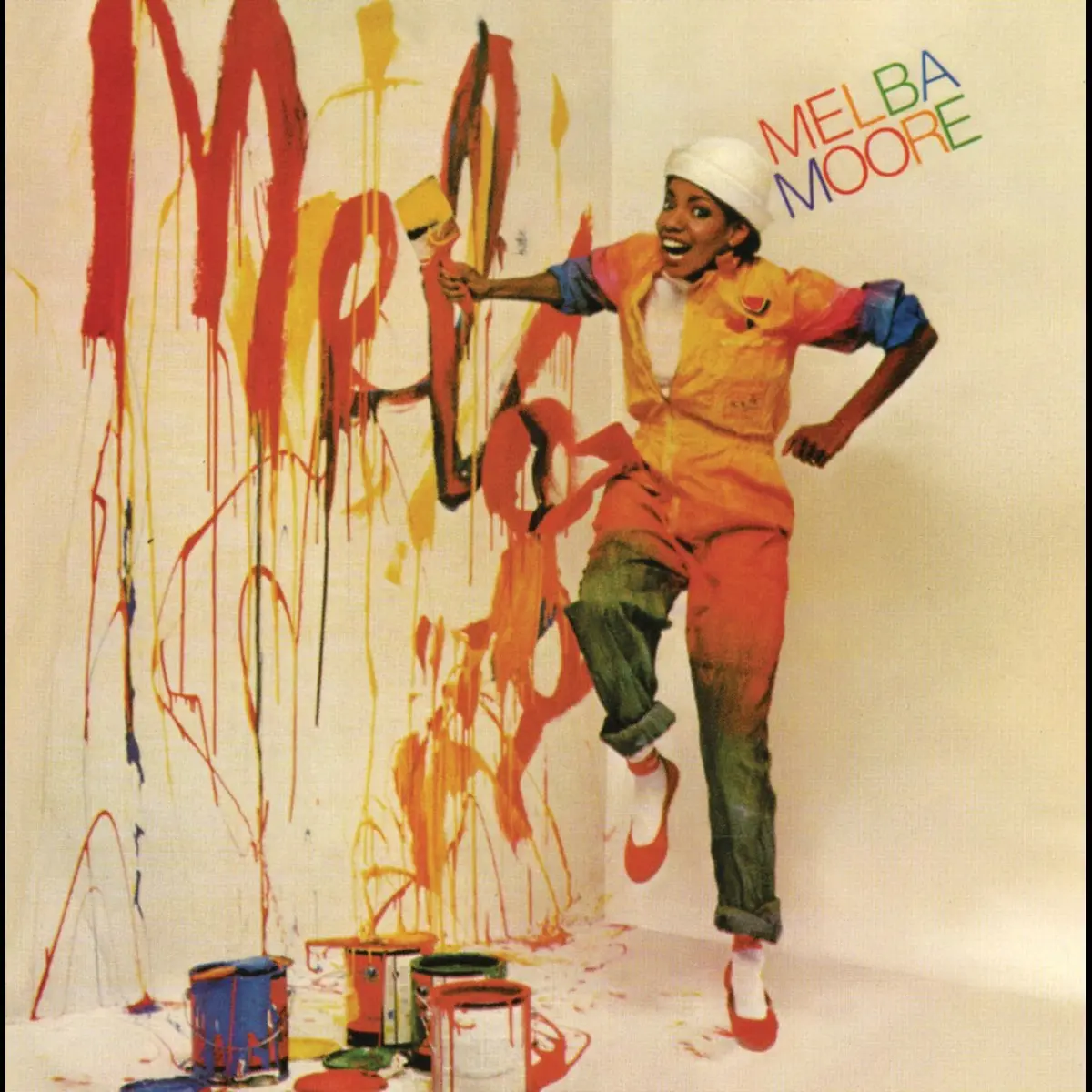 Melba Moore released her eighth album, her second titled Melba, on September 29, 1978, on Epic.
The album marked her first for Epic and her second collaboration with Gene McFadden and John Whitehead. It combines Philadelphia International–styled ballads with extended uptempo numbers tailored for dancefloor play.
McFadden and Whitehead produced the sessions and co-wrote six numbers with keyboardist Jerry Cohen, guitarist Dennis Harris, Ronald Rose, and lyricists Frankie Smith and Harold Preston. Melba herself contributed “Together Forever.” Outside writers include Barry, Robin, and Maurice Gibb with “You Stepped Into My Life” and Dexter Wansel with “Where Did You Ever Go.” Background vocals feature Barbara Ingram, Carla Benson, Yvette Benton, McFadden, Whitehead, and The Futures.
The Bee Gees‘ cover “You Stepped Into My Life” opens the set with elongated phrasing and orchestral lifts that carry through its seven minutes. “There’s No Other Like You” and “I Promise to Love You” highlight Moore’s ballad range, while “Pick Me Up, I’ll Dance” and “Happy” drive forward with brisk rhythms and emphatic horn lines. “Together Forever” stands apart as Moore’s first self-penned composition, and “Where Did You Ever Go” closes the album with climactic intensity.
A1. “You Stepped Into My Life” (7:50)
A2. “There’s No Other Like You” (5:28)
A3. “It’s Hard Not to Like You” (3:48)
A4. “Together Forever” (5:16)
B1. “Pick Me Up, I’ll Dance” (5:09)
B2. “Happy” (3:45)
B3. “I Promise to Love You” (5:30)
B4. “Where Did You Ever Go” (4:03)
Sessions occurred at Sigma Sound Studios in Philadelphia and New York with McFadden and Whitehead producing and Dirk Devlin, Jay Marks, and Kenny Present engineering. Stewart Romain mastered the album at CBS Recording Studios in New York.
Melba features cover design by Paula Scher with photography by Bill King.
Epic lifted “You Stepped Into My Life” as the lead single, which reached No. 5 on the Billboard disco chart and No. 17 R&B. A follow-up, “Pick Me Up, I’ll Dance,” charted at No. 22 disco and No. 85 R&B.
Burn
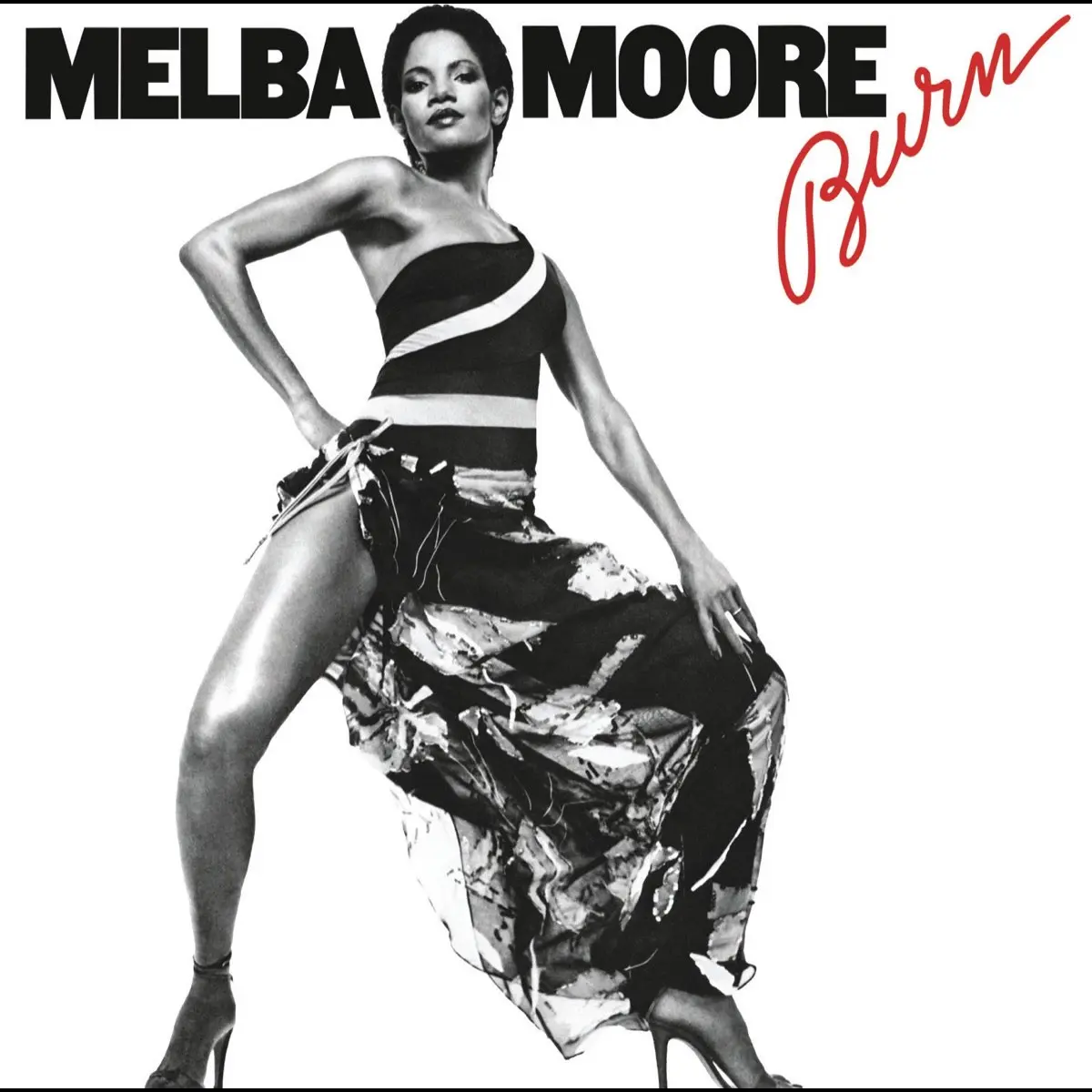 Melba Moore released her ninth album, Burn, on September 21, 1979, on Epic.
The album marked a departure from her Philadelphia-based productions as she moved into Eurodisco terrain under the guidance of producer Pete Bellotte. The sound leans on synthesizer-heavy arrangements with long-form dance tracks balanced by shorter, funk-oriented pieces.
Bellotte co-wrote four songs with Moore and lyricist Bruce Hawes, often in partnership with Mikki Farrow, Jerry Rix, and Sylvester Levay. Moore also supplied lyrics to “Burn” and “If You Believe in Love,” both co-composed with Bellotte and German musicians Michael Hofman, Gunter Moll, and Stefan Wisnet. Arranger Thor Baldursson handled keyboards while Marcus Miller played bass, with further instrumentation by percussionist Rubens Bassini, trumpeters John Gatchell and Robert Millikan, and saxophonists David Tofani, Lawrence Feldman, and Ronald Cuber.
A1. “Burn” (7:04)
A2. “Hot and Tasty” (5:52)
A3. “If You Believe in Love” (4:49)
A4. “Night People” (4:50)
B1. “I Don’t Wanna Lose Your Love” (4:32)
B2. “Can’t Give It Up” (4:51)
B3. “Miss Thing” (5:32)
B4. “Need Love” (4:45)
Sessions occurred at the Record Plant in New York City with Bellotte producing and Peter Luedemann engineering. Mixdown took place at Strawberry Studios South, with mastering handled by Brian Gardner at Allen Zentz Mastering in Los Angeles.
Burn features cover photography by Richard Avedon with design by Paula Scher. Epic lifted the title track as the album’s single.
Closer
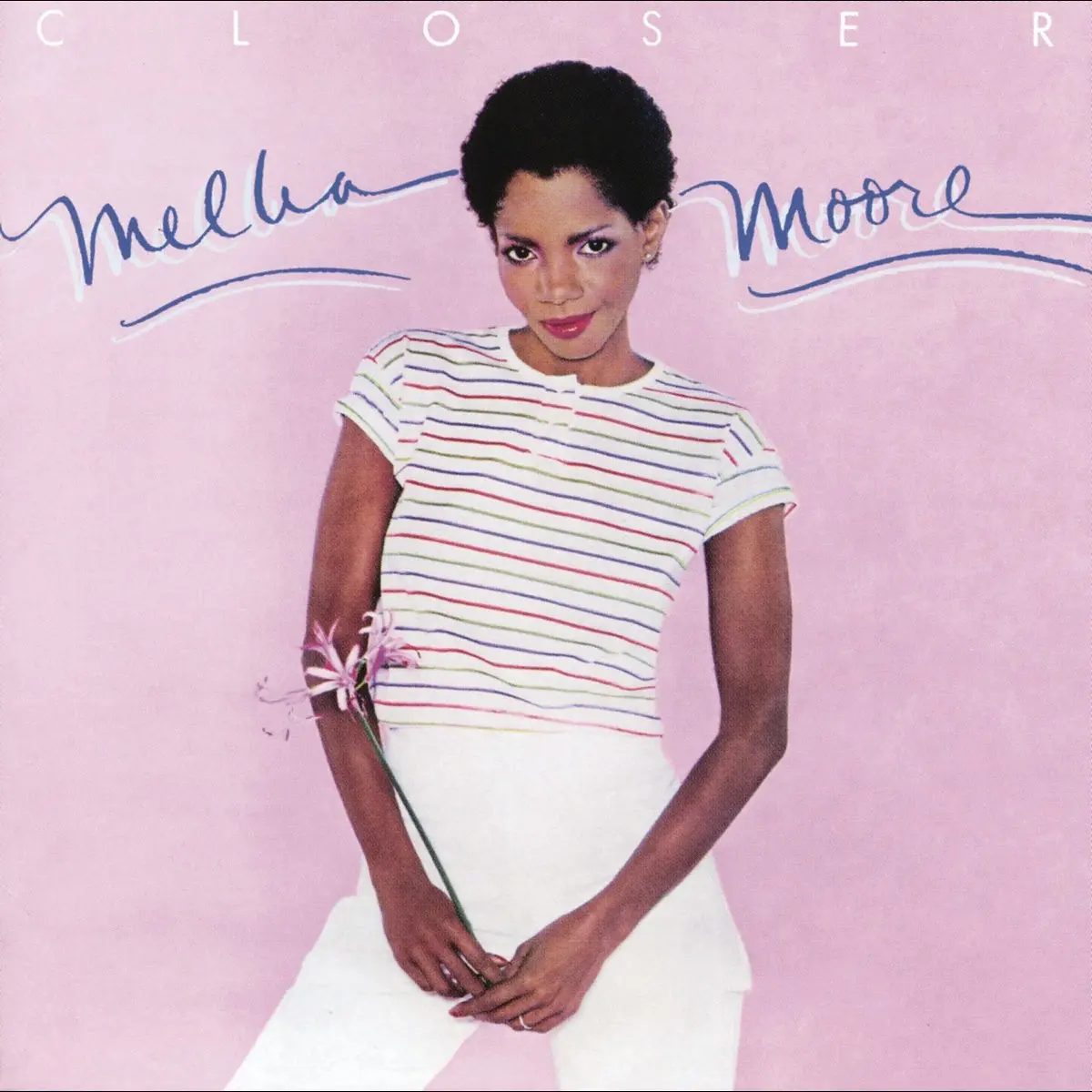 Melba Moore released her tenth album, Closer, on July 20, 1980, on Epic.
The album resumes Moore’s work with Philadelphia songwriters and producers, emphasizing contoured R&B ballads and mid-tempo dance numbers. The arrangements blend string- and horn-driven textures with layered vocals, highlighting Moore’s co-production contributions.
Primary songwriting comes from Bruce Hawes, Melba Moore, and Victor Carstarphen, who wrote all tracks except those credited to Gene McFadden, John Whitehead, and Jerry Cohen (“You Got Me Loving You”), Clarence Brice and Theodore Robinson (“Never Gonna Let You Get Away”), Jesse Butler, Lawrence Hanks, and Rodney Massey (“Rest Inside My Love”), Neil Harrison (“I Could Never Miss You More”), and Janice Gugliuzza and Phillip P. Pugh (“Next to You”).
Guitarists Clarence Brice, Craig Snyder, Dennis Harris, Norman Harris, and Steve Khan provided additional instrumentation, while Jimmy Williams played bass and Charles Collins and Keith Benson handled drums. Backing vocals included Brenda White, Deborah McDuffie, Dennis Collins, Lani Groves, Luther Vandross, Tawatha Agee, and Vivian Cherry.
A1. “Everything So Good About You” (5:34)
A2. “You Got Me Loving You” (3:45)
A3. “Closer” (3:46)
A4. “Something on Your Mind” (4:16)
A5. “Shame” (3:56)
B1. “Never Gonna Let You Get Away” (3:56)
B2. “Rest Inside My Love” (5:06)
B3. “I Could Never Miss You More” (3:55)
B4. “Next to You” (3:59)
B5. “You Don’t Know (What You Do to Me)” (4:14)
Sessions occurred at Sigma Sound Studios in Philadelphia and New York with Bruce Hawes, Victor Carstarphen, and Moore producing. Jay Mark engineered and mixed the sessions with assistance from Carla Bandini, Joan Meisel, and Matthew Weiner, and mastering was handled by Jack Skinner.
What a Woman Needs
 Melba Moore released her eleventh album, What a Woman Needs, on October 12, 1981, on EMI America.
The album blends post-disco dance tracks with contoured R&B ballads, emphasizing layered vocals, sharp synth lines, and precise rhythm sections. Contributions from Gene McFadden, John Whitehead, and emerging arranger-producer Kashif give the sessions a tight, polished texture, while Patrick Adams adds string arrangements that heighten dynamic range.
Primary songwriting comes from Moore, Bruce Hawes, and McFadden & Whitehead, who wrote most tracks, with outside writers including Jason Smith (“What a Woman Needs”), Kashif (“Take My Love”), Gloria Sklerov and Pamela Phillips (“Overnight Sensation”), Alvin Fields, Frank Fuchs, and Jolyn Skinner (“Piece of the Rock”), and Jerry Cohen (“Each Second,” “Let’s Go Back to Lovin’”).
Guitarists Dave Chun, Stan Lucas, Ira Siegel, Ray Gomez, Tony Ventura, and Mirek Kuoykowsky supply instrumentation alongside bassists Wayne Brathwaite and James Williams, drummers Kelvin Jones, Leslie Ming, and Keith Benson, and percussion by Bashiri and Darryl Burgee. Keyboards and synths come from Barry Eastmond, Jerry Cohen, Steve Robbins, Peter Cannarozzi, and Ray Chew, while backing vocals feature Moore, Alyson Williams, Barbara Ingram, Carla Benson, Yvette Benton, George McCrae, John Whitehead, Kashif, Robin Clark, and Lilo Thomas.
A1. “Let’s Stand Together” (5:03)
A2. “Your Sweet Lovin’” (3:38)
A3. “What a Woman Needs” (4:21)
A4. “Take My Love” (6:30)
B1. “Overnight Sensation” (4:22)
B2. “Each Second” (5:12)
B3. “Piece of the Rock” (4:12)
B4. “Let’s Go Back to Lovin’” (3:30)
Sessions occurred at Park South Studios, New York City, with producers Gene McFadden and John Whitehead (tracks A1–A3, B1, B3, B4) and Kashif producing “Take My Love.” Mixing for “Take My Love” and “Piece of the Rock” occurred at Mediasound Studios, New York City. Engineers included Bob Miller, Dick Williams, and Pete Thea, assisted by Tim Hatfield, Allen Johnson, Bill Reid, David Rogers, Ken Bolden, and Ronnie Jones. Ted Currier served as executive producer and handled mixing, with mastering completed at Frankford Wayne Mastering Labs.
The album’s singles included “Take My Love” backed with the non-album track “Just You, Just Me,” and “Let’s Stand Together” backed with “What a Woman Needs.”
The Other Side of the Rainbow
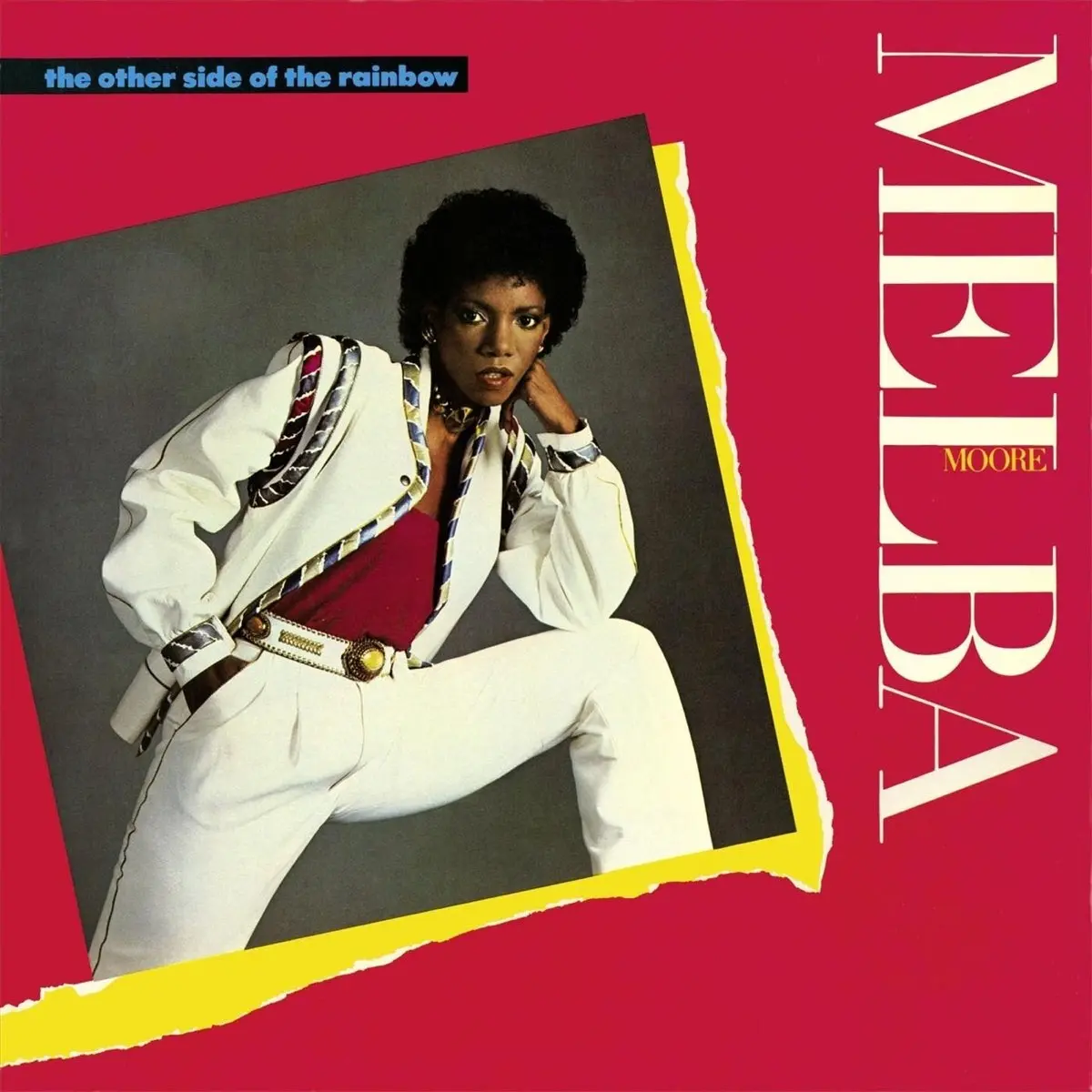 Melba Moore released her twelfth album, The Other Side of the Rainbow, on October 10, 1982, on Capitol.
The album merges post-disco dance rhythms with contoured R&B ballads, highlighting synth layers, precise percussion, and expansive vocal lines. Kashif contributes as producer, arranger, and musician across multiple tracks, while Paul Lawrence Jones III and Lillo Thomas add songwriting and production support, giving the album a cohesive, polished sound.
Primary songwriting comes from Melba Moore, Paul Lawrence Jones III, Rahni Harris, and Lillo Thomas, with outside contributions from Holland–Dozier–Holland (“I Can’t Help Myself”) and Cole and Stovall (“The Other Side of the Rainbow”).
A1. “Love’s Comin’ at Ya” (5:42)
A2. “Underlove” (5:15)
A3. “Mind Up Tonight” (5:30)
A4. “Knack for Me” (4:45)
B1. “How’s Love Been Treating You” (4:55)
B2. “Don’t Go Away” (4:13)
B3. “I Can’t Help Myself” (4:44)
B4. “The Other Side of the Rainbow” (5:49) Melba hold the final note in this song for a jaw-dropping 38 seconds.
Sessions occurred at Frankford/Wayne Mastering Labs, with production and arrangement by Kashif (A2), Paul Lawrence Jones III (A1, A3, A4), and Rahni Harris (B2–B4). Mixing duties were handled by Steve Goldman (A1–B1, B4) and Rahni Harris with Ron Scalise (B2, B3), while mastering was completed by Herb Powers.
The album’s singles include “Love’s Comin’ at Ya” backed with an instrumental version, “Mind Up Tonight” backed with an instrumental version, and “Underlove” backed with a non-album M&M mix. “Love’s Comin’ at Ya” reached No. 2 on the Billboard Hot Dance Singles chart.
Never Say Never
 Melba Moore released her thirteenth album, Never Say Never, on November 14, 1983, on Capitol.
The album blends post-disco dance tracks with contoured R&B ballads, featuring layered synths, precise percussion, and expanded vocal harmonies. Kashif returns as producer and synthesist, while Paul Lawrence Jones III and John Anderson with Steve Williams contribute production and songwriting on multiple tracks, supporting a consistent, polished sound.
Primary songwriting comes from Paul Lawrence Jones III, Kashif, John Anderson, and Steve Williams, with additional contributions from LaLa (La Forrest Cope), Joe Cobb and Van McCoy (“Lean on Me”), and Freddie Jackson (co-writing “Keepin’ My Lover Satisfied”).
Musically, the album divides into upbeat post-disco numbers (“Keepin’ My Lover Satisfied,” “Lovin’ Touch,” “It’s Really Love”) and contoured ballads (“Livin’ for Your Love,” “Lean on Me”), with each track maintaining tight rhythms, layered synth textures, and Moore’s expansive vocal lines.
A1. “Love Me Right” (4:09)
A2. “Keepin’ My Lover Satisfied” (5:12)
A3. “Got to Have Your Love” (5:09)
A4. “Livin’ for Your Love” (4:50)
B1. “It’s Really Love” (4:36)
B2. “Never Say Never” (4:41)
B3. “Lovin’ Touch” (4:47)
B4. “Lean on Me” (5:04)
Sessions occurred at Celestial Sounds Recording Studio, Media Sound Studios, Park South Studios in New York City, and The Nineteen Recording Studio in Connecticut. Mixing took place at Atlantic Studios, Mediasound, Park South, and The Nineteen Recording Studio, with mastering completed at Sterling Sound. Production and arrangement duties were handled by Kashif, Paul Lawrence Jones III, John Anderson with Steve Williams, and Rahni Harris.
The album’s singles include “Keepin’ My Lover Satisfied” backed with an instrumental version, “Livin’ for Your Love” backed with an instrumental, and “Love Me Right” backed with “Never Say Never.”
Never Say Never reached No. 9 on the Billboard Top R&B Albums chart and No. 147 on the Billboard 200.
Read My Lips
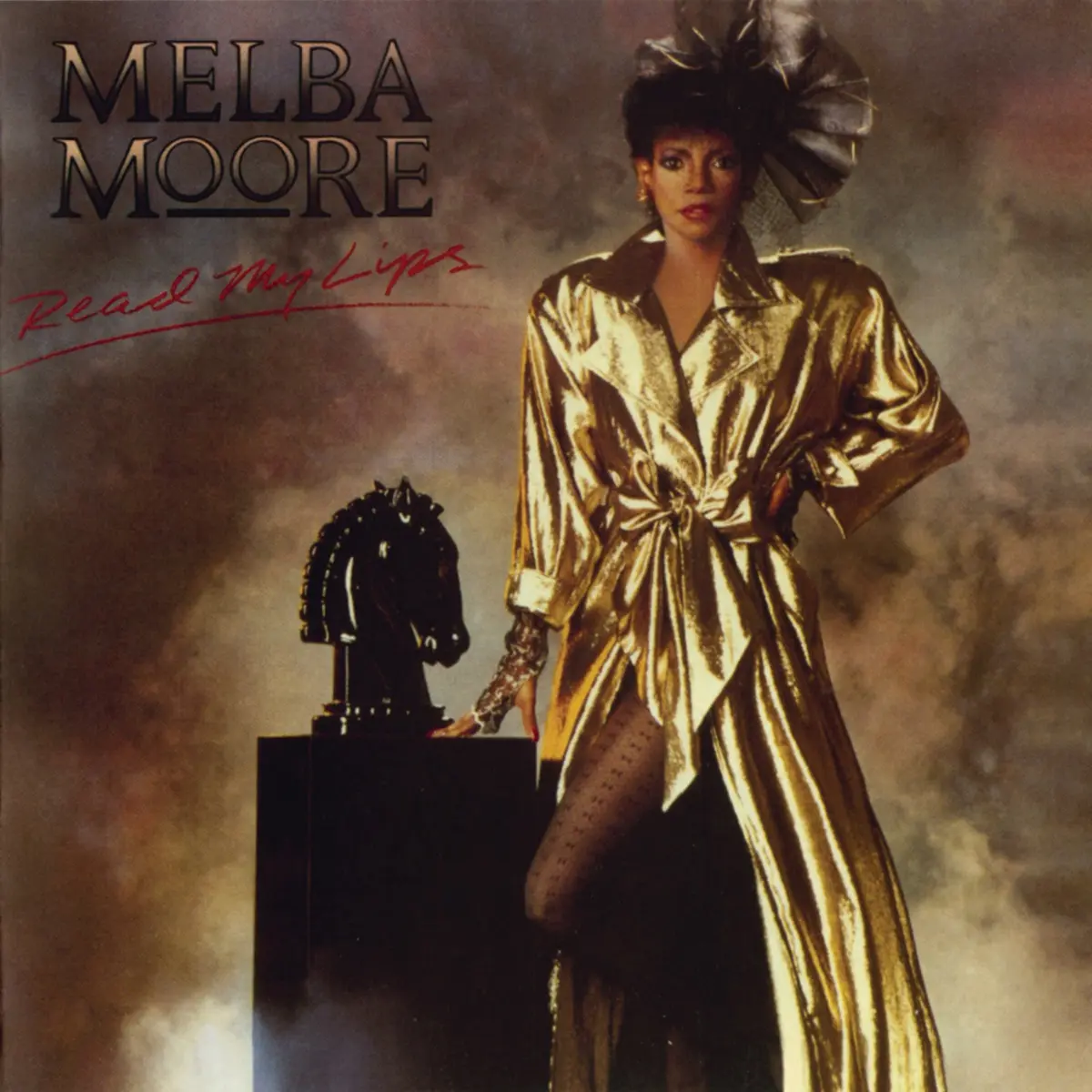 Melba Moore released her fourteenth album, Read My Lips, on March 22, 1985, on Capitol.
The album spans R&B, pop, and funk-infused uptempo tracks alongside contoured ballads, blending layered synths, programmed drums, and multi-part backing vocals. Producers Keith Diamond and Paul Laurence anchor the sound with precise arrangements and a balance of rhythmic and harmonic textures.
Primary songwriting comes from Keith Diamond and Paul Laurence, with additional contributions from Craig Peyton, Jolyon Skinner, Lillo Thomas, Stevie Nicks, Barry Eastmond, Jay Levy, Terry Shaddick, Madeline Stone, and Sam Lorber.
Musically, the album divides into kinetic, up-tempo numbers (“Mind Over Matter,” “Winner”) with tightly structured rhythms and synthesizer layers, and slower, contoured ballads (“To Those Who Wait,” “I Can’t Believe It (It’s Over)”) featuring expansive vocal phrasing. Moore’s vocals alternate between restrained intensity and sultry warmth, while the arrangements maintain sharp turns, dynamic pacing, and polished instrumental interplay throughout.
A1. “Love of a Lifetime” (5:39)
A2. “I Can’t Believe It (It’s Over)” (5:29)
A3. “Read My Lips” (4:07)
A4. “Dreams” (4:55)
B1. “When You Love Me Like This” (4:24)
B2. “Winner” (4:12)
B3. “King of My Heart” (4:05)
B4. “To Those Who Wait” (4:31)
B5. “Mind Over Matter” (3:46)
Sessions occurred at Unique Recording, Celestial Sound Studios, Right Track Recording, and RPM Studios in New York City. Mixing took place at Battery Studios in London and Sarm West Studios, with mastering completed at Frankford/Wayne and Sterling Sound. Diamond and Laurence produced multiple tracks, with additional programming, instrumental performance, and mixing executed by various engineers and arrangers.
The album’s singles include the title track “Read My Lips” and “When You Love Me Like This.” The title track earned Moore a third Grammy nomination for Best Female Rock Vocal Performance, making her the third Black artist after Donna Summer and Tina Turner to be nominated in that category.
A Lot of Love
 Melba Moore released her fifteenth album, A Lot of Love, on July 18, 1986, on Capitol.
The album blends R&B, pop, and dance-oriented arrangements with layered synthesizers, programmed percussion, and harmonized backing vocals. Producers Paul Laurence, Kashif, Gene McFadden, and Vaneese Thomas shape the sound with rhythmic precision and textured instrumentation, balancing energetic tracks with contoured ballads.
Primary songwriting comes from Paul Laurence, Gene McFadden, Vaneese Thomas, and Kashif, with additional contributions from Freddie Jackson, Brian Morgan, Shelly Scruggs, Keith Diamond, Rahni Harris, Jay Levy, Terry Shaddick, Madeline Stone, Sam Lorber, and others.
Musically, A Lot of Love divides into kinetic dance-oriented tracks such as “Love the One I’m With (A Lot of Love)” and “You Trip Me Out” with rhythmic drive and layered synth textures, and smoother ballads like “Don’t Go Away” and “Stay,” which emphasize Moore’s vocal range with spacious phrasing and measured pace. Duets and featured vocals, including collaborations with Freddie Jackson and Kashif, introduce dynamic counterpoints, while programming and synthesizer textures maintain angular turns and layered harmonic interplay throughout.
A1. “There I Go Falling in Love Again” (3:31)
A2. “It’s Been So Long” (4:57)
A3. “I’m Not Gonna Let You Go” (4:04)
A4. “Love the One I’m With (A Lot of Love)” (4:18)
A5. “You Trip Me Out” (4:35)
B1. “A Little Bit More” (4:54)
B2. “Falling” (4:33)
B3. “Stay” (4:28)
B4. “When We Touch (It’s Like Fire)” (4:25)
B5. “Don’t Go Away” (3:44)
Sessions occurred at Celestial Sound Studios, Unique Recording, Minot Sound, and The Hit Factory in New York City. Engineers included Darryl Gustamachio, Ron Banks, Roey Shamir, and Wayne Warnecke, with assistants supporting tracking and mixing. Jack Skinner mastered the album at Sterling Sound. Producers handled instrumentation, drum programming, and vocal arrangements across multiple tracks.
The album’s singles include “Love the One I’m With (A Lot of Love)” featuring Kashif (UK No. 5), “A Little Bit More” featuring Freddie Jackson (US R&B No. 1, US Hot 100 No. 96), “Falling” (US R&B No. 1), “I’m Not Gonna Let You Go” (US R&B No. 26), and “It’s Been So Long” (US R&B No. 6).
Discography:
- I Got Love (1970)
- Look What You’re Doing to the Man (1971)
- Melba Moore Live! (1972)
- Peach Melba (1975)
- This Is It (1976)
- Melba (1976)
- A Portrait of Melba (1977)
- Melba (1978)
- Burn (1979)
- Closer (1980)
- What a Woman Needs (1981)
- The Other Side of the Rainbow (1982)
- Never Say Never (1983)
- Read My Lips (1985)
- A Lot of Love (1986)
- I’m in Love (1988)
- Soul Exposed (1990)
Sources:
Artist/Album Pages:
The Silesian Blues Band — commonly billed as SBB — are a Polish symphonic/space-rock band that deb...
Roots was a South African jazz-funk band that released two albums in 1975 on Highway Soul. Member...
The Holy Mackerel was an American studio-assembled psych–pop group formed in 1968 by singer–songw...
Deniece Williams is an American soul singer and songwriter with a musical career that dates back to ...
Sons and Daughters of Lite were an American jazz-funk ensemble from Oakland that released the 197...
Chelsea Beige was an American brass-rock band that released the 1971 Epic album Mama, Mama Let You...
French TV was an American jazz-rock band that self-released a 1984 eponymous album, followed in 1...
Quintessence was an English raga-psych band from London that released the 1969–71 Island albums In...
Kahvas Jute was an Australian post-psychedelic hard-rock band from Sydney that released the 1971 a...
Willie Wright (July 7, 1939 – June 29, 2020) was an American soul singer who released the 1971 alb...
Chi Coltrane is an American singer, songwriter, and pianist whose music blends piano-driven rock w...
Weaselsnout was the moniker of English folk-psych musician Julian Mount, who issued the album Unsu...