

Kollektiv was a German jazz-psych/jam band that released a self-titled album on Brain in 1973. That same year, the band were documented live and in a volume of SWF sessions that were ultimately released in the 21st century by archivists Long Hair.
Members: Jürgen Havix (guitar, zither), Klaus Dapper (flute, saxophone), Jürgen “Jogi” Karpenkiel (bass), Waldmar “Waldo” Karpenkiel (drums, Cymbals), Jochen Schrumpf (guitar), Detlef Wiederhöft (bass), Thomas Bettermann (keyboards), Jonas Hellborg (bass)
Background
Kollektiv formed in 1970 in Krefeld, North Rhine-Westphalia, as an evolution of the 1960s beat group The Generals, founded by brothers Jürgen “Jogi” Karpenkiel (bass) and Waldemar “Waldo” Karpenkiel (drums) with guitarist Jürgen Havix. Initially influenced by the British Invasion, the group gradually absorbed psychedelic and jazz influences, drawing inspiration from Frank Zappa, King Crimson, Blodwyn Pig, Wes Montgomery, and Cannonball Adderley. In 1967, Jogi joined local rivals The Phantoms, where he played alongside flutist Klaus Dapper and organist Ralf Hütter—soon to form Kraftwerk. When Jogi rejoined The Generals the following year, he brought Dapper with him, planting the seeds of Kollektiv.
By 1970, the group shed its beat roots, adopted the Kollektiv name, and shifted focus to instrumental improvisation and experimental textures. They customized their instruments with filters, contact microphones, and handmade circuitry, applying these tools in long-form jams rooted in freeform jazz, modal rock, and timbral exploration.
In 1971, they pooled funds to buy a used VW tour van and began performing widely across West Germany, from universities and open-air festivals to club stages and broadcast studios. Their self-organized tour schedule sharpened their interplay and expanded their musical range. By early 1973, Kollektiv had become a fixture of the Krautrock-era live circuit. This momentum culminated in their March 1973 studio sessions for Brain Records, where they documented the long-honed material that formed their self-titled debut.
Kollektiv
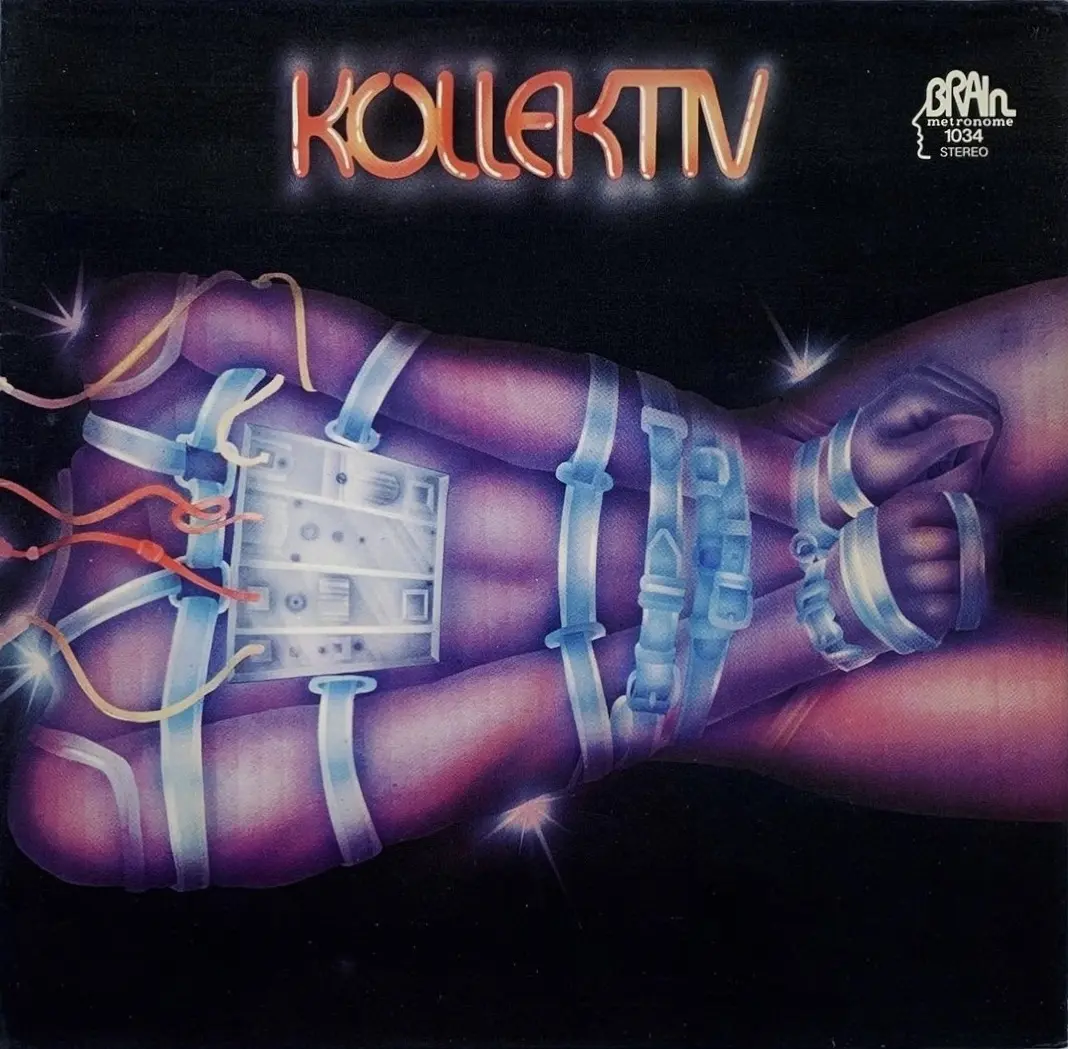 Kollektiv released their self-titled album in October 1973 on Brain.
The album unfolds in extended instrumental form, driven by the contrapuntal phrasing of guitarist Jürgen Havix and reedist Klaus Dapper, who shifts between flute and electronically treated saxophone. Their exchanges float over a fulcrum of syncopated bass figures from Jürgen “Jogi” Karpenkiel and offset meters from drummer Waldemar “Waldo” Karpenkiel, whose restrained cymbal use holds tension across each sustained passage. The band navigates tempo modulations and harmonic expansions without relying on overdubs, working as a live ensemble in real time.
“Rambo Zambo” begins in suspension, with echo-treated flute tracing slow arcs in open space before bass and drums enter around the ninety-second mark, tightening the pulse while guitar threads short, chiming figures that later sharpen into rapid, angular runs; intensity rises through accumulation, not volume, as flute, guitar, and rhythm section trade prominence in waves. “Baldrian” sustains a more atmospheric stretch, opening with processed winds and resonant strings before dissonant sax and bass align into a measured pace, the texture thickening through layered resonance from Havix’s extended-string instrument and zither-derived tones. “Försterlied” compresses the band’s language into brief, repeated ruptures, where spoken lines trigger abrupt ensemble outbursts that cut off and restart with clipped precision.
Side two’s multipart “Gageg” expands gradually: an opening section drifts at low velocity with flute-led contours mirrored by guitar, the middle section nudges forward as bass and drums firm the underpinning and guitar sketches sharper turns, and the final stretch accelerates into denser motion where saxophone and guitar alternate lead roles, tempos tighten, and the ensemble locks into sustained forward drive before easing back into open-ended resolution.
A1. “Rambo Zambo” (11:49)
A2. “Baldrian” (7:05)
A3. “Försterlied” [Forester’s Song] (1:49)
B. “Gageg” (19:42)
— a. “Andante” (5:05)
— b. “Allergo” (3:35)
— c. “Preßluft” [Compressed Air] (11:02)
Kollektiv recorded the album in March 1973 at Windrose Studio, Hamburg, with Conny Plank producing and engineering. Hans Lampe assisted on the sessions, which were cut direct-to-tape with no post-overdubs. Brain issued the album in a gatefold sleeve designed by Peter Kretzmann of Progressive People, with session photography by Brigitte Moritz and Horst Scherzberg. Phonodisc GmbH handled the vinyl pressing, with lacquer cut at Tonstudio Pfanz.
Postude
After their self-titled album, Kollektiv rehearsed new material and recorded demos intended for a second album. SWF invited the band to record sessions based on these tapes, but the project stalled. In 1975, Jürgen “Jogi” Karpenkiel joined Guru Guru, prompting Kollektiv’s breakup. Klaus Dapper soon exited, and the remaining members briefly continued with keyboardist Klaus Hackspiel for a handful of shows in 1976. A final incarnation featuring Jogi Karpenkiel, guitarist Axel Zinowski, bassist Georg Fukne, and keyboardist Christoph tracked four rehearsal-room recordings—“Intro,” “Pull Moll,” “Pap-Jack,” and “Rozz-Pop”—later released by Long Hair.
Kollektiv feat. Jonas Hellborg
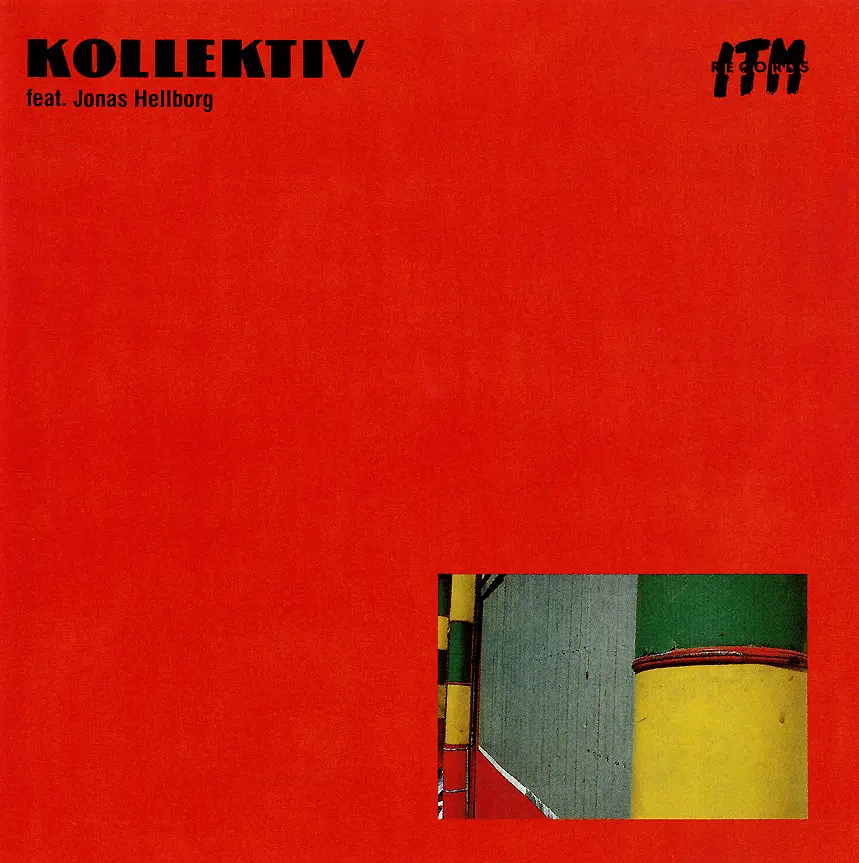 In 1988, Waldo Karpenkiel and Klaus Dapper reactivated Kollektiv returned with guitarist Jochen Schrumpf and Swedish bassist Jonas Hellborg for a second album, released in 1988 on ITM.
Here, Karpenkiel and Hellborg underpin the harmonic exchanges between Schrumpf and Dapper, shifts between flute and assorted sax (baritone, tenor, soprano). Keyboardist Thomas Bettermann adds modulated textures and chordal tension, alternating between piano and synth to shape transitions and layer contrast across ensemble movements.
A1. “Bold” (2:50) – Schrumpf, Hellborg, W. Karpenkiel
A2. “Kong For a Day” (5:06) – Schrumpf, Dapper, W. Karpenkiel
A3. “As Times Go By” (6:39) – Schrumpf, Dapper, W. Karpenkiel
A4. “Electric Lady” (3:40) – Schrumpf, Dapper, W. Karpenkiel
A5. “Following You” (4:38) – Bettermann
B1. “Go East” (5:37) – Schrumpf, Dapper, W. Karpenkiel
B2. “15 Steps to Heaven” (4:22) – Schrumpf, Dapper, W. Karpenkiel
B3. “Lady B (Good)” (6:35) – Schrumpf, Dapper, W. Karpenkiel
B4. “Count the Blues” (2:18) – Schrumpf, Dapper, W. Karpenkiel
B5. “Following Me” (4:39) – Dapper, Bettermann
Kollektiv recorded the album at Tonstudio Burghardt & Sohn under the production oversight of Illegal Stephen, with recording engineered by Andreas Burghardt and mixdown handled by Helmut Laser. ITM issued the album in 1988 with cover design by Vario GmbH and photography by Alexander Dörfler.
SWF-Sessions Volume 5
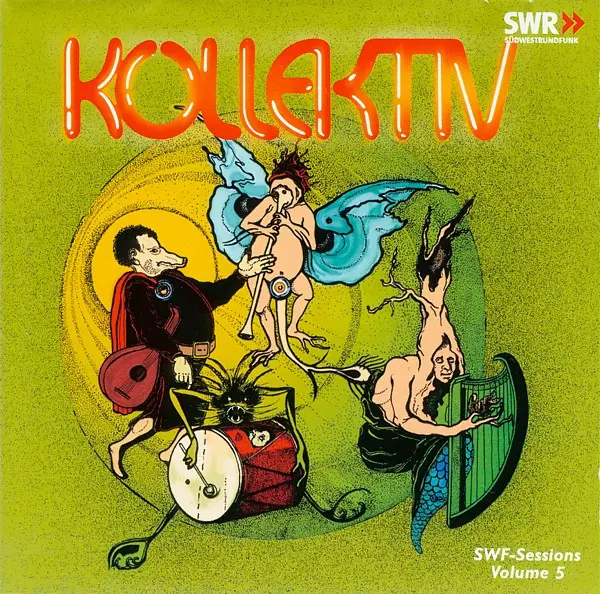 In 2001, archivists Long Hair released the 1973 SWF-Sessions by Kollektiv.
Captured live-to-tape at the height of their exploratory phase, the session presents extended, in-the-moment improvisation shaped by the sustained interplay of guitarist Jürgen Havix and flutist–saxophonist Klaus Dapper, whose phrasing arcs across shifting modal frameworks. Bassist Jürgen “Jogi” Karpenkiel and drummer Waldemar “Waldo” Karpenkiel anchor the ensemble with a responsive pulse, adjusting their dynamics to support long-form developments and sudden sectional pivots.
A1. “Tamboura” (8:15) – Kollektiv
A2. “Subo” (8:20) – Kollektiv
A3. “Mollzitter” (14:19) – Kollektiv
B1. “Baldrian” (6:29) – Kollektiv
B2. “Gageg” (20:09) – Kollektiv
Kollektiv recorded this session on July 6, 1973, at Südwestfunkstudio U1 in Baden-Baden for broadcast by SWF. Südwestrundfunk later licensed the tapes to Long Hair, who issued the material in remastered form through Skywalk Records GmbH. Sony DADC handled glass mastering, with packaging and layout by shapefruit AG and liner commentary by Manfred Steinheuer. The remaster retains the raw stereo separation and dynamic range of the original reels.
Live 1973
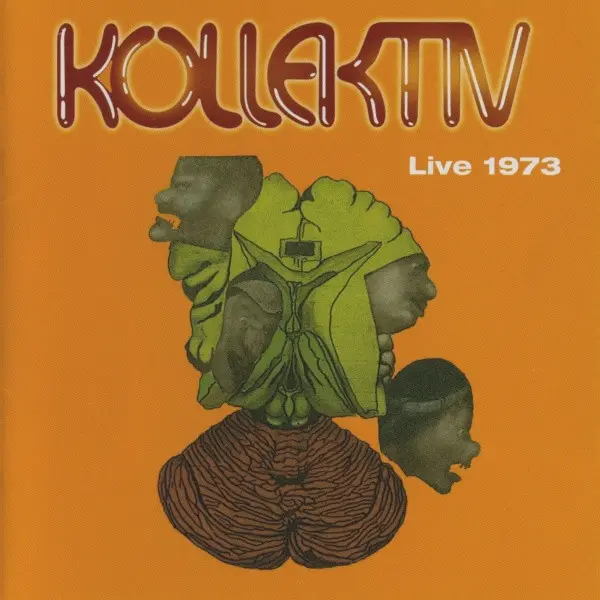 In 2005, Long Hair released Live 1973, a document of Kollektiv from the time of their original studio album.
This performance captures the band in full improvisational mode, with guitarist Jürgen Havix and flutist–saxophonist Klaus Dapper expanding thematic motifs through layered exchanges and tonal shifts. Bassist Jürgen “Jogi” Karpenkiel and drummer Waldemar “Waldo” Karpenkiel provide a reactive underpinning, holding structural tension while accommodating tempo drift and textural build-ups over long durations.
A1. “Rapunzel” (8:06) – Kollektiv
A2. “Subo” (15:33) – Kollektiv
A3. “Rambo Zambo” (24:20) – Kollektiv
B1. “Försterlied” (1:53) – Kollektiv
B2. “Gageg (Excerpt)” (12:44) – Kollektiv
Kollektiv recorded the performance live in 1973 at an undocumented location in Germany. The band licensed the tapes directly to Long Hair, who issued the material in 2005 with digital remastering by Jörg Scheuermann. The release includes a 20-page booklet with liner notes by Manfred Steinheuer (translated by Dr. Martina Häusler) and design by shapefruit AG. Optimal Media Production handled glass mastering and pressing.
Discography:
- Kollektiv (1973)
- Kollektiv feat. Jonas Hellborg (1988)
- SWF-Sessions Volume 5 (2001, recorded 1973)
- Live 1973 (2005, recorded 1973)
Sources:
Artist/Album Pages:
Colosseum was an English brass-rock band that released the 1969 albums Those Who Are About to Die Sa...
Jeronimo was a German hard-rock band behind the 1970/71 Bellaphon albums Cosmic Blues and Jeronimo...
Fred Wesley (born July 4, 1943) is an American R&B/jazz-funk trombonist who emerged in the 196...
Joe Haider is a German jazz pianist and bandleader with 100-plus album credits since the late 1960...
Peter Tessier is a Canadian songwriter, arranger, producer, and recording engineer who released th...
De De Lind was an Italian post-psych/symphonic band that cut three singles and a 1972 album on Mer...
Planetarium was an Italian symphonic-rock band that released the 1971 album Infinity on Victory Re...
Stanley Turrentine (April 5, 1934 — September 12, 2000) was an American post-bop/jazz-funk tenor ...
Houston Person (born Nov. 10, 1934) is an American post-bop/jazz-funk tenor saxophonist and recor...
Jellyroll was an American brass-rock band from Cincinnati that released a 1970 self-titled album on ...
Don Shinn (born December 15, 1945) is an English keyboardist and composer who played in the '60s bea...
Nanu Urwerk was a German jazz-rock band that self-released the 1980 album Irgendwo... Nicht Weit v...