

Kazumi Watanabe — 渡辺香津美 (born Oct. 14, 1953) — is a Japanese jazz-rock guitarist who cut his first album in 1971 at age 17. Between 1975 and 1996, he released albums biannually on Better Days, DOMO, and Gramavision. During the early 1980s, he led the namesake Kazumi Band for two albums. He also backed Ryuichi Sakamoto, Sadao Watanabe, Taeko Ohnuki, Shigeharu Mukai, Jun Fukamachi, and other transpacific jazz and rock players.
Background
Watanabe was born in Tokyo, where he took up piano at age seven. He switched to guitar at age 12, when he studied under jazz guitarist Sadanori Nakamure at the Yamaha Music School. Watanabe devoted himself to jazz at age 15 after hearing the music of American post-bop guitarist Wes Montgomery.
Infinite
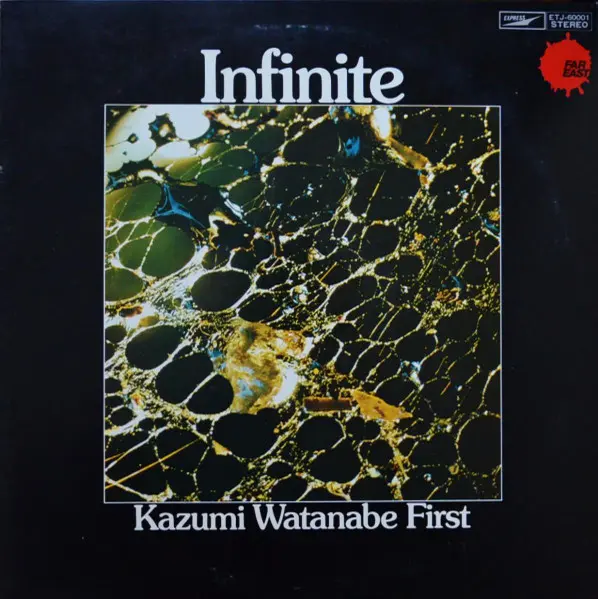 Kazumi Watanabe released his debut album, Infinite, on May 19, 1971, on Express Records.
Watanabe sets long modal guitar lines against tenor saxophone by Takao Uematsu and piano by Hideo Ichikawa. Bassist Yoshio Suzuki and drummer Motohiko Hino lock the quintet into a taut undertow that gives the session its bite.
Side one places the two Watanabe compositions in extended form. “Infinite” opens the album with the broadest span, while “Cortly” condenses the same modal language into a shorter statement. Side two turns to Joe Henderson’s “Isotope,” Kenny Dorham’s “Blue Bossa,” and “Here That Rainy Day,” which tighten the themes into more fixed song structures.
A1. “Infinite” (10:56) — Watanabe
A2. “Cortly” (4:30) — Watanabe
B1. “Isotope” (7:01) — Joe Henderson
B2. “Blue Bossa” (5:45) — Kenny Dorham
B3. “Here That Rainy Day” (3:52) — Jimmy Van Heusen
Kazumi Watanabe recorded Infinite on May 19, 1971, at Teichiku Studio with producer K. Hirakata and engineer Y. Namekata.
The sleeve carried the subtitle Kazumi Watanabe First. Seiji Kudo handled art direction and H. Mizutani handled design.
Endless Way
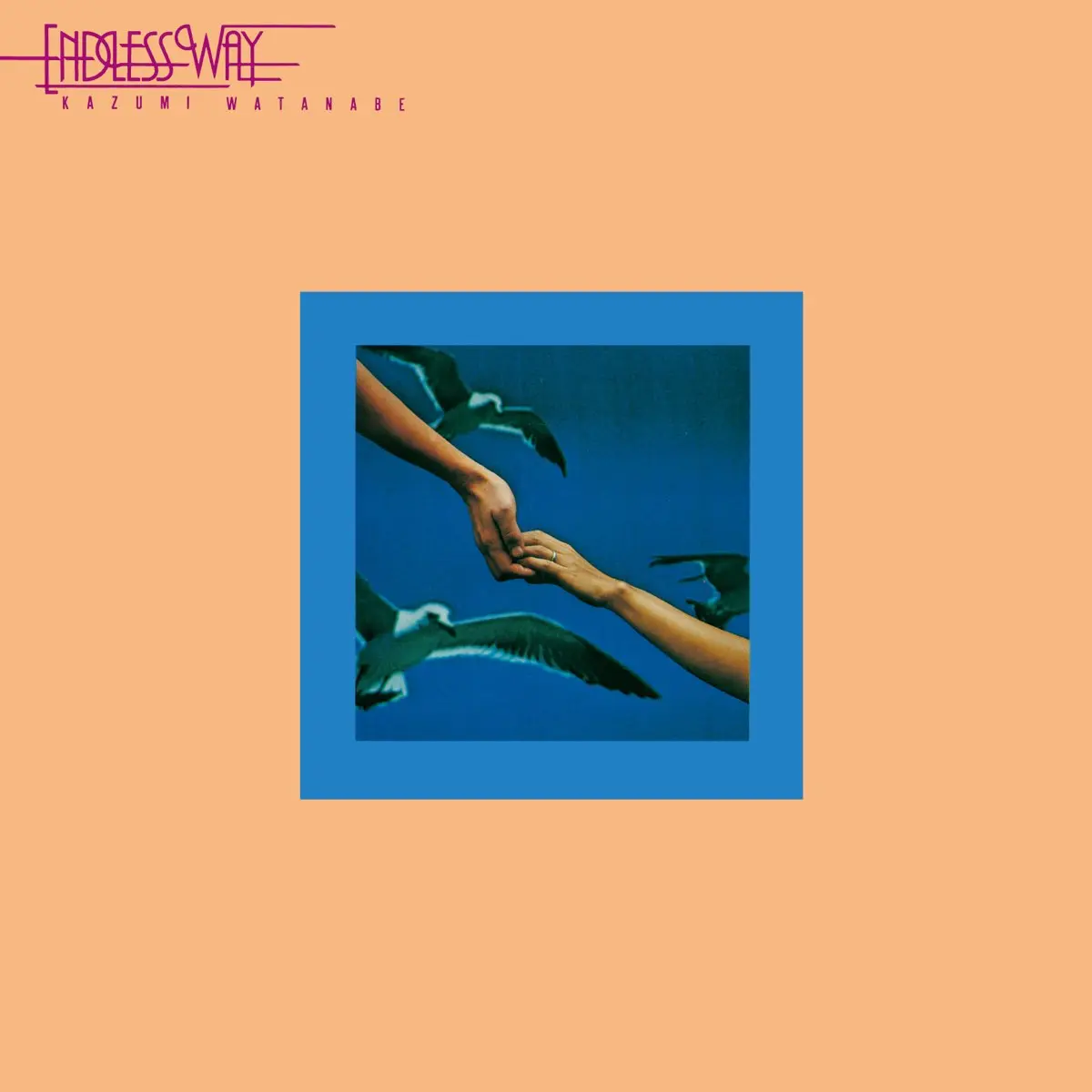 Kazumi Watanabe released his second solo album, Endless Way, in November 1975 on Nippon Columbia.
Watanabe wrote all four pieces and set them inside a lean electric program built on Nobuyoshi Ino’s bass and Arihide Kurata’s drums. Shigeharu Mukai widens three tracks with trombone, and Hidefumi Toki enters on two cuts with soprano saxophone.
A1. “On the Horison” (14:15)
A2. “Sadness” (5:21)
B1. “Endless Way” (11:30)
B2. “The Second Wind” (10:45)
Kazumi Watanabe recorded Endless Way on July 7, 8, 10, and 11, 1975, at Nippon Columbia 1st Studio with recording director Takuo Morikawa and engineer Kaoru Iida
Milky Shade
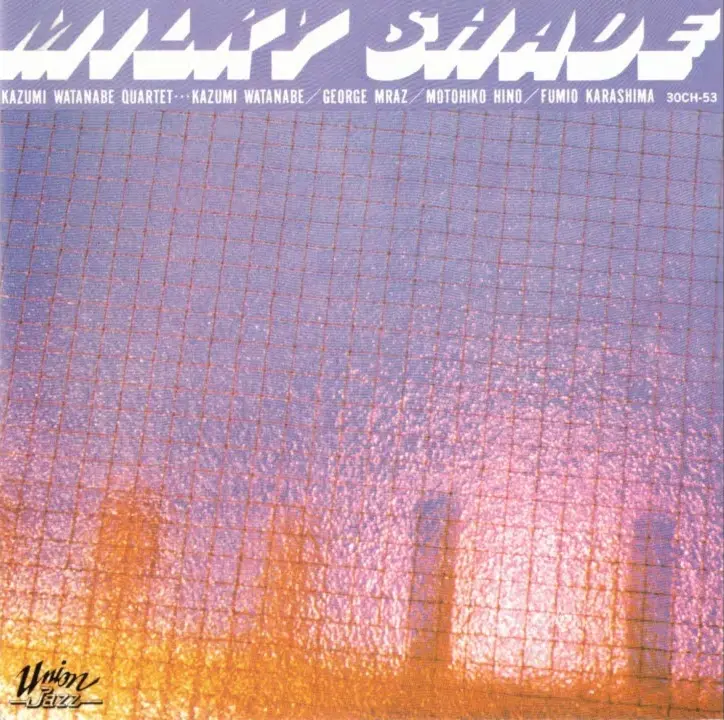 Kazumi Watanabe released his third solo album, Milky Shade, in 1976 on Union.
Watanabe wrote all four pieces and set them inside a quartet with pianist Fumio Karashima. George Mraz and Motohiko Hino hold a taut undertow that gives the session its weight and drive.
A1. “Wonder Land”
A2. “Milky Shade”
B1. “Mirrors”
B2. “Cyclone”
Kazumi Watanabe recorded Milky Shade on July 1, 1976, at Teichiku Kaikan with producers Tsuneaki Tone and Hiromichi Kawamura.
Jimmy Hopps & Kazumi Watanabe – Mudari : Spirit of Song
In March 1977, Denon Jazz issued Mudari: Spirit of Song, a collaborative effort between Kazumi Watanabe and Jimmy Hopps, an American jazz drummer, percussionist, and poet.
Hopps sets the record’s vocal, percussive, and spoken center while Watanabe covers all guitars and electric bass. Joe Jackson adds tenor saxophone, percussion, and one vocal, and Reiko Aoki enters as the spoken-text voice.
A1. “Handle Me Gently” (5:16) — Correan Powers
A2. “Inner Wind” (4:02) — Kazumi Watanabe
A3. “Lullaby for Mama” (3:43) — Mudari J. Hopps
A4. “Salute to Papa” (2:02) — Kazumi Watanabe, Mudari J. Hopps
A5. “Poem” (1:38) — Traditional
B1. “Blues Africaine” (7:36) — Mudari J. Hopps
B2. “Brothers & Sisters” (2:47) — Halifu, Mudari J. Hopps
B3. “Lonesome Cat” (6:21) — Kazumi Watanabe
B4. “Ann” (1:36) — Mudari J. Hopps
B5. “Reprise: Handle Me Gently” (3:59) — Correan Powers
Jimmy Hopps and Kazumi Watanabe recorded Mudari: Spirit of Song on June 26 and June 28, 1976, at Nippon Columbia 1st Studio in Tokyo with engineer Yoshio Mitsuo. Mudari World Music Theater Productions handled production, and Jimmy James Edward Hopps Jr. took artistic-director credit.
Sign, with Satoshi Saitoh and Chu Nakamura, handled the cover design. Tadayuki Naitoh shot the front-cover photograph, and Satoshi Saitoh shot the back-cover photograph.
Olive’s Step
 Kazumi Watanabe released his fourth solo album, Olive’s Step, in September 1977 on Better Days Records.
Watanabe wrote six of the seven pieces and set the album inside two quartet lineups split across the LP sides. Ryuichi Sakamoto shapes side one with piano, electric piano, clavinet, and synthesizers over Tsugutoshi Goto and Hiro Tsunoda, while side two turns to Hiroshi Matsumoto, Nobuyoshi Ino, Arihide Kurata, and percussionist Tatsuji Yokoyama for a rounder keyboard surface and a denser rhythmic bed.
A1. “Olive’s Step” (4:58) — Watanabe
A2. “Inner Wind” (4:44) — Watanabe
A3. “Mellow Sunshine” (6:47) — Watanabe
A4. “Movin’ Nozzle” (4:14) — Watanabe
B1. “Sky” (6:37) — Watanabe
B2. “Little Apple” (5:06) — Watanabe
B3. “Dindi” (6:45) — Antonio Carlos Jobim
Kazumi Watanabe recorded Olive’s Step from June 1 to June 3, 1977, at Nippon Columbia 1st Studio in Tokyo with recording director Tomohiro Saito and engineer Kaoru Iida. Watanabe produced the album.
Tadayuki Naitoh shot the cover photograph. The original LP carried catalog number YX-7580 on Better Days.
1977–78 All-star Appearances
Kazumi Watanabe received co-billing on the 1977 Flying Dog release Guitar Work Shop and the 1978 Alfa title Concierto de Aranjuez.
Watanabe appears on Guitar Work Shop as one quarter of a shared-guitar project with Kenji Omura, Katsutoshi Morizono, and Jun Yamagishi. The album divides most of its program into separate leader-led units and saves only the last track for a full four-guitar session. Watanabe contributes two originals, “Neptune” and “Gentle Afternoon,” both with Arihide Kurata, Nobuyoshi Ino, Hiroshi Matsumoto, and Tatsuji Yokoyama behind him, then joins the closing group cut of “I’m in You” with the other three guitarists, Shuichi Murakami, and Kenji Takamizu.
Concierto de Aranjuez places Watanabe in a three-guitar front line with Kenji Omura and Lee Ritenour, so this one also rises above an incidental appearance. Released on December 20, 1978, the album runs as a five-track all-star session with Abe Laboriel, Alex Acuña, Dave Grusin, Don Grusin, Steve Forman, Ernie Watts, and Jun Fukamachi. Watanabe plays across the record, including the 17-minute title performance that fills side one.
Also in 1978, Watanabe partook in Kaleidoscope, a super-session with singer Carmen Maki, organist George Murasaki (Murasaki), guitarist Masami Tsuchiya (Ippu-Do, Japan), and the rhythm section from Godiego.
Lonesome Cat
 Kazumi Watanabe released his fifth solo studio album, Lonesome Cat, in early 1978 on Denon.
Pianist George Cables sets a broad electric surface around Watanabe’s guitar. Alex Blake and Cecil McBee split bass duties over Lenny White’s backbeat, which gives the New York session a taut undertow.
A1. “Somebody Samebody” (4:12)
A2. “Mirrors” (7:29)
A3. “Aqua Beauty” (9:33)
B1. “Blackstone” (10:15)
B2. “Moving Nozzle” (4:37)
B3. “Lonesome Cat” (5:17)
Kazumi Watanabe recorded Lonesome Cat on December 14, 1977, at Sound Ideas Studio in New York City with producer Yoshio Ozawa and engineer Jim McCurdy. Takeaki Anazawa and Kaoru Yamamoto handled PCM engineering.
Tadayuki Naitoh shot the front and back cover photographs. Tom Ueno contributed an additional back-cover image.
Mermaid Boulevard
Kazumi Watanabe released his sixth studio album, Mermaid Boulevard, in mid-1978 on Alfa, which co-billed the title to Gentle Thoughts.
Watanabe and Lee Ritenour split the guitar front line over electric piano by Patrice Rushen and tenor saxophone by Ernie Watts. Anthony Jackson and Harvey Mason hold a taut undertow while Steve Forman’s percussion and Jun Fukamachi’s string writing widen the session.
A1. “Mermaid Boulevard” (7:09)
A2. “Neptune” (4:03)
A3. “Waltz for Sweet” (3:54)
A4. “Q” (3:53) — Louis Johnson, George Johnson
B1. “Sugar Loaf Express” (6:34) — Lee Ritenour
B2. “Poppy’s Walk” (4:49)
B3. “Gentle Afternoon” (4:49)
Kazumi Watanabe recorded Mermaid Boulevard from October 17 to October 29, 1977, at Studio A in Tokyo’s Shibaura district with producer Shunsuke Miyazumi. Lee Ritenour handled rhythm arrangements, and Jun Fukamachi handled string arrangements.
Aijiro Wakita handled art direction, Koichi Sato supplied the illustration, and Hiroshi Seo shot the photography.
Village in Bubbles
 Kazumi Watanabe released his seventh studio album, Village in Bubbles, on in late 1978 on Better Days Records, which co-billed the title to Manhattan Blaze, an all-star jazz-funk ensemble with Alex Blake, Joe Chambers, Eddie Henderson, and Idris Muhammad.
Watanabe and Yoshio Masuo split the guitar parts over piano and Fender Rhodes by Mickey Tucker. Alex Blake and Idris Muhammad hold the rhythmic bed while Joe Chambers, Ray Mantilla, No-Bu, and a large horn section arranged by Cecil Bridgewater thicken the ensemble attack.
A1. “Park Avenue” (5:27)
A2. “Dance of Corona” (7:52)
A3. “Village in Bubbles” (8:40)
B1. “Magic Carpet” (9:58)
B2. “Mustache Daddy” (7:10)
B3. “Crystal Rain” (6:07)
Kazumi Watanabe recorded Village in Bubbles from August 22 to August 29, 1978, at Sound Ideas Studio in New York City with producer Yoshio Ozawa and engineer Jim McCurdy. Cecil Bridgewater arranged and conducted the horn writing.
Akira Kobayashi shot the cover photograph.
Kylyn
 Kazumi Watanabe released his eighth studio album, Kylyn, on June 25, 1979, on Better Days.
Kylyn places Watanabe inside a keyboard-heavy ensemble led from the piano and synthesizer chair by Ryuichi Sakamoto. Akiko Yano and Mikio Masuda widen the harmonic surface, while bassist Rei Ohara and alternating drummers Shuichi Murakami and Yukihiro Takahashi give the record a shifting rhythmic pull. Trombone by Shigeharu Mukai and saxophone parts by Toshiyuki Honda and Yasuaki Shimizu add a brass edge to the larger cuts.
A1. “199X” (1:56)
A2. “Sonic Boom” (6:30)
A3. “Water Ways Flow Backward Again” (5:17) — Akiko Yano
A4. “Milestones” (8:15) — Miles Davis
B1. “E-Day Project” (5:52) — Ryuichi Sakamoto
B2. “Akasaka Moon” (4:34)
B3. “Kylyn” (2:29) — Ryuichi Sakamoto
B4. “I’ll Be There” (6:38) — Ryuichi Sakamoto, Akiko Yano
B5. “Mother Terra” (3:35) — Ryuichi Sakamoto
Kazumi Watanabe recorded Kylyn in April and May 1979 at Nippon Columbia Studios 1, 2, and 4. Sakamoto produced the album for Nippon Columbia, while Watanabe shared production credit on “199X,” “Sonic Boom,” and “Milestones.” Taku Kashiwabara and Akira Ikuta co-produced, and “Superman” Goto engineered the sessions.
Kylyn Live
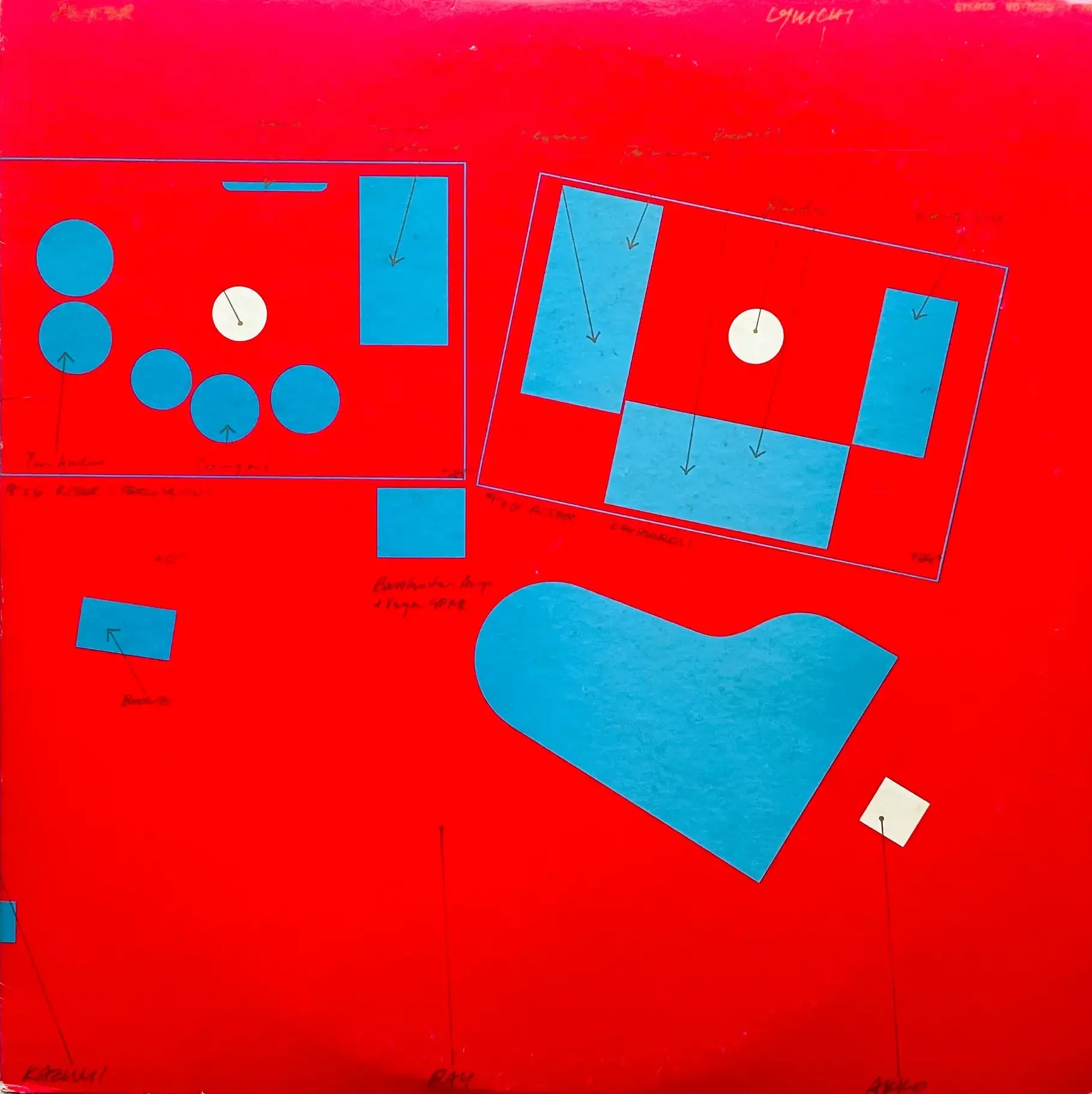 In November 1979, Kazumi Watanabe released Kylyn Live, a two-record document of his June 15–17 shows at the Pit Inn in Roppongi, Tokyo.
The Pit Inn band stretches the Kylyn material across longer spans and folds earlier Watanabe pieces into the same ensemble language. Sakamoto covers Fender Rhodes, acoustic piano, Prophet 5, Polymoog, ARP Odyssey, and KORG PS-3100 around Yano’s keyboards and vocals, while Murakami, Ohara, Pecker, Mukai, Shimizu, and Honda give the set a broader live surface than the studio LP.
A1. “Inner Wind” (11:00)
A2. “Snap Dragon” (12:04)
B1. “Milky Shade” (13:53)
B2. “Milestones” (6:55) — Miles Davis
C1. “The River Must Flow” (6:12) — Gino Vannelli
C2. “在広東少年” (7:13) — Akiko Yano
C3. “I’ll Be There” (7:12) — Ryuichi Sakamoto, Akiko Yano
D1. “Blackstone” (18:25)
D2. “Walk Tail” (2:15) — Joe Zawinul
Kazumi Watanabe recorded Kylyn Live from June 15 to June 17, 1979, at the Pit Inn in Roppongi, then remixed the album from August 20 to August 23 at Onkio Haus Studio 3 in Tokyo. Watanabe produced the set for Nippon Columbia, Sakamoto produced tracks five through seven, and “Superman” Goto engineered the album.
Akira Ikuta and Kenji Sugiyama handled the artwork.
To chi ka
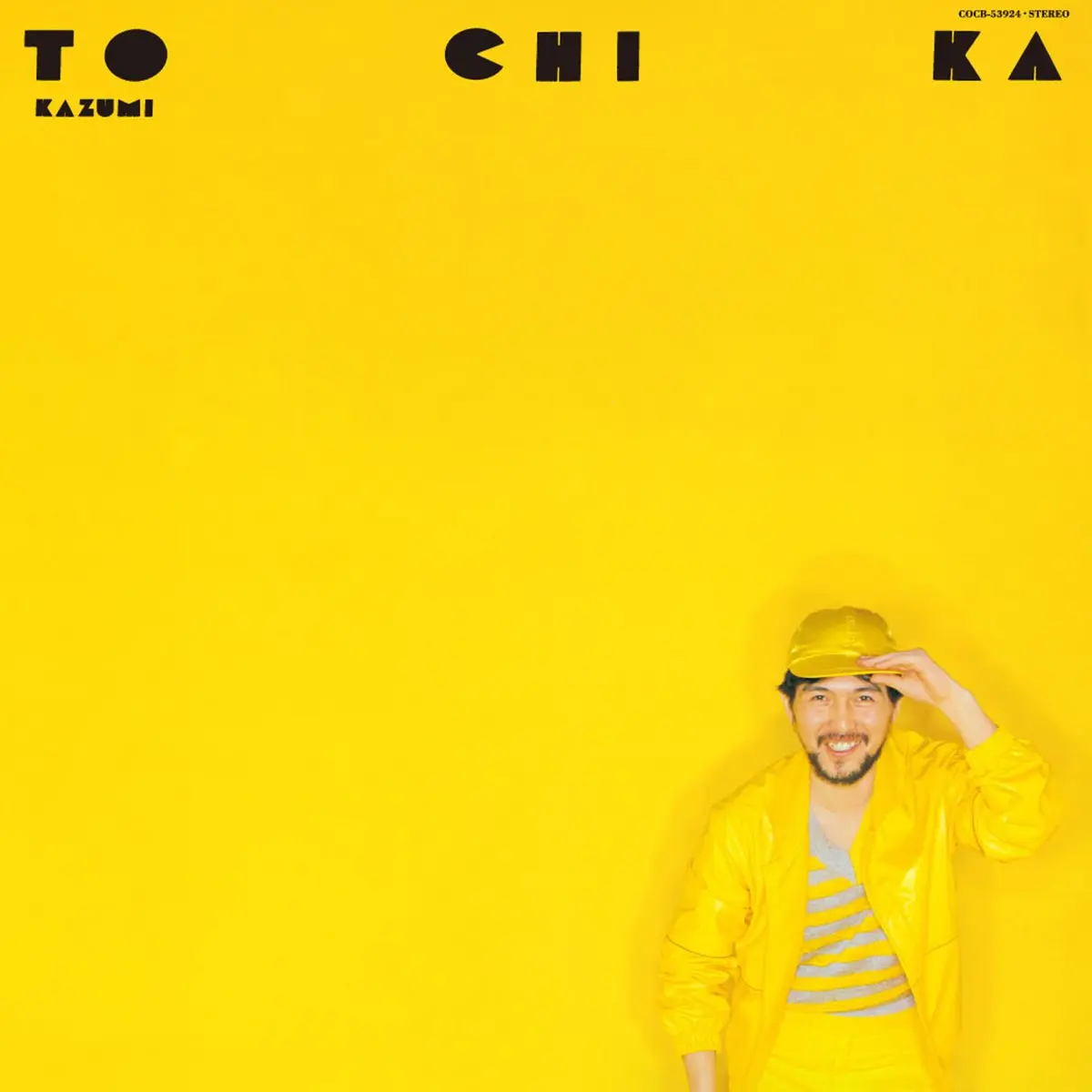 Kazumi Watanabe released his ninth studio album, To chi ka, in 1980 on Better Days.
Joe Caro shades the guitar front on four cuts while Kenny Kirkland and Warren Bernhardt alternate keyboards across the program. Marcus Miller and Tony Levin split bass duties over drums by Steve Jordan and Peter Erskine. Mike Mainieri enters on vibes, Sammy Figueroa adds percussion, and Michael Brecker appears on tenor saxophone for “Cokumo Island.”
A1. “Liquid Fingers” (4:55)
A2. “Black Canal” (6:42)
A3. “To Chi Ka” (3:30)
A4. “Cokumo Island” (8:56)
B1. “Unicorn” (4:40)
B2. “Don’t Be Silly” (5:39)
B3. “Sayonara” (5:24)
B4. “Manhattan Flu Dance” (6:02)
Kazumi Watanabe recorded To Chi Ka at Media Sound in New York City from March 4 to March 26, 1980, with producer Mike Mainieri and engineer Doug Epstine. Ed Walsh programmed the Oberheim 8-Voice and OB-X parts.
Kenji Sugiyama handled art direction and design. Noboru Takahashi shot the cover photograph, and Akira Aimi shot the inner-sleeve photograph.
Dogatana
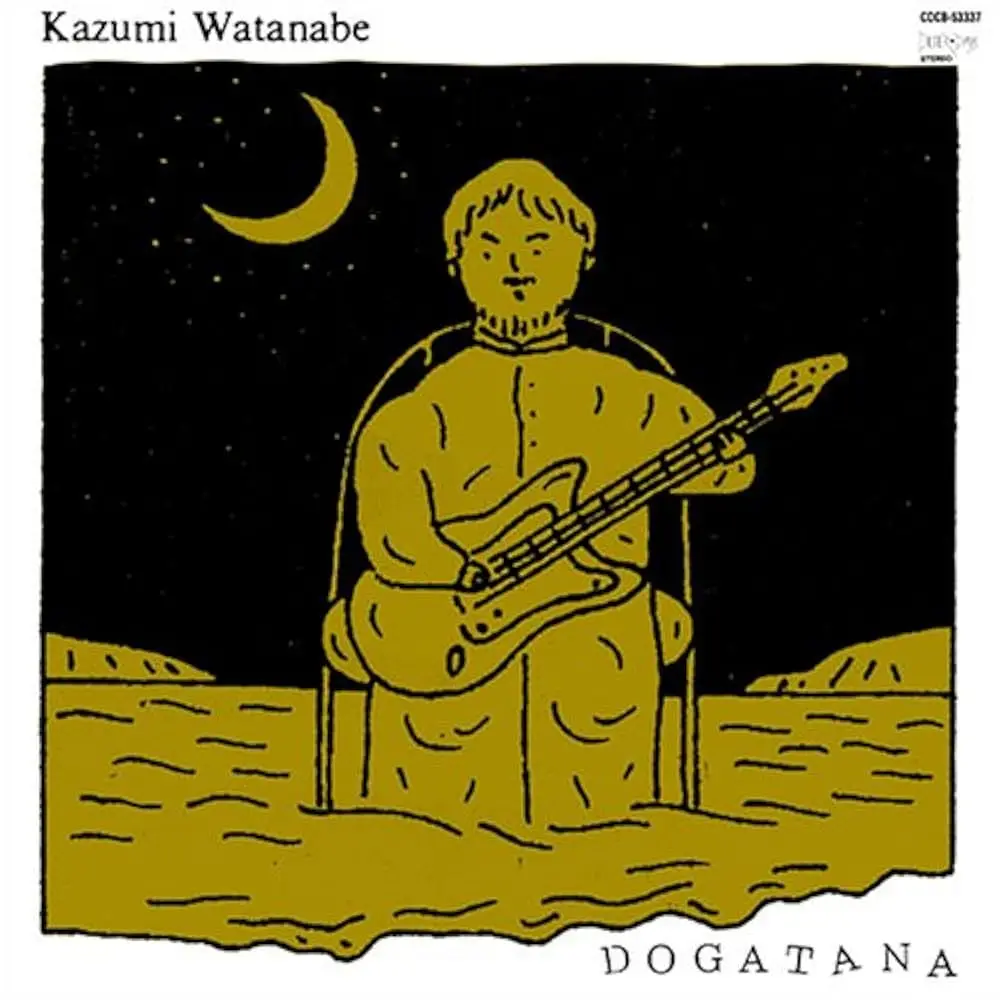 Kazumi Watanabe released his tenth studio album, Dogatana, in 1981 on Better Days.
Dogatana replaces the large ensemble format with a looser acoustic-centered design. Watanabe shifts between Ovation Adamas, 12-string, double-neck guitar and bass, then brings in Roland MC-4, ARP Odyssey, and Prophet 5 on selected cuts. Mike Mainieri, David Liebman, Warren Bernhardt, Larry Coryell, Nobuyoshi Ino, and Hideo Yamaki enter one track or one cluster at a time, which gives the album a more sectional layout than To Chi Ka.
A1. “Nuevo Espresso” (5:53)
A2. “Loosey Goosey” (6:56)
A3. “Ti-Fa-Let” (3:09)
A4. “Island” (5:05)
B1. “Diana” (3:19) — Wayne Shorter
B2. “Waterfall ~ Autumn” (6:50)
B3. “Please Don’t Bundle Me” (7:14)
B4. “Haru no Tsurara” (3:14)
Kazumi Watanabe recorded and mixed Dogatana at Power Station in New York across spring and fall 1981 with Scott Litt and James Farber, then completed additional work at Nippon Columbia Studios in Tokyo in fall 1981 with Hiroshi “Superman” Goto. Watanabe produced the album, and Mainieri co-produced tracks one, four, six, and seven.
Akira Ikuta handled art direction, Kenji Sugiyama handled design, and Nobuyuki Kuwahara supplied the illustration.
Talk You All Tight (1981)
Ganaesia (1982)
Mobo
 Kazumi Watanabe released his eleventh studio album, Mobo, in 1983 on Trio Records (Japan) and Gramavision (US).
Gramavision split the material into Mobo I and Mobo II for the US and Europe in 1984.
Watanabe built the set around a double rhythm core. Sly Dunbar and Robbie Shakespeare share the foundation with Marcus Miller and Omar Hakim, which gives the album two separate bass-and-drum pulls across the four sides. The long takes grew from continuously running tape, and the program established “Yenshu Tsubame Gaeshi” as one of the central titles from this phase.
A1. “Shang-Hi (Mobo #1)” (6:19)
A2. “Yatokesa (Mobo #3)” (7:46)
A3. “Alicia” (5:42)
B1. “American Short Hair” (5:08)
B2. “Mobo #2” (15:50)
C1. “Voyage” (4:50)
C2. “Half Blood” (5:33)
C3. “Yenshu Tsubamé Gaeshi” (6:40)
D1. “Walk, Don’t Run” (3:37)
D2. “All Beets Are Coming (Mobo #5)” (14:08)
Kazumi Watanabe recorded and mixed Mobo at Media Sound in New York in August and September 1983.
Mobo II
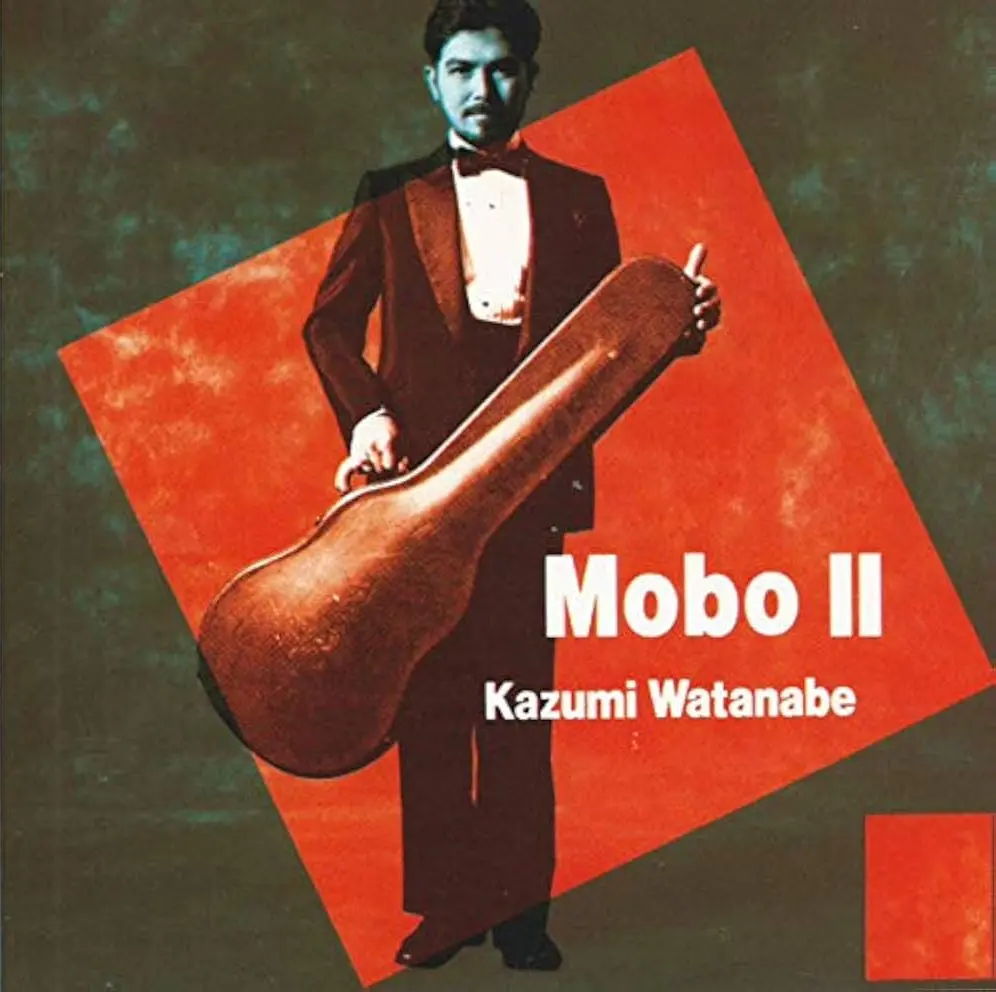 Kazumi Watanabe released his twelfth studio album, Mobo II, in 1984 on Gramavision.
he LP draws five tracks from the broader Mobo sessions and sequence.
Watanabe shifts between electric and acoustic guitar, synthesizer, fake log drums, and percussion across a tighter one-disc program. Marcus Miller and Robbie Shakespeare divide the bass chairs, Omar Hakim and Sly Dunbar divide most of the drum parts, Steve Jordan enters on selected material, Kei Akagi and Don Grolnick cover the keyboard surface, and Michael Brecker adds tenor saxophone.
A1. “Voyage” (4:50)
A2. “Yatokesa (Mobo #3)” (7:46)
A3. “Alicia” (5:42)
B1. “Shang-Hi (Mobo #1)” (6:19)
B2. “All Beets Are Coming (Mobo #5)” (14:08)
Kazumi Watanabe recorded and mixed Mobo II at Media Sound in New York in August and September 1983. Gramavision issued the LP in 1984.
Mobo Club
 Kazumi Watanabe released his thirteenth studio album, Mobo Club, in 1985 on DOMO.
Kazumi Watanabe released Mobo Club on November 1, 1984, on DOMO. Gramavision reissued the album outside Japan in 1985.
This album shifts from the international session model of Mobo to a standing Japanese working band. Watanabe threads guitar synthesizer and Emulator through keyboards by Ichiko Hashimoto, bass by Gregg Lee and Ken Watanabe, drums by Shuichi Murakami, percussion by Kiyohiko Semba, and the saxophone chair associated with Mitsuru Sawamura in the band’s lineup. The result is a more compact ensemble surface than the double-set sprawl of Mobo.
A1. “Fu-Ren” (6:57)
A2. “Yokan” (4:29)
A3. “Tsuru-Kame Hinatango” (5:26)
A4. “Kiken-Ga-Ippai” (3:18)
B1. “Kyosei Seppun” (2:12)
B2. “Sat-Chan” (5:16)
B3. “Circadian Rhythm” (5:36)
B4. “Sigma” (5:21)
Kazumi Watanabe recorded Mobo Club at Polydor Studio and Onkio Haus in Tokyo between July and September 1984.
Mobo Splash
 Kazumi Watanabe released his fourteenth studio album, Mobo Splash, in 1985 on DOMO.
Kazumi Watanabe released Mobo Splash in 1986 on DOMO. Some discography listings file the LP under 1985, but Universal’s DOMO reissue page dates the original issue to 1986.
The third MOBO Club record keeps Gregg Lee and Shuichi Murakami at the core of the rhythm section and places guest horn players across selected cuts. David Sanborn and Michael Brecker each enter on two tracks, Nobuyoshi Ino adds additional bass, and Ichiko Hashimoto appears vocally on “Gourd-Top-Mouse.”
A1. “Afternoon In The Park” (3:41)
A2. “Splash” (3:21)
A3. “Izayoi” (3:15)
A4. “Sometimes We Say Monk” (3:41)
B1. “Crisis III” (3:18)
B2. “Gourd-Top-Mouse” (5:09)
B3. “Synapse” (5:13)
B4. “Busiest Night” (3:24)
Kazumi Watanabe recorded and mixed Mobo Splash at Polydor Studio in Tokyo.
Mobo Live
Kazumi Watanabe released Mobo Live in 1985 on DOMO. The same album appears in Japan under the title Oukaranman.
The album documents a stage from the year after Mobo Club at Shinjuku Kosei Nenkin Hall. The set pulls heavily from Mobo and Mobo Club and adds a short reading of “Unicorn,” which links the live book back to To Chi Ka.
A1. “Introduction” (2:31)
A2. “American Short Hair” (5:57)
A3. “Sigma” (6:26)
A4. “Kiken-Ga-Ippai” (6:06)
B1. “Good Vibration” (5:03)
B2. “Yenshu Tsubame Gaeshi” (6:05)
B3. “Unicorn” (2:14)
B4. “Shang-Hi” (5:35)
B5. “Fu-Ren” (8:03)
The Spice of Life
 Kazumi Watanabe released his fifteenth studio album, The Spice of Life, in 1987 on DOMO/Gramavision.
Watanabe sets the album inside a stripped guitar trio with Jeff Berlin on electric bass and Bill Bruford on electronic drums. Berlin holds the low register with clipped, singing lines, while Bruford cuts the beat into short electronic figures that keep the record taut and dry.
A1. “Melancho” (3:27)
A2. “Hiper K” (5:38)
A3. “City” (4:27)
A4. “Period” (6:37)
B1. “Unt” (5:10)
B2. “Na Starovia” (4:46) — Bruford, Watanabe
B3. “Lim-Poo” (4:49)
B4. “J.F.K.” (4:54) — Berlin, Watanabe
Kazumi Watanabe recorded and mixed The Spice of Life at Swanyard Studios in London in October and November 1986.
The Spice of Life Too
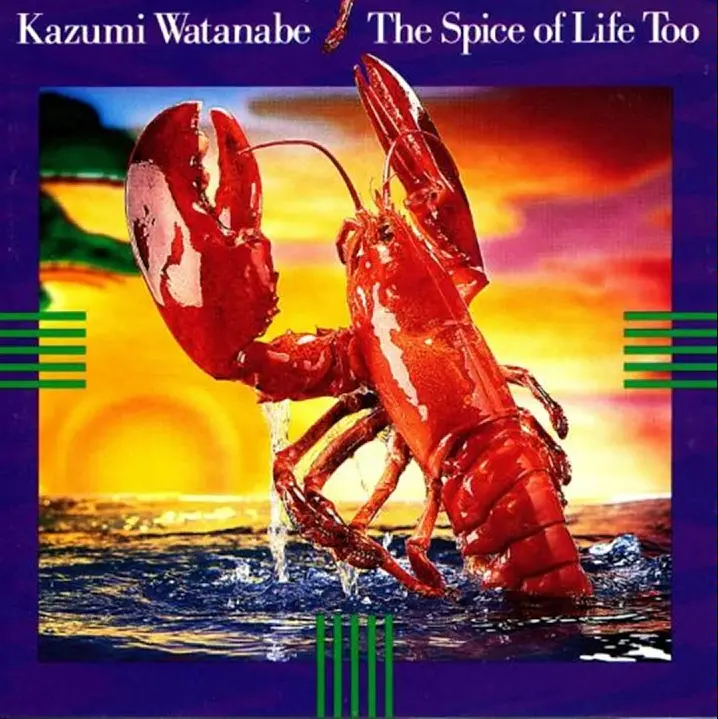 Kazumi Watanabe released his sixteenth studio album, The Spice of Life Too, in 1988 on DOMO/Gramavision.
Peter Vettese opens the harmonic bed and turns the prior trio into a quartet. Watanabe keeps the guitar line in front, Jeff Berlin drives the center of the rhythm section, and Bill Bruford’s Simmons SDX gives the album a harder electronic edge than the first volume.
A1. “Andre” (5:10)
A2. “We the Planet” (5:20)
A3. “Fu Bu Ki” (4:54) — Watanabe, Bruford, Berlin
A4. “Rain” (4:57)
B1. “Small Wonder” (5:05) — Bruford
B2. “Concrete Cow” (5:22) — Watanabe, Berlin
B3. “Kaimon” (5:35)
B4. “Men and Angels” (5:35) — Bruford
Kazumi Watanabe recorded The Spice of Life Too in February and March 1988 at Great Linford Recording Studios in Milton Keynes and Trident II in London with producer Akira Yada. Adam Moseley recorded and mixed the album.
Kilowatt
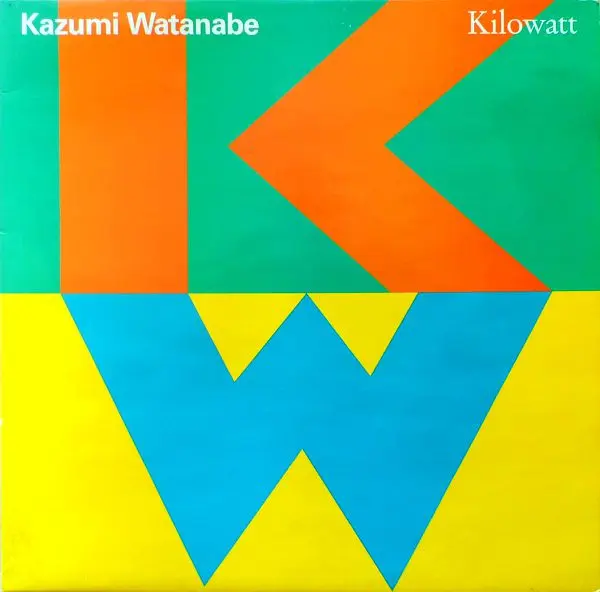 Kazumi Watanabe released his seventeenth studio album, Kilowatt, in 1989 on DOMO/Gramavision.
Watanabe widens the palette with synth guitar and keyboards around Bunny Brunel’s bass and John Wackerman’s drums, synth drums, and electric vibes. Wayne Shorter, Patrick Moraz, and Alex Acuña enter on selected tracks, which gives the album a denser ensemble than the two Spice of Life records.
A1. “1000 Mega” (4:57)
A2. “Capri” (4:09)
A3. “No One” (5:31) — Watanabe, Brunel
A4. “Jive” (3:46) — Watanabe, Brunel
A5. “Papyrus” (4:49)
B1. “Sunspin” (5:13)
B2. “Pretty Soon” (5:35) — Brunel
B3. “Bernard” (4:39) — Brunel
B4. “Dolphin Dance” (6:58) — Herbie Hancock
B5. “Good Night Machines” (6:17) — Watanabe, Moraz, Brunel
Kazumi Watanabe recorded Kilowatt at Time Code Studio and Studio B in Los Angeles with producer Akira Yada.
Discography:
- Infinite (1971)
- Mudari (1975)
- Endless Way (1975)
- Milky Shade (1976)
- Olive’s Step (1977)
- Guitar Work Shop (1977 • 大村憲司, 渡辺香津美, 森園勝敏 & 山岸潤史)
- Concierto de Aranjuez (1978 • Aranjuez)
- Kaleidoscope (1978)
- Lonesome Cat (1978)
- Mermaid Boulevard (1978)
- Village in Bubbles (1978)
- Kylyn (1979)
- Kylyn Live (1979)
- To chi ka (1980)
- Dogatana (1981 • Kazumi Watanabe)
- Talk You All Tight (1981)
- Mobo (1983)
- Mobo II (1984)
- Mobo Club (1985)
- Mobo Splash (1985)
- Mobo Live (1985)
- The Spice of Life (1987)
- The Spice of Life Too (1988)
- Kilowatt (1989)
- Pandora (1992 • 渡辺香津美 [Kazumi Watanabe] / Resonance Vox)
Sources:
- Discogs: Kazumi Watanabe
- 45worlds: Kazumi Watanabe
- 45cat: Kazumi Watanabe
- RYM: Kazumi Watanabe
- MusicBrainz: Kazumi Watanabe
- JazzMusicArchives: Kazumi Watanabe
Artist/Album Pages:
Sweet Sensation was an English soul-pop octet from Manchester that released ten singles between 1974...
Roger Glover (born Nov. 30, 1945) is a Welsh bassist, composer, and producer with a six-decade mus...
Ratata was a Swedish synthpop band from Stockholm that released seven studio albums, starting with...
Pseudo Echo are an Australian synthpop band that rose to fame with the 1984/85 EMI albums Autumnal P...
Pat Benatar is an American rock singer from Brooklyn who released nine studio albums between 1979 ...
Sandra Wright (Oct. 1, 1948 — Jan. 11, 2010) was an American soul singer from Memphis who recorde...
Don "Sugarcane" Harris (June 19, 1938 — Nov. 30, 1999) was an American jazz-funk violinist from P...
Progres 2 are a Czech progressive rock band, formed in 1968 in Brno as the Progress Organization u...
Locust was an American hard-rock band that released the 1976 album Playgue on small-press Annuit C...
The Moirs were an Australian vocal trio comprised of Scottish-born sisters Jean, Margot, and Lesley ...
Films were a Japanese new wave band that released the 1980 album Misprint on Columbia/Denon. Me...
Modern English are a U.K. rock band that emerged on the 4AD label with the 1981 post-punk album Me...