

Junipher Greene was a Norwegian folk-rock/psych band that debuted to much fanfare with the 1971 double-album Friendship on Sonet. Their second album, Communication, appeared in 1973, followed in 1982 with Forbudte formiddagstoner.
Members: Bent Åserud (guitar, keyboards, flute, vocals), Geir Bøhren (vocals, drums, saxophone), Helge Grøslie (organ, vocals, 1966-73), Øyvind Vilbo (bass, vocals, guitar, 1966-74), Freddy Dahl (guitar, vocals, 1969-72), Bjørn Sønstevold (bass, 1966-67), Sverre Beyer (bass, 1974), Lars Hesla (keyboards, 1975-83), Arve Sakariassen (bass, 1975), Jan Devik (bass, 1976-77), Jørund Bøgeberg (bass, vocals, 1978-83)
Background
Geir Bøhren and Bent Åserud started the group at Sandaker School in Oslo in 1966 with Øyvind Vilbo and bassist Bjørn Sønstevold. The first edition worked as a blues band. Sønstevold soon left. Vilbo shifted from guitar to bass, and Helge Grøslie entered on organ. That change widened the harmonic range and pulled the music past straight rhythm-and-blues.
Åserud supplied the band’s name after a school-band trip to Edinburgh, where he stayed near a bus route whose terminus read Juniper Green. The group altered the spelling and kept the reference. In 1969, Freddy Dahl joined as lead singer and guitarist. That five-piece lineup gave Junipher Greene the configuration that carried its first major run on stage and record.
Junipher Greene built its early profile as the house band at Club 7 in Oslo and soon stepped onto larger festival bills and support slots. Sonet agreed to issue the band’s debut after Arne Bendiksen asked the group to absorb part of the cost of such an ambitious project. By 1971, Junipher Greene stood ready to unveil Friendship, the double-LP that opened the discography and became the first double album issued by a Norwegian act.
Friendship
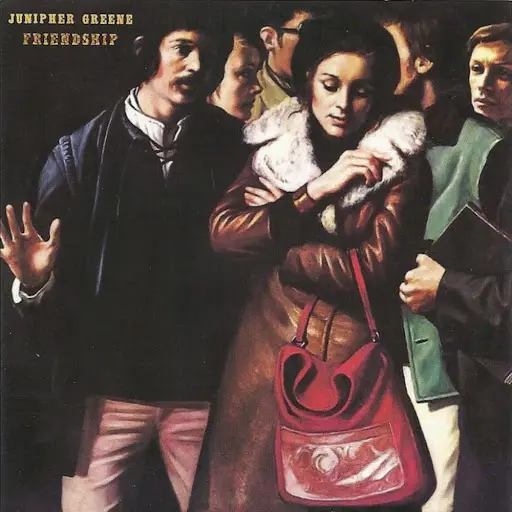 Junipher Greene released their debut album, Friendship, in late 1971 on Sonet.
The album runs on sharp shifts between riff sections, organ surges, flute passages, and longer ensemble stretches. Guitarist/flutist Bent Åserud and organist Helge Grøslie carry much of the harmonic weight, while singer-guitarist Freddy Dahl drives the vocal line through the denser passages; bassist Øyvind Vilbo and drummer Geir Bøhren hold the shorter songs to a tight attack and give the extended sections a firm rhythmic pull.
“Try to Understand” opens with flute before the band drops into a hard guitar figure and brisk vocal entry. “Music for Our Children” and “A Spectre Is Haunting the Peninsula” tighten around organ pressure, guitar accents, and quicker turns in the rhythm bed. “Sunrise/Sunset” lowers the temperature with an organ-led drift, “Magical Garden” settles into a slower undercurrent, and “Maurice” links one flute phrase to the next over a changing beat. “Prelude: Take the Road Across the Bridge” sets up the closing suite with Hammond and guitar in tandem, after which the title work breaks into short connected episodes that alternate vocal statements, brief instrumental links, and recurring motifs.
A1. “Try to Understand” (4:50) — Dahl/Åserud, Wirum
A2. “Witches Daughter” (3:30) — Åserud, Clever Duck
A3. “Music for Our Children” (7:00) — Dahl/Åserud, Clever Duck/Grøslie
B1. “A Spectre Is Haunting the Peninsula” (2:53) — Dahl/Grøslie/Åserud, Clever Duck
B2. “Sunrise/Sunset” (4:11) — Grøslie, Clever Duck
B3. “Magical Garden” (7:11) — Åserud, Skodbo
C1. “Autumn Diary” (1:53) — Grøslie, Clever Duck
C2. “Maurice” (4:24) — Junipher Greene
C3. “Attila’s Belly-Dance” (0:40) — Junipher Greene
C4. “Prelude: Take the Road Across the Bridge” (6:10) — Dahl/Åserud, Skodbo
D1. “Friendship” (2:23) — Dahl/Åserud/Carlsson
D2. “Interlude” (0:55) — Dahl/Åserud/Carlsson
D3. “Mountain Voices” (4:53) — Dahl/Åserud/Carlsson
D4. “Land of the Foxes” (1:26) — Dahl/Åserud/Carlsson
D5. “Friendship That’s Earned” (1:36) — Dahl/Åserud/Carlsson
D6. “Into the Cloudburst” (2:57) — Dahl/Åserud/Carlsson
D7. “Manitou’s Skylands & Down to Earth” (3:34) — Dahl/Åserud/Carlsson
D8. “Friendship” (2:04) — Dahl/Åserud/Carlsson
Junipher Greene recorded Friendship sporadically between November 1970 and May 1971 at Arne Bendiksen Studio in Oslo with co-producers Nils Bjarne Kvam and Harald Are Lund. Kvam engineered the album, and Lund handled the final mix.
The original Sonet set came in a gatefold sleeve with a cover painting by Odd Nerdrum.
Sonet issued “A Spectre Is Haunting the Peninsula” (b/w “Try to Understand”) as a Norwegian 7-inch from the album.
Friendship spent 13 weeks on the VG album chart and reached No. 8 on that listing.
Communication
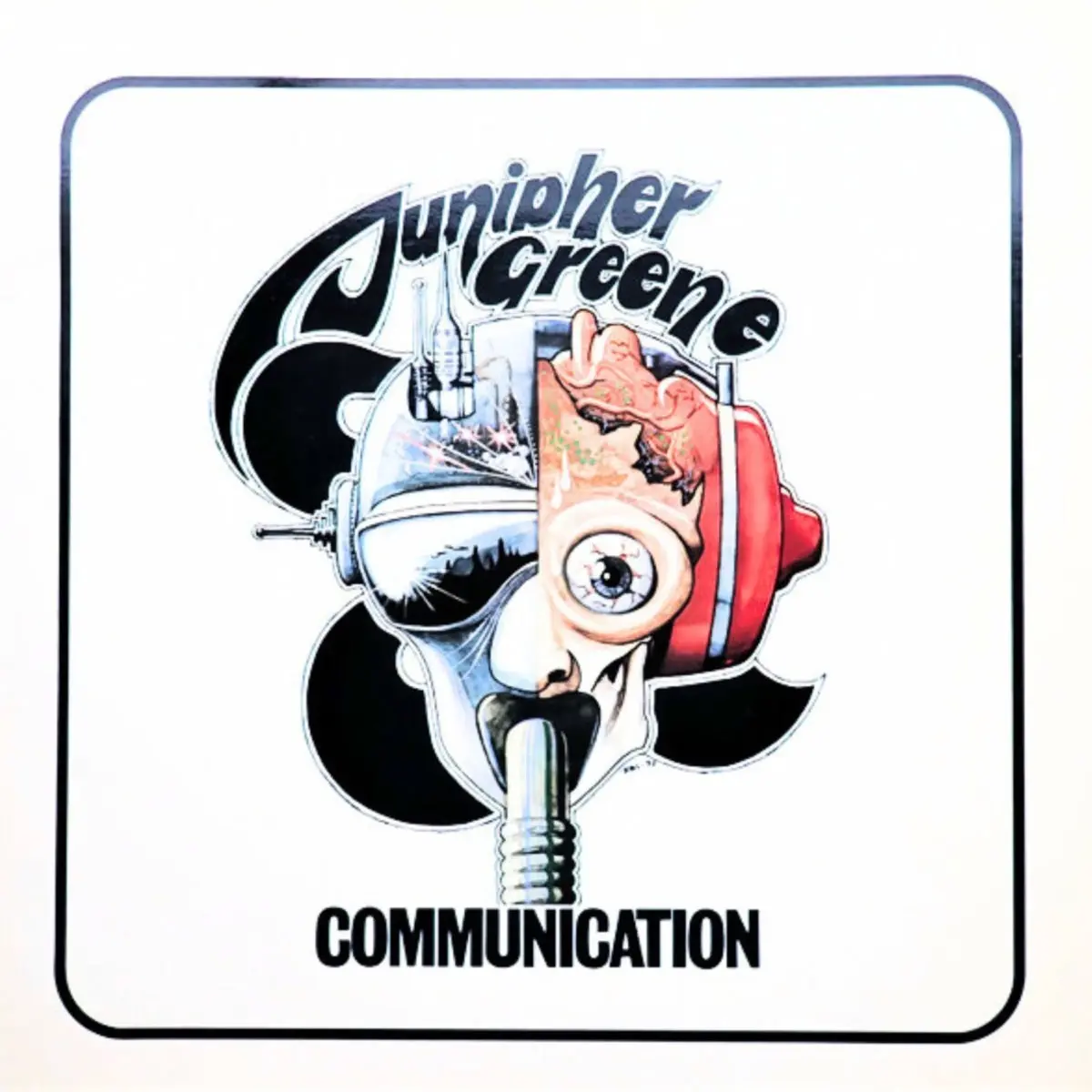 Junipher Greene released their second album, Communication, in 1973 on ON Records.
This album tightens the group to a three-man unit and strips the arrangements to guitar, organ-colored keyboard lines, bass motion, and a busier percussion spread. Bent Åserud carries much of the upper register with guitar, flute, synthesizer, piano, violin, and steel guitar, while Geir Bøhren and Øyvind Vilbo give the record a firmer rhythmic bed and handle part of the vocal load.
A1. “Communication” (12:02)
A2. “Standby” (1:48)
A3. “Biscuit” (4:11)
A4. “Sunlight” (2:14) — Åserud/Bøhren/Vilbo
B1. “Talk Is a Bird” (4:10)
B2. “If You Can Hear the Blackbird Sing” (3:08)
B3. “Reflections” (4:01) — Åserud/Bøhren/Vilbo
B4. “Play On Stranger” (3:21)
B5. “1, After Midnight” (5:48)
All other songs: Åserud/Bugs Bunny.
Junipher Greene recorded Communication at Arne Bendiksen Studio with producer and engineer Nils Bjarne Kvam.
Paal Melberg designed the sleeve, and Finn Rolsdorph shot the photography.
Interim
After Communication, Junipher Greene lost two key voices in quick succession. Freddy Dahl left in December 1972, returned briefly at the start of 1973, then left again in April. Helge Grøslie went to Titanic in February 1973. Bent Åserud, Geir Bøhren, and Øyvind Vilbo carried on as a trio long enough to issue the 1973 single “Ugha-Mugha! Sunshine Boy” (b/w “Easy Flying”), which reached the Europatoppen list. They cut Communication in that reduced form, but Vilbo left soon after the album sessions.
Dahl and Vilbo both stayed active after their exits, chiefly in blues-based work. Dahl turned up in Ruphus during 1974 and later surfaced in Saluki, NRI, Chipahua, Repeat Repeat, and Mulens Portland Combo. Grøslie continued his keyboard career in Titanic and later appeared in Veslefrikk.
Bøhren and Åserud paused for a few months, then rebuilt the band with new members. Arve Sakariassen held the bass chair from July 1975 to March 1976. Jan Devik followed from April 1976 to September 1977. Lars Hesla joined on keyboards in 1975 and stayed through the final run. During the same stretch, both Bøhren and Åserud completed studies at the Norwegian Academy of Music in 1977.
A steadier lineup took shape in 1978 when Jørun Bøgeberg joined on bass and vocals. Bøgeberg later recalled that Junipher Greene was already working intermittently on a new album with producer Bjørn Nessjøe, while Hesla split time with Flax. That late edition widened the keyboard palette, admitted more electronic color, toured in Europe and Africa, and appeared on three African television programs. In 1981, Åserud and Bøhren also began writing film music, a parallel line of work that opened just before Forbudte formiddagstoner.
Forbudte formiddagstoner
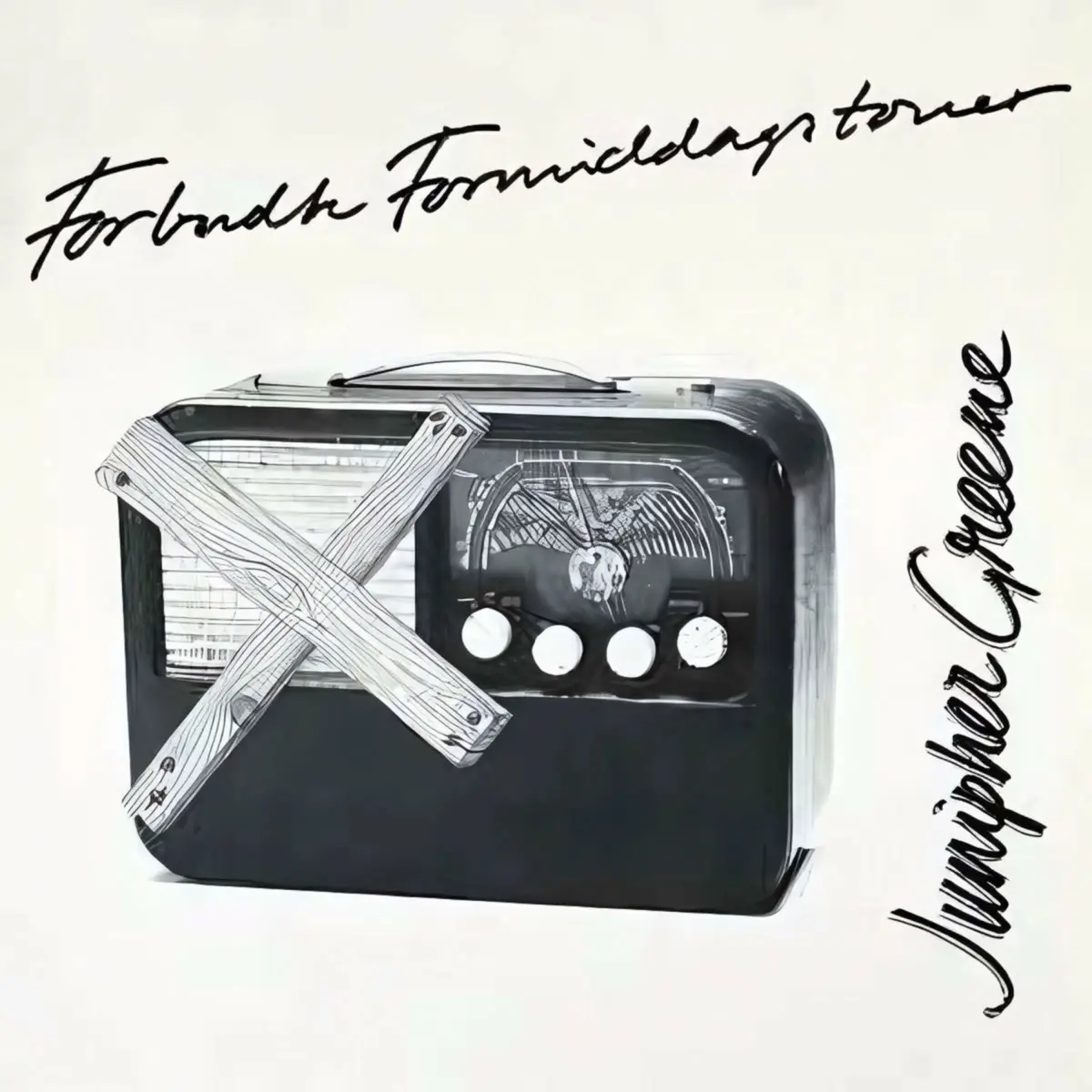 Junipher Greene released their third album, Forbudte formiddagstoner, in 1982 on Musikkselskapet.
The album condenses the band to a four-man unit and pulls the music toward a drier, more angular attack with keyboard lines, pedal-steel accents, bass-led motion, and a broader percussion spread. Bent Åserud threads guitar and pedal steel across Lars Hesla’s keyboards while Jørun Bøgeberg and Geir Bøhren give the songs a tighter rhythmic bed and carry much of the vocal line. Most of the album credits Åserud, Hesla, Bøgeberg, and Bøhren as writers; “Slaraffenliv” stands apart as a Bøgeberg composition.
“Slaraffenliv” settles into a slow offbeat pulse and a lighter lyrical turn. It became the album’s best-known cut and later fed a separate single release and a humorous TV appearance.
A1. “Sjakk matt” (5:10) — Åserud/Hesla/Bøgeberg/Bøhren
A2. “Ruiner” (6:32) — Åserud/Hesla/Bøgeberg/Bøhren
A3. “Slaraffenliv” (5:25) — Bøgeberg
A4. “Symbolikka” (6:37) — Åserud/Hesla/Bøgeberg/Bøhren
B1. “Allah Toya” (4:04) — Åserud/Hesla/Bøgeberg/Bøhren
B2. “Grønne hender” (6:07) — Åserud/Hesla/Bøgeberg/Bøhren
B3. “Tankerus” (4:02) — Åserud/Hesla/Bøgeberg/Bøhren
B4. “Fire Cola og video’n fra igår” (8:13) — Åserud/Hesla/Bøgeberg/Bøhren
Junipher Greene recorded Forbudte formiddagstoner at Musikkselskapets Dynamiske Studio with co-producers Geir Bøhren and Bent Åserud. Bent Åserud handled engineering and mixing, and Ivar Finsen mastered the album. Rune Åserud designed the cover.
In 1983, Musikkselskapet issued “Slaraffenliv” (b/w “Allah Toya”) as a 7-inch. It became the band’s final single before the breakup.
Discography:
- Friendship (1971)
- Communication (1973)
- Forbudte Formiddagstoner (1982)
Sources:
- Discogs: Junipher Greene
- RYM: Junipher Greene
- ProgArchives: Junipher Greene
- MusicBrainz: Junipher Greene
Artist/Album Pages:
Betty Davis (1944–2022) was an American soul-funk singer who released the 1973/74 small-label albu...
Valerie Simpson is an American R&B singer and songwriter, best known as part of the husband/w...
Love Unlimited was an American soul trio from Los Angeles comprised of two sisters, Glodean and Li...
Third World War was an English rock band that released two albums between 1971 and 1973 on Fly and T...
L'Infonie was a Québécois avant-jazz/psych collective that released two albums on Polydor in 1969 ...
Earth and Fire was a Dutch symphonic art-rock band that released eight albums and numerous singles...
Elton John (born March 25, 1947) is an English vocalist, pianist, songwriter, and philanthropist wit...
The Carpenters were the American MOR pop duo of pianist–singer Richard Carpenter and his singer–dr...
Sweet Slag was an English jazz-rock/blues band from Luton that released the album Tracking With Cl...
Hemlock was an English rustic-rock band behind a 1973 self-titled album on Deram. They were a spinof...
Brainticket was a Swiss Krautrock band the made the 1970–73 albums Cottonwoodhill, Psychonaut, and...
Toad was a Swiss hard-rock trio that scored a national hit with "Stay" and made the 1971/72 albums...