

Judie Tzuke is an English singer/songwriter, best known for her 1979 ballad “Stay With Me Till Dawn.” She released seven studio albums through 1989 and charted with the first two, Welcome to the Cruise and Sportscar, on Elton John‘s Rocket Record Company.
Background
Tzuke was born Judie Myers on April 3, 1956, in London to television actress Jean Silverside and music manager Sefton Myers. In the late 1920s, her paternal grandparents migrated from Poland to Yorkshire, where they adopted the Myers surname. At the start of her singing career, Judie reclaimed the Tzuke family name.
She studied music and performing arts at the London Ballet and Drama School in Piccadilly. At age 12, she took up acoustic guitar and matched her poetry to chords. From age 15, she performed the local folk-club circuit.
In 1973, she answered a talent ad for the newly formed Rocket Records Company, established by Elton John. She played her two completed songs for company staff, including “Bring the Rain.” Though she impressed the staffers, she skipped her followup appointment after overstating her song-count.
Tzuke & Paxo
Two years and an abortive dalliance with Island Records followed before Judie met musician Mike Paxman, then-drummer of the jazz quartet Sphere. They formed a songwriting partnership and pitched their efforts to producer Tony Visconti (David Bowie, T. Rex, Strawbs, Osibisa). Their sole release as Tzuke & Paxo, “These Are the Laws” (b/w “It’s Only Fantasies”), appeared in 1977 on Visconti’s Good Earth label.
Through this liaison, Tzuke met keyboardist Bob Noble and guitarist Paul Muggleton of fellow Good Earth recording artists Omaha Sheriff. They soon joined Paxman in her backing band. Tzuke and Muggleton later married.
By 1978, Tzuke amassed more than an album’s worth of material. She re-approached the Rocket Record Company, which issued her debut single as Judie Tzuke: “For You” (b/w “Sukarita”).
Welcome to the Cruise
 Judie Tzuke released her debut album, Welcome to the Cruise, in May 1979 on Rocket.
Tzuke developed the album over a two-year period after signing with Rocket Records in 1977, having impressed the label with early songs including “Stay with Me till Dawn.” She co-wrote the material with guitarist Mike Paxman, her longtime collaborator since their earlier single “These Are the Laws” under the name Tzuke and Paxo. The ten-track album opens with the soaring title song and ends with the plaintive “Stay with Me till Dawn.”
Electric guitarist Ray Russell shapes the album’s sonic palette with layered rhythm parts and lead fills, working alongside Paxman, who solos on the opener and closer and adds acoustic textures on “Katiera Island.” Keyboardist Chris Parren plays on six tracks, alternating with Paul Hart on “Sukarita,” where he also arranges strings. Pianist Steve Nye adds notation detail to the printed edition and joins the sessions alongside orchestral arranger Paul Buckmaster, who conducts the strings on “Bring the Rain” and “Stay with Me till Dawn.” Ray Warleigh plays soprano saxophone on “Katiera Island,” trading lines with Paxman’s acoustic figures. Percussionist Morris Pert appears on two tracks, contributing marimba and auxiliary elements that round out the arrangements.
A1. “Welcome to the Cruise” (4:58)
A2. “Sukarita” (3:26)
A3. “For You” (2:40)
A4. “These Are the Laws” (4:41)
A5. “Bring the Rain” (5:05)
B1. “Southern Smiles” (3:51)
B2. “Katiera Island” (5:12)
B3. “Ladies Night” (4:02)
B4. “New Friends Again” (2:42)
B5. “Stay with Me till Dawn” (3:55)
Punter produced and mixed the album at AIR Studios in London, where the sessions ran six months with three drummers and two orchestral arrangers. Lem Lubin produced the two earliest songs, “For You” and “Sukarita.” Steve Nye and Colin Fairley co-engineered the sessions with assistant Tim Cuthberson. Hipgnosis designed the album sleeve with photography by Richard Draper.
Rocket released the lead single “For You” backed with “Sukarita” in 1978, followed in July 1979 by “Stay with Me till Dawn,” which peaked at No. 16 in the UK and No. 8 in Australia. The album itself reached No. 14 on the UK Albums Chart and was certified gold by the BPI in 1981.
Sportscar
 Judie Tzuke released her second album, Sportscar, in May 1980 on Rocket.
Tzuke co-produced the album with guitarist Mike Paxman and vocalist-arranger Paul Muggleton. They built on the orchestral pop textures of her debut with more prominent interplay between keyboardist Bob Noble and Paxman’s electric guitar lines. Paul Hart arranged select tracks, introducing layers of harmonic counterpoint that alternate between string passages and keyboard-led motifs.
The arrangements rely on dynamic contrasts, with Noble shaping mood shifts through alternating electric piano, synth, and organ textures, while Paxman threads in sharp accents and melodic extensions. Muggleton contributes vocal layers and structural input, continuing his collaborative role behind the scenes. “Rain on the Hills” expands the writing partnership to include Muggleton, marking the trio’s first co-written piece.
A1. “Sports Car” (5:42)
A2. “Nightline” (3:30)
A3. “Chinatown” (4:41)
A4. “Understanding” (3:40)
B1. “The Choices You’ve Made” (4:08)
B2. “The Rise of Heart” (4:50)
B3. “Living on the Coast” (4:51)
B4. “Molly” (3:04)
B5. “Rain on the Hills” (3:30)
Tzuke recorded the album in February 1980 at The Manor Studio in Shipton-on-Cherwell, Oxfordshire. She produced the sessions with Paxman and Muggleton, working with engineer Steve Taylor and four assistants. Paul Hart arranged “Molly” and the preceding odd-numbered tracks.
Rocket issued two singles: “The Choices You’ve Made” backed with “Ladies Night,” and “Understanding” backed with “It’s the Night.” Sportscar peaked at No. 7 in the UK and was certified Silver by the BPI in 1981. Chalkie Davies shot the cover photography.
I Am the Phoenix
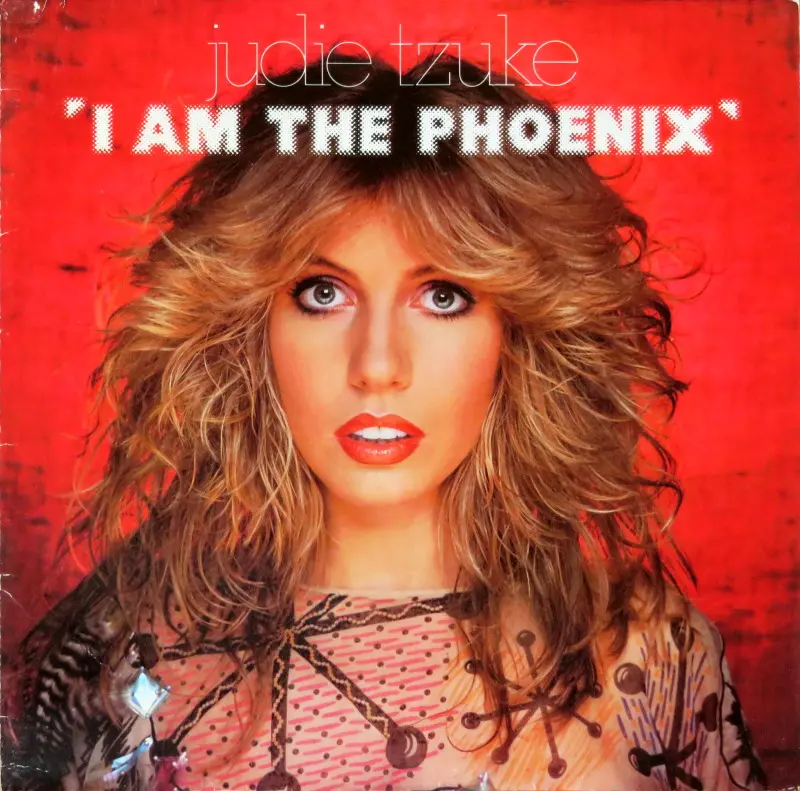
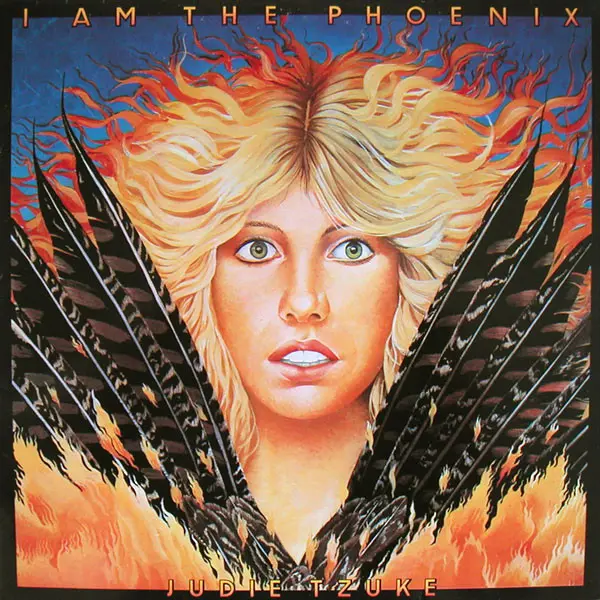 Judie Tzuke released her third album, I Am the Phoenix, in May 1981 on Rocket.
The album draws on arrangements by keyboardist Bob Noble and guitarist Mike Paxman, who trade layered textures and lead figures across the set. Paul Muggleton expands his role, contributing background vocals and co-writing more than half the album, including three songs with Noble.
Andy Clark supplies synthesizer arrangements on “Come Hell or Waters High,” adding textural contrast to Noble’s primary keyboard lines. Paul Buckmaster arranges the strings, conducted by Gavyn Wright, providing orchestral depth that weaves through the instrumental framework. The album’s collaborative centerpiece, “The Flesh Is Weak,” credits all core players and reflects a fully co-composed ensemble effort.
A1. “Black Furs” (4:30)
A2. “Higher and Higher” (4:35)
A3. “Fate’s Wheels” (4:59)
A4. “Come Hell or Waters High” (3:14) – originated as the title track on Omaha Sheriff’s 1977 album.
A5. “You Were the Place” (4:58)
 B1. “City of Swimming Pools” (5:39)
B2. “You Are the Phoenix” (4:39)
B3. “The Flesh Is Weak” (5:10)
B4. “I Never Know Where My Heart Is” (5:16)
Sessions took place at Ridge Farm Studio in Surrey and The Manor in Oxfordshire. Muggleton produced the album with Steve Taylor as chief engineer and Howard Gray assisting. Paul Buckmaster returned to arrange the strings, while Martin Ditcham added percussion.
Rocket issued “I Never Know Where My Heart Is” backed with “You Were the Place,” followed by “Higher and Higher” backed with “City of Swimming Pools.” I Am the Phoenix peaked at No. 17 on the UK Albums Chart. Keith McEwan handled the album’s art direction and illustration.
Shoot the Moon
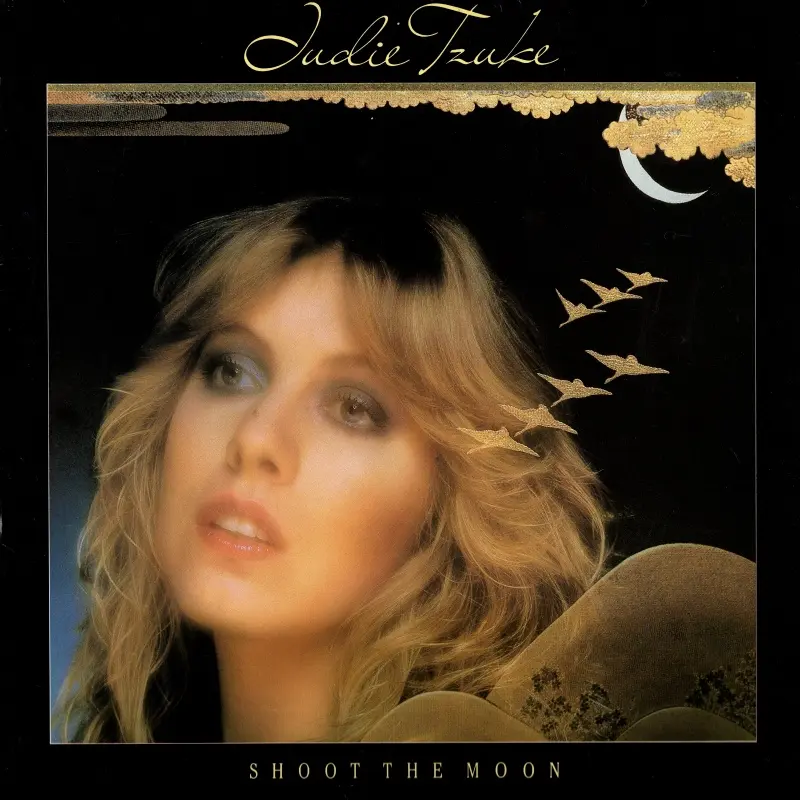 Judie Tzuke released her fourth album, Shoot the Moon, in April 1982 on Chrysalis.
Tzuke’s first release for Chrysalis built on her established songwriting partnership with guitarist Mike Paxman, while introducing expanded contributions from keyboardist Bob Noble and co-writer/producer Paul Muggleton. Guitar lines alternate between Paxman’s central rhythm figures and Muggleton’s additional accents, marked as “accidental guitar” in the credits.
Noble guides the harmonic movement and textural transitions across the album, sharing compositional duties on two tracks. Andy Clark and Don Snow provide auxiliary keyboard parts, adding layered voicings to Noble’s foundations. Jeff Rich, who appeared on earlier sessions, plays drums on “I’m Not a Loser,” which he co-developed with Muggleton and Noble. Tzuke and Paxman co-wrote most tracks, with “Love on the Border” credited to Paxman and Muggleton.
A1. “Heaven Can Wait” (4:32)
A2. “Love on the Border” (3:14)
A3. “Information” (3:07)
A4. “Beacon Hill” (3:57)
A5. “Don’t Let Me Sleep” (3:30)
B1. “I’m Not a Loser” (3:28)
B2. “Now There Is No Love at All” (4:08)
B3. “Late Again” (3:14)
B4. “Liggers at Your Funeral” (5:32)
B5. “Water in Motion” (3:34)
B6. “Shoot the Moon” (0:38)
Sessions took place at Rockfield Studios in Monmouth and continued at Ramport and Odyssey Studios in London. Muggleton produced the album with engineering and mixing handled by Jeff Titmus.
Tzuke released three singles: “Love on the Border” backed with “Sold a Rose,” “I’m Not a Loser” backed with “Run on Luck,” and “Late Again” backed with “Water in Motion.” Shoot the Moon reached No. 19 on the UK Albums Chart. John Pasche designed the cover.
Road Noise
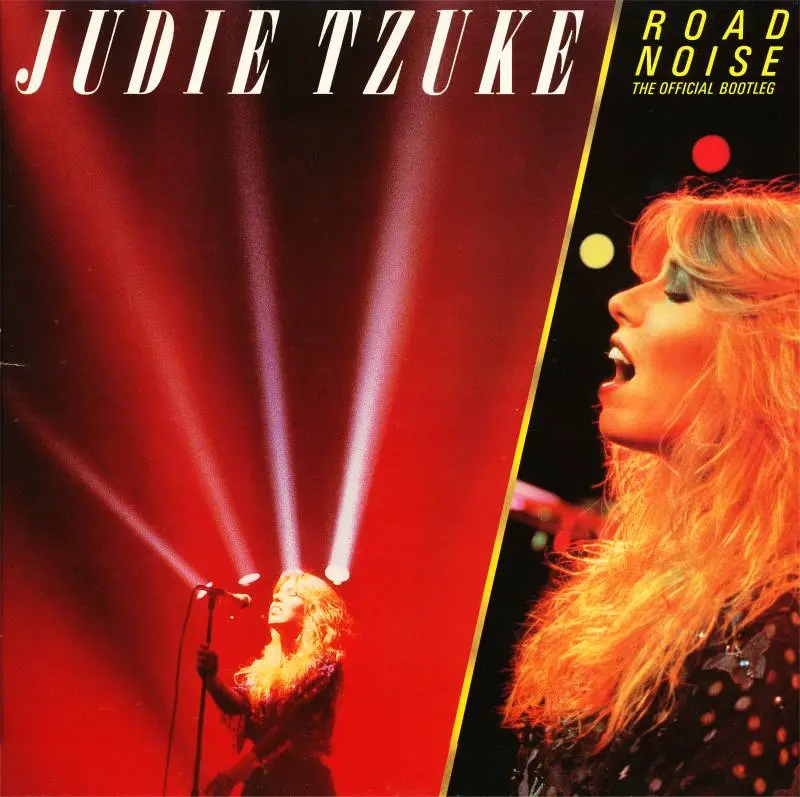 In October 1982, Judie Tzuke released Road Noise, a live double-album sourced from spring shows at Glastonbury and the Hammersmith Odeon.
The set draws material from all four of her studio albums and emphasizes the instrumental chemistry that developed across years of touring. Guitarist Mike Paxman trades lead figures with Paul Muggleton, who shifts between rhythm lines, secondary guitar phrases, and percussion. Keyboardist Bob Noble supports the arrangements with tonal swells and harmonic layering, alternating between lead passages and atmospheric backdrops. All three contribute backing vocals, reinforcing the live dynamic around Tzuke’s central melodies.
Paxman’s sustained solos often emerge from the interplay with Noble’s chordal phrasing, while Muggleton’s parts fill rhythmic and melodic gaps with interstitial detail. Jeff Rich maintains rhythmic continuity throughout the set, with bassist John “Rhino” Edwards anchoring shifts in tempo and register.
A1. “Heaven Can Wait” / “Chinatown” (8:55) — from Shoot the Moon / Sportscar
A2. “I’m Not a Loser” (3:58) — from Shoot the Moon
A3. “Information” (3:20) — from Shoot the Moon
B1. “You Are the Phoenix” (4:08) — from I Am the Phoenix
B2. “The Flesh Is Weak” (4:12) — from I Am the Phoenix
B3. “Sportscar” (6:05) — from Sportscar
B4. “For You” (4:25) — from Welcome to the Cruise
B5. “Come Hell or Waters High” (3:53) — from I Am the Phoenix
C1. “Southern Smiles” / “Katiera Island” (12:50) — from Welcome to the Cruise
C2. “Love on the Border” (3:57) — from Shoot the Moon
C3. “Black Furs” (4:33) — from I Am the Phoenix
D1. “City of Swimming Pools” (5:10) — from I Am the Phoenix
D2. “Bring the Rain” (3:42) — from Welcome to the Cruise
D3. “Sukarita” (3:28) — from Welcome to the Cruise
D4. “Stay with Me till Dawn” (4:10) — from Welcome to the Cruise
D5. “The Hunter” (4:25) — cover
Paul Muggleton produced the album, which was recorded live at the Hammersmith Odeon on May 24 and 25, 1982, and at Glastonbury Festival on June 20, 1982. Additional material came from a show at The Regal in Hitchin, Hertfordshire. Engineer John Hudson oversaw the recordings with Andy Canelle assisting and Jeff Titmus supervising sound. Mixing took place at Mayfair Studios in London.
Chrysalis issued Road Noise as a double album on October 22, 1982. It peaked at No. 39 on the UK Albums Chart. John Pasche designed the cover.
Ritmo
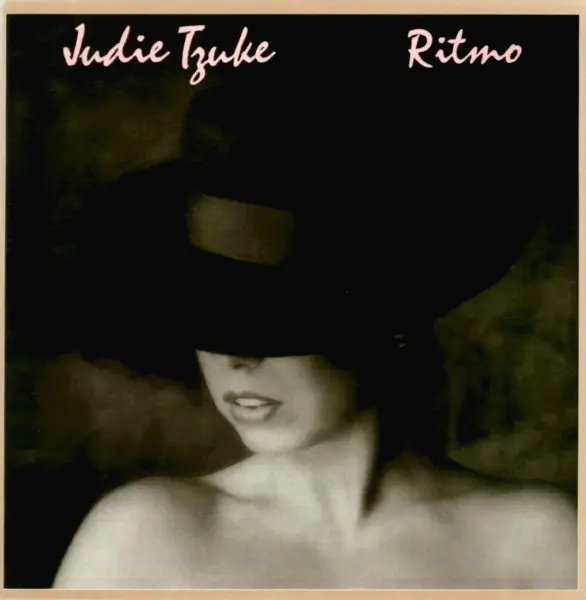 Judie Tzuke released her fifth studio album, Ritmo, in September 1983 on Chrysalis.
The album centers on a synth-driven ensemble shaped by keyboardist Bob Noble and guitarist Mike Paxman, with arrangements co-developed by Paul Muggleton, who also contributes additional keyboards and percussion. Don Snow and Roy White support Noble’s lines with layered voicings and background vocals.
Guitarist Ray Russell returns on select tracks to interact with Paxman’s rhythmic patterns and melodic phrases. Morris Pert adds percussive textures that shift between atmospheric accents and rhythmic emphasis. Andy Sheppard contributes tenor and soprano saxophone parts that punctuate and counterbalance the core keyboard layers. “How Do I Feel” introduces co-writer Noble alongside Muggleton, marking one of the few Tzuke tracks not co-authored by Paxman.
A1. “Jeannie No” (4:28)
A2. “She Don’t Live Here Anymore” (4:04)
A3. “Shoot from the Heart” (4:46)
A4. “Face to Face” (5:15)
B1. “Another Country” (2:56)
B2. “Nighthawks” (5:02)
B3. “Walk Don’t Walk” (4:37)
B4. “Push Push, Pull Pull” (3:24)
B5. “How Do I Feel” (5:15)
Tzuke recorded the album at Mayfair and Odyssey Studios in London with producers Paxman and Muggleton. John Hudson handled engineering and primary mixing, with Simon Sullivan mixing “Push Push, Pull Pull” and Jeff Titmus engineering “How Do I Feel.” Bob Parr and Carb Canelle assisted.
Chrysalis released two singles from the album: “Jeannie No” and “How Do I Feel.” Ritmo peaked at No. 26 on the UK Albums Chart. John Pasche designed the sleeve, and Brian Aris shot the cover photo.
The Cat Is Out
 Judie Tzuke released her sixth studio album, The Cat Is Out, in June 1985 on Legacy.
The album reunites Tzuke with long-standing collaborators Mike Paxman, Paul Muggleton, and Bob Noble, who share production credits and divide instrumental roles across guitar, keyboards, synths, and backing vocals. Paxman and Muggleton alternate guitar lines and build rhythmic interplay that shifts between supporting textures and dual melodic phrases.
Noble shapes the harmonic flow with a range of keyboard voicings, supporting Muggleton’s chord placements and responding to Paxman’s tonal accents. Andy Hamilton adds saxophone and Nigel Kennedy appears on violin, introducing contrast to the keyboard-saturated settings. “You,” a cover of a 1967 Marvin Gaye single, departs from the core trio’s writing framework and features a new arrangement driven by the session band.
A1. “How Sweet It Is” (4:42)
A2. “Who Do You Really Love?” (4:35)
A3. “Love Like Fire” (4:14)
A4. “I’ll Be the One” (5:01)
A5. “Girl Without a Name” (3:58)
B1. “This Side of Heaven” (5:30)
B2. “Harbour Lights” (5:40)
B3. “You” (4:05)
B4. “Falling” (3:34)
B5. “Racing Against Time” (3:22)
Recording took place at The Boiler Room in Weybridge and Mayfair Studios in London. Paxman, Muggleton, and Noble produced the sessions, working with engineers Leigh Mantle and Bob Parr, with John Hudson handling additional mixing on “You.”
Legacy issued four singles: “You,” which reached No. 92 in the UK, followed by “I’ll Be the One” (UK No. 97), “Love Like Fire,” and “This Side of Heaven.” The Cat Is Out peaked at No. 35 on the UK Albums Chart. Brian Aris photographed the cover.
Turning Stones
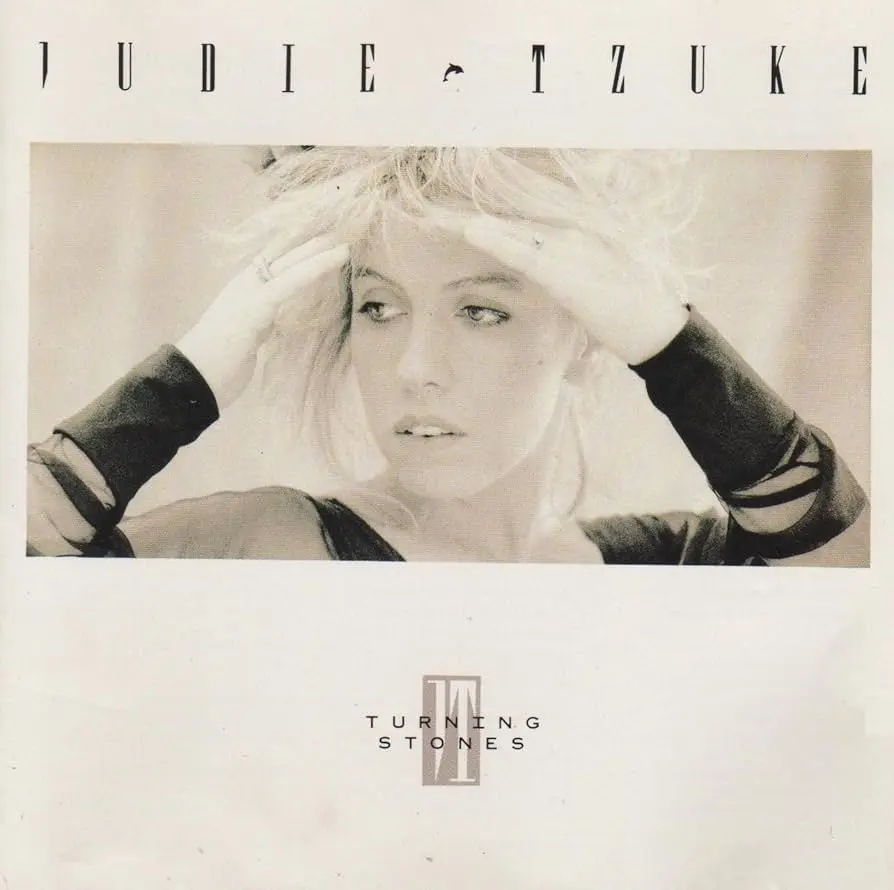 Judie Tzuke released her seventh studio album, Turning Stones, in April 1982 on Polydor.
Paxman and Muggleton split duties across guitar, keyboards, and programming, layering digital textures with interlocking melodic phrases and tonal atmospheres. Keyboardist Bob Noble contributes to multiple co-writes and shapes the harmonic core alongside Muggleton, often reinforcing structural changes beneath Paxman’s lead voicings. Nigel Kennedy reappears with violin embellishments that shadow and extend melodic contours, while Andy Sheppard contributes saxophone parts that enter in contrast to the programmed elements, offering moments of lyrical phrasing against synthetic backdrops.
“Dominique” and “Don’t Go,” both co-written with Noble, diverge from the trio’s usual writing pattern. “We’ll Go Dreaming,” co-written by all three core members, was released as the lead single and became her final entry on the UK Singles Chart.
A1. “We’ll Go Dreaming” (4:45)
A2. “Let Me Be the Pearl” (5:50)
A3. “Dominique” (5:05)
A4. “Take It All” (5:16)
A5. “Sound of My Sisters Tears” (4:45)
B1. “Run to Win” (4:37)
B2. “Don’t Go” (4:50)
B3. “Everything Will Come” (4:20)
B4. “Modern Killers” (5:10)
B5. “Turning Stones” (3:10)
CD bonus track:
“All They Can Do Is Talk” (4:33)
Tzuke recorded the album at The Tango Hut in Weybridge, Surrey. Paxman and Muggleton co-produced and engineered the sessions, with additional engineering by Mike Silverston. Stephen W Tayler handled the mixing with assistance from Derek A. Murphy.
Polydor released two singles: “We’ll Go Dreaming,” which charted at No. 96 in the UK, and “Let Me Be the Pearl.” Turning Stones peaked at No. 57 on the UK Albums Chart. It marked Tzuke’s only release for Polydor before her departure from the label.
Discography:
- Welcome to the Cruise (1979)
- Sportscar (1980)
- I Am the Phoenix (1981)
- Shoot the Moon (1982)
- Ritmo (1983)
- The Cat Is Out (1985)
- Turning Stones (1989)
- Left Hand Talking (1991)
- Wonderland (1992)
Sources:
- Discogs: Judie Tzuke
- 45worlds: Judie Tzuke
- 45cat: Judie Tzuke
- MusicBrainz: Judie Tzuke
- Davie’s Music: Judie Tzuke – The Facts
- Baker, Glenn A and Stuart Coupe: The New Music (1980, Harmony Books)
Artist/Album Pages:
Third World War was an English rock band that released two albums between 1971 and 1973 on Fly and T...
Fiona Flanagan is an American hard-rock singer who debuted with the 1985 Atlantic release Fiona, w...
Pacific Eardrum was a multi-national jazz-funk/soul band behind the 1977/78 Charisma albums Pacific ...
Masahiko Togashi — 富樫雅彦 (March 22, 1940 — Aug. 22, 2007) — was a Japanese jazz-drummer who played ...
Junior Delahaye is a Jamaican roots-reggae artist who released the 1982 album Reggae on Wackies. ...
Westwind was an English folk trio that released the album Love Is... on the Penny Farthing label in ...
Detective was an English-American hard-rock band that released the 1977 albums Detective and It Ta...
Alco were an English folk-rock band that self-pressed the album Threads of Life in 1972 in collabo...
Natalie Cole (Feb. 6, 1950 — Dec. 31, 2015) was an American soul singer from Los Angeles. She rec...
Chilli Willi & The Red Hot Peppers were an English rustic-rock band that released the album Ki...
Chris Squire (March 4, 1948 — June 27, 2015) was an English bassist who emerged in The Syn, a psyc...
Wagner Tiso is a Brazilian keyboardist, composer, and arranger who played in the Sixties samba-jaz...