

James Blood Ulmer (February 8, 1940 – June 3, 2026) was an American avant-jazz/rock guitarist who played on Seventies albums by Rashied Ali Quintet, Larry Young, Joe Henderson, and Arthur Blythe. He went solo with the 1979 album Tales of Captain Black on Artists House, followed by the 1980 Rough Trade release Are You Glad to Be in America?
Background
James Blood Ulmer was born Willie James Ulmer on February 8, 1940, in St. Matthews, South Carolina. His father, a Baptist preacher, gave him a guitar during childhood and placed him in the family gospel quartet the Southern Sons. Between 1949 and 1955, Ulmer sang and played guitar with the Southern Sons before a vocal change shifted his attention toward guitar.
Ulmer left South Carolina for Pittsburgh in 1959 and entered professional R&B work with the Savoys and the Del-Vikings. In Pittsburgh, he encountered guitarists Chuck Edwards and George Benson, then worked organ-combo engagements with Jimmy Smith and Richard Holmes. Local musicians gave him the “Youngblood” nickname, later shortened to Blood.
Early Credits
In 1963, Ulmer formed Blood and the Bloodbrothers in Columbus, Ohio. The group worked the 502 Club and backed visiting singers, including Dionne Warwick. Organist Hank Marr brought Ulmer into the studio for Hank Marr in the Marketplace, a 1967 King album that marks Ulmer’s first documented recording credit.
Ulmer moved to Detroit during the late sixties and wrote original material for the James Ulmer Trio and Focus Novii. At Blue Note, he appeared on Big John Patton sessions later split between Accent on the Blues and Memphis to New York Spirit.
In 1971, he moved to New York City, where Minton’s Playhouse hired him for a nine-month engagement. His early NYC period included stints behind Art Blakey, Joe Henderson (Multiple), Larry Young (Lawrence of Newark), and Rashied Ali. The 1973 Survival album Rashied Ali Quintet placed Ulmer beside tenor saxophonist Bob Ralston, trumpeter Earl Cross, and bassist John Dana. The side-long Ulmer title “Theme for Captain Black” introduced a composition he later revised as a bandleader.
Ulmer connected with Ornette Coleman during the same period and worked through Coleman’s harmolodic method as a touring guitarist. He also played beside Arthur Blythe on the saxophonist’s 1978–80 Columbia albums Lenox Avenue Breakdown and Illusions.
Revealing
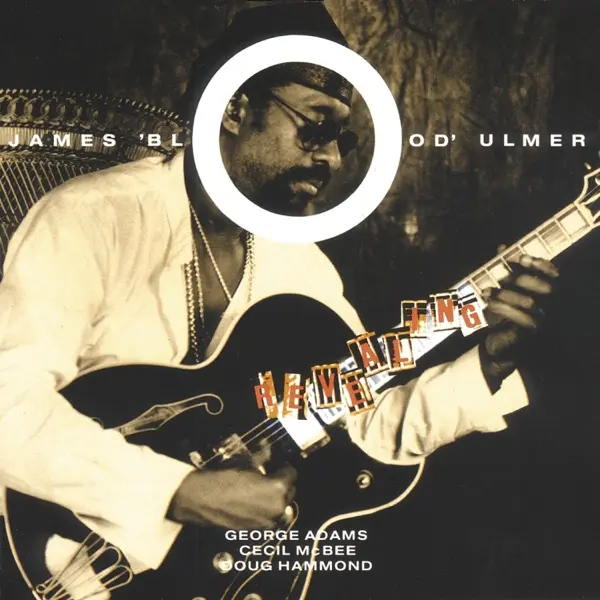 In 1977, James Blood Ulmer recorded a four-track New York session, later released by In+Out on the 1990 archival disc Revealing.
Revealing contains four Ulmer originals performed with tenor saxophonist George Adams, bassist Cecil McBee, and drummer Doug Hammond.
“Revealing” circles through drones, chords, and solo lines inside the same harmolodic span. “Raw Groove” lurches from McBee’s compressed entry into a compact shuffle feel. “Overtime” braids Ulmer–Adams exchanges through broken melodic rounds and abrupt key turns. “Love Nest” settles into repeated bass-clarinet figures and a drone-based final lane.
1. “Revealing” (8:15)
2. “Raw Groove” (8:49)
3. “Overtime” (9:01)
4. “Love Nest” (10:05)
Tales of Captain Black
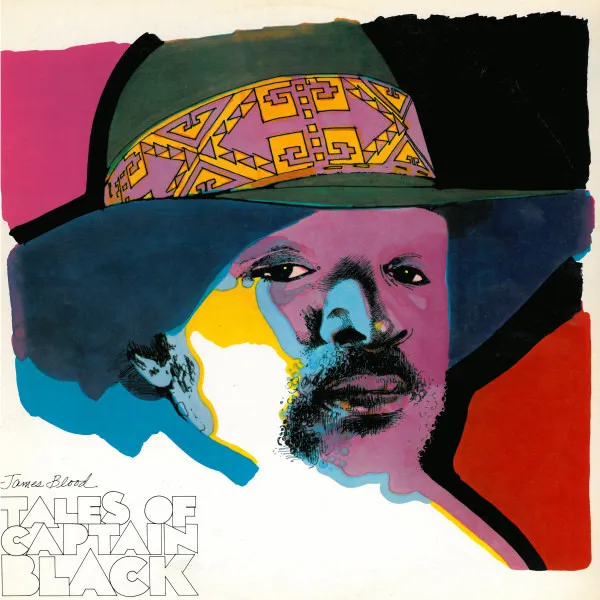 James Blood Ulmer released his first widely issued leader album, Tales of Captain Black, in 1979 on Artists House under the name James Blood.
Tales of Captain Black contains eight Ulmer originals, performed by Ulmer with alto saxophonist Ornette Coleman, electric bassist Jamaaladeen Tacuma, and drummer Denardo Coleman. The quartet places electric guitar against alto saxophone statements, mobile electric bass, and trap-set accent changes.
“Tales of Captain Black” tangles Ulmer’s root figure with Tacuma’s counter-motion while Coleman traces a higher line over the ensemble. “Moons Shine” braids long repeated phrases through drone-like chords, microtonal unison, and arpeggios that cross the bass motion. “Revelation March” fractures into short group fragments that interrupt the march pattern. “Revealing” sharpens its earlier material through angular harmonic turns and denser rhythmic pressure.
A1. “Theme From Captain Black” (3:14)
A2. “Moons Shine” (3:52)
A3. “Morning Bride” (4:57)
A4. “Revelation March” (4:32)
B1. “Woman Coming” (3:38)
B2. “Nothing to Say” (4:13)
B3. “Arena” (4:24)
B4. “Revealing” (4:42)
Sessions occurred on December 5, 1978, at RPM Sound in New York with producers John Snyder and Ornette Coleman. The original Artists House gatefold housed an eight-page booklet with notated music and the harmolodic guitar clef attributed to Ulmer. Carol Friedman directed the sleeve, with artwork by Shelby McPherson, Chief Z.K. Oloruntoba, and Sarah Penn.
During the same window, Ulmer joined Arthur Blythe’s Columbia septet on Lenox Avenue Breakdown. He returned for Illusions, a 1980 Blythe album with pianist John Hicks, bassist Fred Hopkins, cellist Abdul Wadud, tuba player Bob Stewart, and drummer Steve McCall.
Are You Glad to Be in America?
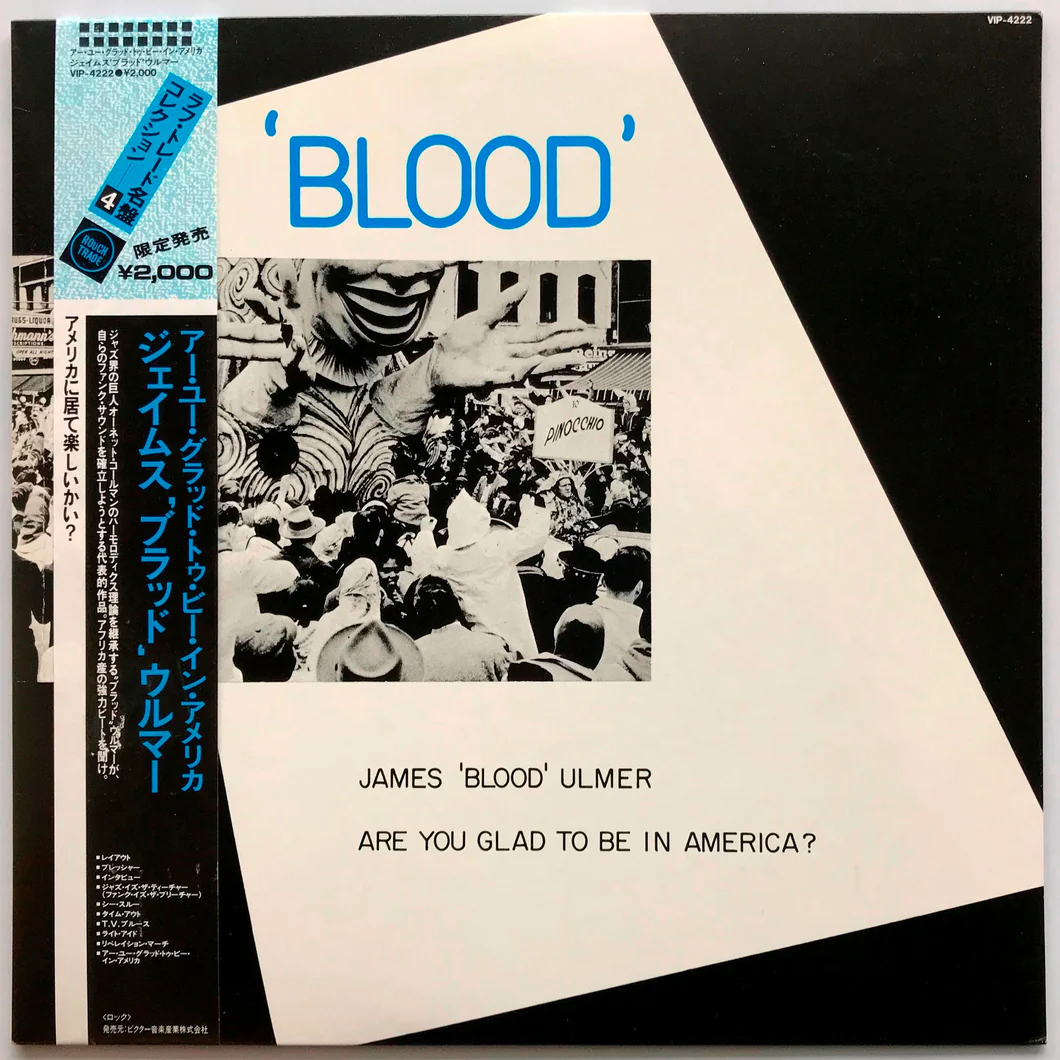 James Blood Ulmer released his second widely issued leader album, Are You Glad to Be in America?, in 1980 on Rough Trade in the United Kingdom.
Are You Glad to Be in America? contains ten Ulmer originals on a horn-and-double-drum lineup with rhythm guitarist William Patterson, bassist Amin Ali, drummers Ronald Shannon Jackson and G. Calvin Weston, and horn players Olu Dara, Oliver Lake, and David Murray. Ulmer sings “Jazz Is the Teacher (Funk Is the Preacher)” and the title piece.
“Layout” jolts through square-dance figures and folk-riff turns. “Pressure” tightens the pace after the first track. “Interview” stutters through stop-start horns, punctuated unison, and an ascending guitar figure that lands in a hard chord. “Jazz Is the Teacher (Funk Is the Preacher)” chants through shouted and growled vocal phrases, horn pumps, and fast bass motion around the theme. “See-Through” drops the tempo slightly but drives toward a sudden horn stop.
“Time Out” races through a chattering mass of cross-talk, with each line pressed into the same high-speed lane. “T.V. Blues” slinks through walking bass and street-corner horn calls. “Are You Glad to Be in America?” splices the vocal phrases through a blues-rooted track with a fractured mix.
A1. “Layout” (5:02)
A2. “Pressure” (3:48)
A3. “Interview” (3:06)
A4. “Jazz Is the Teacher (Funk Is the Preacher)” (4:19)
A5. “See-Through” (3:50)
B1. “Time Out” (5:19)
B2. “T.V. Blues” (4:32)
B3. “Light Eyed” (3:56)
B4. “Revelation March” (3:18)
B5. “Are You Glad to Be in America?” (4:37)
Sessions occurred on January 17, 1980, at RCA Studios in New York with producers John Snyder and Ulmer. Alec Head recorded the album for a Rough Trade issue mastered by Allan Tucker. The Rough Trade mix credits Ulmer with Geoff Travis, Roger Trilling, and Mayo Thompson. Artists House issued the 1981 US edition with a Bob Blank remix, revised sequence, and alternate cover.
Rough Trade lifted “Are You Glad to Be in America?” as a 1980 single backed with “T.V. Blues.”
Later in 1980, Ulmer formed Music Revelation Ensemble for No Wave, a Moers Music album taped at Studio 57 in Düsseldorf. The quartet matched Ulmer with David Murray, Amin Ali, and Ronald Shannon Jackson.
Free Lancing
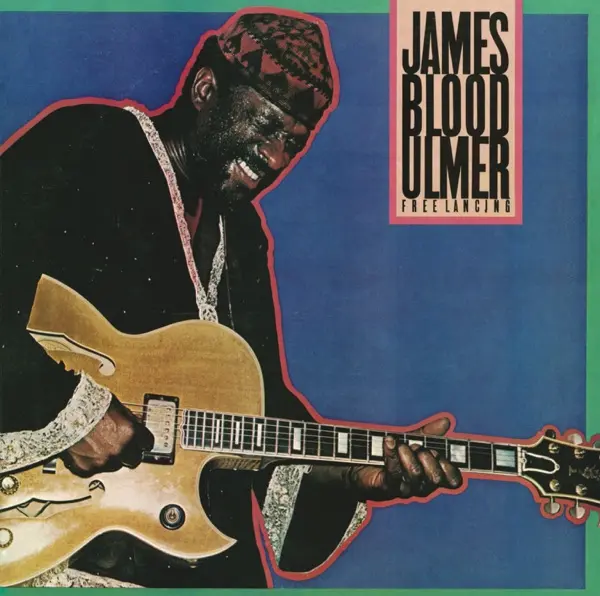 James Blood Ulmer released his first Columbia album, Free Lancing, in 1981.
Free Lancing contains ten Ulmer originals, performed with returning players Ali, Weston, Murray, Lake, and Dara. Ronnie Drayton joins as second guitarist on three titles, while Diane Wilson, Irene Datcher, and Zenobia Konkerite add backing voices to the same vocal tracks.
“Timeless” rips through jagged instrumental figures and raw guitar shards. “Pleasure Control” chants over a gospel-leaning setup with Ulmer’s voice answered by female replies. “Night Lover” swerves through a Latin-tinged pattern without smoothing the ensemble edges. “Where Did All the Girls Come From?” overlays Ulmer’s vocal with female responses and keeps the track in a rough dance lane. “High Time” struts under a horn back line with hard section hits. “Hijack” gives Dara a broad solo inside the horn-trio front.
A1. “Timeless” (4:22)
A2. “Pleasure Control” (5:00)
A3. “Night Lover” (5:22)
A4. “Where Did All the Girls Come From?” (4:38)
A5. “High Time” (4:00)
B1. “Hijack” (4:42)
B2. “Free Lancing” (4:37)
B3. “Stand Up to Yourself” (3:44)
B4. “Rush Hour” (5:32)
B5. “Happy Time” (5:11)
Ulmer produced and arranged Free Lancing with associate producers Jim Fishel and Roger Trilling. Tim Geelan engineered the album with assistant Lou Schlossberg for a Columbia issue mastered by Joe Gastwirt. Carin Goldberg designed the sleeve with Carol Friedman photography.
Black Rock
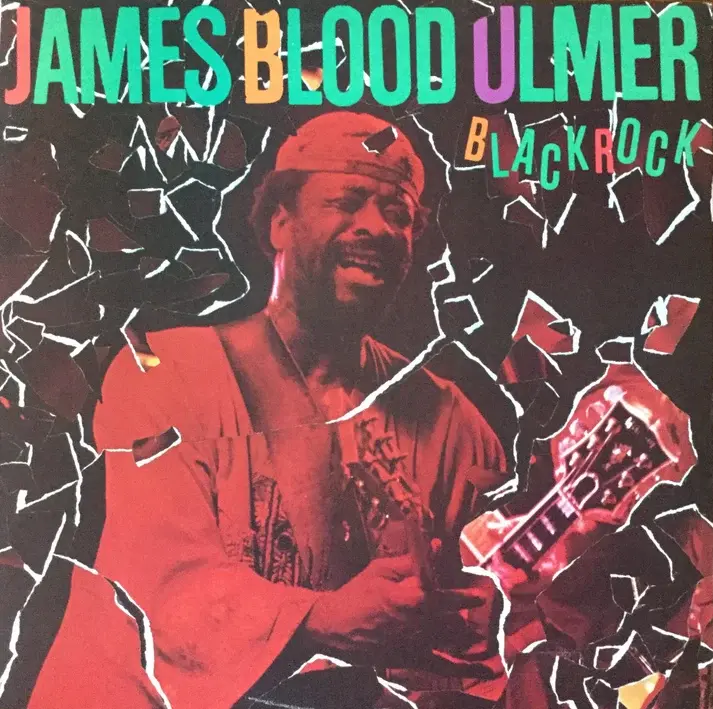 James Blood Ulmer released his second Columbia album, Black Rock, in 1982.
Black Rock contains nine Ulmer originals and co-writes with returning players Calvin Weston and Irene Datcher. The album also features Ali, Drayton, drummer Cornell Rochester, and saxophonist Sam Sanders. Ulmer sings three titles; Datcher joins on “Family Affair” and “Love Have Two Faces,” and Ali takes lead vocal on “Fun House.”
“Open House” hurls three interlocked riffs through 12/4 motion, popped bass, and Ulmer’s scalded lead break. “Black Rock” chants through shouted Ulmer–Weston exchanges and Ali’s deep line. “Moonbeam” drives Sanders’ flute and tenor figures over doubled chord riffs. “Family Affair” slows into Ulmer–Datcher semi-unison, a hypnotic riff, and a stop-start turn under the lead break.
“More Blood” lets Ulmer cut across the harmolodic grid with serrated phrases. “Love Have Two Faces” settles into a slow vocal exchange before sudden breakouts and a final solo. “Overnight” detonates with Weston’s hard motion and Sanders’ alto cries. “Fun House” lurches through a slowed harmolodic pattern and Ulmer’s drawled vocal. “We Bop” fires a machine-gun line through Sanders–Ulmer unison, accent-arpeggio bursts, and crossing figures.
A1. “Open House” (5:21)
A2. “Black Rock” (3:23)
A3. “Moonbeam” (5:11)
A4. “Family Affair” (7:26) – Ulmer, Datcher
B1. “More Blood” (4:43)
B2. “Love Have Two Faces” (5:29)
B3. “Overnight” (3:26)
B4. “Fun House” (4:53) – Ulmer, Weston
B5. “We Bop” (2:58)
Sessions occurred in 1982 at the Power Station in New York with Ulmer as producer. Columbia mastered Black Rock at its New York recording facility.
Odyssey
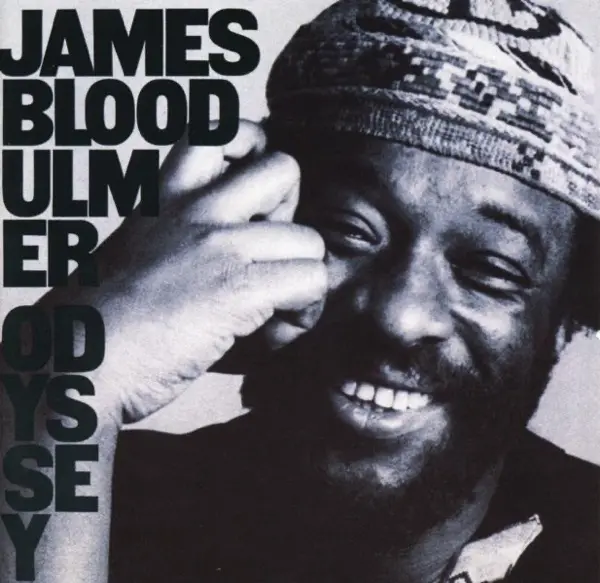 James Blood Ulmer released his third Columbia album, Odyssey, in 1983.
Odyssey contains eight Ulmer originals in a three-piece format with violinist Charles Burnham and drummer Warren Benbow. Burnham occupies the string-counterline role beside Ulmer’s guitar and voice, while Benbow supplies the album’s percussion frame.
“Church” jolts between open improvisation and spare dance figures. “Little Red House” rasps through Ulmer’s husky vocal and Burnham’s angled replies. “Love Dance” braids a drone with Eastern-tinged turns and long Ulmer–Burnham exchanges. “Are You Glad to Be in America?” chants through a nursery-rhyme contour in the vocal line.
“Election” tightens a plain theme into intricate six-string figures. “Please Tell Her” pleads through a slow delivery with Burnham’s dreamlike counterline. “Swing & Things” careens between dissonant unison and boogie-derived motion.
A1. “Church” (4:54)
A2. “Little Red House” (4:45)
A3. “Love Dance” (5:05)
A4. “Are You Glad to Be in America?” (3:40)
B1. “Election” (3:26)
B2. “Odyssey” (5:01)
B3. “Please Tell Her” (4:10)
B4. “Swing & Things” (4:32)
Sessions spanned March through May 1983 at the Power Station with Ulmer as producer and John Wright as engineer. Columbia credits Patricia Samuel and Audrey Satterwhite as mix engineers.
Part Time
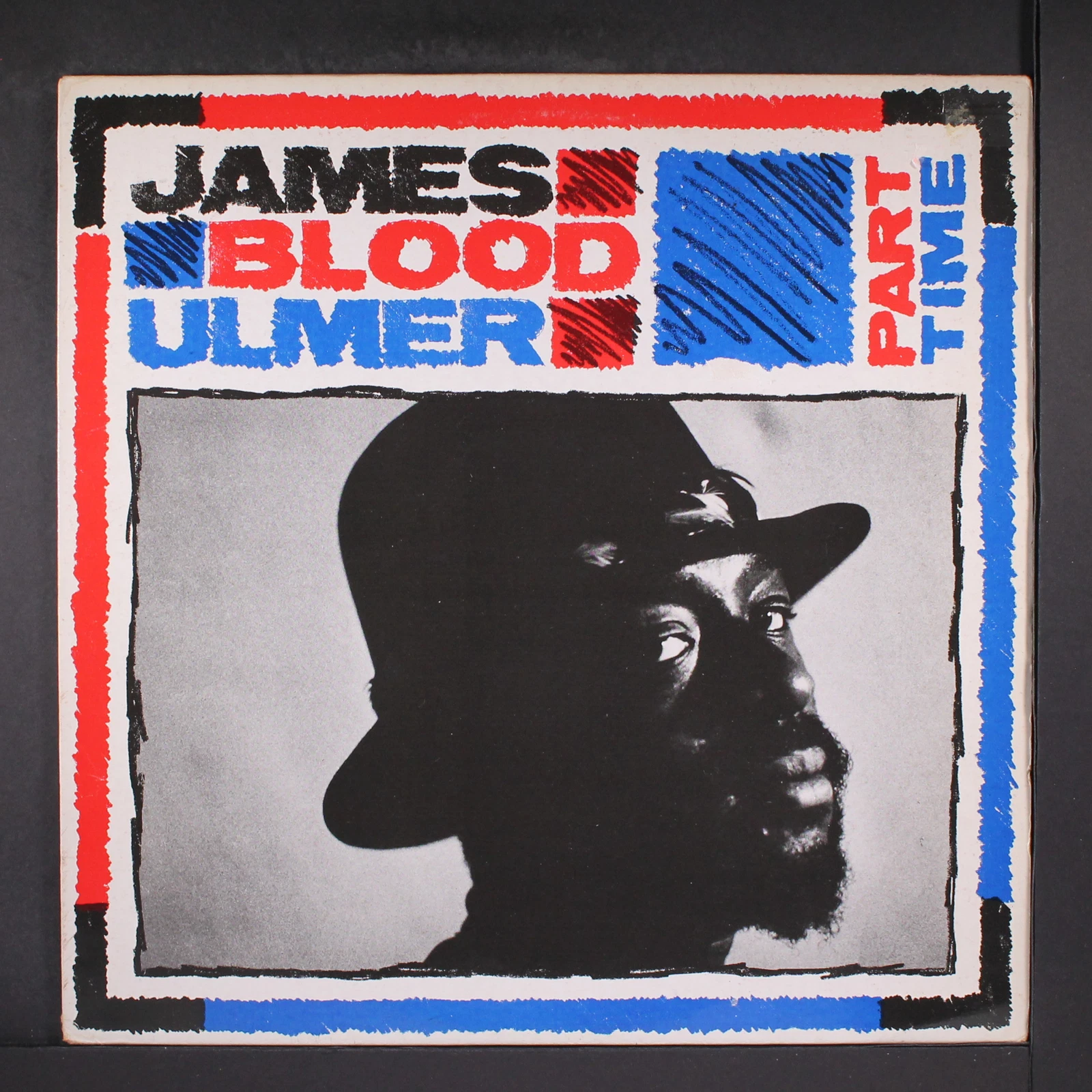 James Blood Ulmer released the live album Part Time in 1984 on Rough Trade.
Part Time documents the Odyssey trio at the 1983 Montreux Jazz Festival. The album combines four titles from Odyssey with the concert pieces “Part Time,” “Encore,” and “Mr. Tight Hat.”
“Swings & Things” compresses the live trio into terse Ulmer–Burnham jabs over Benbow’s hard forward motion.
A1. “Part Time” (4:55)
A2. “Little Red House” (5:40)
A3. “Love Dance” (6:39)
A4. “Encore” (2:59)
B1. “Are You Glad to Be in America?” (3:38)
B2. “Swings & Things” (3:27)
B3. “Mr. Tight Hat” (5:03)
Ulmer recorded Part Time on July 21, 1983, at the Montreux Jazz Festival in Switzerland. Rough Trade issued the album with sleeve art by Andy Mlodecki.
Ulmer next joined David Murray for the guitarist’s mid-eighties sideman return on Children and Recording N.Y.C. 1986. He also formed Phalanx with tenor saxophonist George Adams, first with bassist Amin Ali and drummer Calvin Weston on Got Something Good for You, a 1985 Hamburg session for Moers Music.
Live at the Caravan of Dreams
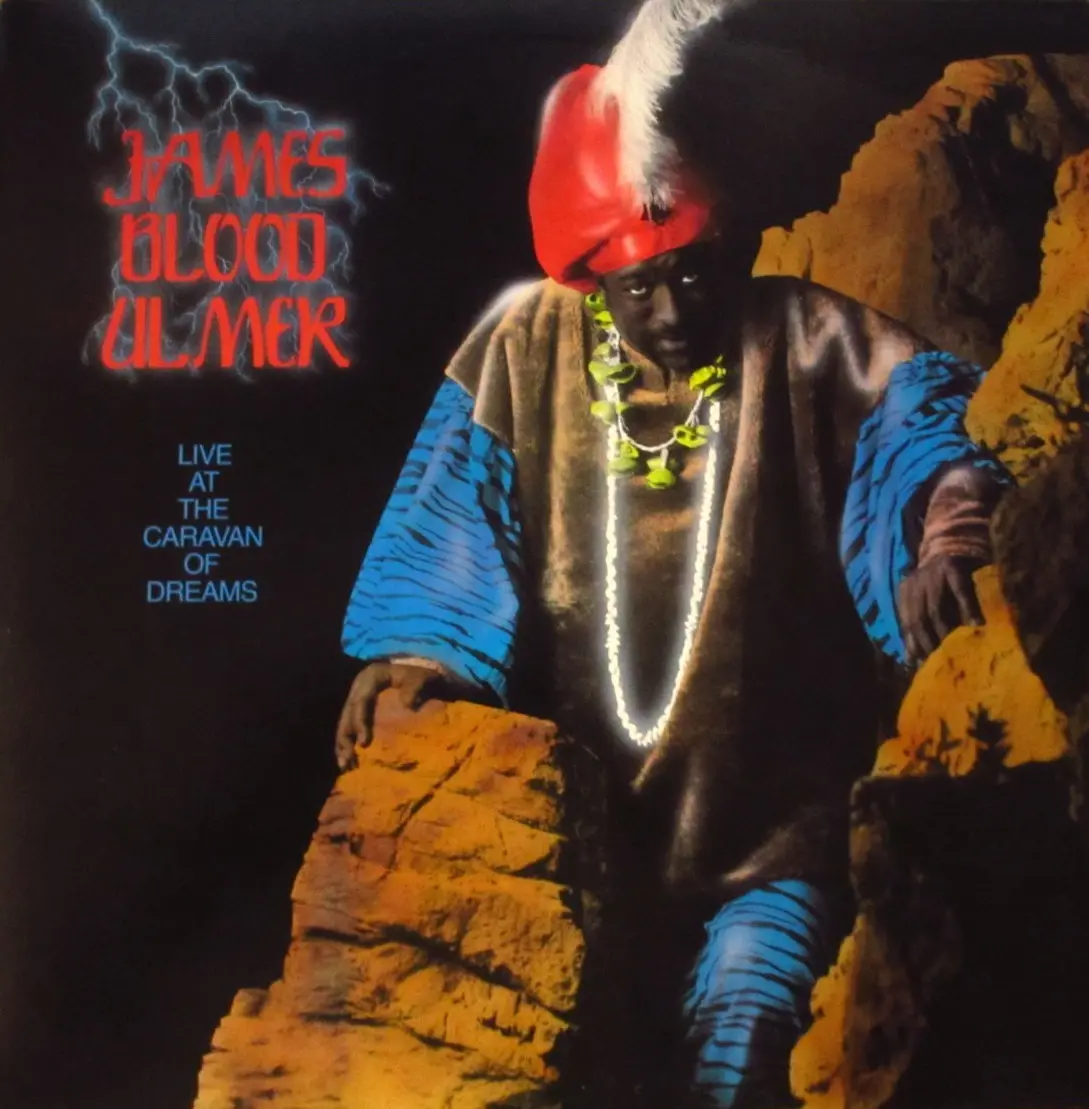 James Blood Ulmer released Live at the Caravan of Dreams in 1986 on Caravan of Dreams Productions.
Live at the Caravan of Dreams documents a revised live quartet at the Fort Worth venue. Amin Ali returns to the Odyssey trio, giving Ulmer, Burnham, and Benbow an electric-bass counterpart across the eight-title program.
“Cheering” slips through a humid rhythmic lane while Ulmer rasps across the live quartet. “Church” hangs on a greasy suspended figure, with Ulmer and Burnham answering each other in restrained strokes.
1. “Are You Glad to Be in America?” (4:28)
2. “The Little Red House” (4:34)
3. “Cheering” (4:43)
4. “Recess” (5:59)
5. “Revealing” (3:26)
6. “Lonely Man” (4:32)
7. “Church” (5:37)
8. “I Need Love” (4:06)
Ulmer recorded Live at the Caravan of Dreams in 1985 at the Fort Worth venue with producer Kathelin Hoffman.
Phalanx recorded Original Phalanx in February 1987 at Sound Ideas in New York with Adams, bassist Sirone, and drummer Rashied Ali. The quartet returned for In Touch in February 1988 at A&R Recording.
America – Do You Remember the Love?
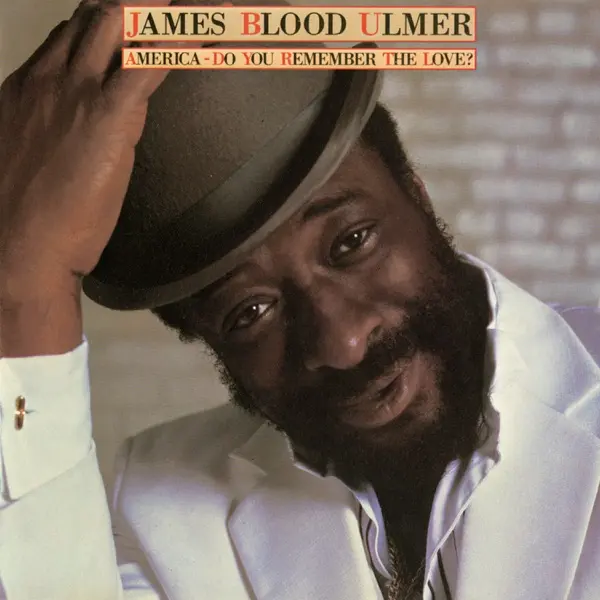 James Blood Ulmer released America – Do You Remember the Love? in 1987 on Blue Note.
America – Do You Remember the Love? contains six Ulmer originals and marks his lone Blue Note leader album. The studio band pairs Ulmer with Material bassist Bill Laswell, twelve-string guitarist and banjoist Nicky Skopelitis, drummer Ronald Shannon Jackson, and backing vocalists Bernard Fowler, Fred Fowler, and Muriel Fowler.
“Show Me Your Love, America” rounds off its pre-chorus phrase and places Ulmer’s vocal ahead of the harsher guitar edges.
A1. “I Belong in the U.S.A.” (6:40)
A2. “Lady Blue” (6:17)
A3. “After Dark” (6:18)
B1. “Show Me Your Love, America” (7:24)
B2. “Black Sheep” (3:44)
B3. “Wings” (5:31)
Sessions occurred in 1987 at the Power Station, Quadrosonic, and RPM in New York with Ulmer as producer. Blue Note issued America – Do You Remember the Love? in a Paula Scher sleeve.
Ulmer revived Music Revelation Ensemble at A&R Recording in February 1988 with David Murray, Jamaaladeen Tacuma, and Ronald Shannon Jackson. His guitar and vocal credits also appear on Calvin Weston’s Dance Romance for In+Out.
Blues Allnight
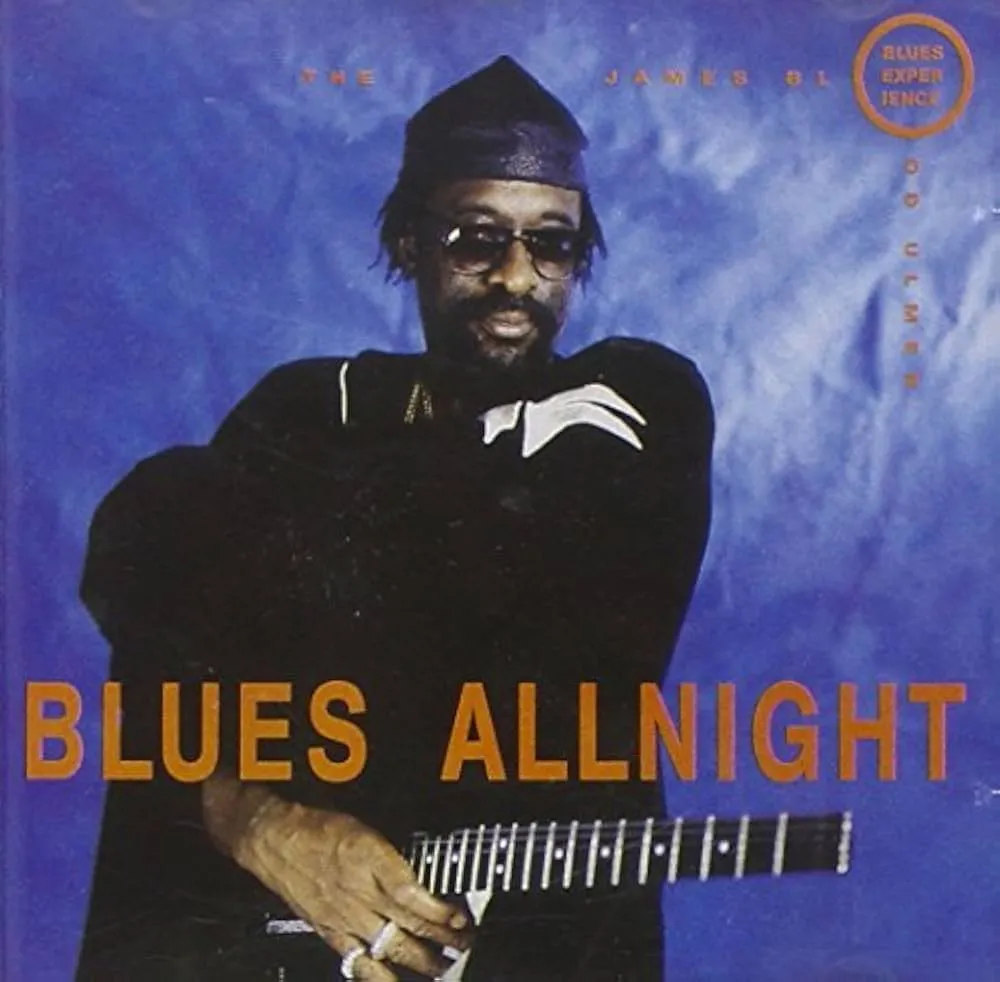 James Blood Ulmer Blues Experience released Blues Allnight in 1990 on In+Out.
Blues Allnight contains eight Ulmer originals, performed with returning bassist Amin Ali, returning guitarist Ronnie Drayton, returning drummer G. Calvin Weston, and keyboardist Winnie Leyh, each dual-credited with backing vocals.
“Peace and Happiness” declaims through sermon-like vocal blocks. “Baby Snatcher” grinds on a repeated vamp.
1. “Blues Allnight” (5:09)
2. “Calling Marry” (5:33)
3. “Peace and Happiness” (4:08)
4. “She Ain’t So Cold” (4:19)
5. “Changing Times” (4:08)
6. “Baby Snatcher” (4:32)
7. “Boss Machine” (4:09)
8. “I Don’t Know Why” (5:22)
Sessions occurred in May 1989 at Calren Studios in West Germany with producers Ulmer and Frank Kleinschmidt. Winnie Leyh mixed Blues Allnight in October 1989 at a West German studio credited under her name. In+Out issued the album with Grace Roselli cover photography and Bad Mr. Ulf graphic design.
Music Revelation Ensemble recorded Elec. Jazz in March 1990 at A&R Recording in New York. The DIW album placed Ulmer with David Murray, Amin Ali, and drummer Cornell Rochester.
Discography:
- Tales of Captain Black (1979 • James Blood)
- Are You Glad to Be in America? (1980 • James ‘Blood’ Ulmer)
- Free Lancing (1981)
- Black Rock (1982)
- Odyssey (1983)
- Part-Time (1984)
- Got Something Good for You (1986 • Phalanx)
- Live at the Caravan of Dreams (1986)
- America – Do You Remember the Love? (1987)
- Blues Allnight (1990)
- Revealing (1990, recorded 1977)
Sources:
- Discogs: James Blood Ulmer
- RYM: James Blood Ulmer
- 45cat: James Blood Ulmer
- MusicBrainz: James Blood Ulmer
Artist/Album Pages:
Hiroki Tamaki — 玉木宏樹 (born March 13, 1943) — is a Japanese violinist, composer, and conductor from...
Spys were an American hard-rock band that landed an FM hit with "Don't Run My Life" from their 198...
Skorpio was a Hungarian rock band whose 1974 debut A rohanás paired organ-led hard rock and spawne...
Wando — aka Wanderley Alves dos Reis (Oct. 12, 1945 — Feb. 8, 2012) — was a Brazilian singer/songw...
Jean-Pascal Boffo is a French guitarist and composer behind the 1986–88 Musea albums Jeux de Nains...
Igra Staklenih Perli was a Yugoslav space-rock band that released the 1979/80 RTB albums Igra Stak...
Azahar was a Spanish symphonic-rock band that released the 1977–79 Movieplay albums Elixir and Aza...
Upryzing was an American jazz-rock band behind the 1978 album Conversion by Fire on Hawk Records. ...
Space Art was a French electronic music duo formed in Paris by keyboardist Dominique Perrier and d...
Gamma was an American hard-rock band from San Francisco, formed by guitarist and Montrose mastermi...
Manfred Mann's Earth Band was an English symphonic/art-rock band that released a pair of albums on P...
B. Baker Chocolate Co. was an American jazz-funk supergroup that released a 1979 self-titled albu...