Iggy Pop

Iggy Pop is an American rock singer who rose to infamy as the frontman of proto-punks The Stooges, which released three albums between 1969 and 1973. He launched his solo career in 1977 with The Idiot, recorded in Berlin with David Bowie and containing the cult hits “Nightclubbing” and “China Girl” (later recorded by Bowie).

Later that year, he released Lust for Life, again produced by Bowie with the fan-favorite “The Passenger” (later covered by Siouxsie and the Banshees). After parting company with Bowie, Pop issued the 1979 album New Values, scoring another cult hit with “I’m Bored.” His 1980 release Soldier paired him with ex-Sex Pistols bassist Glen Matlock. The following year’s Party yielded “Bang Bang,” also covered by Bowie. In 1984, he sang the theme song to Repo Man.

Pop re-teamed with Bowie on the 1986 release Blah-Blah-Blah, which spawned the modern-rock hits “Cry for Love,” “Real Wild Child,” and “Isolation.” After pairing with ex-Pistol Steve Jones on his 1988 release Instinct, Pop finally scored a Billboard Top 40 hit with “Candy,” a duet with B-52’s singer Kate Pierson from his 1990 album Brick by Brick.


Background

Pop was born James Newell Osterberg Jr. in Muskegon, Michigan, on April 21, 1947, the son of Louella (née Christensen; 1917–1996) and James Newell Osterberg Sr. (1921–2007). He grew up near Ypsilanti in a trailer park household and took up drums as a teenager.

In 1965, he joined The Iguanas, a garage band that specialized in British Invasion covers. He adopted the stagename Iggy Pop: “Iggy” derived from the first two letters in “Iguanas”; “Pop” a nickname given by his bandmates.

He then joined The Prime Movers, a blues-tinged rock combo. After a brief enrollment at the University of Michigan, he went to Chicago and drummed with established blues players before returning to Ann Arbor with a broader musical base. Back in Michigan, he abandoned drums for the microphone, inspired by the stage antics of Doors frontman Jim Morrison, who shaped Pop’s idea of what a frontman could do with confrontation, physical risk, and audience tension.


The Stooges

In 1967, he formed the Psychedelic Stooges with guitarist Ron Asheton, drummer Scott Asheton, and bassist Dave Alexander. Their first public booking came in 1968 at Detroit’s Grande Ballroom. Soon after, they signed with Elektra as The Stooges. They linked with John Cale for their 1969 debut album, followed by the 1970 release Fun House, a template for fractious rock minimalism.

Sales aside, The Stooges built a fierce live reputation through repetitive riff structures, blunt force, and Pop’s stage assaults, which included dives into the audience and self-inflicted punishment. By 1971, drug strain and label trouble triggered the band’s collapse.

David Bowie kick-started the story when Pop teamed with guitarist James Williamson for Raw Power, which arrived in 1973 under the Iggy and the Stooges banner. That third album did not steady the situation for long. The group collapsed again in 1974, and Osterberg moved into Los Angeles under the weight of legal trouble and addiction, a closing chapter on the Stooges years and the unstable prelude to his solo career.


Kill City
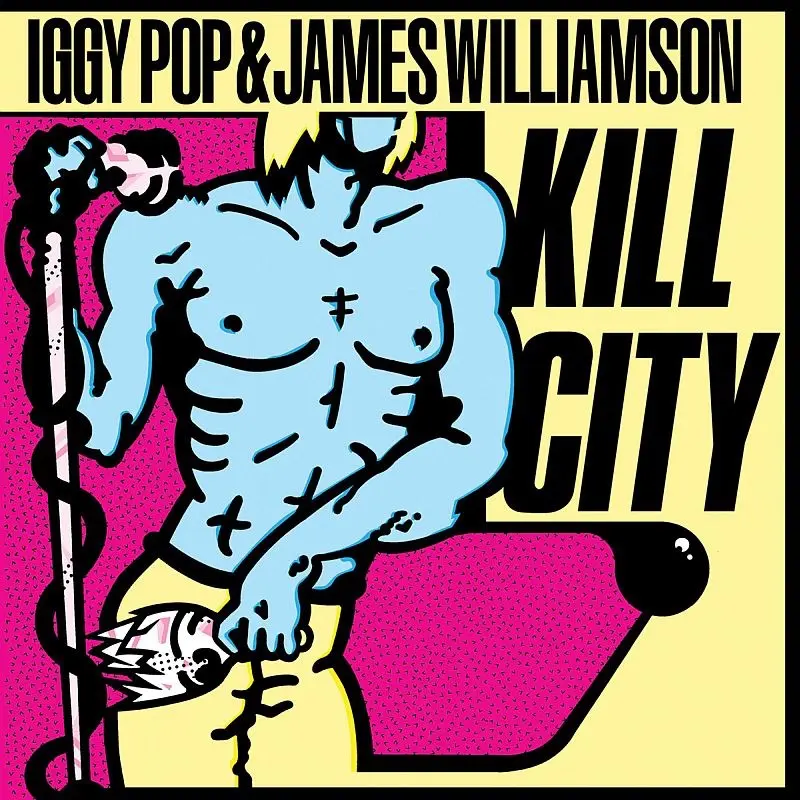
In late 1977, Bomp! Records issued Kill City, a collection of 1974–75 demos by Iggy Pop and James Williamson.

Williamson drives the record with clipped riff figures and short lead flares. Pop answers with a dry sneer over Scott Thurston’s keyboard lines, while John Harden’s saxophone cuts through the rough texture. Pop and Williamson wrote the album apart from “Master Charge,” which Williamson wrote with Thurston.

“Kill City” opens with a fast slash-and-lunge pattern. “Sell Your Love” drops into a sour, slower pull, while “Beyond the Law” snaps the set back into harder acceleration. “I Got Nothin’” shifts speed inside the arrangement. “Johanna” stretches the tension with saxophone accents. “No Sense of Crime” settles into a lower drag, and “Lucky Monkeys” adds a sharper satirical edge.

A1. “Kill City” (2:20)
A2. “Sell Your Love” (3:36)
A3. “Beyond the Law” (3:00)
A4. “I Got Nothin’” (3:23)
A5. “Johanna” (3:03)
A6. “Night Theme” (1:20)

B1. “Night Theme (Reprise)” (1:04)
B2. “Consolation Prizes” (3:17)
B3. “No Sense of Crime” (3:42)
B4. “Lucky Monkeys” (3:37)
B5. “Master Charge” (4:33)

Pop and Williamson recorded the Kill City material at Maconnel Studios in Los Angeles and pitched the demos to assorted labels, but to no avail. In 1977, as Pop gained solo traction, Williamson remixed the tracks for Bomp!, the LA-based label venture of zinester Greg Shaw, an underground rock enthusiast and longtime Stooges champion. The album appeared with a sleeve illustration by David Allen.

Bomp pressed the first Kill City run on green vinyl. “Consolation Prizes” appeared as a single (b/w “Johanna”). In the UK, Radar Records issued “Kill City” as a 1978 single (b/w “I Got Nothin’”).


Partnership with David Bowie

David Bowie, the late-period Stooges benefactor, invited Pop as a road-mate for Isolar, the 1976 tour behind Station to Station.

The two first met in early 1972 when Pop visited London in search of musicians for the new Stooges lineup. Bowie soon mythologized Iggy in “The Jean Genie,” a No. 2 UK hit that autumn. Their association deepened after the Stooges collapse. Later, after the spring–summer Isolar tour, they left the road with a shared plan to reset Pop’s life and launch his proper solo career.

In June 1976, Bowie took Pop to the Château d’Hérouville in France, where sessions commenced on a new album with bassist-engineer Laurent Thibault. Pop wrote lyrics over Bowie’s music, which drew on electronic repetition, hard rhythmic pulse, and spare keyboard texture. “Sister Midnight” and “China Girl” emerged from those sessions. Bowie filled out the tracks with keyboards, piano, guitar, and other instrumental detail. When another booking forced them out of the château, they shifted to Musicland in Munich for additional sessions.

From Munich they moved to Berlin, where longtime Bowie soundman Tony Visconti mixed Pop’s album at Hansa. Bowie had long attached artistic weight to the city, which offered both men distance from the habits and attention that had shaped their recent years. They settled in nearby Schöneberg for their next phase of work. 


The Idiot

Iggy Pop released his debut solo album, The Idiot, on March 18, 1977, on RCA.

The album trades blunt riff attack for machine pulse, recessed space, and slow chord cycles. Bowie wrote most of the music, and Pop answers those structures with clipped lines, flat declarations, and sudden turns into ache. Guitarists Carlos Alomar and Phil Palmer cut terse figures across the surface. Bowie spreads synthesizer wash and piano through the arrangements, while bassists Laurent Thibault and George Murray, with drummers Michel Santangeli and Dennis Davis, pin the pulse to a hard chassis.

“Sister Midnight” opens with a stalking beat and clipped guitar chatter. “Nightclubbing” drops into a slow electronic lurch built from bare drum-machine strikes and long pockets of silence. “Funtime” tightens the attack with abrasive guitar and a barked refrain. “Baby” strips the rhythm to bass and synthesizer. “China Girl” carries the longest vocal line on side one over distorted guitar and raw keyboard tone. “Dum Dum Boys” folds spoken memory into a long instrumental rise, while “Mass Production” closes with tape noise, metal scrape, and a mechanical crawl that widens into a dense wall of sound.

Pop and Bowie wrote the album apart from “Sister Midnight,” which adds Carlos Alomar to the credit.

A1. “Sister Midnight” (4:19)
A2. “Nightclubbing” (4:14)
A3. “Funtime” (2:54)
A4. “Baby” (3:24)
A5. “China Girl” (5:08)

B1. “Dum Dum Boys” (7:12)
B2. “Tiny Girls” (2:59)
B3. “Mass Production” (8:24)

Pop recorded The Idiot at Château d’Hérouville in France and Musicland in Munich during 1976 with producer David Bowie and engineer Laurent Thibault. Tony Visconti handled the final mix.

Bowie titled the album after Dostoevsky’s The Idiot. Andy Kent shot the black-and-white cover image after Erich Heckel’s Roquairol.

RCA issued “Sister Midnight” (b/w “Baby”) as a 7-inch in February 1977. Bowie repurposed the backing track for “Red Money” on his 1979 album Lodger.

“China Girl” appeared as a second RCA 7-inch on May 13, 1977, with the same flip. The Idiot reached No. 72 on the Billboard Top LPs & Tape chart, No. 30 on the UK Albums Chart, and No. 88 in Australia.


Touring with Bowie and Berlin, 1977

The Idiot appeared two months after the current Bowie album, Low, recorded in sequence at d’Hérouville. Due to his high profile, Bowie let his album sell itself and assumed a backing role on Pop’s Idiot tour. Rehearsals opened in mid-February. The band paired guitarist Ricky Gardiner with bassist Tony Sales and drummer Hunt Sales, and the set pulled in Stooges material, The Idiot tracks, and new songs that soon fed the next album, including “Tonight,” “Some Weird Sin,” and “Turn Blue.” Bowie kept a low stage profile through the March–April run, which ended on April 16.

On April 15, near the close of that run, Pop and Bowie taped an appearance on Dinah! at CBS Television City in Los Angeles. They performed “Funtime” and “Sister Midnight,” placing Pop’s new solo unit in front of a daytime television audience far removed from the Stooges circuit.

Berlin soon gave the pair a second identity beyond the road. Bowie later described West Berlin as cheap, anonymous, and creatively freeing, and that setting suited both men after Los Angeles. Their shared image in the city quickly entered pop mythology. Kraftwerk fixed it in “Trans-Europe Express” with the line “Meet Iggy Pop and David Bowie.”

The tour also exposed the limit of the arrangement. Interviewers kept steering the conversation back to Bowie, and Pop left the run determined to claim more ground on the follow-up. He moved out of the apartment he had shared with Bowie and Coco Schwab and took his own place in the same building. Back in Berlin, he and Bowie wrote with Gardiner, then cut the next record at Hansa with the Sales brothers, Carlos Alomar, and Colin Thurston. Pop later said the album came together in eight days.

That follow-up became Lust for Life, but the sessions closed the first Bowie–Pop cycle. Bowie reduced his role from principal architect to keyboardist and co-producer, while Pop pushed harder for his own arrangements and direction. After the album, Pop resumed the road without Bowie, and Lust for Life stood as their last official collaboration until the mid-1980s.

Lust for Life

Iggy Pop released his second solo album, Lust for Life, on September 9, 1977, on RCA.

The album hits with hard snare crack, tight guitar attack, and a lean live-band frame. Guitarist Ricky Gardiner threads bright lead figures through Carlos Alomar’s rhythm slashes, while bassist Tony Sales and drummer Hunt Sales lock the songs to a taut chassis beneath Bowie’s piano, organ, and keyboard parts.

“Lust for Life” opens with a pounding beat and a broad refrain. “Sixteen” strips the set to a terse chant and a tight guitar figure. “Some Weird Sin” drives forward on a compact charge. “The Passenger” rides Gardiner’s line through a detached city drift. Side two opens “Success” with call-and-response shouts, then drops into the long confession of “Turn Blue.” “Fall in Love with Me” closes the album on a rough jam shape that the band built in the room.

Pop wrote all lyrics apart from “Turn Blue,” which he wrote with Walter Lacey.

A1. “Lust for Life” (5:13) — Bowie
A2. “Sixteen” (2:26) — Pop
A3. “Some Weird Sin” (3:42) — Bowie
A4. “The Passenger” (4:44) — Ricky Gardiner
A5. “Tonight” (3:39) — Bowie

B1. “Success” (4:25) — Bowie, Gardiner
B2. “Turn Blue” (6:56) — Bowie, Warren Peace
B3. “Neighborhood Threat” (3:25) — Bowie, Gardiner
B4. “Fall in Love with Me” (6:30) — Bowie, Hunt Sales, Tony Sales

Pop recorded Lust for Life at Hansa Studio by the Wall in West Berlin during May and June 1977 with co-producers David Bowie and Colin Thurston. Eduard Meyer assisted the engineering, and Thurston handled additional engineering and production work under the Bewlay Bros. credit.

Andrew Kent shot the cover in Pop’s dressing room during the UK tour.

RCA issued “Success” (b/w “The Passenger”) as a 7-inch on September 30, 1977. In October 1977, “Lust for Life” appeared as a second RCA 7-inch with “Success” on the flip. Lust for Life reached No. 28 on the UK album chart, No. 8 in the Netherlands, and No. 120 on Billboard Top LPs & Tape.


TV Eye Live 1977

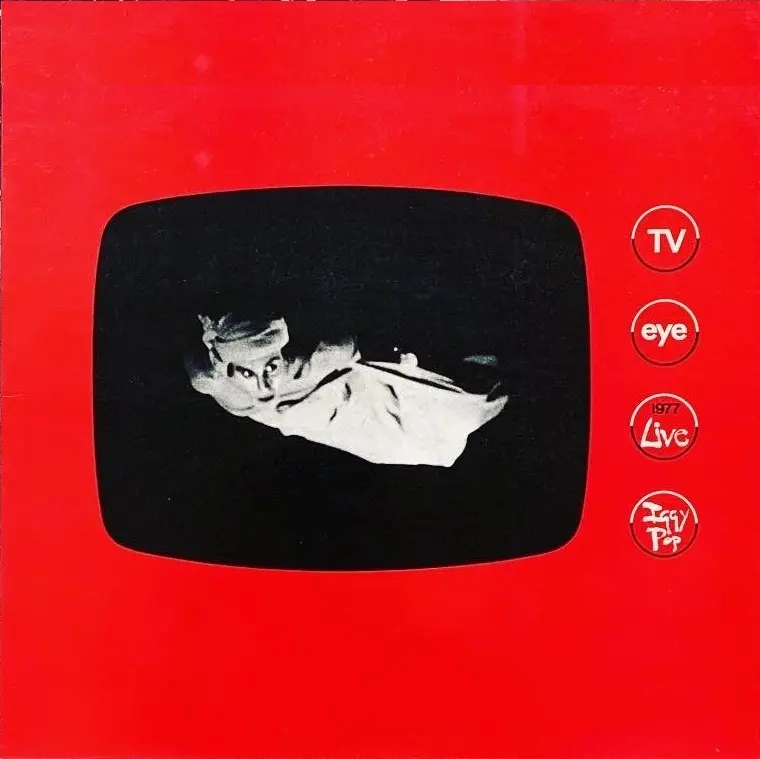
Iggy Pop released TV Eye Live 1977 on May 7, 1978, on RCA.

The record captures Pop in a stripped live frame with a thick low end and hard snare crack. Pop tears through the set with a clipped bark over bassist Tony Sales and drummer Hunt Sales, whose pressure gives each cut blunt impact. David Bowie adds piano and synthesizer to four performances. Guitarist Ricky Gardiner appears on those same cuts, while Stacey Heydon and Scott Thurston handle the remaining four.

The eight-song sequence pulls four Stooges titles, two songs from The Idiot, and two from Lust for Life. Side one opens with “T.V. Eye” and “Funtime,” then shifts to the later-tour band for “Sixteen” and “I Got a Right.” Side two returns to the spring lineup for “Dirt,” then closes with “Nightclubbing” and “I Wanna Be Your Dog.”

A1. “T.V. Eye” (4:24)
A2. “Funtime” (3:20)
A3. “Sixteen” (3:56)
A4. “I Got a Right” (4:29)

B1. “Lust for Life” (4:01)
B2. “Dirt” (5:19)
B3. “Nightclubbing” (6:16)
B4. “I Wanna Be Your Dog” (4:16)

Pop assembled TV Eye Live 1977 from soundboard tapes to complete his RCA commitment. The LP draws “T.V. Eye,” “Funtime,” and “Dirt” from the Agora in Cleveland on March 21–22, 1977; “I Wanna Be Your Dog” from the Aragon in Chicago on March 28; and the remaining four cuts from the Uptown Theater in Kansas City on October 26. Pop co-produced the release with Bowie, and Eduard Meyer handled the engineering.

Barney Wan handled the art direction, and Este shot the sleeve photography. TV Eye Live 1977 reached No. 89 in Australia.


New Values

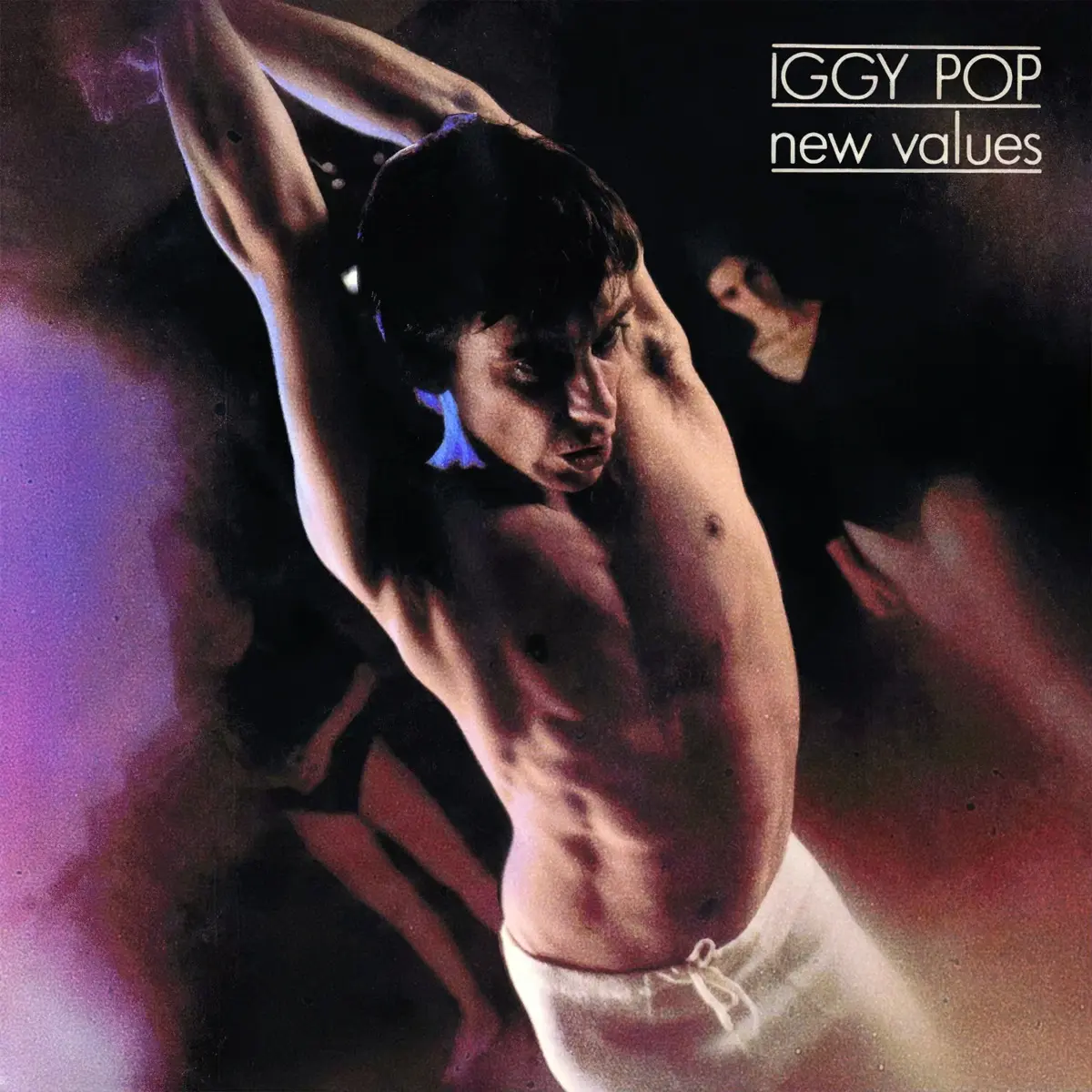
Iggy Pop released his third solo album, New Values, on April 27, 1979, on Arista. It marked his first album for the label and renewed his studio partnership with James Williamson, with Scott Thurston back in the fold.

Williamson steers the record toward terse guitar cuts and a harder rhythmic snap. Scott Thurston threads keyboards through that attack. He also adds harmonica and extra guitar. Bassist Jackie Clark and drummer Klaus Krüger hold Pop’s vocal to a blunt chassis. Horns and strings widen select tracks through John Harden and David Brock.

“Tell Me a Story” opens with jangly guitar and soft backing voices around a wary mid-tempo refrain. “Don’t Look Down,” “How Do Ya Fix a Broken Part,” and “Angel” slow the sequence with horns and female harmonies. “The Endless Sea” rides metronomic bass through a repeated three-chord figure, then thickens with violin and saxophone over synthesizer shade. “African Man” breaks that pressure with yelps over synthetic percussion.

Pop wrote most of the album. Thurston shares credit on five songs, and Williamson shares credit on “Don’t Look Down.” 

A1. “Tell Me a Story” (2:50) — Pop
A2. “New Values” (2:39) — Pop/Thurston
A3. “Girls” (3:00) — Pop
A4. “I’m Bored” (2:47) — Pop
A5. “Don’t Look Down” (3:39) — Pop/Williamson
A6. “The Endless Sea” (4:50) — Pop

B1. “Five Foot One” (4:29) — Pop
B2. “How Do Ya Fix a Broken Part” (2:55) — Pop
B3. “Angel” (3:44) — Pop/Thurston
B4. “Curiosity” (2:29) — Pop/Thurston
B5. “African Man” (3:35) — Pop/Thurston
B6. “Billy Is a Runaway” (2:31) — Pop/Thurston

Pop recorded New Values at Paramount Recording Studios in Hollywood with producer James Williamson and engineer Peter Haden. Williamson also mixed the album. Lloyd Malan assisted the production.

Paul Henry handled the sleeve design and art direction. Trevor Rogers shot the cover, and Graphyk supplied the sleeve graphics.

Arista issued “I’m Bored” (b/w “African Man”) as a 7-inch in May 1979. The label followed with “Five Foot One” (b/w “Pretty Flamingo”) later that year. A UK picture-disc edition also appeared for the second single.

New Values reached No. 60 on the UK Albums Chart. It also reached No. 180 on the Billboard 200 and No. 36 in Australia.


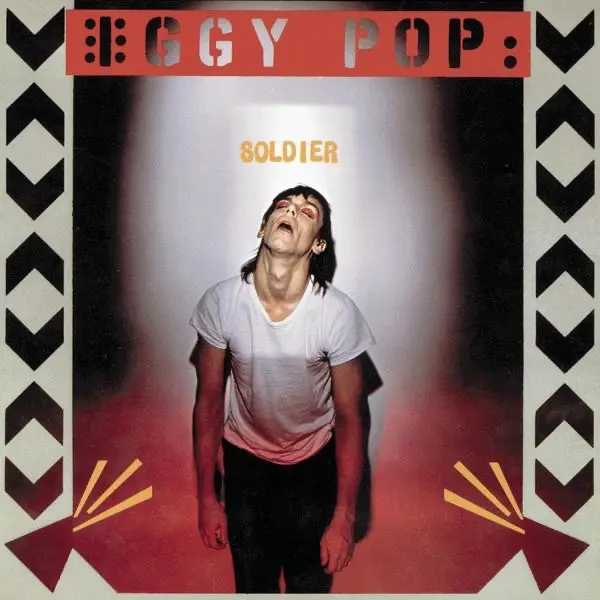
Soldier

Iggy Pop released his fourth solo album, Soldier, on February 7, 1980, on Arista.

Former Sex Pistols bassist Glen Matlock became Pop’s main collaborator on the album. Matlock brought in former Rich Kids guitarist Steve New, while Pop added Patti Smith Group alumnus Ivan Král and former XTC keyboardist Barry Andrews to the sessions. Drummer Klaus Krüger returned from New Values.

“Loco Mosquito” opens with acoustic guitar over a strutting bass line. “Knocking ’Em Down (In the City)” tightens the attack with duelling guitars under Pop’s bark. “Play It Safe” pulls a chorus chant into a darker keyboard setting, while “Mr. Dynamite” and “I Need More” push the Matlock co-writes toward a tougher riff drive.

A1. “Loco Mosquito” (3:13) — Pop
A2. “Ambition” (3:25) — Matlock, Pop
A3. “Knocking ’Em Down (In the City)” (3:20) — Pop
A4. “Play It Safe” (3:05) — Bowie, Pop
A5. “Get Up and Get Out” (2:43) — Pop
A6. “Mr. Dynamite” (4:17) — Matlock, Pop

B1. “Dog Food” (1:47) — Pop
B2. “I Need More” (4:02) — Matlock, Pop
B3. “Take Care of Me” (3:25) — Matlock, Pop
B4. “I’m a Conservative” (3:55) — Pop
B5. “I Snub You” (3:07) — Andrews, Pop

Pop recorded Soldier at Rockfield in Wales during August 1979. James Williamson started the project, then exited during the sessions. Pat Moran took the producer credit on the finished album, Peter Haden engineered it, and Thom Panunzio mixed it.

The Rockfield dates also produced one of the album’s better-known side stories. Bowie re-entered Pop’s orbit during the sessions, and “Play It Safe” picked up backing vocals from Bowie and Simple Minds. Patti Palladin, New’s partner and one-half of Snatch, also moved through the Rockfield circle. New later said Bowie made a pass at Palladin, which triggered a fight between the two men at the studio. Matlock later tied that clash to the reduced presence of New’s guitar in the finished mix, but that point remains reported session fallout, not settled production history.

Brian Griffin and Rocking Russian handled the sleeve design.

Arista issued “Loco Mosquito” (b/w “Take Care of Me”) as a 7-inch in February 1980. Soldier reached No. 62 on the UK Albums Chart, No. 78 in Australia, and No. 125 on the Billboard 200.


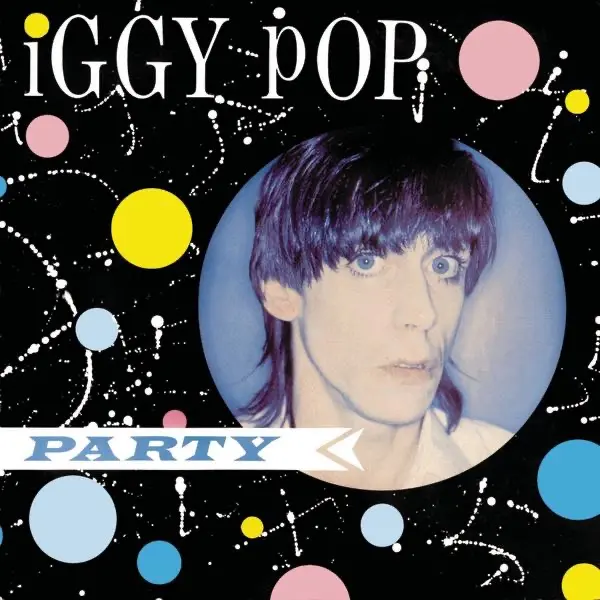
Party

Iggy Pop released his fifth solo album, Party, on June 7, 1981, on Arista.

Patti Smith Group alumnus Ivan Král became Pop’s main collaborator on Party. He wrote with Pop and handled guitar and keyboards. Guitarist Rob Duprey joins Král in the frontline, while bassist Michael Page and drummer Dougie Bowne pin the songs to a steady backbeat. Uptown Horns add brass punches to four tracks. Arranger Jimmy Whizner colors “Bang Bang,” “Sea of Love,” and “Time Won’t Let Me” with extra chart detail.

Pop wrote the album with Král apart from the Phil Phillips song “Sea of Love” and the Outsiders song “Time Won’t Let Me.”

A1. “Pleasure” (3:10)
A2. “Rock and Roll Party” (4:11)
A3. “Eggs on Plate” (3:41)
A4. “Sincerity” (2:38)
A5. “Houston Is Hot Tonight” (3:30)

B1. “Pumpin’ for Jill” (4:30)
B2. “Happy Man” (2:19)
B3. “Bang Bang” (4:08)
B4. “Sea of Love” (3:49) — originated as a 1959 hit for Phil Phillips with the Twilights.
B5. “Time Won’t Let Me” (3:22) — originated as a 1966 hit for the Outsiders.

Pop recorded Party at the Record Plant in New York during August 1980 with producer Thom Panunzio. Arista later brought Tommy Boyce into the project for additional work on “Bang Bang.”

Arista issued “Bang Bang” (b/w “Sea of Love”) as a 7-inch in May 1981. It reached No. 35 on the Billboard Club Play Singles chart.

The label followed with “Pumpin’ for Jill” (b/w “Time Won’t Let Me”) later in 1981. Party reached No. 166 on the Billboard 200 and No. 93 in Australia.


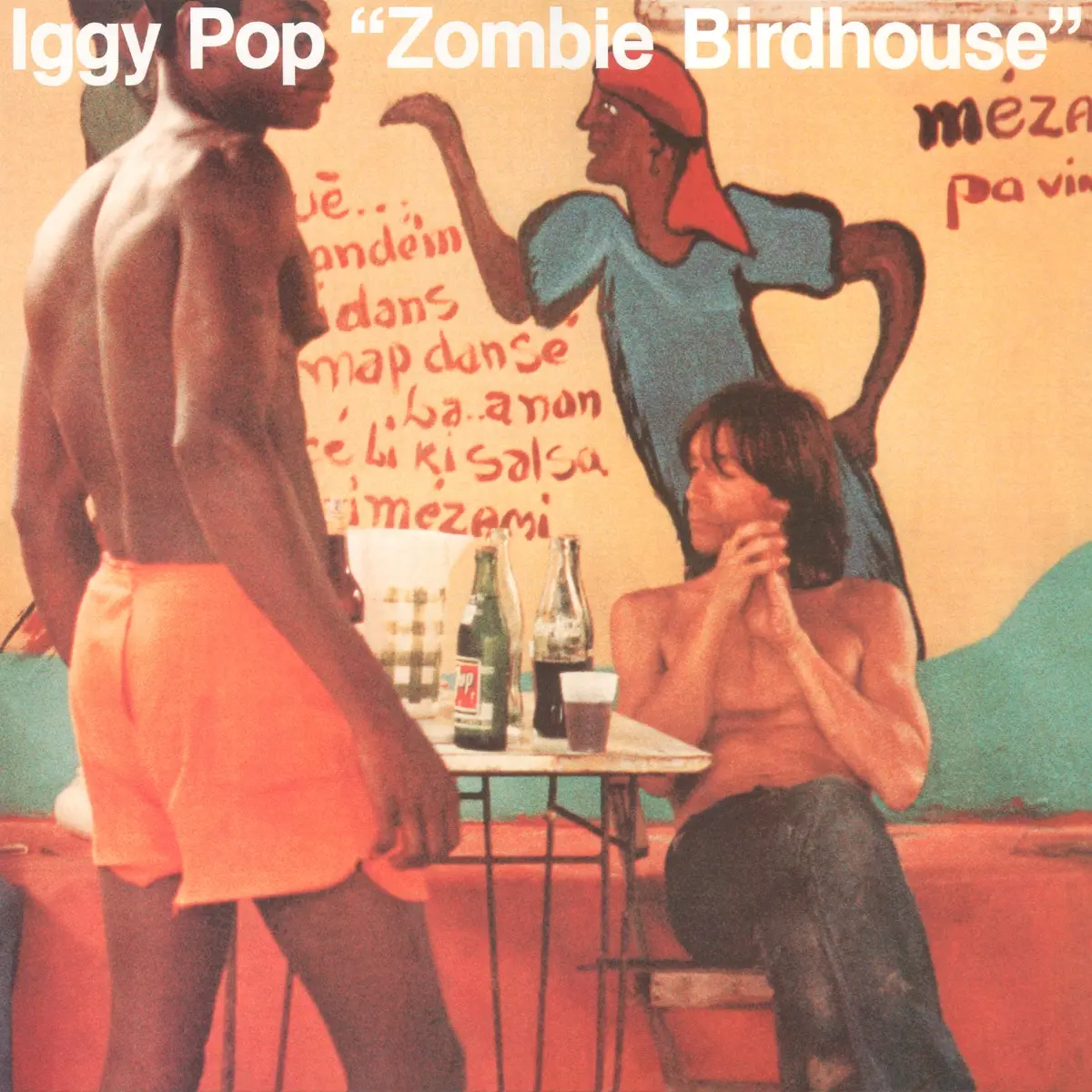
Zombie Birdhouse

Iggy Pop released his sixth solo album, Zombie Birdhouse, on September 7, 1982, on Animal.

Guitarist-keyboardist Rob Duprey became Pop’s main collaborator on Zombie Birdhouse. He wrote most of the material with Pop and built the record from treated guitar, droning keyboard lines, and clipped rhythmic turns. Blondie guitarist Chris Stein produced the sessions and added bass to five cuts, while his bandmate Clem Burke handled drums and percussion. Pop and Duprey wrote every track apart from “Ordinary Bummer” and “Street Crazies,” which Pop carried under a sole credit.

“Run Like a Villain” and “The Villagers” open the album with terse chant lines and nervous rhythmic hops. “Ordinary Bummer” sags into a worn croon and frayed howl. “Watching the News” rides an ad-lib vocal over backing clutter, and “Street Crazies” closes the set in raw splutter.

A1. “Run Like a Villain” (3:09)
A2. “The Villagers” (3:56)
A3. “Angry Hills” (3:01)
A4. “Life of Work” (3:57)
A5. “The Ballad of Cookie McBride” (3:06)
A6. “Ordinary Bummer” (2:50)

B1. “Eat or Be Eaten” (3:23)
B2. “Bulldozer” (2:23)
B3. “Platonic” (2:47)
B4. “The Horse Song” (3:05)
B5. “Watching the News” (4:19)
B6. “Street Crazies” (3:58)

Pop recorded Zombie Birdhouse at Blank Tape Studios in New York during June 1982 with producer Chris Stein and session engineer Joe Arlotta. Butch Jones handled the mix.

Stein handled the art direction, Esther Friedman shot the cover photograph, and Box Productions designed the sleeve.

On August 27, 1982, Animal issued “Run Like a Villain” (b/w “Platonic”) as a UK 7-inch single.


1983–85: films, marriage, and Bowie’s return

Pop’s fortunes shifted in 1983 when Bowie’s version of “China Girl” broke through as a hit from Let’s Dance. Pop shared the writing credit, so the single restored a flow of royalties after the commercial dead ends of the Arista and Animal years. Bowie extended that support on Tonight in 1984, where he revived three earlier Bowie–Pop songs and added two new co-writes. That renewed income gave Pop a measure of financial stability and eased the pressure that had followed his early-’80s slump.

In 1984, Pop married Suchi Asano, a twenty-something Japanese American woman. During the same period he worked with filmmaker Alex Cox on Repo Man, for which he supplied the title song “Repo Man” and the opening-credits instrumental “Repo Man Theme.” The studio band paired Pop with former Sex Pistols guitarist Steve Jones and Blondie rhythm players Nigel Harrison and Clem Burke. The Cox connection later carried Pop and Asano into non-speaking cameos as prospective Chelsea Hotel tenants in Sid & Nancy.

The Bowie lift bought Pop time for a reset outside the usual album cycle. He used that stretch to get clean again and take acting classes. In 1985 he also contributed the vocal “Pain & Suffering” to the animated feature Rock & Rule.

By 1985 Pop had started writing again with Jones and cut a batch of demos. Bowie heard the tapes and agreed to produce the next album, which reopened their partnership after the Berlin period and set up the move toward Blah-Blah-Blah.


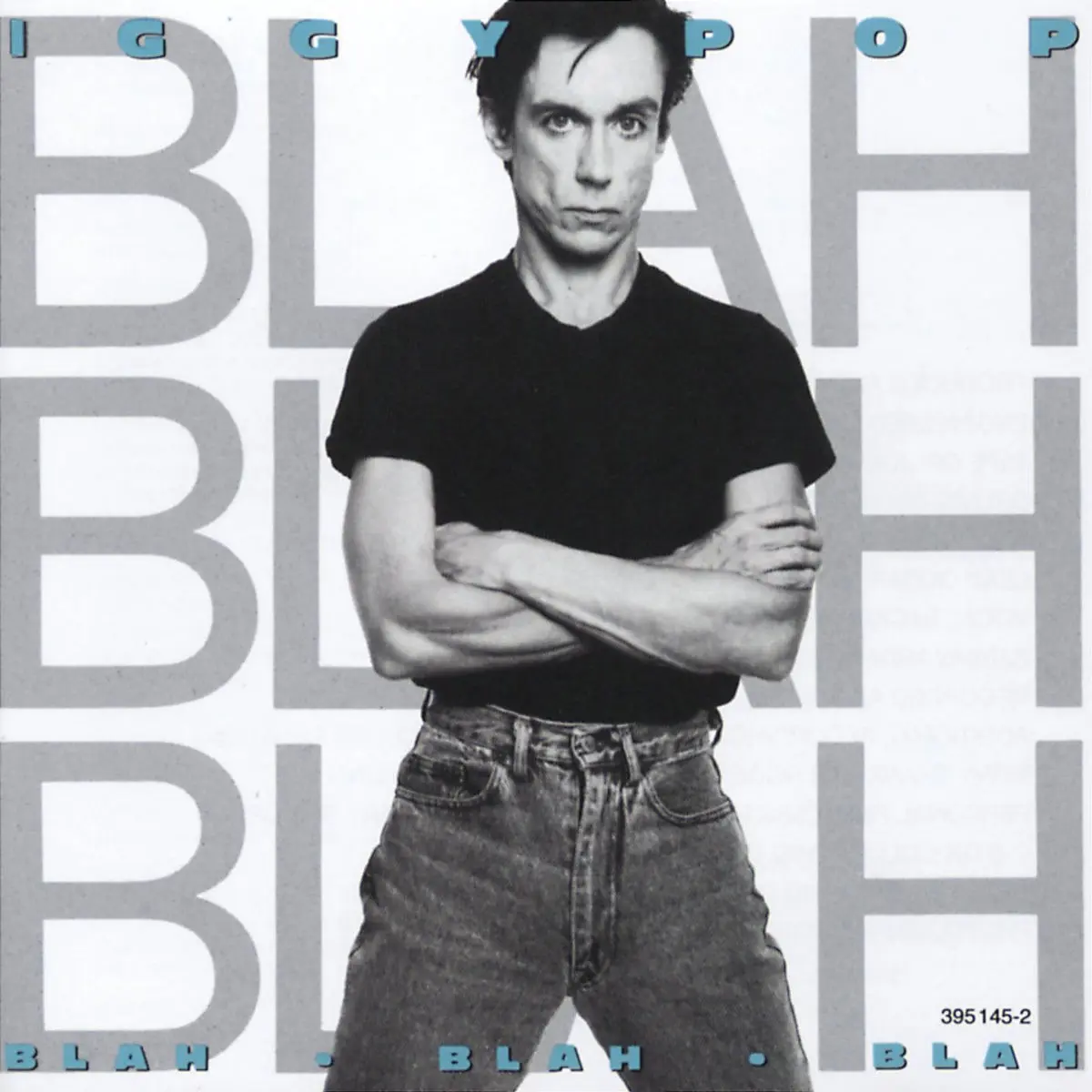
Blah-Blah-Blah

Iggy Pop released his seventh solo album, Blah-Blah-Blah, on October 23, 1986, on A&M.

David Bowie returned as Pop’s principal collaborator and co-producer. Guitarist Kevin Armstrong carries most of the guitar work, while multi-instrumentalist Erdal Kızılçay supplies synthesizer, bass, drums, and string figures across a tightly programmed frame. Former Sex Pistols guitarist Steve Jones enters on three co-writes and the lead solo on “Cry for Love.”

Pop and Bowie wrote the album apart from the ’50s Oz rock classic “Real Wild Child (Wild One)” and the Steve Jones collaborations “Fire Girl,” “Cry for Love,” and “Winners & Losers.” The 1986 sequence runs as follows.

A1. “Real Wild Child (Wild One)” (3:37) – Australian rocker Johnny O’Keefe first cut “Wild One” in 1958 with the Dee Jays during the first wave of homegrown rock ’n’ roll in Sydney. He shared the writing credit with Johnny Greenan and Dave Owens, and some early credits also named disc jockey Tony Withers. Pop revived the song here under the title “Real Wild Child (Wild One).” 
A2. “Baby, It Can’t Fall” (4:13)
A3. “Shades” (5:17)
A4. “Fire Girl” (3:31)
A5. “Isolation” (4:33)

B1. “Cry for Love” (4:29)
B2. “Blah-Blah-Blah” (4:33)
B3. “Hideaway” (5:01)
B4. “Winners & Losers” (6:20)
B5. “Little Miss Emperor” (3:51)

Pop recorded Blah-Blah-Blah at Mountain Studios in Montreux during May 1986 with co-producers David Bowie and David Richards. Richards also engineered and mixed the album, while Bowie added backing vocals but no instrumental parts.

Nick Egan handled the art direction and design. Michael Halsband shot the cover photography.

A&M issued “Cry for Love” (b/w “Winners & Losers”) as the first single in October 1986.

In November 1986, A&M issued “Real Wild Child (Wild One)” (b/w “Little Miss Emperor”). It reached No. 10 on the UK singles chart and gave Pop his first UK Top 10 hit.

In February 1987, the label lifted “Shades” (b/w “Baby, It Can’t Fall”) as a third single.

A&M followed in June 1987 with “Isolation” (b/w “Hideaway”). Blah-Blah-Blah reached No. 43 on the UK album chart, No. 34 in Australia, and No. 75 on the Billboard album chart.

Pop sang lead on “Risky,” a 1988 US single by Ryuichi Sakamoto from the ex-YMO musicians 1987 release NEO GEO.


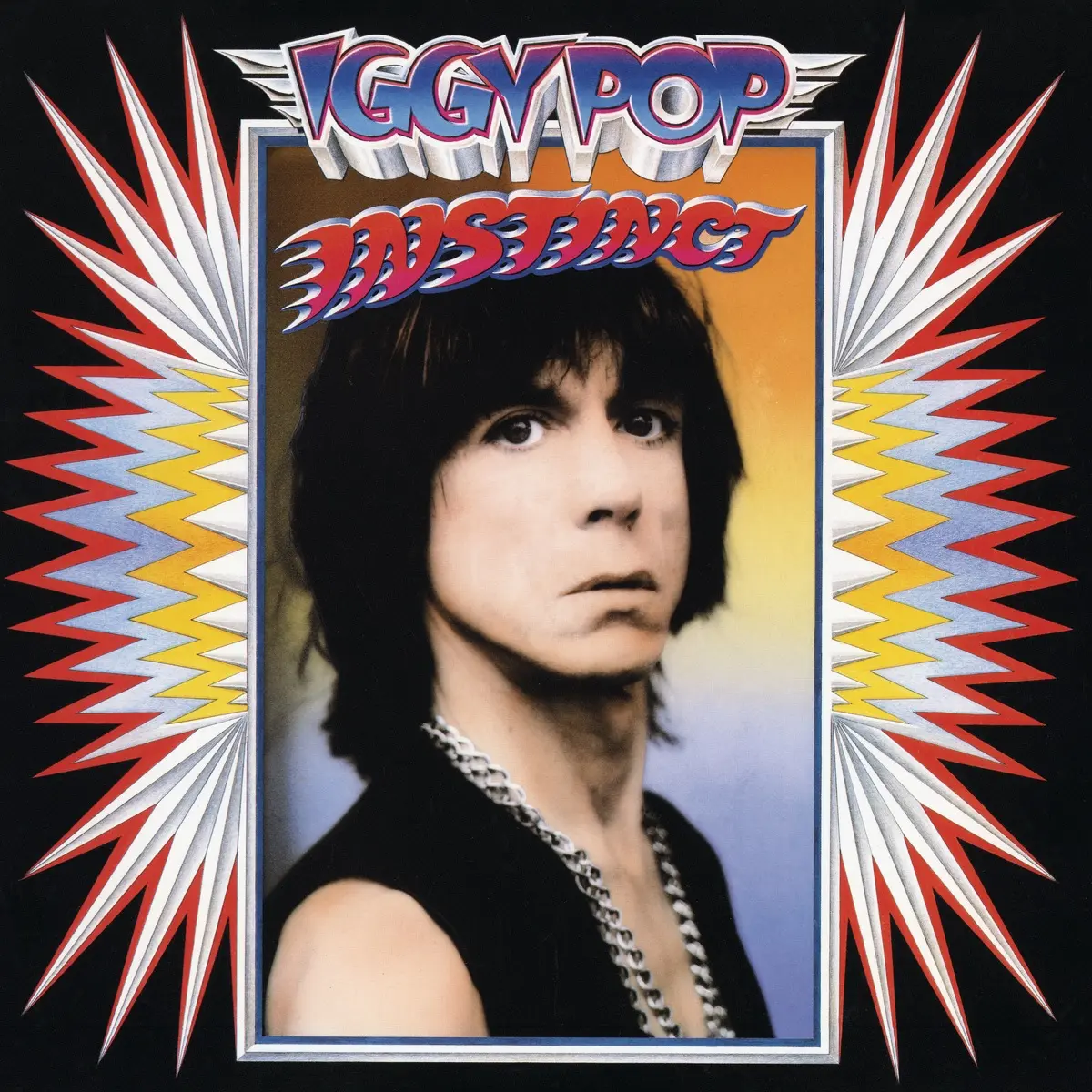
Instinct

Iggy Pop released his eighth solo album, Instinct, on June 20, 1988, on A&M.

Former Sex Pistols guitarist Steve Jones returned as Pop’s main collaborator. He shares four writing credits and drives the album with a hard guitar attack over the keyboard lines of Seamus Beaghen. Bassist Leigh Foxx and drummer Paul Garisto pin the songs to a dry, compressed chassis under Bill Laswell’s production.

Pop wrote most of the album. Jones shares the credits on “Strong Girl,” “Easy Rider,” “Power & Freedom,” and “Squarehead.”

A1. “Cold Metal” (3:27)
A2. “High on You” (4:48)
A3. “Strong Girl” (5:04) — Jones, Pop
A4. “Tom Tom” (3:17)
A5. “Easy Rider” (4:54) — Jones, Pop

B1. “Power & Freedom” (3:53) — Jones, Pop
B2. “Lowdown” (4:30)
B3. “Instinct” (4:12)
B4. “Tuff Baby” (4:27)
B5. “Squarehead” (5:06) — Jones, Pop

Pop recorded Instinct at Sorcerer Sound and B.C. Studio in New York City with producer Bill Laswell, tracking engineer Robert Musso, vocal engineer Martin Bisi, and mixing engineer Jason Corsaro. Nicky Skopelitis and Jeff Bova handled keyboard programming, and Howie Weinberg mastered the album.

Gary Grimshaw designed the cover. Donald Krieger handled the graphics, and Paul McAlpine shot the photography.

A&M issued “Cold Metal” (b/w “Instinct”) as a UK 7-inch in August 1988. It reached No. 37 on Billboard’s Mainstream Rock chart and earned Pop a Grammy nomination for Best Hard Rock/Metal Performance in 1989. On December 12, 1988, the label issued “High on You” (b/w “Squarehead”) as a second UK 7-inch. “Easy Rider” also appeared as a 1988 Germany-only single.

Instinct reached No. 61 in the UK, No. 20 in Sweden, and No. 110 on the Billboard 200.


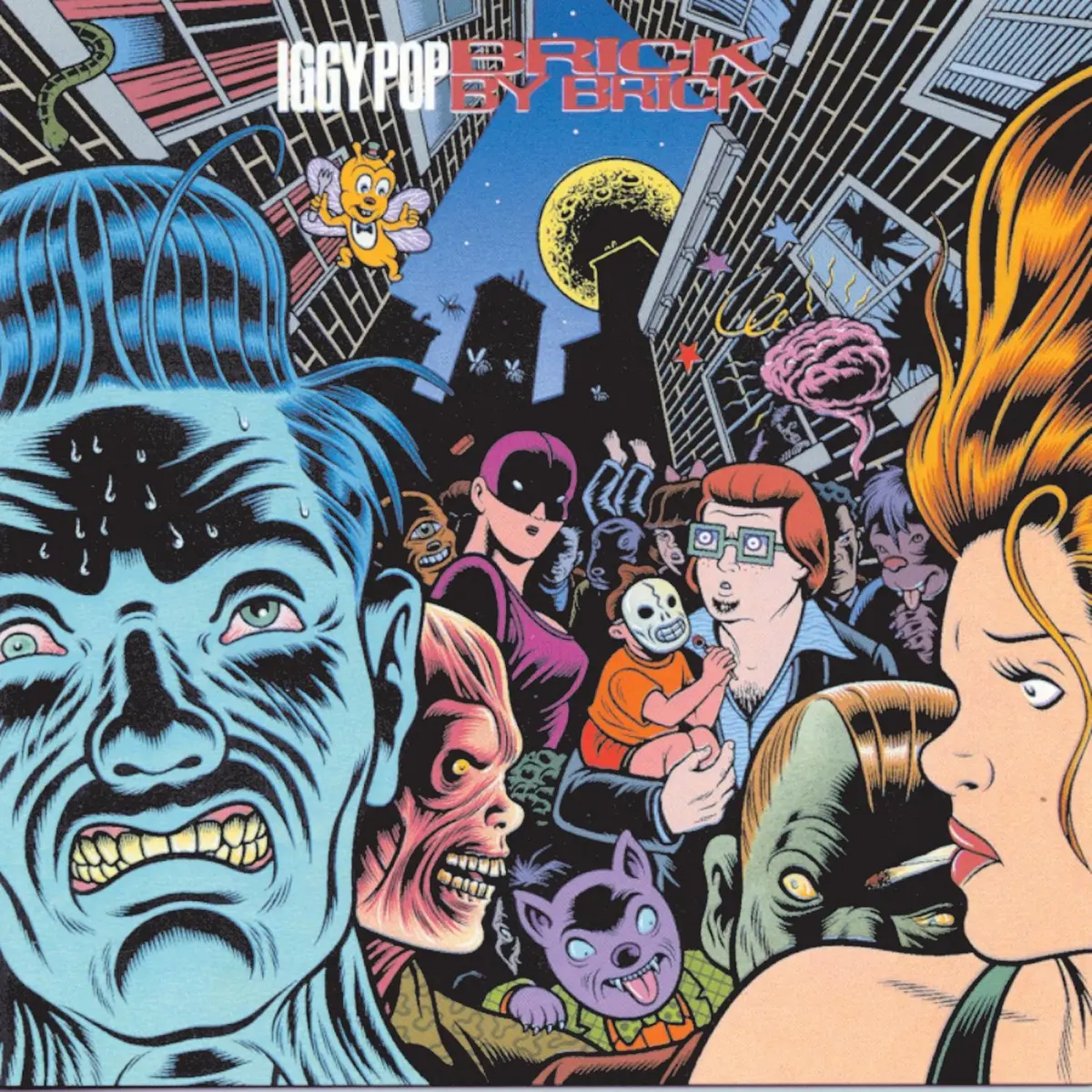
Brick by Brick

Iggy Pop released his ninth solo album, Brick by Brick, on June 25, 1990, on Virgin.

Producer Don Was built the album around a broad live-band attack and gave Pop room to add guitar across much of the record. Session guitarist Waddy Wachtel and Guns N’ Roses guitarist Slash widen that attack, while bassist Charley Drayton, drummer Kenny Aronoff, and keyboardists Jamie Muhoberac and Craig Street hold the songs to a firm chassis. Guns N’ Roses bassist Duff McKagan also appears, and B-52’s singer Kate Pierson joins Pop for the duet “Candy.”

“Home” opens with a mid-tempo push and a rough street-corner chant. “Candy” softens the surface with a male-female exchange over a steady pop pulse. “Butt Town” cuts harder with a sneering vocal and blunt riff figures, while “The Undefeated” and the title track lean on acoustic strum and plainspoken uplift. “Neon Forest” stretches the sequence with a longer, darker drift, and “My Baby Wants to Rock & Roll” turns Slash’s music into a faster bar-band charge.

Pop wrote most of the album. John Hiatt wrote “Something Wild,” Slash wrote the music for “My Baby Wants to Rock & Roll,” and Jay Rifkin and Eric Rackin wrote “Livin’ on the Edge of the Night.”

A1. “Home” (4:00)
A2. “Main Street Eyes” (3:41)
A3. “I Won’t Crap Out” (4:02)
A4. “Candy” (4:13)
A5. “Butt Town” (3:34)
A6. “The Undefeated” (5:05)
A7. “Moonlight Lady” (3:30)

B1. “Something Wild” (4:01) — originated with John Hiatt.
B2. “Neon Forest” (7:05)
B3. “Starry Night” (4:05)
B4. “Pussy Power” (2:47)
B5. “My Baby Wants to Rock & Roll” (4:46) — music by Slash.
B6. “Brick by Brick” (3:30)
B7. “Livin’ on the Edge of the Night” (3:38) — written by Jay Rifkin and Eric Rackin.

Pop recorded Brick by Brick at Ocean Way and Hollywood Sound in Hollywood between February 15 and March 23, 1990, with producer Don Was.

Cartoonist Charles Burns drew the cover illustration. Melanie Nissen handled the art direction, and Suchi Asano Osterberg served as production coordinator.

Virgin issued “Livin’ on the Edge of the Night” ahead of the album after the song appeared in the film Black Rain; it reached No. 16 on Billboard’s Modern Rock Tracks chart. Virgin then issued “Home,” which reached No. 2 on that same chart. “Candy” followed in September 1990 with “Neon Forest” on the flip and reached No. 28 on the Billboard Hot 100, No. 30 on Mainstream Rock, and No. 5 on Modern Rock. “Butt Town” followed as a fourth single.

Brick by Brick reached No. 90 on the Billboard 200 and No. 50 in the UK.


Discography:

  • The Idiot (1977)
  • Lust for Life (1977)
  • Kill City (1977 • Iggy Pop & James Williamson)
  • TV Eye: 1977 Live (1978)
  • New Values (1979)
  • Soldier (1980)
  • Party (1981)
  • Zombie Birdhouse (1982)
  • Blah-Blah-Blah (1986)
  • Instinct (1988)
  • Brick by Brick (1990)

Sources:

Leave a Reply