

Guru Guru is a German Krautrock band that released the 1970–71 Ohr albums UFO and Hinten, followed by the 1972–73 Brain titles Känguru and Guru Guru and three Atlantic discs, including 1974’s Dance of the Flames.
Members: Mani Neumeier (drums, percussion, vocals), Uli Trepte (bass, 1968-73), Hans Sax (vocals, 1968-69), Eddy Naegeli (guitar, 1969-70), Jim Kennedy (guitar, 1970), Ax Genrich (guitar, vocals, 1970-74), Bruno Schaab (bass, vocals, 1973), Hans Hartmann (bass, piano, 1973), Houschäng Nejadépour (guitar, 1974), Conny Veit (bass, 1974), Josef Jandrisits (guitar, 1975-76), Jürgen Karpenkiel (bass, 1975-76), Roland Schaeffer (saxophone, guitar, vocals, 1975-present), Dieter Bornschlegel (guitar, percussion, 1977-79, 1994-97), Peter Kühmstedt (bass, percussion, 1977-79, 1993-present), Butze Fischer (drums, 1979-83), Ingo Bischof (keyboards, synthesizer, 1978-81)
Background
Guru Guru formed in Heidelberg in 1968 as The Guru Guru Groove by drummer/singer Mani Neumeier and bassist Uli Trepte with short-term members on vocals and guitar. Neumeier (b. 1940) emerged in the early 1960s behind jazz pianist/bandleader Alexander von Schlippenbach. In 1964, he first played with Trepte (1941–2009) in the Irene Schweizer Trio.
In 1969, Guru Guru made its earliest recordings with American guitarist Jim Kennedy, including the length jams “Roots of ‘Der LSD-Marsch'” and “Roots of ‘…Dalai Llama'” (later released on the CDr Early Archives, Live 1969). In 1970, guitarist Ax Genrich completed the classic Guru Guru lineup, fresh off a stint with an embryonic Agitation Free. They were one of the first acts signed to the underground label Orh.
UFO
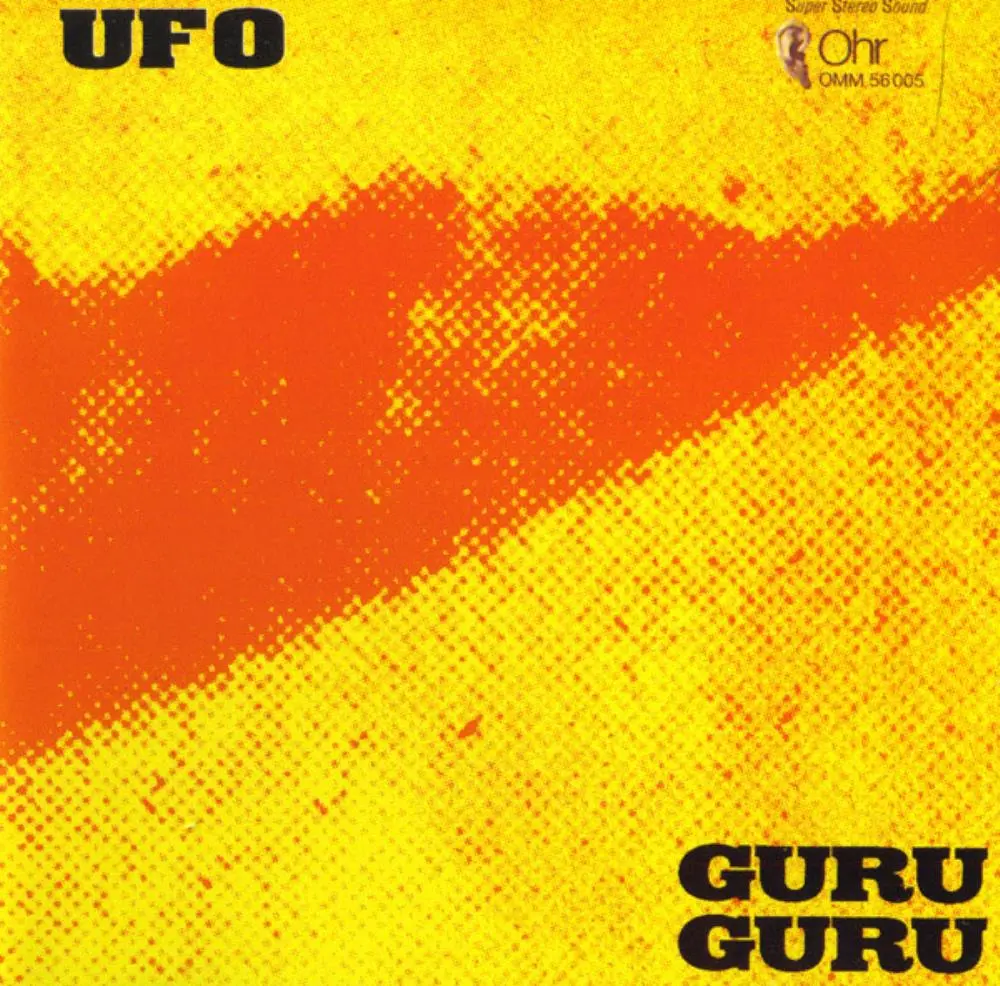 Guru Guru released their debut album, UFO, in 1970 on Ohr. The album contains five group-credited jams. All three members use electronic effects with their instruments.
Mani Neumeier plays gong, cymbals, elektrische trommeln (“electric drums”), and uses a kontaktmikrophon (“contract microphone”), a mic that senses audio vibrations.
Ax Genrich uses an echogerät (echo effects) guitar pedal. Bassist Uli Trepte curates sounds from intercoms, verstärker (amplifiers), and tonband (tapes).
A1. “Stone In” (5:42)
A2. “Girl Call” (6:15)
A3. “Next Time See You at the Dalai Lhama” (6:10)
B1. “UFO” (10:15)
B2. “Der LSD-Marsch” (8:25)
Guru Guru self-produced the June 1970 sessions, engineered by one Thomas Muller.
UFO appeared in a gatefold with a pixelated red/yellow image of a “ufo” (a bird) and a bluescale innergate photo of the hirsute trio.
“Der LSD-Marsch” appears on Ohrenschmaus (Neue Pop-Musik Aus Deutschland), a 1970 two-record Ohr/Metronome comp with tracks by Amon Duul II, Annexus Quam, Embryo, Floh de Cologne, Limbus, Tangerine Dream, and Witthüser & Westrupp.
Hinten
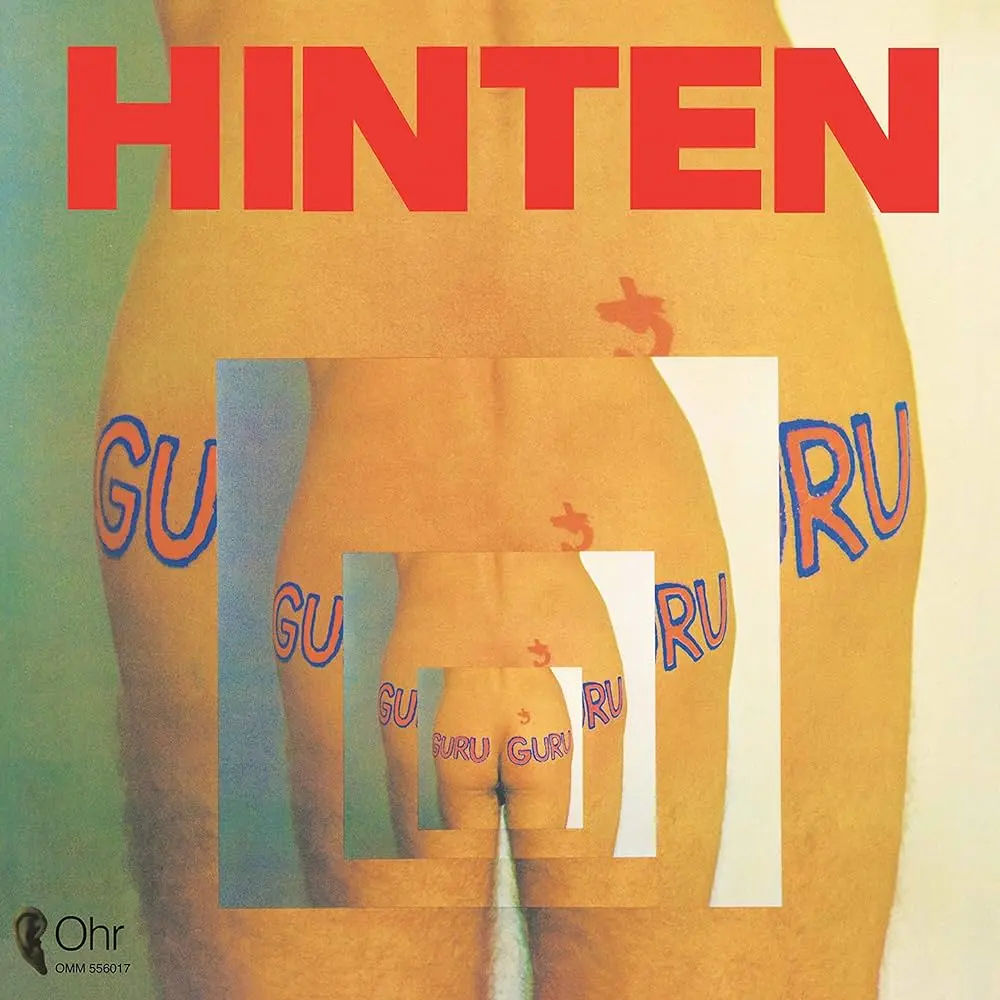 Guru Guru released their second album, Hinten, in September 1971 on Ohr. The album contains four group-credited jams, each half-side pieces in the 10-12 minute range. The title is German for “Rear.”
Percussionist Mani Neumeier adds kalimba, ‘zonk machine,’ and whistles dubbed rehfänger (“deer catcher”). Bassist Uli Trepte inserts radio effects around the guitar work of Ax Genrich.
A1. “Electric Junk” (10:58)
A2. “The Meaning of Meaning” (12:09)
B1. “Bo Diddley” (9:56)
B2. “Space Ship” (11:05)
Guru Guru self-produced the album in July 1971 at the Star Produktion facility in Hamburg, where Kraftwerk soundman Conny Plank engineered Hinten in sequence with the debut albums by Ash Ra Tempel, Cluster, Eiliff, Eloy, Parzival, and Virus.
Känguru
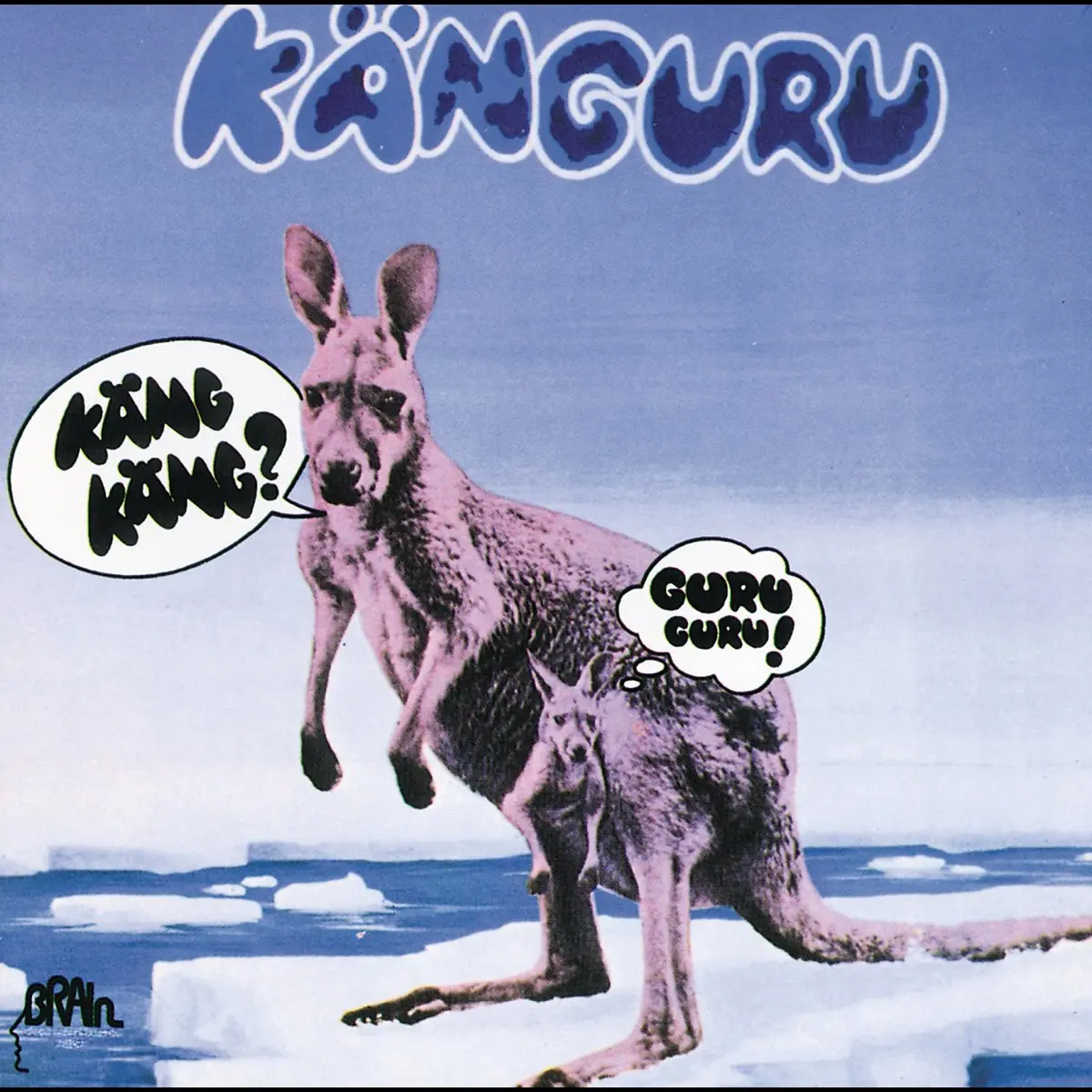 Guru Guru released their third album, Känguru, in May 1972 on Brain/Metronome.
Känguru (like Hinten) contains four group-credited jams, each half-side length. Side A exceeds 26 minutes due to the added length of “Immer lustig,” their longest song.
This was the final album by the original trio of guitarist Ax Genrich, bassist Uli Trepte, and drummer Mani Neumeier. The title makes light of how their name appears in the German spelling of “Kangaroo.”
A1. “Oxymoron” (10:33)
A2. “Immer lustig” (15:37)
B1. “Baby Cake Walk” (10:57)
B2. “Ooga Booga” (11:11)
Guru Guru recorded Känguru between February 28 and March 6, 1972, at Windrose Studios in Hamburg, where Conny Plank produced and engineered the album in sequence with titles by Association PC, Grobschnitt, Gomorrha, Ibliss, Lucifer’s Friend, NEU!, Scorpions, and Thirsty Moon.
Känguru sports sleeve art by Birth Control illustrator Heinz Dofflein. The cover depicts an ice-floating kangaroo that twice utters the title’s first syllable (“Käng Käng”) while its pouched offspring replies with the second and third syllables, which match the band’s name. The backside shows Neumeier in a kagaroo-style mid-air leap. Genrich appears on the right inner-gate with multiple guitar pics in an orange/white setting. Trepte occupies the left-inner with a deskside photo.
Trepte left Guru Guru, which hired Night Sun bassist Bruno Schaab.
Guru Guru
 Guru Guru released their self-titled fourth album in February 1973 on Brain/Metronome.
Side A contains two group originals (conventional length) around a medley of Eddie Cochrane numbers. Side B contains two half-side group-credited jams.
This was their only album with bassist Bruno Schaab, who completed the second Guru Guru trio with guitarist Ax Genrich and drummer Mani Neumeier.
A1. “Samantha’s Rabbit” (2:54)
A2. “Medley” (13:25)
— a. Rocken mit Eduard
— b. Something Else
— c. Weekend
— d. Twenty Flight Rock
A3. “Woman Drum” (3:57)
B1. “Der Elektrolurch” (9:46)
B2. “The Story of Life” (12:06)
Conny Plank (credited here under his real forename, Konrad) produced and engineered Guru Guru amid work on 1973 albums by Achim Reichel, Andy Marx, Kollektiv, Tomorrow’s Gift, and the third Kraftwerk release, Ralf & Florian.
“Samantha’s Rabbit” appears on German Rock Scene, a 1973 Brain/Metronome comp with cuts by Curly Curve, Emergency, Jane, Lava, and Novalis. In 1974, Brain combined Guru Guru and Känguru on a double-album titled Der Elektrolurch. This release has a bluescale backside photo of Neumeier disrobed in a jungle with a tribal mask.
Schaab did later stints in Desperado, Bernies Autobahn Band, and the 1980 politi-rock one-off Schlachtvieh.
Guru Guru continued with Swiss bassist Hans Hartmann, a recent Reichel sideman with prior credits in Free Orbit, the Wonderland Band, and ID Company, a 1970 split-record showcase for ex-City Preachers singers Dagmar Krause (Slapp Happy) and Inga Rumpf (Frumpy).
Don’t Call Us We Call You
 Guru Guru released their fifth album, Don’t Call Us We Call You, in October 1973 on Atlantic.
The album contains five group-credited numbers, including three half-side jams.
Mani Neumeier’s arsenal includes drums, congas, gong, and cymbals. New member Hans Hartmann plays electric and standup bass, plus piano. This was their last album with guitarist and co-founder Ax Genrich, who doubles on banjo.
A1. “Africa Steals the Show” (12:26)
A2. “Round Dance” (8:40)
B1. “200 Clichés” (5:09)
B2. “Das Zwickmaschinchen” (4:43)
B3. “Guru Guru Ltd.” (11:43)
Guru Guru self-produced the album in August 1973 at Studio 70 in Munich, where English transplant Dave Fiddler (Siddle) engineered Don’t Call Us We Call You with assistance from Brainstorm/Kraan soundman Sebastian Salm.
Passport artist Petrus Wandrey illustrated the cover, which shows a human hand emerge from the earside of a telephone.
Don’t Call Us We Call You simultaneously with a non-album Guru Guru single:
A. “More Hot Juice” (4:22)
B. “20th Century Rock” (3:52)
Guru Guru continued with ex-Eiliff guitarist Houschäng Nejadépour, whose prior band made the 1971/72 Philips albums Eiliff and Girlrls!
Dance of the Flames
 Guru Guru released their sixth album, Dance of the Flames, in June 1974 on Atlantic.
The album contains four group-composed numbers and four lone-written tracks by new guitarist Houschäng Nejadépour, who contributed “The Day of Timestop,” “Samba das Rosas,” and the last two songs.
He joins Don’t Call Us bassist Hans Hartmann and Guru Guru founder Mani Neumaier, who uses a toy sound called the entenfänger (“duck catcher”). Mami wrote lyrics for the first two songs.
A1. “Dagobert Duck’s 100th Birthday” (7:39)
A2. “The Girl From Hirschhorn” (8:33)
A3. “The Day of Timestop” (5:22)
B1. “Dance of the Flames” (3:28)
B2. “Samba das Rosas” (4:05)
B3. “Rallulli” (4:35)
B4. “At the Juncture of Light and Dark” (3:12)
B5. “God’s Endless Love for Men” (7:24)
Sessions occurred at Studio 70 between April 12 and 20, 1974, with Dave Siddle, who engineered concurrent albums by Amon Duul II, Metropolis, and Randy Pie.
Mani und seine Freunde
 Guru Guru released their seventh album, Mani und seine Freunde, in August 1975 on Atlantic.
A1. “Sunrise Is Everywhere” (3:00)
A2. “Chicken Rock” (3:03)
A3. “It’s Your Turn” (7:15)
A4. “Walking, Eating My Hot Dog” (3:35)
A5. “Fly Easy” (2:33)
B1. “From Another World” (9:25)
B2. “Woodpecker’s Dream” (8:50)
B3. “1, 2, 3, 4, Marsch ‘n’ Rock” (1:50)
B4. “Drink Wine” (1:00)
Tango Fango
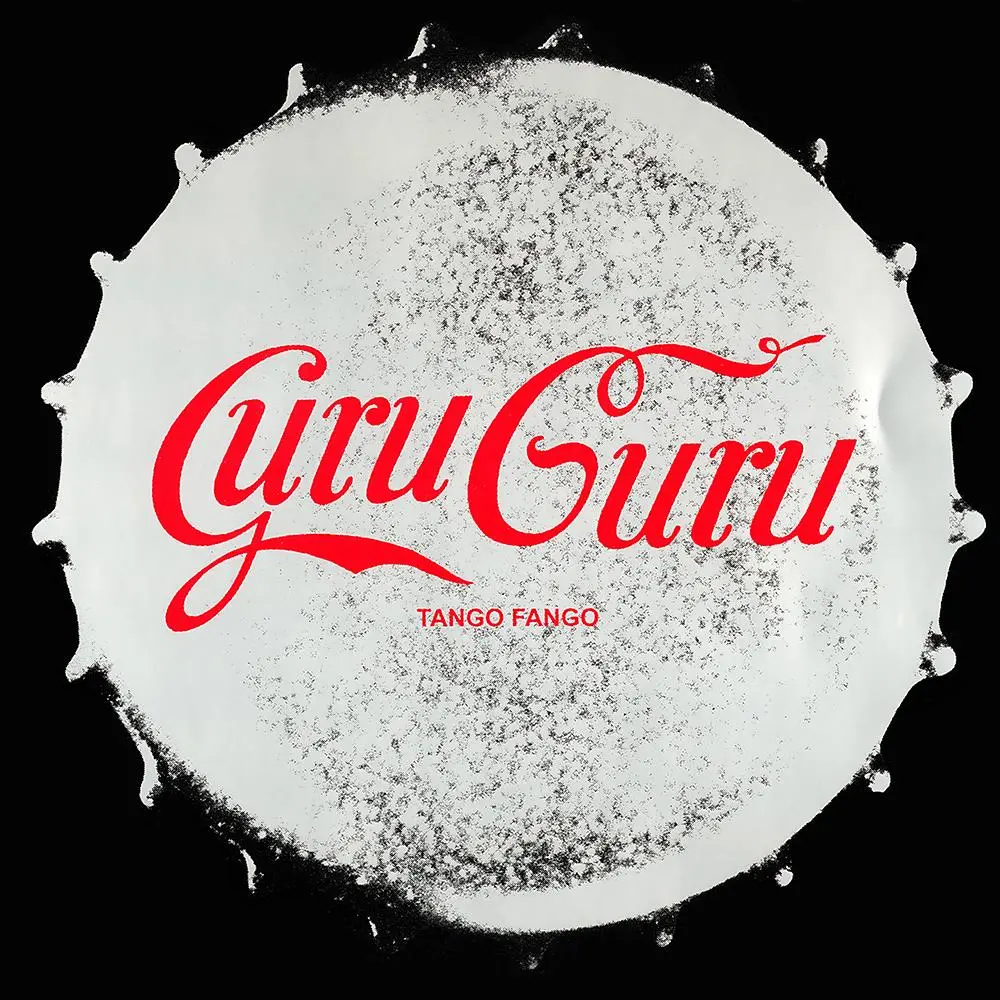 Guru Guru released their eighth album, Tango Fango, in April 1976 on Brain.
A1. “Tomorrow” (4:14)
A2. “Tango Fango” (3:48)
A3. “Soba soave bossanova” (5:00)
A4. “Un, deux, trois” (0:44)
A5. “Nightbear” (6:29)
B1. “Banana Flip” (6:14)
B2. “L. Torro” (4:53)
B3. “Salto Mortadella” (3:14)
B4. “Das lebendige Radio” (8:05)
— a. 0 Uhr 69 (0:28)
— b. Wir machen Musik (0:57)
— c. Der Kaiserjodler (1:05)
— d. Schnaderhupferl (1:22)
— e. Bye, Bye Johnny (1:32)
Mani Neumeier – vocals, drums, electronic effects, producer, lyrics
Roland Schaeffer – vocals, guitar, alto saxophone, soprano saxophone, lyrics, producer
Sepp Jandrisits – electric guitar, harmonica
Ingo Bischof – piano, percussion, choir
Jogi Karpenkiel – bass, choir
Tommy Goldschmitt – percussion, choir
Globetrotter
 Guru Guru released their ninth album, Globetrotter, in May 1977 on Brain.
A1. “Rolling Through the City” (4:30)
A2. “I’m Really in to Rock’n Roll Man” (4:03)
A3. “Moroso” (4:11)
A4. “When the Lights Go Out” (3:42)
B1. “Da Wee” (5:12)
B2. “May Dream” (4:03)
B3. “Simba Ka Limba” (3:20)
B4. “Globetrotter” (7:18)
Mani Neumeier – drums, vocals, producer
Roland Schaeffer – guitar, vocals, producer, saxophone
Ingo Bischof – piano, synthesizer, bass
Petrus Wippel – recording engineer, mixing
Discography:
- UFO (1970)
- Hinten (1971)
- Känguru (1972)
- Don’t Call Us We Call You (1973)
- Guru Guru (1973)
- Dance of the Flames (1974)
- Mani und seine Freunde (1975)
- Tango Fango (1976)
- Globetrotter (1977)
- Hey du (1979)
- Mani in Germani (1981)
- Guru Mani Neumeiers neue Abenteuer (1983)
- Hot on Spot / Inbetween (1985 • Guru Guru / Uli Trepte)
- Jungle (1987)
Sources:
Artist/Album Pages:
Accept is a German hard-rock/metal band, active eight years before their 1979 debut on Brain Recor...
Wolfgang Riechmann (May 14, 1947 — Aug. 24, 1978) was a German keyboardist who joined Streetmark f...
Iskander were a German symphonic-rock band that released the album Bohème 2000 on Herkules in 198...
Xhol Caravan was a psychedelic German jazz-rock band that originated as Soul Caravan. In 1969, the...
Satin Whale was a German symphonic-rock band that debuted with the album Desert Places on Brain/Me...
Abacus was a German art-rock band that released the 1971/72 Polydor albums Abacus and Just a Day's...
Toto Blanke (Sept. 16, 1939 — Oct. 24, 2013) was a German guitarist who played in the ethno-jazz/r...
Emergency was a German/Czech brass-rock band that cut the 1971/72 CBS albums Emergency and Entranc...
Ivory was a German symphonic-rock band that released the 1979 album Sad Cypress on Jupiter Records...
The Twins was a German synthpop duo that released four albums on Hansa International between 1981 ...
Manfred Schoof (born April 6, 1936) is a German trumpeter and bandleader with over 200 album credi...
Cry Freedom was a German jazz-rock band that self-released the 1976 album Volcano, followed by the...