

Eloy is a German symphonic space-rock band formed in 1969 by guitarist Frank Bornemann. The original lineup with singer/keyboardist Erich Schriever made a 1971 hard-rock album on Philips.
Bornemann reconfigured the group with the 1973/74 Harvest albums Inside and Floating, which established their Floydian identity. After their 1975 conceptual breakthrough Power and the Passion, Bornemann stabilized the lineup for the 1976–79 concept albums Dawn, Ocean, and Silent Cries and Mighty Echoes.
When keyboardist Detlev Schmidtchen and drummer Jürgen Rosenthal formed the splinter duo Ego On the Rocks, Bornemann hired Hannes Folberth and Jim McGillivray for the 1980/81 albums Colours and Planets. The latter introduced a two-part concept continued on Time to Turn, recorded with earlier drummer Fritz Randow, who played on the 1983/84 albums Performance and Metromania.
Eloy returned with the 1988 album Ra, followed by three Nineties-era titles, including Ocean 2: The Answer, a sequel to their 1977 classic. Bornemann regrouped Eloy for the 2009 disc Visionary and the 2017–19 two-part conceptual efforts The Vision, the Sword and the Pyre – Part I and Part II, based on Jeanne d’Arc.
Members: Frank Bornemann (guitar, lead vocals), Manfred Wieczorke (guitar, bass, vocals, 1969-75), Wolfgang Stöcker (bass, 1969-73), Erich Schriever (lead vocals, organ, piano, keyboards, 1969-72), Helmuth Draht (drums, 1969-72), Fritz Randow (drums, 1973-75, 1981-84), Luitjen Janssen (bass, 1974-75), Detlev Schwaar (guitar, 1975), Matze (bass, 1976-84, 1994-present), Detlev Schmidtchen (keyboards, guitar, 1976-79), Jürgen Rosenthal (drums, 1976-79), Hannes Arkona (guitar, 1979-84), Hannes Folberth (keyboards, 1979-84, 1998-present), Jim McGillivray (drums, 1979-81), Michael Gerlach (keyboards, vocals, 1988-present)
Background
Eloy was formed in 1969 in Hanover by guitarist Frank Bornemann, the band’s one constant member through all its configurations. The original lineup featured guitarist Manfred Wieczorke, bassist Wolfgang Stöcker, drummer Helmuth Draht, and keyboardist Erich Schriever, who initially served as their singer.
They derived their name from the Eloi, a race of futuristic humans in The Time Machine, an 1895 dystopian novel by English author H. G. Wells.
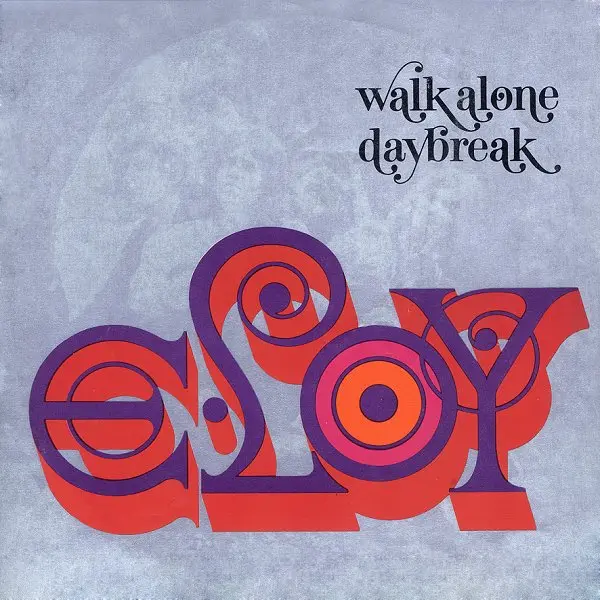 In 1970, Eloy linked with United Artists for their first single: “Walk Alone,” a Schriever/Wieczorke fuzz-laden waltz backed with “Daybreak,” a Schriever/Bornemann number.
In one of their earliest videos, Eloy mime their then-unreleased “I Work It Out” — a gruff hard-rocker with brisk, extended solos, primarily in the key of B — atop wrecked automobiles at a hippie music festival. (The video appears as a bonus on their 2010 two-DVD retrospective The Legacy Box.)
Eloy
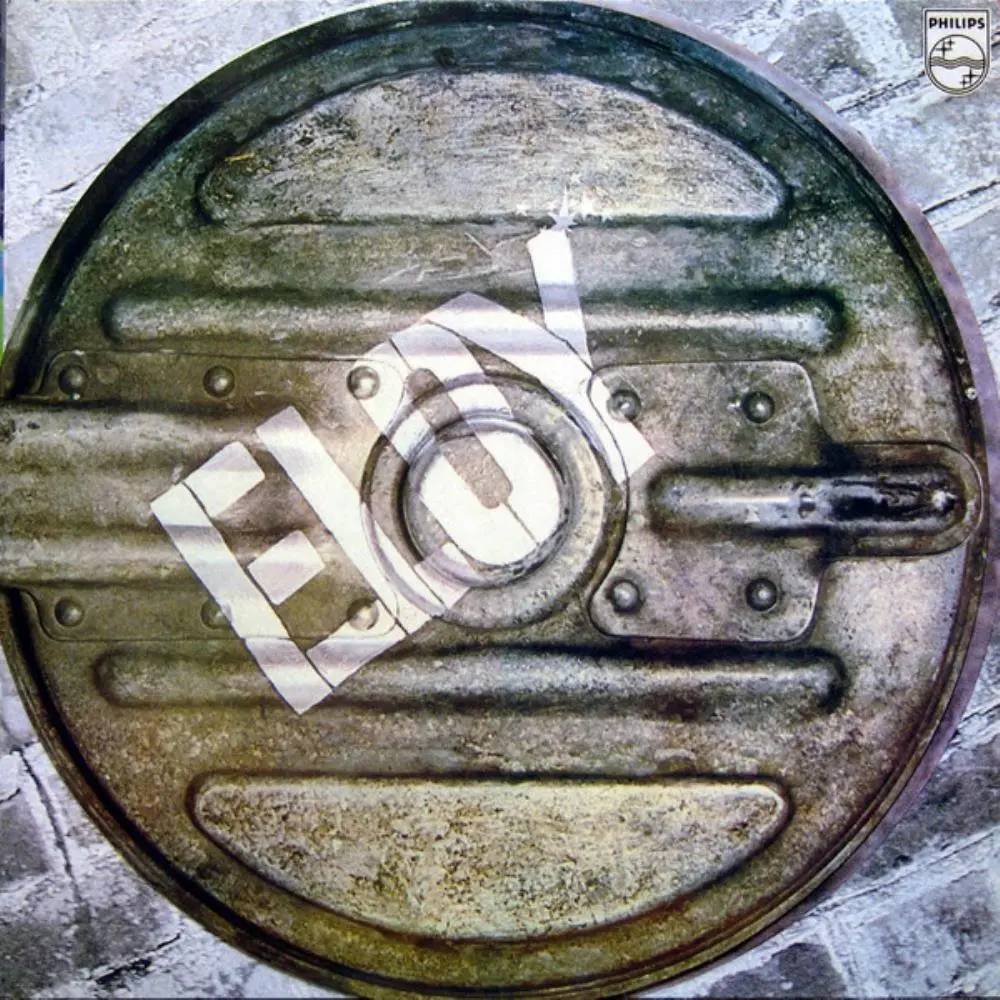 Eloy released their self-titled debut album in July 1971 on Philips.
Erich Schriever composed “Isle of Sun” and co-wrote the other six songs with Manfred Wieczorke. Frank Bornemann third-wrote “Today,” “Dillus Roady,” and the group-credited treble*. Musically, Eloy mines post-psychedelic hard rock with organ/guitar arrangements akin to Murphy Blend and Warhorse. “Isle of Sun” foreshadows the spacious melodrama of future albums.
Eloy opens with “Today,” where jagged guitar stabs alternate with spaced phrasing before giving way to a central riff over a tightly locked rhythm section. The vocals punctuate each phrase with a declamatory rise, while Frank Bornemann’s mid-song solo climbs across a climbing modal arc. “Something Yellow” stretches the structure into multiple shifts, opening with sharp electric organ phrasing that gives way to searing guitar bends over mid-tempo propulsion; halfway through, the band downshifts into a drifting segment of sustain, then rebuilds momentum under spiraling leads and phased cymbals. “Eloy” rides a churning riff with brief vocal lines and call-response breaks; a central drop introduces syncopated percussion and angular soloing before reassembling its main theme.
“Song of a Paranoid Soldier” moves in clipped start-stop phrases, then dissolves into a reflective break framed by slow cymbal washes and expressive vibrato bends. “Voice of Revolution” centers on a compact riff over a rolling backbeat, maintaining high density throughout its short span. “Isle of Sun” repositions the band into a smoother register with voice-and-keyboard-led passages over flowing organ lines and brushed drums, sidestepping intensity for soft-focus contrast. “Dillus Roady” returns to a riff-centered frame, with wah-toned leads layered over steady organ chords and a midsection marked by stratified rhythms and chromatic fills.
A1. “Today” (5:56)
A2. “Something Yellow” (8:15)
A3. “Eloy” (6:15)
B1. “Song of a Paranoid Soldier” (4:50)
B2. “Voice of Revolution” (3:07)
B3. “Isle of Sun” (6:03)
B4. “Dillus Roady” (6:32)
Sessions occurred in April 1971 at Star-Musik-Studios Hamburg with producer Peter M. Freiherr Von Lepel and Kraftwerk engineer Conny Plank, and soundman on concurrent titles by Ash Ra Tempel, Cluster, Eiliff, Guru Guru, and Parzival.
Eloy sports an illustrated dustbin lid with a seal-flap that, when opened, reveals a deep bin with a discarded tomato/lettuce sandwich.
After Eloy, Erich Schriever and drummer Helmut Draht departed over music differences.
*A title track on a self-titled album.
Inside
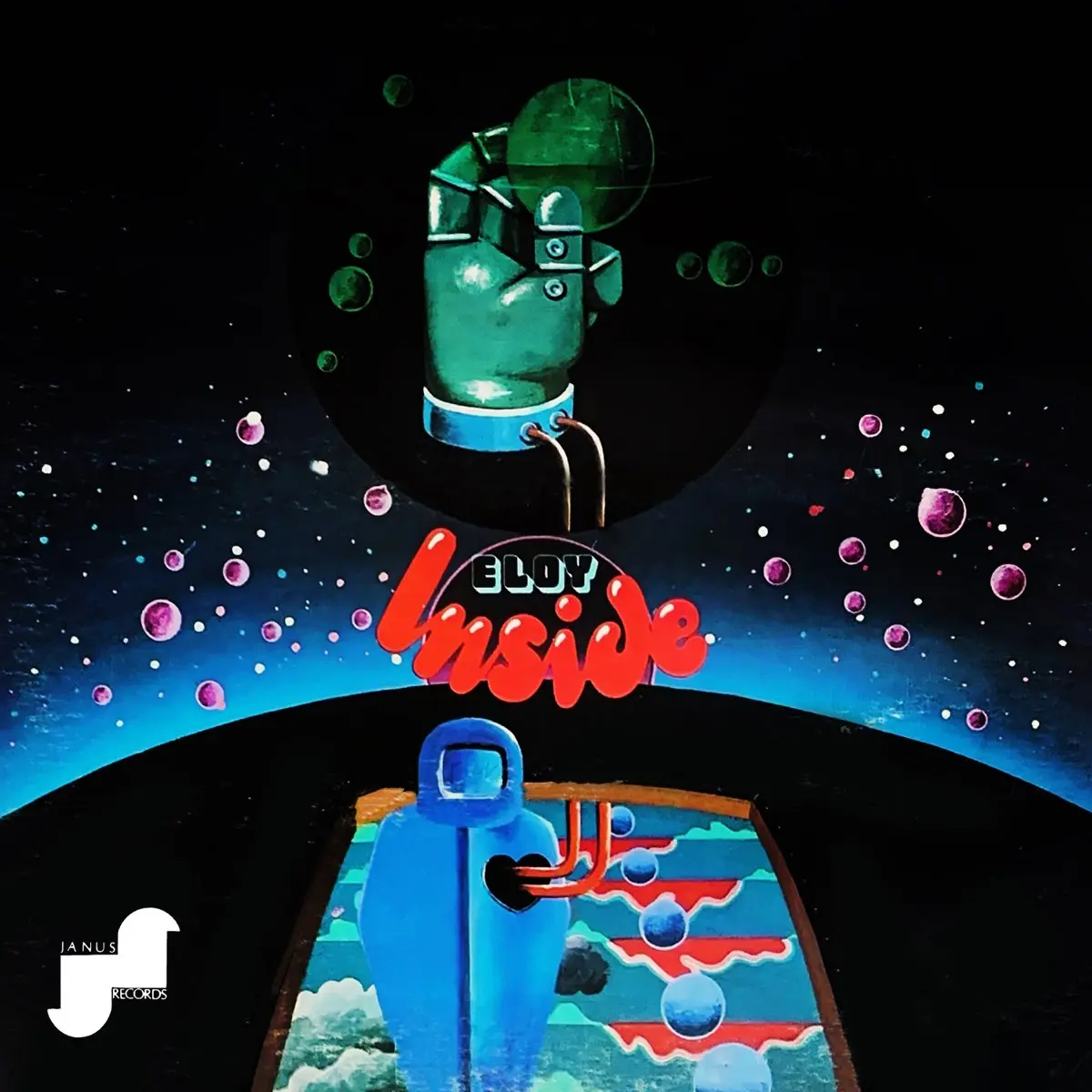 Eloy released their second album, Inside, on October 10, 1973, on Harvest.
The album contains four group-credited pieces, including the side-long “Land of No Body,” an “Echoes“-like epic that established their Floydian style. Inside retains three-fifths of the Eloy lineup: guitarist/singer Frank Bornemann, bassist Wolfgang Stöcker, and guitarist Manfred Wieczorke, who now doubles as organist. They welcome drummer Fritz Randow (b. 1952), a sometimes acoustic guitarist.
Inside opens with the 17-minute “Land of No Body,” a sectional suite that shifts between quiet passages, open-frame psych wanderings, and extended crescendos anchored by surging Hammond organ. After an ominous fade-in, the band tightens into a mid-tempo push with clipped vocals and dramatic rhythmic pivots, then slows into a suspended half-speed break. A lengthy ambient lull divides the piece before they reenter with a layering build of overdriven guitar, saturated organ figures, and rhythmic swells that reframe earlier motifs with heightened intensity.
The title track follows a similar structure on a smaller scale, moving from sparse phrasing into a full-bodied progression marked by contoured electric guitar and rapid organ thrusts, then braking into a slow climb before a sudden high-speed sprint drives the piece to its peak. “Future City” stands apart with a bounding, upbeat pulse and clustered acoustic rhythm underneath rolling bass lines, shifting midway into a tightened jam with wah-toned leads and snaking transitions. “Up and Down” resets the pace with staggered dynamics and a subdued vocal tone, alternating tension and release over a steady organ bed. Its middle third dips into spaced phrasing and ambient voice treatments before regrouping for a final stretch that fluctuates between clipped phrasing and gradual fade.
A. “Land of No Body” (17:14)
B1. “Inside” (6:35)
B2. “Future City” (5:35)
B3. “Up and Down” (8:23)
Eloy self-produced the album in September 1972 at Studio Windrose in Hamburg.
Inside appeared in a gatefold illustrated by Roberto Patelli, an Italian graphic artist behind colorful Sixties covers for Jens & Erich (Die Mitternachtsplatte), Orchester Hugo Strasser (Chicken-Polka), The Gloomys (Daybreak). Inside depicts a planet in the hand of a green god. Amid the purple orbs and red bubble letters, a blue spaceman on the ozone with heartstrings connected to god’s hand. The inner-gate presents medium grayscale pics of each member.
Wolfgang Stöcker exited after this album. Meanwhile, Harvest reissued the 1970 b-side “Daybreak” an an a-side, backed with the “On the Road,” a on-album group-credited song.
B. “On the Road” (2:30)
Floating
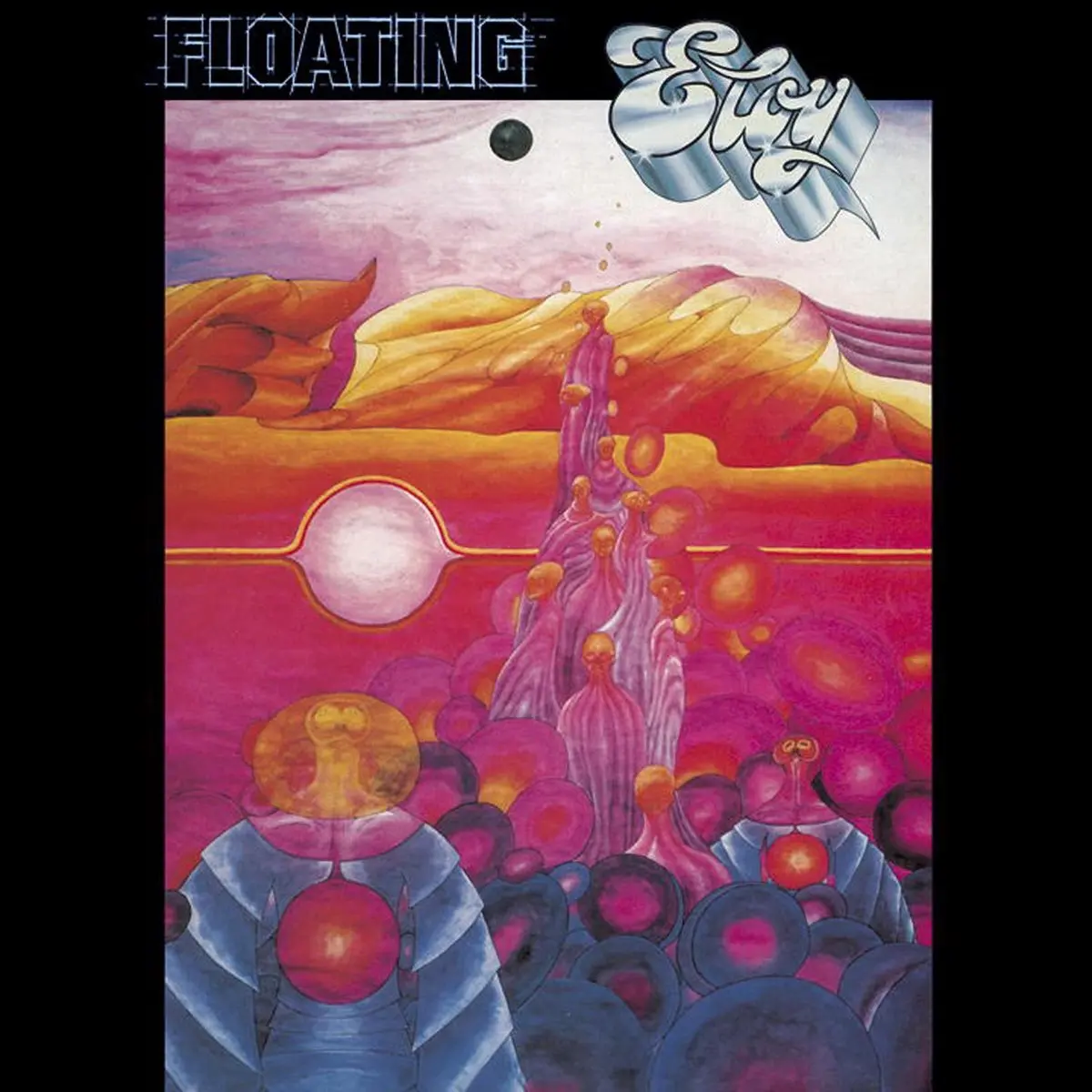 Eloy released their third album, Floating, on October 11, 1974, on Harvest.
The album contains five group-composed numbers, including their second-longest track, “The Light From Deep Darkness.” Floating retains the four-piece composition with new bassist Luitjen Jansen, who joins Fritz Randow and co-founders Frank Bornemann and Manfred Wieczorke.
Floating opens with its title track, which pivots from a charged instrumental riff into clipped call-and-response phrases over an urgent rhythm, then drops into a gauzy midsection where sustained guitar glides over pulsed organ textures and cymbal shimmer. After two minutes of suspension, the band reengages in staggered tempo, driving the remainder with alternating organ bursts and guitar flourishes. “The Light From Deep Darkness” follows a slow upward arc through interlaced passages of restraint and eruption. Clean-tone guitar and hushed vocals open the 14-minute piece, then fall away under surging Hammond and tom-heavy cadence. Several shifts ensue: a quieted ambient lull at midpoint; a wordless vocal passage over suspended figures; a soaring peak of saturated organ and vibrato lead; and a final stretch that alternates tension and release before fading in clustered keyboard layers.
“Castle in the Air” balances clipped riffs with half-speed narration, then accelerates into a full-band stretch where the bass rises against snare syncopation and spiraling guitar. A drop-out at the midpoint clears space for open soloing, followed by a rising return to the core rhythm. “Plastic Girl” enters in swelling organ tones and tom-tom undercurrent, gradually filling out with angular guitar leads and delayed-entry vocals. The track shifts registers several times—first thinning to minimal phrases, then reentering in staggered rhythm with fluid organ runs and tight unison hits, eventually circling back to the introductory motif. “Madhouse” closes the album with clustered guitar strikes and compressed rhythm bursts, periodically broken by freeform drum showcases and tempo shifts. Halfway through, the band interlocks into a fast-looped figure that climaxes in rapid dual lead lines and organ stabs before cutting off abruptly.
A1. “Floating” (3:59)
A2. “The Light From Deep Darkness” (14:37)
B1. “Castle in the Air” (7:37)
B2. “Plastic Girl” (9:05)
B3. “Madhouse” (5:16)
Sessions spanned January through May 1974 at EMI Electrola Studios in Cologne, where staffer Wolfgang Thierbach engineered Floating amid albums by Sweet Smoke and Triumvirat.
Floating displays a cover painting by Jacques Wyrs, a German-French sci-fi illustrator whose works grace 1972–74 covers for Ange (Le Cimetière des Arlequins), Klaus Schulze (Picture Music), Major Symphony (Prophetic Soul), Malon (El Camino Dale Negro), and the Eleventh House with Larry Coryell (Introducing). Floating depicts bipeds hatched from floating eggs along a magenta canyon plain.
Floating marks the debut of the iconic Eloy logo: a three-dimensional chrome signature that marks their eight subsequent studio albums.
Power and the Passion
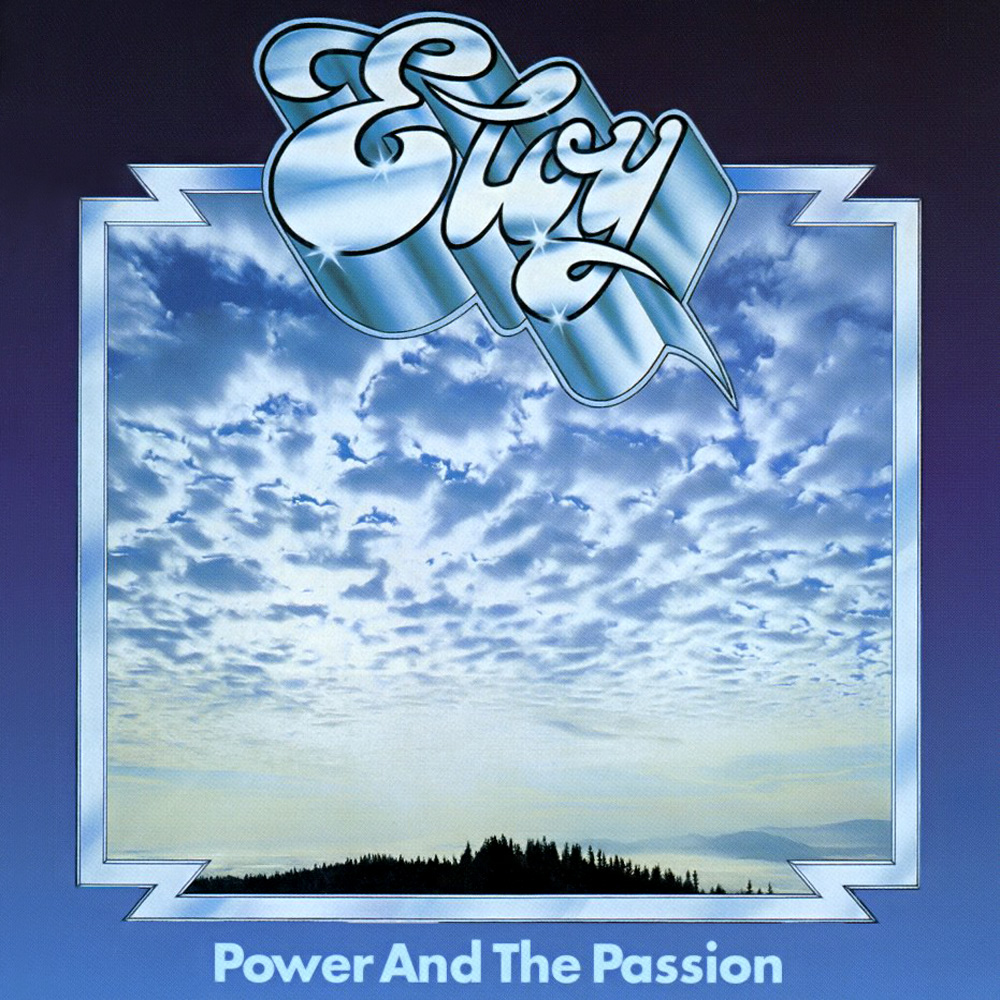 Eloy released their fourth album, Power and the Passion, in October 1975 on Harvest.
The album retains the Floating lineup with a fifth member, guitarist Detlef “Pitter” Schwaar. He presence frees the now-keyboard oriented Manfred Wieczorke, whose arsenal includes organ, Moog mellotron, Steinway grand piano, and electric piano. Power and the Passion contains two group-composed numbers with lyrics co-written by Frank Bornemann and EMI Electrola staffer Richard Smith (credited as Gordon Bennit), who voices the Zany Magician character. His wife, Mary Davis-Smith, portrays Jeanne.
The lyrics concern humanity’s paradox of technical accomplishments beset with moral failures. The protagonist, a boy named Jamie, time-travels back to 1358, where he falls for Jeanne, the daughter of an oppressive landlord. In exchange for her hand, he gives the landlord future secrets and betrays his support of the rebel forces, his eventual abductors. After his imprisonment, the magician sends him back to the present, where Jamie reflects on the vast technical advances yet similar class-based conflicts.
Musically, Power and the Passion unfolds as a segmented narrative built around tonal contrast and pacing shifts. “Journey Into 1358” moves from quiet organ and spoken vocals into a rising march anchored by fast tom fills and staccato guitar shapes. “Love Over Six Centuries” stretches across multiple phases, starting with circular guitar figures and sparse vocal exchanges, then rising into a swirl of phased organ, alternating vocal registers, and a long build of climbing guitar leads and pulsating rhythm. “Mutiny” opens in slow focus with faint vocals and suspended chords, then escalates under thick organ phrases and interwoven keyboard and guitar lines, sustaining that interplay through repeated peaks.
“Imprisonment” resets the momentum with sparse synth figures and narrative delivery, shifting into subdued acoustic guitar under distant reverb. “Daylight” answers with compact drumming and clustered guitar-organ pairings in short bursts. “Thoughts of Home” lays down a clavinet ostinato and voice fragment before “The Zany Magician” throws sharp guitar accents against off-kilter vocals, bass throbs, and clipped riff-based transitions. “Back Into the Present” enters in hazy phasing, then clears into a forward-driving rhythm under rapid bass and guitar licks, breaking mid-track into spectral keyboard patterns and cut-time refrains. “The Bells of Notre Dame” stretches that final descent, beginning with long-held keyboard tones and slow phrasing, then layering sustained guitar lines over organ beds as the tempo stays restrained, building gradually to a final resolution marked by widening space and a long delay-saturated fade.
A1. “Introduction” (1:10)
A2. “Journey Into 1358” (2:56)
A3. “Love Over Six Centuries” (10:05)
A4. “Mutiny” (9:07)
B1. “Imprisonment” (3:12)
B2. “Daylight” (2:38)
B3. “Thoughts of Home” (1:04)
B4. “The Zany Magician” (2:38)
B5. “Back Into the Present” (3:07)
B6. “The Bells of Notre Dame” (6:26)
Sessions spanned June through August 1975 at Tonstudio Nedeltsche in Cologne, where Eloy co-produced the album with manager Jay Partridge.
Power and the Passion appeared in a gatefold with photos of advancing overcast (front) and sunlit water-ripples with approaching storm clouds (back). The lyrical inner-gates present corresponding visuals for each song.
Breakup | New Eloy
In early 1976, Eloy disbanded over policy disputes with Jay Partridge. Manfred Wieczorke jumped ship to Jane for their 1976/77 albums Jane Live and Between Heaven and Hell. Fritz Randow and Luitjen “Harvey” Janssen later surfaced as the rhythm section of Epitath for the reconstituted band’s 1979 fourth album, Return to Reality. Schwaar disappeared until 1982 when he resurfaced in the NDW act Razzia.
Frank Bornemann formed a new Eloy with bassist Klaus Peter Matziol (b. 1950), drummer Jürgen Rosenthal (b. 1949), and keyboardist Detlev Schmidtchen (b. 1954). Rosenthal drummed on the 1974 second Scorpions album, Fly to the Rainbow. Matziol and Schmidtchen cut respective jazz-rock EPs with Boorturm and Getriebe, both one-off acts on Pauer Records. This Eloy lineup lasted three studio albums.
Dawn
 Eloy released their fifth album, Dawn, on October 4, 1976, on Harvest.
The album presents the new Eloy quartet led by guitarist Frank Bornemann, the band’s sole founding member. He co-composed the music with bassist Klaus Peter Matziol, keyboardist Detlev Schmidtchen, and drummer Jürgen Rosenthal, who wrote the album’s lyrics.
Despite the lineup overhaul, Dawn serves as a Power and the Passion sequel with a ten-song cycle that revisits Jamie, whose spirit travels in a third state between life and death. As he searches through space and time for Jeanne, a cryptic voice advises him to wait for dawn. Confused, he returns to his injured body for a final battle, then abandons human form for a sunny eternity.
Schmidtchen plays Hammond, Minimoog, mellotron, Steinway grand piano, and the Rmi Keyboard Computer on Dawn, which features Rosenthal on glockenspiel, gong, timpani, temple blocks, and roto-toms in addition to a standard Ludwig drum set.
Dawn unfolds as a continuous suite of tightly linked segments, drawing momentum from overlapping themes, cyclic pacing, and narrative tension. “Awakening” begins with storm noise and orchestral bursts, then narrows into acoustic strums and voice lines that bridge directly into “Between the Times,” a segmented multi-part piece that cycles through rising piano motifs, string punctuations, and alternating narrations layered across staggered rhythmic phrases.
“The Sun Song” softens the mood, centering on elongated keyboard pads and arching vocal lines that ride across sweeping Mellotron surges and slow pulsed cymbals. “The Dance in Doubt and Fear” inverts that structure, anchoring its motion on repeating bass figures while overlaying organ flashes and conversational fragments. “Lost!? (Introduction)” opens with layered chants and clustered Moog figures over tribal-pattern drums, giving way to a sustained stretch of strings and oceanic textures. “Lost?? (The Decision)” uses cathedral organ as a cue point before diving into a tightly wound arrangement of stop-start bursts, phased keyboards, and low-end guitar swells that spiral into a slow drift section before vocals realign the structure.
“The Midnight-Fight / The Victory of Mental Force” pivots from rapid vocal phrasing into staggered drum patterns and call-answer figures, then drives through layered percussion, unison string swells, and keyboard refrains that accelerate into a climactic duel between voice, Moog, and guitar. “Gliding into Light and Knowledge” opens in spacious ambient fragments—birdcalls, reverb traces, distant tones—before establishing a grounded rhythmic pulse with interwoven guitar and synth lines. “Le Réveil du Soleil / The Dawn” closes the album with sequenced layering: low-end bass figures, slow-chime patterns, floating Mellotron phrases, and pulsing modulated synths, gradually rising in density until resolving in a slow fade of unified textures.
A1. “Awakening” (2:53)
A2. “Dawn Suite”
— a. “Between the Times” (2:00)
— b. “Memory – Flash” (5:20)
— c. “Appearance of the Voice” (5:19)
— d. “Return of the Voice” (3:20)
A3. “The Sun-Song” (1:52)
A4. “The Dance in Doubt and Fear” (1:20)
A5. “Lost!?? (Introduction)” (1:10)
B1. “Lost?? (The Decision)” (4:14)
B2. “The Midnight-Flight” (6:41)
B3. “The Victory of Mental Force” (1:44)
B4. “Gliding Into Light and Knowledge” (4:49)
B5. “Le réveil du soleil / The Dawn” (7:46)
Eloy produced the album in August/September 1976 at Tonstudio Nedeltschev with owner Georgi Nedeltschev, who engineered their two subsequent albums.
Dawn replicates the prior album’s cover design with opposite imagery: sunset clear skies (in lieu of midday overcast) and a gold frame and logo (its only non-silver appearance).
Eloy performed “The Sun Song” on the German music program Midnight Flight.
Ocean
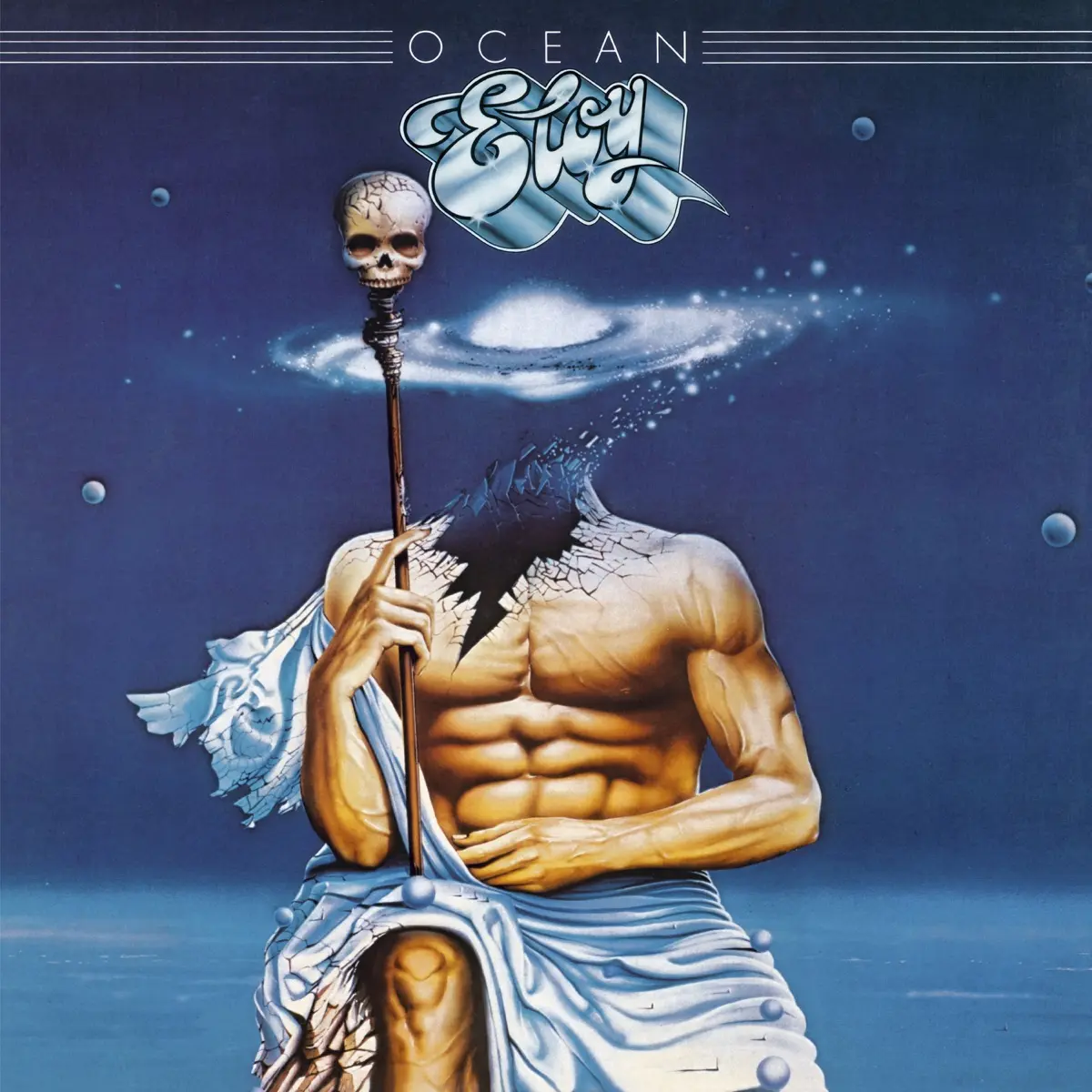 Eloy released their sixth album, Ocean, on October 26, 1977, on Harvest.
Their third straight concept album, Ocean presents four epic songs that chart the rise and fall of Atlantis, from its creation by Poseidon, god of the oceans, to its adaption and later corruption of logos (divine principles), which lead to its ultimate fate.
Jürgen Rosenthal wrote the lyrics, set to forty-four minutes of group-composed music. He multi-tasks between flute, timpani, tubular bells, and his expanded drum kit. Detlev Schmidtchen adds xylophone and ARP to his arsenal of Hammond, Minimoog, RMI, and mellotron. Klaus-Peter Matziol plays Thunderbird and fretless basses. Frank Bornemann produced the album with mystery electronic effects.
Ocean unfolds as a continuous four-part suite structured around gradual thematic ascents, dense instrumental layering, and tonal shifts between restraint and climax. “Poseidon’s Creation” builds from an extended overture of tom-heavy cadence and swelling synth drones, gradually layered with sustain-heavy guitar phrasings that intertwine with low-register keyboard pulses. After four minutes, the rhythm suspends as Bornemann’s vocals enter over a slow-moving foundation, then ramps into an instrumental section driven by oscillating bass, phased Moog runs, and guitar accents sharpened by delay and tremolo. Vocal returns alternate with solo segments until a choral-textured coda breaks the momentum into stasis.
“Incarnation of the Logos” enters in stark contrast with subdued synth pads and reverberant voice, maintaining suspension until three minutes in when the rhythm section reengages with a syncopated upturn. The instrumental break follows a rising arc, first establishing a tight locked figure under bass, then releasing into contrapuntal synth and guitar lines that trade prominence across the remaining stretch. “Decay of the Logos” sets a darker tone with chromatic synth loops and dissonant guitar accents before shifting to a faster tempo marked by clipped vocals, percussive keyboard stabs, and descending fills. The arrangement resets midway, briefly thinning to a pulse-driven center before closing in clustered repetition and vocal reinforcement.
“Atlantis’ Agony at June 5th – 8498, 13 P.M. Gregorian Earthtime” opens in abstract space: glacial synth textures, processed voice fragments, and slow-moving modal shifts that extend for eight minutes without rhythmic anchor. A subdued organ cue and slow bass pattern introduce structure, followed by tom rolls and filtered guitar swells that eventually coalesce into a driving final movement. Bornemann’s vocals reappear over a mid-tempo progression reinforced by symphonic synth layers and a final burst of analog solos, ending the album with rising harmonic density that cuts to silence after its peak.
A1. “Poseidon’s Creation” (11:38)
A2. “Incarnation of the Logos” (8:25)
B1. “Decay of the Logos” (8:15)
B2. “Atlantis’ Agony at June 5th – 8498, 13 P.M. Gregorian Earthtime” (15:35)
Sessions occurred in September and early October 1977 at Sound Studio N in Cologne. Rosenthal completed the lyrics just pre-deadline and handed them to Bornemann, who sang them cold as single-take final overdubs.
Ocean appeared in a blue vertical gatefold with an illustration by Polish painter Wojtek Siudmak, whose image depicts a half-robed headless god on an ocean rock with a skull wand. Siudmak’s fantasy art also graces subsequent albums by the French space-disco groups Evidence, Rockets, Visitors, and Sunshine on the World.
Live
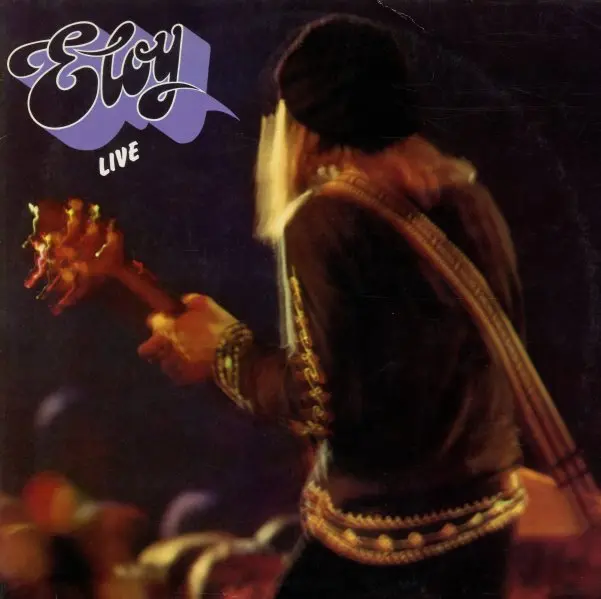 In May 1978, Eloy issued Live, a two-record document of their March tour of Germany, France, and Switzerland.
Sides A and D present Ocean material. Sides B and C present rearranged Dawn numbers, plus one song each from Power and the Passion (“Mutiny”) and Inside.
A1. “Poseidon’s Creation” (11:37)
A2. “Incarnation of Logos” (8:46)
B1. “The Sun-Song” (8:30)
B2. “The Dance in Doubt and Fear” (7:36)
C1. “Mutiny” (9:56)
C2. “Gliding Into Light and Knowledge” (4:24)
C3. “Inside” (6:34)
D. “Atlantis’ Agony at June 5th – 8498, 13 P.M. Gregorian Earthtime” (20:54)
Eloy recorded each night of their tour on mobile 24-track but defective tape left them with few usable numbers. Live presents salvageable portions from multiple nights edited together into compete songs. The credits list their twelve-member road crew that facilitated Eloy’s laser-light stage sets.
Silent Cries and Mighty Echoes
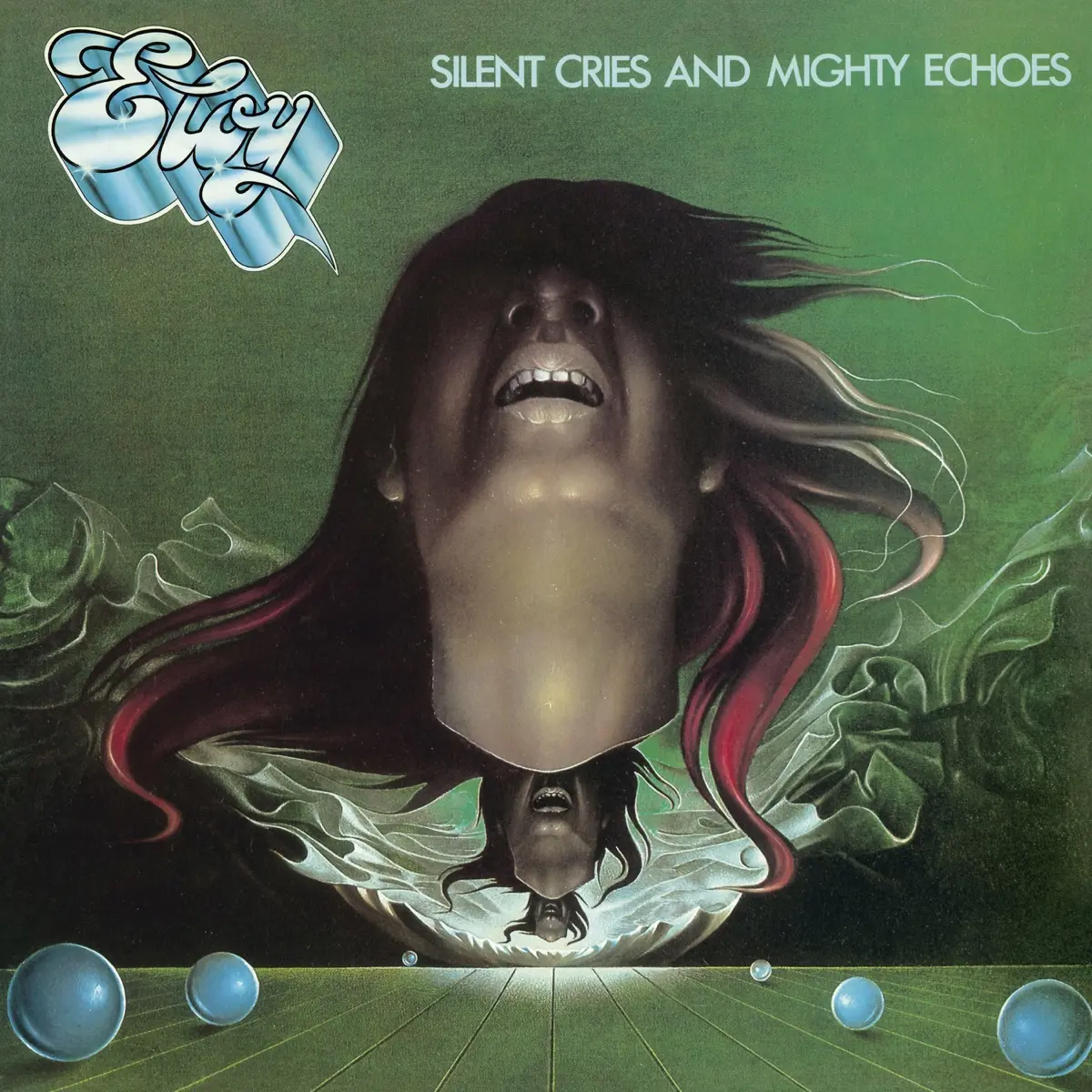 Eloy released their seventh studio album, Silent Cries and Mighty Echoes, on January 10, 1979, on Harvest.
Their fourth concept album, Silent Cries presents five group-composed songs and one suite. Jürgen Rosenthal wrote the lyrics, which explore human transcendence through spiritual awareness.
Detlev Schmidtchen plays Hammond M3, Minimoog, RMI, ARP/Solina String Ensemble, Logan/Hohner String Melody, Fender Rhodes electric piano, and Steinway grand. Klaus-Peter Matziol uses an Alembic bass and Moog Taurus pedalboard, plus “two-minutes-effect-guitar.”
Silent Cries and Mighty Echoes opens with the dyad “Astral Entrance / Master of Sensation,” unfolding from a suspended synth wash and delay-treated guitar into a sharply defined mid-tempo sequence powered by tom-led percussion and a cycling rhythm guitar figure. Vocals emerge as callouts framed by layered keyboard textures, then yield to interwoven solos: first a wide-voiced synth line, then a clipped snare-led break that cues a searing guitar lead and organ flourishes under a deepening pulse.
“The Apocalypse” proceeds as a three-part suite. Its first section, “Silent Cries Divide the Nights,” centers on slow phrasing over a thick synth bed with interlaced clean guitar. “The Vision – Burning” expands the frame with echo-laced vocals and phased cymbals, leading into “Force Majeure,” where wordless female voice layers swell across a rising organ backdrop before the tempo pivots into an urgent rhythm—snapped hi-hats, stabbing keyboard chords, and surging bass—under sustained Moog lines and arching guitar accents.
“Pilot to Paradise” picks up with clipped vocal phrasing and staggered synth bursts locked into a rolling bass figure. The midsection stretches out with held keyboard chords and restrained drum patterns that break back into full motion for a final instrumental surge. “De Labore Solis” dials the energy down into minimal rhythm and sparse arrangement, driven by alternating keyboard arpeggios and low-register voice over layered pads. “Mighty Echoes” closes the album with steady forward motion, combining rhythm guitar and stacked keyboard voices across a fixed pulse, gradually intensifying through cumulative layering before opening into a final guitar-led passage that floats over Mellotron contours and drum-roll cadences. Throughout, the band anchors tempo changes and texture shifts with seamless transitions and ensemble precision.
“The Vision – Burning” features vocals by Wolfgang Maus and Brigitte Witt, a recent auxiliary for Triumvirat and their deceased ex-bassist, Helmut Koellen.
A1. “Astral Entrance” (3:03)
A2. “Master of Sensation” (6:00)
A3. “The Apocalypse”
— a. “Silent Cries Divide the Night”
— b. “The Vision – Burning” (11:32)
— c. “Force Majeure” (3:22)
B1. “Pilot to Paradise” (7:01)
B2. “De Labore Solis” (5:12)
B3. “Mighty Echoes” (7:16)
Sessions occurred in November/December 1978 at Sound Studio N with Nedeltschev and assistant engineer Günther Kaspar, a soundman on the 1977 EMI Electrola release Dreamlike Land by Richard Schneider Jr.
Silent Cries appeared in a dark green gatefold with surreal imagery by German painter Winfried Reinbacher, whose art graced the three subsequent Eloy albums.
Silent Cries and Mighty Echoes went Top 20 on the German and Norwegian album charts. Eloy embarked on a tour that included a sold-out March 19 co-headline engagement with Scorpions at the Cologne Sporthalle. For these dates, Bornemann hired a fifth-wheel, guitarist Hannes Arkona.
The 2005 Silent Cries CD remaster includes two bonus tracks, “Child Migration” and “Let the Sun Rise In My Brain,” both recorded for an intended 1979 single as tie-ins with UNESCO’s International Year of the Child campaign. The two songs (withheld over quality concerns) were Eloy’s last recordings with Detlev Schmidtchen and Jürgen Rosenthal, who formed the splinter duo Ego On the Rocks.
Colours
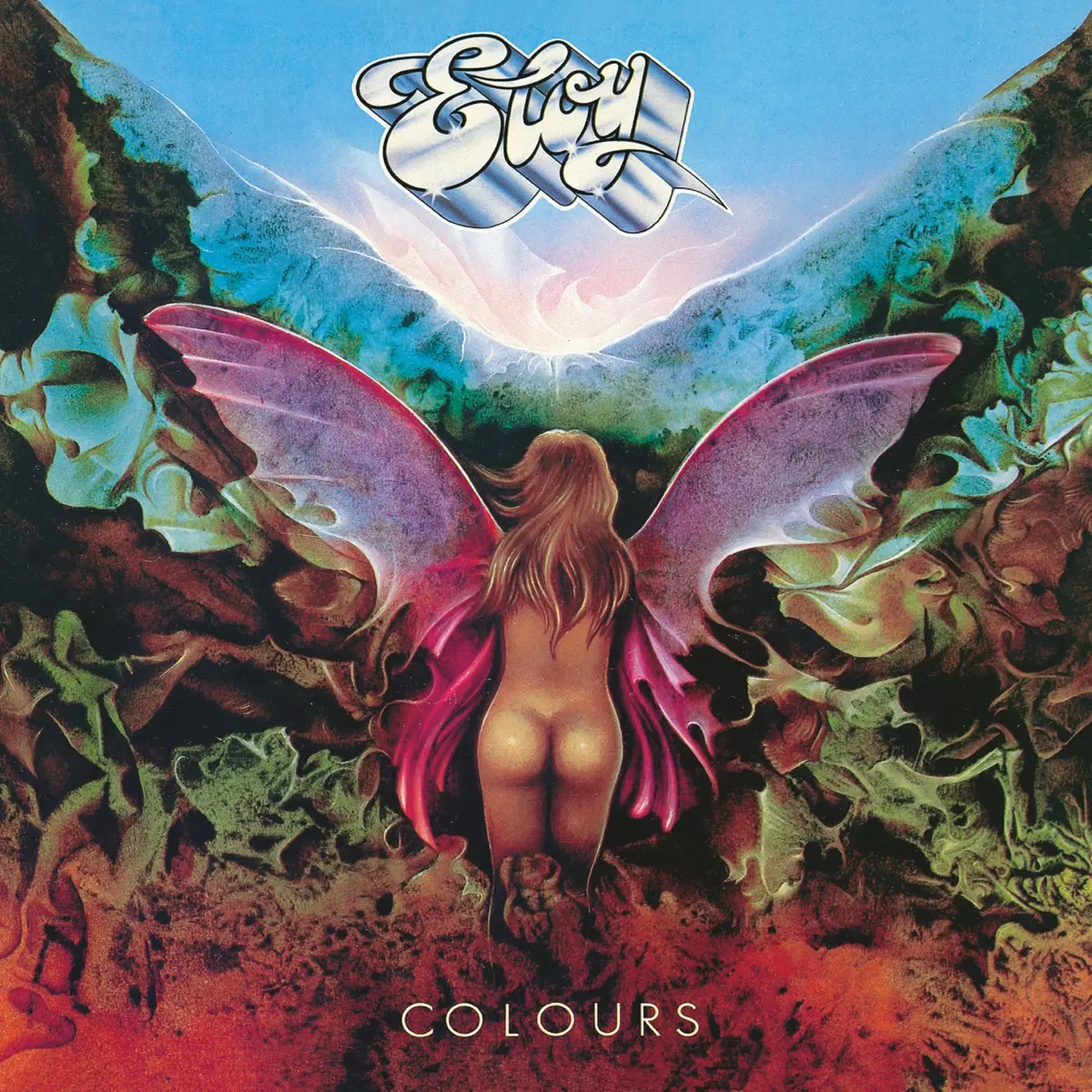 Eloy released their eighth studio album, Colours, in June 1980 on Harvest.
The album contains eight group-composed songs, including a re-recorded “Child Migration” and the single sides “Silhouette” and “Horizons.”
Colours, presents a new five-piece Eloy with Frank Bornemann, veteran bassist Klaus-Peter Matziol, recent tour guitarist Hannes Arkona, and two new recruits: keyboardist Hannes Folberth and Serene drummer Jim McGillivray, an early (pre-Randow/Janssen) Epitaph member who (like his predecessor, Jürgen Rosenthal) assumed the role of lyricist.
A1. “Horizons” (3:20)
A2. “Illuminations” (6:19)
A3. “Giant” (6:05)
A4. “Impressions” (3:06)
B1. “Child Migration” (7:23)
B2. “Gallery” (3:08)
B3. “Silhouette” (6:57)
B4. “Sunset” (3:15)
Sessions occurred in early 1980 at Horus Sound Studio, a just-completed Hannover facility that Bornemann constructed for group activities. He partnered for the venture with Polish soundman Jan Němec, who mixed a 1978 private release (The Young Lovers) by The Locals, a fusion/reggae/electro crossover act. Němec engineered Colours in sequence with 1980 Horus recordings by Wintergarden and Fargo, a Hanover hard-rock quartet who co-produced their second album, No Limit, with Bornemann.
Colours appeared in a gatefold illustrated by Silent Cries artist Winfried Reinbacher, whose image presents a backside faerie within a gradient dike with brown/turquoise shrubbery.
Harvest lifted “Silhouette” as an edited single (3:30 b/w “Horizons”). For “Silhouette,” Eloy filmed their first music video, which intersperses silhouetted clips of the band with translucent closeups of Bornemann in clown makeup. They also filmed a clip for “Illuminations” in which they mime on a soundstage in period garb.
Colours CD reissues add Eloy’s subsequent single, “Wings of Vision,” an exclusive a-side (b/w “Sunset”).
A. “Wings of Vision” (4:14)
Planets
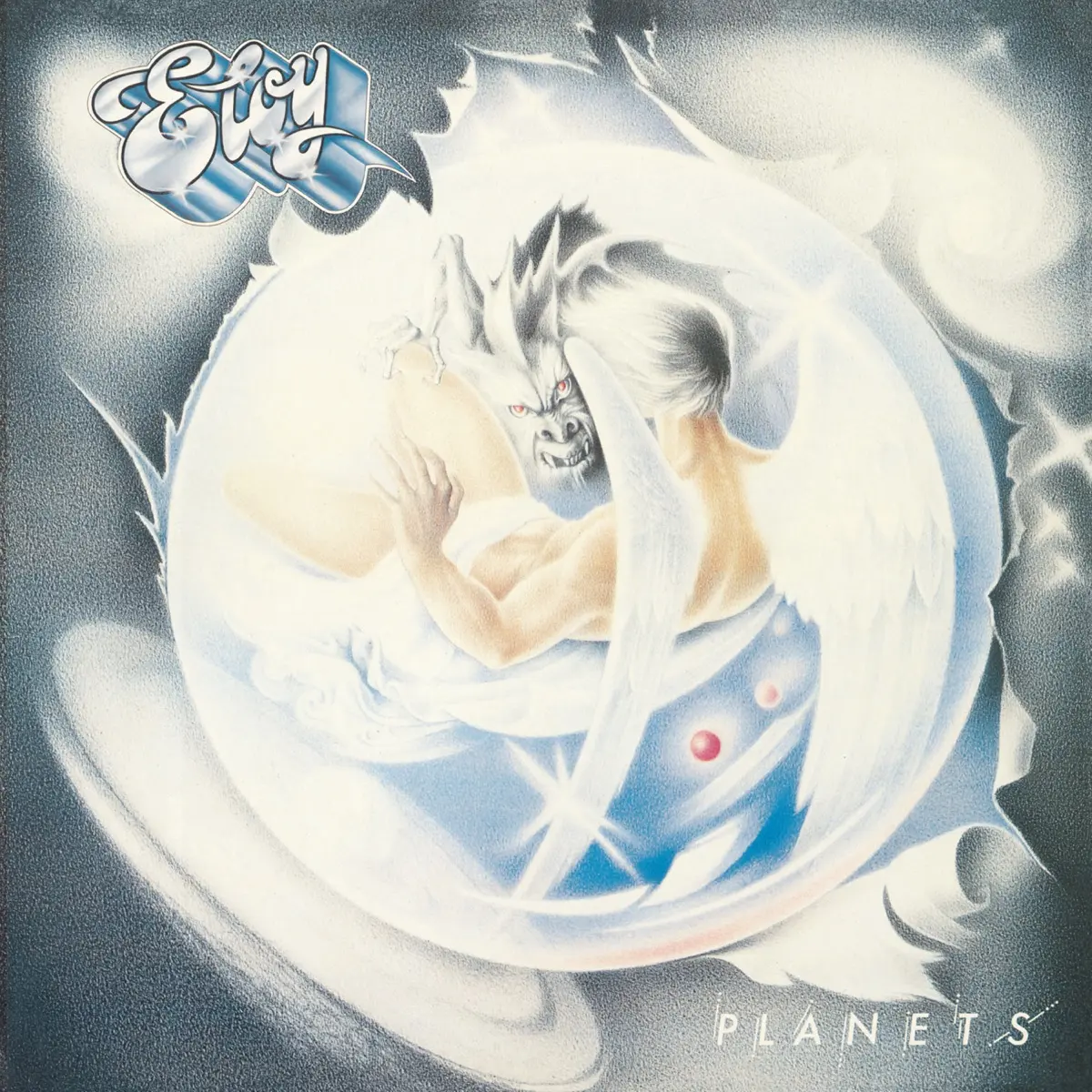 Eloy released their ninth studio album, Planets, in June 1981 on Harvest.
Planets is the first in a two-album concept involving Ion, the goodness crusader of Salta, a planet plagued by dark forces. Frank Bornemann conceived the story with inspiration from Nach uns die Zukunft (After us, the Future), a book by Swiss author Hans A. Pestalozzi (1929–2004), who met twice with the Eloy frontman during the album’s conception. American multi-linguist Sigi Hausen assisted Bornemann’s translation of the 1,000-word backstory.
Bornemann retained the Colours lineup for Planets‘ creation. However, he hired Känguru drummer Olaf Gustafson midway through the sessions due to Jim McGillivray’s diminished state.
A1. “Introduction” (1:58)
A2. “On the Verge of Darkening Lights” (5:37)
A3. “Point of No Return” (5:45)
A4. “Mysterious Monolith” (7:40)
B1. “Queen of the Night” (5:22)
B2. “At the Gates of Dawn” (4:17)
B3. “Sphinx” (6:50)
B4. “Carried by Cosmic Winds” (4:32)
Eloy rehearsed Planets in a shared apartment and recorded the album at Horus Sound, where sessions ran back-to-back with the sequel.
Planets appeared in a gatefold sleeve with Winfried Reinbacher, who depicts Ion as an Eros-like figure in a cracked, haunted depiction of Salta. Bornemann’s story text appeared on the inner-gates. Original copies came with a two-tone lyrical inner-sleeve.
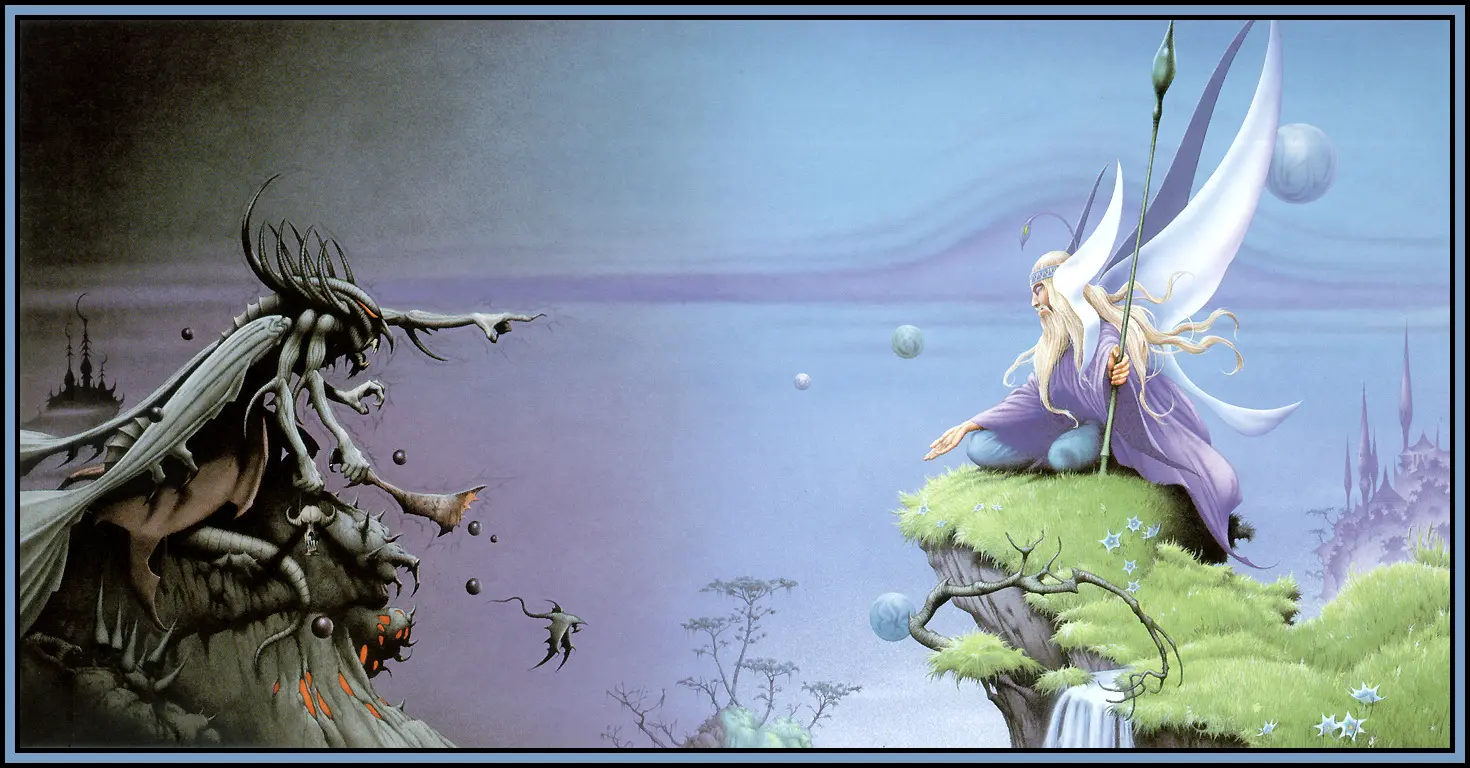 In the UK, Planets appeared in 1982 on the label Heavy Metal Worldwide with an alternate cover by Rodney Matthews, an early Thin Lizzy illustrator behind recent fantasy art for Nazareth and Praying Mantis. Matthews’ art (reminiscent of Yes/Osibisa illustrator Roger Dean) presents Ion as a winged wise man perched on a green hilltop across from Salta’s evil forces (backside), depicted as spiky demons. The inner-sleeve displays a purple-scale illustration of a Saltan airship.
Time to Turn
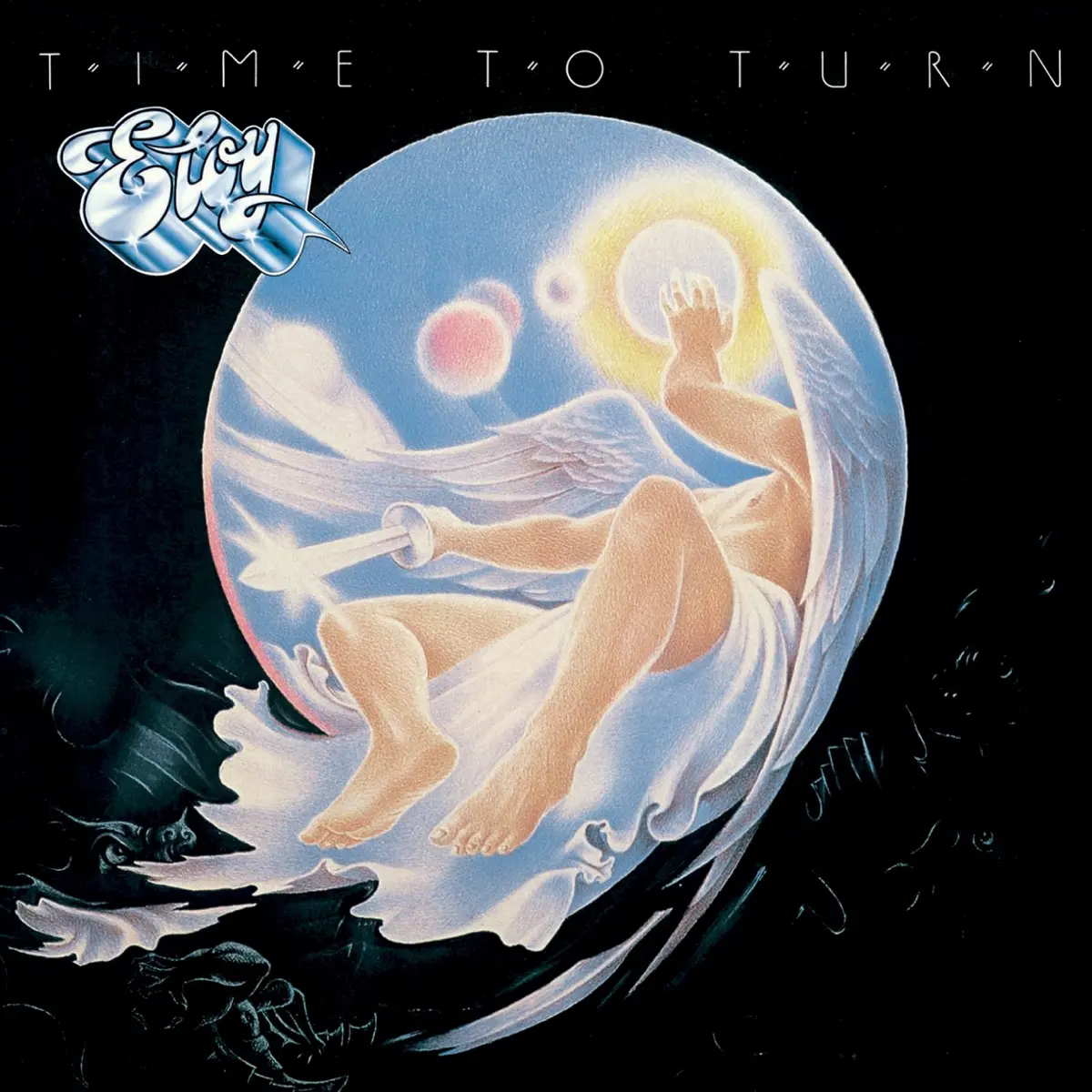 Eloy released their tenth studio album, Time to Turn, on April 6, 1982, on Harvest.
Conceived as the Planets sequel, Time to Turn continues the story of Ion, the hero of Salta, an Earth-like planet of low morale. The album contains seven group-composed songs with lyrics by Frank Bornemann and translator Sigi Hausen.
Bornemann retained four-fifths of the Colours lineup — guitarist Hannes Arkona, keyboardist Hannes Folberth, and longtime bassist Klaus-Peter Matziol — and reinstated earlier drummer Fritz Randow from the 1973–75 Eloy.
A1. “Through a Somber Galaxy” (6:03)
A2. “Behind the Walls of Imagination” (6:25)
A3. “Time to Turn” (4:34)
A4. “Magic Mirrors” (5:28)
B1. “End of an Odyssey” (9:28)
B2. “The Flash” (5:35)
B3. “Say, Is It Really True” (4:46)
Sessions commenced in August 1981 (three months after Planet‘s completion) and ran through February 1982 at Horus Sound, where Jan Němec engineered and mixed Time to Turn amid projects by Eiskalte Engel, Fargo, and Achim Kück & Friends.
Time to Turn sports Winfried Reinbacher’s fourth consecutive Eloy cover. Here, Ion clutches sunlight in a peaceful, intact Salta surrounded in darkness. Bornemann’s narrative text appears on the inner-sleeve while the lyrics cover the inner-gates.
Harvest lifted “Time to Turn” as a single backed with an edited “Through a Somber Galaxy” (5:16).
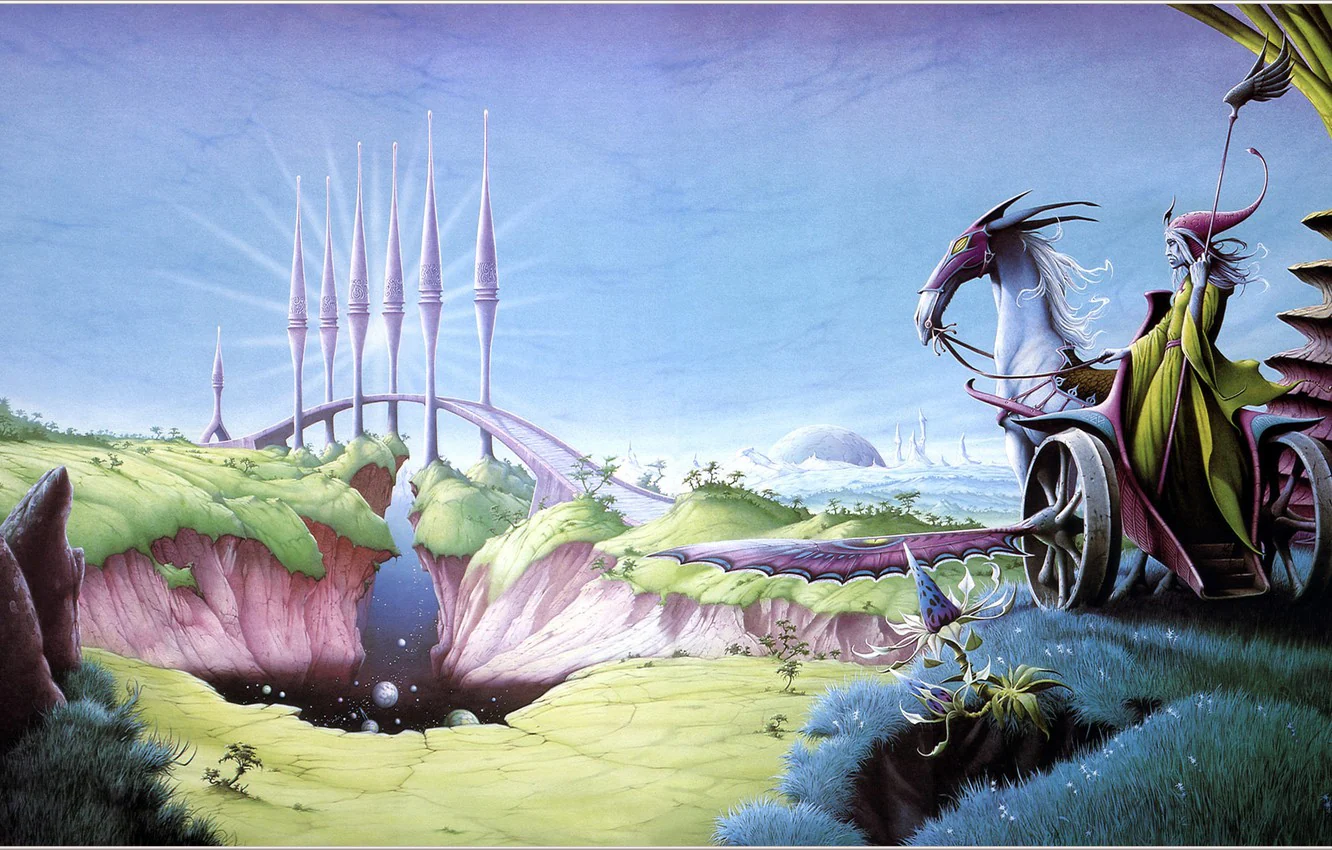 In the UK, Time to Turn appeared simultaneous with Planets on Heavy Metal Worldwide, again with alternate cover art by Rodney Matthews, who depicts a beardless Ion on a lavender/teal horse carriage that faces an arched valley bridge (backside) on a plentiful Salta. For this version, Bornemann replaced “Magic Mirrors” with a remix of the Colours track “Illuminations.” Matthews fantasy art also graces 1982 covers for Diamond Head (Borrowed Time) and Magnum (Chase the Dragon).
Performance
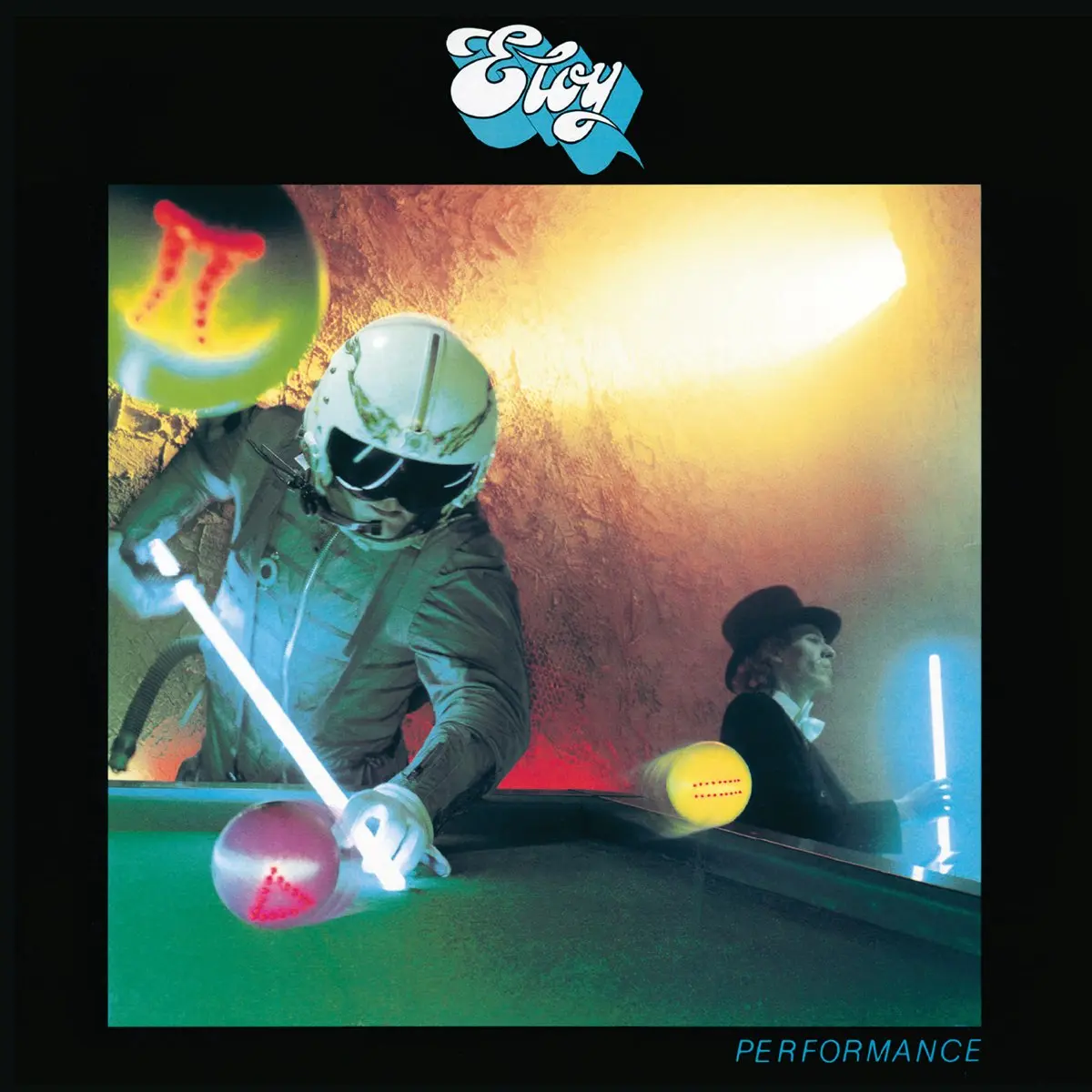 Eloy released their eleventh studio album, Performance, in April 1983 on Harvest.
Performance contains seven group-composed songs with lyrics by Sigi Hausen. For this album and the followup, Frank Bornemann retained the Time to Turn lineup.
On Performance, keyboardist Hannes Folberth and guitarist/keyboardist Hannes Arkona impart a synth-rock feel akin to Planet P Project.
A1. “In Disguise” (4:29)
A2. “Shadow and Light” (5:17)
A3. “Mirador” (3:44)
A4. “Surrender” (5:38)
B1. “Heartbeat” (6:26)
B2. “Fools” (5:10)
B3. “A Broken Frame” (8:10)
Bornemann produced Performance in the winter of 1982/83 at Horus Sound, where Jan Nemec used the assistance of Jane soundman Achim Schulze and ACI/Profil engineer Harald Lepschies.
Wintergarden’s Walter Seyffer (ex-Nine Days Wonder) conceived the Performance album cover: a neon pool game between an astronaut and a cabaret MC. This marked the final appearance of their calligraphic chrome logo.
Metromania
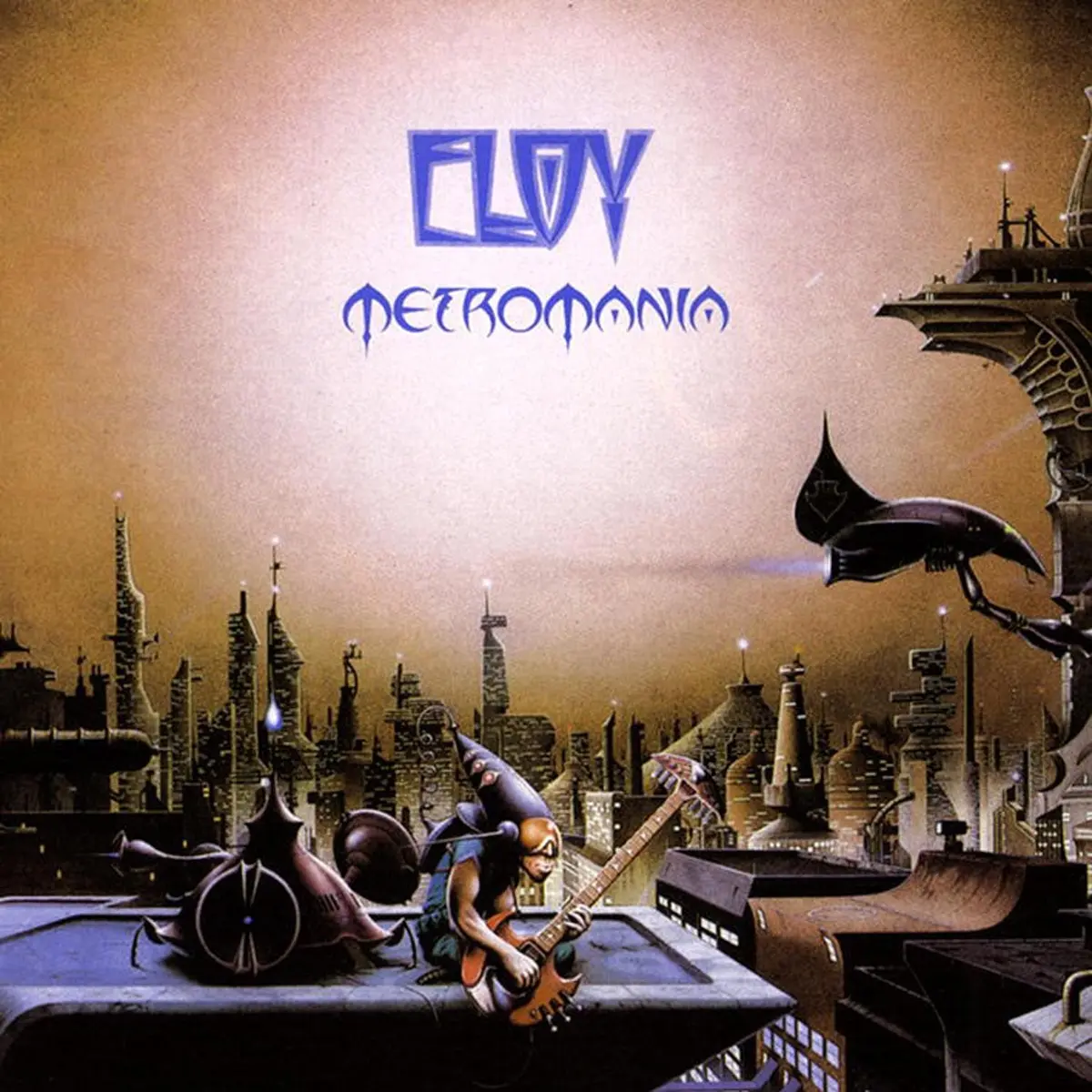 Eloy released their twelfth studio album, Metromania, on June 15, 1984, on Harvest. The title (derived from the Greek word μετρομανία) refers to intensive poetry writing.
Their seventh concept album, Metromania follows an unnamed dissident poet in a world oppressed and mind-numbed by machinery. He finds a spiritual connection with nature, a rare source that inspires poems which touch audiences, who view him as a prophet. Despite his rebel fervor, he resigns to metromania as a means of escape from oppressive forces.
Metromania was the third and final Eloy album that Frank Bornemann recorded with the quintet lineup of eight-year bassist Klaus-Peter Matziol, two-term drummer Fritz Randow, and current-decade mainstays and Hannes Folberth and Hannes Arkona, who modernizes the sound with vocoder and drum machine.
A1. “Escape to the Heights” (4:59)
A2. “Seeds of Creation” (4:29)
A3. “All Life Is One” (6:29)
A4. “The Stranger” (4:04)
B1. “Follow the Light” (9:40)
B2. “Nightriders” (4:40)
B3. “Metromania” (6:08)
Sessions occurred at Horus Sound, where Eloy utilized eight backing vocalists. Němec co-engineered Metromania with Lepschies and Die Gesunden soundman Thomas Stiehler, who worked on subsequent albums by Killing Joke, Marillion, and Running Wild.
Rodney Matthews illustrated the Metromania, which depicts the poet with a string instrument on a rooftop in an over-developed city with smog-billowing funnels (backside).
In the album’s final mixing stage, UK promoters summoned Eloy for a sold-out two-night engagement at London’s Rainbow Theatrer. BBC Radio broadcast the second night’s performance, which impressed the members of Marillion, who offered Eloy the opening slot on an upcoming UK tour. Eloy declined due to preexisting commitments.
Code Name: Wild Geese
In October 1984, Eloy released Code Name: Wild Geese, the soundtrack to the Italian–German war film starring Lewis Collins (The Professionals).
Ra
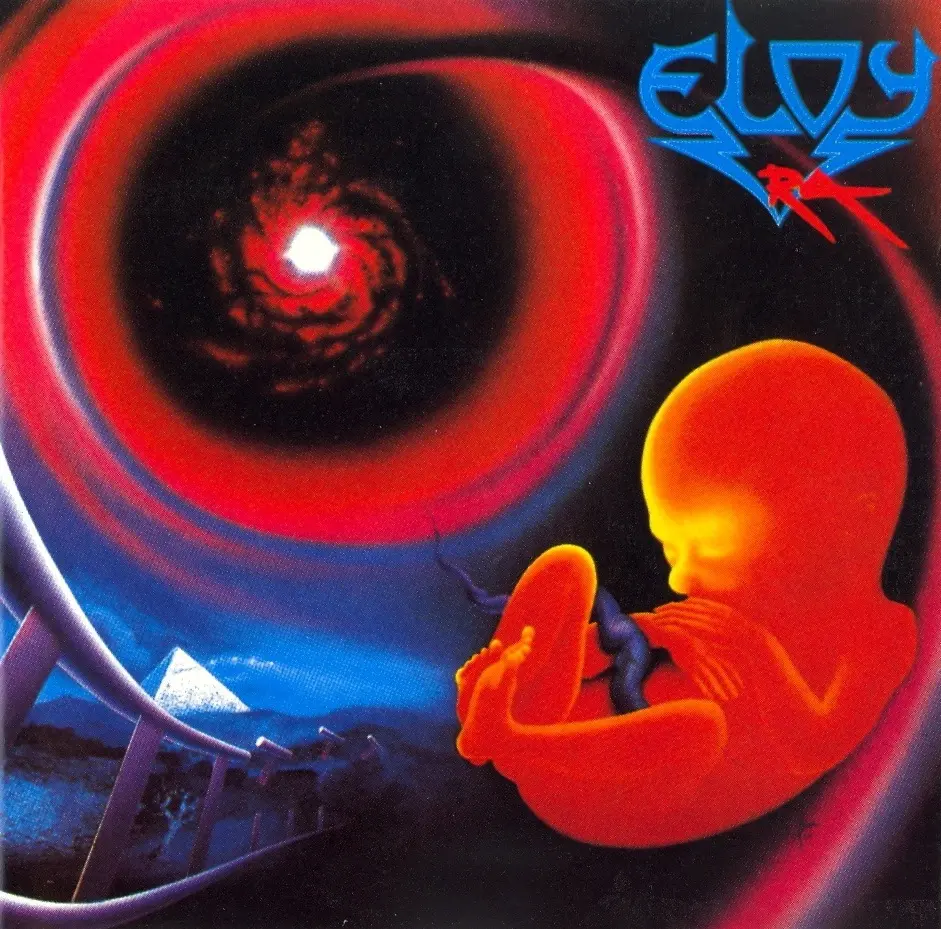 Eloy released their thirteenth studio album, Ra, on March 15, 1988, on ACI.
1. “Voyager of the Future Race” (9:03)
2. “Sensations” (5:13)
3. “Dreams” (8:09)
4. “Invasion of a Megaforce” (7:45)
5. “Rainbow” (5:23)
6. “Hero” (6:52)
Discography:
- “Walk Alone” / “Daybreak” (1970)
- Eloy (1971)
- Inside (1973)
- Floating (1974)
- Power and the Passion (1975)
- Dawn (1976)
- Ocean (1977)
- Silent Cries and Mighty Echoes (1979)
- Colours (1980)
- Planets (1981)
- Time to Turn (1982)
- Performance (1983)
- Metromania (1984)
- Code Name: Wild Geese (OST, 1984)
- Ra (1988)
Sources:
- Discogs: Eloy
- 45worlds: Eloy
- 45cat: Eloy
- Zaragon: Directory of German Albums
- MusicBrainz: Eloy
- ProgArchives: Eloy
Artist/Album Pages:
Zones were a Scottish new-wave rock band behind the 1979 Arista album Under Influence. They evolved ...
Spin was a Dutch jazz-rock band that made the 1976/77 Ariola albums Spin and Whirlwind and scored ...
Het Pandorra Ensemble was a Dutch jazz-rock band that released the 1978 album III on Disaster Elec...
Peter Baumann is a German keyboardist and percussionist who served as a member of Tangerine Dream ...
Samson was an English brass-psych band from Manchester that made the 1969 album Are You Samson. Paul...
Byzantium was an English rustic-rock band that released the 1972/73 albums Byzantium and Seasons Cha...
Joe Jackson is an English pianist, songwriter, vocalist, author, and occasional bandleader, active s...
Tierra was an American Latin-rock band from Los Angeles that made a 1973 self-titled album on 20t...
Television was an American art-rock band from N.Y.C. that released the single "Little Johnny Jewel...
Pondus was a Swedish jazz-rock band behind the 1979 album Myrornas Frammarsch on Coop Records. M...
La Máquina de Hacer Pájaros were an Argentine symphonic/jazz-rock band that released two albums in...
The Visitors were an American spiritual jazz combo from Philadelphia that released the album Neptu...