

Dalek I was an English electro/art-pop combo from Liverpool that released two albums and a clutch of singles between 1979 and 1983. Originally called Dalek I Love You — a space-age play on the phrase “darling I love you” — the band distilled from a late-’70s Liverpudlian conglomerate that would also yield future members of Orchestral Manoeuvres in the Dark and The Teardrop Explodes.
Members: Alan Gill (vocals, synthesizer, bass, guitar), David Balfe (bass, keyboards, 1977-78), David Hughes (keyboards, 1977-80), Chris “Teepee” Shaw (drum machine, tapes, synthesizer, 1977-78), Andy McCluskey (vocals, bass, 1978), Martin Cooper (saxophone, 1978), Gordon Hon (instruments, vocals, 1982-83), Kenny Peers (instruments, vocals, 1982-83), Keith Hartley (instruments, vocals, 1982-83)
Background
Dalek I Love You assembled in December 1977 when guitarist Alan Gill and bassist David Balfe teamed with keyboardist Dave Hughes.
Gill, Balfe, and guitarist Keith Hartley first played together in a Thingwall pub-covers combo, Mr. McKenzie, before shifting to punk as Radio Blank in November 1976 with drummer Stephen Brick. Radio Blank delivered originals and covers at fifteen shows, five at Eric’s Club in Liverpool. Gill and Balfe dissolved the band amid growing interest in experimental sounds and formed Dalek I Love You, a name blending Balfe’s preference for the Daleks with Gill’s choice of Darling, I Love You.
Saxophonist Martin Cooper joined in August 1978, along with vocalist and bassist Andy McCluskey and keyboardist Paul Humphreys from The Id, plus poets Gordon Hon and Max the Actor. McCluskey and Humphreys departed in September 1978 to start Orchestral Manoeuvres in the Dark. Balfe exited to launch Zoo Records and manage the Teardrop Explodes and Echo & the Bunnymen. Gill and Hughes continued as a duo, signed to Inevitable Records, and secured a deal with Phonogram, which abbreviated the band name to Dalek I for initial releases.
1979 Vertigo Singles
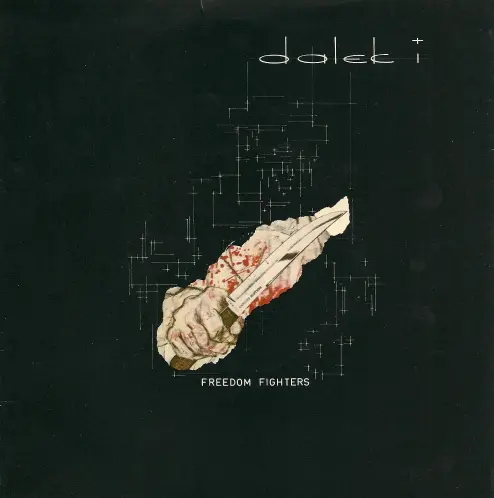 Dalek I debuted on July 16, 1979, with the Vertigo single “Freedom Fighters” (b/w “Two Chameleons”) followed in October by “The World” (b/w “We’re All Actors”).
A1. “Freedom Fighters” (2:18)
B1. “Two Chameleons” (3:40)
A1. “The World” (2:58)
B1. “We’re All Actors” (3:18)
Sessions for both occurred at Amazon Studios, Liverpool, with the Blitz Brothers: the production team of Chris Hughes, David Bates, and Steve Lovell.
Compass Kum’pas
 Dalek I released their debut album, Compass Kum’pas, on May 24, 1980, on Back Door. The album explores whimsical synth arrangements with angular guitar and vocal humor across fourteen tracks.
“The World” opens the album on sustained raybeam synth tones before the arrangement fills out around them. “8 Track” follows with a warped intro that folds into a drunken rhythmic sway, buzz-drone synth and random interjections of plucked guitar and tinkling piano cutting against lurching downbeats. The album returns repeatedly to clipped, stop-start rhythmic patterns — “Mad” runs them through neon-ray synths and percolating tones with clipped guitar, and “Heat” sets them against fractious, echo-laden minor-key figures.
“Good Times” opens on a false start before a driving marquee-synth passage takes hold, broken by desolate verses and faint, rhythmless detours. The album balances bright, neon-chordal surfaces against more harmonically vertical movement — a tension most audible in “The World,” “The Kiss,” and “Missing 15 Minutes.” Of those, “The Kiss” runs on staccato piano and synth in brisk call-and-response, while “Missing 15 Minutes” stretches into an extended instrumental built around a cinematic synth theme with sound effects circling the arrangement.
“Freedom Fighters” drives with a choppy, ska-tinged pulse and odd sound effects cutting through the mix. The segue from “A Suicide” into “The Kiss” works as a running joke: the narrator of the preceding track reverses course in the opening lyric, delivering the retraction in the same polite, unhurried tone. Studio chatter surfaces on at least one track, and the album opener sets the register early with the instruction “don’t listen to a word I say.”
A1. “The World” (2:27)
A2. “8 Track” (2:27)
A3. “Dalek I Love You (Destiny)” (3:37)
A4. “A Suicide” (2:53)
A5. “The Kiss” (2:00)
A6. “Trapped” (4:00)
A7. “Two Chameleons” (3:18)
B1. “Freedom Fighters” (2:08)
B2. “You Really Got Me” (1:56) – Ray Davies
B3. “Mad” (1:48)
B4. “Good Times” (2:07)
B5. “We’re All Actors” (2:52)
B6. “Heat” (3:11)
B7. “Missing 15 Minutes” (5:36)
Dalek I group-wrote everything apart from “You Really Got Me,” the 1964 Kinks song recently re-popularized by Van Halen, also quoted in “Trapped.” Sessions took place at Rockfield Studios in Wales and Amazon Studios in Liverpool, where the Blitz Brothers produced, with engineers Hugh Jones and Frazer Henry.
 Chris Hughes designed the cover, setting the band name in loose, hand-drawn lettering across the top of an architect’s grid, with a collaged central image — a fragment of black-and-white photography overlaid with concentric rings and ruled construction lines, numbers visible at the edge. The title runs along the bottom in two typefaces: “compass” in a faint, struck-through script and “kum’pəs,” in bold green block letters. Back Door issued the original pressing in black on white; a red-ground edition followed on Vertigo for the UK and Canada.
Dalek I preceded the album with “Dalek I Love You (Destiny),” released as their third advance single on Back Door on May 1, 1980, with “Happy” / “This Is My Uniform,” an exclusive two-part track.
B1. “Happy” / “This Is My Uniform” (6:00)
1981/82 Singles
By the time Compass Kumpas appeared, Hughes had left to form Godot with Keith Hartley. Gill joined the Teardrop Explodes in July 1980, re-recording the guitar parts for their debut album Kilimanjaro before his withdrawal from the band. He then relaunched Dalek I Love You with Hartley and returned to recording.
 On February 28, 1981, Dalek I Love You released a standalone Back Door single: “Heartbeat” backed with “Astronauts (Have Landed on the Moon).” Here, Gill assembled a loose ensemble — Chuca Russo and Hugh Jones on vocal harmonies, Chris Hughes on drums — around a pulsing electronic backbone, the overall arrangement warmer in texture than the Compass Kumpas material.
A1. “Heartbeat” (3:20)
B1. “Astronauts (Have Landed on the Moon)” (3:21)
Gill and company recorded the tracks at Rockfield with engineer Alan Jones. The Blitz Brothers mixed both songs at Matrix Studios.
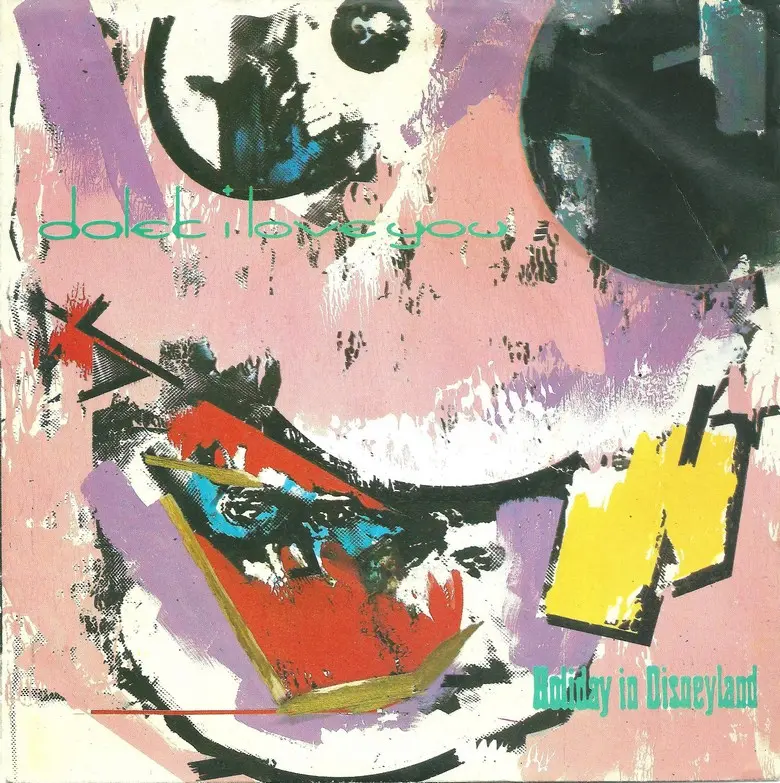
On July 15, 1982, Dalek I Love You released “Holiday in Disneyland” backed with “Masks & Licenses,” their first single on Korova. In August, the single appeared as an extended 12″ with two additional tracks: “Heaven Was Bought for Me” and an extended version of the A-side.
A1. “Holiday in Disneyland” (5:27)
B1. “Masks & Licenses” (2:52)
B2. “Heaven Was Bought for Me” (4:04)
B3. “Holiday in Disneyland” (2:50)
Dalek I Love You
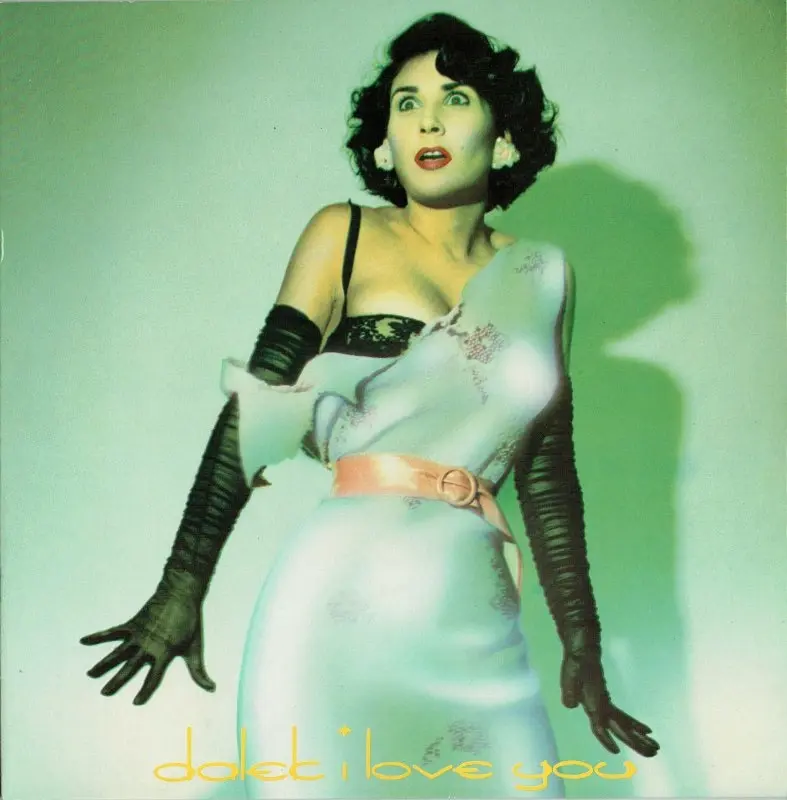 Dalek I Love You released their second album, Dalek I Love You, in November 1983 on Korova.
The album splits along distinct lines — Side One moves through shorter, more direct tracks while Side Two opens into longer, more expansive pieces drawing on dub and dance forms, with synths absorbed into layered percussion. “Horrorscope” takes aim at predictions of the future, “Health and Happiness” turns over the darker underside of middle-class life, and “Dad on Fire” builds around a child’s-eye nightmare. Hartley co-wrote six of the ten tracks.
A1. “Holiday in Disneyland” (4:40)
A2. “Horrorscope” (4:03)
A3. “Health and Happiness” (3:14)
A4. “The Mouse That Roared” (2:49)
A5. “Dad on Fire” (3:39) A6. “Ambition” (3:43)
B1. “Lust” (4:22)
B2. “12 Hours of Blues” (5:32)
B3. “Sons of Sahara” (5:27)
B4. “Africa Express” (7:14)
Dalek I Love self-produced the album at four studios — Farmyard, Jam, Marcus Music, and Trident Studios. The album credits eight engineers: Chris Hughes, Ross Cullum, Colin Fairley, Bob Kraushaar, Rafe McKenna, Tim Hunt, Flood, and Greg Milliner. Side A features rhythm tracks by Trident soundman Steve Short, who also worked on 1983 albums by Echo & The Bunnymen, Marc & The Mambas, and Tony Banks.
Postlude
Gill continued recording with local artists and launched Bop a Dub, a cassette-only label, releasing Naive in 1985 before the project disbanded. He contributed two tracks to the soundtrack of Letter to Brezhnev, Chris Bernard’s 1985 Liverpool-set film. Fontana reissued Compass Kumpas on CD in 1989 with four bonus tracks. Korova reissued Dalek I Love You on CD in 2007 in a remastered and expanded edition.
Hughes moved into film soundtrack work, partnering with Martin Cooper on the scores for Hearts and Armour and CHUD, both 1984, credited as Cooper Hughes. He later collaborated with Thomas Lang, releasing the album The Lost Letter Z and the single “Feels So Right” under the company Dry Communications, and subsequently worked under the name David A. Hughes on further soundtrack projects.
Discography:
- Compass Kum’pas (1980)
- Dalek I Love You (1983)
Sources:
Artist/Album Pages:
Eider Stellaire was a French Zeuhl/jazz-rock band that self-released two eponymous albums between ...
Godley & Creme were an English musical duo and video-production team comprised of multi-instrume...
Mike Makhalemele (June 10, 1938 — May 6, 2000) was a South African saxophonist from Alexandra, Gau...
Rockie Robbins is an American soul-pop singer from Minneapolis who recorded five albums between 19...
Loudness was a Japanese hard-rock/metal band with guitarist Akira Takasaki. They debuted with the ...
Bloque was the Spanish symphonic-rock band behind the classic 1978/79 albums Bloque and Hombre, Ti...
Benoît Widemann (born 1957) is a French pianist and composer who emerged at age 18 in a mid-1970s ...
UPP was an English jazz-funk band that released two albums on Epic during 1975 and 1976, the first...
A Flock of Seagulls are an English new wave band from Liverpool, best known for the Eighties classic...
Burning Spear — aka Winston Rodney (born March 1, 1945) — is a Jamaican dub/roots-reggae artist wh...
In Camera was an English post-punk band on 4AD that released the 1980 short-players "Final Achieve...
Armada were an English art-rock band that was active through several iterations between 1970 and 1...
2018 draft:
Paired down to the duo of Alan Gill and David Hughes, Dalek I cut the choppy “Freedom Fighters” for Phonogram’s Back Door subsidiary in 1979. The following May, the label released Compass Kum’pas, on which the duo cross the neon-chordal rays of the Tubeway Army with the harmonically vertical abstractions of mid-period Gentle Giant — a balance exemplified in the Replicas-cum-Interview jitters of “The World,” “The Kiss,” and “Missing 15 Minutes” — on an assortment of electronic and acoustic instruments.
Unfortunately, the duo splintered upon the album’s release when Hughes departed for Godot. Undeterred, Gill carried on the Dalek I nameplate for a round of singles with new personnel. A more streamlined second album, Dalek I Love You, appeared in 1983.
Between the two Dalek I longplayers, Gill lent his guitar services to five tracks on Kilimanjaro, the first album by The Teardrop Explodes. He would later go into soundtrack work. Hughes appeared on a number of small-press/shortplayer recordings and later assumed the role of keyboardist/composer/producer for sophisti-pop crooner Thomas Lang.