

Colin Newman is an English musician, vocalist, and songwriter, best known as the frontman of the post-punk band Wire through three periods of activity. He made three 1977–79 studio albums with Wire and launched his solo career with the 1980 Beggars Banquet release A-Z, followed by the 1981–82 4AD albums Provisionally Entitled the Singing Fish and Not To. As Wire commenced its second phase, he released the 1986–88 Crammed Discs albums Commercial Suicide and It Seems.
Background
Colin John Newman was born on September 16, 1954, in Salisbury, Wiltshire, and grew up in Newbury, Berkshire. As a schoolboy, he developed a music obsession and listened closely to 1960s radio. He later studied at Watford School of Art, where he moved deeper into the mix of music, style, and visual culture that shaped his late-teen years. Newman’s earliest musical activities involved CNDS, an informal duo with his instrumentalist school friend Desmond Simmons.
By 1976, the shared reference points around him included the Velvet Underground, The Stooges, New York Dolls, The Ramones, Jonathan Richman, and Patti Smith, alongside the first wave of British punk groups. Newman also responded strongly to early Buzzcocks, Damned, and Siouxsie & The Banshees shows at the 100 Club. Those influences fed into the formation of Wire, where he emerged as the group’s principal songwriter across the three albums of their initial run: Pink Flag, Chairs Missing, and 154.
After their 1979 tour behind 154, Wire collapsed amid label politics and musical differences with bandmates Graham Lewis and Bruce Gilbert, who partnered in a series of noise-music projects (Cupol, Dome, Duet Emmo). Newman emerged from their breakup with a surplus of songs.
A-Z
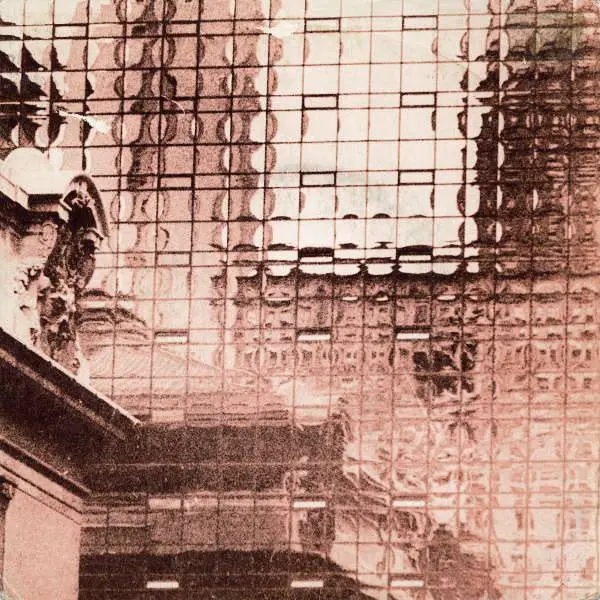
 Colin Newman released his debut solo album, A-Z, in October 1980 on Beggars Banquet.
The album contains twelve originals conceived for a fourth Wire studio album, including co-writes with Wire bassist Graham Lewis (“Alone”) and One 45 auxiliary guitarist–bassist Desmond Simmons (“& Jury”), Newman’s longtime personal friends, who forms the A-Z rhythm section with Wire drummer Robert Gotobed. Producer Mike Thorne plays keyboards and synthesizer across the album. “Troisieme” features Charles Bullen of This Heat (credited as Billy Bagg) on clarinet.
A-Z runs on clipped drum patterns, bouncy bass motion, and guitar lines that snap into short, abrasive figures, with synth layers that chill the room and thicken the edges. “Image” tightens into a boxed-in pulse, drops the beat, then snaps it back, while “Troisieme” stacks industrial keyboard repeats, chants, and extra percussion until the mass turns frantic. “Life on Deck” hits harder and louder, pushes toward overload, and lets the parts scrape against each other as the momentum climbs. “& Jury” rides a steadier pace with bright, off-angle turns in the vocal line, while “I’ve Waited Ages” keeps a fragmented frame and ends in repetitive vocal syllables that tip into clownish insistence.
“Seconds to Last” opens with atonal spoken distance and instruments that feel misaligned, then swells into chaos before it resolves into a melancholy waltz feel. “Alone” slows the record to a long, stark ballad shape, with a haunted rise in its progression (later used in The Silence of the Lambs), and “But No” turns catharsis into a chant that hardens into mantra. “B” closes on a repeating bass figure with structure left loose, with moments of clatter that give way to a calmer, lifted finish.
 A1. “I’ve Waited Ages” (5:05)
A2. “& Jury” (2:47)
A3. “Alone” (3:57)
A4. “Order for Order” (2:44)
A5. “Image” (4:18)
A6. “Life on Deck” (3:12)
B1. “Troisieme” (4:09)
B2. “S-S-S-Star Eyes” (2:09)
B3. “Seconds to Last” (7:07)
B4. “Inventory” (2:11)
B5. “But No” (3:06)
B6. “B” (2:58)
Sessions occurred at Studio Scorpio in London, where Thorne produced A-Z in sequence with titles by Berlin Blondes, The Shirts (Street Light Shine), Urban Verbs, Soft Machine, and the Softs side-project Plaza. Scorpio staffer Steve Parker co-engineered A-Z with colleague Dennis Weinreich, a soundman on Seventies classics by Duncan Browne (Streets of Fire), Easy Street (self-titled), Hummingbird (We Can’t Go On Meeting Like This), Jack Bruce (Out of the Storm), Streetwalkers, the Sensational Alex Harvey Band, and the 1975 Watt release 13 & 3/4 by Michael Mantler and Carla Bley.
Newman conceived the album cover with his personal partner, Wire photographer Annette Green. A-Z features typography by Malti Kidia, also credited with recent visual for Chrome and Gary Numan (Replicas, The Pleasure Principle).
 Newman lifted “B” as a single backed with the non-album “Classic Remains” and a solo piano rendition of “Alone.”
B1. “Classic Remains” (3:52)
B2. “Alone On Piano” (1:56)
In March 1981, Newman lifted “Inventory” as the second A-Z single backed with the non-album “This Picture,” a self-produced track.
B. “This Picture” (3:31)
In 1988, Beggars Banquet reissued A-Z as a seventeen-track CD with the twelve album tracks plus the three b-sides and the 1980 demonstration tracks “Not Me” and “Don’t Bring Reminders.”
16. “Not Me” (2:39)
17. “Don’t Bring Reminders” (2:22) Newman re-recorded this song for his third solo album Not To.
Provisionally Entitled the Singing Fish
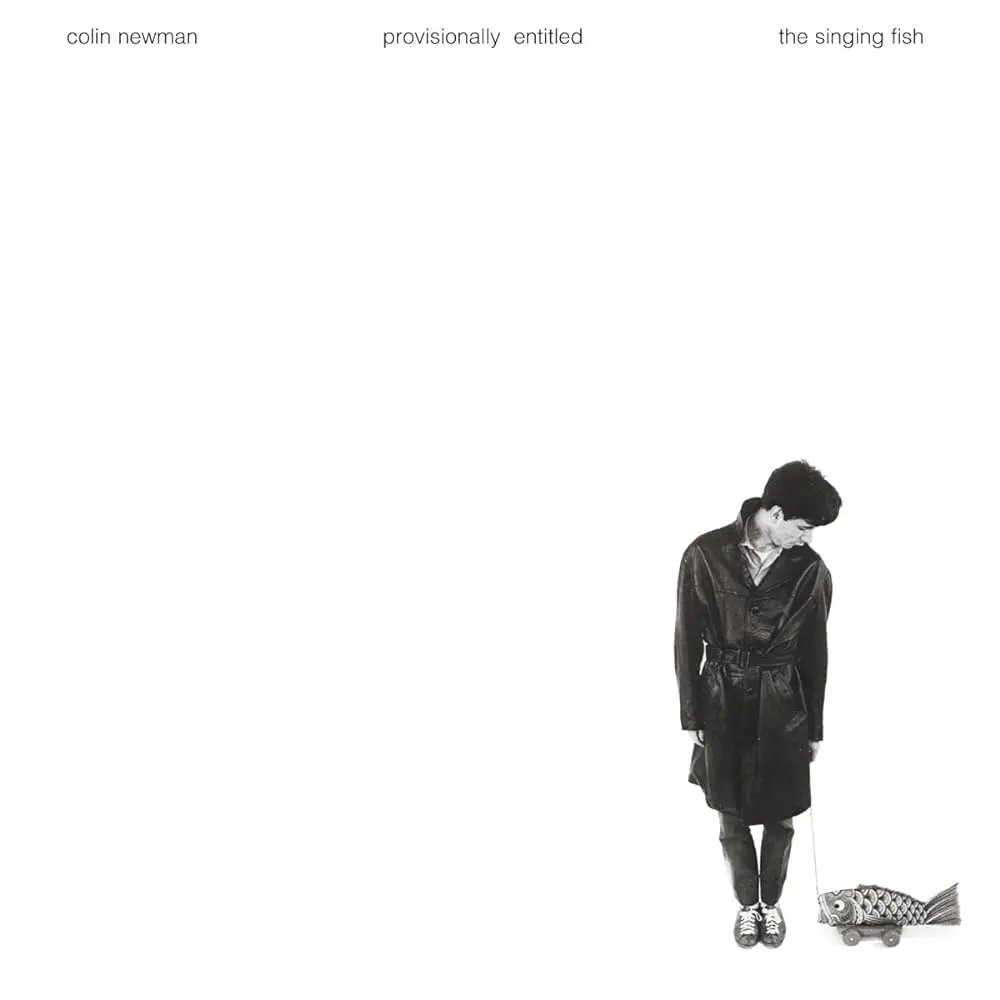 Colin Newman released his second solo album, Provisionally Entitled the Singing Fish, in June 1981 on 4AD.
The album features twelve numerical tracks titled “Fish” (one through twelve). Newman self-performed the album apart from “Fish Nine,” which features Wire and A-Z drummer Robert Gotobed. Apart from ‘mouth noise,’ Provisionally Entitled is an instrumental album.
Singing Fish plays as twelve short, functional pieces that move in quick cuts, with Newman building most of the sound alone and keeping vocals as occasional color. “Fish One” steps out with a light, chamber-dance pulse, while “Fish Two” pares down to a folk-like fragment. “Fish Three” locks into an electronic march, then “Fish Four” stretches into lustrous, floating ambience. “Fish Five” leans on an eastern-tinged electro-dance pattern, and “Fish Six” pivots into suspense built from sound effects and clipped gestures.
“Fish Seven” stands tallest: guitar strums sit under electronic swirls and chant-like vocals, with a Middle Eastern tinge and organ weight that turns the air darker. “Fish Nine” pushes a funk bassline through feverish electronic rhythm, then piles on celebratory swells, slap-happy vocal spurts, disjointed bleeps, and steam-engine noise. “Fish Ten” reduces to sparse piano in a sonata-like frame, “Fish Eleven” spikes the calm with machine shrieks and intense fragments from violin, guitar, and piano, and “Fish Twelve” exits on a buoyant, fairy-tale lift.
A1. “Fish One” (2:31)
A2. “Fish Two” (1:49)
A3. “Fish Three” (3:04)
A4. “Fish Four” (4:58)
A5. “Fish Fiver” (4:05)
A6. “Fish Six” (2:17)
B1. “Fish Seven” (2:30)
B2. “Fish Eight” (4:07)
B3. “Fish Nine” (3:45)
B4. “Fish Ten” (3:01)
B5. “Fish Eleven” (1:58)
B6. “Fish Twelve” (3:34)
Newman self-produced the album at Scorpio, where Steve Parker engineered Singing Fish in sequence with titles by Linx (Go Ahead) and Fischer-Z (Red Skies Over Paradise).
Not To
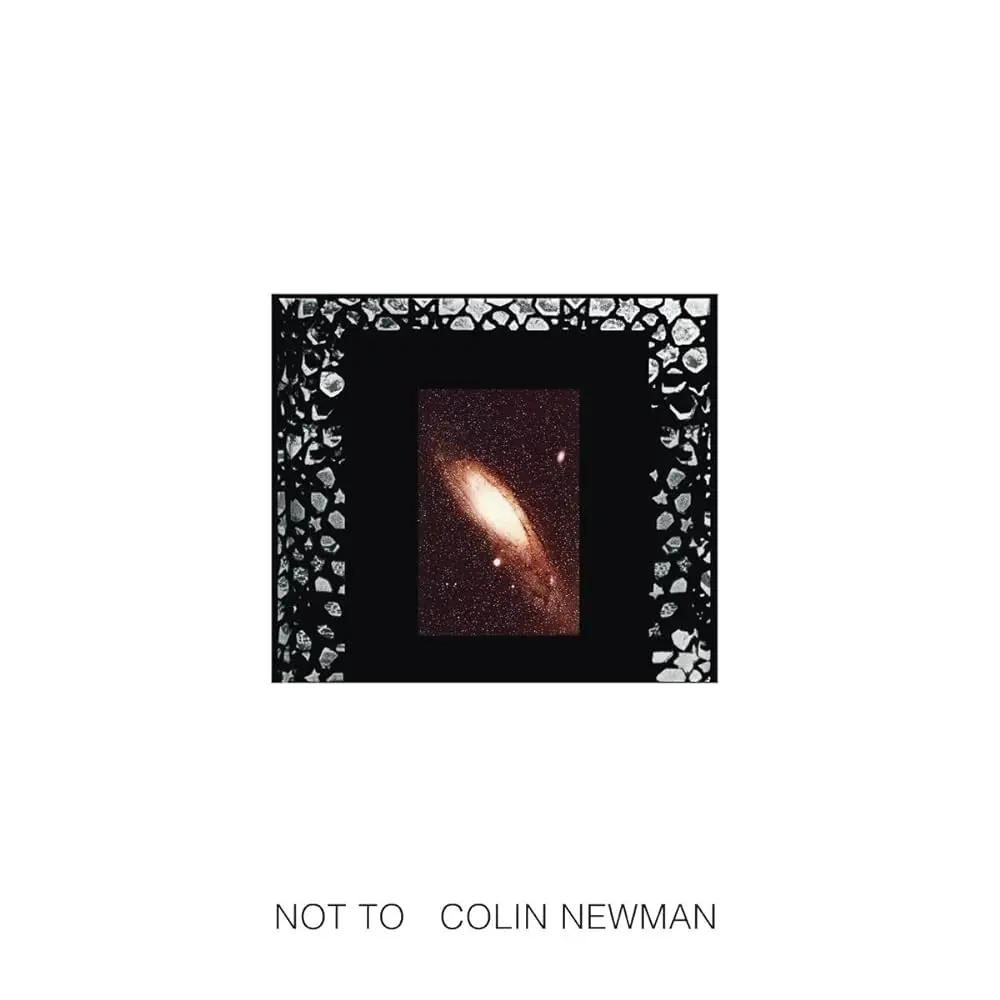 Colin Newman released his third solo album, Not To, in January 1982 on 4AD.
Like A-Z, multiple songs stem from the aborted 1980 fourth Wire album, including the leftover Wire group-write “5/10” and Newman’s co-writes with Wire guitarist Bruce Gilbert (“Remove for Improvement”) and bassist Graham Lewis (“Safe,” “Don’t Bring Me Reminders”).
Side Two contains “Indians,” which Newman joint-wrote with his current backing players: bassist Simon Gillham, drummer (and Wire colleague) Robert Gotobed, and A-Z multi-instrumentalist Desmond Simmons, who plays guitars, piano, and recorder. In addition to guitar and piano, Newman plays tabla, vibes, and percussion on Not To, which closes with the Beatles cover “Blue Jay Way.”
Not To tightens around a full band and keeps the studio tricks in the background, so the songs land through dry attack, clipped transitions, and a slightly clunkier push than the earlier record. Side One rides a bright, chiming surface: “Safe” moves on a brisk pulse with jingle-bell punctuation, “You, Me and Happy” floats in haze, and “Lorries” pairs chiming guitars with a serpentine bass line that keeps shifting the center of gravity. “Remove for Improvement” sits in a reflective midtempo frame with spare changes that let small rhythmic turns carry the tension, while “We Meet At Tables” wobbles in a gentle psych tilt that blurs the edges without losing forward motion. The title track slows the air and turns windswept and meditative, “Truculent Yet” runs as a minimalist, stream-of-consciousness sketch, and “1, 2, 3, Beep Beep” pushes zany repetition into near-irritation. “Blue Jay Way” arrives as a slow, woozy drag that drains energy by design, leaving the record split between crisp, wintry momentum and heavier, left-field detours.
A1. “Lorries” (3:51)
A2. “Don’t Bring Me Reminders” (3:27)
A3. “You Me and Happy” (2:37)
A4. “We Meet Under Tables” (3:47)
A5. “Safe” (2:34)
A6. “Truculent Yet” (3:49)
B1. “5/10” (3:32)
B2. “1, 2, 3, Beep Beep” (2:14)
B3. “Not To” (3:33)
B4. “Indians!” (3:05) – features Gilbert on “guest greatest hits guitar.”
B5. “Remove for Improvement” (4:07)
B6. “Blue Jay Way” (3:11) – is a George Harrison song from the 1967 Beatles film Magical Mystery Tour.
Newman self-produced the album at Scorpio, where Steve Parker engineered Not To in sequence with the Rough Trade release …If I Die, I Die, the debut album by Irish goth rockers Virgin Prunes.
4AD lifted “We Means We Starts” as a single (b/w “Not To”).
Commercial Suicide
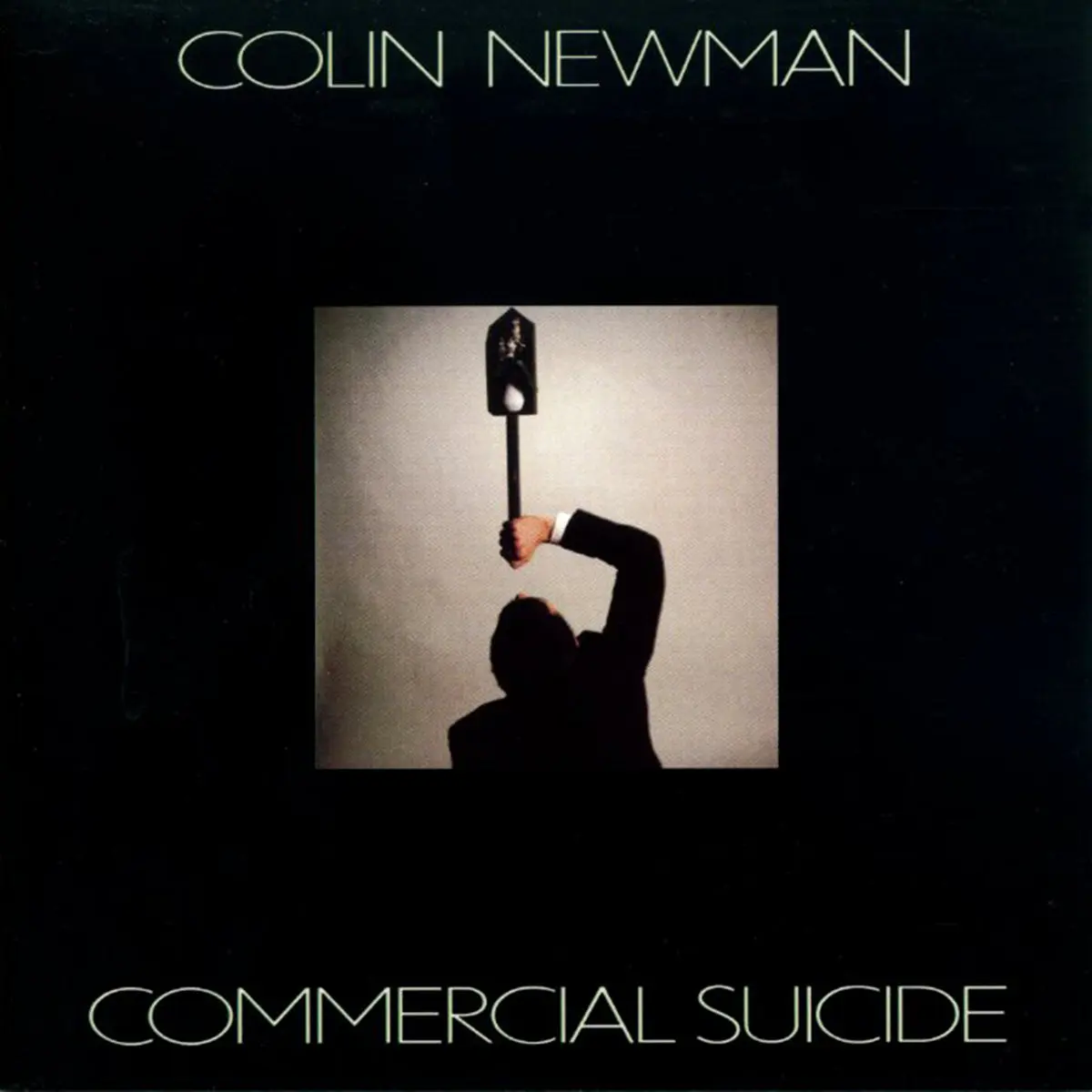 Colin Newman released his fourth solo album, Commercial Suicide, in October 1986 on Crammed Discs. Newman collaborates with Minimal Compact multi-instrumentalist Malka Spigel, Colin’s personal partner who plays bass, guitar, and piano.
Contrabassist Andre Klenes and keyboardist–percussionist Sean Bonnar back Newman on Commercial Suicide, which features a four-piece string section and six-piece brass and reeds section.
Commercial Suicide moves at a measured pace and lets space do the heavy lifting, with voices set low in the frame and the arrangements built from small repeats, soft electronics, and chamber-weight accents. “Their Terrain” rises in slow swells, with brass and strings pushing the harmony upward in lopsided, scene-by-scene lifts. “2-Sixes” sits down-tempo on a slight percussive layer and resonant bass, then loops guitar fragments until the pattern starts to feel self-contained.
“Metarkest” holds a darker, hypnotic pull through restrained motion and incremental layering, while “But I…” turns lyrical clichés into a richly orchestrated set-piece that keeps shifting its emphasis as the parts enter and fade. The title track hangs in airy ambience, “Feigned Hearing” keeps the line fluid and pared back, and “I Can Hear Your…” thickens into austere electronic fog with the pulse half-buried. “Can I Explain the Delay?” keeps the same deliberate stride, and the long “Interview” pieces stretch into extended monologue and repetition, treating voice as texture and letting the backing cycle underneath without rushing toward a payoff.
A1. “Their Terrain” (5:01)
A2. “2-Sixes” (5:17)
A3. “Metarkest” (5:12)
A4. “But I…” (4:53)
B1. “Commercial Suicide” (4:02)
B2. “I’m Still Here” (3:47)
B3. “Feigned Hearing” (4:02)
B4. “Can I Explain The Delay?” (4:55)
B5. “I Can Hear Your…” (4:46)
Support players include clarinetist Dirk Descheemaeker, flautist–piccolo player Pierre Coulon, French horn player Rino Christ, oboist Stefaan Verdegem, trombonist Michiel Deylius, and trumpeter–flugelhorn player Luc Van Lieshout, who also coordinated the brass section. Violinist Jeannot Gillis coordinated the string section, featuring cellist Claudine Staanackers, violist Wiet Van De Leest, and second violinist Jacqueline Rosenfeld.
Colin Newman produced Commercial Suicide and co-arranged the material with Sean Bonnar. Gilles Martin engineered the sessions and also handled treatments, while Patrick Codenys served as digital consultant.
It Seems
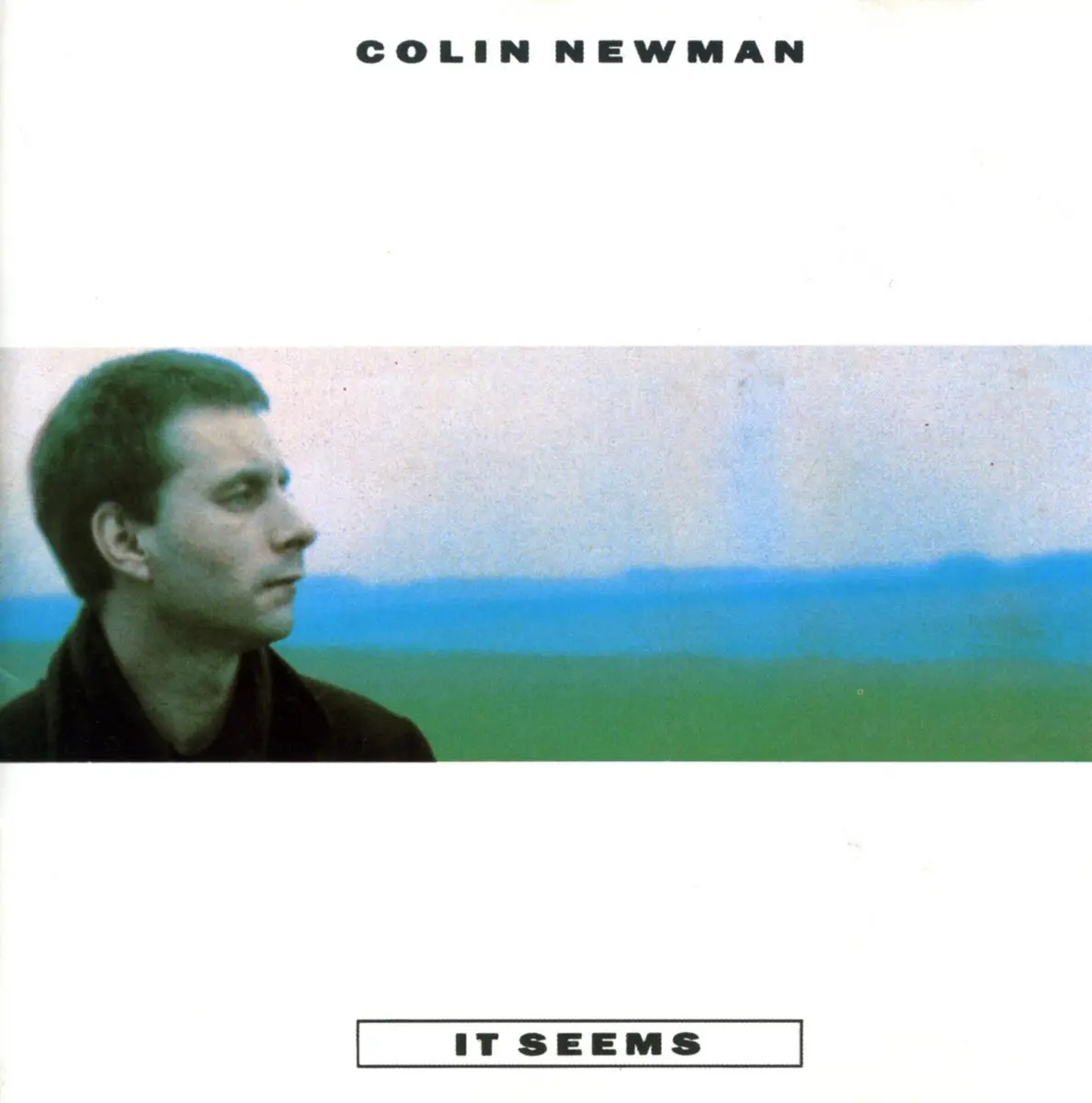 Colin Newman released his fifth solo album, It Seems, in May 1988 on Crammed Discs. Newman retains Commercial Suicide backers John Bonnar and (Colin’s now-wife) Malka Spigel along with earlier drummer-sideman (and renewed Wire bandmate) Robert Gotobed.
It Seems features eleven originals, including co-writes with Malka (“Round and Round”), Bonnar (“It Seems,” “An Impressive Beginning,” “Better Late Than Never”), and both (“Rite of Life”). Sessions took place in Brussels with a four-piece brass section that includes clarinetist Marc Hollander, a veteran Belgian band-leader (Aksak Maboul, Honeymoon Killers).
Musically, It Seems runs on computer sequencing and repeating synth patterns, with drums almost absent apart from Robert Gotobed’s metronome beats on a couple tracks. “Quite Unrehearsed” holds a subtle drone and a softened vocal tone, and “Si Tu Attends” sets an un-ironic French love song frame. “Round & Round” turns its circular figure into a steady, mesmeric pulse. “Better Later Than Never” widens the texture with horns, Malka Spigel’s backing vocals, and Gotobed’s crisp timekeeping.
A1. “Quite Unrehearsed” (4:16)
A2. “Can’t Help Being” (3:25)
A3. “Rite of Life” (3:36)
A4. “An Impressive Beginning” (3:32)
A5. “It Seems” (4:02)
B1. “Better Late Than Never” (4:16)
B2. “Not Being in Warsaw” (4:14)
B3. “At Rest” (4:01)
B4. “Convolutions” (3:22)
B5. “Round and Round” (4:11)
11. “Si Tu Attends” (“If You Wait,” 3:52) – CD bonus: features French lyrics by one Angelo.
Newman co-produced It Seems at Brussels’ Daylight Studios with engineer Giles Martin. Hollander’s horn section featured trumpeter Luc van Lieshout, trombonist Jean-Paul Danhier, and French horn player Rino Christ.
Discography:
- A-Z (1980)
- Provisionally Entitled the Singing Fish (1981)
- Not To (1982)
- Commercial Suicide (1986)
- It Seems (1988)
Sources:
Artist/Album Pages:
Baker Gurvitz Army was an English hard-rock supergroup that released three albums on Atco/Vertigo ...
Colin Blunstone is an English singer who fronted The Zombies, which charted with the British Invas...
Orchestral Manoeuvres in the Dark — also known by the acronym OMD — are an English electronic band t...
Stretch was an English hard-rock band that released the 1975–77 Anchor albums Elastique, You Can't...
The Rascal Reporters were an American avant-jazz/rock band that issued two cassette-albums in 198...
Freedom was an English rock band formed by two original Procol Harum members: singer–drummer Bobby...
Sally Oldfield (born Aug. 3, 1947) is an English-Irish singer and composer, born in Dublin and rai...
The Moody Blues were an English rock band active from 1964 to 2018. The original lineup included sin...
Atomic Rooster was an English hard-rock band formed as an organ trio by Crazy World of Arthur Brown...
The Waterboys are an English rock band that released five albums between 1984 and 1990 on Ensign. ...
The Vapors were an English rock band that released the 1980–81 albums New Clear Days and Magnets o...
Tony Banks — aka Anthony George Banks (born March 27, 1950) — is an English keyboardist and compos...